Contents18 sections
Antibiotic resistance is one of the biggest problems in modern medicine. Bacteria become resistant when they evolve ways to survive the drugs meant to kill them, and overuse and misuse of antibiotics speed this up. According to the CDC’s 2019 Antibiotic Resistance Threats Report, more than 2.8 million antibiotic-resistant infections occur in the United States each year, and more than 35,000 people die as a result.
That is one reason researchers are interested in LL-37, a peptide the human body makes as part of its first line of defense against infection. In lab studies it kills a broad range of bacteria, including some resistant strains, and it also steers inflammation and wound repair. It is sold online as a research peptide, and some people inject it for immune support or healing.
The evidence for that use is thin. Most of the research comes from cell and animal studies, the human trials tested LL-37 applied to wounds rather than injected, and user reports include some bad experiences. This LL-37 peptide guide covers what LL-37 is, how it works, what the research shows, commonly reported doses, side effects and how it compares with other peptides.
Key Takeaways
- LL-37 is the only human cathelicidin, a 37-amino-acid antimicrobial peptide made by immune cells and by the cells lining the skin, gut and airways.
- In lab studies it kills many bacteria, including some resistant strains, blocks biofilms and modulates inflammation and wound repair. The only human trials tested it on leg ulcers, not as an injection.
- LL-37 cuts both ways: high levels help drive psoriasis, rosacea and lupus, and in some cancers it appears to help tumors grow.
- The commonly reported dose is about 100 mcg a day by subcutaneous injection (some report up to 200 mcg). That is a user figure, not a tested or recommended dose.
- Side effects of injected LL-37 have not been studied. Users report injection-site redness and, in some cases, swollen lymph nodes and other reactions that made them stop.
LL-37 Peptide Guide: What Is LL-37?
LL-37 is the only cathelicidin antimicrobial peptide that humans make. It is cut from the C-terminal end of a larger, inactive precursor protein called hCAP18, which is coded by the CAMP (cathelicidin antimicrobial peptide) gene. The name comes from its first two amino acids, two leucines (L-L), and its length of 37 amino acids. (1)
It belongs to the antimicrobial peptides (AMPs), small proteins that are part of the innate immune system, the body’s fast, non-specific first line of defense.
LL-37 is made by immune cells such as neutrophils, monocytes, macrophages, mast cells and natural killer cells, and by the epithelial cells that line the skin, gut and airways, including the keratinocytes of the skin. Levels in the skin rise after an injury or infection.
What Is the Mechanism of Action of LL-37?
LL-37 works in two broad ways: it attacks microbes directly, and it acts as a signal that steers the immune response and tissue repair.
Direct Antimicrobial Action
LL-37 is a cationic antimicrobial peptide with a net positive charge of +6. That lets it bind to the negatively charged outer membrane of bacteria and disrupt it, which kills the cell. (2)
Because it attacks the membrane rather than a single enzyme or protein, as most antibiotics do, LL-37 also acts on some antibiotic-resistant bacteria in lab tests. It is not specific to resistant bacteria, though: it acts on a broad range of bacteria and on some fungi.

Neutrophils, the first immune cells to reach an infection, are the main source of LL-37. They store the inactive precursor hCAP18 in their granules and release it when they are activated; an enzyme, proteinase 3, then cuts it into active LL-37. (3)
In lab studies, LL-37 also stopped Pseudomonas aeruginosa from forming biofilms, the slime-protected bacterial communities behind many chronic infections, at concentrations lower than those needed to kill the bacteria. (4)
Immune Signaling
LL-37 also acts as a messenger for the immune system. It attracts immune cells such as neutrophils, monocytes and T cells to the site of infection and prompts cells to release chemokines and cytokines, the signaling proteins that coordinate the response. (5) It also influences how dendritic cells, which present antigens to the adaptive immune system, mature. (6)
Effects on Inflammation
LL-37 can calm or amplify inflammation, depending on the setting. It binds bacterial endotoxin (LPS) and blunts the inflammatory response to it, and in cell studies it reduced the movement of NF-κB, a key pro-inflammatory switch, into the cell nucleus. In a mouse study, LL-37 lowered levels of pro-inflammatory cytokines and chemokines. (7)
In other settings it does the opposite. In psoriasis, for example, LL-37 binds DNA released from damaged cells and turns it into a strong trigger for interferon-producing immune cells, which fuels the disease (see the FAQ below).
Wound Repair, Blood Vessels and Bone
In cell and animal studies, LL-37 stimulates the growth of new blood vessels (angiogenesis) and the proliferation and migration of the cells that close wounds. (8) Animal studies also suggest it helps bone repair by drawing mesenchymal stem cells to the injury. (9)
Its role in heart disease is unclear. LL-37 has been found in human atherosclerotic plaque, studies disagree on whether it helps or harms there, and there is no evidence that taking LL-37 protects the heart. (10)
LL-37 Peptide Benefits: What the Research Shows
Most claimed benefits of LL-37 come from the lab. This is where the evidence stands:
| Area | What was found | Type of evidence |
|---|---|---|
| Bacteria | Kills many bacteria, including some resistant strains; blocks biofilm formation | Lab studies |
| Inflammation | Neutralizes endotoxin and lowers inflammatory signals, but can also drive inflammation | Cell and mouse studies |
| Wound healing | Better healing of hard-to-heal leg ulcers with LL-37 applied to the wound | Small human trial (topical) |
| Bone repair | Drew stem cells to bone injuries and helped repair | Animal studies |
| Cancer | Killed some cancer cells, but promoted growth of others | Lab and animal studies |
| Immune support from injections | No published trials | User reports only |
Infections
In lab dishes, LL-37 kills a wide range of bacteria, including Staphylococcus aureus and some methicillin-resistant (MRSA) strains, which has made it a starting point for new antimicrobial drugs.
The catch is that its activity drops sharply in salt and blood serum, the conditions it meets inside the body, and some bacteria, including S. aureus, make enzymes that break it down. No trial has shown that injected LL-37 treats an infection in people.
Immune Support
Because it recruits and activates immune cells, LL-37 is often marketed for “immune support”. There are no human studies of LL-37 injections for preventing colds or other infections, so this use rests on lab findings and user reports.
Inflammation and Autoimmune Disease
LL-37’s role in inflammatory and autoimmune disease is double-edged. Mouse studies suggest cathelicidin helps protect the gut lining in colitis, but in psoriasis, rosacea and lupus, high levels of LL-37 appear to help drive the disease. (11) That makes autoimmune conditions a reason for caution, not a reason to use it.
Wound Healing
This is the one area with human data. In a small randomized, placebo-controlled trial in people with hard-to-heal venous leg ulcers, LL-37 applied to the wound once a week for four weeks improved healing compared with placebo at the lower strengths tested, and it was well tolerated.
That was topical use on an open wound, not an injection, and LL-37 has not been approved as a wound treatment. For other options, see our guide to the best peptides for healing.
Cancer
In lab studies, LL-37 suppressed the growth of oral squamous cell carcinoma and colon cancer cells. (12) In other cancers, including ovarian, breast and lung cancer, it appears to help tumors grow and spread. LL-37 is not a cancer treatment, and a history of cancer is a reason to be cautious with it.
Who Is Interested in LL-37?
Most people who look into LL-37 fall into a few groups:
- People with recurring or stubborn infections who are looking for something beyond antibiotics.
- People who want general “immune support”, often during cold and flu season.
- Lifters and athletes recovering from injuries who want faster healing.
None of these uses has been tested in human trials. An infection that does not clear needs a doctor and, often, a culture to pick the right antibiotic, not a research peptide. Anyone with an autoimmune condition such as psoriasis or lupus, or a history of cancer, has extra reason for caution because of the effects described above.
Forms of LL-37
Research vendors sell LL-37 as a freeze-dried powder in vials, which is mixed with bacteriostatic water and injected. In clinical research it has been applied directly to wounds. There is no evidence that injection works better than other routes or that it produces fast results.
How LL-37 Is Used
Most user reports describe subcutaneous injection, into the fat under the skin (usually of the belly) with an insulin syringe, as in the user report further down. Some sources describe intradermal injection, into the skin itself, but no study has compared the two routes, so there is no basis for calling either one better.
Whichever route is used, sterile technique matters: clean the vial stopper and the skin with alcohol and use a new sterile needle every time. Our guide to peptide injection sites covers where and how subcutaneous injections are given.
LL-37 Dosage
No human study has established a dose for injected LL-37. The figures below are what users and vendors commonly report, not a tested or recommended dose:
- Commonly reported starting dose: 100 mcg once a day, by subcutaneous injection.
- Upper range reported: up to 200 mcg a day, usually after starting lower to see how the body reacts.
- Human trial use: topical application to leg ulcers once a week, which does not translate to an injected dose.
Measuring microgram doses from a vial depends on how much water the powder is mixed with. Our peptide reconstitution calculator converts a dose into syringe units.
LL-37 Cycling
Commonly reported cycles run from about 4 weeks to 3 months of daily use, followed by a break of 2 to 4 weeks before another cycle.
These cycle lengths are user and vendor convention, not research. No study has tested daily LL-37 injections for weeks or months, so the long-term effects are unknown. As the user reports below show, some people stopped early because of side effects.
LL-37 Stacks
LL-37 is most often stacked with TB-500, a synthetic peptide based on thymosin beta-4 that is used for tissue repair. No study has tested the two together, so any benefit or added risk of the combination is unknown.
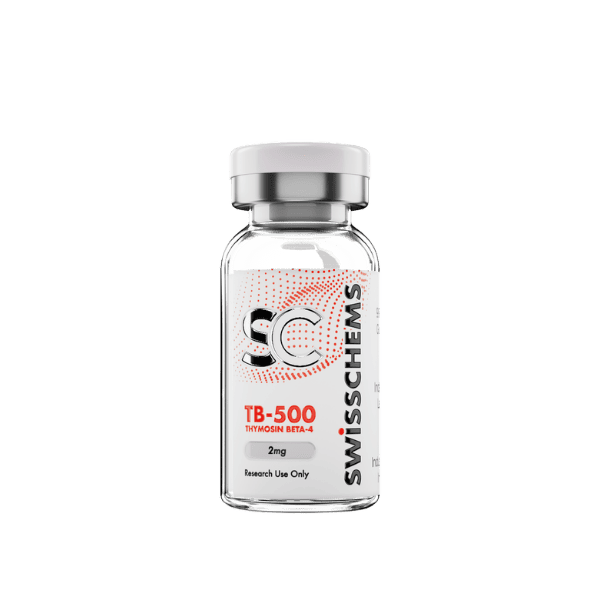

Overview
- Form: Lyophilized powder
- Researched Dosage: 2 mg to 5 mg per week, often split into two doses, during a 4-6 week loading phase; then 2 mg to 2.5 mg every 1-2 weeks for maintenance
- Typical Cycle: 4-8 weeks
- Cost: $23.96-$25.16
- Stacking Options: BPC-157, GHK-Cu, CJC-1295/Ipamorelin
Pros
- Thought to help regulate actin, a protein involved in cell movement and structure, which may help with tissue repair and recovery.
- Animal studies suggest it may speed up healing in muscle, tendon, ligament and skin, and may reduce inflammation.
- Commonly paired with BPC-157 because the two peptides are believed to support recovery in different ways.
Cons
- May encourage new blood vessel growth and cell migration, which raises a theoretical concern about speeding up existing tumors. Long-term human safety data is very limited.
- Not an approved human medication. The FDA lists it as a bulk substance with potential safety risks (Category 2), and WADA bans it for tested athletes.
The other common pairing is vitamin D, and here there is a real biological link: active vitamin D switches on the CAMP gene that makes LL-37, so the body’s own LL-37 production depends partly on vitamin D status. Whether vitamin D adds anything on top of injected LL-37 has not been studied.
LL-37 User Reviews
User reports are anecdotes, not evidence, but they show how people use LL-37, and for this peptide many of them are negative. On Reddit, one user wrote:
“I used it for a couple weeks and feel great. My wife and daughter caught a cold and I didn’t.”
Reddit user
In the same thread, another user described stopping early:
“I was on it about three weeks and quit. I had swelling and tenderness in my lymph glands under my arms. Resolved after quitting in about 7-10 days. I was taking 100mcg a day Sub-Q for approximately 3 weeks. Intended to go 50 days but like I said, I cut it off after noticing the tenderness.”
Reddit user
In another thread, a user reported severe, lasting problems:
“Took LL-37 for 4 weeks 18 months ago. My life hasn’t been the same since (awful spinal muscle spasms, hair dried out, just my entire body feeling completely off). Turns out that this peptide is highly toxic.”
Reddit user
And in the first thread, one more user wrote:
“Incredibly toxic! Ruined my life!”
Reddit user
Reports like these cannot show cause and effect: the product may have been impure, the dose wrong, or the symptoms unrelated. LL-37 has not been shown to be toxic at these doses, but it has not been shown to be safe either. Swollen lymph nodes would fit an immune reaction, and the share of negative reports is a good reason for caution.
LL-37 Side Effects
The side effects of injected LL-37 have not been studied in people. In the leg ulcer trial, LL-37 applied to wounds was well tolerated, but that says little about daily injections. What is known or suspected:
- Injection-site reactions: redness, swelling, itching or pain where it is injected, especially at higher doses. Poor sterile technique adds a risk of infection.
- Immune reactions: users report swollen, tender lymph nodes and general malaise, which stopped after they quit.
- Inflammation and autoimmunity: because high LL-37 levels help drive psoriasis, rosacea and lupus, adding more of it could, in theory, trigger or worsen these conditions.
- Cancer: in lab and animal studies LL-37 promoted the growth of some cancers, including ovarian, breast and lung cancer.
- Damage to human cells: at high concentrations in lab studies, LL-37 damages human cells as well as bacteria.
- Product quality: research chemicals are not regulated like medicines, so contamination, a wrong dose or the wrong compound in the vial are real risks.
For a wider view, see our guide to the side effects of peptides.
Where Can I Buy LL-37?
LL-37 is sold as a research chemical, not as a medicine, and few vendors carry it, so quality depends entirely on the supplier. Ask for a recent third-party certificate of analysis (COA) for the exact batch, with identity and purity testing. Our guide on how to read a peptide COA explains what to check.
SwissChems has listed LL-37. Check its current range and the batch COA before buying anything.
Pros
- Exceptional purity & testing (≥98%)
- Pharmaceutical-style packaging for stability
- Broad catalog across peptides & nootropics
- Strong reputation & consistency across years
Cons
- Some items frequently out of stock due to high demand
- Limited long-term data for some compounds
LL-37 vs. Other Peptides
| LL-37 | Thymosin Beta-4 (TB4) | Thymosin Alpha-1 | KPV | |
|---|---|---|---|---|
| Origin | Cut from hCAP18; released mainly by neutrophils and skin cells | First isolated from the thymus; found in most cells, especially platelets | Fragment of prothymosin alpha, first isolated from the thymus | Three-amino-acid fragment of the hormone alpha-MSH |
| Main research focus | Infection, wound healing | Tissue repair, wound healing | Immune function, hepatitis B | Gut and skin inflammation |
| Antimicrobial | Yes (lab) | Limited data | Indirect, through T cells | Yes (lab) |
| Anti-inflammatory | Both pro- and anti-inflammatory | Yes (animal) | Immune-balancing | Yes (cell and mouse) |
| Wound healing | Small human trial (topical) | Animal and early human data | Not a main use | Limited data |
| Approval | Not approved | Not approved | Approved in some countries, not in the US | Not approved |
| Forms sold | Injectable vials | Injectable vials | Injection | Capsules, cream, vials |
LL-37 vs. Thymosin Beta-4 (TB4)
LL-37 and thymosin beta-4 are both naturally occurring peptides that support wound healing in cell and animal studies, partly by promoting the growth of new blood vessels.
The difference is their main job. LL-37 is an antimicrobial peptide released by neutrophils and skin cells in response to infection or injury. Thymosin beta-4 was first isolated from the thymus but is found in most cells, and its research focus is cell migration and tissue repair rather than fighting microbes.
LL-37 vs. Thymosin Alpha-1
Both peptides are immunomodulators, but they work differently. LL-37 attacks microbes directly and signals the innate immune system, while thymosin alpha-1 mainly supports T-cell function, the adaptive side of immunity.
Thymosin alpha-1 also has far more clinical history. As the drug thymalfasin (brand name Zadaxin), it is approved in a number of countries, mainly for chronic hepatitis B and to support immune function, though not in the US. LL-37 is not approved anywhere.
LL-37 vs. KPV
LL-37 and KPV overlap in their effects: both show antimicrobial and anti-inflammatory activity in lab studies.
They differ in size and origin. LL-37 is a 37-amino-acid peptide released mainly by neutrophils and skin cells, while KPV is a three-amino-acid fragment of the hormone alpha-MSH whose research centers on gut and skin inflammation in mice. KPV is also sold as capsules and creams, while LL-37 is sold almost only as injectable vials.
Is LL-37 Legit?
The science behind LL-37 is real. It is a well-studied part of the human immune system, and its antimicrobial and wound-healing effects in the lab are why drug developers have worked on it and on peptides based on it.
The way people buy and use it, daily injections for immune support or healing, has no human trials behind it. Lab and animal data show it can also feed inflammation, autoimmune disease and some cancers, its side effects have not been studied, and user reports are mixed, with several bad experiences.
For tissue repair, TB-500 and thymosin beta-4 have more animal research behind them, and KPV has been studied for gut and skin inflammation. None of these are approved medicines either, and none has solid human trial data for these uses, so the same caution about evidence and product quality applies.
The Bottom Line
LL-37 is an important part of the human immune system, but as an injected research peptide it is unproven and may carry risks that have not been studied.
- Lab studies show LL-37 kills many bacteria, including some resistant strains, blocks biofilms and helps steer inflammation and wound repair. The only human trials tested it applied to leg ulcers, not injected.
- It cuts both ways: high LL-37 levels help drive psoriasis, rosacea and lupus, and in some cancers it appears to promote tumor growth.
- The commonly reported 100 mcg a day, injected under the skin for 4 weeks to 3 months, is a user convention, not a tested protocol, and several users report side effects that made them stop.
Frequently Asked Questions
Disclaimer
Please read carefully
The information on this site is for educational and informational purposes only, and is not medical advice. Always consult a qualified healthcare professional before using any supplement or medication, or making changes to your health, fitness, or nutrition routine.
Not medical advice
Content here is not a substitute for professional medical advice.
Consult your doctor
Talk to your doctor before starting any supplement or new routine.
Use at your own risk
We are not responsible for adverse effects from acting on this.
Do your research
Make informed decisions about your own health.
No guarantees
Individual results vary. No claims about outcomes.
Important — Never disregard professional medical advice or delay seeking it because of something you read here. If you think you may have a medical emergency, call your doctor or your local emergency number right away.