Contents14 sections
The Glow Stack, usually sold as “GLOW”, is an injectable research blend of three peptides: GHK-Cu, BPC-157 and TB-500. The most common version holds 50 mg of GHK-Cu, 10 mg of BPC-157 and 10 mg of TB-500 in one vial. It is marketed mainly for skin quality (glow, firmness, hydration and fine lines), with tissue repair as a secondary aim.
Each ingredient has its own research base, but most of it is lab, animal or topical-skin data, and the blend itself has never been tested in a human trial. This guide covers what each peptide does, what the evidence shows, the doses commonly reported for the blend, the side effects and who should avoid it.
Key Takeaways
- The Glow Stack (GLOW) is an injectable blend of GHK-Cu, BPC-157 and TB-500, most often 50 mg, 10 mg and 10 mg per vial.
- GHK-Cu is the skin ingredient. Its collagen effects come from lab studies, and its human skin data come mostly from topical creams, not injections.
- BPC-157 and TB-500 add tissue-repair signalling, but nearly all of their evidence comes from animal and lab studies.
- The blend is dosed by its GHK-Cu content: commonly reported doses are 1-2 mg of GHK-Cu in one daily subcutaneous injection, which delivers 200-400 mcg each of BPC-157 and TB-500.
- Expect subtle changes at best. Long-term safety is unknown, and people who are pregnant, have a cancer history or compete in tested sport should avoid it.
What Is the Glow Stack Peptide?
Glow Stack is a vendor name, not a medical product. Formulas can differ between sellers, but the version most vendors sell as GLOW combines three peptides in a fixed ratio of about 5:1:1:
| Component | Typical amount per vial | What it is |
|---|---|---|
| GHK-Cu | 50 mg | A copper-binding tripeptide (glycine-histidine-lysine) found naturally in human plasma; levels fall with age |
| BPC-157 | 10 mg | A synthetic 15-amino-acid peptide based on a protein found in human gastric juice |
| TB-500 | 10 mg | A synthetic peptide based on thymosin beta-4, a protein involved in cell migration and tissue repair |
Some articles describe “glow” stacks that contain CJC-1295 or injectable glutathione. Those are different products: CJC-1295 is a growth hormone releasing peptide, and glutathione is an antioxidant usually given by IV drip. Neither is part of the GLOW blend. Some vendors also sell a four-peptide version, often called KLOW, which adds the anti-inflammatory peptide KPV.
The idea behind the stack is simple. GHK-Cu is the skin-focused ingredient, while BPC-157 and TB-500 are better known as healing peptides. Together they are meant to cover collagen, blood supply and tissue repair in one injection. Whether the three work better together than alone has never been tested.
How It Works: Mechanism of Action of Glow Stack Peptide

Each peptide in the blend acts through different pathways. Most of what follows comes from cell-culture and animal studies, so read it as a description of how the ingredients work, not as proof of visible results.
Stimulates Collagen Production
In fibroblast cultures, GHK-Cu increases the production of collagen and glycosaminoglycans, the building blocks of the skin’s support matrix. This is the main reason GHK-Cu is used in anti-aging skincare, and the basis for claims that the blend makes skin firmer over time.
Supports Tissue Repair and Remodelling
GHK-Cu draws repair cells to wounds and helps balance the enzymes that break down and rebuild tissue (metalloproteinases and their inhibitors). TB-500 is based on thymosin beta-4, which binds actin and helps cells move into damaged areas. BPC-157 has sped up the healing of tendon, ligament, muscle and gut injuries in rat studies, partly by promoting new blood vessel growth.
Supports Anti-Inflammatory Activity
All three peptides have lowered markers of inflammation in lab or animal models. On the skin, less inflammation could mean less redness and a more even tone, but no study has measured this for the injected blend.
Hydration and Skin Barrier Function
Glycosaminoglycans, including hyaluronic acid, hold water in the skin. GHK-Cu’s effect on glycosaminoglycan production in lab studies is the basis for the hydration and “plumper skin” claims. It is a plausible mechanism, not a measured result for the blend.
Activates Copper-Dependent Repair Pathways (GHK-Cu)
GHK binds copper tightly and can deliver it to cells in a usable form. Copper is a cofactor for lysyl oxidase, the enzyme that cross-links collagen and elastin fibres, and for superoxide dismutase, one of the body’s main antioxidant enzymes. Both play a part in skin structure and repair.
What Results Look Like Over Time
Expect subtle cosmetic changes, not a transformation. The topical copper peptide studies measured changes in fine lines and firmness over a few months, not days. There is no comparable data for the injected blend, so user reports of results within 4-12 weeks are anecdotal.
What the Evidence Actually Shows
This is the most important section for anyone considering the blend. Each ingredient has a different level of evidence, and none of it comes from testing the combination.
| Peptide | Main evidence | Human data |
|---|---|---|
| GHK-Cu | Cell studies, animal wound models, topical skin studies | Small studies of copper peptide creams on facial skin; no controlled trials of injections for skin |
| BPC-157 | Rat studies on tendon, ligament, muscle and gut healing | A few small, uncontrolled reports; no controlled trials |
| TB-500 | Lab and animal studies on wound, heart and eye tissue | None for TB-500 itself; human trials used full-length thymosin beta-4 as eye drops or skin gel |
| Glow Stack blend | None published | None |
The topical GHK-Cu studies were small. They suggest modest improvements in fine lines, firmness and skin density, but they say little about what happens when GHK-Cu is injected under the skin elsewhere on the body instead of being applied to the face.
For more detail on each ingredient, see our guides to GHK-Cu, BPC-157 and TB-500.
Glow Stack Dosage: Commonly Reported Protocol
There is no approved or studied dose for the Glow Stack. The figures below are doses commonly reported by users and vendors, not advice. Because the ratio is fixed, the blend is dosed by its GHK-Cu content and given as one subcutaneous injection, usually once a day.
| GHK-Cu per injection | BPC-157 delivered | TB-500 delivered |
|---|---|---|
| 1 mg | 200 mcg | 200 mcg |
| 1.5 mg | 300 mcg | 300 mcg |
| 2 mg | 400 mcg | 400 mcg |
For example, a 70 mg vial (50/10/10) mixed with 3 mL of bacteriostatic water holds about 16.7 mg of GHK-Cu per mL. A 0.1 mL injection (10 units on a U-100 insulin syringe) then gives about 1.7 mg of GHK-Cu plus about 330 mcg each of BPC-157 and TB-500. Use our peptide dosage calculator to work out syringe units for other vial sizes and water volumes, and see how to reconstitute peptides for mixing and sterile handling.
At about 1.7 mg of GHK-Cu a day, the blend delivers roughly 330 mcg of BPC-157 a day, within the range commonly reported for BPC-157 alone, and about 2.3 mg of TB-500 a week, at the low end of reported TB-500 protocols. Reported cycles usually last several weeks and are followed by a break. There is no data on how long daily use is safe.
Where to Buy the Glow Stack
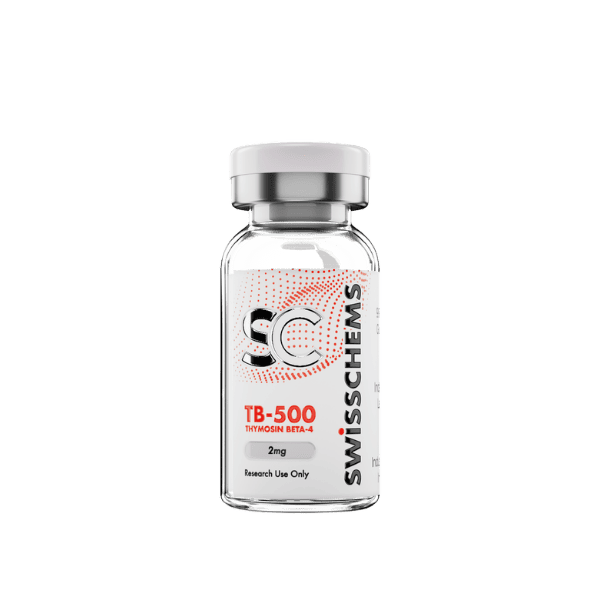
Research peptides are not regulated like medicines, so quality varies between vendors. Choose a supplier that publishes recent third-party test results (certificates of analysis) for each batch, and check that the label states the amount of each peptide. SwissChems sells the GLOW blend, and it also sells TB-500 on its own for anyone who prefers to dose the ingredients separately.

Pros
- Exceptional purity & testing (≥98%)
- Pharmaceutical-style packaging for stability
- Broad catalog across peptides & nootropics
- Strong reputation & consistency across years
Cons
- Some items frequently out of stock due to high demand
- Limited long-term data for some compounds
Overview
- Form: Lyophilized powder
- Researched Dosage: 2 mg to 5 mg per week, often split into two doses, during a 4-6 week loading phase; then 2 mg to 2.5 mg every 1-2 weeks for maintenance
- Typical Cycle: 4-8 weeks
- Cost: $23.96-$25.16
- Stacking Options: BPC-157, GHK-Cu, CJC-1295/Ipamorelin
Pros
- Thought to help regulate actin, a protein involved in cell movement and structure, which may help with tissue repair and recovery.
- Animal studies suggest it may speed up healing in muscle, tendon, ligament and skin, and may reduce inflammation.
- Commonly paired with BPC-157 because the two peptides are believed to support recovery in different ways.
Cons
- May encourage new blood vessel growth and cell migration, which raises a theoretical concern about speeding up existing tumors. Long-term human safety data is very limited.
- Not an approved human medication. The FDA lists it as a bulk substance with potential safety risks (Category 2), and WADA bans it for tested athletes.
Benefits of Glow Stack Peptide
The benefits below are what users and vendors report, based on how the ingredients work. None has been confirmed for the blend in a controlled study.
Improved Skin Texture and Smoothness
Users often report smoother, more refined skin. This fits GHK-Cu’s effect on collagen in lab studies and the modest improvements seen with topical copper peptides.
Enhanced Hydration and Radiance
Better hydration and a brighter, “dewier” look are the most common claims. They are plausible given GHK-Cu’s effect on glycosaminoglycans, but they have not been measured for the injected blend.
Fewer Fine Lines and Early Signs of Aging
Topical GHK-Cu studies reported small reductions in fine lines and better firmness. Expect existing wrinkles to soften, not disappear.
More Even Skin Tone
The anti-inflammatory effects seen in lab studies may mean less redness and blotchiness. This is the weakest of the skin claims: there is no good evidence that the blend fades pigmentation.
Skin and Tissue Repair
BPC-157 and TB-500 are the reason the blend is also marketed for recovery. In animal studies they sped up the healing of wounds, tendons and muscle. At the amounts in the blend, any effect on human joints or tendons is unproven.
Who Might Consider the Glow Stack
Adults Focused on Skin Quality and Early Signs of Aging
The blend is aimed at people who notice dull or dry skin, fine lines or reduced firmness and want to support collagen and hydration. It is a cosmetic experiment with an unproven upside, so it makes most sense for people who already have the basics in place: sun protection, sleep and a consistent skincare routine.
Lifters and Athletes
Interest from lifters usually comes from the BPC-157 and TB-500 content. The Glow Stack is not a muscle-building peptide: it does not raise growth hormone or testosterone. Tested athletes should avoid it, because BPC-157 and TB-500 are on the WADA prohibited list.
People Who Prefer a Non-Injected Option
The Glow Stack is injected, so it is not a non-invasive treatment. If you want to avoid injections, topical GHK-Cu serums and creams are where most of the human skin data come from.
Compared to Other Peptides
| Peptide / Stack | Main use | Evidence | Best fit |
|---|---|---|---|
| Glow Stack (GHK-Cu + BPC-157 + TB-500) | Skin quality, with tissue repair as a secondary aim | No trials of the blend | Skin-focused users who accept injections |
| GHK-Cu alone | Skin and collagen | Topical human studies; injection data lacking | Skin goals; topical use is an option |
| BPC-157 | Tendon, ligament and gut repair | Mostly rat studies | Injury recovery |
| TB-500 | Tissue repair and cell migration | Mostly animal studies | Injury recovery, often stacked with BPC-157 |
| CJC-1295 + Ipamorelin | Raises growth hormone release | Small human studies of each peptide | Body composition and recovery goals, not skin |
Safety Considerations
None of the three peptides is an approved medicine, and research peptides are sold for laboratory use. “Pharmaceutical grade” claims cannot be verified, so look for a recent third-party certificate of analysis, use sterile technique and never share needles or vials.
Avoid the Glow Stack if you are pregnant or breastfeeding, or if you have a current or past cancer: BPC-157 and TB-500 promote new blood vessel growth in lab and animal studies, and thymosin beta-4 has been linked to tumour growth in some lab research. People with Wilson’s disease or another copper metabolism disorder, a copper allergy, a weakened immune system or a serious chronic illness should also avoid it.
Stacking it with other peptides adds unknowns, because nothing is known about interactions. Speak to a doctor before using it, and stop if you have a severe or persistent reaction.
Side Effects of Glow Stack Peptide
The most commonly reported side effects are at the injection site: stinging or burning (users often say GHK-Cu injections sting), redness, swelling, itching and small bruises.
Some users report tiredness, headache or a brief light-headed feeling after injecting, effects more often linked to TB-500. A rash or hives can point to an allergic reaction, including to copper, or to a contaminated product.
Because the blend is unregulated, the bigger risks may be contamination, wrong peptide content and dosing errors. The long-term effects of daily injections of these peptides are unknown.
The Bottom Line
The Glow Stack pairs a skin peptide with two healing peptides, but the blend itself has never been tested in people.
- GHK-Cu is the skin ingredient, and its best human data come from topical creams. BPC-157 and TB-500 data come mostly from animal studies.
- The commonly reported protocol is one daily subcutaneous injection of 1-2 mg of GHK-Cu, which delivers 200-400 mcg each of BPC-157 and TB-500. It is not a studied or approved dose.
- Expect subtle skin changes at best, buy only lab-tested products, and skip it if you are pregnant, have a cancer history or compete in tested sport.
Frequently Asked Questions
Disclaimer
Please read carefully
The information on this site is for educational and informational purposes only, and is not medical advice. Always consult a qualified healthcare professional before using any supplement or medication, or making changes to your health, fitness, or nutrition routine.
Not medical advice
Content here is not a substitute for professional medical advice.
Consult your doctor
Talk to your doctor before starting any supplement or new routine.
Use at your own risk
We are not responsible for adverse effects from acting on this.
Do your research
Make informed decisions about your own health.
No guarantees
Individual results vary. No claims about outcomes.
Important — Never disregard professional medical advice or delay seeking it because of something you read here. If you think you may have a medical emergency, call your doctor or your local emergency number right away.