Contents12 sections
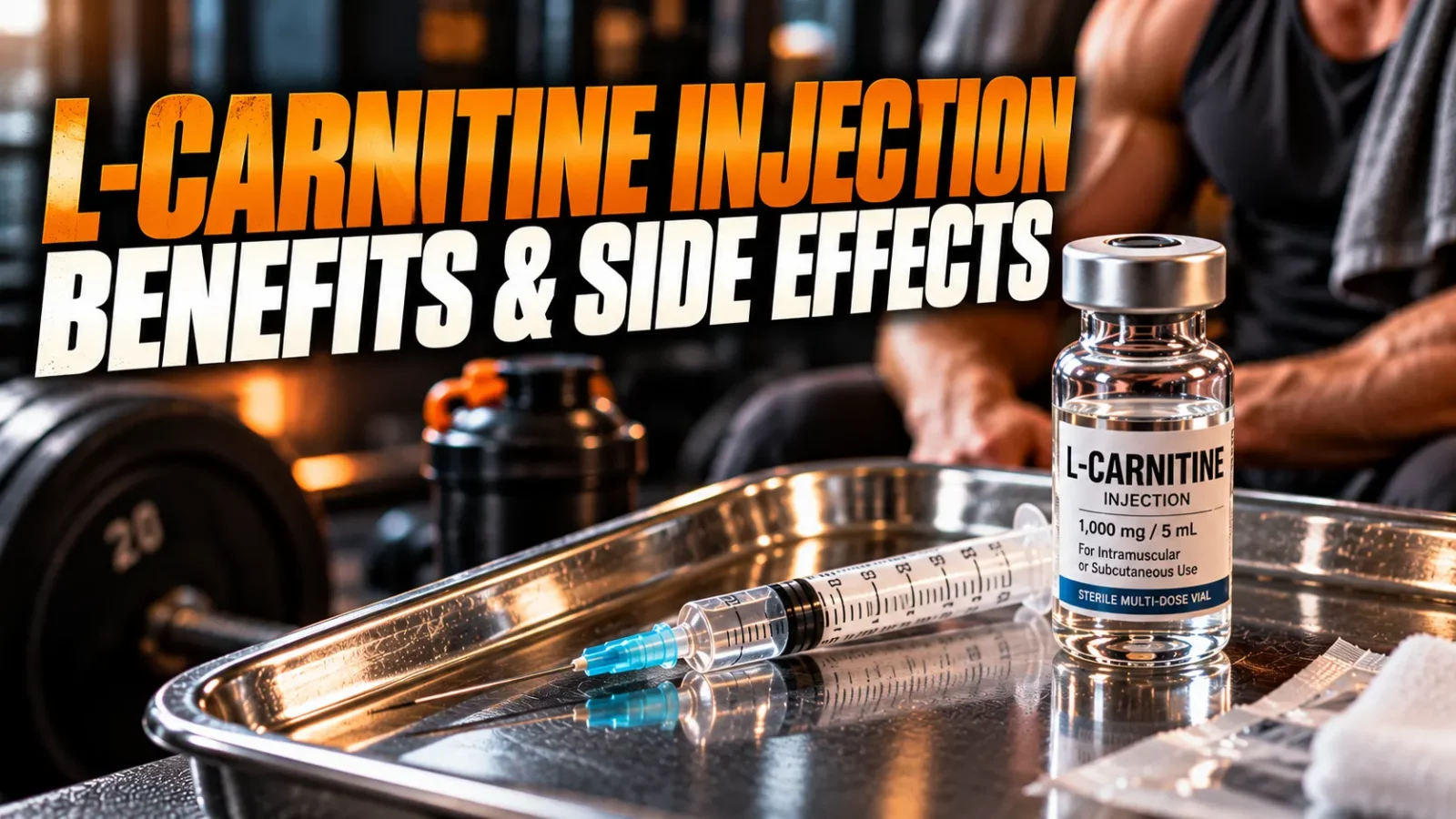
An L-carnitine injection is a dose of levocarnitine delivered into a vein, muscle or the fat under the skin instead of swallowed as a supplement. The only FDA-approved form is intravenous levocarnitine (brand name Carnitor), prescribed for people with diagnosed carnitine deficiency, including patients on kidney dialysis. The intramuscular and subcutaneous “L-carnitine shots” offered at wellness clinics and gyms for fat loss and energy are an off-label use, and the evidence behind them is thin.
Injection does get around carnitine’s poor oral absorption. What it does not do is turn carnitine into a reliable fat burner. Across dozens of controlled trials, mostly using oral carnitine in overweight adults, the average extra weight loss is a little over one kilogram. This guide covers what L-carnitine does, what the research actually shows, how doses are reported in clinical and wellness settings, the side effects, the TMAO question, and where injections stand under anti-doping rules.
Key Takeaways
- The only FDA-approved L-carnitine injection is intravenous levocarnitine (Carnitor), labeled for carnitine deficiency caused by inborn errors of metabolism and for dialysis patients with end-stage renal disease.
- Two meta-analyses found modest weight loss with carnitine: about 1.33 kg across 9 trials and about 1.21 kg across 37 trials, mainly in adults with overweight or obesity. Almost all of that data comes from oral supplements, not injections.
- Oral L-carnitine supplements are poorly absorbed (5-18% of a 1-6 g dose), which is the main argument for injecting it.
- Claims that carnitine shots boost energy, focus or recovery in healthy people are largely anecdotal or based on oral studies with small effects.
- Gut bacteria convert carnitine into TMAO, a compound linked to atherosclerosis in mouse and human data.
- L-carnitine is not a banned substance for athletes, but IV infusions or injections of more than 100 mL per 12-hour period are a prohibited method under the WADA list.
What Is L-Carnitine?
L-carnitine (levocarnitine) is a nutrient the body makes in the liver and kidneys from the amino acids lysine and methionine. Most people also get it from food, mainly red meat and dairy. Skeletal and heart muscle hold the bulk of the body’s carnitine store, even though muscle cannot make it and relies on uptake from the blood.
Its main job is transport. Long-chain fatty acids cannot cross into mitochondria on their own, so carnitine binds to them and carries them inside, where they are burned for energy through beta-oxidation. Carnitine also helps clear excess acyl groups out of mitochondria, which keeps energy production running smoothly.
Healthy adults on a normal diet rarely run short. The NIH Office of Dietary Supplements describes carnitine as “conditionally essential,” meaning supplementation only becomes necessary in specific situations such as genetic disorders, certain medications or dialysis.
Forms of Carnitine
- L-carnitine: the standard form used in injections and most supplements.
- Acetyl-L-carnitine (ALCAR): crosses into the brain more readily and is the form most often studied for cognitive outcomes.
- Propionyl-L-carnitine: studied mainly for circulation and peripheral artery disease.
- L-carnitine L-tartrate: a salt form common in sports supplements and used in several recovery studies.
- D-carnitine: the inactive mirror form. It can interfere with L-carnitine and has no place in supplementation.
How Injected Carnitine Is Absorbed
The case for injecting carnitine comes down to absorption. A review of carnitine pharmacokinetics found that the absolute bioavailability of oral L-carnitine doses of 1-6 g is only 5-18%. Carnitine from food is absorbed far better, up to about 75%, because the amounts are much smaller and the gut’s transport system is not saturated.
An injection skips the gut entirely, so the full dose reaches the bloodstream. The same review notes that after intravenous dosing the kidneys clear more carnitine than usual. Normally they reabsorb 98-99% of it, but once blood levels pass a threshold of roughly 40-60 µmol/L, much of the excess is lost in urine. Raising blood levels is easy. Raising muscle levels, where carnitine does its fat-transport work, is much harder.
That is why the most cited human muscle study took a different route. Wall and colleagues gave 14 healthy men 2 g of L-carnitine L-tartrate plus 80 g of carbohydrate twice daily, by mouth, for 24 weeks. The carbohydrate was there to raise insulin, which helps push carnitine into muscle. Muscle carnitine rose by 21%, the men used 55% less muscle glycogen during low-intensity cycling, and work output in a performance trial improved by 11% from baseline.
Two points matter here. That study used oral carnitine, not injections. And it took six months of high-dose carnitine with 160 g of extra daily carbohydrate to move muscle levels. Short courses of a few intramuscular shots per week have not been shown to do the same.
L-Carnitine Injection Benefits: What the Research Shows
Most claims about L-carnitine injection benefits borrow from oral supplement research. Here is how the main claims hold up.
Fat Loss and Weight Management
This is the main reason people try L-carnitine shots, and the evidence is modest. A 2016 meta-analysis of 9 randomized trials (911 participants) found that carnitine users lost an average of 1.33 kg more than controls, and that the effect shrank the longer people took it.
A larger 2020 meta-analysis pooled 37 randomized trials with 2,292 participants. Carnitine reduced body weight by an average of 1.21 kg, BMI by 0.24 kg/m², and fat mass by 2.08 kg. There was no significant effect on waist circumference or body fat percentage, and only the body weight result held up when the analysis was limited to high-quality trials. The authors described the effect as “modest,” seen mainly in adults with overweight or obesity.
Neither meta-analysis is built on injection studies. There is no good evidence that lean, active people lose meaningful fat from L-carnitine shots. For a wider look at the compounds actually studied for weight loss, see our guide to peptides for weight loss.
Exercise Performance and Recovery
A 2020 review concluded that whether carnitine improves exercise performance “has not definitively been clarified.” Results vary with training status, dose, timing and route of administration.
Recovery data looks a little stronger. A 2018 review reported that oral L-carnitine supplementation reduced markers of muscle damage, free radical formation and soreness after exercise. That review was sponsored by Lonza, a carnitine manufacturer, and the studies it covers used oral forms, mostly L-carnitine L-tartrate. Endurance athletes interested in other compounds studied for performance can read our breakdown of peptides for endurance athletes.
Energy and Focus
Reports of a “real energy boost” or sharper focus after L-carnitine shots are anecdotal. A 2024 systematic review of carnitine in neurological and psychiatric conditions found benefits in some diagnosed conditions, such as hepatic encephalopathy, but limited efficacy in chronic fatigue syndrome and depression. Much of the cognitive research involves acetyl-L-carnitine, not plain L-carnitine, and none of it shows a focus benefit from injections in healthy people.
Heart Health
Carnitine has a long history in cardiology research, and the propionyl form has been studied for circulation. The picture is complicated by TMAO, covered in the side effects section below. Anyone with a heart condition should treat carnitine as a medication question, not a supplement one.
Injectable L-Carnitine vs Oral
The table below compares the two routes based on the label and published research.
| Factor | Injectable L-carnitine | Oral L-carnitine |
|---|---|---|
| FDA status | IV levocarnitine (Carnitor) approved for specific deficiency and dialysis indications; IM/SC wellness shots are off-label | Prescription levocarnitine tablets and solution approved for deficiency; L-carnitine also sold as a dietary supplement |
| Absorption | Full dose enters circulation | 5-18% of a 1-6 g dose |
| Muscle uptake | Not well studied for IM/SC use in healthy people | Raised 21% after 24 weeks with carbohydrate |
| Fat-loss evidence | Little to no controlled data in healthy adults | Modest, about 1.2-1.3 kg average in meta-analyses |
| TMAO production | Bypasses gut bacteria, so in theory less TMA conversion (not well studied) | Unabsorbed carnitine reaches gut bacteria and can raise TMAO |
| Main side effects | Injection site pain, nausea, rare allergic reactions | Nausea, cramps, diarrhea, fishy body odor at higher doses |
| Practical issues | Needles, sterile technique, clinic cost | Simple, cheap, no injection risks |
L-Carnitine Injection Dosage: Clinical, Research and Clinic-Reported Doses
Muscle & Brawn does not give personal dosing instructions. The doses below are what appears on the FDA label, in research and in wellness clinic reports.
FDA-Labeled Dosing (Carnitor Injection)
The Carnitor injection label on DailyMed lists two uses, both given intravenously as a slow 2-3 minute bolus or by infusion:
- Inborn errors of metabolism with secondary carnitine deficiency: 50 mg/kg, given every 3-4 hours and never less often than every 6 hours. A loading dose may be used in a severe metabolic crisis. The highest reported dose is 300 mg/kg.
- End-stage renal disease on dialysis: a starting dose of 10-20 mg/kg dry body weight, injected into the venous return line after each dialysis session, adjusted based on pre-dialysis blood levels.
The label recommends checking plasma carnitine before treatment and monitoring blood chemistry during it, with a target plasma free carnitine level of 35-60 µmol/L. The product comes as 1 g per 5 mL vials (200 mg/mL) for intravenous use only.
Doses Used in Research
Most performance and body composition studies used oral doses of 1-4 g per day. The Wall study used 2 g twice daily for 24 weeks, and the 2020 meta-analysis found that weight-loss effects leveled off at about 2,000 mg per day by mouth.
Doses Commonly Reported at Wellness Clinics
Wellness clinics and gyms commonly report L-carnitine shots of 500-1,000 mg per injection, given intramuscularly or subcutaneously one to three times per week. Courses of 4-8 weeks followed by a few weeks off are often reported. These protocols come from clinic practice and online communities, not from clinical trials, and many clinics combine carnitine with B vitamins or “lipotropic” blends, which makes any effect hard to pin on carnitine.
General information on injection technique is covered in our guides to how to inject peptides and peptide injection sites. Products sold outside the pharmacy system vary in quality, so our guide on how to read a peptide COA is useful background on what a certificate of analysis should show.
L-Carnitine Injection Side Effects and Safety Concerns
Common Side Effects
The Carnitor label lists transient nausea and vomiting as the most common reactions, with body odor and gastritis reported less often. In placebo-controlled trials in dialysis patients, reported events included injection site reactions, headache, flu-like symptoms, high blood pressure and diarrhea, although the underlying kidney disease makes those figures hard to interpret. Intramuscular and subcutaneous shots add the usual injection risks: pain, bruising, lumps and infection if sterile technique slips.
Oral carnitine at about 3 g per day or more is linked to nausea, stomach cramps, diarrhea and a fishy body odor, according to the NIH Office of Dietary Supplements.
Serious Reactions
The label warns of serious hypersensitivity reactions, including anaphylaxis, throat swelling and bronchospasm, mostly in dialysis patients and sometimes within minutes of an IV dose. Seizures have been reported after both oral and IV use in people with and without a seizure history, and people with existing seizure disorders may see more frequent or severe seizures.
The TMAO Question
Gut bacteria break down carnitine into trimethylamine (TMA), which the liver converts to trimethylamine-N-oxide (TMAO). In a 2013 Nature Medicine study, chronic carnitine supplementation in mice increased TMAO and accelerated atherosclerosis, but only when gut bacteria were present. In 2,595 people undergoing cardiac evaluation, high blood carnitine predicted heart disease and major cardiac events only in those who also had high TMAO.
This does not prove that carnitine supplements cause heart disease in humans. It is a real open question, though, and long-term high-dose use is not proven safe. Because injected carnitine bypasses the gut, it may produce less TMA than oral doses. That has not been well studied for wellness-style shots, and the Carnitor label separately warns that high oral doses in severe kidney impairment can lead to TMA and TMAO buildup.
Drug Interactions
- Warfarin and acenocoumarol: carnitine can increase their blood-thinning effect. The label advises monitoring INR.
- Thyroid hormone: carnitine may blunt thyroid hormone activity in tissues, a concern for people on thyroid replacement.
- Valproic acid and pivalate-containing antibiotics: these drugs lower carnitine levels and are a recognized cause of secondary deficiency.
Who Is Medically Indicated for Injectable Carnitine
Injectable levocarnitine has a clear medical role for a small group of people:
- Patients with inborn errors of metabolism that cause secondary carnitine deficiency.
- Patients with end-stage renal disease on hemodialysis, who lose carnitine through the dialyzer and may develop a deficiency.
- Some patients with drug-induced deficiency, for example during long-term valproic acid therapy, at the prescriber’s discretion.
Primary systemic carnitine deficiency is usually treated with prescription oral levocarnitine. Vegans and vegetarians eat little carnitine but generally make enough of their own, so a diet alone is not a medical reason for injections.
Who Should Be Cautious
- People with a seizure disorder.
- People with kidney disease or heart disease who are not under a doctor’s care.
- People on warfarin, acenocoumarol or thyroid hormone.
- People with trimethylaminuria (fish odor syndrome).
- Pregnant or breastfeeding women. The label advises use only when clearly needed.
Food Sources
Food remains the simplest source. Red meat is by far the richest, followed by pork, fish, chicken and dairy. Plant foods contain very little. Lifters who want a structured approach to diet, training and supplements without injectables can look at our Natty Plus protocol.
WADA Status and Anti-Doping Rules
L-carnitine is not a prohibited substance under the WADA Prohibited List. The delivery method is the issue. Section M2 prohibits “intravenous infusions and/or injections of more than a total of 100 mL per 12-hour period,” except those legitimately received during hospital treatment, surgery or clinical diagnostic investigations. The rule applies even when the substance itself is allowed.
A standard intramuscular or subcutaneous L-carnitine shot is a few milliliters, well under that limit. Large IV “drip” sessions that combine carnitine with fluids can exceed it. Tested athletes should check the current list and their federation’s rules before any IV treatment.
The Bottom Line
L-carnitine injection has a clear medical role in carnitine deficiency and dialysis, but the evidence for fat loss, energy or recovery in healthy people is modest at best.
- Meta-analyses found average weight loss of about 1.2-1.3 kg, almost entirely from oral supplements in adults with overweight or obesity.
- Injection bypasses poor oral absorption, but no strong trials show wellness-clinic shots outperform diet and training.
- Gut conversion of carnitine to TMAO is a cardiovascular concern, and IV infusions or injections over 100 mL per 12 hours are prohibited under WADA rules.
L-Carnitine Injection FAQ
Disclaimer
Please read carefully
The information on this site is for educational and informational purposes only, and is not medical advice. Always consult a qualified healthcare professional before using any supplement or medication, or making changes to your health, fitness, or nutrition routine.
Not medical advice
Content here is not a substitute for professional medical advice.
Consult your doctor
Talk to your doctor before starting any supplement or new routine.
Use at your own risk
We are not responsible for adverse effects from acting on this.
Do your research
Make informed decisions about your own health.
No guarantees
Individual results vary. No claims about outcomes.
Important — Never disregard professional medical advice or delay seeking it because of something you read here. If you think you may have a medical emergency, call your doctor or your local emergency number right away.