
Running a testosterone cycle is one thing. Knowing how to come off it properly is another, and arguably more important. Post-cycle therapy (PCT) is the structured protocol used to restore natural hormone production after exogenous steroid use, and getting it right can mean the difference between keeping your gains and spending months feeling flat, fatigued, and hormonally compromised.
This guide covers everything you need to know about designing an effective PCT for a testosterone cycle, from understanding why your hormones shut down, to selecting the right compounds, to knowing when and how long to run your protocol.
Key Takeaways
- Bloodwork is non-negotiable. Testing your hormone levels before and after a cycle is the only way to design a PCT that actually addresses what your body needs. 🩸
- Your natural testosterone production shuts down on cycle. Exogenous testosterone suppresses LH and FSH, and without a structured PCT to restart that signalling, recovery can take months or, in severe cases, may not fully occur. ⚠️
- SERMs are the foundation of any PCT. Nolvadex and Clomid work by unblocking the hormonal feedback loop that suppresses natural testosterone, making them the most important tools in the post-cycle recovery process. 💊
- The heavier the cycle, the more comprehensive the PCT needs to be. A beginner running testosterone alone needs a very different recovery protocol to someone running a multi-compound advanced stack. 📊
- PCT is not just about hormones. Cardiovascular health, liver function, cholesterol, and oxidative stress all take a hit during a cycle, and a complete PCT addresses all of these. 🔄

Why Do Testosterone Cycles Need Post-Cycle Therapy?
Testosterone is produced naturally by the gonads. However, introducing any exogenous hormone — including testosterone — triggers a negative feedback response in the hypothalamic-pituitary-gonadal (HPG) axis. The body detects elevated hormone levels and responds by downregulating its own production.
Specifically, exogenous testosterone suppresses two critical hormones:
- Luteinizing hormone (LH): responsible for signalling the Leydig cells in the testes to produce testosterone
- Follicle-stimulating hormone (FSH): essential for sperm production and reproductive function
The longer and heavier the cycle, the more pronounced this suppression becomes. If left unaddressed after the cycle ends, suppressed LH and FSH levels mean the Leydig cells receive no signal to resume testosterone production. Prolonged inactivity can cause Leydig cell atrophy, which in severe cases may result in permanent impairment of natural testosterone production.
PCT exists to prevent this outcome by actively stimulating the restoration of LH, FSH, and endogenous testosterone levels as efficiently as possible.
The Four Goals of PCT
A well-designed PCT protocol addresses four distinct objectives:
- Restoring natural testosterone production to baseline levels
- Managing elevated or imbalanced estrogen levels that persist post-cycle
- Supporting overall physiological health and organ recovery
- Preserving fertility and spermatogenesis for those who require it
Before You Start: Get Your Bloodwork Done
PCT cannot be designed intelligently without knowing where your hormone levels actually sit. Bloodwork before a cycle establishes your personal baseline, and bloodwork after a cycle tells you the extent of suppression you are dealing with.
At minimum, the following markers should be tested:
- Total and free testosterone
- LH and FSH
- Estradiol (E2)
- Lipid panel (HDL, LDL, triglycerides)
- Liver enzymes (ALT, AST)
- Kidney function markers (creatinine, eGFR)
- Complete blood count (CBC) including hematocrit
Testing from home has become straightforward with services like LetsGetChecked, which offer comprehensive hormone and health panels with results delivered privately. There is no reliable shortcut here — attempting to run PCT without bloodwork is guesswork, and the consequences of under- or over-correcting can compound existing hormonal issues.
How PCT Works
SERMs (selective estrogen receptor modulators) are the cornerstone of most PCT protocols. They work by blocking estrogen receptors in the hypothalamus and pituitary, which removes the negative feedback signal that was suppressing LH and FSH production. With that suppression lifted, the pituitary resumes signalling the testes to produce testosterone.
HCG (human chorionic gonadotropin) acts as a synthetic analogue of LH and FSH, directly stimulating the Leydig cells in the testes. It is particularly useful for jumpstarting testicular function before or alongside SERM use, and is especially important for users concerned about fertility.
The combination of a SERM and HCG covers both the signalling pathway (via the SERM) and the end-organ response (via HCG), making it a more comprehensive approach than either compound used alone.
PCT Protocol by Cycle Intensity
| Cycle Level | Testosterone Restoration | Estrogen Management | Health Support | Fertility Support |
|---|---|---|---|---|
| Beginner | Nolvadex | Only if needed | Glutathione | Only if needed |
| Intermediate | Nolvadex + HCG | Aromasin | Glutathione | HMG + Carnitine |
| Advanced | Nolvadex + HCG + Clomid | Aromasin | Glutathione + TUDCA | HMG + Carnitine |
PCT Compounds Explained
Nolvadex (Tamoxifen Citrate)
Nolvadex is the most widely used SERM in PCT protocols and is well-supported by clinical evidence for its ability to raise LH and FSH levels. It also blocks estrogen receptors at breast tissue, reducing the risk of gynecomastia during the recovery window. An additional benefit is its positive effect on cholesterol via the liver, which is relevant given that steroid use typically suppresses HDL levels.
Nolvadex is generally better tolerated than Clomid and is the first choice for beginner and intermediate PCT protocols. For most testosterone-only cycles, it is sufficient as a standalone SERM.
Typical dosing: 40mg per day for weeks one and two, 20mg per day for weeks three and four.
Clomid (Clomiphene Citrate)
Clomid is a more potent SERM than Nolvadex and stimulates LH and FSH production more aggressively. It is typically reserved for heavier cycles or situations where suppression is more significant. The tradeoff is a higher incidence of side effects, including visual disturbances, mood changes, and emotional instability in some users.
Clomid and Nolvadex are often run together in advanced PCT protocols because they act on different receptor pathways, providing more comprehensive stimulation of the HPG axis.
Typical dosing: 50mg per day for weeks one and two, 25mg per day for weeks three and four.
HCG (Human Chorionic Gonadotropin)
HCG mimics the action of LH and FSH, directly stimulating the Leydig cells to produce testosterone while the SERMs work to restore the upstream hormonal signalling. It is most effective when used in the final weeks of a cycle or in the transition period before SERM-based PCT begins.
One important consideration is that HCG can elevate estrogen levels, as the increase in testosterone it stimulates will also increase aromatization. For this reason, it is often run alongside an aromatase inhibitor.
HCG is considered essential for users with fertility goals. It supports intratesticular testosterone levels, which are critical for sperm production and are not adequately restored by SERMs alone.
Typical dosing: 500–1000 IU every other day for two to four weeks, typically before or at the start of SERM-based PCT.
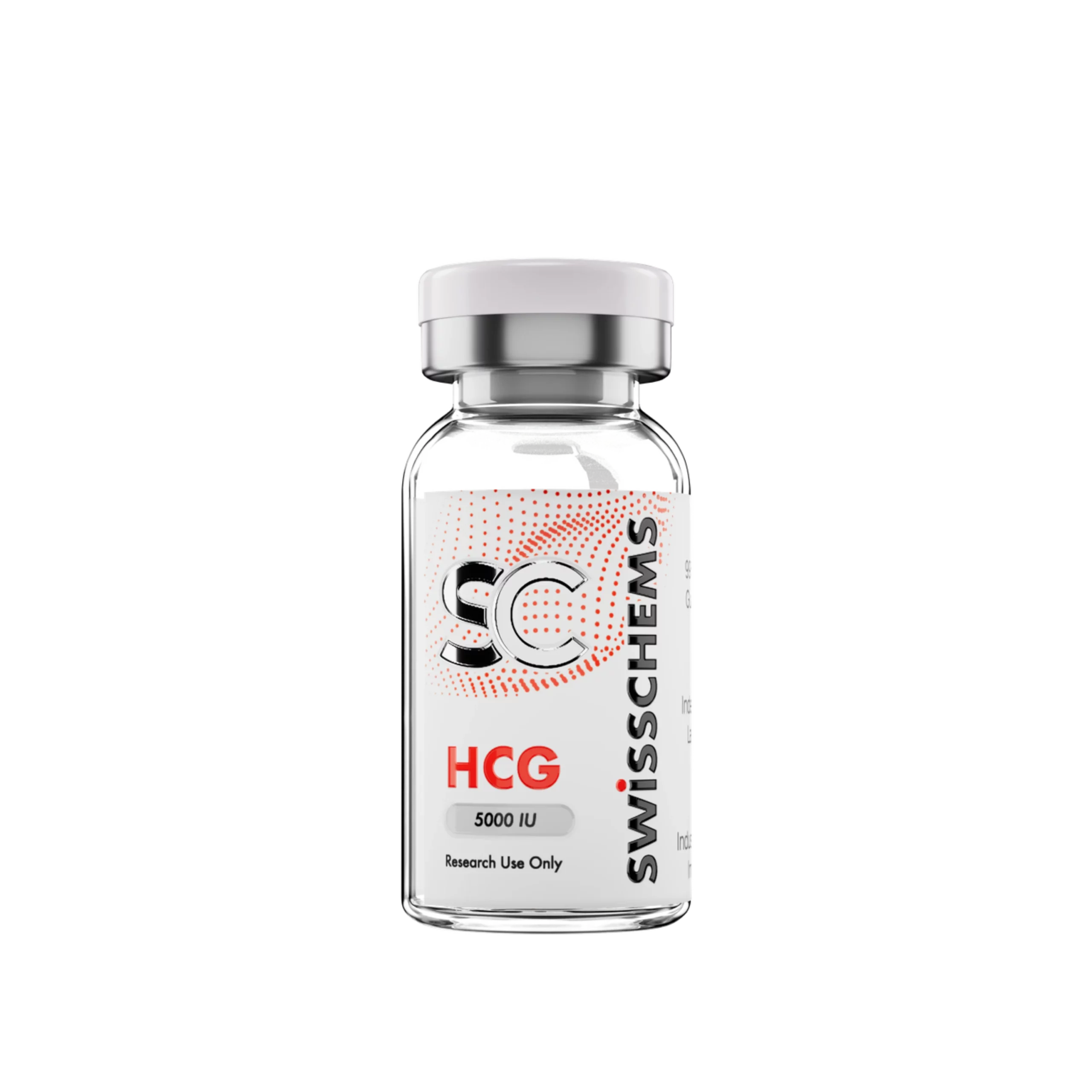
HCG
HCG (Human Chorionic Gonadotropin) is a naturally occurring glycoprotein hormone that shares receptors with Luteinizing Hormone (LH) and plays an essential role in reproductive function and hormone regulation.
In scientific research, HCG has been shown to stimulate testosterone production in males and trigger ovulation in females by directly acting on LH receptors in the gonads. It supports the production of progesterone, estrogen, and testosterone, which are vital for fertility and endocrine health.
SwissChems HCG 5000 IU is an extracted form of HCG derived from the urine of pregnant women, formulated for laboratory and developmental research purposes. Clinical studies have investigated its role as an ovulation-inducing agent and a tool for hormone restoration.
HCG’s direct action on reproductive tissues makes it a valuable compound for fertility research, testosterone regulation studies, and post-cycle hormonal recovery models.
Disclaimer: This content is for informational purposes only. HCG is not approved by the FDA for personal or medical use. All products are for laboratory research only and not for human consumption.
HCG Overview
⭐ Top Benefits: Supports fertility research, testosterone regulation, and post-cycle hormonal studies
🧪 Form: Lyophilized peptide (kit: 10 vials)
⚖️ Concentration: 5000 IU per vial
⌛ Shelf Life: 36 months (store refrigerated after reconstitution)
💰 Average Cost: $28.99 per vial
❤️🩹 Side Effects: Temporary fluid retention, mild injection site irritation, or transient mood changes (observed in studies)
📚 Best Peptide Stack: Commonly paired with Kisspeptin-10, CJC-1295, or Gonadorelin for reproductive hormone pathway research
Copy Brawn10 for 10% off
- Stimulates testosterone, estrogen, & progesterone production for fertility research
- Supports reproductive hormone balance & post-cycle recovery studies
- Clinically recognized for ovulation & testosterone stimulation in controlled settings
- Requires proper reconstitution & cold storage to preserve stability
- Limited long-term clinical data on broader applications
- Possible temporary hormonal fluctuations or mild injection site reactions
Aromasin (Exemestane)
Aromasin is a steroidal aromatase inhibitor that permanently binds to and deactivates the aromatase enzyme — often referred to as a “suicide inhibitor.” This eliminates the risk of estrogen rebound after discontinuation, which is a known issue with non-steroidal AIs like Arimidex.
In a PCT context, Aromasin is used when estrogen levels remain elevated post-cycle or when HCG use is pushing estrogen up. It is not necessary for every PCT, but is an important tool for intermediate and advanced protocols where estrogen management becomes more complex.
Note: AIs do carry a negative impact on HDL cholesterol levels, which should be monitored via bloodwork.
Glutathione
Glutathione is the body’s primary endogenous antioxidant and plays a direct role in neutralising the oxidative stress associated with steroid use. Elevated blood pressure, lipid disruption, and general metabolic strain from a cycle all generate free radicals that place ongoing burden on cardiovascular and hepatic tissue. Supplementing with glutathione during and after a cycle supports the body’s ability to clear this damage.
Its effects are not immediately perceptible, but will show up meaningfully in follow-up bloodwork — particularly in liver enzyme markers and lipid profiles.
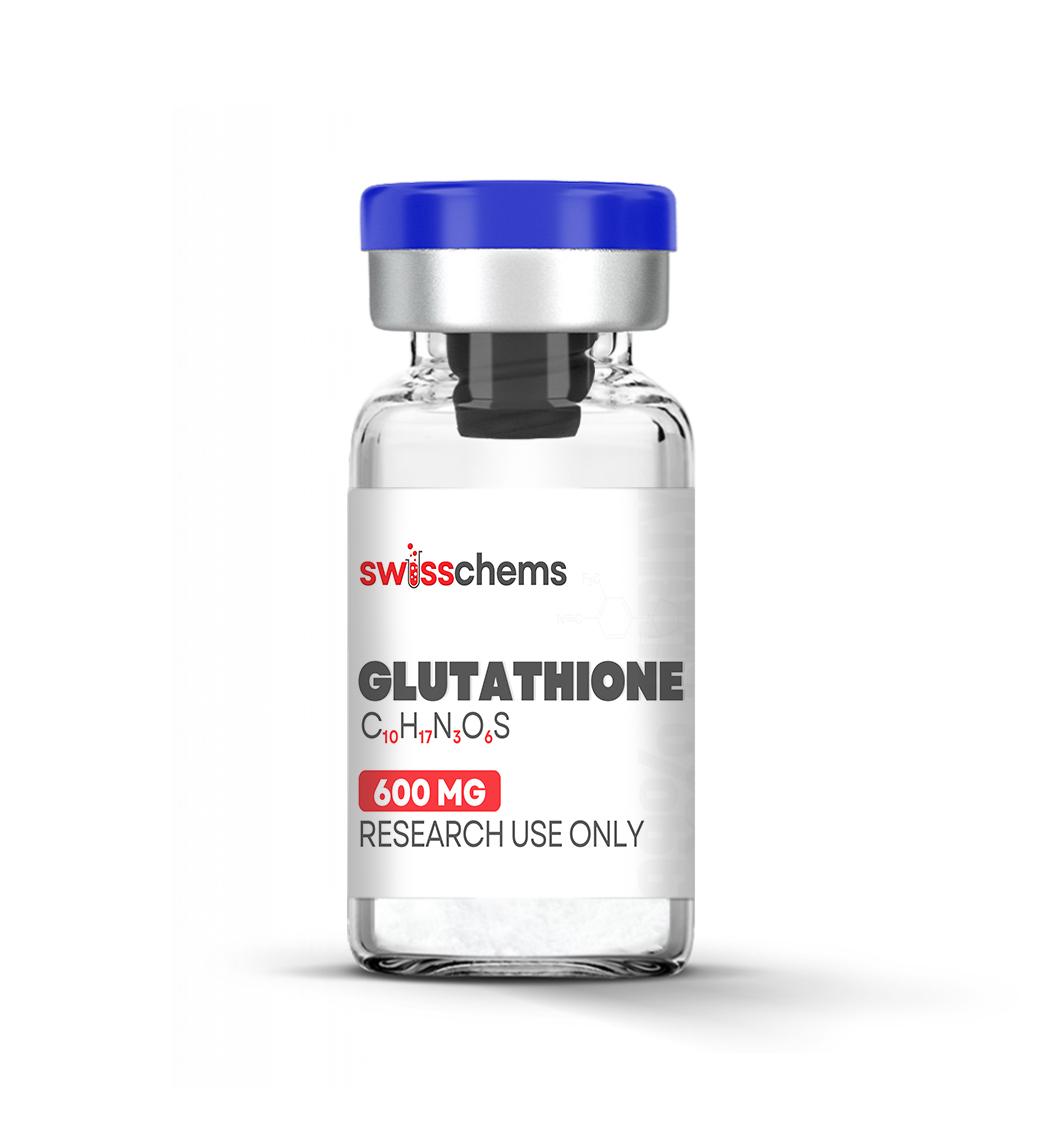
Glutathione
Glutathione (600mg Injectable) is a naturally occurring tripeptide composed of three amino acids—L-glutamine, L-cysteine, and glycine—studied extensively for its role in cellular redox balance, antioxidant defense, and detoxification pathways. It is one of the body’s primary intracellular antioxidants and plays a critical role in protecting cells from oxidative stress.
Laboratory research suggests Glutathione supports electron transfer reactions, reactive oxygen species (ROS) modulation, and cellular repair signaling. It is widely investigated in studies related to liver protection, mitochondrial efficiency, immune signaling, and skin-related oxidative processes.
SwissChems provides Glutathione in 600mg freeze-dried vial form, lab-verified for ≥98% purity and sealed in sterile, temperature-controlled, tamper-proof vials. SwissChems is widely trusted for injectable research compounds due to strict quality control and batch consistency.
Disclaimer: Glutathione is a research compound not approved by the FDA for human consumption. This content is for educational purposes only and does not constitute medical advice.
Glutathione Overview
⭐ Top Benefits: Antioxidant defense, cellular detoxification, oxidative stress modulation
💉 Form: Injectable vial — 600mg
⏱ Max Time Used: 2–8 weeks (research use)
💲 Average Cost: $29.95
❤️ Side Effects: Mild fatigue, headache, injection-site irritation
⚠️ Dangers: Limited injectable human data; sterile handling required
🔗 Best Stack: Vitamin C (research), NAD+, Alpha Lipoic Acid
♂♀ Men/Women: Suitable for both (research use)
Copy Brawn10 for 10% off
- One of the most powerful endogenous antioxidant compounds
- Supports detox and redox balance pathways
- Plays a key role in mitochondrial and immune research
- High-purity, sterile, injectable research format
- Research-only compound
- Injectable handling requires precision and sterility
- Limited long-term human injectable data
- Potential injection-site sensitivity
TUDCA (Tauroursodeoxycholic Acid)
TUDCA is a bile acid compound with well-documented hepatoprotective properties and is particularly relevant following cycles that include oral steroids. It supports liver cell integrity and can help reverse stress-induced liver damage more effectively than most over-the-counter liver support supplements. For advanced cycles, TUDCA should be considered a standard inclusion in the health support component of PCT.
Fertility Protocol: HMG and Carnitine
For users who are actively trying to conceive, standard PCT alone is unlikely to be sufficient. HMG (human menopausal gonadotropin) contains both LH and FSH activity and is used clinically to treat male infertility. When combined with HCG (to restore intratesticular testosterone) and L-carnitine (which has been shown to improve sperm motility), this combination represents the most complete fertility-focused recovery protocol available outside of clinical fertility treatment.
This is a situation where consulting a reproductive endocrinologist or urologist is strongly advised, particularly if natural conception is time-sensitive.
When to Start PCT
The timing of PCT depends on the half-life of the testosterone ester used during the cycle:
- Testosterone Enanthate or Cypionate: Begin PCT approximately 14 days after the last injection
- Testosterone Propionate: Begin PCT approximately 3 days after the last injection
- Testosterone Undecanoate: Begin PCT approximately 3–4 weeks after the last injection
Starting too early (before the exogenous testosterone has cleared) means the SERMs are working against active suppression rather than helping recovery. Starting too late unnecessarily extends the window of low testosterone and its associated symptoms.
How Long Should PCT Last?
For most testosterone cycles, a PCT duration of four to six weeks is appropriate. Heavier or longer cycles may warrant eight weeks. The guiding principle is that PCT should continue until bloodwork confirms that LH, FSH, and testosterone levels have returned to baseline.
Running PCT longer than necessary is not without risk. SERMs have their own side effect profiles, and unnecessary extended use adds pharmacological burden without meaningful benefit.
Will Natural Testosterone Levels Return to Normal?
For most users who run reasonable cycle lengths and doses, natural testosterone production does return to baseline with proper PCT. Several factors influence how quickly and completely this happens:
Cycle length and dose matter significantly. A 12-week cycle at moderate doses is far easier to recover from than a 20-week cycle at high doses. The longer suppression has been in place, the longer the Leydig cells have been dormant, and the harder it is to reactivate them.
Age plays a role. Younger users generally recover more readily than older users, whose baseline testosterone production may already be declining.
Compound selection matters. Some compounds are significantly more suppressive than others. A testosterone-only cycle is considerably easier to recover from than a stack involving Trenbolone or Nandrolone.
Consecutive cycles without adequate recovery time compound suppression over time, making full restoration progressively more difficult.
In practice, expect full hormonal recovery to take anywhere from two to four months, depending on these variables. Bloodwork at the eight-week mark post-PCT is a good indicator of whether levels have normalised or whether further investigation is warranted.
Who Should Use PCT?
PCT is appropriate for anyone who has used anabolic steroids and intends to return to natural hormone production afterward. The exception is users who choose to remain on testosterone replacement therapy (TRT) between cycles — a practice known as “blasting and cruising.” In this model, natural testosterone production is intentionally sacrificed in favour of maintained supraphysiological levels. PCT is not relevant in this context, but fertility is permanently impaired as a consequence.
For users who want to maintain the ability to produce testosterone naturally and retain fertility, PCT is not optional — it is the structured mechanism by which recovery occurs.
How to Keep Your Gains After a Testosterone Cycle
Muscle retention post-cycle comes down to a few fundamentals:
Continue training at cycle-level intensity. The training stimulus that built the muscle needs to remain in place for that muscle to be retained. A significant drop in training volume or intensity post-cycle accelerates the loss of cycle-gained tissue.
Maintain caloric intake. A sharp reduction in calories during the recovery window increases cortisol, accelerates catabolism, and undermines PCT effectiveness. Eating at or slightly above maintenance supports muscle retention and hormonal recovery simultaneously.
Prioritise sleep. Testosterone production, growth hormone secretion, and tissue repair all occur primarily during sleep. Seven to nine hours per night is a minimum, not a target, during the post-cycle window.
Support your PCT compliance. Skipping doses or cutting the protocol short is one of the most common reasons PCT fails to restore hormone levels adequately. Treat the protocol with the same discipline applied to the cycle itself.
This article is intended for educational and informational purposes only. Nothing contained here constitutes medical advice or a recommendation to use anabolic steroids or any other controlled substance. Always consult a qualified medical professional before making decisions about hormone-related health matters.
When should I start PCT after a testosterone cycle?
Start PCT one to two weeks after your last testosterone injection if using a long-ester compound like Enanthate or Cypionate. For short esters like Propionate, PCT can begin within three days of the last dose.
How long should PCT last?
A typical PCT protocol runs four to eight weeks. The appropriate duration depends on cycle length and intensity. Bloodwork at the end of PCT is the most reliable way to confirm recovery.
How long does it take for testosterone levels to return to normal?
With a properly executed PCT, most users see testosterone levels return to baseline within two to four months. This timeline lengthens with more suppressive cycles or inadequate PCT.
What is the most effective PCT protocol?
The most effective PCT combines a SERM (Nolvadex as a minimum, Clomid for heavier cycles), HCG for Leydig cell stimulation, and appropriate health support supplements including glutathione and, where indicated, TUDCA. Bloodwork before and after is what makes any protocol genuinely effective rather than approximate.
Do I need PCT if I only ran a short cycle?
Suppression occurs regardless of cycle length — the degree varies, but it is present from the first dose. A shorter cycle warrants a shorter, less intensive PCT rather than no PCT at all.








Thanks for all the information, greatly appreciated. If a guy was using 250 mg Test E per week do you think PCT is a must? Obviously blood work should be done to know for sure but most Trt treatments seem to be that dose or slightly less. The idea would be to have the benefit of trt but not have to commit to a lifetime of it. Thanks!
Yes, depending on how long he was on
i have tested for low T through the NHS and had mixed results due to underlying symptoms that suggest i do have low T but the NHS test does not support the symptoms i have, which in turn has had me turning to a private test as i am unconvinced with the results for obvious reasons, my main concern is below.
can i have average testosterone levels without regular unbroken sleep every night?
if i do have low T, will testosterone injections help me sleep finally?
will i need to undergo PCT?
what products above & how much do i take?
is their a minimum i can take, i am not looking to be a bodybuilder.
their are a lot of forums on this subject, but i cant get a straight answer.
thank you for your advice.
m.mccormack.