Contents15 sections
Peptides for sleep are short chains of amino acids that people take, usually by injection, hoping for deeper or longer sleep. Four names come up again and again: DSIP (delta sleep-inducing peptide), epitalon, sermorelin, and the CJC-1295 and ipamorelin pair.
They work in very different ways, and the evidence is thin for each. DSIP’s human trials were small and mostly disappointing, epitalon’s sleep claims rest on animal research, and the growth hormone-releasing peptides have never been properly tested as sleep treatments.
This guide covers what each peptide is, what the studies show, doses used in studies and commonly reported doses, side effects, legal status, and what to try first. Nothing here is a recommendation to use any of them.
Key Takeaways
- No peptide is approved to treat insomnia. The evidence for DSIP, epitalon and growth hormone (GH) secretagogues as sleep aids is small, old or indirect.
- DSIP increased deep-sleep brain waves in rabbits, but in a small placebo-controlled trial in adults with chronic insomnia it showed no meaningful benefit.
- Epitalon’s sleep claims rest mainly on animal studies from one Russian research group reporting a restored night-time melatonin rhythm. No independent trial has measured its effect on sleep.
- Sermorelin, CJC-1295 and ipamorelin raise GH. GHRH and ghrelin-like compounds increased deep sleep in small human studies, but these peptides have not been tested as sleep treatments.
- Cognitive behavioral therapy for insomnia (CBT-I) and sleep basics have far stronger evidence. Ongoing poor sleep is worth checking with a doctor, since conditions like sleep apnea need their own treatment.
How Sleep and Peptides Are Linked
Adults should sleep 7 or more hours a night on a regular basis, according to a joint consensus statement from the American Academy of Sleep Medicine and the Sleep Research Society (1). Regularly sleeping less is linked to weight gain, high blood pressure, heart disease, and poorer mood and focus.
Each night the brain cycles through light sleep, deep or slow-wave sleep (named for its slow “delta” brain waves), and REM sleep. Slow-wave sleep is concentrated early in the night, and that is when the body releases its largest pulse of growth hormone, most clearly in men.
That link is why GH-releasing peptides are discussed as sleep aids. Growth hormone-releasing hormone (GHRH), the brain signal that triggers GH release, also appears to promote deep sleep, and both GH and deep sleep decline with age. A 2000 study of healthy men found that slow-wave sleep fell sharply between young adulthood and midlife, alongside a similar drop in GH secretion.
Peptides for Sleep at a Glance
| Peptide | Proposed Sleep Mechanism | Human Sleep Evidence | Status |
|---|---|---|---|
| DSIP | Unknown; first linked to deep-sleep brain waves in rabbits | Small trials from the 1980s and early 1990s; the best-controlled one showed little benefit | Not FDA-approved |
| Epitalon | Restoring the night-time melatonin rhythm (animal data) | No independent sleep trials | Not FDA-approved |
| Sermorelin | GHRH analogue that boosts the body’s own GH pulses | Indirect: GHRH increased deep sleep in small studies of young men | FDA-approved in 1997 (Geref) for children with GH deficiency; brand discontinued |
| CJC-1295 + ipamorelin | GHRH analogue plus ghrelin-receptor agonist | Indirect: from GHRH, ghrelin and MK-677 studies | Not FDA-approved; banned in tested sport |
DSIP (Delta Sleep-Inducing Peptide)
DSIP is a nine-amino-acid peptide isolated in 1977 by Swiss researchers from the blood of rabbits whose sleep had been induced by electrical stimulation of the brain. Given to other rabbits, the material increased delta waves, the slow brain waves of deep sleep, which gave the peptide its name. Its drug name is emideltide.
DSIP-like material has since been found in the brain, including the hypothalamus, in the pituitary gland and in blood (2). Yet no gene coding for it and no dedicated receptor have been identified, and researchers still debate what it actually does in the body. Animal studies have linked it to stress hormones, pain and the release of other hormones, often with conflicting results.
What the Human Research Shows
Early studies in the 1980s, most of them small and without a placebo group, reported better sleep in people with insomnia. Researchers also looked at DSIP for narcolepsy and for alcohol and opioid withdrawal (3). None of these uses was confirmed in larger trials.
The best-controlled study is still small. In a placebo-controlled trial published in 1992, 16 adults with chronic insomnia were split into two groups: half received DSIP by intravenous injection and half received placebo. DSIP produced no clinically meaningful improvement, and the authors concluded that short-term DSIP treatment was unlikely to be of major benefit for chronic insomnia.
There is a practical gap too: the human studies gave DSIP into a vein, while products sold today are mostly injected under the skin, a route with little or no published sleep data.
Doses Used in Studies and Commonly Reported Doses
The 1992 insomnia trial used 25 nmol/kg intravenously, which works out to about 1.5 mg for a 70 kg adult. In peptide communities, commonly reported doses are about 100 to 500 mcg injected under the skin in the evening. These figures come from user practice, not from clinical research.
Our DSIP compound profile covers its chemistry and research history in more detail.
Epitalon

Epitalon (also spelled epithalon) is a synthetic peptide of four amino acids: alanine, glutamic acid, aspartic acid and glycine. It was developed in Russia by Vladimir Khavinson’s group at the St. Petersburg Institute of Bioregulation and Gerontology, modeled on epithalamin, a peptide extract of calf pineal glands. Epitalon is not a hormone the pineal gland makes; the link to sleep comes from the pineal gland’s job of producing melatonin.
Most epitalon research is about aging, not sleep: animal studies from the same group report longer lifespan and fewer tumors in mice and rats.
What the Research Shows for Sleep
The sleep case rests on melatonin. In older animals, including monkeys, the group reported that epitalon restored the evening rise in melatonin that fades with age (4). Human data are limited and come mainly from the same research network.
No independent, placebo-controlled trial has measured whether epitalon improves sleep in people. A restored melatonin rhythm in old animals is a good reason to study it further, not evidence that it helps human insomnia.
Commonly Reported Doses
There is no established human dose. Commonly reported protocols use 5 to 10 mg a day injected under the skin for 10 to 20 days, repeated once or twice a year. There is no evidence supporting open-ended daily use. Our epitalon guide covers its anti-aging research in more depth.
Sermorelin

Sermorelin is a synthetic version of the first 29 amino acids of GHRH, the part of the hormone that carries its activity. It signals the pituitary gland to release the body’s own growth hormone rather than supplying GH directly (5). Under the brand name Geref, it was FDA-approved in 1997 to treat children with GH deficiency, given as an injection at bedtime. The brand was later discontinued by its maker, not for safety reasons.
Because it works through the body’s own control system, the GH it releases still comes in pulses and is held in check by somatostatin, the hormone that switches GH release off. That makes it gentler than injecting GH, and also weaker.
What the Research Shows for Sleep
The sleep case for sermorelin comes from research on GHRH itself. In rats, GHRH promotes non-REM sleep, and blocking it reduces sleep. In small studies at the Max Planck Institute of Psychiatry in Munich, repeated intravenous GHRH injections in young men increased slow-wave sleep and GH release and lowered cortisol.
The limits matter. Those studies gave GHRH into a vein in timed pulses during the night, not as a single injection under the skin, and results in older adults and in women have been less consistent. Sermorelin itself has not been tested in a proper trial as a treatment for insomnia.
Doses Used in Studies and Commonly Reported Doses
The approved dose for children was 30 mcg per kg of body weight, injected under the skin once a day at bedtime. Commonly reported adult doses are 200 to 300 mcg (0.2 to 0.3 mg) under the skin at bedtime, on an empty stomach, because food, especially carbohydrate, blunts GH release. Watch the unit: these doses are in micrograms (mcg), and some older guides confuse mcg with mg.
For how it compares with growth hormone itself, see our guide to sermorelin vs HGH.

Overview
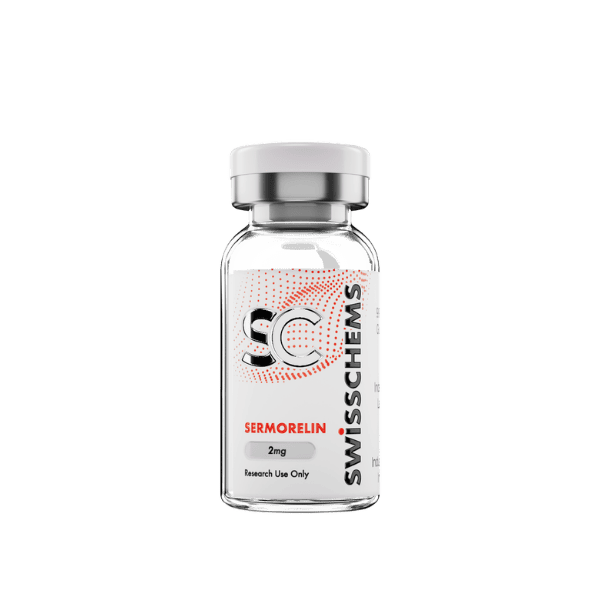
- Form: Lyophilized powder
- Researched Dosage: 200 mcg to 500 mcg daily, usually taken before bed
- Typical Cycle: 8-12 weeks, with some protocols running 3-6 months
- Cost: $25.95
- Stacking Options: Ipamorelin, GHRP-2, GHRP-6
Pros
- A copy of the first 29 amino acids of natural growth hormone-releasing hormone, so it prompts the pituitary to release its own growth hormone.
- Keeps the body’s normal growth hormone pulses and feedback loop working, unlike taking synthetic growth hormone directly.
- Was once FDA-approved as Geref for children with growth hormone deficiency, so it has more human data than most peptides in this group.
Cons
- Half-life is very short, about 10-20 minutes, so it usually needs a daily injection.
- Reported side effects include flushing, headache, dizziness and redness or swelling where it’s injected.
- Approved version was taken off the US market in 2008 (the maker cited business reasons), and WADA bans it for tested athletes.
CJC-1295 and Ipamorelin
This pair combines two GH-releasing peptides that work through different receptors. CJC-1295 is a modified GHRH analogue, built to last longer in the body than sermorelin. Ipamorelin is a five-amino-acid peptide that activates the ghrelin receptor, the same receptor targeted by GHRP-6, GHRP-2 and the oral compound MK-677 (ibutamoren). A GHRH signal and a ghrelin-receptor signal together release more GH than either one alone.
CJC-1295 comes in two forms. The version with DAC (drug affinity complex) binds to albumin in the blood; in a study of healthy adults, single injections raised GH for six days or more and IGF-1 for more than a week. The version without DAC, also called Mod GRF 1-29, is cleared within hours, not days, and is the form usually paired with ipamorelin at night. Ipamorelin was developed as a selective GH secretagogue: in animal studies, it released GH without the rise in cortisol and prolactin seen with older GHRPs.
What the Research Shows for Sleep
No published trial has measured sleep on CJC-1295 or ipamorelin. The argument is indirect and has three parts:
- GHRH: as described above, intravenous GHRH increased deep sleep in small studies of young men.
- Ghrelin: the natural hormone that ipamorelin mimics increased slow-wave sleep when given intravenously to young men.
- MK-677: in a 1997 study, oral MK-677, which acts on the same receptor as ipamorelin, increased the time young adults spent in the deepest stage of sleep and in REM sleep, and increased REM sleep in older adults.
That is a reasonable basis for interest, not proof. Users commonly report deeper sleep and vivid dreams, but those reports are not controlled for placebo.
Commonly Reported Doses
There are no sleep-specific doses from research. Commonly reported protocols use 100 to 300 mcg each of CJC-1295 without DAC and ipamorelin, injected under the skin once a day at bedtime on an empty stomach, often for 8 to 12 weeks. CJC-1295 with DAC is commonly reported at 1 to 2 mg a week. Our Ipamorelin + CJC-1295 stack guide covers the pair in detail.

What makes Ipamorelin stand out is its selectivity — it boosts GH without significantly affecting cortisol, prolactin, or other hormones.
This peptide is widely used for its ability to support recovery, promote deeper sleep, and help preserve lean muscle. Many athletes and fitness enthusiasts notice faster recovery between training sessions and improved energy balance.
Overview
- Studied For: Growth hormone release, recovery, body composition, muscle repair, fat metabolism, and healthy-ageing pathways
- Mechanism: Selectively activates ghrelin receptors in the anterior pituitary gland to stimulate pulsatile growth hormone secretion
- Available Strength: 2mg vial
- Form: Peptide vial supplied for reconstitution
- Research Status: Investigational growth hormone secretagogue intended for research use
Pros
- Stimulates GH release with minimal impact on other hormones
- Supports recovery, sleep quality, and lean mass retention
- Generally considered to have a milder side effect profile compared to stronger GH analogs
Cons
- Short half-life requires frequent or carefully timed dosing
- Limited human clinical research and long-term data
- Injection site discomfort and mild side effects possible
Why AOD-9604 Is Not on This List
Some roundups list AOD-9604 as a sleep peptide. It is a modified fragment of the GH molecule, developed as a fat-loss drug, and no study has shown that it affects sleep.
Doses and Timing Compared
| Peptide | Doses Used in Studies | Commonly Reported Doses | Typical Timing |
|---|---|---|---|
| DSIP | 25 nmol/kg IV (small insomnia trial) | 100-500 mcg SC | Evening |
| Epitalon | No established human dose | 5-10 mg SC daily for 10-20 days | Courses once or twice a year |
| Sermorelin | 30 mcg/kg SC (children with GH deficiency) | 200-300 mcg SC | Bedtime, empty stomach |
| CJC-1295 (no DAC) + ipamorelin | No sleep studies | 100-300 mcg of each SC | Bedtime, empty stomach |
IV means into a vein; SC means under the skin. Commonly reported doses are not shown to work or to be safe.
Side Effects and Risks
Claims that sleep peptides have no side effects are not supported. The main risks are:
- Injection-site reactions: redness, itching or small lumps.
- GH-related effects (sermorelin, CJC-1295, ipamorelin): flushing, headache, water retention, tingling or numbness in the hands, and joint aches. Higher GH and IGF-1 also reduce insulin sensitivity, which matters for anyone with prediabetes or diabetes.
- Hunger: ghrelin-receptor agonists can increase appetite, although ipamorelin is reported to do this less than GHRP-6.
- Unknown long-term safety: DSIP and epitalon have no long-term human safety data. The small DSIP studies reported few side effects, but they were short.
- Cancer concerns: GH and IGF-1 promote cell growth, so GH-releasing peptides are generally avoided by anyone with active cancer or a history of it.
- Product quality: research-chemical peptides are not made to drug standards, so content, dose and sterility can vary.
Are Sleep Peptides Legal?
It depends on the peptide and the country. In the US, sermorelin was approved as a prescription drug, and some clinics still prescribe it. DSIP, epitalon, CJC-1295 and ipamorelin are not FDA-approved for any use. They are mostly sold as “research chemicals” labeled not for human consumption, a gray area where the rules keep changing.
For athletes the answer is simpler: WADA prohibits GHRH analogues such as sermorelin and CJC-1295, and GH secretagogues such as ipamorelin, at all times, in and out of competition. For country-by-country rules, see our guide to whether peptides are legal.
What to Try Before a Sleep Peptide
For chronic insomnia, the treatment with the best evidence is cognitive behavioral therapy for insomnia (CBT-I), a structured program that changes sleep habits and the thoughts that keep people awake. Guidelines, including those of the American College of Physicians, recommend it as the first treatment for adults. Other steps that help:
- Keep a fixed wake-up time, seven days a week.
- Get daylight in the morning, and keep the bedroom dark, quiet and cool.
- Avoid caffeine in the afternoon and evening, and limit alcohol, which fragments sleep in the second half of the night.
- Get loud snoring, gasping at night or heavy daytime sleepiness checked. Sleep apnea is common, often missed and needs its own treatment.
- Consider melatonin, a hormone rather than a peptide, for jet lag or a shifted sleep schedule; it mainly moves the timing of sleep.
Anyone who still considers a GH-releasing peptide should involve a doctor and get blood work first, including IGF-1 and fasting blood glucose.
The Bottom Line
No peptide is a proven sleep aid: the evidence ranges from weak for DSIP and epitalon to indirect for the GH-releasing peptides.
- DSIP has the most sleep-specific history, but its best-controlled human trial found no meaningful benefit for chronic insomnia.
- Epitalon’s sleep claims rest on animal melatonin studies from one research group; independent human sleep data are missing.
- Sermorelin, CJC-1295 and ipamorelin have the most plausible mechanism through GH and deep sleep, but none has been tested properly as a sleep treatment, and all are banned in tested sport.
- CBT-I and sleep basics come first, and persistent poor sleep deserves a medical check before any peptide.
Frequently Asked Questions
Disclaimer
Please read carefully
The information on this site is for educational and informational purposes only, and is not medical advice. Always consult a qualified healthcare professional before using any supplement or medication, or making changes to your health, fitness, or nutrition routine.
Not medical advice
Content here is not a substitute for professional medical advice.
Consult your doctor
Talk to your doctor before starting any supplement or new routine.
Use at your own risk
We are not responsible for adverse effects from acting on this.
Do your research
Make informed decisions about your own health.
No guarantees
Individual results vary. No claims about outcomes.
Important — Never disregard professional medical advice or delay seeking it because of something you read here. If you think you may have a medical emergency, call your doctor or your local emergency number right away.