
The introduction of synthetic PEPTIDES in the market is nothing short of a miracle!
Want to build and bulk muscles? Use CJC-1295!
Want to lose some weight and unwanted fat? Use Semaglutide or AOD 9604!
Want to ensure rapid recovery and healing from injuries? Umm, TB-500 is the key!
With all of the examples being shared, we have peptides that cover all the bases of human health. But, I am pretty sure that you wouldn’t want to get yourself in trouble by using peptides just because of some legality issues, right?
Because let’s just be honest, most peptides aren’t legal or approved by the FDA anyway. This is primarily because not all peptides make it to the last stage of clinical trials. And, different countries/regions have different regulations on recreational supplements.
Well, don’t worry anymore because I got you!
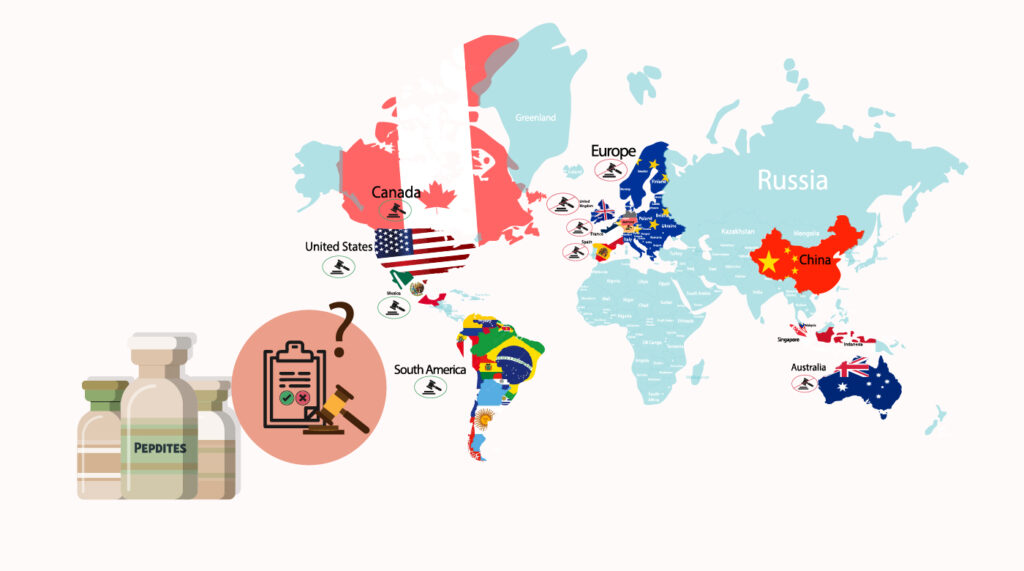
This little and sweet thread highlights all the legal rules and regulations concerning the peptides in different countries, and what’s the stance of USADA and WADA on peptides. So, are peptides legal? Let’s find out!
Key Takeaways
- Peptides are mainly legal for research, not human consumption, across most countries. Always check local regulations before purchasing. 🧐
- Research peptides are not the same as prescribed peptides. The former is for studies, while the latter requires a prescription for specific medical conditions. 📝
- In the U.S., peptides are largely unregulated but can’t be marketed for human use without FDA approval. Ensure you know the rules. 🇺🇸
- The legality of peptides varies globally, with many countries allowing them for research but not for personal use. 🌍
- Athletes and military personnel must be cautious with peptide use due to strict regulations from WADA, USADA, and the DoD. ⚠️

Research Peptides vs. Prescribed Peptides
Okay, so I am pretty sure that whenever you are on an online store ordering peptide supplements for yourself, you often see a disclaimer that reads, “only for research purposes.”
But what does that really mean?
People often get confused when trying to distinguish between research peptides and prescribed peptides.
To start, research peptides are developed in certified laboratories. These therapeutic peptides are primarily used in studies that aim to pave the way for pharmaceutical advancements.
They’re tested rigorously, undergoing multiple stages of clinical trials, including those involving human subjects. Once they pass these stringent tests and gain FDA approval, these peptides are classified as prescribed peptides.
Prescribed peptides are trusted and carefully assessed by healthcare professionals who believe in their therapeutic effects. These peptides, like growth hormone releasing peptides or certain peptides for skin treatments, are prescribed for specific medical conditions.
For instance, peptides that target the pituitary gland can be used to regulate hormone levels, while others might be used to stimulate muscle growth or improve skin elasticity.
It’s important to note that while prescribed peptides are available for medicinal use, research peptides are strictly for studies, even if they have potential benefits like boosting muscle growth or reducing body fat.
The legal sale of bulk drug substances like these peptides is closely monitored, ensuring they are only distributed under strict conditions.
Peptide Legality by Country
🇺🇸 United States of America (USA)
It is the Food and Drug Administration’s (FDA) responsibility to ensure the approved drugs do not pose any significant threat to public health and with the therapeutic benefits surpassing their side effects.
Generally speaking, the majority of the peptides are not approved/authorized by the FDA due to the lack of clinical trials involving humans as subjects. However, this doesn’t mean that it is illicit for you to consume these peptides; rather, these peptides can’t be sold legally or be publicized under the ‘human consumption’ tag.
🇨🇦 Canada

Health Canada is equivalent to the Food and Drug Administration (FDA). Health Canada strictly prohibits using bodybuilding products like SARMs or anabolic steroids. Even so, peptides known to have potential effects, including bodybuilding, are outlawed for human consumption.
Nonetheless, some sources claim the use of peptides for ‘research purposes‘ (Similar to the US)
🇲🇽 Mexico
In Mexico, you’re allowed to purchase peptides for research purposes only. It is prohibited for human consumption.
South America
Countries in South America fall into a bit of a gray zone when it comes to rules and regulations concerning peptides.
While the open purchase of peptides in several countries of South America is prohibited, you can still buy them safely if you have a medical prescription from an established physician.
🇬🇧 United Kingdom

If you are a resident of the UK, and you would want to buy peptides for yourself, I am afraid you can’t do that. This is because peptides are banned in the UK for human consumption, but they are still available in the market and intended to be sold for ‘research purposes only.’
This means one can buy peptides in the context of ‘research compounds’ in the UK to use in the laboratory. This also elaborates that one can not sell peptides as a sports or health supplement.
🇫🇷 France
In France, you can not buy peptides for personal intake. It is only legal for clinical trials and research purposes.
🇩🇪 Germany
Just like most countries, you are not legally allowed to purchase peptides for human consumption.
🇪🇸 Spain

In Spain, you can not buy peptides for human use, however, they can be purchased for research purposes.
Europe
Buying peptides for human consumption is prohibited in countries falling into European Union, but again it’s not illegal to buy the peptides because they are openly sold for research purposes.
🇦🇺 Australia

The only way to get peptides in Australia is if you are prescribed them by a doctor.
Full Country Legality List
Below is a table about the purchase legality of peptides, not the application or consumption of peptides. These are important differentiations. We also added a level of percieved reliability for each nations laws. This is not to be used for legal defense.
| Emoji | Country | Peptides Legal? | Reliable Reference Available? | Reliability Level |
|---|---|---|---|---|
| 🇺🇸 | United States | Legal (unregulated) | Yes | High |
| 🇨🇦 | Canada | Legal (unregulated) | Yes | High |
| 🇬🇧 | United Kingdom | Legal (unregulated) | Yes | High |
| 🇦🇺 | Australia | Legal (prescription only) | Yes | High |
| 🇳🇿 | New Zealand | Legal (prescription only) | No | Low |
| 🇮🇳 | India | Legal (unregulated) | No | Low |
| 🇰🇷 | South Korea | Legal (prescription only) | No | Low |
| 🇯🇵 | Japan | Legal (prescription only) | No | Low |
| 🇨🇳 | China | Legal (unregulated) | No | Low |
| 🇷🇺 | Russia | Legal (prescription only) | No | Low |
| 🇧🇷 | Brazil | Legal (prescription only) | No | Low |
| 🇲🇽 | Mexico | Legal (prescription only) | No | Low |
| 🇪🇸 | Spain | Legal (prescription only) | No | Low |
| 🇮🇹 | Italy | Legal (prescription only) | No | Low |
| 🇫🇷 | France | Illegal | Yes | High |
| 🇩🇪 | Germany | Illegal | Yes | High |
| 🇸🇦 | Saudi Arabia | Legal (unregulated) | No | Low |
| 🇮🇷 | Iran | Legal (unregulated) | No | Low |
| 🇰🇿 | Kazakhstan | Legal (unregulated) | No | Low |
| 🇺🇦 | Ukraine | Legal (unregulated) | No | Low |
| 🇵🇱 | Poland | Legal (prescription only) | No | Low |
| 🇳🇱 | Netherlands | Illegal | Yes | High |
| 🇧🇪 | Belgium | Illegal | Yes | High |
| 🇸🇪 | Sweden | Illegal | Yes | High |
| 🇦🇹 | Austria | Illegal | Yes | High |
| 🇳🇴 | Norway | Illegal | Yes | High |
| 🇨🇭 | Switzerland | Illegal | Yes | High |
| 🇦🇷 | Argentina | Legal (prescription only) | No | Low |
| 🇨🇴 | Colombia | Legal (prescription only) | No | Low |
| 🇻🇪 | Venezuela | Legal (prescription only) | No | Low |
| 🇵🇪 | Peru | Legal (prescription only) | No | Low |
| 🇨🇱 | Chile | Legal (prescription only) | No | Low |
| 🇺🇾 | Uruguay | Legal (prescription only) | No | Low |
| 🇿🇦 | South Africa | Legal (prescription only) | No | Low |
| 🇪🇬 | Egypt | Legal (unregulated) | No | Low |
| 🇳🇬 | Nigeria | Legal (unregulated) | No | Low |
| 🇰🇪 | Kenya | Legal (unregulated) | No | Low |
| 🇹🇷 | Turkey | Legal (prescription only) | No | Low |
| 🇮🇱 | Israel | Legal (prescription only) | No | Low |
| 🇸🇬 | Singapore | Illegal | No | Low |
| 🇹🇭 | Thailand | Illegal | No | Low |
| 🇵🇭 | Philippines | Illegal | No | Low |
| 🇲🇾 | Malaysia | Illegal | No | Low |
| 🇮🇩 | Indonesia | Illegal | No | Low |
| 🇻🇳 | Vietnam | Illegal | No | Low |
| 🇵🇰 | Pakistan | Legal (unregulated) | No | Low |
| 🇧🇩 | Bangladesh | Legal (unregulated) | No | Low |
Peptide Rules from USADA
The United States Anti-Doping Agency (USADA) plays a crucial role in enforcing the World Anti-Doping Code. This code sets the guidelines, policies, and rules that dictate which peptide drugs and substances are allowed or banned in public and sports settings.
USADA has a strict stance on certain peptides, especially those that are anabolic or have the potential to boost muscle growth or enhance strength and endurance. These substances, including peptide hormones and releasing factors, are strictly prohibited.
Interestingly, even if a peptide drug isn’t explicitly listed, it can still be banned if it shares a similar chemical structure with other forbidden substances that have the same biological effects.
However, there is a bit of flexibility. USADA allows athletes to apply for a Therapeutic Use Exemption(TUE) if their doctor prescribes a banned substance for legitimate medical reasons, such as peptide therapy to treat specific conditions.
This exemption is crucial for those who rely on these treatments, such as human growth hormone or amino acids, which might otherwise be banned in competitive sports.
It’s important to note that while USADA aims to protect the integrity of sports, they also understand the need for peptide drugs in certain medical scenarios. This balance ensures that athletes can receive necessary treatments without compromising fair play.
Peptide Rules from WADA
Under the World Anti-Doping Code, the World Anti-Doping Agency (WADA) is responsible for releasing an annual list of prohibited drugs and substances for human consumption.
According to the following criteria, substances, including peptides, are added to the prohibited list.
- The drug can enhance or modify an athlete’s ability in sports.
- The drug poses a potential health risk.
- The drug violates the spirit of clean sports.
Based on the above-mentioned specifics, the following peptides/releasing factors are barred from use as per the list:
- Erythropoietin (EPOs)
- Growth Hormone and its analogs like AOD 9604 and HGH 176-191
- Growth Hormone Releasing Hormone agonists like CJC 1295, Sermorelin, and Tesamorelin
- Mechano Growth Factors (MGF)
- Insulin-Like Growth Factor-1 and analogs
- Thymosin beta-4 or TB-500
These peptides generally aid in the treatment of the medical conditions, and for that reason, they are spared from the restrictions.
Are Peptides Legal in Sports?
According to the World Anti-Doping Agency, peptide hormones and releasing factors influencing or enhancing an athlete’s performance are strictly prohibited under section S2.2. However, it depends on the stage of your sport. As per valid sources, specific peptides are banned for ingestion or purchase if you’re an athlete playing aggressive sports, particularly sanctioned by WADA, USADA, etc.
Some of these peptides are listed below:
- Growth Hormone fragments
- GHRH analogs
- Growth Hormone secretagogues
- GHRPs
- BPC-157 For much more extensive information, Global DRO is your best chance regarding the type of peptide and whether it is banned in the sport you play in your own country.
Are Peptides Legal in the US Military?
If you’re in the military, staying vigilant about the supplements you use is crucial. The Department of Defense (DoD) has adopted the World Anti-Doping Agency’s list of banned substances, making it essential for service members to be cautious.
Many peptide hormones and releasing factors are on this list, and the rules apply strictly to military personnel.
One of the challenges today is the rise of health products containing banned ingredients. Unfortunately, some service members unknowingly consume these products, leading to positive test results. This trend is concerning, as it puts careers at risk.
To avoid such pitfalls, always check the labels and warnings on supplements before using them.
This is especially important since some products may contain substances like antimicrobial peptides or other compounds that could affect your body fat or lead to unintended consequences. Stay informed, and protect yourself from unnecessary risks.
In a Nutshell, Are Peptides Legal?
In a Nutshell, Are Peptides Legal?
Well, peptides are generally prohibited for human consumption according to the World Anti-Doping Code. However, many countries permit the purchase of peptides under the guise of “research and clinical use.”
It’s essential to understand that the use of peptides, particularly those intended for bodybuilding and enhancing strength in athletes, carries significant legal and health implications.
The rules can vary widely depending on your location, so it’s crucial to research thoroughly and consult with professionals before considering peptide use.
Careful monitoring and adherence to regulations are key to ensuring you’re on the right side of the law and protecting your health.
Frequently Asked Questions
Do peptides have side effects?
Yes! Like other supplements, peptides too have side effects like nausea, stomach discomfort, and headaches. However, these are often mild and go away in a few hours to days.
Where can I get peptides?
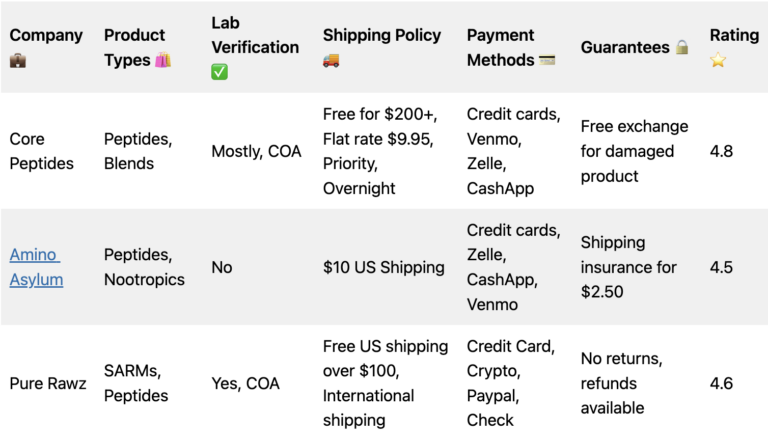
One can easily purchase peptides from credible online vendors. These include Biotech Peptides, Sports Technology Labs, and Pure Rawz.
What are the benefits of peptides?
Peptides are multi-oriented supplements that cater to various functions. These include increased muscle mass, rapid weight loss, anti-inflammatory properties, healing, and strength.





What are the rules on peptides in Portugal? Same as Spain? Thanks!
You will need to contact local authorities
Will purchasing 10 or 20 mg of Retatrutide get stopped at customs in Italy?