
Contents18 sections
Mechano growth factor (MGF) is a form of IGF-1 (insulin-like growth factor 1) that your muscles make when they are loaded or damaged, for example by heavy resistance training. It has caught the interest of lifters because, in lab and animal research, it helps switch on the stem cells that repair and grow muscle.
Synthetic MGF and its longer-lasting version, PEG-MGF, are sold online as research peptides. The real question is whether injecting them does anything useful in people, and the honest answer is that it has not been tested.
This MGF peptide review covers what MGF is, how it works, what the research does and does not show, the doses users commonly report, side effects, legal status, and how it compares with HGH, SARMs and steroids.
Key Takeaways
- MGF is a splice variant of IGF-1 that muscle makes in response to mechanical loading, such as resistance training.
- In cell and animal studies, MGF helps activate satellite cells, the muscle stem cells that repair and build muscle fibers.
- Older muscle makes less MGF after exercise than young muscle, one possible reason muscle is harder to build and keep with age.
- There are no published human trials of injected MGF or PEG-MGF, and one lab study found the synthetic peptide had no clear effect on muscle cells.
- MGF is an unapproved research peptide banned by WADA, and the doses in circulation come from user reports, not studies.
What is MGF?
MGF, or mechano growth factor, belongs to the IGF-1 (insulin-like growth factor 1) family. IGF-1 carries much of growth hormone’s effect on tissues, and its gene can be read (“spliced”) in several ways to make slightly different versions of the protein.

MGF is one of those alternatively spliced variants of IGF-1, which is why it is sometimes called an isoform of IGF-1 [1]. In humans it is known as IGF-1Ec, and in rodents as IGF-1Eb. What sets it apart is a unique tail at one end of the molecule, the C-terminal E-peptide, and most MGF research focuses on this tail.
MGF was first described in the 1990s by Geoffrey Goldspink’s research group in London, in muscle that had been stretched. Both MGF and the main form of IGF-1 are produced in muscle in response to mechanical stress, such as weight training [2].
Research also suggests that the ability to produce MGF after exercise declines with age, which may be one of the reasons we lose muscle as we get older.
How Does MGF Work?
When a muscle is trained or mechanically overloaded, IGF-1 gene expression goes up, and part of that output is MGF. In rodent studies of muscle damage, MGF expression peaks early, within the first days, while the main form of IGF-1 rises later.
Because of its unique C-terminal tail, MGF appears to be good at activating and replenishing the pool of muscle stem cells, called satellite cells. In cell studies, the MGF E-peptide made muscle precursor cells multiply while holding back their maturation into muscle fibers. The main form of IGF-1 mostly does the opposite job and drives that maturation.
In plain terms, MGF is thought to help with muscle repair and, more importantly, to top up the stem cells that later fuse with muscle fibers to grow them. Most of this evidence comes from cells and animals, and lab results have not always agreed: a 2014 lab study (Fornaro et al., American Journal of Physiology) found that the synthetic MGF peptide had no clear effect on muscle cells or primary muscle stem cells.
The MGF response to loading is lower in older muscle than in young muscle [3]. Much of this work was done in rodents, but a small human study found that older people produced far less MGF than young people after a single bout of heavy resistance exercise (Hameed et al., Journal of Physiology, 2003). This is why researchers are interested in MGF for age-related muscle loss and muscle-wasting diseases.
You may see the claim that MGF increased muscle mass by 35% in about a week. That figure comes from animal experiments, not from people injecting MGF: the animal’s muscle was held under constant stretch and electrically stimulated, and related work delivered the MGF gene straight into animal muscle (gene transfer). A lifter injecting the synthetic peptide should not expect anything like it.
That animal gene-transfer work also led MGF researchers to warn that it could be misused for “gene doping”, meaning delivering performance genes into an athlete’s muscle. Gene doping is banned in sport, and so are MGF peptides themselves.
Benefits of MGF
MGF is not a well-researched peptide, and the research on modified versions like PEG-MGF is even thinner. These are the possible benefits suggested so far, with the type of evidence behind each:
| Possible Benefit | Evidence So Far | Human Trials |
|---|---|---|
| Muscle growth with mechanical overload | Animal loading and gene-transfer studies | None with injected MGF |
| Repair of injured muscle | Rodent injury studies and cell studies | None |
| More satellite (muscle stem) cells | Cell studies, with mixed results | None |
| Heart protection after a heart attack | Animal studies, including sheep | None |
| Brain protection after reduced blood flow | Early animal studies | None |
One thing to keep in mind: synthetic peptides used as medicines are usually well studied, but rigorous research on synthetic MGF is rare, and none of these benefits has been confirmed in humans.
MGF Usage in Bodybuilding
Lifters use MGF mainly for faster recovery of trained or injured muscle and for extra muscle growth. The idea is that it calls on satellite cells to repair and add to muscle fibers, which in theory leads to more muscle and strength over time.
That is the theory. No study has shown that injecting MGF or PEG-MGF builds muscle or speeds recovery in people, and the 200 mcg a day figure often quoted for bodybuilding comes from user reports, not research.
Is MGF Legal?
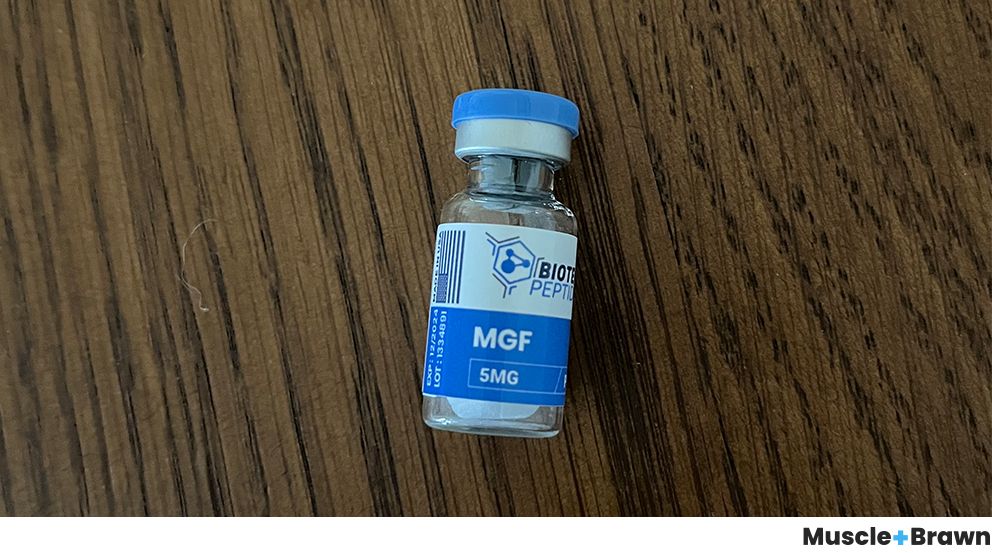
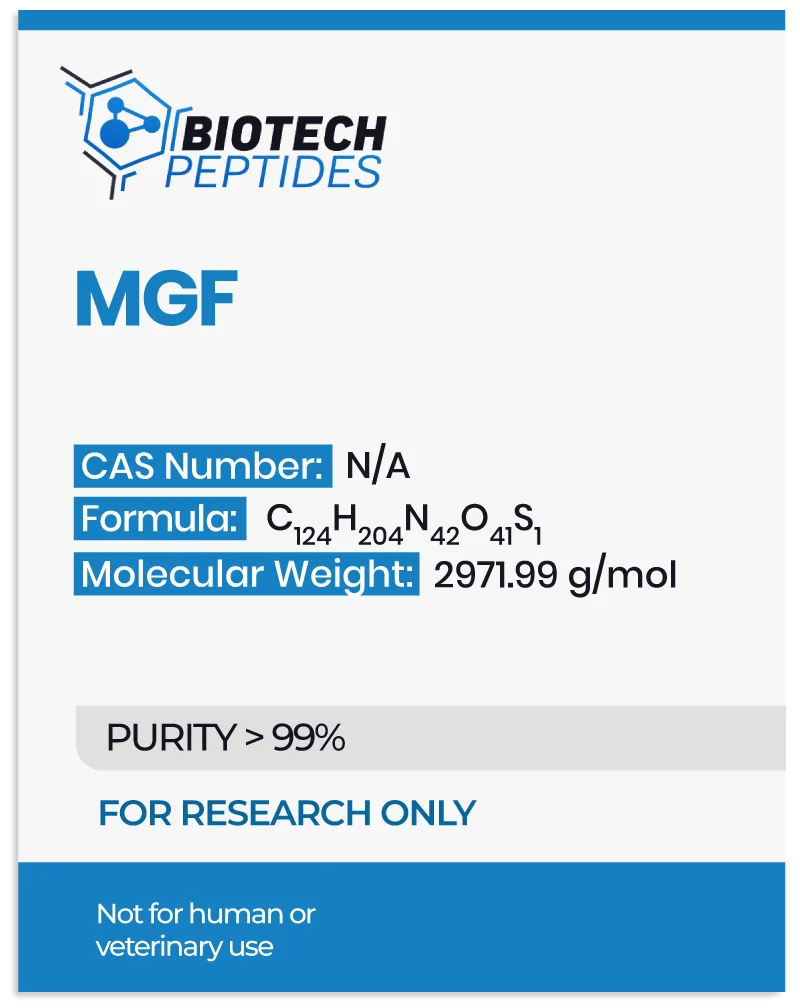
MGF is not approved as a medicine by the FDA or any other regulator. It is sold as a research chemical, labelled “for research use only” or “not for human use”, which means it is not made or checked to medicine standards. Rules on buying and owning research peptides differ by country.
Mechano growth factors are named on the WADA Prohibited List, so tested athletes cannot use them at any time, in or out of competition.
If your real goal is holding on to muscle as you age, a medical route is safer than research peptides. A telehealth clinic can test your hormones and treat a diagnosed problem, such as low testosterone, with a doctor and regular bloodwork. See our guide to the best online TRT clinics, or Yes Clinic below.

Pros
- LegitScript-certified telehealth provider that uses licensed U.S. pharmacies.
- Licensed providers review every intake, and TRT plans include quarterly bloodwork.
- Direct-pay pricing with the consultation and shipping included and no membership fees.
- Fully remote, with no clinic visits and treatments shipped to your door.
Cons
- Serves U.S. patients only.
- Some treatments are compounded and have not been evaluated by the FDA for safety or effectiveness.
Who Uses MGF?
Doctors do not prescribe MGF as a standard treatment for any condition. Growth hormone, the drug it is most often compared with, is approved only for specific diagnoses such as growth hormone deficiency, so using either one for muscle or anti-aging falls outside approved medical use.
Most MGF users are bodybuilders and other athletes looking for an edge in recovery and muscle growth.

In cell and animal studies, MGF can increase satellite cell activity, but there is no evidence that it comes close to the effects of anabolic drugs in people. At best, it may support the repair and stem-cell side of muscle growth.
How Is MGF Used?
MGF comes in two forms. Native MGF is reported to break down within minutes once it enters the blood, so users who inject it typically do so into the trained muscle right after a workout.
PEG-MGF has polyethylene glycol (PEG) chains attached, which is meant to keep it in circulation for much longer, often quoted as several days. That is why it is usually injected under the skin a few times a week rather than into a muscle after every session.
Some users run native MGF, some PEG-MGF, and some both. Because its suggested action is local tissue repair, users take it in both bulking and cutting phases. Both forms arrive as a powder that has to be mixed before injection; see our guide on how to reconstitute peptides.
There are no human studies of either form’s half-life, and none of MGF combined with growth hormone, a stack that users often describe as stronger. These figures and practices come from vendors and user reports.
One more thing: animal studies, including one in sheep, suggest MGF may protect heart muscle after a heart attack, but there is no human evidence for heart benefits.
MGF Dosage
There are no studied human doses of MGF. The figures below are commonly reported doses from bodybuilding forums, not medical advice:
- Native MGF: around 100-200 mcg, injected into the trained muscle shortly after a workout
- PEG-MGF: around 200-400 mcg, injected under the skin one to three times a week, often on rest days
Users who run both often take native MGF on training days and PEG-MGF on rest days, on the idea that the stem-cell signal from training is lower on those days. None of these schedules has been tested for safety or results.
MGF Stack
Users commonly report stacking MGF with IGF-1 LR3, growth hormone, or healing peptides such as BPC-157. A stack usually depends on age, goals and past experience. No study has tested any of these combinations in people, and combining growth factors adds to the risks, especially changes in blood sugar.
MGF Experiences
User reports on forums vary widely. Some lifters describe extra growth in the muscles they injected, and even in nearby muscles they did not inject. Others notice nothing.
Some of the most-shared logs involve doses far beyond those commonly quoted. In one widely shared account, a user micro-injected PEG-MGF into worked muscles after training at up to 4 mg at a time, sometimes four days in a row (16 mg in a week), spread across dozens of injection sites, and reported regular bruising.
Treat these as anecdotes. They are single, uncontrolled accounts, the users often have other drugs in their system or products of unknown content, and doses like 16 mg a week are many times higher than commonly reported doses and have never been tested for safety. Claims you will also see, such as MGF lowering your own growth hormone and IGF-1 output, have not been shown in research. We do not recommend copying any of these protocols.
MGF Side Effects
MGF has never been through human safety trials, so its side effects are known only from user reports and from what is known about growth factors in general. Commonly reported or possible issues include:
- Low blood sugar (hypoglycemia): the side effect users worry about most, because MGF is related to IGF-1, which lowers blood sugar. Reports are anecdotal and mostly at higher doses.
- Injection site reactions: pain, redness, swelling and bruising, especially with repeated injections into muscle.
- Product risks: infection or reactions from contaminated, underdosed or wrongly made products, since research peptides are not regulated as medicines.
- Unknown long-term effects: MGF is a growth factor that makes cells multiply, and no one has studied whether long-term use affects cancer risk.
For a wider look, see our guide to the side effects of peptides.
Where Can I Buy MGF?
MGF is not available as an approved, prescribed medicine, so it is sold only by research peptide vendors. Quality varies between sellers, and a certificate of analysis checks identity and purity, not whether a product is safe to use.
Biotech Peptides sells MGF in 5 mg vials. Our Biotech Peptides review covers the company in more detail.

Overview
- Form: Lyophilized powder for injection (5 mg vial)
- Researched Dosage: 100 mcg to 200 mcg post-workout, 2-3 times weekly
- Typical Cycle: 4-6 weeks
- Cost: $59.00
- Stacking Options: IGF-1 LR3, PEG-MGF, Follistatin-344
Pros
- A splice variant of IGF-1 released by muscle after mechanical stress, thought to activate satellite cells that drive muscle repair and growth.
- Animal studies suggest it may speed muscle regeneration after injury and help offset age-related muscle loss.
- Early animal research also points to possible protective effects on heart and nerve tissue after damage.
Cons
- Its half-life is only minutes, so it must be injected right after training, usually into the worked muscle.
- The evidence is contested: some lab studies found the synthetic peptide had no independent effect on muscle cell growth.
- MGF is not an approved human medication, there is no human safety data, and WADA bans it as a growth factor.
Is MGF Legit?
Honestly, we are not sure. Animal and cell studies show MGF has real effects on satellite cells and muscle repair, but there are no human trials, one lab study found no effect from the synthetic peptide, and few users report large gains.
Mixed results may come from people using it wrongly, buying underdosed or fake products, or expecting it to work like steroids, which no peptide will.
For most lifters, MGF is at best a speculative add-on to good training, food and sleep, not a proven muscle builder.
MGF vs. Other Compounds
MGF vs HGH
HGH (growth hormone) is an approved prescription drug with decades of human data. It raises IGF-1 levels throughout the body, and in human studies it increases lean mass and reduces fat mass, which MGF has not been shown to do. It also has well-known side effects, such as water retention, joint pain and higher blood sugar.
MGF vs SARMs
No study has compared the two. SARMs have small human trials showing gains in lean mass, while MGF has none, so SARMs are likely to do more for muscle size. They also bring more known side effects, such as suppressed testosterone and worse cholesterol, and they are unapproved research chemicals too.
MGF vs Steroids
Anabolic steroids are far stronger than any peptide, including MGF, and their muscle-building effect is well shown in human studies. Their side effects are also much more serious, from strain on the heart and liver to shutting down natural testosterone. See our peptides vs steroids comparison for more.
The Bottom Line
MGF is a real and interesting part of how muscle repairs and grows, but injecting it is still an experiment.
- MGF is a splice variant of IGF-1 that muscle makes after loading; cell and animal studies link it to satellite cell activation and muscle repair.
- There are no human trials of synthetic MGF or PEG-MGF, so the doses, half-lives and benefits you see quoted come from vendors and user reports.
- It is an unapproved research peptide banned by WADA. If age-related muscle loss is the worry, training, enough protein and a doctor who can check your hormones are the better-proven route.
Frequently Asked Questions
Disclaimer
Please read carefully
The information on this site is for educational and informational purposes only, and is not medical advice. Always consult a qualified healthcare professional before using any supplement or medication, or making changes to your health, fitness, or nutrition routine.
Not medical advice
Content here is not a substitute for professional medical advice.
Consult your doctor
Talk to your doctor before starting any supplement or new routine.
Use at your own risk
We are not responsible for adverse effects from acting on this.
Do your research
Make informed decisions about your own health.
No guarantees
Individual results vary. No claims about outcomes.
Important — Never disregard professional medical advice or delay seeking it because of something you read here. If you think you may have a medical emergency, call your doctor or your local emergency number right away.