
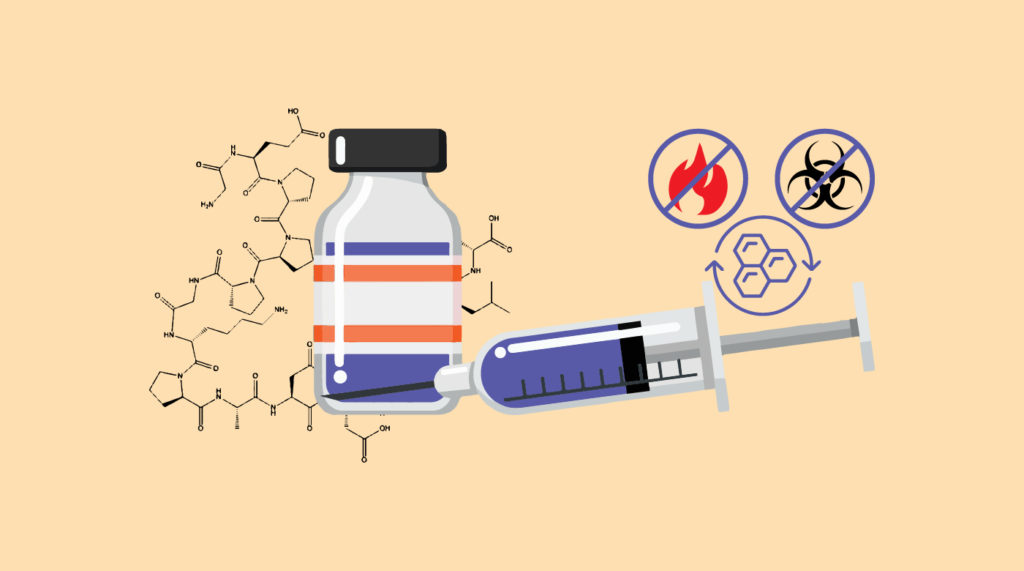
I’ve been getting questions about BPC 157 dosing for years now, and honestly, 90% of people overcomplicate it. The standard BPC 157 dosage chart breaks down to 200–500 mcg per day for most users, split into one or two doses, for cycles lasting 4–8 weeks. That’s the quick answer. But the details like the goal-specific protocols, the oral vs. injectable debate, and how to stack it are where things get interesting.
BPC 157 is one of those peptides that’s quietly become a staple in the biohacking and bodybuilding communities. Not because it’s flashy, but because it actually seems to work for recovery. I’ve watched guys come back from nagging tendon injuries in weeks after running BPC, and the research (mostly rodent-based, but still compelling) backs up a lot of what people are reporting anecdotally.
BPC-157
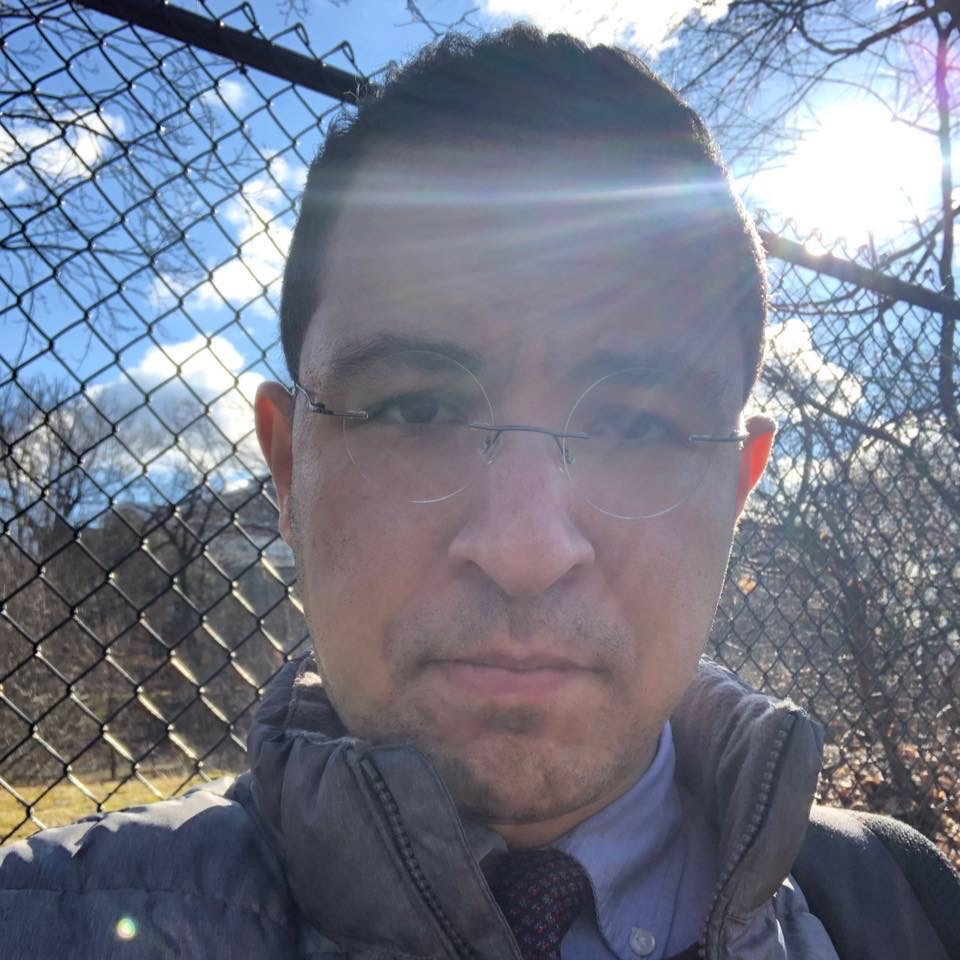
BPC-157 (short for “Body Protection Compound-157”) is a synthetic peptide made up of 15 amino acids. It doesn’t occur naturally in the body but is derived from a partial sequence found in human gastric juices.
The peptide is best known for its regenerative and healing potential. It supports recovery by promoting angiogenesis (the growth of new blood vessels) through activation of the vascular endothelial growth factor (VEGF). This helps build a stronger vascular network, which is essential for repairing muscle, tendons, and connective tissue.
BPC-157 also works by inhibiting 4-hydroxynonenal, a compound that slows tissue growth and healing. By blocking this negative factor, BPC-157 accelerates wound repair, particularly around tendons and soft tissue.
Many users run BPC-157 for injury recovery, gut health, and overall healing support. It’s available in different forms, most commonly as an injectable or nasal spray.
Disclaimer: This content is for informational purposes only. BPC-157 is not intended to diagnose, treat, cure, or prevent any disease. Always consult a healthcare professional before adding new supplements to your regimen.
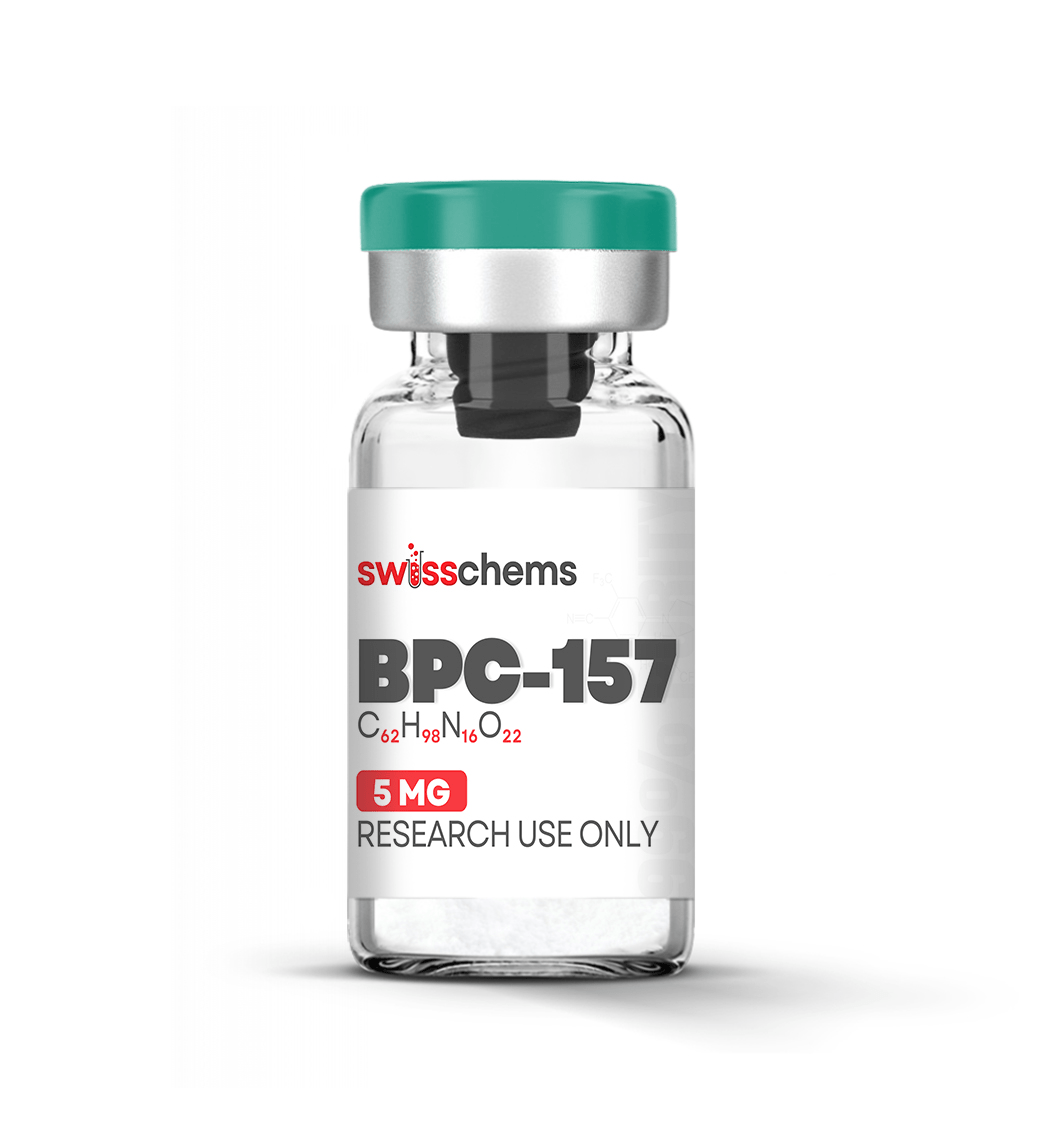
BPC-157 Overview
⭐ Top Benefits: Recovery from injury, tendon/ligament repair
🧪 Form: Injectable liquid, nasal spray
⌛ Max Time Used: Up to 14 weeks
💰 Average Cost: $39.99 per 5mg vial
❤️🩹 Side Effects: Possible abdominal pain, injection site irritation
📚 Best Peptide Stack: Often paired with TB-500, HGH, or IGF-1
Copy Brawn10 for 10% off
- Supports faster recovery from injuries and tendon damage
- May improve gastric function and gut health
- Strong regenerative effects through angiogenesis
- Can cause abdominal discomfort in some users
- Injection site pain is a common complaint
- Limited long-term human research available
What Is BPC-157?
BPC 157 (Body Protection Compound-157) is a synthetic pentadecapeptide, which is the official term for a chain of 15 amino acids derived from human gastric juice. It was first isolated and studied by researchers at the University of Zagreb in Croatia, and the bulk of published research comes from Dr. Predrag Sikiric’s lab.
The reason people in the fitness community care about this peptide is simple: it appears to accelerate healing of soft tissues at a rate that nothing else in the peptide space can match. We’re talking tendons, ligaments, muscle tears, and even gut lining.
A study published in the Journal of Orthopaedic Surgery and Research demonstrated that BPC 157 significantly improved Achilles tendon healing in rats, with functional outcomes matching surgical repair. That’s not a small claim.
I should be upfront here: the human clinical trial data is thin. Most of what we know comes from animal models. But the sheer volume of rodent studies (over 100 at this point) paints a remarkably consistent picture, and the anecdotal reports from bodybuilders and athletes line up pretty closely with what the science predicts. It’s not a magic bullet, but it’s the closest thing to one for joint and connective tissue recovery that I’ve personally come across.
How Does BPC-157 Work?

Most guides will tell you BPC 157 “promotes healing.” That’s not wrong, but it’s vague to the point of being useless. Here’s what’s actually happening at the molecular level.
BPC 157 upregulates the expression of growth hormone receptors in tendon fibroblasts, which are the cells responsible for building and repairing connective tissue. It also stimulates the formation of new blood vessels (angiogenesis) through the VEGF pathway, which is how injured tissue gets the nutrients it needs to rebuild.
A 2020 study in Current Pharmaceutical Design confirmed that BPC 157 promotes the NO (nitric oxide) system, which plays a direct role in blood vessel formation and tissue protection.
There’s also a significant interaction with the FAK-paxillin signaling pathway, which governs cell migration and adhesion. Basically, BPC 157 tells your body’s repair cells where to go and helps them stick around once they get there. Pretty elegant mechanism for a 15-amino-acid chain.
Beyond musculoskeletal repair, BPC 157 shows gastroprotective effects. It can counteract damage from NSAIDs, alcohol, and stress on the gut lining. This is partly why some guys running harsh oral compounds stack BPC for gut support.
It also interacts with the dopamine and serotonin systems, though we don’t fully understand those pathways yet. Vascular peptides like Vesugen work through somewhat similar angiogenic mechanisms, if you’re curious about that side of things.
BPC 157 Dosage Chart
Alright, let’s talk dosing. This is the part most of you came here for, so I’ll keep it practical.
The most commonly used BPC 157 dosage falls between 200–500 mcg per day. Bodyweight plays a role, as heavier individuals tend to run the higher end, but 250 mcg twice daily is where the majority of users land and where I’d start.
| Experience Level | Daily Dosage | Frequency | Cycle Length |
| Beginner | 200–250 mcg | Once daily | 4 weeks |
| Intermediate | 250–500 mcg | Split into 2 doses (AM/PM) | 4–8 weeks |
| Advanced | 500–800 mcg | Split into 2 doses | 6–12 weeks |
A couple of notes on this chart. The “advanced” dosages above 500 mcg daily are based purely on anecdotal reports from experienced peptide users. The rodent studies typically use dosages equivalent to roughly 1–10 mcg/kg of body weight when allometrically scaled to humans, which puts a 200 lb person right in that 200–500 mcg sweet spot.
I’ve personally run BPC at 250 mcg twice daily (500 mcg total) for a nagging elbow issue that wouldn’t quit. Noticed meaningful improvement around week 2. Your mileage may vary, but from what I’ve seen, most people report the same timeline.
BPC 157 Dosage by Goal
Not everyone runs BPC 157 for the same reason. The protocols shift depending on what you’re trying to accomplish, so here’s how I’d break it down by specific goal.
Tendon and Ligament Repair
This is the bread and butter use case for BPC 157. For active injuries like tendinitis, partial tears, chronic strains, the standard protocol is 250–500 mcg per day, ideally split into two doses administered as close to the injury site as possible if injecting. A 2019 study in Muscles, Ligaments and Tendons Journal found that BPC 157 improved tendon-to-bone healing biomechanics at dosages equivalent to this range.
Run it for 4–6 weeks minimum. Some people extend to 8 weeks for stubborn injuries.
Gut Healing
Here’s where oral BPC 157 actually makes more sense than injectable. Since the peptide naturally occurs in gastric juice and the target tissue is the GI tract itself, oral capsules deliver the compound directly where it’s needed. Dosage for gut issues — leaky gut, IBS symptoms, NSAID-related damage — is typically 250–500 mcg once or twice daily, taken on an empty stomach.
I’ve talked to a fair number of users who run BPC specifically during oral steroid cycles to protect their gut lining. Smart approach, in my opinion.
General Recovery and Performance
For athletes using BPC 157 as a general recovery aid, not for a specific injury but to support connective tissue health during heavy training, a lower dose works fine. 200–250 mcg per day, single dose, cycled 4 weeks on, 2 weeks off. Think of this as a maintenance protocol. You won’t notice dramatic overnight changes, but the cumulative effect on joint comfort and recovery capacity is real.
Post-Surgical Recovery
Some people run BPC 157 after surgery (with their doctor’s knowledge, obviously). The typical protocol here is on the higher end — 500 mcg twice daily — starting as soon as possible post-op and continuing for 6–8 weeks.
Rodent data from a 2021 paper in Life Sciences showed BPC 157 accelerated anastomotic healing (gut surgical sites) and reduced adhesion formation. Not a substitute for proper medical care, but potentially a useful adjunct.
How to Use BPC 157
You’ve got three main delivery methods, and each has tradeoffs.
Subcutaneous Injection
This is the gold standard for bioavailability. You’ll need to reconstitute lyophilized BPC 157 powder with bacteriostatic water — typically 2 mL of bac water into a 5 mg vial gives you 2,500 mcg per mL (or 250 mcg per 0.1 mL). Use an insulin syringe and inject subcutaneously near the injury site. Pinning close to the problem area isn’t strictly necessary (BPC works systemically), but anecdotal reports suggest faster local results.
Store reconstituted BPC 157 in the refrigerator. It stays stable for roughly 10–14 days once mixed. Don’t freeze it.
Oral Capsules
If you don’t want to deal with reconstitution or needles, capsules are your best bet. The bioavailability is lower than subcutaneous injection, probably 50–70% based on available peptide absorption data, but for gut healing specifically, oral is actually the preferred route. Next Chems and Swiss Chems both offer solid capsule options at 500 mcg per cap.
Nasal Spray
A newer delivery method that’s gaining traction. Behemoth Labz offers a BPC 157 nasal spray that eliminates both the needle and the capsule. Nasal bioavailability for peptides generally falls somewhere between oral and injectable — and it’s convenient as hell. Worth a look if you travel a lot or just hate pinning.
Cycle Length and Protocol
So how long should you actually run this?
The standard cycle is 4–8 weeks. Most users start noticing effects around days 7–14, with peak benefits around weeks 3–4. I don’t recommend running BPC 157 indefinitely, not because there’s data showing long-term harm but because we simply don’t have long-term human safety data. Caution is warranted.
A typical cycling protocol looks like this:
- Healing cycle: 4–8 weeks on, 2–4 weeks off, reassess
- Maintenance cycle: 4 weeks on, 4 weeks off, repeat as needed
- Aggressive recovery (post-surgery): 8–12 weeks continuous, then stop
There’s no PCT needed with BPC 157. It doesn’t suppress testosterone or interact with the HPTA axis. That’s one of the nice things about it: you can run it alongside pretty much anything without worrying about hormonal complications. The natty plus protocol is a good framework if you’re combining peptides with other non-hormonal performance aids.
BPC 157 Stacking Options
BPC 157 plays well with others. The most common and well-regarded stack is BPC 157 + TB-500. TB-500 (Thymosin Beta-4) upregulates actin, a cell-building protein involved in tissue repair and blood vessel growth. The two peptides work through complementary mechanisms: BPC handles the VEGF/NO side while TB-500 handles the actin/cell migration side. Together, they’re widely considered the best non-hormonal healing stack available.
Typical dosing for the stack: 250 mcg BPC 157 twice daily + 2.5 mg TB-500 twice per week.
Other synergistic stacks include:
- BPC 157 + GHK-Cu: GHK-Cu is a copper peptide that supports collagen synthesis. Great combo for skin and connective tissue.
- BPC 157 + Ipamorelin: Adding a growth hormone secretagogue can amplify recovery by increasing systemic GH levels.
- BPC 157 + collagen + vitamin C: Not everything has to be a peptide. This stack supports the raw materials for connective tissue repair while BPC 157 upregulates the repair process itself. Pair it with solid recovery-supporting vitamins and you’re covered.
I wouldn’t stack BPC 157 with more than two other peptides simultaneously. Not because of safety concerns per se, but because it becomes impossible to know what’s actually working. Keep it simple.
Side Effects of BPC 157
The side effect profile for BPC 157 is remarkably mild. That’s not me being optimistic. It’s what the data actually shows.
Across hundreds of animal studies, BPC 157 has demonstrated an extremely wide safety margin with no lethal dose identified. In human anecdotal reports, the most commonly cited side effects include:
- Mild nausea (especially with oral dosing on an empty stomach)
- Lightheadedness or dizziness
- Headache
- Slight fatigue in the first few days
- Injection site irritation (minor pip, if injectable)
Honestly, most people report zero sides. I didn’t experience any during my 6-week run, and I’ve heard the same from dozens of others.
One theoretical concern that gets raised is BPC 157’s angiogenic properties. If it promotes blood vessel growth, could it theoretically feed tumor growth? This is a legitimate question, and there isn’t a definitive human answer yet.
A 2022 review in Biomedicine & Pharmacotherapy noted that BPC 157’s effects on angiogenesis appear to be context-dependent and wound-directed rather than systemic, but I’d still say anyone with an active or recent cancer diagnosis should avoid it until we know more. Not a risk worth taking.
Where to Buy BPC 157
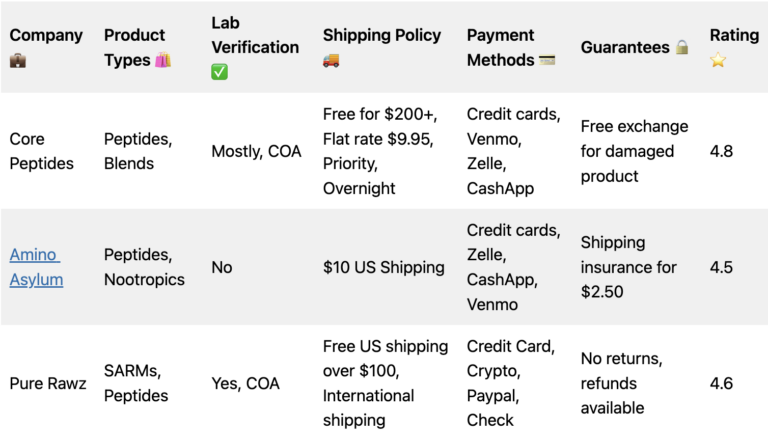
Vendor quality matters enormously with peptides. Underdosed, degraded, or contaminated BPC 157 is a real problem in this market. I only recommend vendors that provide third-party certificates of analysis (COAs) and have a track record in the community.
For capsules, my top picks are Swiss Chems and Next Chems. Both carry 60-count bottles at 500 mcg per capsule. If you want a nasal spray option, Behemoth Labz has a solid product. And for those who prefer the capsule route with maximum third-party verification, Sports Technology Labs is another option I’ve heard good things about.
This reminds me of the whole SARMs vendor debate from a few years back — the brands that survived are the ones that invested in testing. Same thing is happening in the peptide space now. Buy from established vendors or don’t buy at all.
Frequently Asked Questions
What is the best BPC 157 dosage for beginners?
Beginners should start at 200–250 mcg per day, taken as a single dose. This allows you to assess tolerance before increasing. Most people can move to 250 mcg twice daily (500 mcg total) after the first week with no issues.
Is oral BPC 157 as effective as injectable?
Injectable BPC 157 has higher bioavailability — likely 80–90% compared to an estimated 50–70% for oral. However, oral BPC 157 is actually preferred for gut healing since it delivers the peptide directly to the GI tract. For musculoskeletal injuries, injectable is generally more effective, but oral capsules still produce meaningful results at appropriate dosages.
How long does BPC 157 take to work?
Most users report noticeable improvements within 7–14 days. Some acute injuries respond faster — sometimes within 3–5 days. Chronic conditions like long-standing tendinopathy typically require the full 4–8 week cycle before significant changes are felt.
Can you take BPC 157 every day?
Yes. BPC 157 is designed to be taken daily throughout your cycle. Unlike some peptides that require pulsing or cycling within the week, BPC 157 is used consistently every day for the duration of your protocol — typically 4–8 weeks.
Does BPC 157 require a PCT?
No. BPC 157 does not suppress testosterone production or interact with the hypothalamic-pituitary-gonadal axis. No post-cycle therapy is needed. You can simply stop taking it at the end of your cycle.






How do I order gear
You can get peptides for research or prescribed by a doctor.
What doctors prescribe peptides? I can’t find any that can or will!
Is BPA-157 Legal?As discussed earlier, this synthetic peptide has not completed human clinical trials. However, the successful rat-based trials put this compound in a kind of no man’s land.
So, BPC-17 is legal in the USA (Rules vary for other regions) and is available in markets, but it can only be purchased via prescription.
It is important to highlight that WADA (World Anti-doping Agency) hasn’t included this compound in the prohibited list yet.
If I am injecting, is the best time to take it still in the morning on an empty stomach? Are there different effects depending on the time I take it? I know some compounds have somewhat different effects depending on what time you take it. thank you.
I just received BPC- 157 0.5 mg per capsule from Swiss chems. I weigh 186 pounds. How many capsules should I be taking a day and when is the best time to take it? Also, should I take it on an empty stomach