Imagine a fat-loss solution that doesn’t rely on dieting, intense workouts, or hormone manipulation, a compound that directly targets the very blood vessels feeding your fat cells. That’s exactly what Adipotide promises in the world of experimental peptides. Developed through cutting-edge research, this peptide has captured attention for its unique vascular-targeting mechanism, showing remarkable fat-reduction results in preclinical studies and opening new possibilities in obesity research.
In this article, we’ll explore what Adipotide peptide research is, how it works, its benefits, safety profile, and how it compares to other popular fat-loss peptides. By the end, you’ll have a clear understanding of this innovative but experimental compound, its potential advantages, and the precautions you need to know before considering it in the context of fat-loss research!
Key Takeaways
- Adipotide is a cutting-edge fat-loss peptide that targets blood vessels feeding fat cells for direct reduction. 🩸
- Preclinical studies show significant fat loss and improved insulin sensitivity in obese animal models. 🐒
- Unlike most peptides, Adipotide works through a vascular mechanism, not hormonal or metabolic pathways. 🔬
- Safety in humans is unverified, and Adipotide remains experimental with no FDA approval. ⚠️
- Adipotide represents a novel approach in obesity research, highlighting the future potential of vascular-targeted fat-loss therapies. 🚀

What is Adipotide?
Adipotide, also known as FTPP (Fat-Targeted Proapoptotic Peptide), is a synthetic research peptide developed to target and reduce body fat by acting directly on the blood vessels that nourish fat cells. Unlike traditional fat burners that rely on stimulating metabolism or appetite suppression, Adipotide works through a vascular mechanism, cutting off the blood supply to fat tissue, ultimately leading to its breakdown and removal from the body.
Originally developed by researchers at the MD Anderson Cancer Center and Barshop Institute for Longevity and Aging Studies, Adipotide was designed to explore a novel way of inducing fat loss without altering hormonal or metabolic pathways. Its structure combines two functional peptide sequences:
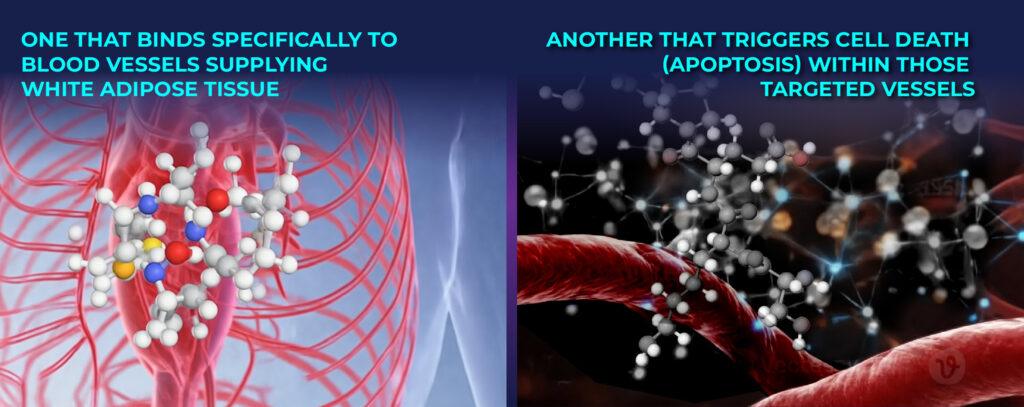
- One that binds specifically to blood vessels supplying white adipose tissue, and
- Another that triggers cell death (apoptosis) within those targeted vessels.
As these fat-feeding blood vessels are destroyed, adipose tissue begins to shrink, and the body naturally metabolizes the dead cells. Early preclinical studies on rhesus monkeys showed promising results, with significant reductions in body fat and improved insulin sensitivity observed after several weeks of treatment. However, these findings remain limited to animal studies, and Adipotide is not approved for human use by the FDA or any major health authority.
Today, Adipotide remains a research compound, studied for its potential in obesity management and metabolic health, but it should not be used outside controlled laboratory research. Despite its experimental status, the peptide has drawn considerable attention in the fitness and biohacking communities due to its unique fat-targeting approach — one that stands apart from conventional weight-loss methods.
How Adipotide Works: Mechanism of Action
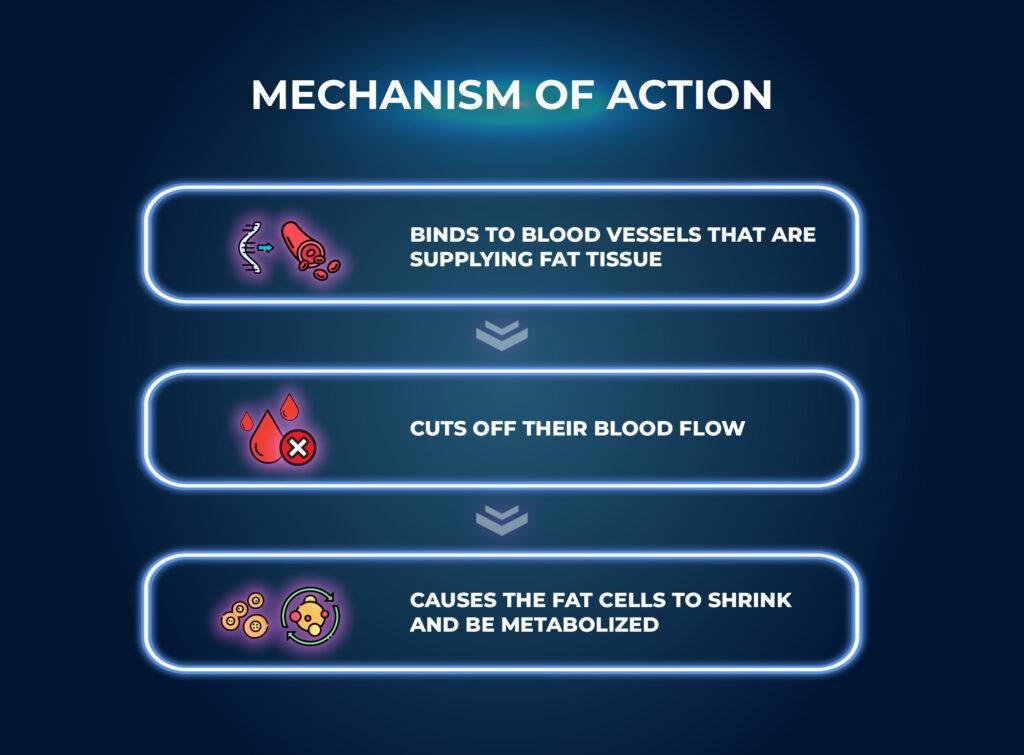
Adipotide stands out for its unique mechanism of action from traditional fat-loss methods. Instead of influencing hormones, metabolism, or appetite, this peptide works by starving fat cells of their blood supply, a process that directly leads to fat tissue reduction.
At the molecular level, Adipotide is composed of two main peptide sequences:
- A targeting sequence (CKGGRAKDC) that specifically binds to receptors found on the blood vessels supplying white adipose tissue (the type of fat responsible for energy storage and stubborn fat deposits).
- A pro-apoptotic sequence ((D)(KLAKLAK)₂) that triggers cell death (apoptosis) once the peptide has attached to these vessels.
Once Adipotide binds to the vasculature surrounding fat cells, it delivers a signal that triggers apoptosis. As the blood supply to adipose tissue is disrupted, the fat cells are deprived of oxygen and nutrients. This leads to their gradual breakdown and clearance by the body’s natural metabolic processes.
In simpler terms, Adipotide acts like a precision-guided missile for fat tissue; it doesn’t raise heart rate or alter metabolism but instead targets the infrastructure that keeps fat cells alive. Once those blood vessels collapse, the associated fat deposits begin to shrink.
Where To Buy?
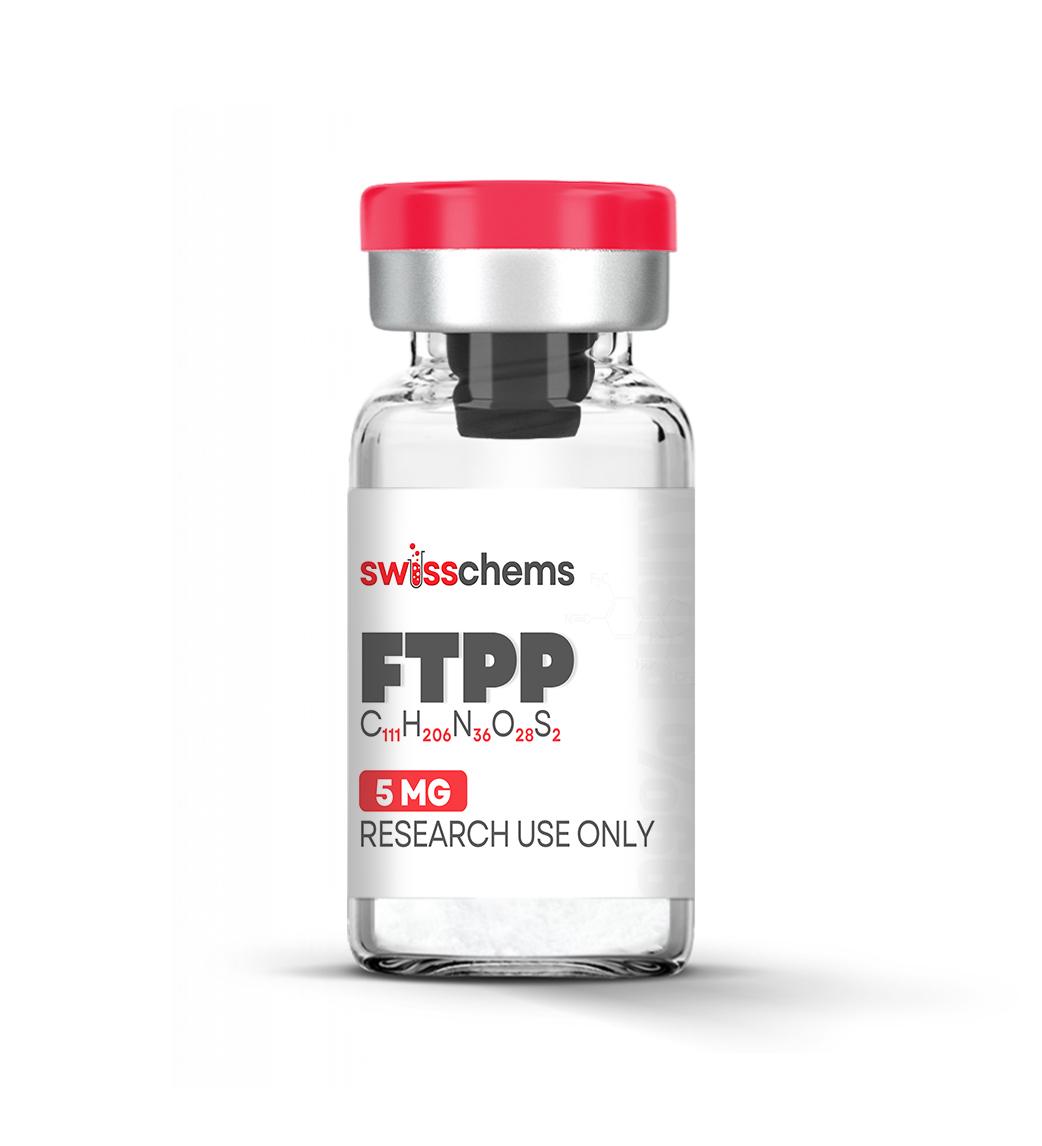
Swiss Chems Adipotide, 5mg
FTPP, also known as Adipotide (EX-A6186), is a synthetic targeted peptide compound developed for research into fat metabolism and vascular modulation. It works by binding to receptors on blood vessels that feed adipose (fat) tissue, leading to a reduction in nutrient supply to fat cells in experimental models.
Research indicates FTPP’s ability to influence molecular pathways of apoptosis in adipose tissue, making it an intriguing candidate in studies on obesity and metabolic regulation. Preliminary trials in non-human subjects suggest improvements in body composition and insulin sensitivity when used under controlled laboratory conditions.
SwissChems provides FTPP as a 5mg freeze-dried vial, lab-tested for 98%+ purity, and sealed for stability and long shelf life. Each batch undergoes third-party verification for quality and integrity.
Disclaimer: FTPP is a research peptide not approved by the FDA for human use. This information is educational only and not medical advice.
FTPP (Adipotide) Overview
⭐ Top Benefits: Targets fat cell blood supply, supports fat metabolism studies, improves metabolic response
💉 Form: 5 mg vial (research peptide)
⏱ Max Time Used: Up to 4 weeks (research use)
💲 Average Cost: $63.95
❤️ Side Effects: Temporary fatigue, mild dehydration in animal studies
⚠️ Dangers: Limited human data, may affect kidney markers at high doses
🔗 Best Peptide Stack: AOD-9604, BPC-157, Tesamorelin
♂♀ Men/Women: Suitable for both (research use)
Copy Brawn20 for 20% off
- Demonstrates targeted fat-cell apoptosis in animal studies
- May improve insulin sensitivity and metabolic efficiency
- Freeze-dried for extended shelf stability
- No approved human clinical data
- Potential renal strain at high research doses
- Requires controlled dosing and storage conditions
Adipotide vs Other Peptides
As peptide research expands, various compounds are being studied for their potential roles in fat loss and body composition. While many peptides, like AOD-9604, CJC-1295, or Tesamorelin influence hormones or metabolism to enhance fat burning, Adipotide stands out for its entirely different approach. It works at the vascular level, targeting the blood vessels that feed fat cells rather than altering the body’s hormonal or metabolic processes.
This distinction makes Adipotide a unique focus of obesity research — but also a more experimental one, given its limited human data. Below, we compare Adipotide with other well-known fat-loss peptides to highlight how their mechanisms and safety profiles differ.
Adipotide vs AOD-9604
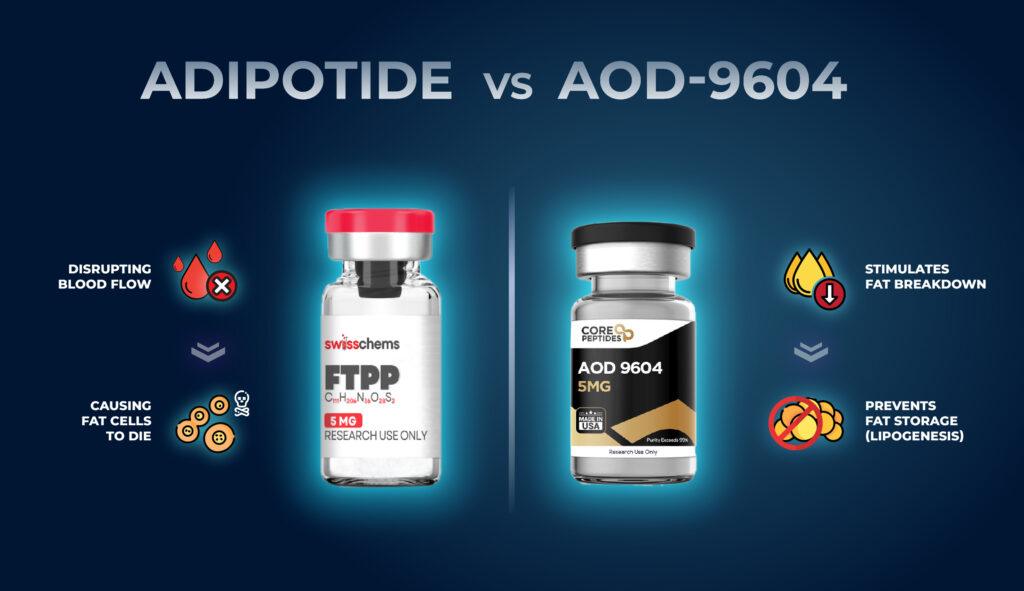
Adipotide and AOD-9604 both aim to reduce fat, but their mechanisms are completely different.
- Adipotide acts by disrupting blood flow to fat cells, causing them to die and be naturally cleared by the body.
- AOD-9604, on the other hand, is a growth hormone fragment that stimulates fat breakdown (lipolysis) and prevents fat storage (lipogenesis) through metabolic pathways.
Adipotide vs CJC-1295 + Ipamorelin
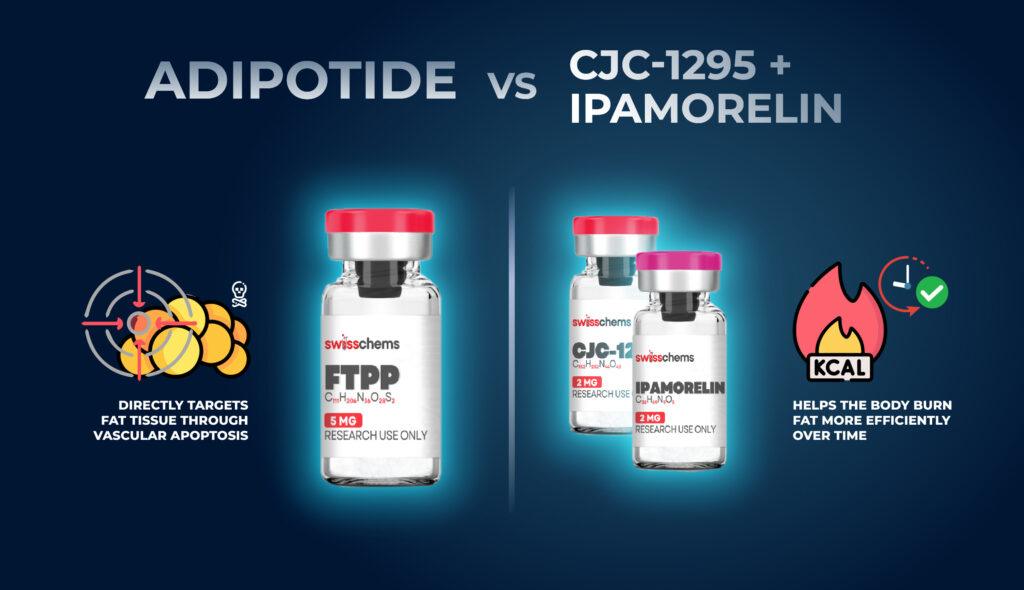
While Adipotide directly targets fat tissue through vascular apoptosis, CJC-1295 + Ipamorelin works by enhancing the body’s natural growth hormone (GH) production. This hormonal boost supports fat metabolism, lean muscle gain, and recovery, but doesn’t destroy fat cells or their blood supply like Adipotide does.
In essence, Adipotide attacks existing fat deposits, while CJC-1295 + Ipamorelin helps the body burn fat more efficiently over time. The latter combination is widely used in research and clinical peptide protocols due to its balanced and systemic benefits, whereas Adipotide remains strictly experimental with no established human safety data.
Adipotide vs Tesamorelin
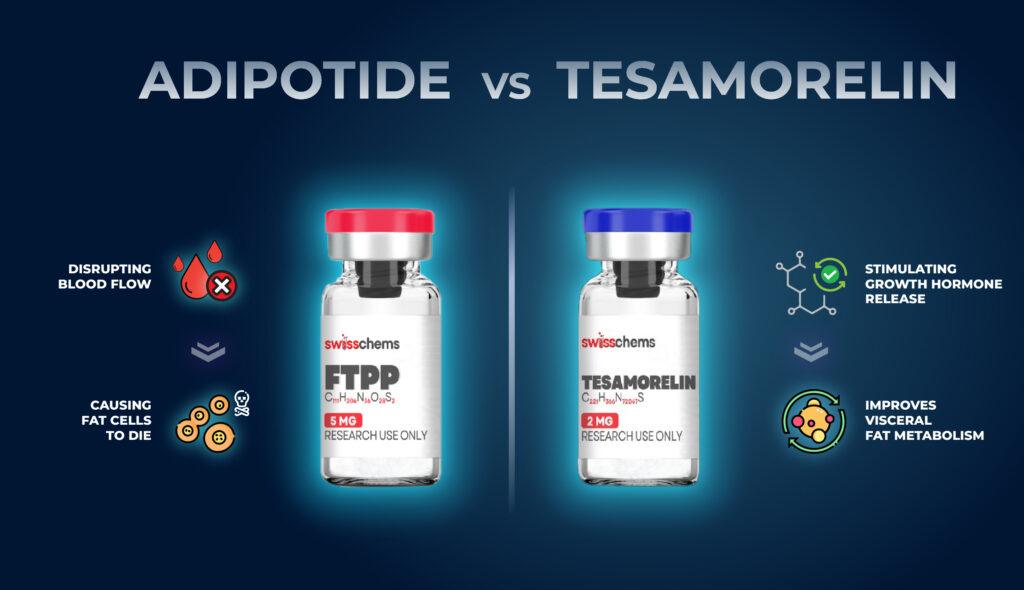
Adipotide and Tesamorelin both target fat reduction, but through very different pathways. Adipotide works by cutting off the blood supply to fat cells, causing them to shrink and be metabolized.
Tesamorelin, an FDA-approved GHRH analog, reduces fat by stimulating growth hormone release, which improves visceral fat metabolism over time. Unlike Adipotide, Tesamorelin’s approach is hormonal and clinically validated, making it a safer option for targeted fat reduction in medical contexts.
Benefits of Adipotide
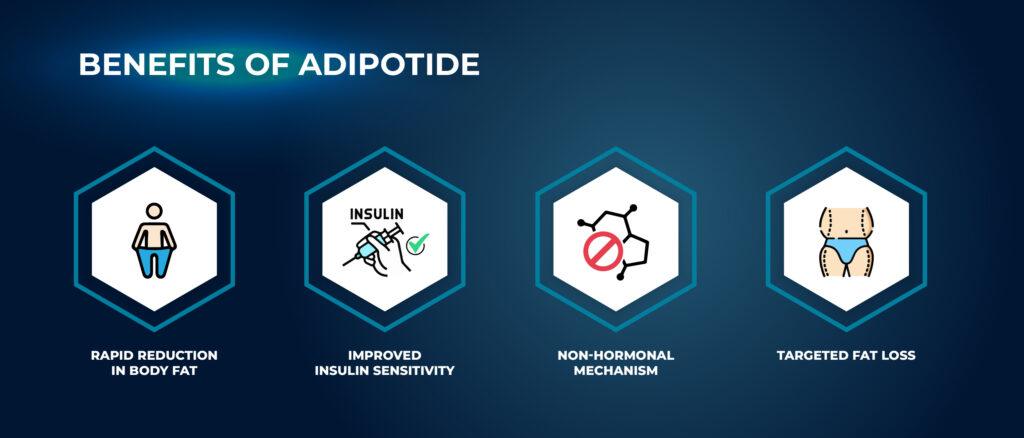
Adipotide offers a novel approach to fat loss that goes beyond traditional diet, exercise, or hormonal interventions. By targeting the blood vessels that feed fat cells, it promotes a more direct reduction in adipose tissue. Preclinical research has highlighted several potential benefits, from rapid fat loss to improved metabolic health, making it a promising focus in obesity and body composition research. Below, we break down the key advantages observed in research settings.
Rapid Reduction in Body Fat
Adipotide has shown the ability to significantly reduce fat tissue in preclinical studies. Research on obese rhesus monkeys demonstrated up to ~11% body weight loss in just four weeks, highlighting its potential to target stubborn fat areas that are resistant to diet and exercise.
Improved Insulin Sensitivity
Beyond fat loss, Adipotide may support better glucose metabolism. Preclinical studies indicated improvements in insulin sensitivity, suggesting it could have positive effects on metabolic health, alongside reducing adipose tissue.
Non-Hormonal Mechanism
Unlike many fat-loss peptides, Adipotide works through a vascular-targeting mechanism rather than altering growth hormone, thyroid, or metabolic hormones. This reduces the risk of hormonal side effects and makes it a unique approach in fat-loss research.
Targeted Fat Loss
Adipotide’s action is highly specific to white adipose tissue. By focusing on blood vessels supplying fat cells, it preferentially reduces visceral and abdominal fat, which is often the most stubborn type of fat to lose naturally.
Safety Profile of Adipotide
While Adipotide shows promising fat-loss potential, its safety profile is an important consideration, especially because it is still an experimental compound with limited human data. Most of the current understanding comes from preclinical studies in animals, primarily obese rhesus monkeys, which provide insight into potential risks and side effects.
Key points regarding Adipotide’s safety include:
- Potential Kidney Effects: Some animal studies noted temporary kidney function changes, likely due to peptide breakdown and excretion.
- Mild Physiological Reactions: Observed reactions included temporary nausea, fatigue, or slight dehydration, though these were generally short-lived in research settings.
- Limited Human Data: There is no robust clinical trial evidence confirming safety or efficacy in humans. Human dosing, long-term effects, and potential interactions remain largely unknown.
- Experimental Status: Because Adipotide is still under research, it is not approved by the FDA or any major health authority, and self-administration is highly discouraged.
In summary, while preclinical results are promising, Adipotide should be approached with caution. Its aggressive vascular-targeting mechanism, though effective in animal models, carries unknown risks in humans, highlighting the need for further controlled research before considering therapeutic use.
Conclusion
Adipotide offers a novel approach to fat loss by targeting the blood vessels that nourish fat cells, promoting direct reduction in stubborn areas like abdominal and visceral fat. Preclinical studies in obese rhesus monkeys showed significant fat loss and improved insulin sensitivity, highlighting its potential in obesity research.
However, Adipotide remains experimental, with limited human data and no FDA approval. Its vascular-targeting mechanism carries unverified risks, making further clinical research essential. While promising, Adipotide is a scientific breakthrough in fat-loss research, not a consumer-ready solution.
FAQs
What is Adipotide?
Adipotide is an experimental peptide that targets blood vessels feeding fat cells to promote fat loss.
How does Adipotide work?
Our tests indicate that it works by destroying fat-feeding blood vessels, causing fat cells to shrink and metabolize naturally.
Is Adipotide safe for humans?
Adipotide is still experimental, and its safety in humans has not been established.
Can Adipotide help with stubborn belly fat?
Preclinical studies suggest it may reduce visceral and abdominal fat, but human evidence is lacking.
Where can I get Adipotide?
Adipotide is only available for research purposes and is not approved for consumer use.
Is Adipotide FDA-approved?
No, Adipotide is not FDA-approved and is intended for research use only.