
Do you ever find yourself in a position where an injury or a bruise while working out hinders your gym routine? Or maybe, if you are an athlete and have suffered an injury dramatically impacting your sports career.
If you can relate to this, then KPV peptide might be the peptide that can help your wound heal faster while ensuring that it doesn’t cause any more problems.
KPV is a naturally occurring peptide that is said to play a role in cutaneous wound healing by means of reducing inflammation at the site of the wound. It possesses anti-microbial properties,l and thus prevents the entry of foreign pathogens at the exposed site.
Despite the fact that there is limited research done so far on KPV, the current literature supports its anti-microbial and anti-inflammatory properties.
KPV can be one life-changing peptide in terms of faster healing from injuries for people involved in fitness, sports, or bodybuilding. Read through the end to know everything related to KPV, and I am pretty sure that you will be able to decide by the end whether to use this peptide or not.
Key Takeaways
- KPV is a naturally occurring tri-peptide found at the terminal end of alpha-melanocyte stimulating hormone (alpha-MSH) released by the pituitary gland. 🧬
- KPV peptide possesses anti-microbial and anti-inflammatory properties. 🛡️
- It can treat a variety of gut-related disorders as well as ensures skin health. 🩺
- Although limited research involving human subjects is available, the sparse evidence is still promising related to KPV! 🔬
- Swiss Chems is inarguably the top vendor offering KPV. 🏆

What is KPV?
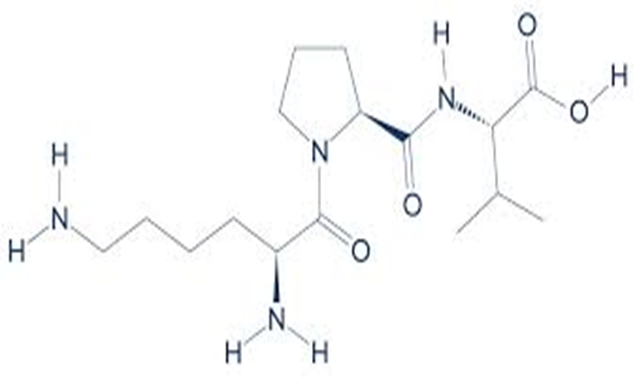
KPV is a naturally occurring tri-peptide that consists of Lysine, Proline, and Valine. It is found at the end terminal of the alpha-melanocyte-stimulating hormone (alpha-MSH), which is produced by the pituitary gland.
This pept1-mediated tripeptide KPV is able to exert its effect in the body through the PepT1 transporter, which is normally expressed in the small intestine (1).
How does KPV work?
KPV is a potent anti-inflammatory peptide with anti-microbial and wound-healing properties (2). Although the effects of KPV are pretty specific and in a narrow range, it still has a systemic application in the human body.
It’s important to have a fairly good understanding of any peptide’s mechanism of action before you really dig into its usage.
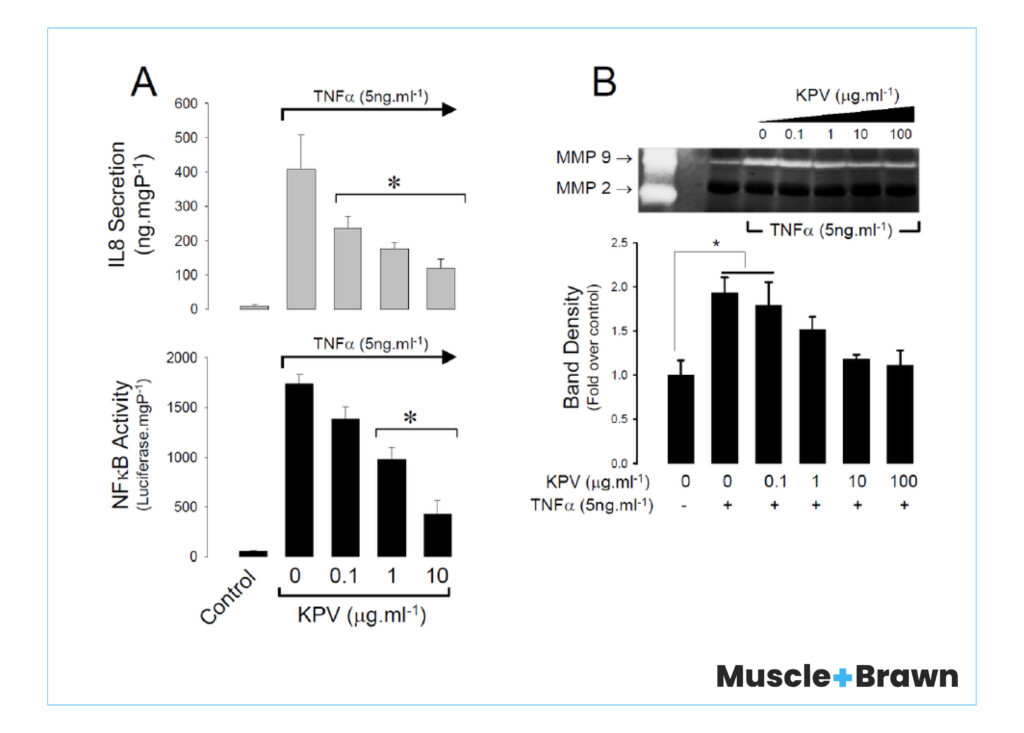
The potent anti-inflammatory properties of KPV are brought about directly inside the cells, where it is able to suppress NFκB. It does this by accumulating in the nucleus and competitively inhibiting the interaction between p65RelA and Imp-α3, which is responsible for the formation of NFκB.
Downregulation of NFκB significantly decreases inflammation as this molecule is primarily responsible for inducing the expression of pro-inflammatory genes, including cytokines and chemokines, among which interleukins 1 and 6 are the most essential (3).
This peptide is also a potent immunomodulator as it stabilizes the immune system’s mast cells to reduce the after effects of allergic reactions. It also significantly affects the expression of both B and T cells.
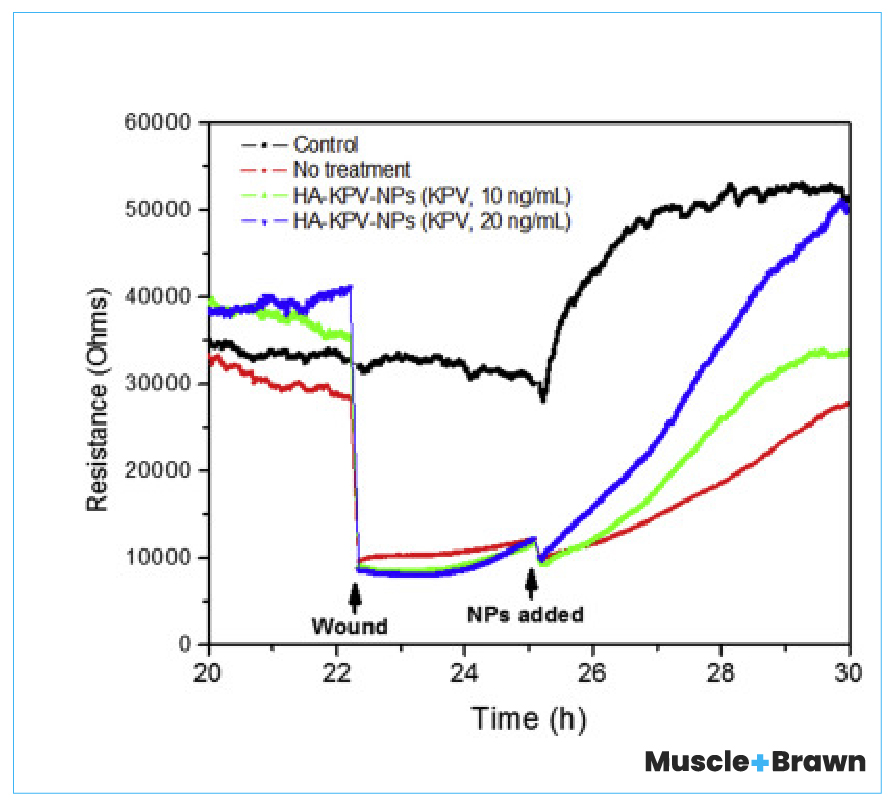
Studies done on animals prove that KPV accelerates the process of cutaneous wound healing as well as skin ulcers. It has also been reported to reduce scarring because of its ability to modulate the metabolism of collagen deposition (4).
Not only does it prevent inflammation at the sites of wounds but it also protects the body from microbes.
Its antimicrobial properties were demonstrated through the inhibition of Staphylococcus Aureus colony formation over a broad range of concentrations (5).
Benefits of KPV
The benefits of KPV peptide have been investigated through substantial studies involving both human and animal subjects.
Now that we have the basics of the mechanism of action of KPV in the back of our minds, we can easily delve into the benefits as well!
Anti-Inflammatory Effects
Due to its anti-inflammatory properties, most of its effects can be observed in patients with autoimmune diseases that are usually characterized by inflammation. Perhaps the anti-inflammatory effects are more prominently seen in the human gastrointestinal tract, as human trials involving kpv have shown that it can potentially treat inflammatory bowel diseases (IBD).
One such subtype of inflammatory bowel disease (IBD) is Ulcerative Colitis, a chronic, relapsing inflammatory disease of the colon in which inflammation impairs the colonic mucosal barrier and increases the chance of bacterial invasion into underlying tissues. KPV alleviates inflammation and promotes mucosal healing, thereby preventing further damage (6).
In cases of inflammatory bowel disease, KPV inhibits the activation of NF-κB and MAP kinase inflammatory signaling pathways through hPepT1 transporters and subsequently relieves pain (1).
Prevents Carcinogenesis
A study concludes that KPV was able to prevent carcinogenesis as a result of colitis in wild-type mice (7).
Treating Allergies
KPV has proven to be effective in targeting airway inflammation in lung diseases, thus making it a useful therapy for inflammatory pulmonary disease. This also theoretically makes KPV effective in treating allergic reactions as well (8).
Considering the cosmetic benefits of KPV, it can be used to treat cutaneous wounds with minimal scarring alongside other dermatologic conditions. Moreover, this tripeptide kpv is also known for its improved cutaneous wound healing characteristics.
This may include allergic contact dermatitis and psoriatic syndromes that may be characterized by itching, inflammation, and redness of the skin.
Is KPV Peptide Legal?
The peptide has proved to be promising in the treatment of inflammatory diseases.
Even though oral, intravenous, subcutaneous, and transdermal administration by licensed professionals is safe, it is not approved by FDA as of yet.
Who should use KPV Peptide?
KPV can be topically administered by people who may have suffered from cuts or bruises and are looking for speedy wound healing with minimal scarring.
It can also be safely used by patients who have been diagnosed with autoimmune diseases such as psoriasis, ulcerative colitis, rheumatoid arthritis, and other inflammatory conditions.
Moreover, KPV peptide can be used by people who are looking to maintain a healthy gut, as KPV promotes gut health and relieves pain in inflammatory bowel disease. It further alleviates the risks of contracting bacterial infections by acting as an antimicrobial.
Forms of KPV
KPV is available as an oral capsule, an injectable form, and a cream as well.
The topical cream is not only cost-effective but is also the widely used form for treating psoriasis, eczema, and acne.
For the treatment of other inflammatory diseases, such as Crohn’s disease, ulcerative colitis, and irritable bowel syndrome, KPV can be administered orally.
While KPV injections are less popular, they are readily effective and can be used to instantly reduce inflammation.
How to use KPV
The topical form of KPV peptide can be easily applied to the areas of skin that have been wounded or exposed and are at an increased risk of scarring.
Oral tablets can be safely taken with or without food. On the other hand, Injections are mostly administered subcutaneously.
To know more about ways to administer peptides, you may want to check out our detailed guide on how to administer peptides.
KPV Dosage
The general recommended dosage for KPV in the form of oral capsules is 250 mg. In the case of injections, 200-500 mcg can be injected safely.
On the other hand, 7.5 mg of topical cream is generally applied to the affected area.
KPV Cycling
250 mg of capsules of KPV can be taken twice a day until the condition for which it is being administered is completely healed. Similarly, 200-500 mcg of KPV is injected once a day for the treatment of systemic inflammation.
Topical creams can also be used up until the inflammation, itching, swelling, and other dermatological symptoms subside.
To know more about dosage and cycling guidelines, review our chart and know all the nitty-gritty details of KPV.
KPV Peptide Stacks
Due to its pleiotropic effects on the body, the standard administration of KPV peptide without stacking is sufficient to reduce inflammation and for the treatment of wounds.
It can, however, be supplemented with other forms of conventional therapies and multivitamins for maximal benefits.
Nonetheless, there is very limited, unproven, and under-researched data on KPV stacks.
KPV User Reviews
Reading Reddit reviews is honestly the best part of doing peptide research because it gives you such a real insight that clinical research would otherwise fail to do so.
KPV peptide user reviews seem promising, so let’s dig into some of them.
One of the users said,
“Just found this so not sure if anyone still cares— had an insane hand rash/mystery contact dermatitis that was resistant to oral and topical steroids, anti fungals, anti bacterials, etc. My Rodeo Dr. dermatologist was absolutely stumped and about to throw in the towel when he suggested I could try an experimental topical peptide with no known side effects. Only downside was that it stains everything it comes in to contact with orange. It cleared up my hand in about a week. I don’t have any experience with taking it orally, but for anyone dealing with troubled skin I can’t recommend topical KPV enough!”
One of the doctors left a comment,
“I use this in practice often. I see results in patients with auto immune issues. It’s been rather helpful for the people I’ve put on it. The KPV creams works incredibly well for acne.”
There is another very comprehensive subreddits available on KPV guide that you would definitely want to check out. I am pretty sure this will clear alot of fuss regarding KPV!
KPV Side Effects Explained
Topical KPV may cause slight staining on the skin. This temporary discoloration usually fades after a few days with washing.
Overall, KPV is considered safe for use across various conditions, showing no major or long-term side effects.
Injection use may lead to minor irritation, such as redness, swelling, or mild pain at the injection site.
These reactions are linked to the injection method itself, not the peptide’s internal effects.
Where can I buy KPV Peptide?
Because KPV is not widely used, you will not find many authentic vendors selling KPV but needless to worry because, just like every time, Swiss Chems is there to the rescue!
Swiss Chems KPV
Swiss Chems offer almost all kinds of peptides available in the market among their other wide catalogue of compounds. As far as KPV is concerned, it is also available in the capsule variant.
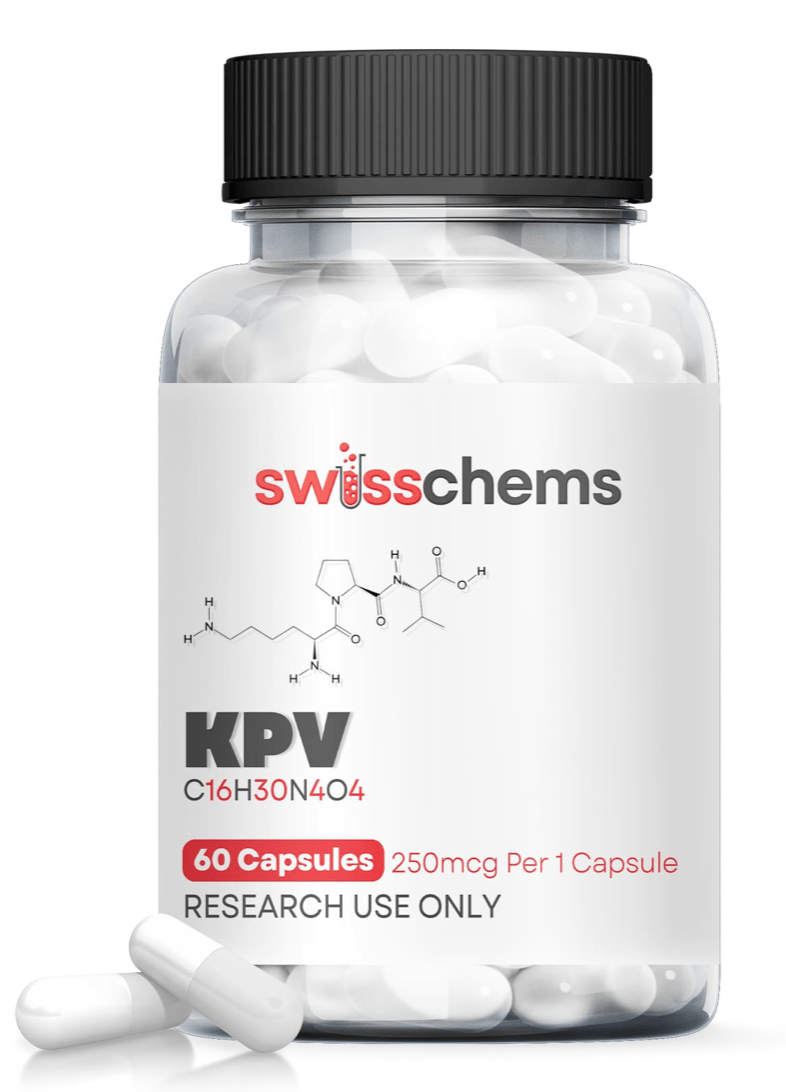
Swiss Chems currently offers 250mcg/60 capsules priced at a reasonable $139.95. Even though this is towards the higher-end, you can be sure about the quality as well as the purity as far as Swiss Chems is concerned.
You can avail further discounts from Swiss Chems by using our special discount coupon code, our Swiss Chems coupon code is Brawn10.
Surprisingly, they also have a same-day shipping facility with a 30-day money-back guarantee
- 99% pure and authentic
- Same-day shipping policy
- Excellent customer reviews
- Relatively expensive
KPV vs. Other Peptides
KPV vs. BPC-157
Both these peptides are proven to accelerate wound healing, and act as an anti-inflammatory agent.
However, both the peptide differ in their mechanism of action as BPC-157 exerts most of its healing properties through angiogenesis, and thus has cardio-protective functions which are not something we can associate with KPV.
You can purchase BPC-157 from our #1 choice for pure peptides, Swiss Chems.
BPC-157
BPC-157 (short for “Body Protection Compound-157”) is a synthetic peptide made up of 15 amino acids. It doesn’t occur naturally in the body but is derived from a partial sequence found in human gastric juices.
The peptide is best known for its regenerative and healing potential. It supports recovery by promoting angiogenesis (the growth of new blood vessels) through activation of the vascular endothelial growth factor (VEGF). This helps build a stronger vascular network, which is essential for repairing muscle, tendons, and connective tissue.
BPC-157 also works by inhibiting 4-hydroxynonenal, a compound that slows tissue growth and healing. By blocking this negative factor, BPC-157 accelerates wound repair, particularly around tendons and soft tissue.
Many users run BPC-157 for injury recovery, gut health, and overall healing support. It’s available in different forms, most commonly as an injectable or nasal spray.
Disclaimer: This content is for informational purposes only. BPC-157 is not intended to diagnose, treat, cure, or prevent any disease. Always consult a healthcare professional before adding new supplements to your regimen.
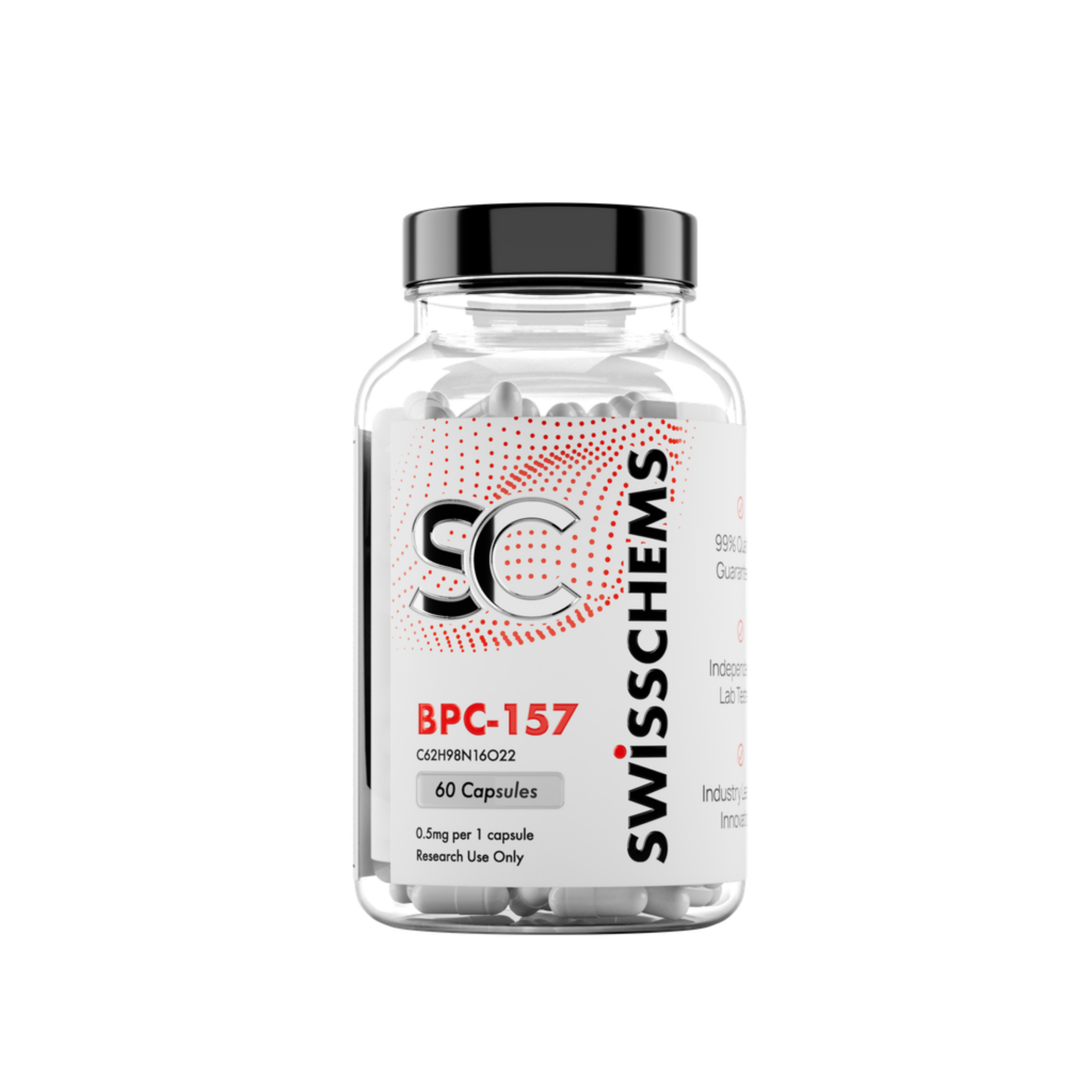
BPC-157 Overview
⭐ Top Benefits: Recovery from injury, tendon/ligament repair
🧪 Form: Injectable liquid, nasal spray, capsules
⌛ Max Time Used: Up to 14 weeks
💰 Average Cost: $39.99 per 5mg vial
❤️🩹 Side Effects: Possible abdominal pain, injection site irritation
📚 Best Peptide Stack: Often paired with TB-500, HGH, or IGF-1
Copy Brawn10 for 10% off
- Supports faster recovery from injuries and tendon damage
- May improve gastric function and gut health
- Strong regenerative effects through angiogenesis
- Can cause abdominal discomfort in some users
- Injection site pain is a common complaint
- Limited long-term human research available
KPV vs. TB-500
The main function of both these peptides is to promote wound healing but just like Pentosan, the origin of both the peptides differ.
KPV, on one hand is a naturally occurring tri-peptide and is formed by alpha melanocyte stimulating hormone (alpha-MSH)as compared to TB-500 which is synthetically made.
You can purchase TB-500 from our #1 choice, Swiss Chems.
TB-500
TB-500 is a synthetic peptide fragment of Thymosin Beta-4, a naturally occurring protein found in almost all human and animal cells. It plays a key role in cell migration, blood vessel formation, and tissue regeneration, making it a valuable compound for recovery-focused research.
Unlike anabolic agents that stimulate muscle growth through hormonal pathways, TB-500 works on a cellular level by improving healing speed, flexibility, and recovery from soft tissue injuries. Researchers often explore its effects on muscle repair, inflammation reduction, and cardiovascular protection.
This peptide is widely recognized for promoting faster wound healing, increased endurance recovery, and enhanced circulation to damaged areas. Its ability to regulate actin, a critical component of cell structure and movement, makes it uniquely suited for studies involving injury recovery and tissue remodeling.
TB-500 is often studied alongside BPC-157 for synergistic regenerative effects, with both compounds showing complementary benefits for muscle, tendon, and ligament repair. It is typically administered via subcutaneous or intramuscular injection in a research setting.
Disclaimer: This content is for informational purposes only. TB-500 has not been approved for medical use by the FDA or other regulatory agencies. Always consult a qualified professional before handling or researching peptides.
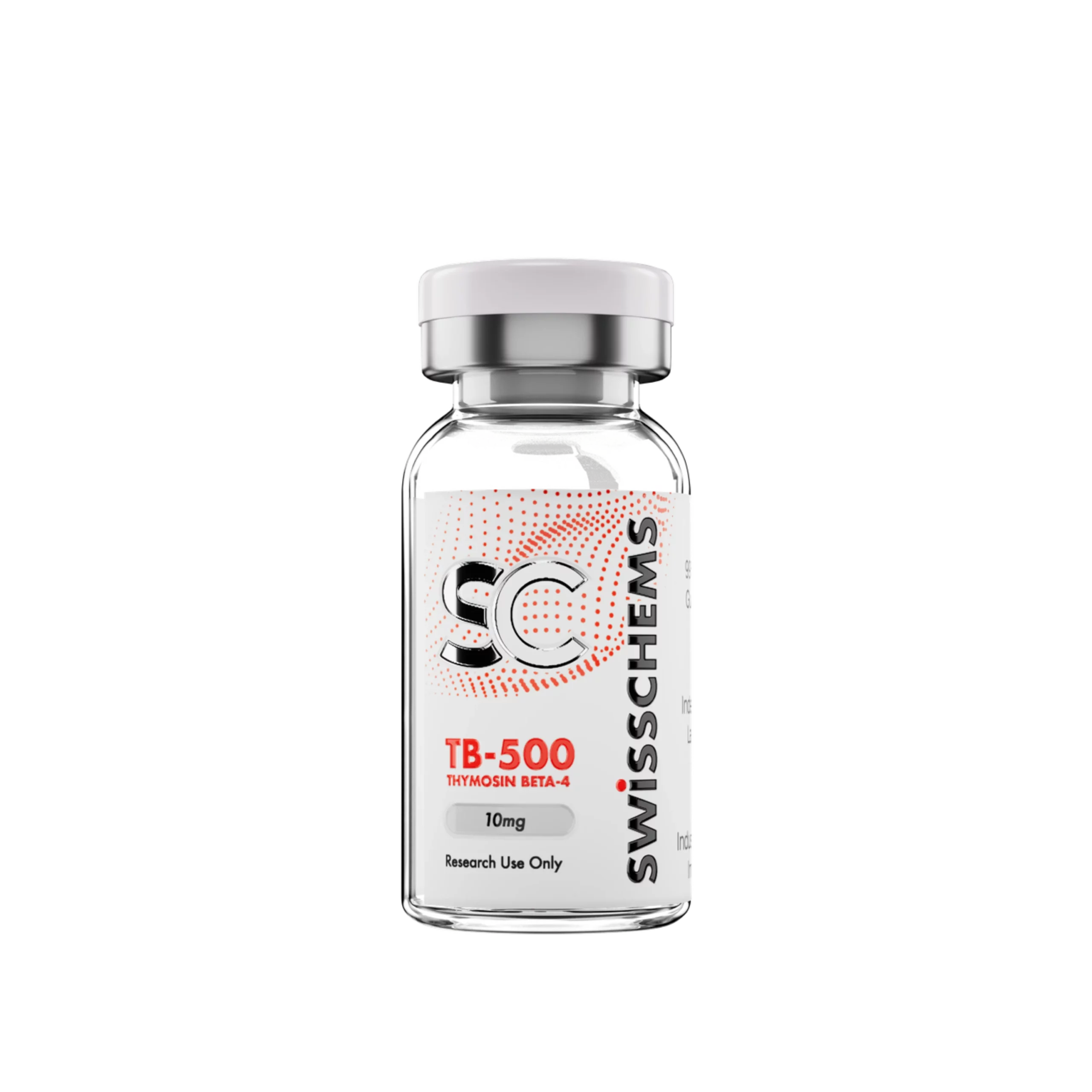
TB-500 Overview
⭐ Top Benefits: Accelerated tissue repair, reduced inflammation, enhanced recovery, improved flexibility
🧪 Form: Injectable peptide (vial)
⌛ Max Time Used: Commonly 4–6 weeks (research context; limited long-term data)
💰 Average Cost: $42.36 per 10-mg vial
❤️🩹 Side Effects: Possible fatigue, mild lethargy, temporary injection site redness or irritation
📚 Best Peptide Stack: Often paired with BPC-157, GHK-Cu, or CJC-1295 for advanced regenerative research
Copy Brawn10 for 10% off
- Promotes cellular regeneration and tissue repair
- Reduces inflammation and enhances flexibility
- Supports healing of muscles, tendons, and ligaments
- Limited human research and not approved for medical use
- May cause mild fatigue or injection site irritation
- Short research duration limits understanding of long-term effects
Conclusion
Research on KPV in humans is still limited, so more studies are needed to confirm its full benefits and safety.
That said, early findings show KPV may reduce inflammation in conditions like IBS and psoriasis with promising results.
It’s also gaining traction in skincare. KPV may help minimize scars by regulating collagen—offering a breakthrough in cosmetic healing.
KPV carries a low risk of side effects, making it a user-friendly option for those exploring peptide-based wellness.
However, long-term data is lacking, and larger trials are essential to confirm its safety profile over time.
Bottom line: While still under research, KPV looks promising—especially for gut health, skin repair, and inflammation relief.
Frequently Asked Questions
How long does it take for KPV to work?
A study in rabbits with corneal abrasions or surface injury to the cornea of the eye that received eyedrops of KPV had accelerated complete healing without any scarring within 60 hours.
What are the benefits of KPV peptides?
KPV acts via PepT1 expressed in immune and intestinal epithelial cells. Furthermore, oral administration of KPV reduces the incidence of DSS- and TNBS-induced colitis indicated by a decrease in pro-inflammatory cytokine expression.
What is KPV peptide good for?
KPV can speed wound healing, reduce infection, fight inflammation, and lead to better cosmetic results. These benefits occur at physiologic concentrations which means KPV could help prevent infection in the setting of serious wounds like burns.





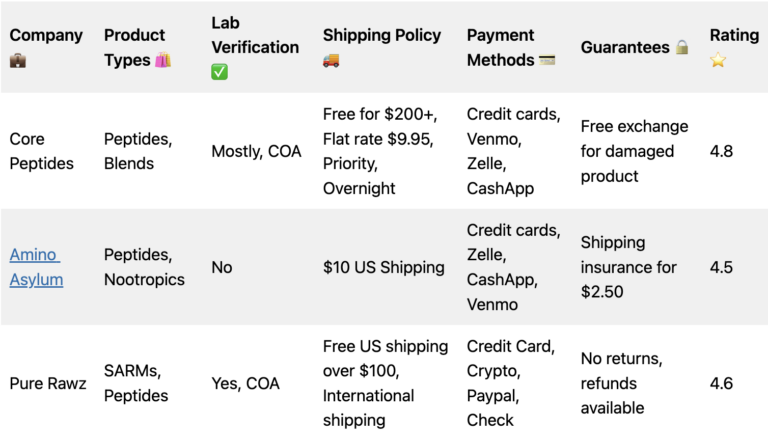


Anyone know anything about biotech peptides? I always kind of dislike seeing articles like this with only one recommended vendor, feels sketchy.
I’m using it for pelvic pain and gastric issues. It works.
You mention KPV creme in the article above. I can’t find a source anywhere. Can you help?
I started taking it for pelvic pain like UTI but have no UTI and gut issues due to high doses of antibiotics and the pelvic pain was gone after second day of 500 m capsule. I am very please. I heard that it can help dizziness and hoping that works for that too.
So the SwissChem website says their KPV isn’t for human consumption. Another website said the same. Is anyone else finding this? Can they be ingested safely? Any experience?