Contents11 sections
The best peptides for endurance athletes are MOTS-c for mitochondrial energy production, BPC-157 for injury recovery, TB-500 for tissue repair and blood vessel formation, CJC-1295 with Ipamorelin for growth hormone-driven recovery, and IGF-1 LR3 for muscle repair and protein synthesis. Each targets a different bottleneck in endurance performance, and selecting the right one depends on whether your priority is energy output, recovery speed, or injury management.
Endurance athletes face a specific set of physiological demands that separate them from strength or physique-focused trainees. Sustained aerobic output, joint and tendon stress from repetitive motion, mitochondrial efficiency, and the ability to recover from high training volumes all determine performance. Endurance peptides address these demands at the cellular level, working through mechanisms like AMPK activation, growth hormone release, angiogenesis, and tissue repair signaling.
This guide covers the five most relevant peptides for endurance athletes, explains how each works, provides dosing protocols, and outlines stacking strategies for different training goals.
Key Takeaways
- MOTS-c is the most endurance-specific peptide available, directly improving mitochondrial function and fatty acid oxidation for better energy production during sustained effort.
- BPC-157 accelerates recovery from the tissue damage that high-volume endurance training creates, particularly in tendons, ligaments, and gut lining.
- TB-500 promotes angiogenesis (new blood vessel formation), which improves oxygen delivery to working muscles during prolonged activity.
- CJC-1295 paired with Ipamorelin stimulates natural growth hormone release, supporting overnight recovery, fat metabolism, and training adaptation.
- IGF-1 LR3 drives muscle protein synthesis and inhibits muscle breakdown, helping endurance athletes maintain lean mass during high-volume training blocks.
How Peptides Support Endurance Performance

Before looking at specific peptides for endurance, it helps to understand the physiological bottlenecks that limit stamina and endurance performance, and how peptide therapy addresses them at the cellular level.
Mitochondrial Efficiency
Endurance performance depends on how efficiently your mitochondria convert fuel into ATP. More mitochondria and better-functioning mitochondria mean more energy available per unit of oxygen consumed. Peptides like MOTS-c directly activate AMPK, the cell’s energy sensor, which triggers mitochondrial biogenesis and shifts cellular metabolism toward fatty acid oxidation.
Recovery from Training Volume
Endurance athletes accumulate training volumes that exceed most other sports. A competitive marathoner runs 70-100+ miles per week. A cyclist may log 15-25 hours of saddle time. This volume creates microtrauma in muscles, tendons, and connective tissue that must heal before the next session. Peptides like BPC-157 and TB-500 accelerate this repair process by modulating inflammation and promoting tissue regeneration.
Oxygen Delivery
VO2 max and oxygen delivery capacity set the ceiling for aerobic performance. TB-500 supports angiogenesis, the formation of new capillaries, which improves blood flow to working muscles. Better capillary density means more oxygen reaches muscle fibers and more metabolic waste gets cleared during effort.
Growth Hormone and Overnight Recovery
Growth hormone release during sleep is when much of the body’s repair work happens. Endurance athletes who train twice daily or log high weekly volumes need this recovery window to function optimally. GH-releasing peptides like CJC-1295 and Ipamorelin amplify the natural GH pulse during deep sleep, supporting faster tissue repair and adaptation.
1. MOTS-c: Best for Mitochondrial Energy and Fat Oxidation
MOTS-c is the most endurance-specific peptide on this list. It is a mitochondrial-derived peptide that activates AMPK, the same pathway activated by exercise and the diabetes drug metformin. For endurance athletes, this translates to improved mitochondrial function, better glucose uptake in working muscle, and enhanced fatty acid oxidation during sustained effort.
Why It Matters for Endurance
Endurance performance is fundamentally about energy production efficiency. MOTS-c improves the ratio of energy output to oxygen consumed by optimizing how mitochondria process fuel. Users typically report that steady-state cardio feels easier at the same heart rate, and that they can sustain higher intensities for longer before fatigue sets in. Our MOTS-c before and after guide documents these improvements in detail.
The peptide also improves insulin sensitivity, which means more stable blood sugar during long efforts and better utilization of pre- and intra-workout carbohydrates. Among the best peptides for endurance athletes focused on energy production, MOTS-c addresses the most fundamental limiter of aerobic performance.
Dosing Protocol
| Phase | Duration | Dose | Frequency |
|---|---|---|---|
| Introduction | Weeks 1-2 | 5mg | 2-3x per week |
| Active | Weeks 3-6 | 10mg | 2-3x per week |
| Taper | Weeks 7-8 | 5mg | 2x per week |
| Off | Weeks 9-12 | None | — |
Best For
Runners, cyclists, triathletes, and any athlete whose performance depends on sustained aerobic output and fat metabolism. For those seeking peptides for stamina and aerobic capacity, MOTS-c is the most targeted option.

Overview
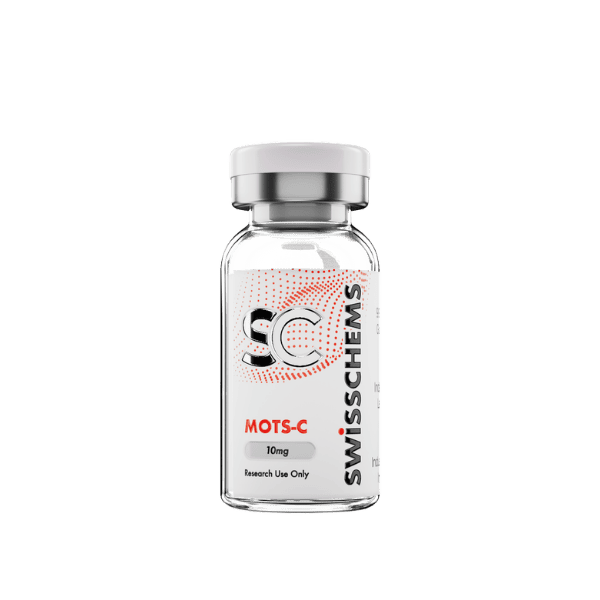
- Form: Lyophilized powder
- Researched Dosage: 5 mg to 10 mg per week, split into 2-3 injections
- Typical Cycle: 4-8 weeks
- Cost: $69.95
- Stacking Options: 5-Amino-1MQ, SS-31, AOD-9604, BPC-157
Pros
- Activates AMPK, the body’s main energy sensor, which may improve how cells use glucose and fat.
- Mouse studies show better insulin sensitivity and protection against diet-induced weight gain.
- Older mice given MOTS-c showed better physical capacity and endurance, which has drawn interest in its role in healthy aging.
Cons
- No human trials show that injected MOTS-c works.
- At 10 mg per vial and several milligrams per dose, one vial usually lasts only 1-2 weeks, so a full cycle gets expensive.
- MOTS-c is not an approved human medication. The FDA lists it as a bulk substance with potential safety risks (Category 2), and WADA bans it as a metabolic modulator.
2. BPC-157: Best for Injury Recovery and Gut Health
BPC-157 (Body Protection Compound-157) is a synthetic peptide derived from a protein found in gastric juice. It has demonstrated significant healing properties across multiple tissue types including muscle, tendon, ligament, and bone. For endurance athletes, its primary value is accelerating recovery from overuse injuries and protecting gut health during prolonged exercise.
Why It Matters for Endurance
Endurance athletes are prone to repetitive stress injuries: runner’s knee, Achilles tendinopathy, IT band syndrome, plantar fasciitis. These injuries sideline training for weeks or months. BPC-157 accelerates the healing process by promoting angiogenesis at the injury site, modulating inflammatory cytokines, and stimulating fibroblast activity for collagen production.
Gut health is another critical issue. “Runner’s gut,” the nausea, cramping, and GI distress common during long efforts, affects up to 70% of endurance athletes. BPC-157’s gastroprotective properties help maintain gut lining integrity during the reduced blood flow to the GI tract that occurs during intense exercise.
Dosing Protocol
| Phase | Duration | Dose | Frequency |
|---|---|---|---|
| Standard | 4-8 weeks | 250-500mcg | Once daily |
| Injury recovery | 4-6 weeks | 500mcg | Once daily, near injury site |
Administered subcutaneously. For gut-related use, some users take BPC-157 orally, though injectable forms have more research behind them.
Best For
Endurance athletes dealing with tendon or ligament injuries, chronic overuse issues, or GI distress during competition. Among peptides for recovery athletes use during heavy training, BPC-157 has the broadest tissue-healing profile.
3. TB-500: Best for Tissue Repair and Blood Vessel Formation
TB-500 (Thymosin Beta-4) is a naturally occurring peptide involved in tissue repair, cell migration, and blood vessel formation. Its primary mechanism is promoting angiogenesis and upregulating actin, a protein essential for cell movement and wound healing. For endurance athletes, this means faster repair of damaged tissue and improved capillary density in working muscles.
Why It Matters for Endurance
Capillary density is a key determinant of aerobic capacity and endurance performance across all endurance sports. The more capillaries surrounding each muscle fiber, the more oxygen that fiber receives and the faster metabolic waste gets cleared. TB-500 supports the formation of new capillaries, which is the same adaptation that high-volume aerobic training produces, but through a complementary mechanism.
TB-500 also reduces inflammation and promotes flexibility in connective tissue, which helps prevent the stiffness and reduced range of motion that accumulate during heavy training blocks.
Dosing Protocol
| Phase | Duration | Dose | Frequency |
|---|---|---|---|
| Loading | Weeks 1-2 | 5mg | Twice weekly |
| Maintenance | Weeks 3-6 | 2.5mg | Twice weekly |
Administered subcutaneously. TB-500 is often stacked with BPC-157 for enhanced recovery.
Best For
Endurance athletes in heavy training blocks, those recovering from muscle or connective tissue injuries, or anyone looking to improve capillary density alongside aerobic training. TB-500 is one of the most effective endurance peptides for athletes in high-volume endurance sports.
4. CJC-1295 with Ipamorelin: Best for Growth Hormone Recovery
CJC-1295 is a growth hormone-releasing hormone (GHRH) analog, and Ipamorelin is a growth hormone-releasing peptide (GHRP). Used together, they amplify the body’s natural growth hormone pulse without the side effects of exogenous GH. For endurance athletes, this combination supports overnight recovery, fat metabolism, and training adaptation.
Why It Matters for Endurance
Growth hormone is released primarily during deep sleep, and it drives much of the body’s repair and adaptation work. Endurance athletes who train 10-20+ hours per week need this recovery window to function well. CJC-1295 extends the duration of GH release, while Ipamorelin sharpens the pulse, creating a synergistic effect that exceeds what either peptide achieves alone.
The combination also promotes fat oxidation and lean mass preservation, which helps endurance athletes maintain an optimal power-to-weight ratio during training and competition. Among peptides for athletic performance, this stack delivers some of the broadest overnight recovery benefits.
Dosing Protocol
| Peptide | Dose | Frequency | Timing |
|---|---|---|---|
| CJC-1295 (no DAC) | 100mcg | Once daily | Before bed |
| Ipamorelin | 200-300mcg | Once daily | Before bed |
Administered subcutaneously. Taken together 30 minutes before sleep for maximum GH pulse amplification. Cycle for 8-12 weeks, then take 4 weeks off.
Best For
Athletes in high-volume training phases who need enhanced overnight recovery, or those looking to optimize body composition while maintaining endurance training loads.
Overview
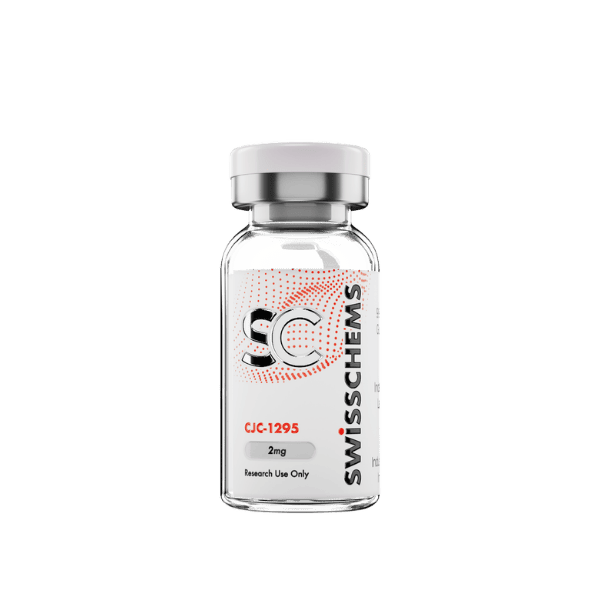
- Form: Peptide vial for subcutaneous injection (2 mg)
- Researched Dosage: 100 mcg, 1-3 times daily
- Typical Cycle: 8-12 weeks
- Cost: $42.95 (1 vial), $429.50 (10 vials)
- Stacking Options: Ipamorelin, GHRP-6, Hexarelin
Pros
- Also called Mod GRF (1-29), it is a GHRH analog with four amino acid swaps that stop enzymes from breaking it down so quickly.
- It boosts the size of natural growth hormone pulses instead of creating a constant elevation, which keeps normal feedback intact.
- Paired with a GHRP like Ipamorelin, it may release several times more growth hormone than either peptide alone.
Cons
- A 2 mg vial covers only about 7-20 days at typical doses, so a full cycle takes several vials.
- Doses should be taken on an empty stomach, since food and insulin blunt the growth hormone release.
- It is not an approved human medication, SwissChems sells it for research use only, and WADA bans it.
5. IGF-1 LR3: Best for Muscle Preservation and Protein Synthesis
IGF-1 LR3 (Insulin-like Growth Factor 1 Long R3) is a modified version of IGF-1 with a longer half-life. It drives muscle protein synthesis and inhibits protein breakdown, making it one of the most relevant peptides for endurance athletes who struggle to maintain muscle mass during high-volume training.
Why It Matters for Endurance
Endurance training, particularly at high volumes, is catabolic. Long runs, rides, and swim sessions break down muscle tissue, and if protein synthesis does not keep pace, athletes lose lean mass over time. This loss reduces power output and increases injury risk.
IGF-1 LR3 shifts the balance toward anabolism by increasing the rate of muscle protein synthesis and reducing the rate of protein degradation, which is why it ranks among the best peptides for muscle growth. It also enhances nutrient uptake in muscle cells, improving the efficiency of post-workout nutrition.
Dosing Protocol
| Phase | Duration | Dose | Frequency |
|---|---|---|---|
| Standard | 4 weeks | 20-40mcg | 2-3x per week |
| Off | 4 weeks | None | — |
Administered subcutaneously. Keep cycles short (4 weeks on, 4 weeks off) due to the potency of IGF-1 signaling and potential for insulin sensitivity changes.
Best For
Athletes in high-mileage training phases who are losing lean mass, or those in a caloric deficit during race preparation.
How to Stack Peptides for Endurance Goals
Different training phases call for different peptide combinations. Here are three practical stacking strategies for endurance athletes:
Base Building (Aerobic Development Focus)
| Peptide | Purpose |
|---|---|
| MOTS-c | Mitochondrial biogenesis, fat oxidation |
| CJC-1295 + Ipamorelin | Overnight recovery, GH support |
This stack targets the two biggest priorities during base training: building mitochondrial density and recovering from increasing training volume.
Race Preparation (Peak Performance Focus)
| Peptide | Purpose |
|---|---|
| MOTS-c | Energy efficiency at race pace |
| BPC-157 | Protect against overuse injuries during peak volume |
This stack prioritizes performance output and injury prevention during the highest-stress training phase.
Injury Recovery
| Peptide | Purpose |
|---|---|
| BPC-157 | Tissue repair, anti-inflammatory |
| TB-500 | Angiogenesis, cell migration, wound healing |
The classic recovery stack. BPC-157 and TB-500 work through complementary mechanisms to accelerate healing of tendons, ligaments, and muscle tissue.
Side Effects and Safety of Endurance Peptides
All five peptides for endurance athletes discussed in this guide have relatively mild side effect profiles compared to anabolic steroids or exogenous growth hormone. However, they are not risk-free.
Common Side Effects
- Injection site reactions: Redness, swelling, or mild irritation at the injection site. Rotate sites and use sterile technique to minimize this.
- Transient nausea: Most common with BPC-157 and higher doses of CJC-1295. Usually resolves within 30 minutes.
- Water retention: CJC-1295 and Ipamorelin can cause mild water retention due to increased GH levels. This typically normalizes within the first 2 weeks.
- Blood sugar changes: IGF-1 LR3 and MOTS-c can affect insulin sensitivity. Monitor blood sugar if you have pre-existing metabolic conditions.
- Headaches: Occasionally reported with Ipamorelin, usually dose-dependent.
Anti-Doping Considerations
Peptides are prohibited by WADA under the S2 (Peptide Hormones, Growth Factors) category. All five peptides covered in this guide are banned in competition and out-of-competition testing for WADA-regulated athletes. If you compete in a sport governed by WADA or a national anti-doping agency, do not use these compounds.
General Safety
- Peptides are sold as research chemicals and are not FDA-approved for human use.
- Source from reputable peptide vendors that provide third-party certificates of analysis (COA).
- Use proper injection technique and rotate peptide injection sites with sterile supplies.
- Consult a healthcare provider before starting any peptide protocol, especially if you have existing medical conditions.
The Bottom Line
Selecting the right peptides for endurance depends on your current training phase and primary performance bottleneck.
- MOTS-c is the strongest standalone choice for improving aerobic energy production. BPC-157 and TB-500 address the tissue damage and recovery demands of high-volume training.
- CJC-1295 with Ipamorelin optimizes the overnight recovery window that endurance athletes depend on.
- IGF-1 LR3 prevents the muscle loss that comes with sustained high mileage.
Frequently Asked Questions
Disclaimer
Please read carefully
The information on this site is for educational and informational purposes only, and is not medical advice. Always consult a qualified healthcare professional before using any supplement or medication, or making changes to your health, fitness, or nutrition routine.
Not medical advice
Content here is not a substitute for professional medical advice.
Consult your doctor
Talk to your doctor before starting any supplement or new routine.
Use at your own risk
We are not responsible for adverse effects from acting on this.
Do your research
Make informed decisions about your own health.
No guarantees
Individual results vary. No claims about outcomes.
Important — Never disregard professional medical advice or delay seeking it because of something you read here. If you think you may have a medical emergency, call your doctor or your local emergency number right away.