
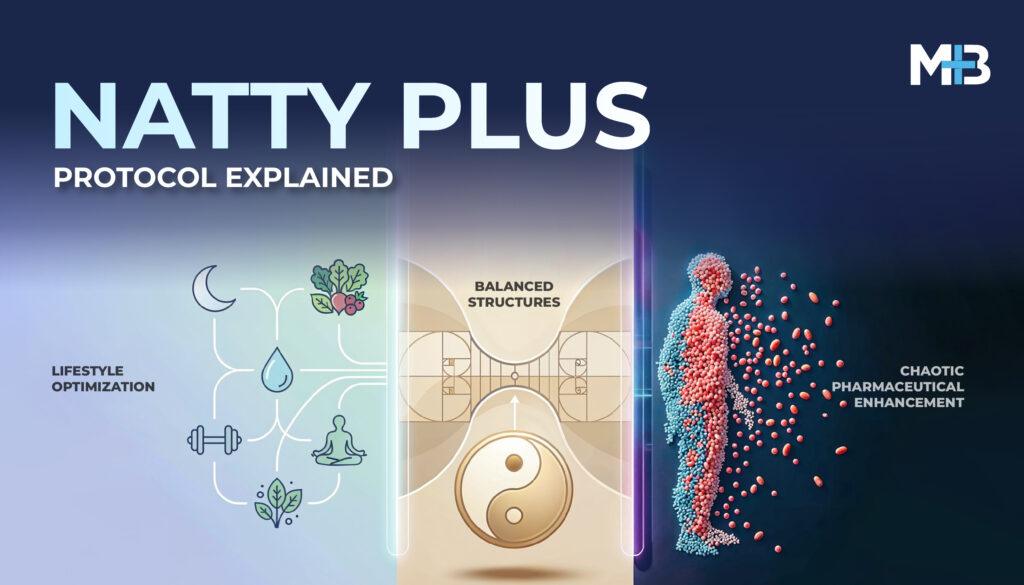
A Practical Look at the Middle Ground Between Natural Training and Full Enhancement
For years, gym culture has treated progress as a binary decision. Either stay natural and accept slower gains, or go enhanced and accept higher risks. That framing has shaped how lifters talk about supplements, PEDs, and even each other. However, it doesn’t reflect how most people actually train anymore.
The Natty Plus Protocol emerged as a response to that outdated debate. Rather than asking whether something is “natural enough,” Natty Plus asks a more useful question: what’s actually limiting progress, and how can it be addressed responsibly?
That perspective is why Natty Plus has gained traction among experienced lifters, biohackers, and performance-focused athletes. It doesn’t promise shortcuts, and it doesn’t pretend biology is optional. Instead, it sits in the gray area between strict natural training and traditional steroid use, where most real-world experimentation already happens.
Originally formalized by Tony Huge, the Natty Plus concept has since been discussed and evaluated as a legitimate category of enhancement rather than a marketing label.
Key Points
- Natty Plus treats performance as a spectrum, not a natural-versus-enhanced binary ⚖️
- It focuses on correcting biological bottlenecks instead of forcing growth through volume alone 🧠
- Legal, lower-toxicity compounds are prioritized over hormone replacement 💊
- Sustainability and health markers matter as much as visible results ❤️
- Natty Plus is a decision-making framework, not a one-size-fits-all stack 🧩

What “Natty Plus” Actually Means

The Natty Plus Protocol is not a supplement stack, a brand, or a promise of rapid transformation. It’s a framework, one that acknowledges that modern lifters face biological constraints that go far beyond training intensity or protein intake.
Sleep disruption, endocrine interference, stress, environmental toxins, and inconsistent recovery are now baseline realities. In that context, simply “training harder” doesn’t always work. Natty Plus focuses on identifying which pathways are limiting progress and supporting them in a targeted, lower-risk way.
This is why Natty Plus is often described as pathway optimization rather than brute-force enhancement. The goal isn’t to override the body’s systems, but to help them function closer to how they’re supposed to.
The Spectrum of “Natural” Training
One of the most useful contributions of the Natty Plus Protocol is reframing the idea of being natural as a spectrum rather than a switch.
On one end, you have foundational tools like creatine, amino acids, caffeine, and basic lifestyle optimization. On the other, you have full anabolic steroid use, which replaces or suppresses natural hormone production.
The Natty Plus Protocol occupies the space in between. It typically includes legal or quasi-legal compounds with significantly lower toxicity profiles than traditional PEDs. These compounds aim to support growth, recovery, appetite regulation, or metabolic efficiency without creating long-term dependence.
That positioning doesn’t make Natty Plus risk-free, but it does make it meaningfully different from traditional enhancement.
Why Lifters Takes the Natty Plus Protocol Seriously
Natty Plus stands out because it reflects how informed lifters already think. The only progress that truly matters is one that’s sustainable, not progress that’s fueled by ego, labels, or extremes.
Instead of chasing size at all costs, it emphasizes health markers, repeatable results, and long-term performance.
That’s an important distinction. Many lifters don’t want to be bigger once. They want to train consistently, recover well, and maintain progress year after year. Natty Plus appeals to that mindset.
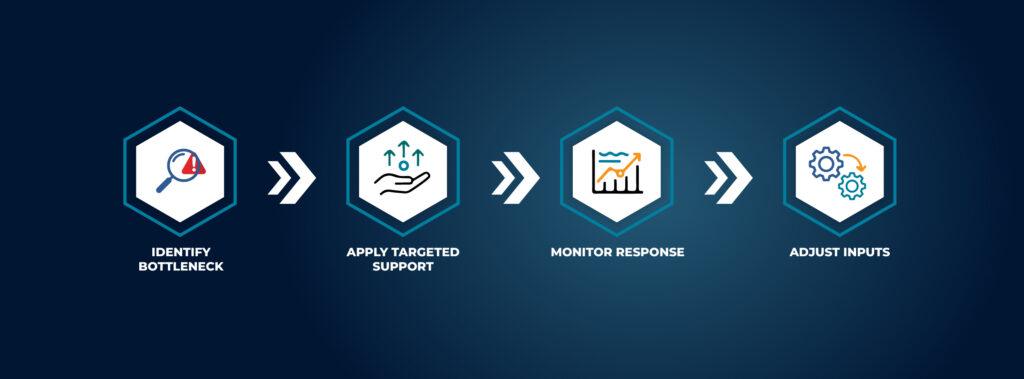
How the Natty Plus Protocol Is Typically Applied
Compounds Typically Used in the Natty Plus Protocol
The following table covers the compounds most commonly associated with the Natty Plus Protocol. This is not an exhaustive list, and specific compound choices vary significantly depending on individual goals and bottlenecks. What these share is that they work with the body’s existing signalling systems rather than replacing them.
| Compound | Category | Primary Role in Natty Plus | Why It Fits the Framework |
|---|---|---|---|
| BPC-157 | Peptide | Tendon, ligament, gut repair | Non-hormonal; supports recovery without suppression |
| TB-500 | Peptide | Tissue regeneration, anti-inflammatory | Complements BPC-157; no hormonal impact |
| MK-677 (Ibutamoren) | GH Secretagogue | GH pulse elevation, sleep improvement, appetite | Stimulates natural GH release; does not suppress endogenous production |
| Ipamorelin / CJC-1295 | GH Secretagogue / GHRH | Pulsatile GH release, recovery, body composition | Works through natural GH axis; no HPTA suppression |
| Enclomiphene | SERM | Endogenous testosterone optimisation | Raises LH/FSH to boost natural T; does not replace production |
| GHK-Cu | Copper Peptide | Collagen synthesis, skin, connective tissue | Naturally occurring peptide; no hormonal mechanism |
| Melatonin (high dose) | Hormone (endogenous) | Sleep quality, GH pulse amplification | Supports natural sleep/GH rhythm; non-suppressive |
| Berberine | Metabolic compound | Insulin sensitivity, glucose partitioning | Improves nutrient handling without hormonal mechanism |
Growth Hormone Secretagogues: MK-677 and Ipamorelin/CJC-1295
GH secretagogues are central to many Natty Plus protocols because they drive natural GH production rather than introducing exogenous growth hormone. MK-677 (Ibutamoren) stimulates ghrelin receptors to increase GH and IGF-1 levels over 24 hours, improving recovery, sleep quality, and body composition without suppressing the natural GH axis. It remains active in the system and does not require cycling in the same way as hormonal compounds.
Ipamorelin paired with CJC-1295 (without DAC) produces a more pulsatile, physiologically natural GH release — mimicking the body’s own GH secretion pattern rather than producing a sustained bleed. This combination is widely used for recovery, fat loss, and lean tissue preservation and has minimal impact on cortisol or prolactin compared to older GHRP compounds.
Peptides: BPC-157, TB-500, and GHK-Cu
Research peptides are the most non-hormonal category within the Natty Plus framework. BPC-157 and TB-500 address connective tissue repair, angiogenesis, and inflammation through mechanisms entirely independent of the hormonal axis. They can be run alongside anything else in a Natty Plus protocol — or a traditional enhancement protocol — without hormonal interference.
GHK-Cu (glycyl-L-histidyl-L-lysine copper) supports collagen synthesis, fibroblast activity, and skin repair. It’s used for connective tissue quality, wound healing, and the cumulative joint wear that comes from years of heavy training. Like BPC-157 and TB-500, it has no meaningful hormonal mechanism.
Enclomiphene: Endogenous Testosterone Optimisation
Enclomiphene is a SERM (Selective Estrogen Receptor Modulator) that raises luteinising hormone (LH) and follicle-stimulating hormone (FSH), stimulating the testes to produce more testosterone naturally. Unlike testosterone replacement therapy, enclomiphene does not suppress endogenous production — it enhances it. This makes it a Natty Plus-aligned tool for men whose testosterone sits in the lower half of the normal range and who want to optimise it without committing to exogenous replacement.
The distinction matters: TRT replaces natural testosterone production. Enclomiphene amplifies it. One requires lifetime management; the other can be stopped with natural production remaining intact.
The draft version of this protocol that circulates online and in discussion forums makes Natty Plus sound more complex than it usually is. In practice, most people start with a single bottleneck.
How the Natty Plus Protocol Is Applied in Practice
Stage 1: Identify the Limiting Variable
Before adding anything, the question is: what is actually limiting progress? Honest answers vary. For many experienced lifters, the answer is recovery — specifically sleep quality and connective tissue health. For others it’s hormonal — natural testosterone in the lower-normal range despite everything else being optimized. For others it’s metabolic — poor insulin sensitivity limiting body composition improvements.
Natty Plus applied well starts by identifying that single limiting variable and addressing it first, rather than stacking compounds speculatively.
Stage 2: Address the Bottleneck
Once identified, the compound choice follows logically:
- Recovery bottleneck: BPC-157 + TB-500 for structural repair; Ipamorelin/CJC-1295 or MK-677 for GH-driven recovery; high-dose melatonin for sleep architecture
- Hormonal bottleneck: enclomiphene to raise endogenous testosterone to the upper-normal range
- Metabolic bottleneck: berberine for insulin sensitivity; GLP-1 support compounds for appetite and partitioning
- Connective tissue: GHK-Cu alongside BPC-157 for collagen and structural repair
Stage 3: Evaluate and Adjust
The Natty Plus framework assumes that progress is measurable and that compounds should be evaluated against actual outcomes. Bloodwork, body composition tracking, and honest performance assessment are all part of responsible application. Adding compounds without tracking their effect isn’t optimization — it’s guesswork.
More experienced practitioners layer two or three of these approaches simultaneously, such as pairing GH secretagogue support with a peptide healing protocol during a period of heavy training. The principle of keeping it simple remains — the goal is to know what’s working, which only happens if the protocol is legible.
Real-World Adoption and Visibility
The Natty Plus Protocol gained attention because it worked before it was widely accepted. Public discussions, podcasts, and collaborations helped demonstrate that lower-risk enhancement could still produce elite physiques when applied intelligently.
Those conversations helped shift the focus away from moral debates about “natty status” and toward practical questions about outcomes, health, and longevity. Over time, Natty Plus became less controversial and more descriptive; a way to explain what many lifters were already doing.
Conclusion
The fitness industry is slowly moving away from extremes. More lifters are questioning short-term peaks that come with long-term costs. They want approaches that respect biology instead of fighting it.
The Natty Plus Protocol fits that shift. It doesn’t promise miracles, and it doesn’t pretend discipline is optional. It simply acknowledges that modern life creates artificial limitations and that addressing those limitations intelligently is not the same as abusing performance drugs.
Frequently Asked Questions
Is Natty Plus still considered natural?
That depends on how strict the definition is. Most people view Natty Plus as its own category—beyond traditional supplementation but below anabolic steroid use.
How is Natty Plus different from steroids?
Steroids often replace or suppress natural hormone production. Natty Plus focuses on supporting signaling pathways and recovery mechanisms without full hormonal shutdown.
Who should consider the Natty Plus approach?
It’s best suited for experienced lifters who have already optimized training, nutrition, and sleep but are no longer progressing consistently.
Are there risks involved with Natty Plus?
Yes. While risks are generally lower than traditional PEDs, Natty Plus still requires research, restraint, and honest self-assessment.
Is Natty Plus about getting bigger faster?
Not primarily. The emphasis is on repeatable progress, better recovery, and results that hold once compounds are removed.









Natty is far more expensive than gear.