Contents12 sections
Anti-aging peptides are short chains of amino acids that people inject in the hope of slowing the signs of aging: lost muscle and collagen, slower recovery, poorer sleep and a weaker immune system. Some raise your own growth hormone, some act on telomeres or the immune system, and some target tissue repair.
This guide covers the six injectable peptides most often picked for anti-aging: Epitalon, the CJC-1295 and ipamorelin combination, sermorelin, thymosin alpha-1, BPC-157 and GHK-Cu. For each one you will find what it is meant to do, what the evidence shows (cell, animal or human), the doses used in studies or commonly reported, and the side effects. Our peptide dosage chart lists studied doses for many more peptides.
The short version: none of these peptides has been shown to slow aging in people. A few have solid human data from other medical uses; the rest rely mainly on lab and animal work.
Key Takeaways
- No peptide has been shown to slow or reverse aging in people. Most of the evidence for anti-aging picks comes from cell studies, animal studies and small human studies.
- Sermorelin and the CJC-1295 + ipamorelin combination raise your own growth hormone and IGF-1. That can shift body composition modestly, but it is not proven to slow aging.
- Epitalon switches on telomerase in cell studies and was linked to longer life in some rodent studies. The human data come from small Russian studies.
- Thymosin alpha-1 and sermorelin have the most human data, from medical uses: thymosin alpha-1 is approved for hepatitis B in more than 30 countries, and sermorelin was FDA-approved for children with growth hormone deficiency.
- BPC-157 and GHK-Cu target tissue repair and collagen. BPC-157’s data are mostly from rats, and GHK-Cu’s human data come from skin creams, not injections.
The Best Anti-Aging Peptides at a Glance
Each peptide targets a different part of aging, and the quality of the evidence differs a lot between them. “Human evidence” here means published studies in people, not user reports.
| Peptide | Main target | Human evidence | Status (US) |
|---|---|---|---|
| Epitalon | Telomerase, pineal gland | Small Russian studies, many using the related pineal extract epithalamin | Not approved; sold as a research chemical |
| CJC-1295 + Ipamorelin | Raises your own GH and IGF-1 | CJC-1295 with DAC: small studies in healthy adults; ipamorelin: tested mainly after bowel surgery | Not approved |
| Sermorelin | Raises your own GH and IGF-1 | Trials in GH-deficient children; small studies in older adults | Approved in 1997, later discontinued; compounded on prescription |
| Thymosin Alpha-1 | Immune function (T cells) | Clinical trials in hepatitis and other immune uses | Not FDA-approved; approved in more than 30 countries |
| BPC-157 | Tissue repair, new blood vessels | A few small reports without control groups | Not approved; banned by WADA |
| GHK-Cu | Collagen, skin repair | Small trials of topical creams; no injection studies | Not approved for injection |
The 6 Best Injectable Anti-Aging Peptides
The numbering below is not a ranking of proven benefit. Where a dose is given, it is either a dose used in studies or a commonly reported dose, not a recommendation.
#1 Epitalon
Epitalon (also spelled Epithalon) is a synthetic peptide and putative anti-aging drug, identified as the putative active component of epithalamin, an extract of bovine pineal gland (1, 2, 3). It was developed in Russia by Vladimir Khavinson’s research group.
Epitalon is a chain of four amino acids: alanine, glutamic acid, aspartic acid and glycine (Ala-Glu-Asp-Gly) (4). None of the four is an essential amino acid; the body makes all of them itself.
Epitalon is studied as a telomerase activator. Telomerase is an enzyme that adds DNA to telomeres, the protective caps at the ends of chromosomes that shorten each time a cell divides (5). In human cell cultures, Epitalon switched on telomerase and lengthened telomeres. In some mouse and rat studies, it was linked to a longer lifespan and fewer age-related changes.
The human evidence is thin. It comes mainly from small Russian studies, many run by the same research group and many using the pineal extract epithalamin rather than synthetic Epitalon. No large, independent randomized trial has shown that Epitalon slows aging in people.
Commonly reported doses: 5-10 mg per day by subcutaneous injection, in short courses of about 10-20 days. These numbers come from users and sellers, not from a trial that set a safe or effective human dose.
Side effects: users mostly report mild irritation at the injection site. The bigger unknown is long-term safety. Telomerase is also switched on in most cancer cells, so raising its activity for years poses a theoretical cancer question that has never been tested in humans.

Overview
- Form: Lyophilized powder for subcutaneous injection
- Researched Dosage: 5 mg to 10 mg daily reported; conservative protocols use 100 mcg to 500 mcg daily
- Typical Cycle: 10-20 days, repeated 1-2 times per year
- Cost: $29.99 to $89.99 (varies by supplier)
- Stacking Options: Thymalin, GHK-Cu, NAD+
Pros
- A synthetic four-amino-acid peptide (AEDG) based on epithalamin, an extract of the pineal gland.
- Cell studies found it activated telomerase and lengthened telomeres, the chromosome caps linked to cellular aging.
- Russian studies in older adults reported better melatonin rhythms and other markers of healthy aging.
Cons
- Most of the research comes from one Russian group and has not been independently replicated.
- Turning on telomerase raises a theoretical concern, since cancer cells use it to keep dividing.
- It is not an approved human medication, and its long-term safety in people is unknown.
#2 CJC-1295 and Ipamorelin
CJC-1295 is a synthetic, longer-lasting version of growth hormone-releasing hormone (GHRH), built on its first 29 amino acids. It signals the pituitary gland to release more growth hormone (GH), which in turn raises insulin-like growth factor 1 (IGF-1). Ipamorelin acts on a different target, the ghrelin (growth hormone secretagogue) receptor, and adds to the GH release. That is why the two are usually combined, often as a premixed CJC-1295 + ipamorelin blend.
CJC-1295 comes in two versions. CJC-1295 with DAC lasts for days: in a study in healthy adults, a single injection raised GH 2- to 10-fold for six days or more and IGF-1 1.5- to 3-fold for 9-11 days. CJC-1295 without DAC (also called Mod GRF 1-29), the version in most blends, has no published human dosing studies. Ipamorelin was selective in animal studies, raising GH without the cortisol rise seen with older GH-releasing peptides. In people it was tested mainly in patients recovering from bowel surgery, where it did not beat placebo.
The anti-aging case is indirect. GH and IGF-1 fall with age, and raising them can shift body composition toward more lean mass and less fat. Claims about more collagen, fewer wrinkles, better sleep and better mood come mostly from user reports, not trials. Higher GH is also not the same as slower aging: in mice, lower GH signaling is linked to a longer life.
Commonly reported doses: 250 mcg of CJC-1295 (without DAC) with 100 mcg of ipamorelin, injected under the skin once a day, for 12-16 weeks. Neither this combination nor these doses have been tested in a clinical trial.
Side effects: pain, redness or swelling at the injection site, facial flushing, headache, water retention, tingling or numbness in the hands, and more hunger. Raising GH and IGF-1 can also lower insulin sensitivity and push up blood sugar.

Overview
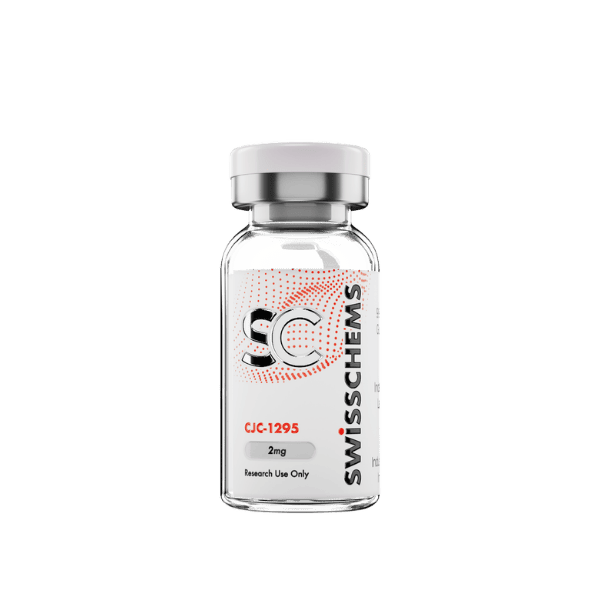
- Form: Peptide vial for subcutaneous injection (2 mg)
- Researched Dosage: 100 mcg, 1-3 times daily
- Typical Cycle: 8-12 weeks
- Cost: $42.95 (1 vial), $429.50 (10 vials)
- Stacking Options: Ipamorelin, GHRP-6, Hexarelin
Pros
- Also called Mod GRF (1-29), it is a GHRH analog with four amino acid swaps that stop enzymes from breaking it down so quickly.
- It boosts the size of natural growth hormone pulses instead of creating a constant elevation, which keeps normal feedback intact.
- Paired with a GHRP like Ipamorelin, it may release several times more growth hormone than either peptide alone.
Cons
- A 2 mg vial covers only about 7-20 days at typical doses, so a full cycle takes several vials.
- Doses should be taken on an empty stomach, since food and insulin blunt the growth hormone release.
- It is not an approved human medication, SwissChems sells it for research use only, and WADA bans it.
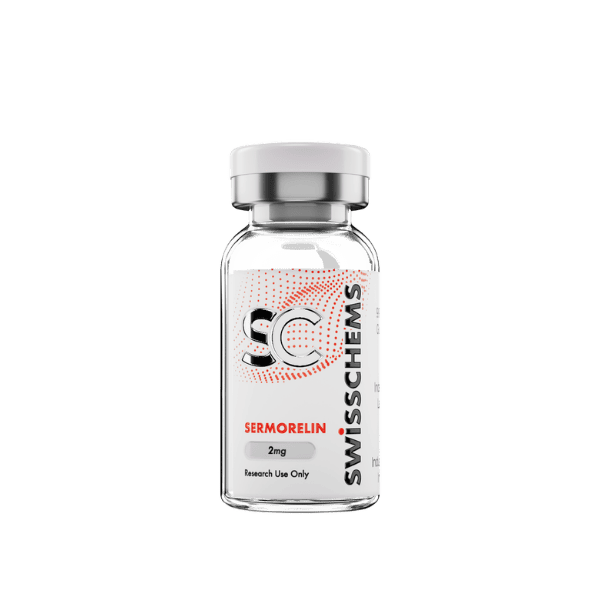
#3 Sermorelin
Sermorelin is the first 29 amino acids of natural GHRH, the shortest piece of the hormone that still works. Like CJC-1295, it prompts the pituitary to release more of your own growth hormone, but it is cleared from the body within minutes, so it produces a short pulse rather than a steady rise. It is not a substitute for HGH: it only works if the pituitary can respond.
Sermorelin has more human history than most peptides on this list. The FDA approved it in 1997 as Geref for children with growth hormone deficiency. It was later taken off the market, and the FDA found it was not withdrawn for safety or effectiveness reasons. Today it is made by compounding pharmacies on prescription, often for anti-aging clinics.
GH output declines steadily from early adulthood. Small studies in older adults found that nightly GHRH injections raised GH and IGF-1, with modest changes in body composition in some groups. Claims that sermorelin thickens hair and nails, gives glowing skin or improves libido come from user and clinic reports, not controlled trials.
Commonly reported doses: 200-300 mcg once a day at bedtime by subcutaneous injection. In the pediatric trials, the dose was set by body weight: 30 mcg/kg at bedtime.
Side effects: pain, swelling or redness at the injection site are the most common. Facial flushing, headache, dizziness and nausea have also been reported.
Overview
- Form: Lyophilized powder
- Researched Dosage: 200 mcg to 500 mcg daily, usually taken before bed
- Typical Cycle: 8-12 weeks, with some protocols running 3-6 months
- Cost: $25.95
- Stacking Options: Ipamorelin, GHRP-2, GHRP-6
Pros
- A copy of the first 29 amino acids of natural growth hormone-releasing hormone, so it prompts the pituitary to release its own growth hormone.
- Keeps the body’s normal growth hormone pulses and feedback loop working, unlike taking synthetic growth hormone directly.
- Was once FDA-approved as Geref for children with growth hormone deficiency, so it has more human data than most peptides in this group.
Cons
- Half-life is very short, about 10-20 minutes, so it usually needs a daily injection.
- Reported side effects include flushing, headache, dizziness and redness or swelling where it’s injected.
- Approved version was taken off the US market in 2008 (the maker cited business reasons), and WADA bans it for tested athletes.
#4 Thymosin Alpha-1
Thymosin alpha-1 is a 28-amino-acid peptide first isolated from the thymus, the gland where T cells mature. The thymus shrinks with age and the immune system weakens with it, a process called immunosenescence. Thymosin alpha-1 supports T-cell function and other parts of the immune response, which is why it appears on anti-aging lists.
Its human data are among the strongest in this group, but they come from medical uses, not anti-aging. A synthetic form, thymalfasin (Zadaxin), is approved in more than 30 countries, mainly for chronic hepatitis B. It is not approved by the FDA. No trial has shown that it slows aging in healthy people.
Doses used in studies: the approved regimen for hepatitis B is 1.6 mg injected under the skin twice a week for six months. Some trials in other conditions have tested higher doses, up to 6.4 mg.
Side effects: it was generally well tolerated in trials; the most common complaint is discomfort or redness at the injection site. Because it stimulates the immune system, it is not a fit for people on deliberate immunosuppression, such as organ transplant recipients.
#5 BPC-157
BPC-157 is a 15-amino-acid fragment of a protein found in human gastric juice. In rat studies, mostly from one research group in Croatia, it sped up healing of tendons, ligaments, muscle, bone and the gut lining, partly by encouraging the growth of new blood vessels (angiogenesis).
It is on anti-aging lists because tissue repair slows with age. That is a fair reason for interest, but there is no evidence that BPC-157 reverses aging. Human data are limited to a handful of small reports without control groups. It is not approved as a medicine, and WADA bans it in sport.
Commonly reported doses: 250-500 mcg a day by subcutaneous injection for several weeks. These figures come from user reports and animal studies, not from human trials.
Side effects: users report injection-site irritation, nausea, dizziness and headache, but side effects have never been measured in a proper trial. Because it promotes blood vessel growth, there is a theoretical concern for anyone with cancer or a history of it.
#6 GHK-Cu
GHK-Cu is a small three-amino-acid peptide (glycine, histidine and lysine) bound to copper. It occurs naturally in human blood, and its levels fall with age. In cell and animal studies, it increased collagen production and helped wounds heal.
Most of its human evidence comes from topical creams, where small trials reported improvements in skin thickness, firmness and fine lines. There are no published human studies of GHK-Cu injections, so injected doses come from users and sellers, not research.
Side effects: users commonly report stinging or pain at the injection site. The long-term effects of injecting it are unknown. Our GHK-Cu copper peptide guide covers the research and risks in more detail.
What Are Peptides?
Peptides are short chains of amino acids, the building blocks of proteins. The sequence of amino acids decides what each peptide does: some act as hormones, some as signals between cells and some as parts of the immune system.
Peptide medicines go back to 1921, when insulin was first extracted from animal pancreas; it was first given to a patient in 1922. Today more than 80 peptide drugs are approved worldwide. Higher counts you may see, such as 239, come from databases that also include larger therapeutic proteins.
How Peptides Are Thought to Slow Aging
Aging has many causes, and each peptide above targets a different one. None of them addresses aging as a whole.
- Falling growth hormone: GH and IGF-1 decline with age (Figure 1). Sermorelin and CJC-1295 + ipamorelin aim to raise them.
- Shortening telomeres: Epitalon is studied as a telomerase activator.
- A weaker immune system: thymosin alpha-1 targets T-cell function as the thymus shrinks.
- Slower repair: BPC-157 is studied for tendon, muscle and gut healing.
- Less collagen: the body makes less collagen and elastin with age, and skin loses firmness. GHK-Cu is studied for collagen production.
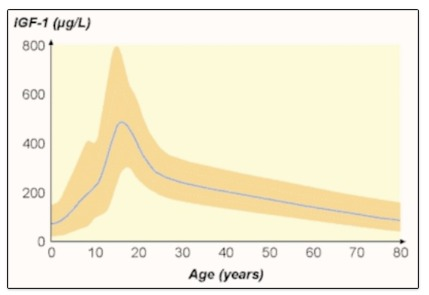
A caution on the growth hormone route: a systematic review of GH injections in healthy older adults found small gains in lean mass and small losses of fat, but side effects such as swelling, joint pain and carpal tunnel syndrome were common. Peptides that raise your own GH are gentler than GH injections, but their long-term benefit and safety have not been tested.
Claimed Benefits and What the Evidence Shows
Claims about anti-aging peptides run well ahead of the evidence. This is what each common claim rests on.
| Claimed benefit | Peptides | Strength of evidence |
|---|---|---|
| More lean mass, less fat | Sermorelin, CJC-1295 + ipamorelin | Small human studies of GH-releasing peptides; modest effects |
| Stronger immune function | Thymosin alpha-1 | Human trials in hepatitis and other immune uses; not tested for healthy aging |
| Faster tissue and wound healing | BPC-157, GHK-Cu | Mostly rat and cell studies |
| Firmer skin, fewer fine lines | GHK-Cu | Small trials of topical creams; no injection data |
| Longer life | Epitalon | Rodent studies and small Russian human studies |

Anti-inflammatory and blood-flow effects, often listed as general benefits of “peptides”, were found for specific compounds in specific studies. They do not apply to peptides as a group.
Side Effects and Risks
The short-term side effects reported for these peptides are mostly mild. The real problem is how little is known about long-term use.
| Peptide | Reported side effects | Main open question |
|---|---|---|
| Epitalon | Injection-site irritation | Long-term effects of telomerase activation in humans |
| CJC-1295 + Ipamorelin | Flushing, headache, water retention, tingling hands, hunger, injection-site reactions | Blood sugar, insulin sensitivity and IGF-1 with long-term use |
| Sermorelin | Injection-site pain or redness, flushing, headache, dizziness, nausea | Long-term use in healthy adults |
| Thymosin Alpha-1 | Injection-site discomfort | Any benefit for healthy aging |
| BPC-157 | Injection-site irritation, nausea, dizziness (user reports) | Safety in people with cancer; no controlled trials |
| GHK-Cu (injected) | Stinging or pain at the injection site | No human injection studies at all |
Some risks apply to all of them:
- Product quality: peptides sold online as research chemicals are not made to drug standards. A vial can be underdosed, contaminated or a different compound. Our guide on how to vet a peptide supplier explains what a certificate of analysis does and does not tell you.
- Injection risks: poor technique or non-sterile mixing can cause infection at the injection site.
- Interactions with health conditions: GH-raising peptides can worsen blood sugar control, and peptides that promote cell growth or new blood vessels are a concern for anyone with cancer or a history of it.
Are Anti-Aging Peptides Legal?
It depends on the peptide and the country. In the US, sermorelin can be prescribed by a doctor and made by a compounding pharmacy. Thymosin alpha-1 is approved as a drug in other countries but not in the US. Epitalon, CJC-1295, ipamorelin, BPC-157 and injectable GHK-Cu are not approved drugs: they are sold as “research chemicals” not intended for human use, and the FDA has restricted compounding pharmacies from using several of them. These rules have been changing, so check the current status where you live.
Athletes should know that WADA bans GH-releasing peptides, including sermorelin, CJC-1295 and ipamorelin, and also bans BPC-157. Our guide on whether peptides are legal covers the country-by-country picture.
Who Should Consider Anti-Aging Peptides?
No anti-aging peptide has been shown to be both safe and useful for healthy people over the long term, so there is no group for whom they are a clear yes.
There is also no evidence for starting young. Growth hormone, IGF-1 and collagen production are still near their peak in your 20s, and no study has tested peptides as prevention at that age.

Most people who look into these peptides are adults in middle age or older with a specific concern, such as low energy, slower recovery or loss of muscle. For them, the sensible first step is a doctor’s visit to rule out treatable causes, such as low testosterone, thyroid problems or poor sleep. Anyone who then considers a peptide is better served by a prescribed option where one exists, such as sermorelin, with blood tests before and during use.
These peptides are a poor fit for anyone who is pregnant or breastfeeding, has cancer or a history of it, or has poorly controlled diabetes.
The Bottom Line
Injectable anti-aging peptides target real parts of aging, but none has been shown to slow aging in people.
- Sermorelin and thymosin alpha-1 have the most human data, from approved medical uses. Sermorelin and CJC-1295 + ipamorelin raise GH and IGF-1, but higher GH has not been shown to extend healthy life.
- Epitalon’s longevity claims rest on cell and rodent studies and small Russian human studies. BPC-157 and GHK-Cu rest mostly on animal and lab work, and GHK-Cu’s human data come from creams, not injections.
- Doses found online are reported doses, not proven ones. Product quality, blood sugar effects and unknown long-term safety are the main risks, so talk to a doctor before using any of them.
Frequently Asked Questions
Disclaimer
Please read carefully
The information on this site is for educational and informational purposes only, and is not medical advice. Always consult a qualified healthcare professional before using any supplement or medication, or making changes to your health, fitness, or nutrition routine.
Not medical advice
Content here is not a substitute for professional medical advice.
Consult your doctor
Talk to your doctor before starting any supplement or new routine.
Use at your own risk
We are not responsible for adverse effects from acting on this.
Do your research
Make informed decisions about your own health.
No guarantees
Individual results vary. No claims about outcomes.
Important — Never disregard professional medical advice or delay seeking it because of something you read here. If you think you may have a medical emergency, call your doctor or your local emergency number right away.