In recent years SARMs, or selective androgen receptor modulators, have grown in popularity and are considered by many to be much safer when it comes to comparing them with anabolic steroids.
Users claim the side effects like hair loss are minimal and SARMS don’t have more severe consequences on the body as many steroids do.
Critics, on the other hand, will say that SARMs have not been “fully vetted” and that research into their benefits and side effects is still in its infancy. Either way, there’s no denying that SARMs have several benefits, including muscle growth, fat loss, better skin, and even better sleep.
Bodybuilders and fitness buffs have been singing the praises of SARMS for years now as they’ve been able to achieve remarkable results in months that otherwise would’ve taken years and, in some cases, never at all.
In this article on SARMS & Hair Loss, we specifically look at the question “Do SARMs cause hair loss”? With conflicting information out there, it can be daunting and misleading when researching the topic of SARMs and hair loss. (1)
Key Takeaways
- Simply put, SARMs can both cause hair loss and prevent hair loss. SARMs are all different from one another, and as such, each SARM possesses different qualities that can negatively or positively impact hair loss. 💡
- The quality of the SARM significantly influences the outcome of experiencing either hair growth or hair loss. High-quality SARMs are less likely to produce hair loss. 🌟
- Stress and anxiety over hair loss can also worsen the problem; however, once you have stopped your cycle, hair growth should return to normal. 😌
- Some SARMs, like RAD 140, are more likely to cause hair loss, especially in higher doses, so it’s crucial to use them responsibly and at recommended dosages. ⚠️
- Using supportive supplements like MK 677 can help mitigate hair loss by boosting natural growth hormone levels and reducing stress. 💪

Do SARMs Cause Hair Loss?
It is indeed true that some SARMs have been shown to cause hair loss, but what many don’t know is that some SARMs prevent hair loss.
Because each SARM is completely unique, they have different qualities as well as impacting hair loss in different ways. Generally speaking, it all comes down to just how suppressive each SARM is.
SARMs reduce natural testosterone production, with many SARMs suppressing these levels to a point where they can have harmful impacts on the body. Alternatively, some SARMs barely stifle natural testosterone suppression.
When testosterone levels drop, the formation of DHT, a hormone linked to hair loss, also changes. If a SARM suppresses testosterone to a safe level, it might actually help prevent hair thinning and loss.
However, some SARMs like RAD 140 are more likely to cause hair loss, especially if taken in high doses. On the other hand, SARMs such as Ostarine and Ligandrol are less likely to cause hair shedding.
Do SARMs Convert to DHT?
Why are testosterone levels so important when it comes to hair loss? Because testosterone is a significant contributor to the formation of DHT, which subsequently causes hair loss.
So it goes, that if you’re taking a SARM that suppresses testosterone to safe levels, it can mitigate the chance of hair thinning and losing hair.
But do SARMs convert to DHT? The simple answer is no. SARMs, or selective androgen receptor modulators, do not directly convert to DHT (dihydrotestosterone).
Unlike anabolic steroids, SARMs are designed to selectively bind to androgen receptors in muscle and bone tissues, not in the scalp or prostate where DHT is known to have a significant impact.
However, the relationship between SARMs and DHT is a bit more complex. While SARMs themselves don’t convert to DHT, they can indirectly influence its levels.
By suppressing natural testosterone production, SARMs might reduce the overall pool of testosterone available to convert to DHT.
This can sometimes lead to lower DHT levels, which might reduce the risk of hair loss. Yet, this suppression must be carefully managed to avoid negative side effects.
How Do SARMs Cause Hair Loss?
Simply put, SARMs have been proven in numerous studies to reduce SHBG or “sex hormone binding globulin.” SHBG binds to testosterone which most people are aware of, however, what is often overlooked is that SHBG actually binds 1.3 faster to DHT than it does to testosterone.
This reduction in SHBG results in an increase in both DHT and free testosterone. Subsequently, hair loss and hair shedding may occur. Luckily, if you do experience hair loss, it will generally only last during the initial phases of the first cycle and will stop once the testosterone can offset the effect.
During this phase, you will also experience benefits such as an increase in motivation and libido and a boost in general health and well-being, so it’s not all bad when it comes to SARMs and hair loss.
It’s important to remember that hair loss is gradual, and a small spike in DHT shouldn’t have a negative impact on your hair health,
Permanent hair loss is only possible if you’re using low-quality SARMs or RAD 140, which is known to induce hair loss, especially if taken in higher than recommended dosages. All in all, hair loss on SARMs can happen, but it’s rare. (2)
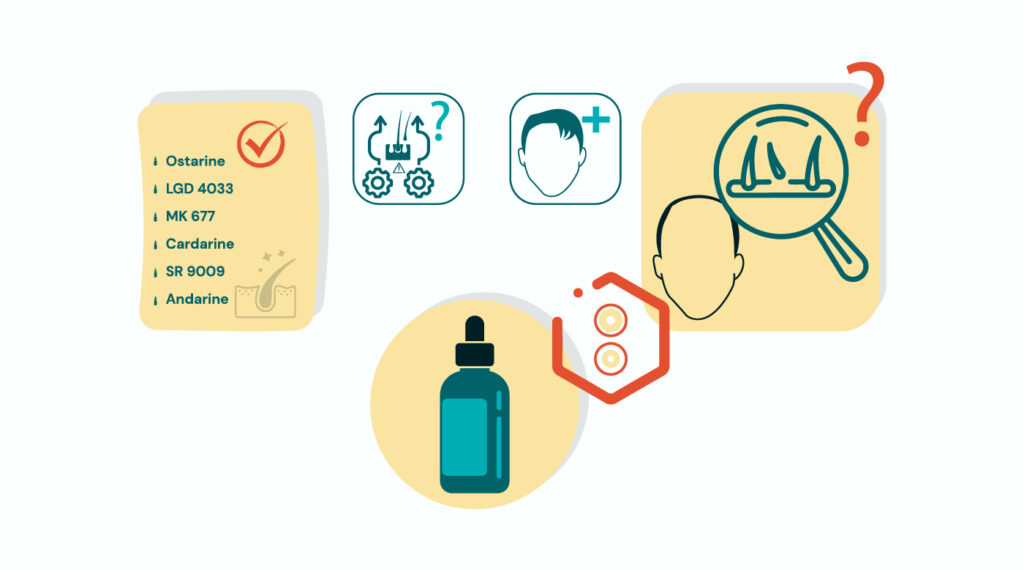
SARMs that Don’t cause Hair Loss
| SARM/Product | Description | Hair Loss Risk |
| Ostarine (MK 2866) | One of the most common and mildest SARMs. 🌟 | 🚫 Low |
| LGD 4033 (Ligandrol) | Popular for lean muscle gain and fat loss. 💪🔥 | 🚫 Low |
| MK 677 (Nutrobol) | Growth hormone secretagogue, not a SARM. 🌿💊 | 🚫 None |
| Cardarine (GW 50156) | Not a SARM, doesn’t affect testosterone. ⚖️🧬 | 🚫 None |
| Stenabolic (SR9009 | Often grouped with SARMs, but non-hormonal. 🧪⚗️ | 🚫 None |
| Andarine (S4 | Combination of Ligandrol and Ostarine. 🧩💥 | 🚫 Low |
There are several SARMs on the market that are considered to be “hair loss friendly” and, if taken correctly, shouldn’t cause hair shedding.
Ostarine
Ostarine, or “MK 2866,” is not only one of the most common SARMs but also one of the mildest. It’s generally accepted that Ostarine does not cause hair loss.
To experience hair loss using Ostarine, you would need to be taking well over 50 mg daily.
LGD 4033
Ligandrol, or LGD 4033, is yet another standard SARM that is commonly used by people looking to develop lean muscle while shedding fat (not hair). Only 1-2% of people taking Ligandrol experience any form of hair loss, however, and luckily, hair growth does start again shortly after ending your initial cycle.
The fact hair loss is mild, may also suggest stress was the main contributing factor rather than LGD 4033.
MK 677
MK-677, or “Nutrobol,” is a growth hormone secretagogue and not a SARM. Whereas SARMs bind to the androgen receptor, MK 677 promotes the production of natural growth hormones.
Obviously, as MK 677 is not a SARM, we can safely assume it should not cause hair loss. As a matter of fact, many people take MK 677 as it can help prevent hair loss and keep hair follicles healthy.
Cardarine
Similar to Mk 677, Cardarine does not fall into the SARM category. Caradine or “GW 50156” does not promote or impact naturally produced testosterone and, as such, should play no role whatsoever in causing people to lose hair or experience hair shedding.
If you are experiencing hair loss with Caradine, you’re probably using a low-quality version or simply using too much.
Stenabolic (SR9009)
Stenabolic or “SR9009” is often mentioned in the same conversations when it comes to SARMs, although not being one itself.
Stenabolic is “non-hormonal,” meaning it should have no effect on your testosterone and, subsequently, your hair follicles and hair loss.
Andarine
A combination of both Ligandrol and Ostarine, S4, also known as “Andarine.” Used responsibly and in the correct dose, S4 should not cause hair loss or hair shedding.
A small number of users have experienced light hair loss while taking S4, but again it’s not clear whether this is due to S4 or lifestyle-like factors like stress and anxiety. (3)
Common Side Effects of SARMS
SARMs, or selective androgen receptor modulators, are popular for their muscle-building benefits. However, they can also have side effects. Here are some common ones to be aware of:
Testosterone Suppression
One of the most common side effects is testosterone suppression. SARMs can lower your body’s natural testosterone production. This can lead to fatigue, mood swings, and a decrease in libido. It’s important to monitor testosterone levels during use.
Liver Toxicity
Some SARMs can be toxic to the liver. This is more common with higher doses and long-term use. Symptoms might include fatigue, nausea, and jaundice. Regular liver function tests are recommended.
Hormonal Imbalances
SARMs can cause hormonal imbalances. This might lead to side effects like acne, hair loss, and mood changes. These imbalances can affect both men and women.
Increased Risk of Heart Problems
There is an increased risk of heart problems when using SARMs. Some users have reported high blood pressure and cholesterol issues. Keeping an eye on cardiovascular health is crucial.
Mood Changes
Mood changes are another possible side effect. Users might experience anxiety, irritability, and depression. These changes can be mild or severe, depending on the individual and the dosage.
Hair Loss
Hair loss can occur with certain SARMs, especially those that impact testosterone levels significantly. This is usually reversible once the cycle is stopped.
Vision Issues
Some SARMs, like Andarine, can cause vision issues. This might include a yellow tint or difficulty seeing in low light. These effects are generally temporary and subside after discontinuation.
While SARMs can offer benefits, it’s crucial to be aware of these potential side effects and take steps to minimize them.
SARMS & Hair Loss – How to Avoid It
So how can you avoid hair loss while on SARMs, and is it possible that some SARMs increase hair growth? One factor that is often overlooked is that many users are stressed about hair loss while using SARMs.
More often than not, stress itself is the cause of hair loss and hair thinning. The other most obvious reason you may be experiencing hair loss, even with a high-quality SARM, is overdosage.
MK 677 is generally accepted as being the most effective way to limit, stop, or mitigate hair loss and hair thinning.
Used in combination with your primary SARM, MK 677 boosts the natural production of growth hormone resulting in better hair and lower stress levels. (4)
How to Fix Hair Growth after Using SARMs?
| Method | Description | Effectiveness |
| Ketoconazole Shampoo | A shampoo that helps reduce hair loss and promotes hair restoration. 🧴🛁 | 🌟 High |
| 5-AR Inhibitors | Compounds that may slow hair loss and help reverse it. 💊🧬 | ⚠️ Moderate |
| Healthy Lifestyle | Reducing stress, eating well, and proper hair care. 🌿🍎 | 🌟 High |
One of the most effective things you can do to reduce hair loss and promote hair restoration is to use the shampoo “ketoconazole.”
Additionally, if you have advanced hair loss, then “5-ar inhibitors” may slow hair loss and even help to reverse it.
However, these compounds have numerous side effects, and much thought needs to be taken before purchasing and using them.
Where Can I Buy SARMs?
Sports Technology Labs
Sports Technology Labs just released their new range of Peptides that are focused solely on bringing high-quality products to your life.
STL is famous for its SARMs, however, looking at the testing and development processes of their Peptides, it’s safe to say the quality of the Peptides is spot on.
They might not have as many options as some of the other players, but this is brand new! Give them time.

Sports Technology Labs Overview
💊 🧪 Forms: Liquid and Powder SARMs
📄 Lab Verified (COA): Yes
📬 Shipping Policy: Free shipping in US with $99+ or $299+ internationally, arrives within 3-5 days in US
💵 Payment Methods: Credit cards, Crypto
✅ Guarantees: Free exchange for damaged product
📦 Other Products: Powder SARMs and Peptides
🔖 Promo Codes: 15% off with Brawn15
🏷 Price (RAD140 10mg equivalent): $64.99
⭐️ Rating: 4.6
➡️ Go to the Full review
- Provides up-to-date COAs
- Various payment methods, including Bitcoin
Conclusion: SARMs and Hair Loss
Who doesn’t want to keep their full head of hair? I know I certainly do. The fact of the matter is that we need to avoid anything that may speed up or exacerbate hair loss.
That said, high-quality SARMs may reduce the risk of experiencing hair loss, especially if correct dosages are cycles are adhered to.
Remember, RAD 140 is known to cause hair loss, and if you’re predisposed to balding, your best bet is to give it a wide berth. Rather opt for Ostarine or even LGD-4033.
Frequently Asked Questions
What are the side effects of SARMs on women?
For women, one of the most common side effects is the disruption to their menstrual cycle, which may result in irregular periods and possibly inflammation and discomfort. Additionally, women may also show signs of male characteristics such as growing body hair, hair loss, and erratic mood swings.
How to prevent hair loss while on RAD 140?
One effective way to reduce or mitigate hair loss is by using 1mg of Finasteride daily. However, if you’re taking SARMs that are of high quality, you’re less likely to see hair loss. Some suggest using MK 677 while on SARMs to prevent hair loss as it generates more growth hormone resulting in healthy hair and glowing skin.
How does RAD 140 cause hair loss?
The vast majority of RAD 140 users suffer some form of hair loss. This is because suppresses SHBG (sex hormone binding globulin), releasing DHT (dihydrotestosterone) throughout the bloodstream. In short, the sudden change in hormones may cause hair loss.
What are the side effects of Ostarine?
Some of the common side effects associated with Ostraine are nausea and diarrhea. There is also the risk of liver damage in long-term users of Ostraine.