Two weeks before your meet, training feels dialed in. Your squat is strong, but your knee aches after every session. Sleep is light, you wake up tired, and even with perfect macros, progress feels stuck—this is where Peptides for Athletic Performance may help.
At the gym, a friend says peptides helped his recovery. You search online and see big promises and warning stories. Some products look like supplements. Others look like medicine. You need a clear, simple view on performance enhancement .
Peptides are small pieces of protein that act like messages in the body. Different peptides may tell tissues to repair, build collagen, or calm irritation. Some are sold as food ingredients such as collagen. Others require medical supervision and may be banned in tested sports.
This guide keeps it practical and honest. We will focus on what peptides matter for performance, safety, rules, and their role in various biological processes. In this article, you will learn what peptides are, how they may work, who they may help, where to find quality, and how to judge claims before you spend money.
Key Takeaways
- Peptides are signals that can support recovery, joint health, and training consistency when your program, nutrition, and sleep are strong. 💪
- Collagen peptides can support joint comfort over twelve to twenty‑four weeks when you pair them with tendon‑loading work. 🦴
- Whey protein hydrolysate can boost muscle protein synthesis and faster recovery when total protein and essential amino acids are in place. 🧬
- If you are a tested athlete, use certified dietary products only and avoid research‑only compounds to protect eligibility. 🏅
- Track strength, times, soreness, and readiness every four weeks to judge real performance value. 📈

What Are Peptides?
Peptides are small chains of amino acids. Most have between two and fifty amino acids. They act as short, biologically active messages that guide various biological processes. In simple terms, proteins are longer and often build or catalyze. Peptides more often signal. Many hormones, such as insulin, come from short chains.
Medical use often falls under peptide therapy. A doctor prescribes these drugs for defined conditions and monitors dose, purity, and effects. Research compounds are unapproved. They may include insulin like growth factors alongside growth hormone releasing peptides or growth hormone releasing hormones, which can affect growth hormone levels.
These are risky for sports performance and often banned. Dietary peptides include collagen peptides, whey protein hydrolysate, and bovine milk whey peptides. These sit beside individual amino acids and essential amino acids in a nutrition plan.
How Peptides Are Delivered And Used For Athletic Performance
The gut breaks most medical peptides before they can work. Enzymes cut them, and the gut wall blocks large molecules. That is why doctors often use injections or advanced delivery systems. A few medicines pair a peptide with an enhancer to improve absorption.
Collagen peptide supplementation is different. Your body can absorb small dipeptides and tripeptides from collagen after you drink them. Whey hydrolysate provides short peptides and amino acids that also absorb quickly.
How Peptide Signals Work For Muscle Growth And Recovery
A peptide binds to a receptor on the cell surface and starts a cascade inside the cell. The signal can change protein synthesis, switch genes on or off, or alter the release of other messengers and growth factors.
In skeletal muscle, some signals drive protein synthesis, repair, and hypertrophy after resistance training. Other signals relate to blood flow, new blood vessel formation, energy use, and mitochondrial function. Different tissues such as muscle tissue, skeletal muscle proteome, connective tissue, and the immune system respond in specific ways.
Why Athletes Care About Body Composition, Fat Loss, And Muscle Mass
Training stresses tissue and drains energy. The body responds with signals that repair and adapt. Peptides may support recovery, muscle growth, and body composition when training and sleep are solid. Some athletes target preserving lean muscle mass during fat loss.
Others focus on boosting endurance and boosting fat metabolism for endurance sports and intense physical activity. These tools do not replace a program; instead, they can help accelerate recovery. They may help you recover faster and improve performance only when the basics are strong.
How Peptides Work To Support Athletic Performance
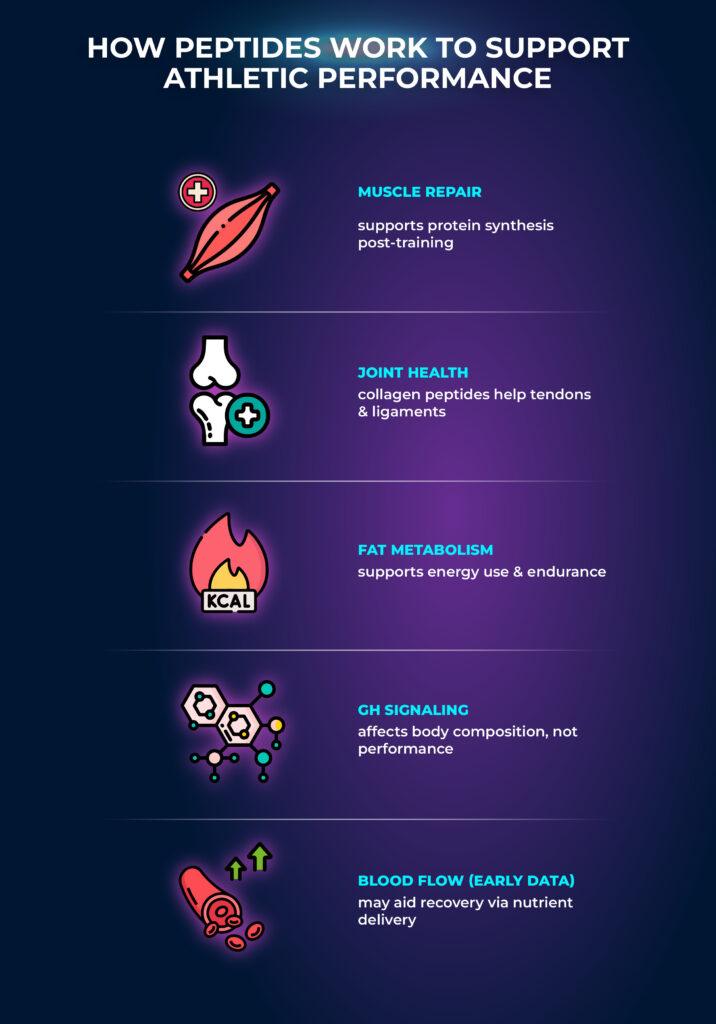
Training sends the main signal for growth and repair. Peptides act like short messages that shape how you adapt after each session. The points below explain how these signals touch muscle, connective tissue, energy use, and blood flow. Use this map to see where peptides might fit in your plan without replacing the basics.
1) Signals that guide adaptation
Peptides act as signals. They bind to receptors and trigger cascades in skeletal muscle and other tissues, affecting protein synthesis, blood flow, and energy use. Training sets the primary signal. Certain peptides may fine-tune those signals, including human growth hormone pathways, so you recover faster from intense physical activity.
2) Connective tissue and collagen support
Some peptides target connective tissue and joint health. Specific collagen peptides and gelatin provide short chains that your gut can absorb. These fragments can reach fibroblasts and support collagen formation in tendons and ligaments. With consistent use and training, prolonged collagen peptide supplementation may help joint comfort and readiness to train.
3) Muscle remodeling after training
Resistance exercise training drives muscle protein synthesis. Certain peptides plug into these biological processes. Signals tied to collagen and tissue repair can support muscle repair and regional muscle strength around a joint. Paired with protein that contains essential amino acids, this helps preserve lean muscle mass during a cut and supports muscle growth during a surplus.
4) Growth‑hormone–related signals (what they change and what they do not)
Growth hormone–related peptides can raise GH levels. They influence the IGF-1 axis, body composition, and fluid balance. But human trials show that while GH may increase lean mass, it does not reliably improve strength, power, or endurance and can raise soreness.
5) Mitochondrial and metabolic signals
Certain peptides link to energy and fat metabolism. Exercise can raise mitochondrial‑encoded signals that help muscles handle stress. These signals may support fat metabolism and help you sustain work in endurance sports. The training plan remains the driver. Peptide signals refine how you adapt and may also improve mitochondrial function.
6) Blood flow and new vessel formation (preclinical)
Some peptides interact with growth factors that guide new vessel formation. Early studies suggest this may improve nutrient delivery and recovery. These findings remain preclinical, and many compounds are banned in tested sports. Keep this in mind as we review safety and rules later.
7) Putting it together for athletes
The biggest levers are still programming, nutrition, and sleep. Peptides for athletic performance may support muscle recovery, tissue repair, and body composition once the base is solid. Combine resistance exercise, smart volume, and adequate protein (including other essential amino acids) with any legal peptide strategy. Track outcomes like exercise performance, regional muscle strength, soreness, and return‑to‑play time to see if a tool truly helps.
Peptide Types For Athletic Performance And Body Composition
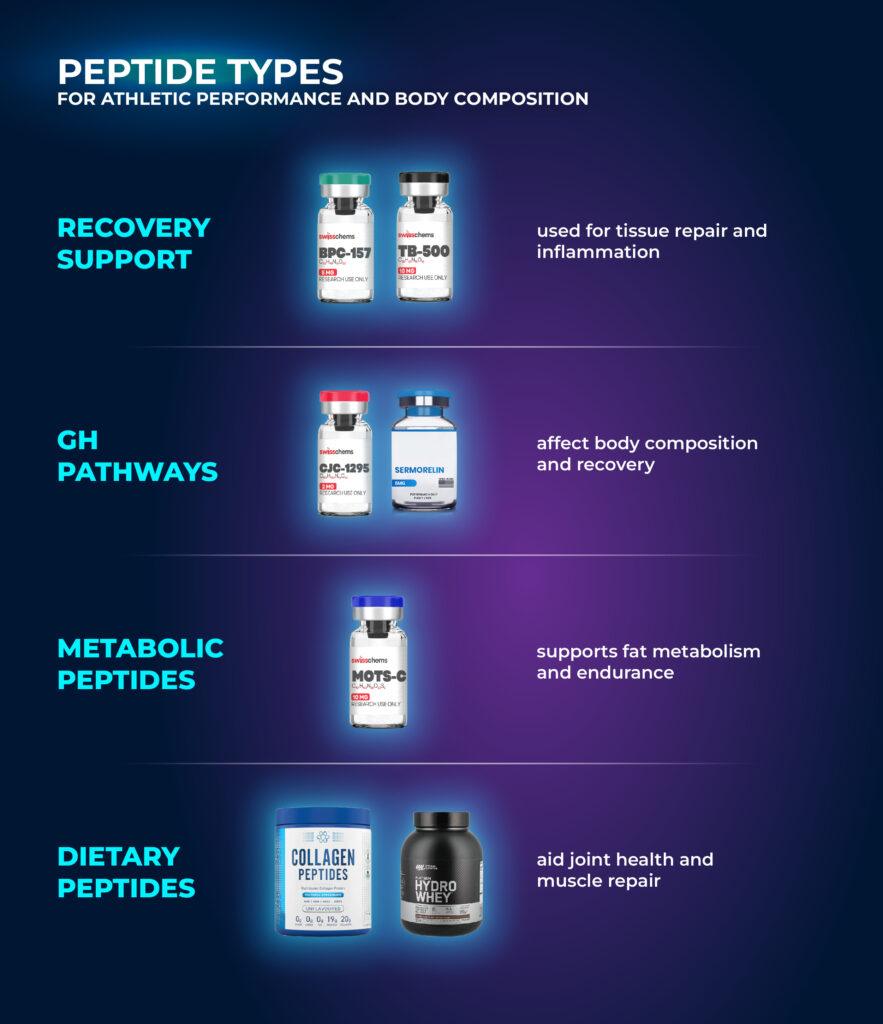
Not all peptides do the same job. Some aim at muscle recovery and tissue repair. Others touch growth hormone pathways, energy use, and fat metabolism. This section maps the major groups for athletic performance, the claims you will hear, and where rules and risks apply. We keep the focus on simple language and on what matters for exercise performance and sports performance.
A) Recovery And Connective Tissue Support
BPC-157
BPC-157 (short for “Body Protection Compound-157”) is a synthetic peptide made up of 15 amino acids. It doesn’t occur naturally in the body but is derived from a partial sequence found in human gastric juices.
The peptide is best known for its regenerative and healing potential. It supports recovery by promoting angiogenesis (the growth of new blood vessels) through activation of the vascular endothelial growth factor (VEGF). This helps build a stronger vascular network, which is essential for repairing muscle, tendons, and connective tissue.
BPC-157 also works by inhibiting 4-hydroxynonenal, a compound that slows tissue growth and healing. By blocking this negative factor, BPC-157 accelerates wound repair, particularly around tendons and soft tissue.
Many users run BPC-157 for injury recovery, gut health, and overall healing support. It’s available in different forms, most commonly as an injectable or nasal spray.
Disclaimer: This content is for informational purposes only. BPC-157 is not intended to diagnose, treat, cure, or prevent any disease. Always consult a healthcare professional before adding new supplements to your regimen.
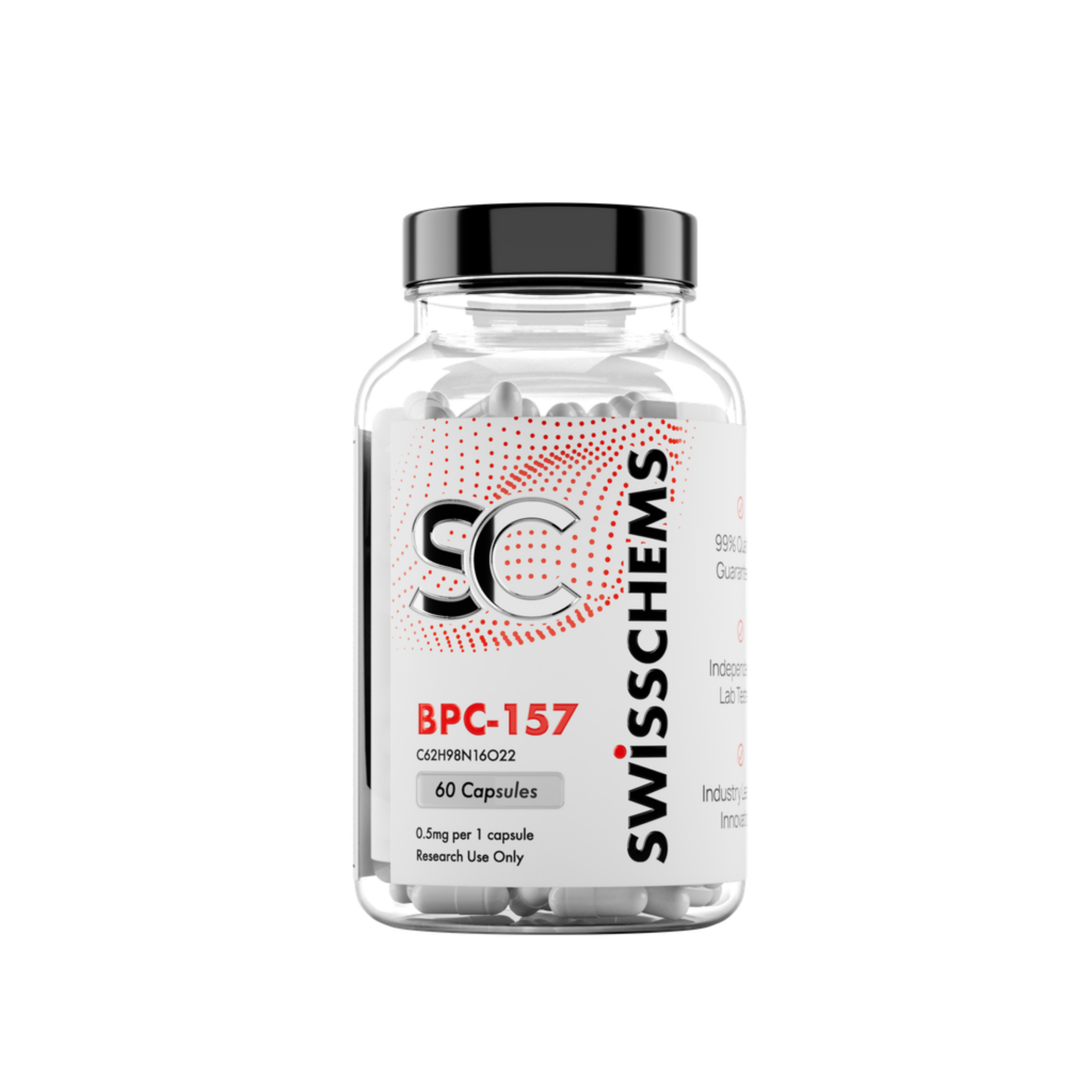
BPC-157 Overview
⭐ Top Benefits: Recovery from injury, tendon/ligament repair
🧪 Form: Injectable liquid, nasal spray, capsules
⌛ Max Time Used: Up to 14 weeks
💰 Average Cost: $39.99 per 5mg vial
❤️🩹 Side Effects: Possible abdominal pain, injection site irritation
📚 Best Peptide Stack: Often paired with TB-500, HGH, or IGF-1
Copy Brawn10 for 10% off
- Supports faster recovery from injuries and tendon damage
- May improve gastric function and gut health
- Strong regenerative effects through angiogenesis
- Can cause abdominal discomfort in some users
- Injection site pain is a common complaint
- Limited long-term human research available
TB-500
TB-500 is a synthetic peptide fragment of Thymosin Beta-4, a naturally occurring protein found in almost all human and animal cells. It plays a key role in cell migration, blood vessel formation, and tissue regeneration, making it a valuable compound for recovery-focused research.
Unlike anabolic agents that stimulate muscle growth through hormonal pathways, TB-500 works on a cellular level by improving healing speed, flexibility, and recovery from soft tissue injuries. Researchers often explore its effects on muscle repair, inflammation reduction, and cardiovascular protection.
This peptide is widely recognized for promoting faster wound healing, increased endurance recovery, and enhanced circulation to damaged areas. Its ability to regulate actin, a critical component of cell structure and movement, makes it uniquely suited for studies involving injury recovery and tissue remodeling.
TB-500 is often studied alongside BPC-157 for synergistic regenerative effects, with both compounds showing complementary benefits for muscle, tendon, and ligament repair. It is typically administered via subcutaneous or intramuscular injection in a research setting.
Disclaimer: This content is for informational purposes only. TB-500 has not been approved for medical use by the FDA or other regulatory agencies. Always consult a qualified professional before handling or researching peptides.
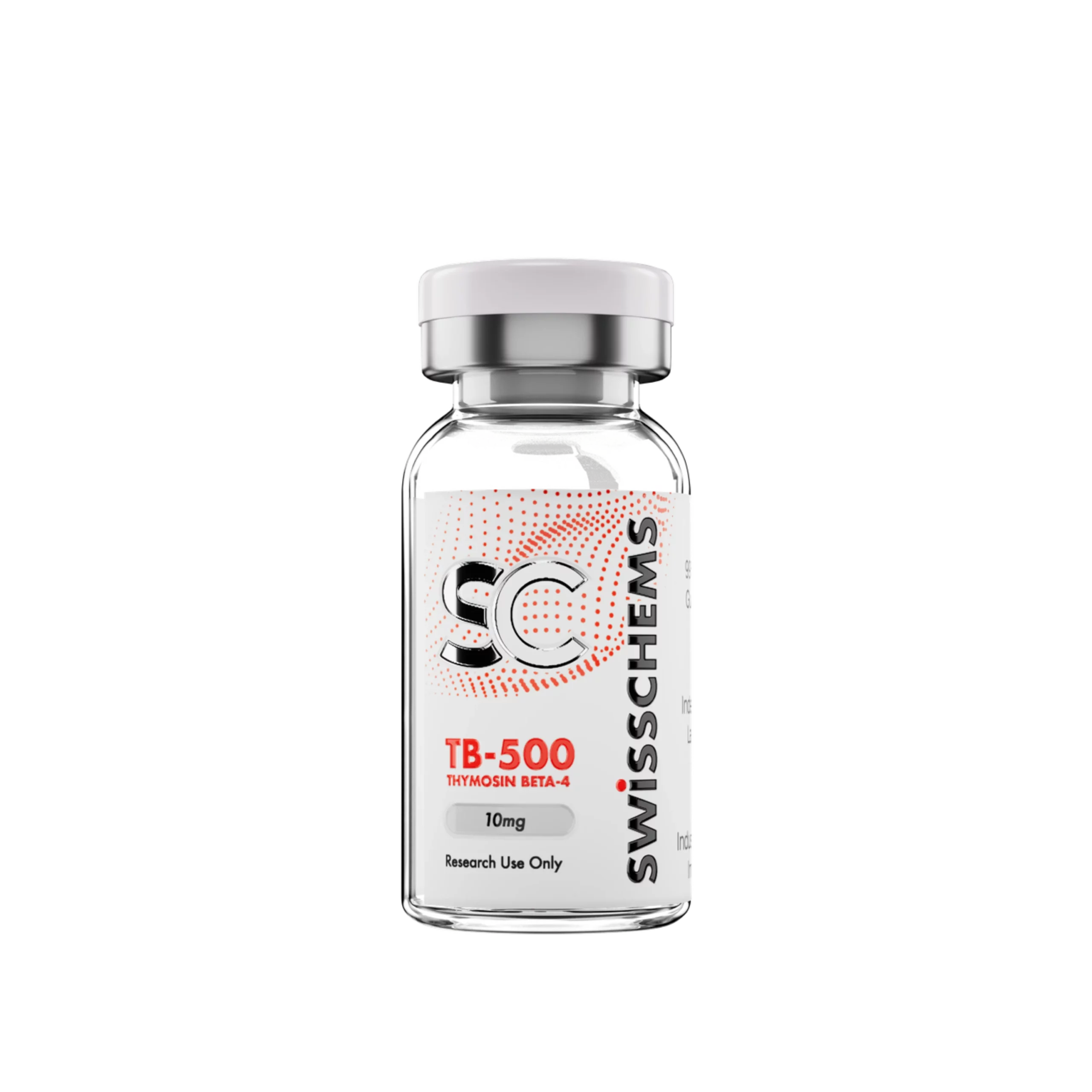
TB-500 Overview
⭐ Top Benefits: Accelerated tissue repair, reduced inflammation, enhanced recovery, improved flexibility
🧪 Form: Injectable peptide (vial)
⌛ Max Time Used: Commonly 4–6 weeks (research context; limited long-term data)
💰 Average Cost: $42.36 per 10-mg vial
❤️🩹 Side Effects: Possible fatigue, mild lethargy, temporary injection site redness or irritation
📚 Best Peptide Stack: Often paired with BPC-157, GHK-Cu, or CJC-1295 for advanced regenerative research
Copy Brawn10 for 10% off
- Promotes cellular regeneration and tissue repair
- Reduces inflammation and enhances flexibility
- Supports healing of muscles, tendons, and ligaments
- Limited human research and not approved for medical use
- May cause mild fatigue or injection site irritation
- Short research duration limits understanding of long-term effects
B) Growth Hormone Releasing Peptides And Growth Hormone Secretagogues
Growth hormone secretagogues like ipamorelin, GHRP-2/6, CJC-1295, and sermorelin can raise GH and shift body composition. Some claim they preserve muscle and enhance recovery. But human trials show GH mainly increases lean mass or water, without reliably improving strength, power, or endurance.
CJC-1295 without DAC
CJC-1295 without DAC (also known as Mod GRF 1-29) is a synthetic analog of growth hormone-releasing hormone (GHRH).
Unlike its DAC-attached counterpart, this version has a shorter half-life, creating more natural growth hormone pulses instead of keeping levels constantly elevated.
By stimulating the pituitary gland to release growth hormone in bursts, this compound helps maintain receptor sensitivity and may reduce the risk of desensitization. These pulses can support lean muscle growth, fat metabolism, recovery, and overall tissue repair.
Many users choose CJC-1295 without DAC when they want tighter control over growth hormone exposure, often stacking it with other peptides like Ipamorelin to amplify its effects.
Disclaimer: Information here is for educational purposes only. CJC-1295 without DAC is sold by research-chemical suppliers and is not approved for human use. Always consult with a qualified healthcare provider before considering any peptide.
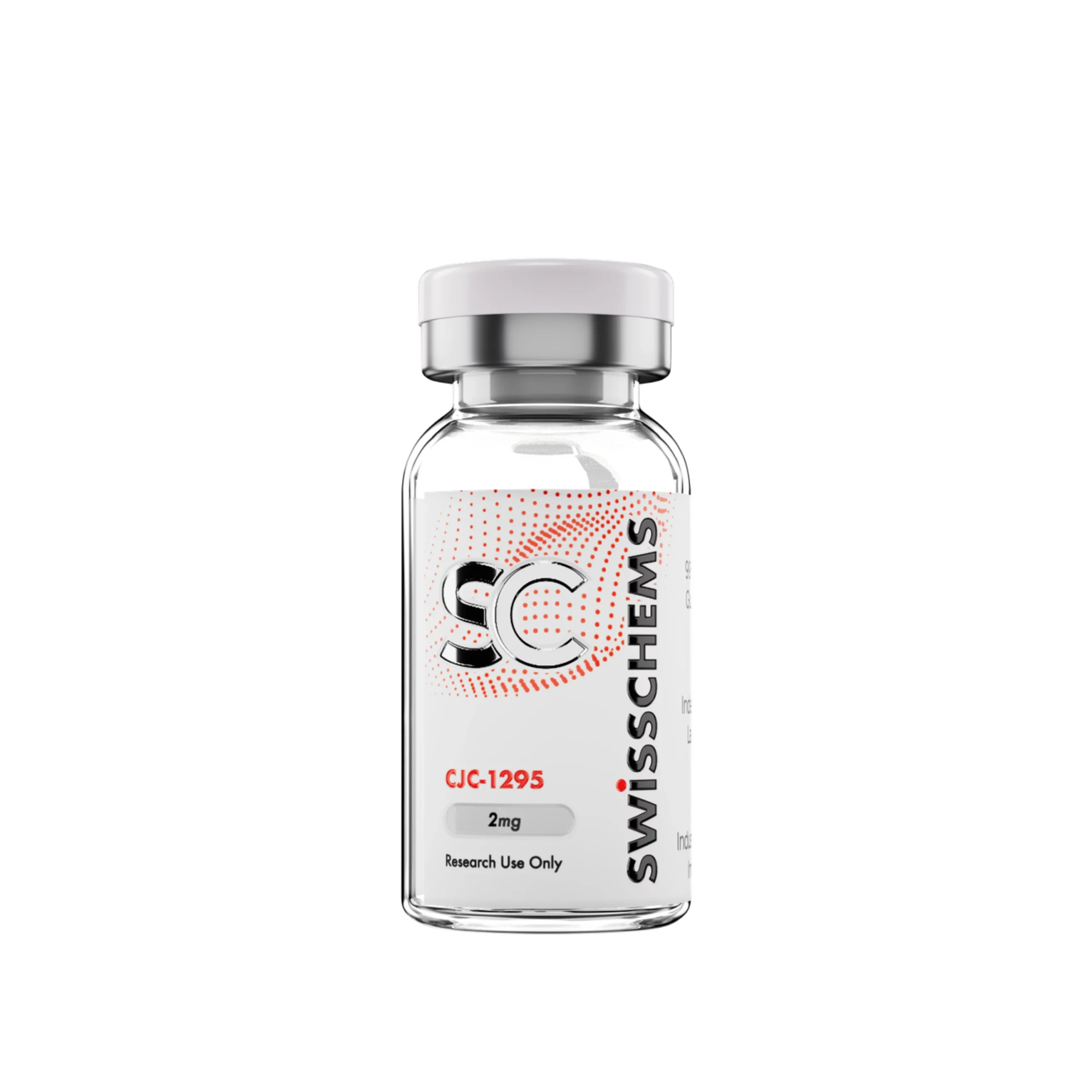
CJC-1295 without DAC Overview
⭐ Top Benefits: Recovery, fat metabolism, lean muscle support
🧪 Form: Injectable liquid
⌛ Max Time Used: 12–16 weeks
💰 Average Cost: $42.95 per 2mg vial
❤️🩹 Side Effects: Flushing, headaches, mild water retention
📚 Best Peptide Stack: Commonly paired with Ipamorelin or GHRP-2
Copy Brawn10 for 10% off
- Mimics natural GH pulses for more balanced results
- May enhance recovery, sleep quality, and tissue repair
- Lower risk of receptor desensitization compared to DAC version
- Short half-life requires multiple injections daily
- Less potent than DAC for sustained IGF-1 elevation
- Limited long-term human research available
C) Peptides For Mitochondrial Function And Fat Metabolism
MOTS‑c. This peptide links to energy use and mitochondrial function. Exercise can raise this signal. Claims focus on fat metabolism, decreasing fat mass, and enhancing endurance in endurance sports.
MOTS-c
MOTS-c (short for “Mitochondrial Open Reading Frame-c”) is a 16-amino acid peptide encoded within mitochondrial DNA. Unlike many peptides derived from nuclear genes, MOTS-c plays a direct role in regulating energy production and metabolic balance.
The peptide is best known for its ability to activate AMPK, a key energy-sensing enzyme that boosts fat metabolism, enhances glucose utilization, and improves mitochondrial function. By supporting these pathways, MOTS-c helps the body adapt to metabolic stress and may promote better endurance and recovery.
Research also suggests MOTS-c contributes to improved insulin sensitivity and cellular resilience, making it a potential tool for both performance enhancement and healthy aging. While human data is limited, interest in MOTS-c has grown for its unique role in metabolic regulation.
Many users explore MOTS-c to support fat loss, energy balance, and exercise performance. It’s typically available as an injectable peptide for research purposes.
Disclaimer: This information is for educational and/or research discussion only. MOTS-c is sold by research suppliers and not approved for human or clinical consumption. Always consult a qualified health professional before use.
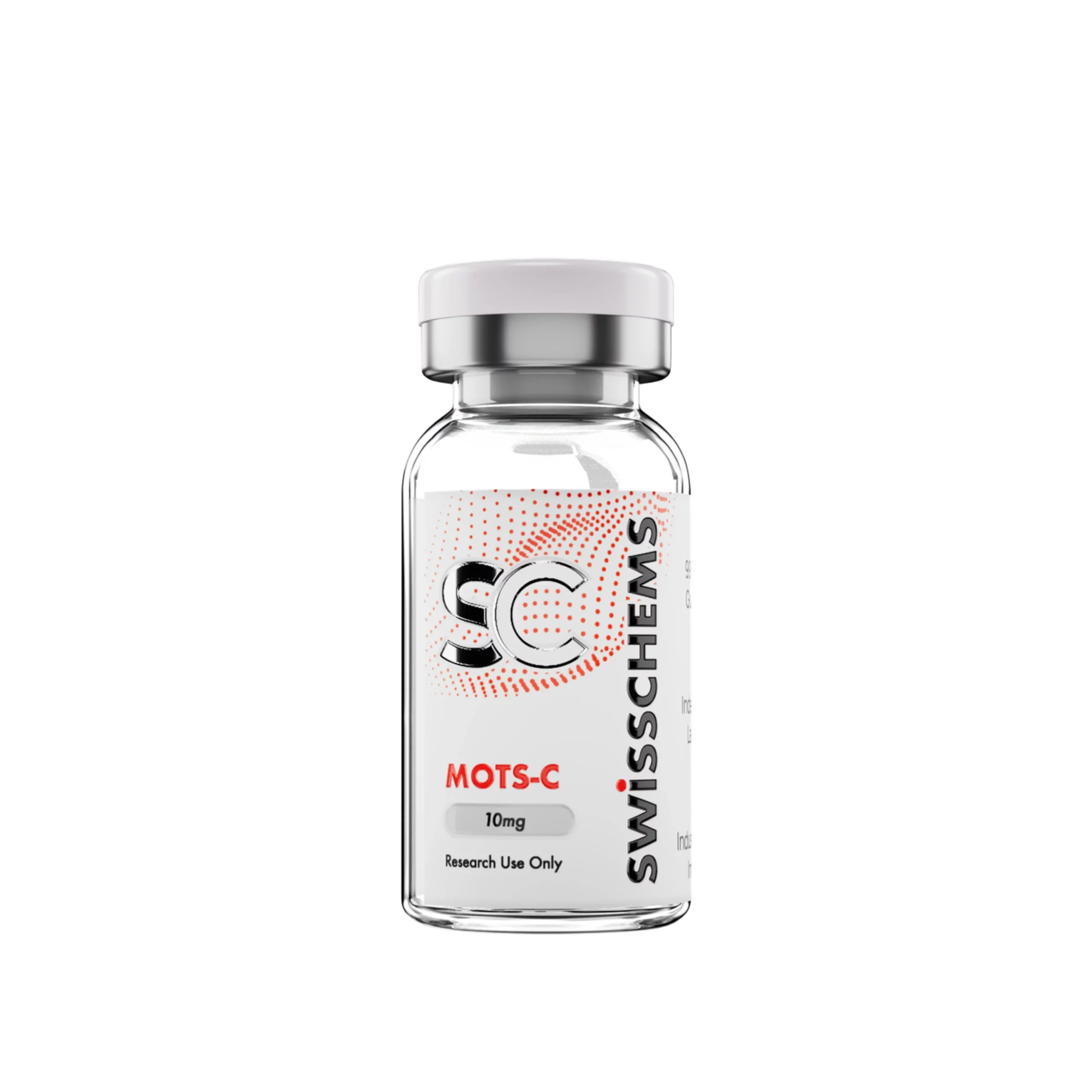
MOTS-c Overview
⭐ Top Benefits: Fat metabolism, energy balance, improved endurance
🧪 Form: Injectable liquid (vial)
⌛ Max Time Used: 4–12 weeks (research context)
💰 Average Cost: $69.95 per 10mg vial
❤️🩹 Side Effects: Possible fatigue, mild nausea, limited human data
📚 Best Peptide Stack: Often paired with CJC-1295 (without DAC) or other mitochondrial/AMPK-support compounds
Copy Brawn10 for 10% off
- Enhances fat utilization and glucose metabolism
- Supports mitochondrial function and endurance
- May improve insulin sensitivity and metabolic flexibility
- Limited human research available
- Requires frequent injections for consistent effects
- Not approved for clinical use; research purposes only
D) Dietary Peptides For Legal Athletic Performance Support
Collagen peptides. Specific collagen peptides are short chains of amino acids from collagen. They are used for joint health and readiness to train. Prolonged collagen peptide supplementation (12–24 weeks) may support comfort around joints and connective tissue during resistance exercise training. Use with loading that targets tendons and ligaments.
Whey protein hydrolysate and bovine milk whey peptides. Hydrolysates are proteins broken into short peptides and individual amino acids. They digest fast and raise blood amino acids quickly. This supports muscle protein synthesis and muscle repair after hypertrophy resistance exercise training. Pair with essential amino acids and other protein foods to support muscle growth and better muscle recovery.
What To Remember For Safe Athletic Performance
Peptides for athletic performance do not replace the base. Legal food‑grade options like collagen peptide supplementation and whey protein hydrolysate can support a plan built on training and sleep. The goal is peak physical performance without needless risk and with a clear plan to recover faster and improve performance over time.
Who Should Consider Peptides For Athletic Performance
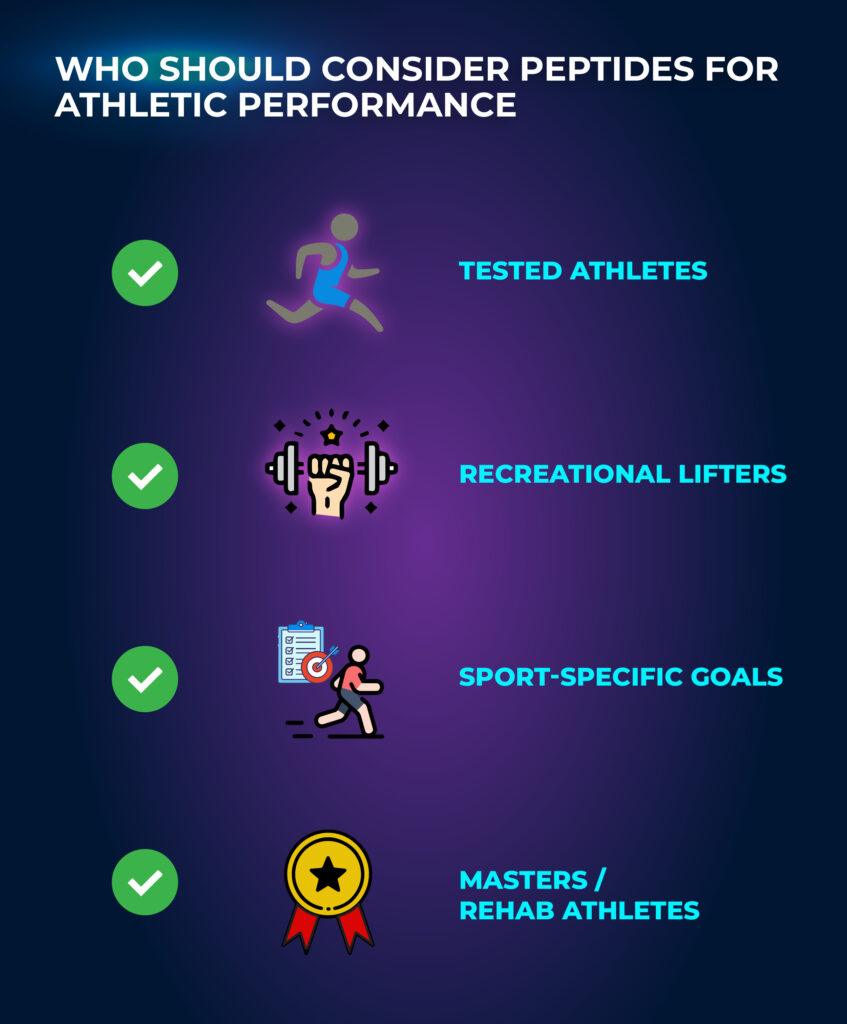
Use this as a quick guide. Build from training, protein, sleep, and tracking. Then decide if any legal peptide fits your goal and your sport’s rules.
For Tested Athletes And Competitive Athletic Performance
Avoid medical or research peptides. Many are banned under peptide hormones and growth factors. Use legal options only, like collagen peptides and whey protein hydrolysate. Choose third‑party tested products, keep records, and work with your team doctor.
For Recreational Lifters Building Muscle Mass And Pursuing Fat Loss
Cover the basics first. Eat enough high‑quality protein to supply essential amino acids. Collagen may help joint comfort over months when you load tissue. Be careful with growth‑hormone‑related peptides. Human performance data are weak and risks are higher.
Special Contexts By Sport And Body Composition Goals
- Strength or hypertrophy focus. Use progressive overload and enough protein to drive muscle protein synthesis. Collagen can support connective tissue around heavy lifts. Track regional strength, soreness, and session quality.
- Endurance or mixed sports. Plan volume and recovery. Legal options like collagen and fast‑digesting proteins can support joint health and muscle recovery. Training load and sleep remain the main levers.
- Cutting or recomposition. Aim to preserve lean muscle mass during fat loss. Keep protein high and lift consistently. Use fast‑digesting protein around training and consider collagen for joint support.
- Rehab or masters athletes. Do not self‑medicate. Follow a clinician‑guided plan with graded loading. Adjust frequency and volume, protect sleep, and document any supplement use if you plan to compete.
Where to Buy Quality Peptides
Choose sources that protect your health and your eligibility to compete. The right source depends on the type of peptide and your goals.
Medical peptides
See a licensed clinician. Use a pharmacy that follows strong quality rules. In the United States this often means a 503B outsourcing facility for sterile drugs or an FDA‑registered manufacturer, especially when considering peptide therapy . These operations follow current good manufacturing practice and batch‑level testing. Do not use gray‑market research sites. If you are in a tested sport, avoid unapproved medical peptides altogether.
Dietary peptides
For legal options like collagen peptides and whey protein hydrolysate, pick products with third‑party certification. Look for NSF Certified for Sport or Informed Sport for anti‑doping risk reduction. USP Verified can help confirm identity, strength, and purity. These marks do not guarantee zero risk, but they lower it.
Quality checklist
- Full label with lot number and clear amino acid compositions
- Current certificate of analysis that lists methods and an ISO 17025 lab
- QR code or site link to batch results
- GMP statement and contact details
- Reasonable claims tied to exercise performance and recovery, not miracles
Evidence Snapshot: What Helps and What Needs Proof
This snapshot weighs the benefits and limits of peptides for athletic performance. We focus on human data and outcomes that matter on the field: strength, endurance, soreness, and return‑to‑play. Use it as a quick compass before you dive into the studies.
Clear wins in active people
Collagen peptides. Multiple trials in athletes and active adults report less activity‑related joint pain after daily use for twelve to twenty four weeks. Better joint comfort helps you keep volume and intensity for athletic performance. These outcomes support joint health and connective tissue resilience during resistance exercise training. Some studies in lifters show gains in strength and fat free mass when collagen is paired with training.
Whey protein hydrolysate and whey peptides. These digest fast and raise blood amino acids quickly. Trials show faster recovery markers, lower muscle soreness, and quicker return of strength at matched protein doses. Use them around training to support muscle protein synthesis, muscle repair, and better muscle recovery. This can aid exercise performance when essential amino acids are adequate.
Promising areas for performance
Mitochondrial and metabolic signals. Exercise can raise peptide signals that support energy use. Early data suggest links to improved fat metabolism, better glucose control, and boosting endurance in endurance sports. These pathways may help you sustain work and improve performance in long sessions while you chase peak performance.
Connective tissue resilience. Specific collagen peptides and gelatin taken with vitamin C before loading can raise collagen production in tendon models. In practice this supports readiness for intense physical activity, jumps, sprints, and heavy lifts. Stronger connective tissue can help you recover faster and maintain training quality.
Body composition support
Growth hormone related peptides. Growth hormone secretagogues and related signals can raise growth hormone levels and may shift body composition toward more lean muscle mass and less body fat in some contexts. Effects on strength or power are mixed, but a tilt toward decreasing fat mass with preserved muscle mass, especially during hypertrophy resistance exercise training, can support certain sports goals and weight classes. These compounds are prohibited for tested athletes and require medical oversight.
Recovery and repair signals
Tissue repair peptides. Certain peptides show pro‑healing effects in animal and early clinical contexts. Signals tied to blood flow, angiogenesis, and new blood vessel formation suggest potential for faster tissue repair after hard blocks.
Bottom line. Peptides show the strongest human support in two areas: collagen peptides for joint comfort and whey protein hydrolysate for recovery. Signals tied to metabolism and tissue repair are promising for performance enhancement when you keep training, sleep, and nutrition tight.
Safety, Legality, and Quality Control
Stay athlete‑first. Use peptides only when they add clear value, and only within the rules that govern your sport and country.
Start with food peptides and protein first. Collagen and whey are generally well tolerated. Medical or research peptides can cause side effects like swelling, which can counteract the benefits of reducing inflammation, water shifts, appetite changes, or interactions with other drugs. Avoid any unapproved peptide if you have unmanaged health issues, are pregnant, or do not have medical oversight.
Legality in sport
Anti‑doping follows strict liability. You are responsible for what is in your body, even if a product was contaminated. Many performance‑related peptides are prohibited at all times. If you compete, confirm status against the current WADA Prohibited List and your federation rules before you consider efficacy.
Use only reputable channels. For prescription use, a licensed clinician and a compliant pharmacy should manage the chain of custody. For dietary peptides, choose third‑party certified products and review batch tests. Keep your receipts, lot numbers, and certificates of analysis.
When to stop and seek help
Stop use and see a clinician if you notice swelling, shortness of breath, headaches, fast weight gain, or unexpected reactions. Document symptoms and bring labels and batch reports to help your provider assess risk quickly.
Putting It All Together: Peptides in Your Plan
Peptides for athletic performance are signals, not shortcuts. When training, nutrition, sleep, and recovery are solid, they can support athletic performance you can measure. The clearest wins today come from collagen peptides for joint health and connective tissue, and from whey protein hydrolysate to enhance recovery, muscle protein synthesis, and muscle repair. Used well, these tools help you hold volume, reduce soreness, and keep exercise performance moving.
Collagen works slowly, so plan 12–24 weeks of daily dosing plus tendon-loading work. Around resistance training, use fast protein like whey hydrolysate to support muscle protein synthesis. Ensure each meal has enough protein with essential amino acids. During a cut, focus on preserving lean mass and improving body composition with protein and smart training.
Match the plan to your sport. For endurance sports, manage load, sleep, and fueling while you target enhancing endurance and steady energy; some signals also relate to mitochondrial function. For strength and power, drive progressive overload and connective tissue care to support muscle growth. During fat loss, control body fat without losing muscle mass. Use the rules and the data in this guide to recover faster and move toward peak performance.
Frequently Asked Questions (FAQs)
What blood tests or biomarkers should an athlete track before and during peptide therapy?
CBC, CMP, lipids, HbA1c or fasting glucose, CRP, ferritin, vitamin D, thyroid; add IGF‑1 or prolactin if supervised; recheck every 8–12 weeks.
How should peptide strategies change for women across menstrual cycle phases or when using hormonal contraception?
Train hardest mid follicular; deload pre menses; on contraception, individualize with a clinician.
Can any peptides improve sleep quality, HRV, or morning readiness during heavy training blocks?
Evidence is limited; prioritize sleep hygiene, steady schedule, adequate protein, and planned deloads; use legal dietary options only.
How should peptides be stored to maintain potency?
Collagen/whey: cool, dry, sealed. Prescription peptides: follow label; often refrigerated, protected from light; discard if cloudy or expired.