You see it every day at the gym while training your upper body. People lifting heavy weights with poor form, trying to grow their back muscles fast. They think using more weight will build more muscle. But weeks go by, and their backs still look the same.
Here is the truth. If you are not keeping tension on your back muscles, including your shoulder blades, during the whole movement, you are not building muscle. You are just moving the weight from point A to point B. This is why cable machines can help.
Cable back workouts give you something free weights cannot. They give you constant resistance. Cables minimize ‘dead zones’ and make it harder to cheat with momentum. Every pull, especially those targeting the upper back muscles, stays smooth and controlled. This keeps your lats, traps, and rhomboids working the entire time.
A study in the Journal of Strength and Conditioning Research shows that cable exercises can be as good as or even better than free weights. This is true especially when you want to isolate a muscle, like during a cable face pull, and keep good control.
In this guide, we’ll show you how to train your back using cable machines. We will focus on science, smart training, and results you can see and feel.
Key Takeaways
- Cable back workouts provide constant tension, which helps build muscle more effectively than many free-weight exercises. 💪
- Exercises like the seated cable row and single arm cable row improve control, symmetry, and upper back development. 🎯
- Cable machines allow a full range of motion and safer joint angles, making them ideal for beginners and advanced lifters. 🔄
- You can target multiple muscle groups with small grip or angle changes, using attachments like the rope or straight bar. 🔧
- Consistent form, slow tempo, and good posture are key to getting results from cable back exercises. ✅

Mechanism of Action: Why Cable Machines Work for Back Growth
Cable machines work differently than free weights. The way they apply resistance allows for better control, muscle targeting, and long-term progress. Below is a breakdown of what makes cable back workouts so effective.
Constant Tension and Smooth Resistance
Cable pulleys provide consistent tension from start to finish. Unlike free weights, which lose resistance at certain angles, cable machine exercises with a straight bar keep your muscles loaded at all times. This helps activate more muscle fibers and supports better control.
Improved Muscle Activation and Isolation
Cable exercises like the single arm cable row, seated cable row, and straight arm pulldown let you isolate your upper back muscles. These moves target the lats, rhomboids, and rear delts with precision.
- Use a straight bar or rope attachment
- Keep your arms straight with a slight bend
- Focus on moving through a full range of motion
This straight-arm setup lets you feel the movement in your shoulder blades and upper arms while keeping your posture stable.
Supports Proper Form and Joint Safety
Cable workouts support good posture and protect your joints. You can maintain a neutral position by incorporating exercises like the reverse cable fly with feet shoulder-width apart, knees slightly bent. Keeping your arms straight helps protect the rotator cuff muscles and promotes shoulder health.
EMG studies show that cable pulls, cable face pulls, and reverse cable fly activate more secondary muscles than many traditional back exercises like bent over rows.
Full Range of Motion and Versatility
Cable back workouts allow for complete range-of-motion training. Whether you’re using the cable crossover machine, performing cable pull throughs, or mixing in wide grip lat pulldowns, cables let you customize angles and grips:
- Narrow grip, overhand grip, or close grip lat pulldown
- Cable deadlifts for total back and lower body integration
- Face pulls and reverse fly for upper back and posture muscles
Better Balance and Muscle Symmetry
Back cable workouts help fix muscle imbalances. You can train one side at a time, like using the left hand in a single arm cable row. Using a cable rope attachment improves muscular symmetry and helps in gaining muscle mass while preventing overcompensation.
From first rep to last, cables encourage strict form. They allow consistent tension, smooth motion, and maximum focus on building muscle mass in your back, making it a fantastic exercise. When done with proper technique and the right cable attachment, these exercises are very effective for muscle growth.
Benefits of Cable Back Workouts
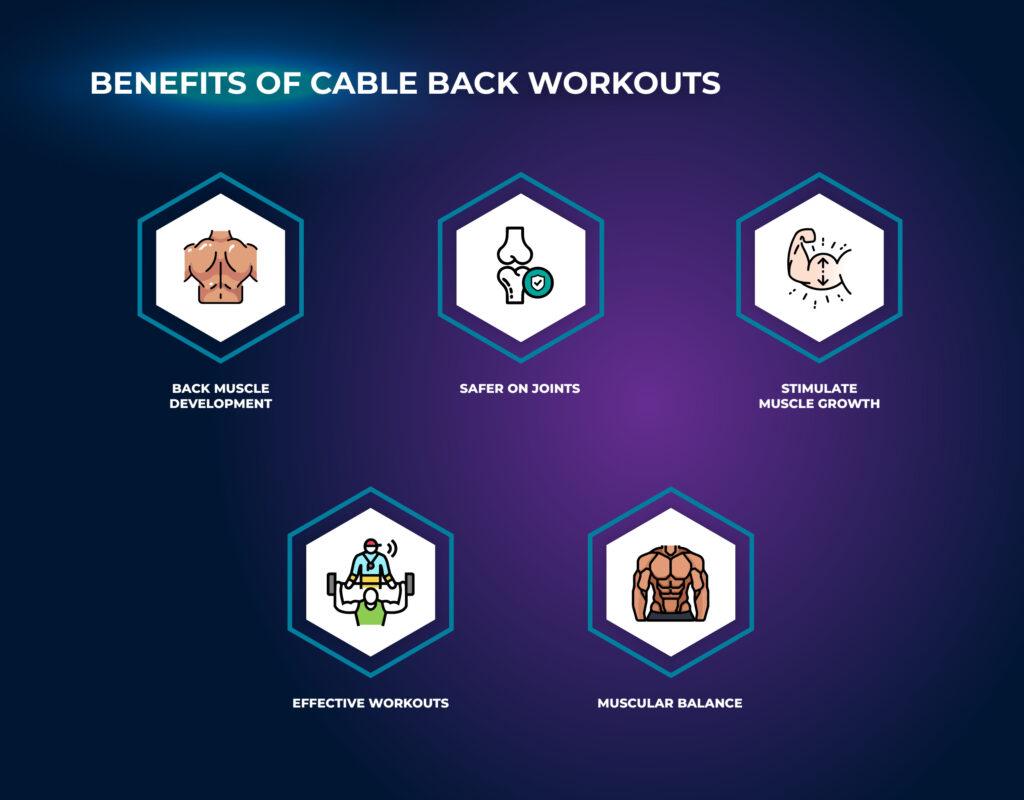
Cable back workouts offer more than just an alternative to barbells and dumbbells. They combine science-backed resistance with control, safety, and versatility. Below are the reasons why cable exercises deserve a spot in your training plan.
Comprehensive Back Muscle Development
Cable back workouts target all major back muscles like lats, rhomboids, traps, erectors, and rear delts. With movements like the seated cable row and straight arm pulldown, you can incorporate various back exercises to train deep muscles and shape the upper body with precision. This level of sculpting is hard to achieve with free weights alone.
Safer on Joints and Spine
The cable machine lets you move with controlled resistance and consistent tension. It reduces stress on the spine and protects the rotator cuff muscles. When done with proper form and knees at shoulder width , cable exercises are safer for your joints, especially when performing high-volume back workouts.
- Use feet shoulder width apart
- Maintain a slight knee bend and neutral position
- Focus on shoulder blades and upper back alignment
Perfect for Advanced Training Methods
Cable workouts shine when it comes to drop sets, supersets, and slow negative reps. These techniques create time under tension which is a key factor in building muscle. With the cable rope attachment or straight bar, you can smoothly adjust resistance mid-set to maximize fatigue and stimulate muscle growth.
Versatility for Every Muscle Group
You can hit multiple angles and muscle groups in one workout routine. Cables make it easy to target:
- Upper back muscles
- Lower body stabilizers
- Rear delts and trapezius muscles
- Deep secondary muscles
You can switch grips (narrow grip, wide grip lat pulldowns overhand grip) and tools (rope attachment, straight arm bar) to keep workouts fresh and effective.
Great for Fixing Muscle Imbalances
Cable back exercises allow unilateral movements, like the single arm cable row, which help correct muscular imbalances. You can train each side equally, adjust range of motion, and avoid compensation by the stronger side.
This makes cables ideal not just for building muscle but for achieving muscular balance and symmetry in the upper arms, back, and shoulders.
Ideal for All Fitness Levels
From beginners using light resistance to advanced lifters pushing heavy sets on the lat pulldown machine or cable deadlifts, cable workouts scale to any level. The consistent tension and guided path make it easy to learn proper technique from the starting position.
Cables are especially helpful when body weight or compound exercises become too stressful on the joints. They offer a safe, controlled way to grow muscle mass in both the lower body and back while improving overall shoulder health.
With a cable machine, you can challenge your upper body from every angle, protect your joints, and correct weak spots.
Best Cable Back Exercises
The key to effective cable back workouts lies in choosing the right movements. These exercises target all major back muscles and allow precise control over angle, grip, and tension.
Seated Cable Row
A classic back builder that targets the lats and rhomboids. Research in the Journal of Electromyography and Kinesiology found high muscle activation in the middle back when performing seated rows with a neutral grip. The cable machine allows constant tension, which enhances hypertrophy and minimizes momentum.
Lat Pulldown (Wide, Neutral, Reverse Grip)
Lat pulldowns activate the latissimus dorsi, teres major, and biceps. Wider grip increases upper lat engagement, while a reverse grip adds more biceps activation. This makes it a versatile vertical pull for back development.
Single-Arm Kneeling Pulldown
This unilateral exercise corrects muscle imbalances and promotes even growth across both sides of the back. Unilateral training enhances motor control and neuromuscular activation, helping lifters develop symmetrical strength and coordination.
Straight-Arm Pulldown
This isolation movement targets the lower lats with minimal bicep involvement. EMG data highlights significant lat activation when arms are kept straight and motion is controlled. It’s ideal for increasing the width and taper of the back.
Face Pulls & Reverse Cable Flyes
Both exercises are effective for rear delts, traps, and rotator cuff muscles. A study in the Journal of Sports Rehabilitation supports face pulls as one of the best movements for shoulder health and postural strength, making them essential for upper back balance.
Cable Shrugs & Cable Deadlifts
Cable shrugs offer consistent resistance and better trap isolation than dumbbells. Cable deadlifts target the posterior chain including the glutes and spinal erectors, while reducing spinal compression, making them a joint-friendly option compared to barbell deadlifts.
Tip: Adjusting grip width and shoulder angle during cable rows can change which fibers are activated. This helps you customize each lift to focus on specific back areas and improve hypertrophy response.
Building Muscles with Cable Back Workout Routines (Scientific Recommendations)
Cable training can fit into any training split, whether you’re doing push-pull-legs, total body routines, or targeted hypertrophy programs. Studies show that varying load, tempo, and rest times can influence the rate of muscle growth and strength adaptation.
For Beginners
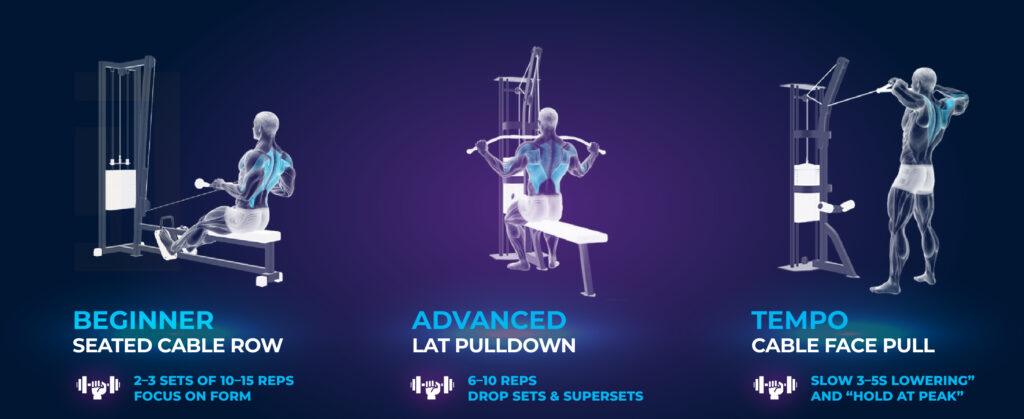
- Reps/Sets: Start with 2–3 sets of 10–15 reps
- Focus: Learn proper form and control before adding volume
- Tip: Use light weight and slow, controlled movements to improve mind-muscle connection
For Advanced Lifters
- Volume: Incorporate heavy sets (6–10 reps), drop sets, and supersets
- Intensity Techniques: Add controlled negatives and partial reps to increase time under tension
- Periodization: Rotate exercises weekly to prevent plateaus
Tempo and Time Under Tension (TUT)
Slow eccentrics (3–5 seconds lowering phase) and isometric pauses at peak contraction have been shown to increase muscle activation. A study in Sports Medicine emphasizes the role of tempo in stimulating hypertrophy and neuromuscular adaptation.
Use tempo-focused techniques in cable rows, lat pulldowns, and face pulls to enhance tension and growth without adding stress to the joints.
List of Relevant Products
While proper training and technique are key, supportive supplements can enhance your performance, recovery, and long-term gains. Here are some science-backed options to consider for your cable back workout program:
- Creatine Monohydrate – Supports increased strength and power output, making it easier to push during heavy cable sets. According to numerous studies, creatine increases intramuscular energy availability, which helps sustain high-intensity performance and aids hypertrophy.

BUY NOW – Enhanced Labs Creatine Monohydrate
- Muscle-Building Peptides (e.g., TB-500 or BPC-157) – These peptides are being studied for their role in muscle repair, tissue regeneration, and joint healing. BPC-157, in particular, may help reduce inflammation and accelerate tendon recovery, which is useful after frequent pulling exercises like rows and pulldowns.
- Pre-Workout Supplements – Ideal for days focused on volume, intensity, or supersets. Look for blends with caffeine, beta-alanine, citrulline malate, and tyrosine to improve energy, endurance, and focus during extended cable training sessions.
BUY NOW – Enhanced Labs Pre-Workout
- Joint Support Formulas – Cables are joint-friendly, but if you’re doing high reps or heavy pulls consistently, support matters. Formulas with glucosamine, MSM, turmeric, and collagen may help reduce inflammation and protect connective tissues.
- Recovery Stacks – Proper recovery is critical for growth. Magnesium supports muscle relaxation and nervous system recovery, while electrolytes improve hydration and prevent cramping. Pair with fast-digesting whey or plant-based protein to kickstart muscle protein synthesis.

- Intra-Workout Amino Acids (Optional) – Branched-chain amino acids (BCAAs) or essential amino acids (EAAs) can reduce muscle breakdown and support endurance, especially during longer workouts with multiple cable back exercises.
BUY NOW – Enhanced Labs Intra-Workout Amino Acids
- Sleep and Hormone Support – Sleep is where real recovery happens. Consider natural sleep aids like magnesium glycinate, zinc, and L-theanine, or hormone-optimizing supplements like ashwagandha if training stress is high.
These products are not mandatory, but when paired with proper form and programming, they can give you an edge in both performance and recovery. Always consult a healthcare professional before adding new supplements to your routine.
Common Mistakes with Cable Exercises
Cable machines offer precision and control, but only if you’re using them correctly. Poor habits not only reduce effectiveness, but also increase your risk of injury or muscular imbalances. Here’s what to watch for:
1. Using Momentum Instead of Muscle
Swinging your body or jerking the cable defeats the purpose of constant tension. This takes the load off your back muscles and puts it on joints or surrounding muscle groups.
- Fix: Control the movement, especially on the eccentric (lowering) phase. Keep your torso stable and isolate the targeted muscle.
2. Ignoring Scapular Control
If you’re not retracting and depressing your shoulder blades, you’re limiting lat and mid-back activation.
- Fix: Focus on initiating each pull by driving the scapula down and in. Think “shoulder blades first, arms second.”
3. Over-Relying on Biceps
In exercises like lat pulldowns or rows, letting the arms dominate the pull can shift focus away from the back.
- Fix: Use cues like “elbows lead the movement” and “pull with your back, not your hands.” Straight-arm movements can help reinforce this.
4. Poor Setup and Body Position
Standing or sitting too far from the pulley alters resistance angles and can strain joints or reduce muscle activation.
- Fix: Keep a neutral spine, feet shoulder-width apart, and adjust your cable machine setup for your height and limb length.
5. Overloading Without Control
Going too heavy leads to form breakdown, especially on movements like the seated cable row or straight-arm pulldown.
- Fix: Prioritize proper technique over weight. Use a tempo that keeps tension on the muscle and control every rep from start to finish.
Disclaimers
Cable back workouts are powerful tools for building strength and improving control, but they are not a complete replacement for all compound lifts. Movements like barbell rows and deadlifts still have their place in a balanced program.
- For Beginners: Start with light resistance and prioritize learning proper form before increasing intensity or load.
- Medical Considerations: Always consult with a qualified trainer or healthcare provider before starting a new workout program, especially if you’re dealing with an injury or chronic condition.
- Supplement Use: Supplements should complement a proper diet and structured training plan. They are most effective when used with guidance and not as a shortcut for poor nutrition or inconsistent workouts.
These guidelines help ensure long-term progress while minimizing risk. Prioritize technique, listen to your body, and make adjustments as needed.
Conclusion
Cable back workouts are not just an alternative to barbells. They are a good way to build a strong and balanced upper body. With simple cable machine exercises like the single arm cable row, seated cable row, and reverse cable fly, you can work specific muscles with better control.
Unlike free weights like the bent over row, cables keep the tension steady from start to finish. This helps you keep your arms straight or slightly bent, use your shoulder blades correctly, and get more out of each rep.
Cable machines let you move freely. You can pull with your left hand or use a cable rope attachment. These small changes help fix muscle imbalances and work both upper and lower body support muscles.
If you want to shape your back, fix your posture, and avoid injuries, cable back exercises should be part of your routine. With good form and steady progress, back cable workouts can help you gain strength and size.
Frequently Asked Questions (FAQs)
Can I build muscle with only cable back workouts?
Yes. Cable exercises provide enough tension and range of motion to build strength and size when done properly.
How often should I do cable back workouts?
Two times a week is enough for most people. Make sure to find the right starting position and allow rest between sessions.
Are cables better than free weights for back training?
They are safer and more controlled, but both have benefits. Combining cables and free weights works best.
Which cable back exercises should beginners start with?
Seated cable row and straight arm pulldown are great for learning form and building base strength.
Can I do cable back workouts at home?
Yes, if you have a cable machine. Many compact models are made for home use.
Are cable rows as effective as dumbbell rows?
Yes—when load and effort match, both build muscle.