You have probably felt it before. Your back feels stiff after hours of sitting. Your core feels weak when even simple movements seem heavy. Many people rush to the gym to fix these problems. They end up with routines that demand heavy weights and strict schedules. But strength, mobility, and recovery can also be trained at home in a simple way.
At home Pilates gives you that option. Traditional workouts often focus only on big muscle groups. Pilates works on the deep stabilizing muscles that protect your spine and improve posture. Research in the Journal of Bodywork and Movement Therapies shows regular Pilates improves flexibility, core strength, and balance. It also reduces stress on the joints compared to high-impact exercise (Kloubec, 2010).
The goal is not only to feel stronger. It is about building a body that moves well in daily life. Athletes can use it for injury prevention. Busy people can use it for stress relief and better mobility. With only a mat and consistency, Pilates can bring science-backed results into your home.
Key Takeaways
- At home Pilates strengthens the core and improves posture with simple body weight movements 🧘♀️
- Slow, controlled Pilates exercises protect the joints while improving balance and flexibility 💪
- Just 15 minutes a day supports weight management and long-term health 🕒
- Breathing and mindful control reduce stress and sharpen focus 🌿
- Staying consistent brings results that go beyond fitness and into daily life ✨

What Makes Pilates Different from Other Workouts
Pilates began in the early 20th century with Joseph Pilates. His method focused on controlled movement, core strength, breath, and body alignment. These principles are still the foundation of Pilates today. Each exercise routine aims to connect the mind and body, making movements both precise and purposeful. Unlike studio classes, at-home Pilates lets you practice core exercises on a mat using only your bodyweight.
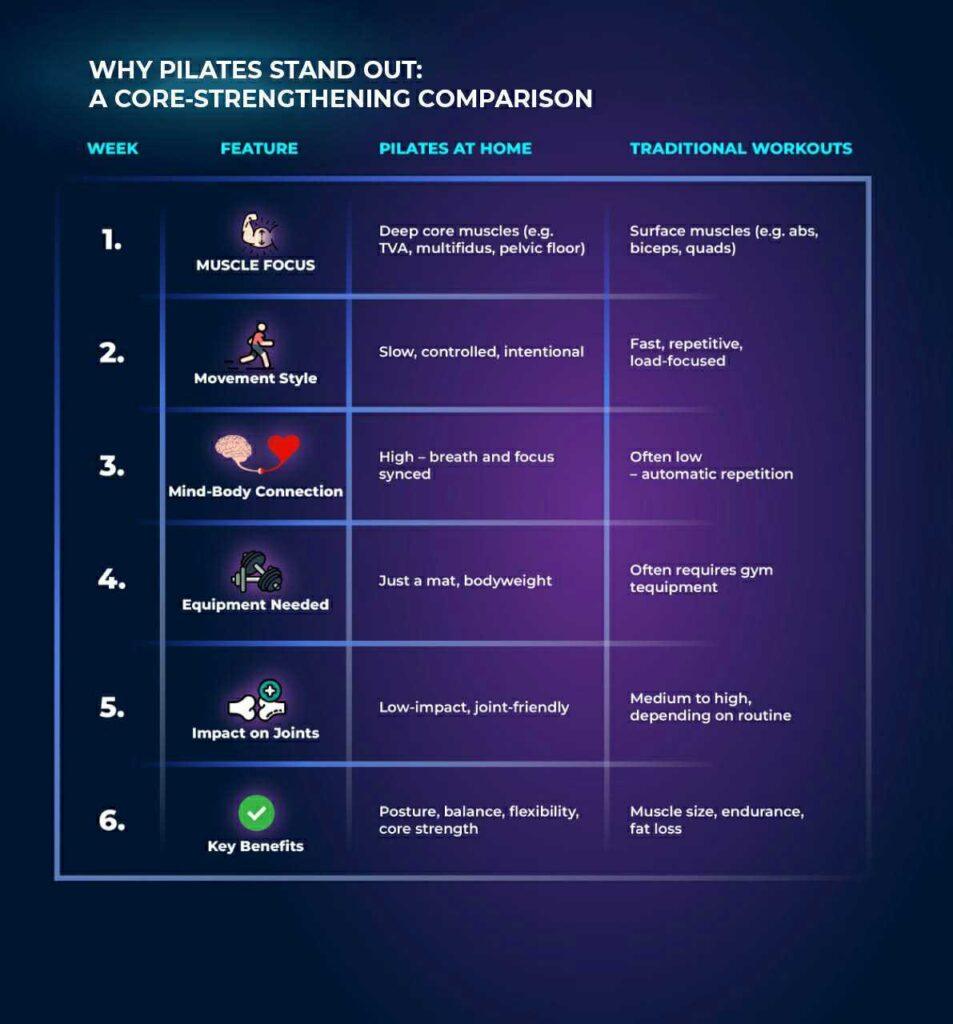
Deep Muscle Activation in a Pilates Workout
- Slow and steady Pilates exercises activate deep core muscles like the transverse abdominis, multifidus, and pelvic floor.
- These core muscles are often ignored in other Pilates workouts, weight training, or cardio, which mainly target larger surface muscles.
- Research in the Journal of Strength and Conditioning shows Pilates moves like the Shoulder Bridge or Single Leg Stretch improve balance and spine stability.
- Starting position matters: knees bent or legs straight, arms extended or arms overhead, all influence which muscles fire during practice.
Breath and Mind-Body Connection in Home Pilates
- Breath control is central to every Pilates workout. Coordinating breathing with Pilates at home improves oxygen delivery to muscles and keeps focus sharp.
- Instructors often teach beginners the tabletop position, raising one leg slightly off the floor while keeping palms open and relaxed.
Low-Impact, High Reward: Full Body Workout with Pilates
- Pilates exercises are low-impact but powerful for building a full body workout. Movements like the criss-cross, lower lift, glute bridge, spine twist, and double leg stretch target the core, hips, shoulders, and glutes while protecting the joints.
- Pilates is safe for most people, but beginners should check with a healthcare provider before starting a new fitness routine.
- A review in Complementary Therapies in Medicine found Pilates improves posture, balance, and flexibility, while reducing the risk of injury. These benefits support weight management, upper body and lower body strength, and long-term health if you stay consistent with practice.
This blend of science-backed core strength, mindful breathing, and joint-friendly movements makes Pilates at home a unique and highly effective fitness routine for beginners and advanced practitioners alike.
The Proven Benefits of At Home Pilates
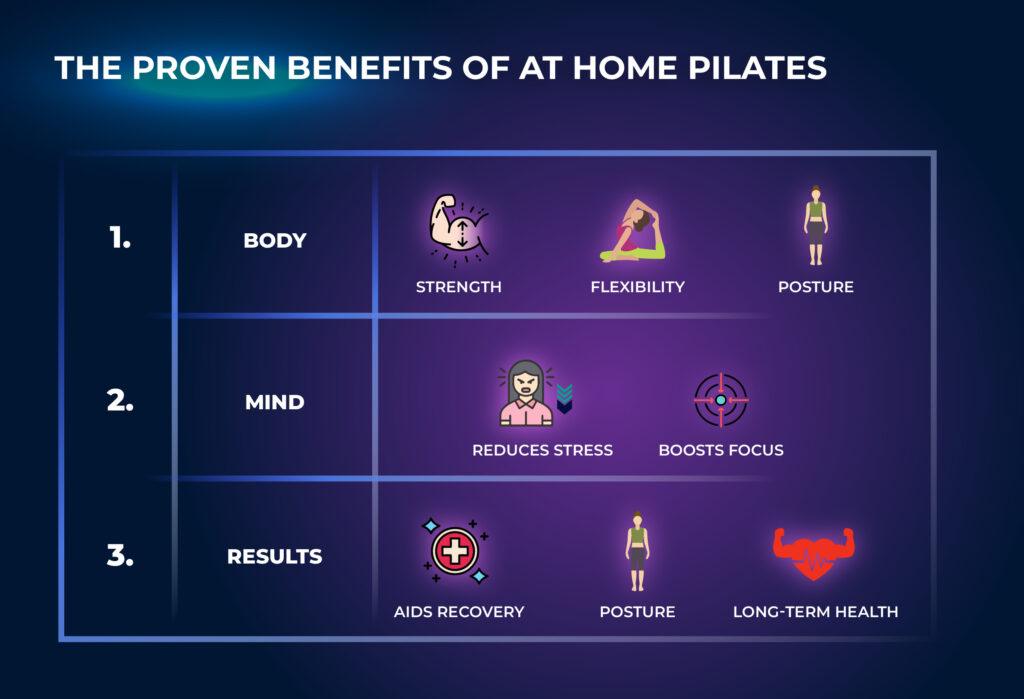
Pilates at home is more than just another exercise routine. It mixes science and practice to give results that reach the whole body. Whether you are a beginner learning foundational exercises like the single leg stretch or an advanced student perfecting a spine twist, these movements bring benefits you can feel both in health and in daily life.
Unlike classes in Pilates studios, home Pilates lets you practice with just a mat, your body weight, and focus. A Pilates instructor or even a certified yoga instructor can guide you, but many basic Pilates exercises can be done safely alone if you stay consistent and pay attention to form.
Physical Benefits of Pilates at Home
- Strengthens core, glutes, hips, and shoulders with controlled bodyweight mat exercises like Glute Bridge, Shoulder Bridge, and Criss Cross.
- Improves flexibility and joint mobility with exercises such as the spine twist, double leg stretch, and lower lift. These moves often start with knees bent, arms extended, or legs straight depending on the starting position.
- Enhances spinal alignment by teaching you to move one vertebra at a time, lowering the risk of back pain. Lifting the shoulder blades during tabletop or alternating legs a few inches off the floor builds balance and control.
Mental Benefits of Pilates Exercises
- Breathing patterns in Pilates help regulate stress by activating the parasympathetic nervous system. Each exercise focuses on precise breathing with arms overhead, palms facing upward, and focus on rest between movements.
- Consistent practice reduces anxiety and increases mental focus, even when you only follow basic Pilates exercises at home.
- A study in the Journal of Bodywork and Movement Therapies highlights that Pilates workouts improve mood and overall quality of life by combining movement with mindfulness, making it more than just fitness.
Long-Term Outcomes of a Consistent Pilates Workout
- Supports weight management by building lean muscle and improving daily health. Combining exercises like single leg stretch, spine twist, and shoulder bridge into your fitness routine helps burn calories and maintain strength.
- Improves posture and balance, lowering fall risk for older adults. Practicing with the right foot or left hand in starting positions like tabletop or arms extended helps build stability in both upper body and lower body.
- Helps athletes, beginners, and even those in class settings with recovery and injury prevention. Many healthcare providers recommend Pilates at home for safe rehabilitation.
- Archives of Physical Medicine and Rehabilitation show Pilates is effective in rehab programs, especially for chronic low back pain. Staying consistent with Pilates exercises gives long-term benefits for the body, core, and spine.
At home Pilates is not only about looking fit. It creates a stronger, more resilient body and a calmer, more focused mind. With consistent practice, the benefits extend far beyond the mat into daily life and long-term health.
The Science of How Pilates Works on the Body
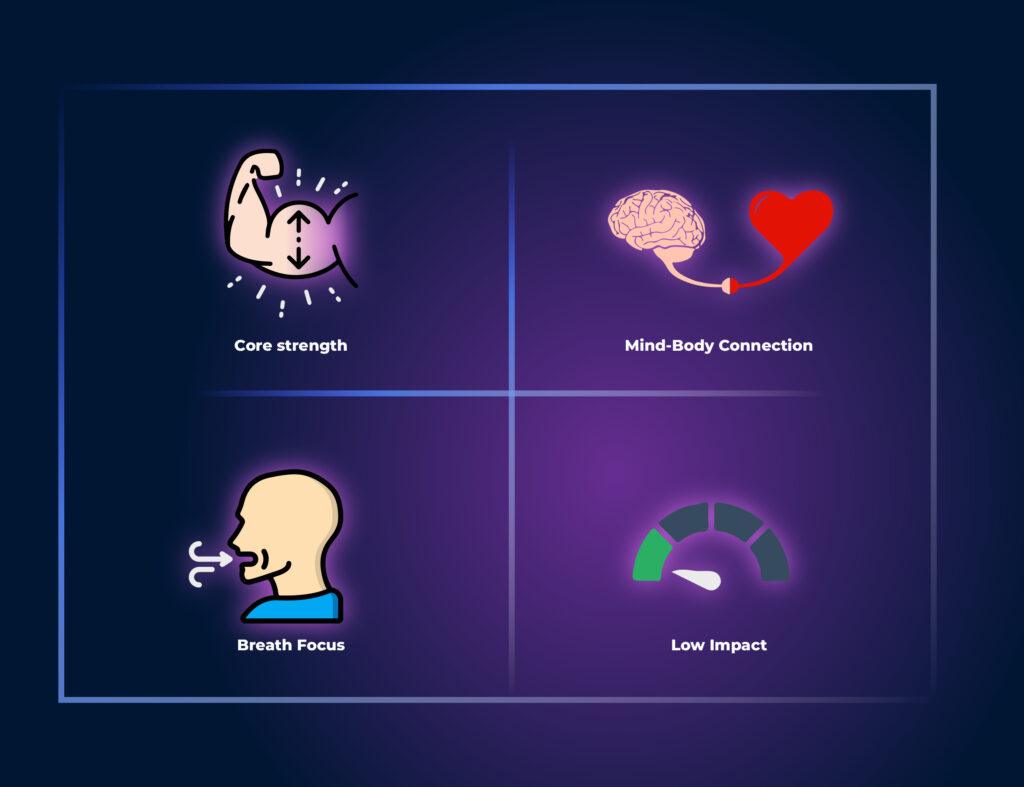
Pilates may look simple, but every exercise is built on science. Unlike fast, heavy workouts, Pilates uses slow, precise control to build stability, balance, and strength without stressing the joints.
Core and Stabilizer Muscles in Home Pilates
- Pilates targets the deep stabilizers such as the transverse abdominis, multifidus, and pelvic floor. These muscles protect the spine and support posture.
- Basic Pilates exercises like the single leg stretch, shoulder bridge, and tabletop position engage them in ways that common strength or cardio workouts often miss.
Neuromuscular Connection with Pilates at Home
- Pilates retrains the body to fire muscles in more efficient patterns. Movements performed one vertebra at a time, such as in the spine twist, sharpen motor control.
- Holding positions like glute bridge or criss-cross while coordinating breath further improves oxygen use and mental focus.
- Studies show that this style of mindful training enhances balance, motor learning, and long-term coordination.
Breathing and Circulation in a Pilates Workout
- Breath is central to the method. Linking inhalation and exhalation with controlled movement boosts circulation, lowers stress, and helps regulate pain.
- Arms extended or overhead, palms facing upward, or legs straight in a tabletop position all integrate breathing into posture.
- Evidence from the International Journal of Sports Medicine shows that breath-focused exercise enhances endurance and overall health, supporting recovery and daily performance.
Comparison with Traditional Training
- Unlike high-impact exercise or heavy gym training, Pilates at home relies on body weight and precise control. Exercises with knees bent, arms overhead, or legs straight challenge the core while sparing the joints.
- While Pilates studios may use reformer equipment, research reviews highlight that mat-based routines at home still provide full body workouts.
- These workouts improve mobility, support weight management, and lower injury risk while delivering science-backed results.
Pilates is more than exercise. It is a science-driven fitness routine that combines breathing, muscle activation, and mindful control to create resilience, better posture, and long-term health.
The Best Science-Backed At Home Pilates Routine
A 15-minute Pilates workout at home can be enough to strengthen the core and improve posture. This routine works the full body with extra focus on core muscles. All movements use body weight only, making it safe for beginners and effective for anyone wanting a science-backed fitness routine.
Warm-Up (2 minutes)
- Start in tabletop position with knees bent and arms extended. Breathe deeply to prepare the spine.
- Engage the core by lifting the shoulder blades slightly off the mat and holding for a few seconds.
Core Activation (5 minutes)
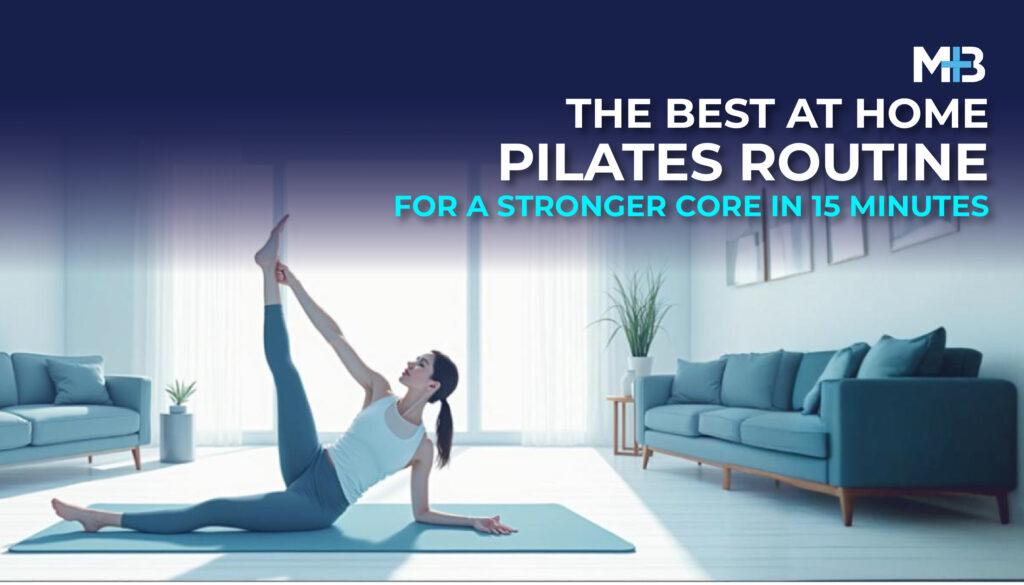
- Single Leg Stretch: Lie on your back, knees bent. Extend the right leg a few inches off the floor while holding the left leg close to the chest. Switch legs slowly, keeping control and steady breathing.
- Double Leg Stretch: From the same starting position, extend both legs straight while arms reach overhead. Return with control. Focus on smooth breath with each repetition.
- Criss-Cross: With hands behind the head, lift the shoulder blades and rotate so the right elbow moves toward the left knee. Switch sides to work the obliques and spine.
Strength and Stability (5 minutes)
- Shoulder Bridge / Glute Bridge: Lie on your back with knees bent and arms at the sides. Lift the hips one vertebra at a time until the body forms a straight line. Lower with control to strengthen glutes, hips, and spine.
- Spine Twist: Sit tall with legs straight and arms extended at shoulder height. Twist gently to each side while keeping the core engaged.
Finisher and Cool Down (3 minutes)
- Lower Lift: Lie flat with legs straight and arms overhead. Lower both legs a few inches off the mat and lift them back up with control. Keep the lower back pressed to the mat.
- Rest for a few deep breaths to release tension and reset the body.
This short Pilates routine combines Joseph Pilates’ foundational moves with proven benefits for core strength, flexibility, and balance. Practicing at home Pilates in this way builds strength safely, supports weight management, and improves long-term health.
Staying Motivated with Home Pilates
At home Pilates works best when it becomes a habit. Beginners often lose focus without guidance, but creating small routines helps. Joining short online classes or following a Pilates instructor on video can provide structure. Practicing on the same mat, at the same time of day, builds consistency.
Tracking small wins such as better posture, less pain, or improved balance keeps motivation high. Mixing Pilates exercises like the single leg stretch or criss-cross with rest and breathing practices creates variety. Staying consistent is key. Research shows that long-term practice delivers lasting changes in fitness, health, and daily movement.
Final Thoughts on At Home Pilates as a Full Body Workout
At home Pilates shows that you do not need a gym or heavy weights to build strength and improve health. Focusing on breathing, control, and mindful movement helps both the body and the mind. Studies confirm its role in improving posture, balance, flexibility, and reducing pain. It is a safe option for most people and effective for both beginners and advanced students.
Practicing on a mat with simple body weight movements gives real results. Core muscles grow stronger, the spine becomes more stable, and balance improves. Even 15 minutes a day can boost energy and reduce stress. Many healthcare providers also recommend Pilates at home for recovery and long-term health support.
Consistency is the key. When you stay consistent, the benefits go beyond fitness. You feel less stiffness after sitting, you recover faster from daily stress, and you move with more ease. These small changes add up to better health over time.
Pilates at home is not only an exercise routine. It is a lifestyle practice that builds strength, focus, and resilience. With each session, you train the body to move better and the mind to stay calm. The results carry into every part of life, making daily activities easier and healthier.
Frequently Asked Questions (FAQs)
What equipment do I need for at home Pilates?
A mat is enough for most routines, but you can add resistance bands or a small ball for variety.
Can Pilates help with back pain?
Yes. Many studies show that Pilates strengthens the core and stabilizes the spine, which can ease back pain.
How soon will I see results from Pilates?
Most people notice improved posture, flexibility, and strength within 6 to 8 weeks of regular practice.
Is Pilates safe during pregnancy?
With guidance from a healthcare provider, modified Pilates can be safe and helpful during pregnancy.
Can I combine Pilates with other workouts?
Yes. Pilates works well with strength training, cardio, and yoga because it builds stability and prevents injury.