Contents13 sections
YK-11 before and after photos get shared more than almost any other SARM transformation. They usually come with a short caption: a few weeks on cycle, a big jump on the scale and heavier lifts. YK-11 has a reputation as one of the strongest SARMs available, and many lifters see it as the next step after milder compounds.
The evidence behind that reputation is thin. YK-11 has never been tested in a human clinical trial. What exists is a small set of cell-culture and animal studies, plus a large pile of user reports that nobody can verify. That gap matters most for the liver, hormones and cholesterol, where no one has measured what YK-11 does in people.
This guide looks at what YK-11 users report, how to read those results realistically, the timelines and doses commonly described online, and the side effects and liver risks to understand before trusting any transformation photo.
Key Takeaways
- YK-11 is an unapproved research chemical with a steroid backbone that only partly activates the androgen receptor. It has never been tested in humans.
- Its “myostatin inhibitor” label comes from a cell study in which it raised follistatin, a protein that blocks myostatin. That effect has not been shown in people.
- Before and after reports often describe around 15 lb of scale weight in four to six weeks. A jump that fast is mostly water, glycogen and food, not new muscle.
- Users commonly report suppressed testosterone, lower HDL cholesterol, raised liver enzymes, acne and hair shedding.
- There is no human data on safe doses, liver safety or hormone recovery, and products sold online often don’t match their labels.
What Is YK-11?
YK-11 is a synthetic compound developed by Japanese researchers and first described in 2011 as a partial agonist of the androgen receptor. Most SARMs are non-steroidal. YK-11 is the exception: it has a steroid backbone, which is why it is often called a “steroidal SARM”.
In that early lab work, YK-11 activated the androgen receptor only partly. It switched on some androgen-responsive genes but did not trigger the full change in the receptor’s shape (the so-called N/C interaction) that testosterone and DHT cause. That is the basis for calling it “gene-selective”.
YK-11 never entered clinical development. There is no approved medical use, no human dose-finding trial and no published human safety data. Everything you read about doses, timelines and side effects in people comes from user reports.
The Myostatin Claim, Corrected
YK-11 is widely sold as a “myostatin inhibitor”. That is an oversimplification. Myostatin is a protein that limits how much muscle the body builds. Cattle breeds such as the Belgian Blue carry a natural mutation in the myostatin gene, which is why they look “double-muscled”.
YK-11 does not block myostatin directly. In a 2013 study in mouse muscle precursor cells (C2C12 myoblasts), YK-11 increased the cells’ production of follistatin, a protein that binds and neutralizes myostatin. YK-11 pushed these cells to mature into muscle cells more strongly than DHT did, and the effect disappeared when follistatin was blocked with an antibody [1].
That study is where the “stronger than DHT” claim comes from: one marker of muscle-cell development, measured in a dish. It does not show that YK-11 builds more muscle than DHT or testosterone in a living person. A myostatin mutation present from birth is also very different from a compound taken for a few weeks in adulthood. For more on this pathway, see our Follistatin 344 page.
What the Research Actually Shows
The published YK-11 research is small and almost entirely preclinical. Here is what it covers:
| Type of study | What was tested | What it found | What it can’t tell you |
|---|---|---|---|
| Cell study (2011) | Androgen receptor activity in cultured cells | Partial activation of the androgen receptor | Any effect in a living body |
| Cell study (2013) | Mouse muscle precursor cells | More muscle-cell development than DHT, driven by follistatin | Muscle growth in people |
| Cell study | Mouse bone-forming cells (osteoblasts) | More cell growth and bone-formation markers | Bone density in people |
| Animal studies | A handful of small rodent experiments | Early, limited findings | Human dose, safety or results |
| Human trials | None | None | Everything that matters for a user |
The honest summary: YK-11 does interesting things in cells. Whether those effects translate into more muscle in people, at what dose, and at what cost to the liver, hormones and heart, has never been studied.
YK-11 Before and After: What Users Report
Because there are no human trials, YK-11 before and after results come from self-reported cycle logs, mostly posted on forums and Reddit. These two are typical of what you will find.
A Six-Week Log
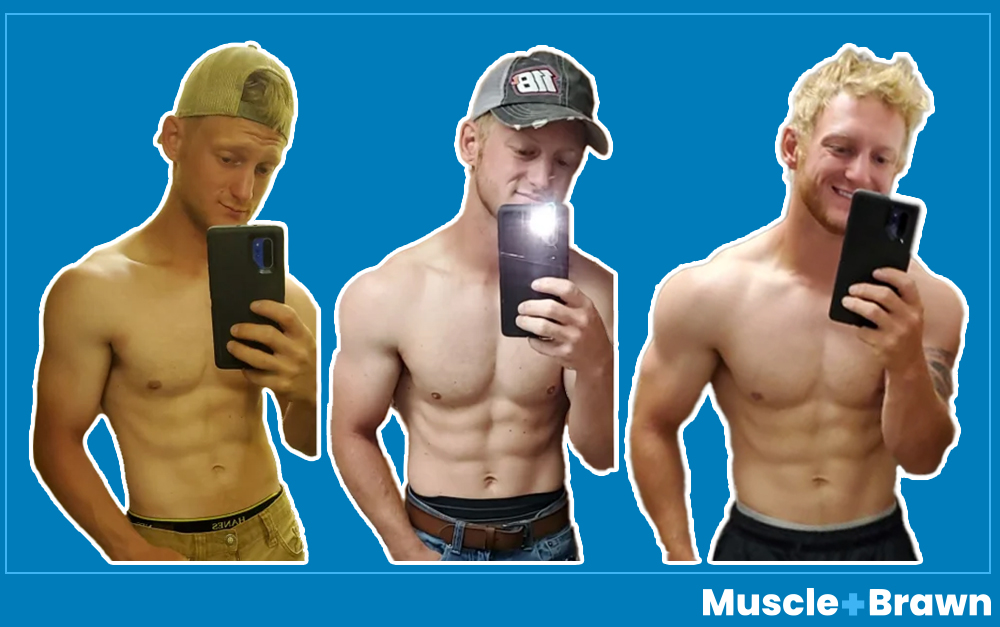
One user posted a six-week log reporting a 15 lb gain in body weight and increases of 65 to 80 lb on his main compound lifts. He planned to get bloodwork and start post cycle therapy as soon as the cycle ended.
A Four-Week Log at 15 mg a Day

A second user, 6 ft 6 in and 35 years old, reported going from about 255 to 270 lb over four weeks at 15 mg a day, split into three 5 mg doses, while training six days a week. He described itchy wrists and legs for the first two days and marked muscle tightness during the cycle.
How to Read These Photos
Logs like these show what people say they experienced. They are not evidence of what YK-11 does. Several things make them hard to interpret:
- Nobody knows what was in the bottle. Products sold as SARMs are often mislabeled (see below).
- Scale weight is not muscle. A fast jump includes water, stored glycogen and gut contents, especially when food intake rises at the same time.
- Photos are easy to improve. Lighting, a pump, posing, a tan and camera angle change how a physique looks.
- Other changes happen at the same time. Many users stack YK-11 with other compounds or start training harder and eating more when the cycle begins.
- You only see the best cases. People with poor results or bad side effects post far less often.
Big strength jumps early in a cycle also reflect motivation, technique and training more often, not only new muscle.
Putting the Numbers in Context
The best comparison comes from compounds that have been tested in people. In a well-known 10-week trial, healthy men who took 600 mg of testosterone enanthate a week and lifted weights gained about 6 kg (13 lb) of fat-free mass, compared with about 2 kg in men who trained on placebo (Bhasin et al., New England Journal of Medicine, 1996). Fat-free mass includes water, not only muscle.
Among SARMs that reached human trials, ligandrol (LGD-4033) at 1 mg a day added about 1.2 kg of lean mass over three weeks in healthy young men, while lowering HDL cholesterol and testosterone in a dose-dependent way (Basaria et al., 2013).
Against that backdrop, a 15 lb gain in four weeks on an untested research chemical is very unlikely to be mostly muscle. A realistic reading is some lean tissue, plenty of water and glycogen, and the effect of eating and training more.
YK-11 Results Timeline
There is no clinical data on how fast YK-11 works. The timeline below summarizes what users commonly report. It is not a prediction of what any one person will see.
| Period | Commonly reported | What to keep in mind |
|---|---|---|
| Weeks 1-2 | Better pumps, a little more strength, scale weight starting to rise | Early weight is mostly water and glycogen |
| Weeks 3-4 | Fuller look, clearer strength gains | Users who test often report suppression and lipid changes by now |
| Weeks 5-8 | Most reported cycles end here; more side effects reported | No data on what longer exposure does to the liver |
| After the cycle | Some size and scale weight lost; low energy or libido during recovery | Natural testosterone needs time to recover |
How much of the result is kept depends mostly on training, diet and how quickly natural testosterone recovers. Water and glycogen go first. Lean tissue is easier to hold onto if training stays consistent and calories don’t crash.
Commonly Reported Doses and Cycle Length
No study has tested YK-11 at any dose in humans, so there are no “doses used in studies” to quote. The cell studies used concentrations in a dish, which cannot be converted into a human dose. The figures below are what users commonly report online. They are not advice and not a safe range.
| Item | Commonly reported |
|---|---|
| Daily amount | 5-15 mg; some reports go up to 20-30 mg |
| Timing | Split into 2-3 doses a day |
| Cycle length | 4-8 weeks |
| Form | Liquid or capsules sold as research chemicals |
| After the cycle | Bloodwork, and a PCT with clomiphene or tamoxifen |
Splitting the daily amount is based on the belief that YK-11 has a short half-life, which has never been measured in people. Many reports describe side effects climbing quickly with dose. There is no evidence that higher doses add results, only that they add risk.
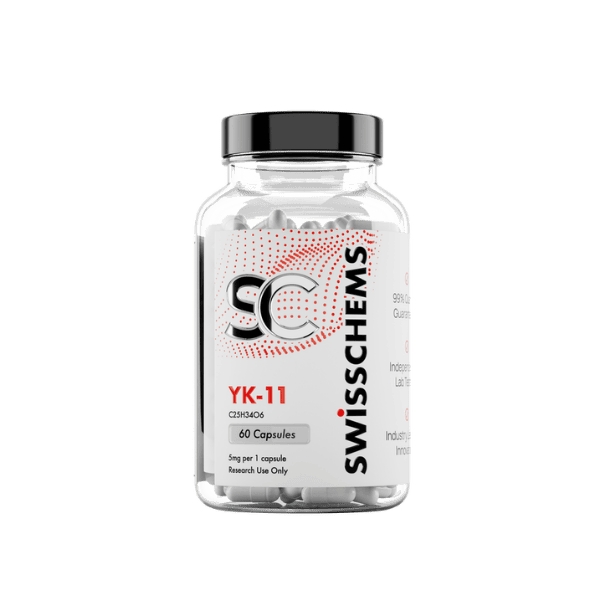
 SARMs
Overview
- Form: Oral Capsules
- Research Dosage: 5-10mg daily
- Typical Cycle: 4-8 weeks
- Cost: $79.95
- Stacking Options: RAD-140, Cardarine
Pros
- Marketed for promoting lean muscle growth through androgen-receptor activity.
- May influence follistatin and myostatin pathways, which has fueled interest in its potential anabolic effects.
- Designed to activate androgen receptors, which may contribute to anabolic activity and potential increases in muscle mass
Cons
- Actual effects and safety in humans remain poorly established.
- May interfere with normal hormone production.
- Not enough clinical evidence to determine its long-term effects on the liver, cardiovascular system, reproductive health, or other organs.
YK-11 Side Effects and Liver Risks
Because YK-11 has no human safety data, its side effect profile comes from user bloodwork and reports, and from what is known about SARMs and androgens in general:
| Side effect | Evidence for YK-11 | Evidence for SARMs in general |
|---|---|---|
| Raised liver enzymes, liver injury | User bloodwork reports | Published case reports; FDA warning |
| Testosterone suppression | User bloodwork reports | Dose-dependent in human trials |
| Lower HDL cholesterol | User bloodwork reports | Shown in human trials |
| Acne, hair shedding | User reports | Expected from androgen receptor activity |
| Irritability, aggression | User reports | Anecdotal reports |
Liver Stress
Liver risk is the main reason YK-11 has a harsher reputation than milder SARMs. It is taken by mouth, it has a steroid structure, and users commonly report raised liver enzymes (ALT and AST) on bloodwork during a cycle. Its effect on the human liver has never been studied, so there is no known “safe” dose or cycle length.
Across SARMs as a class, there are published case reports of drug-induced liver injury, most often with LGD-4033 and RAD-140, and often in people taking several products at once. Some of these patients developed jaundice and needed hospital care. The FDA has warned that SARMs in bodybuilding products have been linked to liver toxicity and may raise the risk of heart attack and stroke.
Warning signs that need a doctor straight away: yellowing of the skin or eyes, dark urine, pale stools, persistent itching, pain under the right ribs, nausea or unusual fatigue. Hard training can raise ALT and AST on its own, so enzyme results need interpreting by a clinician, ideally against a baseline test. There is no good evidence that over-the-counter “liver support” supplements prevent liver injury from a research chemical.
Testosterone Suppression
Anything that activates the androgen receptor signals the brain to cut back LH and FSH, the hormones that drive natural testosterone production. Users commonly report suppressed testosterone on bloodwork with YK-11, and human trials of related SARMs show the same dose-dependent effect. Symptoms tend to show up after the cycle: low libido, fatigue, flat mood and lost strength. Suppression can also reduce sperm production.
Cholesterol and Heart Health
SARMs tested in humans, including ostarine and LGD-4033, lower HDL (“good”) cholesterol. YK-11 hasn’t been tested, but lower HDL is commonly reported on user bloodwork. The effect of repeated cycles on long-term heart health is unknown.
Androgenic and Other Effects
Users commonly report acne, oily skin and faster hair shedding in men prone to male-pattern hair loss, along with irritability or aggression in some people. Women risk virilization (deeper voice, body and facial hair, clitoral enlargement), and some of these changes can be permanent. Nobody knows what years of on-and-off YK-11 use does to the liver, heart or prostate. Our guide to the long-term side effects of SARMs covers what is known across the class.
Bloodwork and PCT
Because suppression and liver changes are so commonly reported, users who share their logs typically describe bloodwork before, during and after a cycle: liver enzymes and bilirubin, a lipid panel, total and free testosterone, LH, FSH, estradiol and a full blood count. Going through a doctor means the results are read properly.
The PCT protocols commonly reported for YK-11 use clomiphene or tamoxifen for about four weeks. Both are prescription drugs with their own side effects, and there is no clinical evidence on PCT after YK-11 specifically. If testosterone doesn’t recover, or symptoms persist, a doctor can test and treat properly rather than guessing. Our guide to PCT for SARMs covers suppression, timing and what the evidence shows.
Is the Product Even YK-11?
YK-11 is only sold as an unregulated research chemical, so there is no pharmaceutical-grade version to compare against. When researchers bought 44 products marketed as SARMs online and tested them (JAMA, 2017), only about half contained a SARM at all. Many contained other unapproved drugs, and many held a different amount than the label stated.
A certificate of analysis can show what one batch contained, but it does not establish that a product is safe for any purpose. Inconsistent products are one more reason YK-11 before and after results vary so much from one user to the next.
Is YK-11 Legal?
In the United States, YK-11 is not approved by the FDA for any use and cannot legally be sold as a dietary supplement. Vendors sell it as a research chemical labeled “not for human consumption”. That label doesn’t make it approved or safe for people, and the FDA has sent warning letters to companies marketing SARMs to consumers.
YK-11 falls under the World Anti-Doping Agency’s prohibited anabolic agents, banned in and out of competition, and anti-doping labs have developed methods to detect it. Rules in other countries vary, and some restrict SARMs to prescription or ban their import. See Are SARMs Legal? for a country-by-country list.
The Bottom Line
YK-11 before and after photos show what some users report, not what the compound reliably does: it has never been tested in humans, and its liver, hormone and cholesterol risks have never been measured.
- The “myostatin inhibitor” and “stronger than DHT” claims come from cell studies in which YK-11 raised follistatin. No human trial exists.
- Reported gains of around 15 lb in a month are mostly water, glycogen and food. Trials of tested androgens show slower lean-mass gains than the photos suggest.
- Users commonly report raised liver enzymes, suppressed testosterone and lower HDL, and products often don’t match their labels. Bloodwork and a doctor matter more than any PCT protocol.
Frequently Asked Questions
Disclaimer
Please read carefully
The information on this site is for educational and informational purposes only, and is not medical advice. Always consult a qualified healthcare professional before using any supplement or medication, or making changes to your health, fitness, or nutrition routine.
Not medical advice
Content here is not a substitute for professional medical advice.
Consult your doctor
Talk to your doctor before starting any supplement or new routine.
Use at your own risk
We are not responsible for adverse effects from acting on this.
Do your research
Make informed decisions about your own health.
No guarantees
Individual results vary. No claims about outcomes.
Important — Never disregard professional medical advice or delay seeking it because of something you read here. If you think you may have a medical emergency, call your doctor or your local emergency number right away.