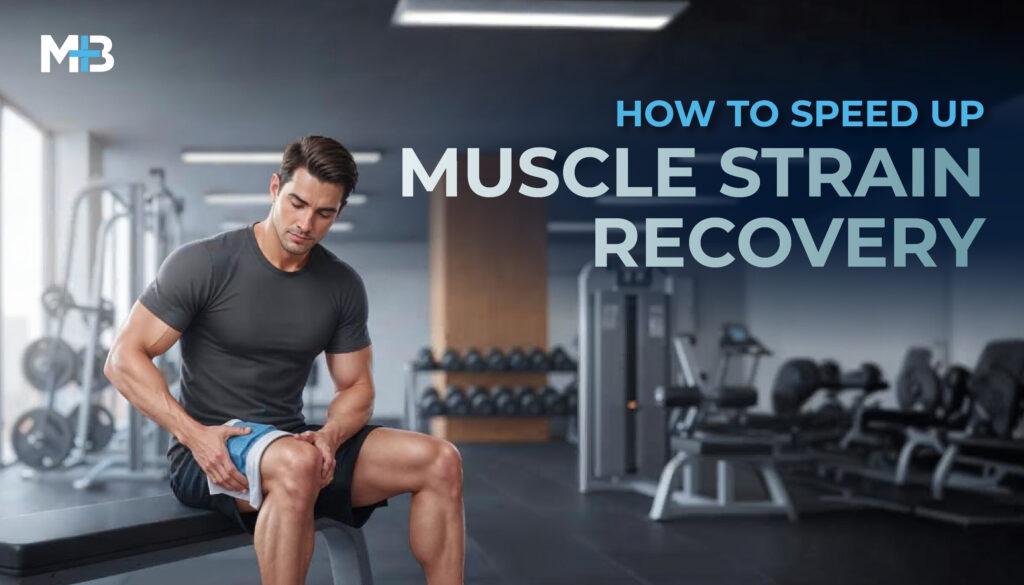
Muscle strains are one of the most common training-related injuries. Whether caused by sudden explosive movement, overtraining, poor warm-up, or accumulated fatigue, a strain can quickly disrupt progress and derail performance goals.
The good news is that most muscle strains heal with proper management. The key isn’t just waiting—it’s applying smart, structured recovery strategies that support tissue repair while minimizing further damage.
If you’re wondering how to speed up muscle strain recovery, this guide breaks down the most effective evidence-based approaches to help you return to training safely and efficiently.
Key Points
- Early management using rest, compression, and controlled mobility helps limit tissue damage and accelerate healing. 🧊
- Gradual reintroduction of movement improves blood flow and prevents stiffness without delaying recovery. 🔄
- Adequate protein intake and overall nutrition significantly influence muscle tissue repair speed. 🍗
- Sleep and stress management directly affect hormonal recovery pathways and tissue regeneration. 😴
- Returning to full training too quickly increases the risk of re-injury, making progressive loading essential. ⚖️

Step 1: Understand What You’re Recovering From
A muscle strain occurs when muscle fibers are overstretched or partially torn. They are generally classified into three grades.
Grade I involves mild fiber damage and tightness.
Grade II includes partial tearing with noticeable pain and swelling.
Grade III is a complete tear and often requires medical intervention.
Most gym-related injuries fall into Grade I or II. These typically heal within weeks when handled properly.
Muscle strain recovery speed depends on several variables: injury severity, blood supply to the area, age, sleep quality, nutrition, and how intelligently you manage the next few weeks.
Phase One: Control Inflammation Without Shutting It Down
The first 48 hours are about minimizing secondary damage.
Inflammation is necessary. It signals the body to begin repair. But excessive swelling can compress tissue, restrict blood flow, and delay recovery.
Use the POLICE framework:
Protection: Protect the area from further strain.
Optimal Loading: Introduce optimal loading through very gentle movement instead of complete immobilization.
Ice: Apply ice intermittently for 15 to 20 minutes.
Compression: Use compression to manage swelling.
Elevation: Elevate when possible.
Avoid aggressive stretching, deep massage, or intense mobility work during this window. That can worsen micro-tears and extend recovery.
Once acute swelling decreases, the focus shifts.
Phase Two: Restore Blood Flow and Controlled Mobility
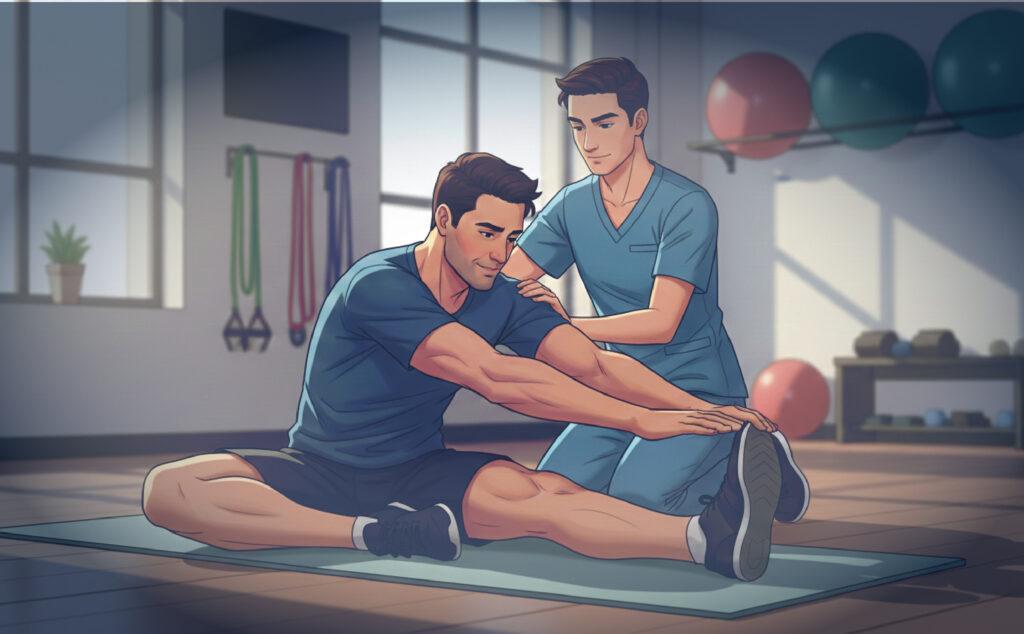
After 48 to 72 hours, light movement becomes critical.
Too much rest reduces circulation and stiffens surrounding tissue. Controlled, pain-free motion improves nutrient delivery and signals the body to rebuild muscle fibers in proper alignment.
Start with simple range-of-motion exercises. Add isometric contractions to stimulate muscle activation without joint movement. Progress into light dynamic mobility drills within tolerance.
Movement should feel productive, not sharp or unstable. The goal is circulation and neural engagement, not intensity.
Phase Three: Fuel the Repair Process
Muscle healing is energy-dependent. If recovery feels slow, nutrition is often the hidden bottleneck.
Protein intake should generally fall between 0.7 to 1 gram per pound of body weight daily. Amino acids, particularly leucine, drive muscle protein synthesis.
Remaining in a mild caloric deficit can slow repair. Your body needs resources to rebuild damaged tissue. Severe cutting phases are not ideal during recovery.
Certain nutrients may support the process. Collagen paired with vitamin C may help connective tissue remodeling. Omega-3 fatty acids can assist with regulating excessive inflammation. Creatine supports cellular energy production, which can be useful during rehabilitation phases.
But none of these compensate for inadequate total calories or insufficient protein.
Phase Four: Prioritize Sleep and Hormonal Recovery
Sleep is where the majority of tissue repair actually occurs.
During deep sleep, growth hormone release peaks. This hormone plays a central role in muscle regeneration and collagen synthesis. Sleep restriction directly reduces the body’s ability to rebuild.
Aim for seven to nine hours nightly. Keep your sleep schedule consistent. Create a dark, cool environment to maximize sleep depth.
Even minor sleep deprivation can extend recovery timelines. Five hours per night may feel manageable, but it meaningfully slows tissue remodeling and increases systemic stress.
If you want faster recovery, treat sleep as non-negotiable.
Phase Five: Progressive Loading — The Real Turning Point
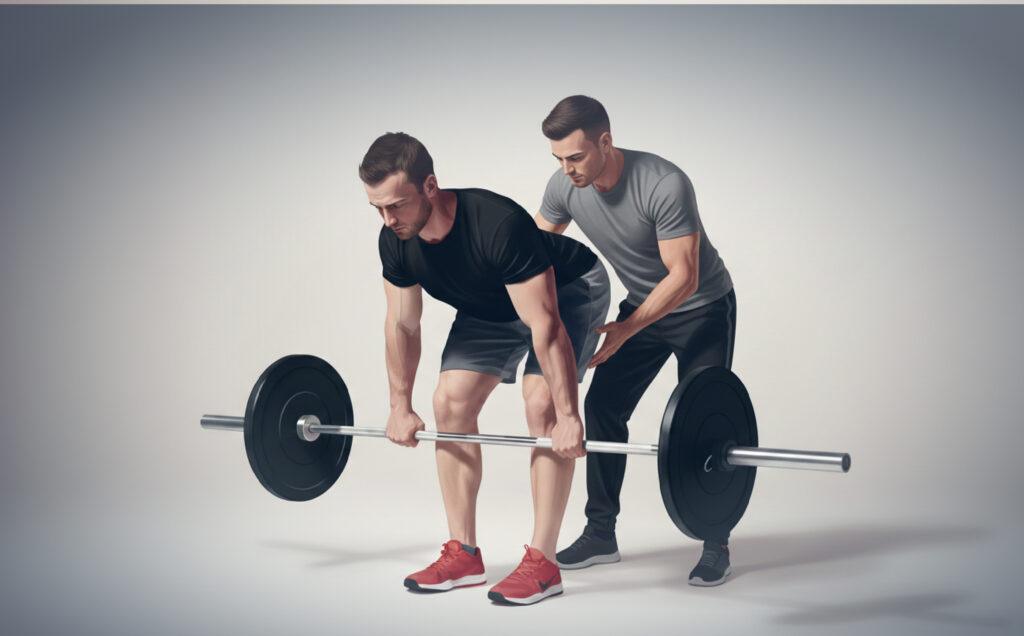
[In-Article Image Prompt #2: An athlete performing controlled Romanian deadlifts with light weight under supervision, emphasizing slow, precise movement and recovery-focused training.]
Once pain subsides and mobility returns, progressive resistance training becomes the most important phase.
Rest does not rebuild tissue. Load does.
After a strain, the muscle is not only weaker but less coordinated. The nervous system must relearn control and timing. This is where intelligent progression matters most.
Start with bodyweight movements and light resistance bands. Introduce slow eccentric loading, where the muscle lengthens under control. Eccentric training has strong evidence supporting tendon and muscle remodeling.
Avoid the common mistake of jumping back to maximal loads once pain decreases. Pain reduction does not equal structural readiness. Most re-injuries happen during premature intensity increases.
Build gradually. Increase load only when movement quality remains stable.
Supporting Circulation Without Overstress
Additional strategies can support healing if used properly.
Light walking or cycling increases systemic blood flow without aggressive strain. Contrast showers may stimulate vascular responsiveness. Compression garments can assist swelling control. Gentle massage after the acute phase may improve tissue mobility.
These are supportive tools, not primary solutions. Structured rehab always comes first.
What Commonly Slows Recovery
When progress stalls during muscle strain recovery, it is often due to behavioral errors.
Returning to full training too soon is the most common setback. Ignoring pain signals or masking them with anti-inflammatory drugs can interfere with tissue feedback.
Poor hydration reduces elasticity. Inadequate protein limits rebuilding capacity. Chronic stress elevates cortisol, which impairs regeneration. Sleep deprivation compounds all of it.
Healing is systemic. If the body is stressed globally, local recovery slows.
The Mental Component
Injury downtime challenges discipline. Frustration builds. The urge to test the muscle early becomes strong.
Use this phase productively by improving mobility and strengthening your core. Refine technique with lighter loads and maintain cardiovascular conditioning within safe limits.
The athletes who recover best are the ones who stay engaged without becoming reckless.
How Long Does Muscle Strain Recovery Take?
A Grade I strain may resolve within one to three weeks.
A Grade II strain often requires three to eight weeks.
A Grade III injury may take months and sometimes surgical repair.
Recovery speed depends less on impatience and more on consistency. Healing cannot be forced, but it can be optimized!
Conclusion
Learning how to speed up muscle strain recovery is about understanding timing.
Control inflammation early. Reintroduce movement strategically. Fuel tissue repair. Protect sleep. Progress load intelligently.
Recovery is not about doing more. It is about doing the right things in the right order.
When you respect the process, you return stronger and more resilient than before.
Frequently Asked Questions
Should I stretch a muscle strain immediately?
No. Avoid aggressive stretching during the first 48 hours. Begin gentle mobility only after acute inflammation decreases.
Is heat or ice better for muscle strain recovery?
Ice is typically recommended during the first 24–48 hours. Heat may be beneficial later when stiffness becomes the main issue.
Can I train other body parts while recovering?
Yes, as long as you avoid loading the injured muscle. Upper/lower body splits can help maintain conditioning safely.
Does massage help muscle strain recovery?
After the acute phase, gentle massage may improve circulation. Avoid deep tissue pressure early on.
When can I return to full intensity training?
Only when pain-free through full range of motion and capable of handling progressive resistance without discomfort. Gradual loading is essential to prevent re-injury.