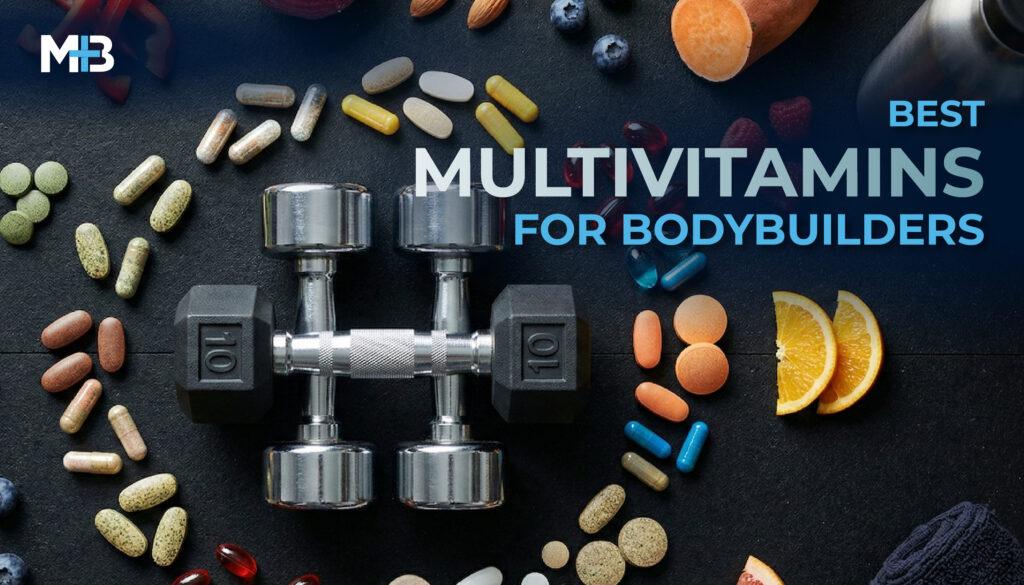
Most people think of multivitamins as a general wellness product. Something you take in the morning and mostly forget about. For bodybuilders, the calculation is different.
Training at high volume depletes micronutrients faster than a sedentary lifestyle ever would. Sweat strips electrolytes. Heavy lifting increases demand for nutrients involved in energy metabolism and muscle repair. A diet locked into a caloric deficit during a cut reduces the variety and volume of food you are eating, which often means you are getting less of the vitamins and minerals your body needs most.
The right multivitamins for bodybuilders will not replace smart training or solid nutrition. But it can fill real gaps, support recovery, and keep your body operating at full capacity when the demands you are placing on it are anything but ordinary.
This guide breaks down what to actually look for in a multivitamin as a bodybuilder, which nutrients matter most, and how to evaluate quality without getting lost in marketing.
Key Points
- Bodybuilders have higher micronutrient demands than the general population due to training volume, sweat loss, and restrictive diet phases. 💪
- A good multivitamin for bodybuilders should cover the full B-vitamin complex, vitamins D and K2, magnesium, zinc, and antioxidants like vitamins C and E. 🔬
- Bioavailability matters more than label dosage. Chelated minerals and methylated B vitamins are absorbed more efficiently than their cheaper counterparts. 📋
- Whole-food-based multivitamins offer better cofactor profiles but typically at higher cost and lower standardized potency than synthetic options. ✅
- No multivitamin compensates for a poor diet, but a quality product can meaningfully support performance and recovery when the rest of your approach is dialed in. 🥗

Why Bodybuilders Have Higher Micronutrient Needs
The recommended daily values printed on supplement labels were designed for average sedentary adults. They are a baseline, not a performance target.
When you train intensely, several things happen simultaneously. Your body burns through B vitamins faster because they are directly involved in energy production from carbohydrates, fats, and protein. Zinc and magnesium are lost through sweat and play critical roles in testosterone production and muscle function. Oxidative stress from heavy training increases your need for antioxidant nutrients like vitamins C and E. Vitamin D, which regulates hundreds of genes including those involved in muscle protein synthesis, is often low in people who train indoors.
Add a cutting phase into the mix and the problem compounds. When total food intake drops, so does micronutrient intake, even for athletes eating a relatively clean diet. This is where supplementation stops being optional and starts being practical.
The goal is not to chase mega-doses. It is to ensure your foundation is covered so that the work you are putting in actually translates to the results you are after.
Multivitamins for Bodybuilders That Matter Most
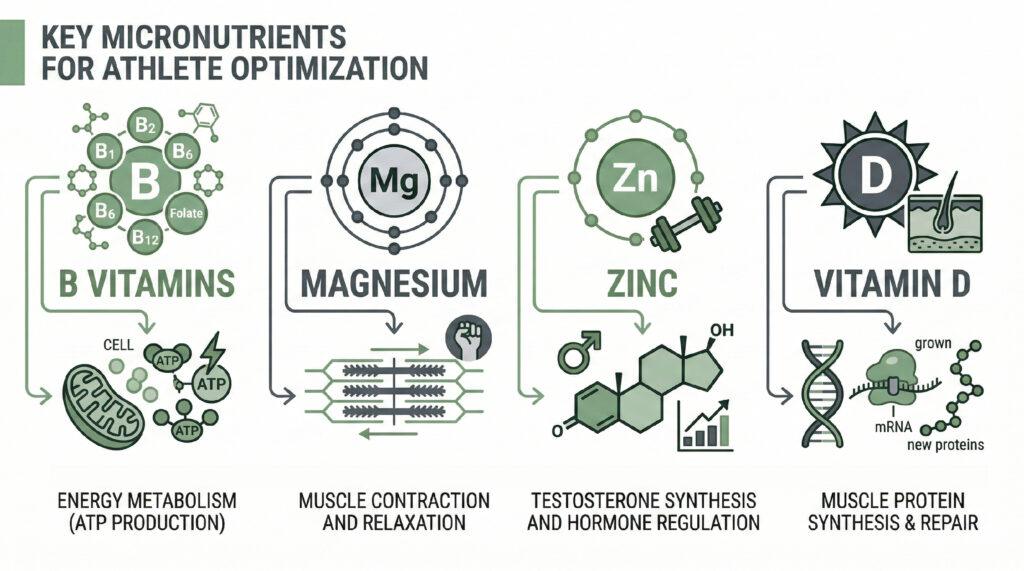
Not every nutrient in a multivitamin is equally relevant to a bodybuilder. Here are the ones that carry the most weight for performance and recovery.
The B Vitamin Complex
B vitamins are the workhorses of energy metabolism. B1 (thiamine), B2 (riboflavin), B3 (niacin), B5 (pantothenic acid), and B6 (pyridoxine) are all involved in converting macronutrients into usable energy. B12 supports red blood cell production and neurological function, both of which directly affect training performance. Folate (B9) is essential for cell division and DNA synthesis, making it particularly important during muscle hypertrophy phases. Look for methylated forms like methylcobalamin and methylfolate, which bypass conversion steps that some people struggle with genetically.
Vitamin D3 and K2
Vitamin D3 is one of the most commonly deficient nutrients in the general population and the situation is no better for gym-goers who train indoors. Research has linked adequate vitamin D levels to improved muscle protein synthesis, better testosterone production, and reduced injury risk. Vitamin K2 works synergistically with D3 to direct calcium into bone and away from soft tissue. The two are best taken together. Most standard multivitamins underclose both, so checking the actual amounts listed is worth doing.
Magnesium
Magnesium is involved in over 300 enzymatic reactions in the body, including ATP production, muscle contraction and relaxation, and protein synthesis. It is also one of the minerals most consistently depleted through sweat during intense exercise. Low magnesium is associated with poor sleep quality, increased muscle cramping, and reduced strength output. Magnesium glycinate and magnesium malate are better absorbed forms than magnesium oxide, which is cheap but largely passes through without being utilized.
Zinc
Zinc plays a direct role in testosterone synthesis and immune function. Athletes who train frequently are at higher risk of zinc depletion, and even subclinical zinc deficiency has been associated with reduced testosterone levels and slower recovery. Zinc bisglycinate and zinc picolinate are more bioavailable than zinc oxide. Avoid products where zinc and calcium are combined at high doses, as they compete for absorption.
Vitamins C and E
Both serve as antioxidants that help manage oxidative stress generated during training. Vitamin C is also essential for collagen synthesis, which supports joint and connective tissue health under load. Vitamin E protects cell membranes from lipid peroxidation. The key here is moderation. High-dose antioxidant supplementation has shown in some research to blunt training adaptations by interfering with the signaling role of reactive oxygen species. Sensible doses in a multivitamin context are generally not a concern.
What to Look for on the Label
The supplement industry is crowded, and most multivitamins for bodybuilders are not created equal. Knowing what to look for will save you money and get you a product that actually does something.
Bioavailability of Mineral Forms
The form of a mineral on the label tells you a lot about how well your body will absorb it. Chelated minerals, where the mineral is bonded to an amino acid such as glycine or picolinic acid, are generally absorbed significantly better than inorganic forms like oxides and sulfates. Magnesium oxide, iron sulfate, and zinc oxide are common in cheap multivitamins because they are inexpensive to produce. They are not the forms your body handles most efficiently.
Methylated vs. Synthetic B Vitamins
Look for methylcobalamin rather than cyanocobalamin for B12, and methylfolate rather than folic acid for B9. These are the active forms that your body can use directly, without requiring conversion. A significant portion of the population carries a genetic variant that reduces their ability to convert folic acid efficiently, making methylfolate a smarter default for anyone who does not know their status.
Serving Size and Split Dosing
A single-capsule multivitamin physically cannot contain meaningful doses of everything it claims to cover. Products that use two to four capsules per serving are generally able to include more substantive amounts of key nutrients. Split dosing, taking half in the morning and half with a second meal, improves absorption of water-soluble vitamins, which are cleared quickly. This is especially relevant for B vitamins and vitamin C.
Third-Party Testing
For competitive athletes, third-party testing is non-negotiable. NSF Certified for Sport, Informed Sport, and USP verification are the three certifications that carry the most weight. These indicate that the product has been tested for label accuracy, contaminants, and banned substances. For recreational bodybuilders, third-party testing is still a meaningful quality signal even if competition eligibility is not a concern.
Whole-Food vs. Synthetic Multivitamins for Bodybuilders
This is a debate worth understanding rather than dismissing in either direction.
Whole-food multivitamins for bodybuilders are derived from concentrated food sources. The theory is that nutrients arrive with their natural cofactors, enzymes, and phytonutrients intact, which may improve how the body recognizes and utilizes them. There is some logic to this, and for people who respond poorly to isolated synthetic vitamins, food-based products can be a better fit.
The tradeoff is that whole-food multivitamins are harder to standardize, often provide lower potencies per capsule, and tend to cost considerably more. For bodybuilders who need reliable, consistent doses of specific nutrients, a high-quality synthetic formulation with good bioavailable forms often provides more predictable outcomes.
The best approach for most people is somewhere in the middle. A quality synthetic multivitamin that uses bioavailable forms alongside a diet rich in whole foods covers both bases without requiring you to choose one at the expense of the other.
What Multivitamins for Bodybuilders Cannot Do
Multivitamins for bodybuilders are not performance enhancers in the traditional sense. It will not directly add mass, accelerate fat loss, or replace the stimulus of training. What it does is support the underlying biological processes that make those outcomes possible.
Think of it as removing friction. If your magnesium is low, your sleep is worse. If your sleep is worse, recovery slows. If your zinc is depleted, testosterone production is compromised. If your B vitamins are insufficient, energy metabolism is less efficient. None of these are dramatic headline effects, but they compound over months of training in ways that become hard to ignore.
This is also why it is important not to over-rely on the label. A multivitamin does not justify a poor diet. Whole food sources of micronutrients come packaged with fiber, phytonutrients, and compounds that no capsule can replicate. The supplement fills gaps. It does not replace the foundation.
When to Take Your Multivitamins

Timing matters more than most people realize, but not in a complicated way.
Fat-soluble vitamins, primarily A, D, E, and K, require dietary fat for absorption. Taking your multivitamin with a meal that contains some fat, not a fat-free protein shake, meaningfully improves how much you actually absorb. Water-soluble vitamins like B and C are cleared relatively quickly, so splitting your dose between morning and evening meals is worth doing if your product allows for it.
Avoid taking zinc and calcium supplements at the same time in high doses, as they compete for the same absorption pathway. If your multivitamin contains both, the formulation will usually account for this, but it is worth keeping in mind if you are stacking with separate calcium or zinc supplements.
What Commonly Goes Wrong With Multivitamins for Bodybuilders
When multivitamins for bodybuilders fail to deliver, there are usually identifiable reasons.
Buying based on price alone is the most common mistake. Budget multivitamins typically use the cheapest mineral forms, underdose key nutrients to hit a low price point, and skip third-party testing. You may technically be taking a multivitamin, but not one your body is meaningfully utilizing.
Taking your multivitamin on an empty stomach or with only liquids reduces absorption of fat-soluble vitamins and can cause nausea in some people, which then discourages consistent use.
Stacking multiple products with overlapping micronutrient profiles, such as a multivitamin plus a pre-workout plus a greens powder, can push certain nutrients into ranges where they stop being beneficial and start creating imbalances. Vitamin A toxicity, for example, is more plausible when multiple fortified products are used simultaneously. Fat-soluble vitamins accumulate in the body in ways water-soluble ones do not.
Inconsistency is the final and probably most common issue. A multivitamin taken three days a week does not fill gaps. Micronutrient status builds over time. Daily consistency is the point.
Conclusion
Choosing the best multivitamins for bodybuilders is not about finding the most expensive product or the one with the longest ingredient list. It is about understanding what your body actually needs given the demands you are placing on it, and then selecting a product that delivers those nutrients in forms your body can use.
Focus on bioavailable mineral forms, methylated B vitamins, adequate vitamin D3 and K2, and a product that has been third-party tested. Take it consistently, with food, and treat it as one piece of a larger nutritional strategy rather than a standalone solution.
The fundamentals still carry the most weight: protein, total calories, sleep, and progressive training. A good combination of multivitamins for bodybuilders supports all of them by ensuring the biological machinery running in the background is not being limited by something as preventable as a nutrient gap.
Frequently Asked Questions
Do bodybuilders actually need multivitamins?
Not every bodybuilder will have the same deficiencies, but the combination of high training volume, sweat-driven mineral loss, and restrictive diet phases means the risk of micronutrient gaps is meaningfully higher than in sedentary individuals. A quality multivitamin is a practical insurance policy rather than a guaranteed necessity for everyone.
Is one multivitamin a day enough, or should I take more?
For most people, a well-formulated multivitamin taken consistently covers the baseline. Individual gaps, particularly for vitamin D, magnesium, or zinc, may warrant separate targeted supplementation depending on blood work and dietary patterns. Getting bloodwork done once a year gives you a far more accurate picture than guessing.
Can I take my multivitamin alongside creatine and protein powder?
Yes. There are no meaningful interactions between a standard multivitamin, creatine, and protein powder. The main consideration is timing relative to food rather than conflicts between these specific products.
Are multivitamins for bodybuilders different if you’re a woman?
The meaningful differences are in iron and a few hormonal support nutrients. Premenopausal women generally need more iron due to monthly losses, while men typically do not benefit from additional iron supplementation. Many gender-specific formulations go beyond these real differences with marketing additions that have limited evidence behind them. Focus on what is inside rather than the label.
How long before I notice any difference from taking a multivitamin?
Multivitamins do not produce dramatic noticeable effects the way stimulants or ergogenic aids do. If you were meaningfully deficient in a specific nutrient, you may notice improvements in energy, sleep quality, or recovery within a few weeks of consistent use. For most people, the benefits are cumulative and protective rather than immediately perceptible.