Do You Need to Pre Workout Before Running?
For many runners, the answer is yes. Pre workout supplements can provide a noticeable edge. You might start a run feeling strong, but as the miles add up, your legs get heavy and your focus drifts. The last stretch feels longer than it should, and energy drops limit how far or how fast you can go.
Taking a pre workout before running can help address this problem. When used properly, certain supplements support endurance, sharpen focus, and delay fatigue.
The real challenge is choosing the right formula and timing it correctly. Too much caffeine, poor ingredient blends, or drinking it too close to a run can create more problems than benefits. Understanding the science ensures you get the performance boost without the drawbacks.
Key Takeaways
- Pre workout before running can improve endurance, focus, and recovery 🏃♂️
- Ingredients like caffeine, citrulline malate, and beta-alanine are especially helpful ⚡
- Risks include caffeine overload, digestive issues, and dehydration. Use with caution ⚠️
- Natural options like coffee, beet juice, bananas, and coconut water work well too 🍌
- Buy from trusted sources like Swiss Chems and Enhanced Labs for safety and quality 🔒

Why Pre Workout Matters for Runners
Running challenges the body in unique ways. Unlike lifting weights or cycling, running combines endurance, impact, and mental focus in a single activity.
Every stride uses stored glycogen for energy, and oxygen demand rises quickly as intensity builds. Once glycogen stores run low or oxygen delivery falls behind, fatigue begins to set in. This is why proper preparation before a run is so important.
A pre workout supplement helps prime the body for these demands. It ensures energy levels are higher at the start, circulation is more efficient, and focus is sharper.
For long-distance runners, this preparation can mean avoiding the dreaded mid-run crash.
For sprinters and interval trainers, it can provide the burst of power needed for repeated high-effort runs. Even recreational runners benefit by feeling stronger and more motivated to finish their sessions.
Pre workout also matters because running is as much mental as it is physical. Focus, motivation, and mental stamina often break down before the muscles truly give out.
A good pre workout formula addresses this by stimulating the central nervous system, raising alertness, and improving reaction times. This allows runners to stay engaged and in control from start to finish.
Finally, pre-workout plays a role in recovery. By improving blood flow and nutrient delivery during exercise, it sets the stage for faster recovery once the run is over.
This means less soreness, quicker return to training, and steady progress over time. Taken together, these benefits highlight why pre-workout is not just a tool for bodybuilders in the gym but also a valuable ally for runners.
The Science of Pre Workout Supplements
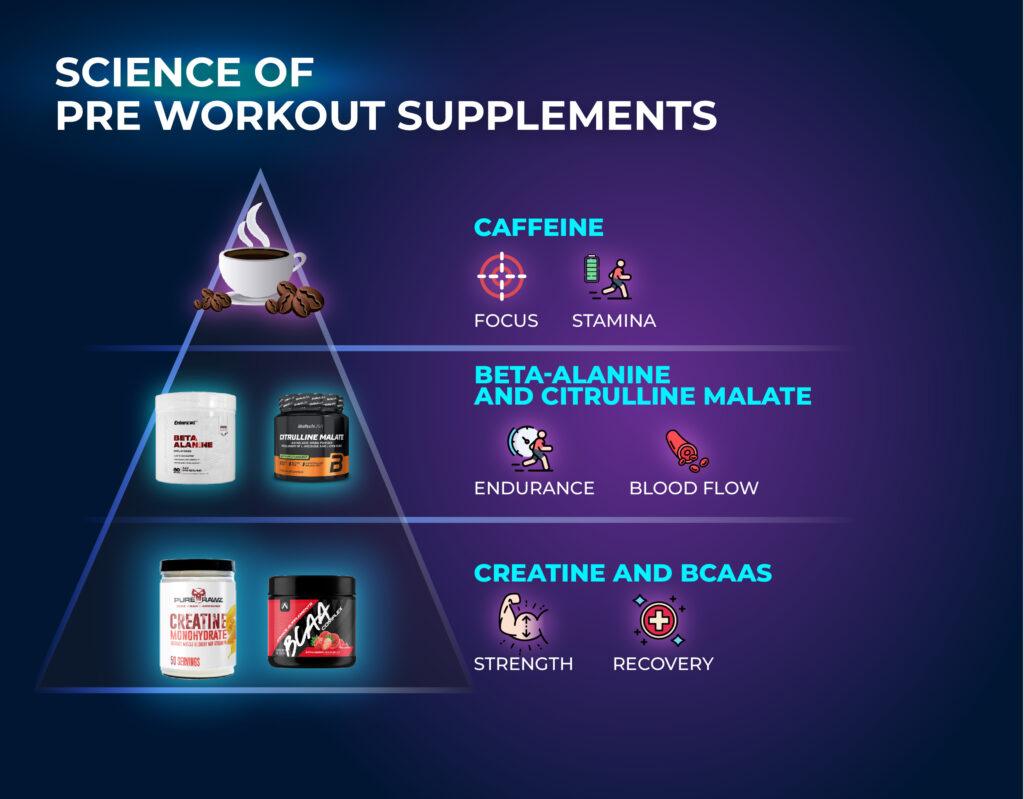
Pre workout supplements are effective because they combine ingredients that have each been studied for their impact on exercise. The science behind these compounds explains how they improve endurance, strength, focus, and recovery.
Caffeine
- Stimulates the central nervous system and sharpens mental alertness.
- Reduces perceived exertion, helping runners feel less tired at the same pace.
- Increases fat oxidation, which helps glycogen stores last longer.
- A meta-analysis found caffeine can improve endurance performance by up to 12% (NCBI, 2019).
Beta-Alanine
- Increases carnosine levels in muscles.
- Buffers hydrogen ions that cause the burning sensation during hard efforts.
- Extends the ability to maintain speed in sprints, hill runs, and intervals.
- Studies show performance improvements in activities lasting 1 to 4 minutes.
Creatine
- Supports rapid replenishment of ATP, the body’s main energy source for short bursts.
- Beneficial for runners who include sprints, intervals, or explosive drills in their training.
- Less critical for long-distance runners but still useful in mixed programs (NCBI, 2018).
Citrulline Malate
- Boosts nitric oxide production, widening blood vessels and improving circulation.
- Enhances oxygen and nutrient delivery to working muscles.
- Research shows it improves time-to-exhaustion, reduces effort, and lowers soreness (ScienceDirect, 2021).
- Especially valuable for long-distance runners who need steady endurance.
Branched-Chain Amino Acids (BCAAs)
- Includes leucine, isoleucine, and valine.
- Provides an additional fuel source during long runs.
- Helps reduce muscle protein breakdown and supports recovery.
- Studies confirm BCAAs can reduce central fatigue by competing with tryptophan in the brain.
The Combined Effect
Each of these ingredients contributes in a different way:
- Caffeine conserves energy and improves focus.
- Beta-alanine delays fatigue in the muscles.
- Creatine fuels short bursts of high-intensity effort.
- Citrulline malate improves blood flow and recovery.
- BCAAs protect muscle tissue and reduce soreness.
Together, they create a powerful formula that helps runners perform longer, recover faster, and train more effectively.
Benefits of Pre Workout Before Running
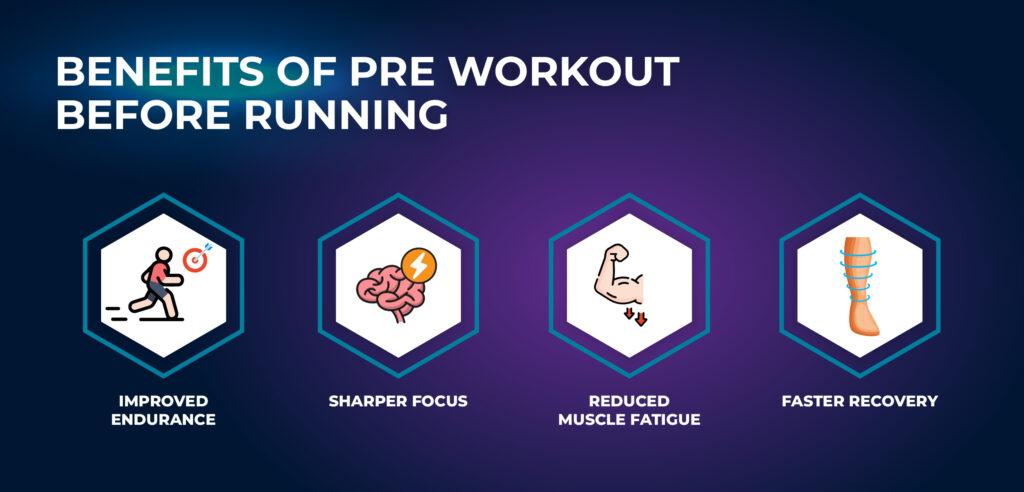
Taking pre workout before running can unlock a range of advantages that go beyond simple energy boosts. These benefits touch on endurance, focus, recovery, and overall performance.
Improved Endurance
Pre workout ingredients such as caffeine and citrulline malate help runners sustain effort for longer periods.
Caffeine reduces the perception of effort, making the same pace feel easier, while citrulline malate enhances blood flow to deliver more oxygen and nutrients to working muscles. Together, they delay fatigue and extend time-to-exhaustion.
For long-distance runners, this can mean holding a steady pace for more miles without hitting the wall.
For sprinters, it helps maintain explosiveness across repeated sprints. Endurance is not only about lasting longer, but also about sustaining quality performance throughout the session, which is exactly what these ingredients support.
Sharper Mental Focus
Running requires mental stamina as much as physical energy. Pre workout formulas often contain caffeine, which stimulates the brain and improves alertness.
This helps runners concentrate on form, pacing, and breathing even when fatigue starts to set in. BCAAs also play a role by competing with tryptophan in the brain, reducing the production of serotonin that contributes to mental fatigue.
The result is clearer focus, steadier motivation, and the ability to push through moments when the mind is tempted to quit.
This benefit is especially important for marathoners or anyone training in repetitive, monotonous environments where mental sharpness often fades.
Reduced Muscle Fatigue
Muscle fatigue is one of the biggest barriers to consistent performance. Beta-alanine helps by buffering hydrogen ions that cause the burning sensation in muscles during hard efforts, allowing runners to push harder for longer.
Meanwhile, BCAAs reduce muscle protein breakdown, protecting muscle tissue during extended runs.
This dual effect means less discomfort during training and less soreness afterward. Runners can return to training sooner and progress faster without being slowed down by lingering fatigue.
Consistency in training is the real key to improvement, and reduced muscle fatigue makes that possible.
Better Recovery
Recovery starts the moment the run ends, and pre-workout can make a difference here as well.
Citrulline malate boosts nitric oxide levels, which improves circulation during and after the workout. This means muscles receive more oxygen and nutrients needed for repair, reducing soreness and speeding recovery.
With faster recovery, runners can increase training frequency or intensity without breaking down.
Over time, this leads to greater performance gains. A supplement that improves both the run itself and the recovery afterward provides a clear advantage for athletes at all levels.
Performance Boost for All Types of Runners
Pre workout benefits are not limited to elite athletes. Every type of runner can see improvements:
- Long-distance runners gain sustained energy, reduced breakdown of muscle, and sharper focus for maintaining pace across many miles.
- Sprinters and interval trainers benefit from extra power, faster recovery between sprints, and improved capacity to repeat high-effort bursts.
- Casual runners notice less fatigue, steadier energy, and a more enjoyable running experience overall.
This wide range of benefits shows why pre-workout has value across the board. Whether the goal is a faster race time, stronger sprint, or simply more enjoyable runs, a properly chosen pre workout can provide meaningful support.
Potential Risks
While pre-workout can be helpful, it is not free from risks. Some runners may experience side effects if they choose the wrong product or use it improperly. Being aware of these risks helps avoid setbacks and ensures safer training.
Caffeine Overload
Caffeine is effective, but too much can lead to jitters, anxiety, and digestive discomfort. High doses may also disrupt sleep if taken late in the day. Runners sensitive to caffeine should start with small amounts and assess tolerance before using stronger pre workout formulas.
Digestive Issues
Some pre workout blends contain artificial sweeteners or sugar alcohols that can cause bloating, cramps, or diarrhea.
Taking a pre workout too close to a run can also upset the stomach. To avoid this, runners should give themselves at least 30–45 minutes between consumption and running.
Dehydration Risk
Caffeine has a mild diuretic effect, which can contribute to dehydration if not balanced with proper fluid intake. Runners should make sure they are well hydrated before using pre workout, especially for long-distance runs in hot or humid conditions.
Ingredient Quality and Transparency
Not all pre workout supplements are created equal. Some products use proprietary blends that hide exact ingredient amounts, making it hard to know what you are taking.
Others may include unnecessary fillers or underdosed compounds. Choosing brands with clear labeling and third-party testing reduces this risk.
Not Runner-Friendly Formulas
Many pre workout products are designed with weightlifters in mind, focusing on strength and pump rather than endurance and stamina. These may contain excess stimulants or ingredients that are not useful for running. Runners should select formulas tailored to endurance athletes or use natural alternatives.
By keeping these risks in mind, runners can make smarter decisions about whether and how to include pre-workouts in their training. Used responsibly, it can provide real performance benefits. Used carelessly, it may cause more problems than it solves.
How to Take Pre-Workout Before Running

Getting the timing, dosage, and approach right is essential to maximize the benefits of pre workout while avoiding side effects. Runners should view supplementation as part of their preparation strategy, not a quick fix.
Timing
- The ideal window is 30 to 45 minutes before running. This allows enough time for ingredients like caffeine and citrulline malate to be absorbed and start working.
- Taking pre-workout too close to a run may cause stomach upset, while taking it too early may cause the effects to fade before the workout ends.
Dosage
- Start with half a serving if you are new to pre workout or sensitive to caffeine. This helps assess tolerance without overwhelming the body.
- Standard caffeine dosage for endurance benefits is 3 to 6 mg per kg of body weight (NCBI, 2019). Runners should avoid exceeding this range to reduce the risk of jitters or sleep issues.
Pairing with Food
- Pre workout works best on a light stomach. Pairing it with a small snack rich in easy-to-digest carbs, such as a banana or oatmeal, provides a balanced fuel source.
- Avoid heavy meals immediately before taking pre workout, as they slow digestion and may reduce effectiveness.
Hydration
- Always drink water with pre workout. Proper hydration supports performance and reduces the risk of cramps and dehydration.
- For longer runs, consider combining pre workout with electrolyte support to maintain fluid balance.
Frequency of Use
- Pre workout does not need to be used for every single run. Save it for long training sessions, speed workouts, or races where an extra edge is needed.
- Overuse can reduce sensitivity to stimulants like caffeine, making them less effective over time.
By following these guidelines, runners can use pre workout safely and effectively. Smart use enhances energy, focus, and endurance, while careless use may lead to discomfort or negative side effects.
Best Types of Pre Workouts for Different Runners
Pre workout supplements are not one-size-fits-all. The best formula depends on the type of running you do and the results you want. Choosing wisely ensures you get the right support without unnecessary side effects.
Long-Distance Runners
Endurance runners need steady energy and muscle preservation. A moderate dose of caffeine can reduce effort perception and keep energy levels stable.
Citrulline malate is valuable for improving circulation and delaying fatigue over long sessions. BCAAs help protect muscle tissue from breakdown during extended runs.
Adding electrolytes supports hydration and reduces the risk of cramps, making these formulas more effective for marathons or half-marathons.
Sprinters and Interval Runners
Short-distance and interval training place more demand on explosive power and quick recovery. Creatine is particularly useful here because it replenishes ATP for repeated sprints.
Beta-alanine helps buffer acid in muscles, allowing athletes to sustain high intensity longer.
Caffeine sharpens focus and provides an extra edge during bursts of speed. Sprinters benefit most from blends that combine stimulants with compounds that enhance power and recovery.
Casual and Recreational Runners
Everyday runners often want smoother, more comfortable energy without overstimulation. Low-stimulant or stimulant-free pre workouts are ideal.
Ingredients such as green tea extract, beetroot powder, and citrulline malate provide mild, sustained energy and better circulation without jitters.
These blends make running feel easier and more enjoyable while supporting performance at a comfortable pace.
Natural Alternatives if You Don’t Want Supplements
Some runners prefer to avoid supplements but still want a boost before training. Natural foods and drinks can provide energy, focus, and endurance without relying on pre workout powders.
These options are easy to find, gentle on the stomach, and effective when timed properly.
Coffee or Green Tea
Coffee delivers a quick caffeine boost that increases alertness and endurance. Green tea provides a lighter dose of caffeine along with antioxidants that support overall health.
Both are simple, accessible options that can be taken 30–45 minutes before a run to sharpen focus and improve energy without relying on synthetic blends.
Bananas, Oats, or Honey
These carbohydrate-rich foods supply quick and easily digestible fuel. A banana offers potassium that supports muscle function, oats provide slow-release energy for longer runs, and honey gives fast sugar for immediate fuel.
Beet Juice
Beet juice is naturally high in nitrates, which the body converts into nitric oxide. Studies show that beet juice can enhance endurance and lower perceived effort. This makes it a powerful natural pre workout drink for both casual and competitive runners.
Coconut Water
Coconut water contains natural electrolytes such as potassium, sodium, and magnesium. These minerals help maintain fluid balance and prevent cramps, especially during long runs in hot weather.
Best Supplements for Pre Workouts Before Running
Finding a reliable pre workout is just as important as knowing how to use it. With so many products on the market, it’s essential to choose sources that offer quality, transparency, and safety.
You can find trusted pre workouts for runners directly from Enhanced Labs and Pumping Iron. It provides detailed product information, clear ingredient labels, and third-party tested formulas that ensure both safety and effectiveness.
Enhanced Labs – Maximus Stim

Maximus Stim delivers long-lasting energy, focus, and endurance support—qualities runners need to power through tough miles without hitting the wall too early. Its adaptogens and cardiovascular support ingredients can also help improve oxygen efficiency, which is especially beneficial for endurance training.
For those who prefer to skip caffeine, Pumping Irons also offers stim-free pre-workout alternatives designed to enhance performance without the jitters.
Pumping Iron – Creatine
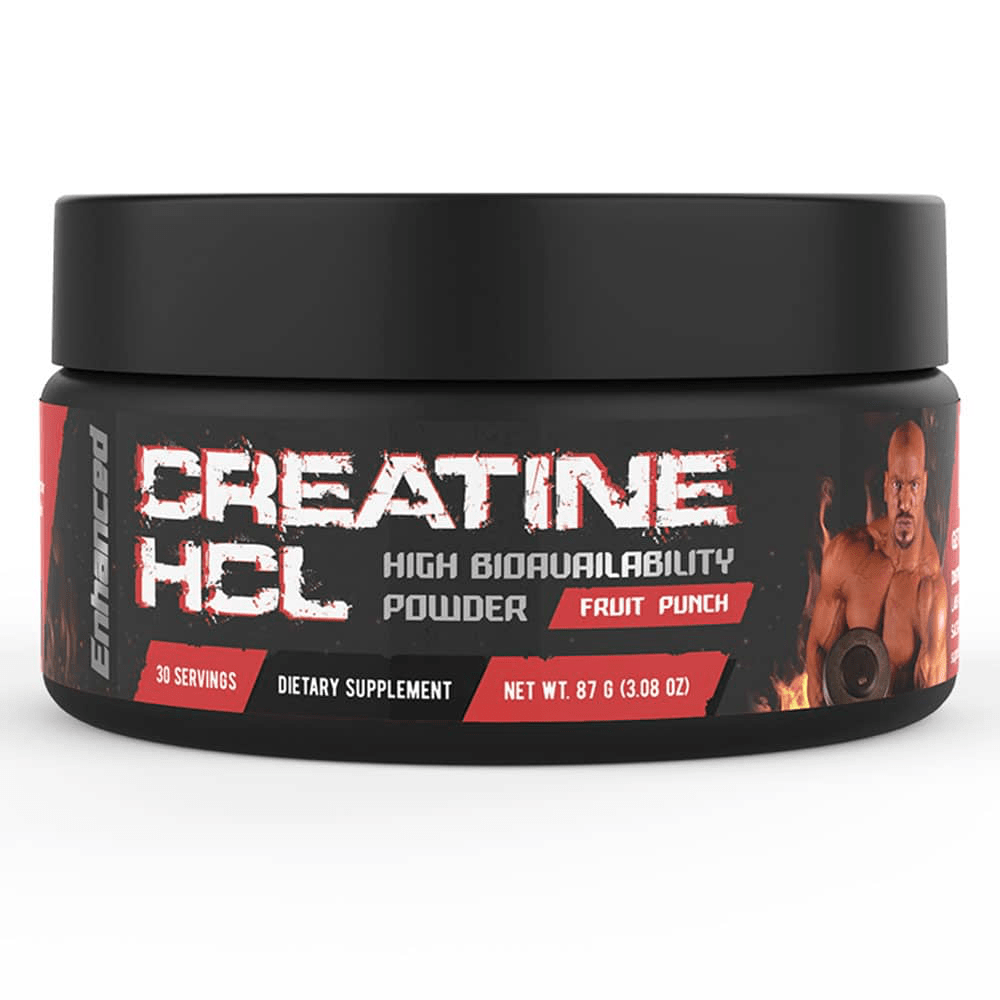
Pumping Irons has built a strong reputation as an authoritative seller of performance supplements. Known for its commitment to transparency and education, Pumping Irons offers well-formulated compounds designed to support endurance, focus, and recovery. Athletes and fitness enthusiasts trust them because they provide clear product labeling, high-quality ingredients, and no-nonsense guidance on proper use.
What to Consider When Buying Pre Workout
- Ingredient Transparency: Choose products that clearly list ingredient amounts rather than hiding behind proprietary blends.
- Stimulant Levels: Look for caffeine levels that match your tolerance. Too much can cause jitters, while too little may not provide the desired boost.
- Endurance Support: Endurance-friendly ingredients such as citrulline malate, beta-alanine, and electrolytes are better suited for runners than pump-focused blends.
- Third-Party Testing: Products tested by independent labs are more reliable in terms of purity and safety.
- Brand Reputation: Stick with companies known for high standards, positive reviews, and customer transparency.
By keeping these factors in mind, anybody can confidently select a solid pre workout before running that align with their training goals while avoiding unnecessary risks.
Disclaimer: This content is for informational purposes only and is not intended as medical advice. Always consult a qualified healthcare professional before starting any new supplement or exercise program.
Final Thoughts
Pre workout before running can be a game-changer when used wisely. It sharpens focus, delays fatigue, and supports both performance and recovery. But the key lies in balance and in choosing the right formula, using it at the right time, and not relying on it for every run.
Runners should view pre workout as a tool, not a shortcut. Natural alternatives like coffee, beet juice, or carb-rich snacks remain excellent options for those who prefer a simpler approach.
At the end of the day, the best pre workout strategy is the one that fits your body, your goals, and your style of running. With the right approach, you can run stronger, last longer, and recover faster.
Frequently Asked Questions
Is pre-workout safe for beginners?
Yes, but start with a half serving to test tolerance. Focus on endurance-friendly blends with moderate caffeine.
Can I take pre workout every day?
It’s not necessary. Save it for long runs, speed training, or races. Overuse can reduce effectiveness.
What’s the best time to take pre workout before a run?
About 30–45 minutes before running for optimal absorption and effect.
Do I need pre workout for short runs?
Not always. For easy or short runs, natural alternatives like a banana or coffee may be enough.
What should I avoid in pre workout supplements?
Avoid products with hidden ingredient blends, excessive stimulants, or fillers that don’t support endurance training.