Kisspeptin vs HCG — Kisspeptin and Human Chorionic Gonadotropin (HCG) are two of the most influential hormones in the field of reproductive and hormonal health. Both impact fertility, testosterone levels, and overall hormonal balance. However, they act in very different ways.
Think of Kisspeptin as the signal starter. It tells the brain to activate the reproductive system. HCG, on the other hand, is the action hormone. It tells the gonads to produce testosterone, estrogen, and progesterone directly.
Because they target different points in the body’s hormonal cascade, both are widely studied in fertility treatments, testosterone therapy, and post-cycle recovery. Understanding their differences is key to optimizing reproductive health and hormonal performance.
What Are Kisspeptin and HCG?
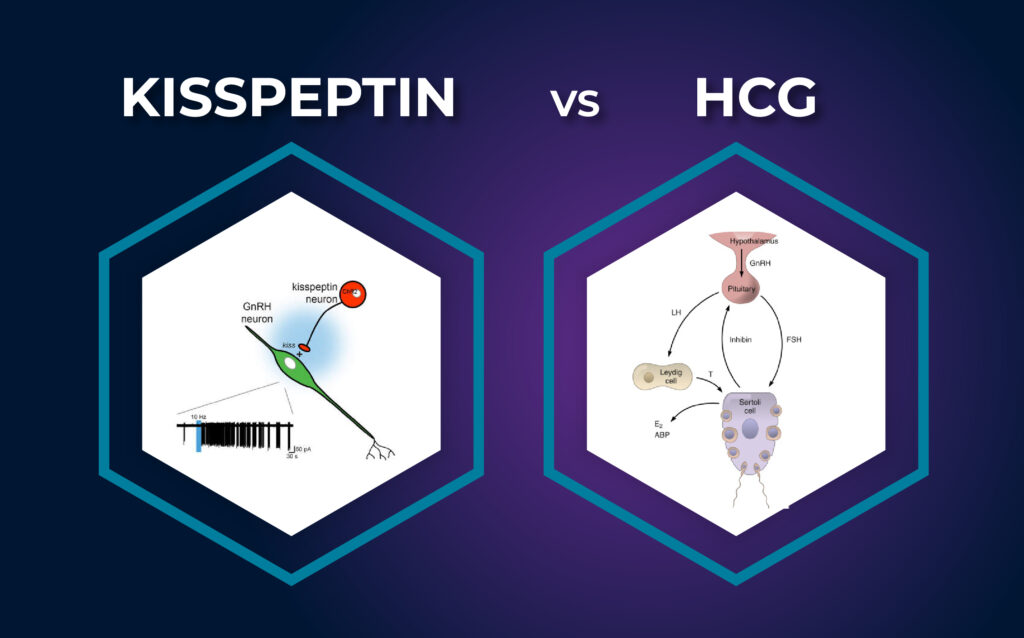
Kisspeptin is a naturally occurring neuropeptide produced in the hypothalamus. It acts as the “on switch” for the body’s reproductive system by triggering the release of Gonadotropin-Releasing Hormone (GnRH).
Once released, GnRH signals the pituitary gland to secrete Luteinizing Hormone (LH) and Follicle-Stimulating Hormone (FSH), two essential hormones for ovulation, sperm production, and sex hormone regulation.
HCG, on the other hand, works at the end of this hormonal chain. It mimics the effects of LH and directly stimulates the gonads to produce testosterone in men and progesterone or estrogen in women.
This makes it an essential hormone in fertility therapy and post-cycle testosterone recovery.
In short:
- Kisspeptin: Brain-level regulator that starts the hormone chain.
- HCG: Direct stimulator that acts on the gonads to produce hormones.
Together, they represent two different ways of achieving hormonal balance—one through the brain, the other through direct stimulation.
Key Takeaways
- Kisspeptin acts as the master regulator, initiating GnRH, LH, and FSH release to support natural fertility. 💡
- HCG directly activates the gonads, promoting testosterone, estrogen, and progesterone production. 🔬
- Both are vital in fertility and hormone therapy, though they act at different points in the HPG axis. 🧠
- Kisspeptin may reduce the risk of ovarian overstimulation, making it a safer fertility option. 💉
- Medical supervision is critical since improper dosing can disrupt hormonal feedback systems. ⚠️

Administration Methods
Both Kisspeptin and HCG are most often administered through injections, but how they’re given can change the way they work.
- Kisspeptin is injected either centrally (closer to the brain for targeted hormone release) or peripherally (subcutaneous or intravenous for broader systemic effects).
- HCG is typically given via subcutaneous or intramuscular injections, depending on the therapy.
Because both interact with delicate hormone systems, dosage, timing, and administration must be medically supervised. Even small missteps can lead to imbalances in hormone levels or diminished therapeutic outcomes.
Kisspeptin and HCG in Fertility Treatment
Both hormones have earned a place in reproductive research and clinical fertility treatments.
Kisspeptin works as a natural trigger for ovulation and sperm production. It stimulates GnRH release, which regulates LH and FSH. These are two hormones critical for healthy reproductive function.
Because it operates within the body’s own hormonal rhythm, researchers are exploring Kisspeptin as a safer alternative to traditional fertility drugs, particularly for women undergoing IVF.
HCG, meanwhile, acts as the direct activator. It’s used to trigger ovulation in women and stimulate testosterone and sperm production in men. In male post-cycle recovery, HCG helps maintain testicular size and prevent atrophy during or after anabolic steroid use.
Both hormones may be combined with other fertility treatments to enhance success rates, but their use should always align with a patient’s hormone profile and medical guidance.
Understanding Human Chorionic Gonadotropin (HCG)
HCG is a hormone naturally produced during pregnancy, but it has broad applications in hormone therapy and research. It works by mimicking Luteinizing Hormone (LH) and directly stimulating the gonads to release sex hormones.
In men, HCG binds to receptors on Leydig cells in the testes, prompting testosterone production and supporting sperm development. In women, it helps trigger ovulation and maintain progesterone levels during the early stages of pregnancy.
Because HCG acts quickly and bypasses brain regulation, it’s often used in:
- IVF and fertility treatments
- Hormone replacement therapy (HRT)
- Post-cycle therapy (PCT) for restoring natural testosterone
Clinical research has shown that HCG’s effects vary with dosage, patient age, and body composition. That’s why personalized medical supervision is key to ensuring consistent, safe results.
Research Findings on Kisspeptin and HCG

Clinical studies have explored both Kisspeptin and HCG for their roles in fertility and endocrine regulation. Research shows that Kisspeptin stimulates GnRH, LH, and FSH, improving reproductive hormone balance and potentially offering a safer alternative for controlled ovarian stimulation.
Studies on HCG confirm its long-standing effectiveness in triggering ovulation and increasing testosterone. It remains a clinical standard for restoring reproductive function and hormonal stability.
Some findings also indicate that Kisspeptin’s mechanism may help lower the risk of ovarian hyperstimulation syndrome (OHSS), a common side effect of traditional fertility medications. Meanwhile, HCG continues to be essential in testosterone restoration and sperm preservation, particularly in male fertility protocols.
While early results are promising, ongoing research continues to refine optimal dosages, timing, and combined use of these hormones in advanced reproductive therapies.
Hormone Levels and Balance
Balanced hormone levels are the backbone of fertility and overall reproductive health. Even slight disruptions in LH, FSH, estrogen, progesterone, or testosterone can lead to infertility, low libido, or hormonal imbalances.
Kisspeptin regulates hormone balance from the brain, fine-tuning the release of GnRH and maintaining rhythm in LH and FSH secretion. HCG, on the other hand, provides a more immediate correction by directly stimulating the gonads to produce these hormones.
Medical professionals often monitor testosterone, LH, and FSH levels when administering either Kisspeptin or HCG to assess response and adjust treatment. This helps maintain a stable endocrine environment, ensuring optimal reproductive outcomes.
Benefits and Risks

Benefits of Kisspeptin
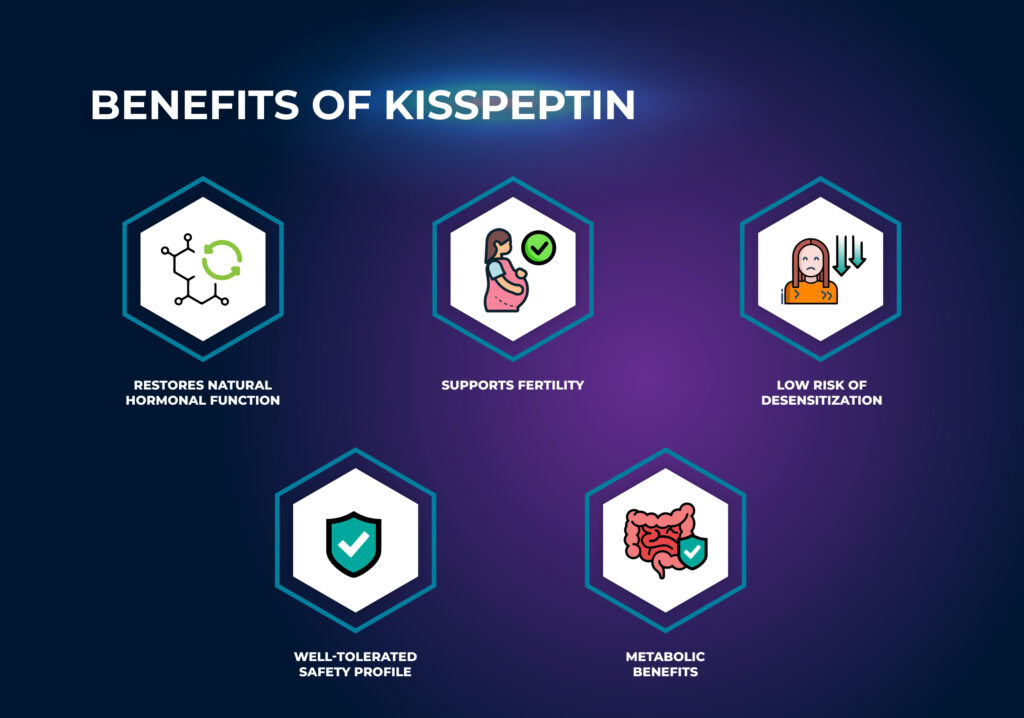
- Stimulates natural GnRH, LH, and FSH release for balanced hormone regulation
- Supports ovulation and sperm production through natural feedback pathways
- May lower risk of ovarian overstimulation in fertility protocols
- Offers a more physiological alternative to traditional fertility drugs
Benefits of HCG
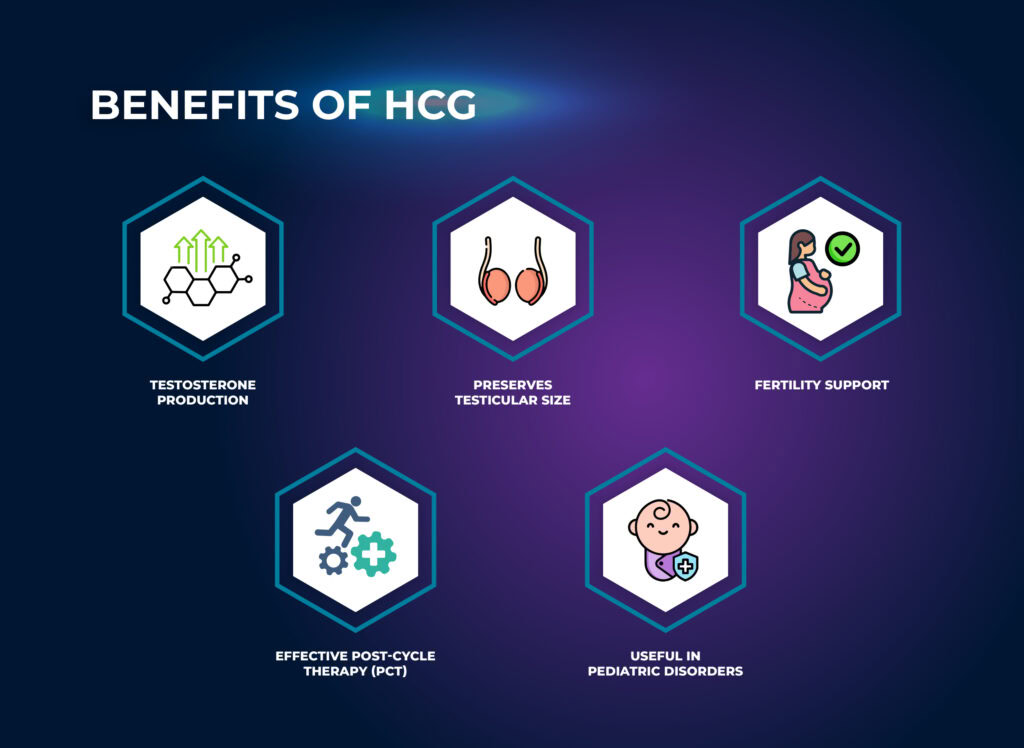
- Directly boosts testosterone, estrogen, and progesterone production
- Triggers ovulation and supports sperm production
- Helps restore hormonal balance after suppression (common in PCT and HRT)
- Clinically established for fertility and hormone therapy
Potential Risks
Both Kisspeptin and HCG can cause side effects if misused or overdosed, including:
- Temporary mood changes
- Fluid retention or bloating
- Mild injection site reactions
- Hormonal imbalances from improper cycling
Because they influence sensitive hormonal pathways, both require medical supervision to ensure safe, effective outcomes.
Where to Buy Kisspeptin vs HCG
Kisspeptin
Kisspeptin-10 is a synthetic decapeptide made up of ten amino acids, known for its role in regulating the hypothalamic-pituitary-gonadal (HPG) axis—the system that governs reproductive hormones like LH, FSH, testosterone, and estrogen.
Rather than acting directly on the gonads, Kisspeptin-10 works in the brain by stimulating the release of Gonadotropin-Releasing Hormone (GnRH) from the hypothalamus. This makes it a key signaling molecule in the natural hormonal cascade that supports fertility, puberty onset, and overall reproductive balance.
What makes Kisspeptin-10 unique is its selective receptor targeting and precision signaling. In research studies, it has shown potential in modulating hormonal rhythms and enhancing communication between the brain and the reproductive system without overstimulating downstream hormones.
Researchers are exploring its applications in fertility studies, hormonal regulation, and neuroendocrine research. It is typically administered via subcutaneous injection in controlled research environments.
Disclaimer: This content is for informational purposes only. Kisspeptin-10 has not been approved for medical use by the FDA or other regulatory agencies. All products are for laboratory research use only and are not for human consumption.
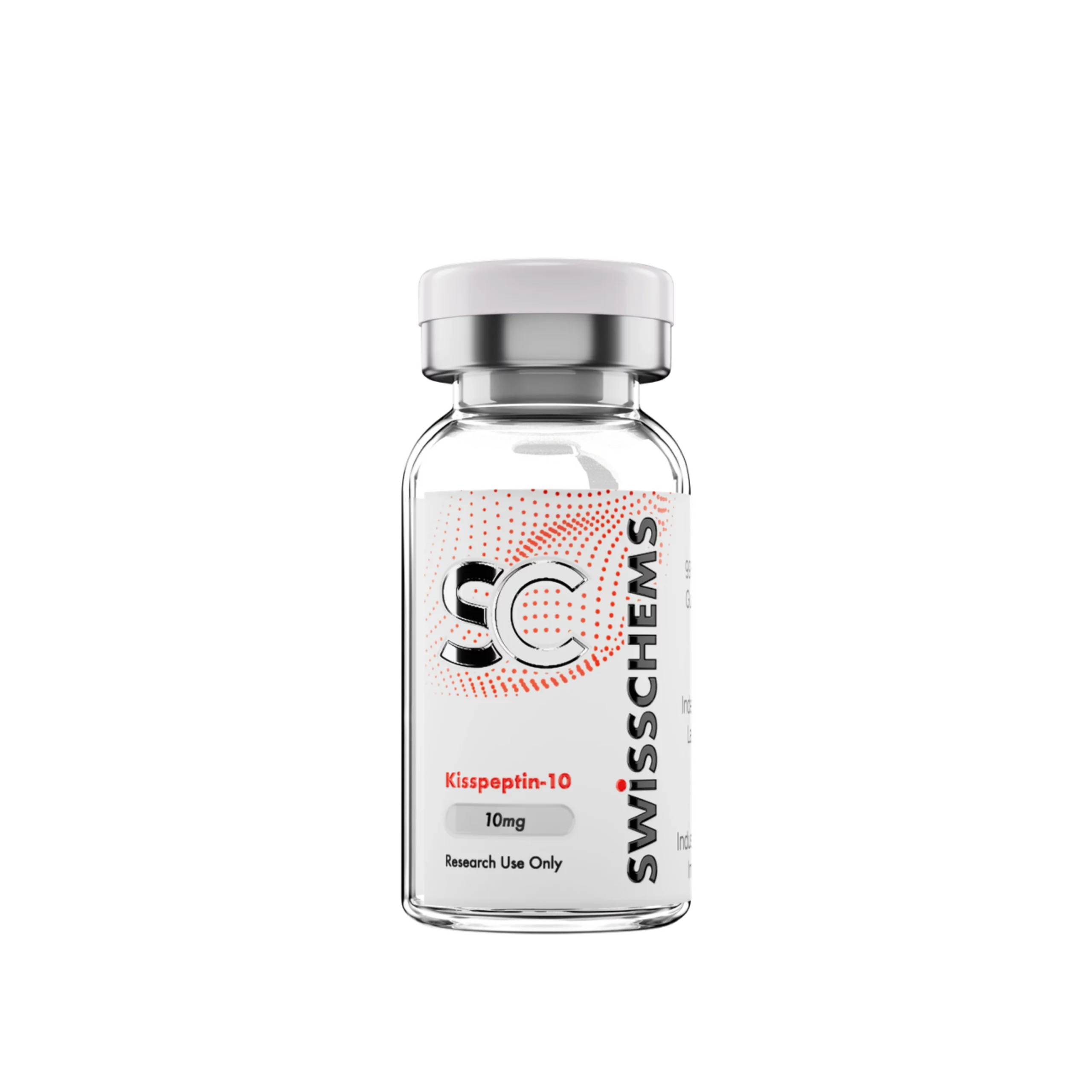
Kisspeptin Overview
⭐ Top Benefits: Supports reproductive hormone research, GnRH stimulation, fertility and HPG axis modulation
🧪 Form: Lyophilized peptide (vial)
⌛ Shelf Life: 36 months (under proper storage conditions)
💰 Average Cost: $135.00 per 10mg vial
❤️🩹 Side Effects: Mild injection site reactions or hormonal fluctuation observed in research settings
📚 Best Peptide Stack: Often combined with HCG, CJC-1295, or GHRPs in advanced hormone signaling studies
Copy Brawn10 for 10% off
- Highly specific receptor binding observed in controlled studies
- Supports advanced research into reproductive hormone regulation
- Freeze-dried formulation ensures purity and long-term stability
- Experimental compound with limited clinical data
- Requires precise laboratory handling
- Not approved for medical or human use
HCG
HCG (Human Chorionic Gonadotropin) is a naturally occurring glycoprotein hormone that shares receptors with Luteinizing Hormone (LH) and plays an essential role in reproductive function and hormone regulation.
In scientific research, HCG has been shown to stimulate testosterone production in males and trigger ovulation in females by directly acting on LH receptors in the gonads. It supports the production of progesterone, estrogen, and testosterone, which are vital for fertility and endocrine health.
SwissChems HCG 5000 IU is an extracted form of HCG derived from the urine of pregnant women, formulated for laboratory and developmental research purposes. Clinical studies have investigated its role as an ovulation-inducing agent and a tool for hormone restoration.
HCG’s direct action on reproductive tissues makes it a valuable compound for fertility research, testosterone regulation studies, and post-cycle hormonal recovery models.
Disclaimer: This content is for informational purposes only. HCG is not approved by the FDA for personal or medical use. All products are for laboratory research only and not for human consumption.
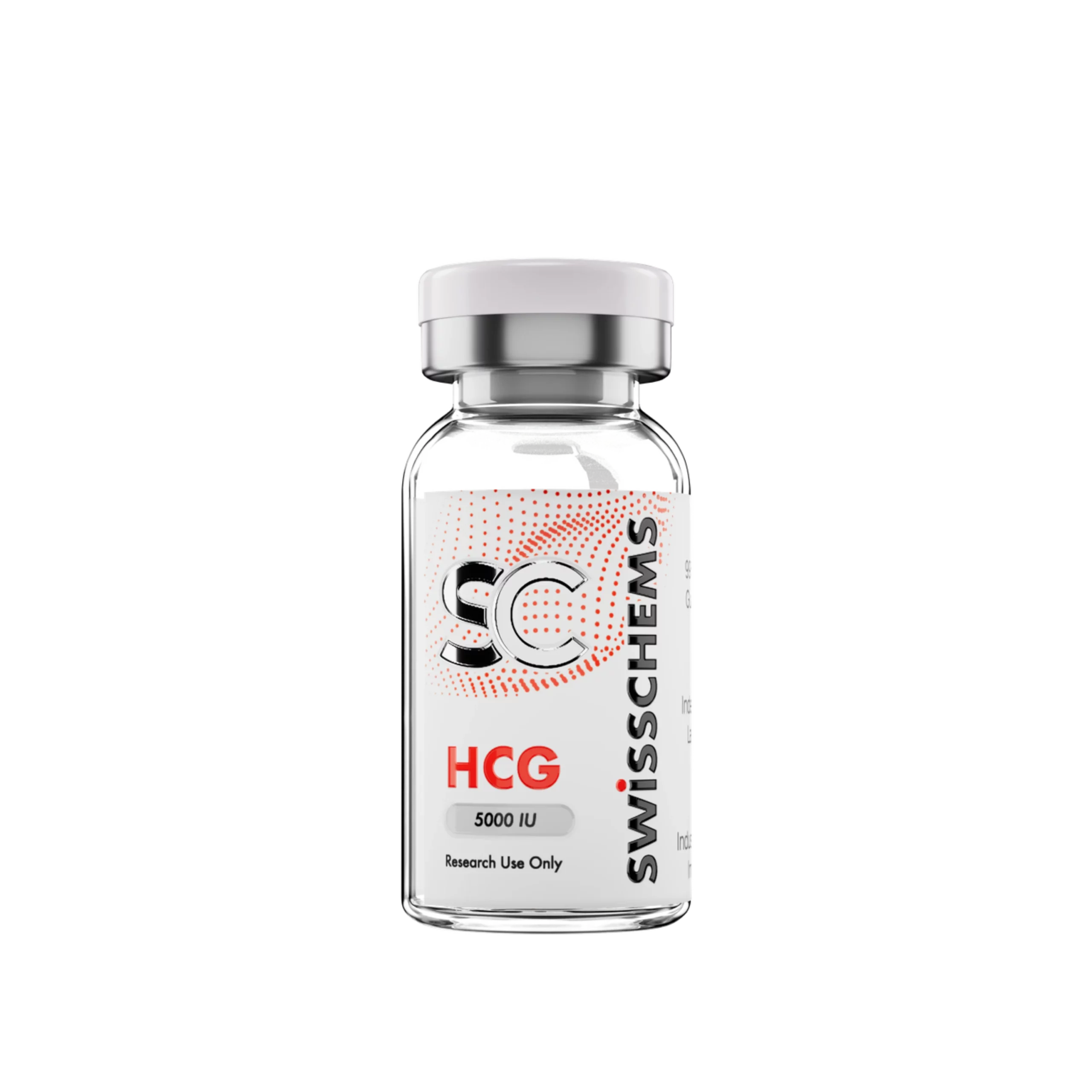
HCG Overview
⭐ Top Benefits: Supports fertility research, testosterone regulation, and post-cycle hormonal studies
🧪 Form: Lyophilized peptide (kit: 10 vials)
⚖️ Concentration: 5000 IU per vial
⌛ Shelf Life: 36 months (store refrigerated after reconstitution)
💰 Average Cost: $28.99 per vial
❤️🩹 Side Effects: Temporary fluid retention, mild injection site irritation, or transient mood changes (observed in studies)
📚 Best Peptide Stack: Commonly paired with Kisspeptin-10, CJC-1295, or Gonadorelin for reproductive hormone pathway research
Copy Brawn10 for 10% off
- Stimulates testosterone, estrogen, & progesterone production for fertility research
- Supports reproductive hormone balance & post-cycle recovery studies
- Clinically recognized for ovulation & testosterone stimulation in controlled settings
- Requires proper reconstitution & cold storage to preserve stability
- Limited long-term clinical data on broader applications
- Possible temporary hormonal fluctuations or mild injection site reactions
Conclusion
Kisspeptin and HCG are two powerful hormones that regulate fertility and hormonal balance—but through completely different routes.
Kisspeptin acts as the initiator, signaling the brain to release reproductive hormones naturally.
HCG acts as the activator, directly stimulating the gonads to produce testosterone, estrogen, and progesterone.
Both play essential roles in fertility treatments, hormone restoration, and post-cycle recovery. Kisspeptin offers a natural, regulated approach; HCG delivers proven, direct results.
Used correctly and under medical guidance, they can both help restore balance, enhance fertility, and support long-term hormonal health.
Frequently Asked Questions – FAQs
1. Can Kisspeptin increase testosterone naturally?
Yes. Kisspeptin stimulates the release of GnRH, which triggers LH secretion—the hormone responsible for testosterone production.
2. Does HCG therapy boost fertility in men?
Absolutely. HCG directly stimulates the testes to produce testosterone and sperm, making it a cornerstone in male fertility treatments.
3. Is Kisspeptin safer than HCG for women?
Early studies suggest Kisspeptin may reduce the risk of ovarian hyperstimulation during IVF, offering a gentler alternative to traditional fertility medications.
4. Can Kisspeptin and HCG be used together?
They can be combined in certain fertility protocols under medical supervision to support both brain-level and direct hormonal stimulation.
5. Are there side effects to Kisspeptin or HCG use?
Mild side effects such as mood changes or injection site irritation may occur, but proper dosing and monitoring can help minimize these risks.