

Contents12 sections
Kisspeptin-10 (KP-10) is a neuropeptide that sits at the very top of the reproductive hormone cascade. It tells the hypothalamus to release gonadotropin-releasing hormone (GnRH), which then triggers LH and FSH secretion from the pituitary. The downstream result is increased testosterone production in men and improved ovulatory signaling in women, all through the body’s own signaling pathway rather than through exogenous hormones.
I first came across Kisspeptin-10 while researching alternatives to HCG for post-cycle hormone recovery. The concept is straightforward: instead of mimicking LH directly the way HCG does, Kisspeptin-10 stimulates the entire HPG axis from the top down. Research in healthy men has confirmed that intravenous KP-10 at doses as low as 0.3 nmol/kg can elevate LH levels with corresponding testosterone increases. That upstream mechanism is what makes this peptide interesting, even if its practical limitations (mainly a very short half-life) keep it from being a straightforward replacement for established compounds.
This guide covers what Kisspeptin-10 actually does, who it makes sense for, realistic dosage protocols, the side effect profile, and how it stacks up against HCG and Gonadorelin.
The information on this site is for educational and informational purposes only, and is not medical advice. Always consult a qualified healthcare professional before using any supplement or medication, or making changes to your health, fitness, or nutrition routine.
Key Takeaways
- Kisspeptin-10 stimulates testosterone production through the natural HPG axis by triggering GnRH release from the hypothalamus. It does not introduce exogenous hormones.
- Research confirms LH elevation in men at doses as low as 0.3 nmol/kg via IV administration, with corresponding testosterone increases.
- Unlike HCG, Kisspeptin-10 works upstream of the pituitary, allowing the body to regulate its own hormone production through intact feedback mechanisms.
- The primary practical limitation is an extremely short half-life (~4 minutes IV), which restricts sustained hormonal effects from a single injection.
- Kisspeptin-10 stimulates both LH and FSH, giving it potential applications in both testosterone support and fertility.
- Human clinical data remains limited. Most evidence comes from short-term studies and preclinical models. Longer-acting analogs are in development but not yet available.
What Is Kisspeptin-10?
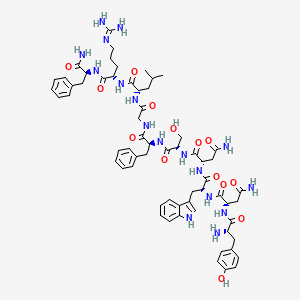
Kisspeptin-10 is the shortest and most potent fragment of the kisspeptin peptide family. It consists of 10 amino acids, is encoded by the KISS1 gene, and acts as the primary natural ligand for the GPR54 receptor (also called KISS1R). In the body, kisspeptin neurons are concentrated in two regions of the hypothalamus: the arcuate nucleus and the anteroventral periventricular nucleus.
Quick Facts
| Property | Detail |
|---|---|
| Type | Neuropeptide |
| Gene | KISS1 |
| Receptor | GPR54 (KISS1R) |
| Isoforms | KP-10, KP-13, KP-14, KP-54 |
| Primary function | Stimulates GnRH release |
| Administration | Subcutaneous injection or intravenous |
| Half-life | ~4 minutes (IV) |
| Downstream effects | Increased LH, FSH, and testosterone |
The four human kisspeptin isoforms (KP-10, KP-13, KP-14, and KP-54) all share the same C-terminal 10-amino-acid sequence. That C-terminal region is the active fragment that binds GPR54 and triggers the hormonal cascade. KP-10 is the minimum active fragment with the fastest onset and is preferred in both research and practical applications for that reason.
How Kisspeptin-10 Works
The Kisspeptin peptide operates at the very top of the hypothalamic-pituitary-gonadal (HPG) axis. Understanding where it acts in the cascade explains both its advantages and its limitations.
The HPG Axis Cascade
- Kisspeptin-10 binds to GPR54 receptors on GnRH neurons in the hypothalamus
- GnRH is released into the portal circulation connecting the hypothalamus to the pituitary gland
- GnRH stimulates the anterior pituitary to secrete luteinizing hormone (LH) and follicle-stimulating hormone (FSH)
- LH acts on the gonads — in men, it stimulates Leydig cells to produce testosterone; in women, it triggers ovulation and progesterone production
- FSH supports gamete production — spermatogenesis in men, follicular development in women
This is why mutations in the KISS1 gene or GPR54 receptor cause hypogonadotropic hypogonadism. When the kisspeptin signal at the top of the chain is absent, the entire downstream hormone cascade fails.
Why the Upstream Position Matters
Most compounds used for testosterone support act at lower levels of the HPG axis. HCG mimics LH directly at the testicular level. Gonadorelin acts as a GnRH analog at the pituitary level. Kisspeptin-10 sits above both of them, stimulating the body’s own GnRH production. This means the pituitary still decides how much LH and FSH to release based on its own feedback mechanisms, which is a more physiological approach.
The trade-off is practical: KP-10 has an extremely short half-life. When administered intravenously, it clears the bloodstream in roughly 4 minutes. A single injection produces a rapid but brief spike in LH and testosterone rather than sustained elevation. Subcutaneous injection slows absorption somewhat, but the effective window remains short compared to compounds like HCG (24-36 hour half-life) or even Gonadorelin (10-40 minutes).
Research into longer-acting kisspeptin analogs is ongoing but none are commercially available yet. Until that changes, the short half-life is the primary factor limiting real-world utility.
Kisspeptin-10 Benefits
Testosterone Stimulation
The core Kisspeptin-10 benefit for men is stimulating endogenous testosterone production without introducing exogenous hormones. Research in healthy male subjects demonstrated that kisspeptin administration increases LH pulse frequency and amplitude, with measurable testosterone elevation following. Because this production occurs through the body’s natural signaling pathway, the risk of testicular desensitization that comes with chronic HCG use is lower.
User reports align with the research. One user running 250 mcg subcutaneously daily described noticeable testicular size increase within six weeks and stated he preferred it to HCG for maintaining function during TRT. The effect is real, but it is more subtle and gradual than what most people experience with direct LH mimetics.
Fertility Support
Kisspeptin-10 stimulates both LH and FSH, which makes it relevant for fertility in both sexes. In men, FSH drives spermatogenesis while LH supports the testosterone levels needed for sperm maturation. In women, kisspeptin has shown promise in IVF protocols as a safer alternative to HCG for triggering final oocyte maturation. The advantage in IVF is a lower risk of ovarian hyperstimulation syndrome (OHSS), a serious and sometimes dangerous complication.
HPG Axis Recovery
For men recovering from testosterone suppression after a steroid cycle or TRT discontinuation, Kisspeptin-10 offers a theoretical advantage over standard PCT protocols. By stimulating the HPG axis at its highest regulatory point, it may help restore the full signaling cascade rather than addressing just one downstream component.
The practical reality is more nuanced. The short half-life means you would need frequent dosing to maintain meaningful stimulation, and clinical evidence supporting Kisspeptin-10 specifically for PCT is limited. Most users who have tried it for recovery report modest effects compared to established PCT compounds like Nolvadex or Clomid. It may have a role as part of a broader PCT stack, but it is not a standalone solution with current formulations.
Sexual Function and Arousal
Research in animal models and preliminary human data suggest Kisspeptin-10 influences sexual and emotional brain processing beyond just hormone levels. Studies have shown that kisspeptin signaling through the HPG axis can affect neural circuits related to sexual arousal, olfaction, and anxiety. Some users report improved libido and sexual drive, though separating this from the downstream testosterone increase is difficult.
Reproductive Health Assessment
Clinicians have used kisspeptin as a diagnostic tool to assess HPG axis integrity. A robust LH response to kisspeptin administration indicates intact hypothalamic and pituitary signaling. A blunted response can help identify where in the HPG axis a dysfunction is occurring, which guides treatment decisions.
Kisspeptin-10 Dosage
Research Dosages
| Protocol | Dose | Route | Frequency | Notes |
|---|---|---|---|---|
| Acute LH stimulation | 0.3-1.0 nmol/kg | IV bolus | Single dose | Research settings only |
| Subcutaneous protocol | 100-250 mcg | SubQ injection | 1-2x daily | Most common user protocol |
| Continuous infusion | 0.1-1.0 nmol/kg/hr | IV infusion | Continuous | Clinical research only |
Practical Dosage Guidelines
The research doses (IV bolus and continuous infusion) are not practical outside of a clinical setting. The protocols most users follow are based on subcutaneous injection, which is accessible and reasonably effective despite producing a lower-amplitude hormonal response than IV administration.
Starting dose: 100 mcg subcutaneously. Assess response for 5-7 days before increasing. Most users settle in the 100-250 mcg range based on individual response.
Frequency: Once or twice daily. Some users dose once in the evening to align with natural nocturnal testosterone production patterns. Others split the dose (morning and evening) to maintain more consistent stimulation given the short half-life.
Cycle length: 4-8 weeks maximum. Extended continuous use increases the risk of receptor desensitization (tachyphylaxis), which progressively reduces the compound’s effectiveness. After a cycle, take at least 3-4 weeks off before starting another.
Reconstitution: Mix with bacteriostatic water. Store reconstituted vials refrigerated. Follow standard peptide injection technique and rotate injection sites.
Bloodwork: Get baseline LH, FSH, and total testosterone levels before starting. Retest at week 4 to assess whether the compound is producing a meaningful response for you. If LH has not increased, the protocol may not be effective at your current dose.
Kisspeptin-10 Side Effects
Kisspeptin-10 has a mild side effect profile compared to most compounds used for hormonal support. Because it works through the body’s existing signaling rather than introducing exogenous hormones, the risk of serious adverse effects is low based on available data.
Reported Side Effects
| Side Effect | Severity | Notes |
|---|---|---|
| Injection site pain/redness | Mild | Standard for subcutaneous peptides |
| Headache | Mild | Occasional, typically transient |
| Facial flushing | Mild | More common with IV administration |
| Nausea | Rare | Dose-dependent |
Tachyphylaxis (Receptor Desensitization)
This is the most clinically significant concern. Research has demonstrated that repeated kisspeptin administration leads to diminishing LH responses over time as GPR54 receptors become desensitized. In women with hypothalamic amenorrhea, twice-daily dosing produced progressively weaker hormonal responses.
This is why cycle length matters. Running Kisspeptin-10 continuously for months without breaks will likely result in diminishing returns. Structured cycles with off-periods allow receptor sensitivity to recover.
Theoretical Risks
- Hormone overproduction: Excessive kisspeptin stimulation could theoretically drive supraphysiological GnRH release, leading to elevated gonadotropins. In practice, the short half-life makes this self-limiting from single injections.
- Precocious puberty: In adolescents, activating mutations of the KISS1 system are associated with early puberty. Kisspeptin-10 is strictly for adult use.
- Limited long-term data: Most human studies are short-term. The safety profile of extended subcutaneous use (months) has not been thoroughly characterized in clinical trials.
Kisspeptin-10 vs. HCG vs. Gonadorelin
This comparison matters because all three compounds are used for testosterone support and/or fertility, but they work at different levels of the HPG axis.
| Feature | Kisspeptin-10 | HCG | Gonadorelin |
|---|---|---|---|
| Where it acts | Hypothalamus (top of HPG) | Testes directly (bottom) | Pituitary (mid-level) |
| Mechanism | Stimulates GnRH release | Mimics LH directly | GnRH analog |
| Testosterone effect | Indirect via LH | Direct via Leydig cell stimulation | Indirect via LH |
| FSH stimulation | Yes | Minimal | Yes |
| Half-life | ~4 min (IV) | ~24-36 hours | ~10-40 min |
| Dosing frequency | 1-2x daily (SubQ) | 2-3x per week | 1-2x daily |
| Desensitization risk | Moderate (GPR54) | High (chronic use) | Low (pulsatile dosing) |
| Fertility support | Both LH and FSH | Primarily LH/testosterone | Both LH and FSH |
| Availability | Research peptide | Prescription (limited) | Prescription |
| Cost | Moderate (~$40-50/5mg) | Moderate-High | Moderate |
| Clinical evidence | Limited human data | Extensive | Moderate |
When Each Compound Makes Sense
Kisspeptin-10 is the most physiological option because it allows the body’s own feedback mechanisms to regulate hormone output. It is best suited for users who want natural axis support without the testicular desensitization risk of chronic HCG. The main drawback is practical: the short half-life, limited clinical data, and the risk of tachyphylaxis with continuous use.
HCG remains the standard for direct testosterone support and testicular maintenance during TRT. It is predictable, well-studied, and has a long half-life that allows convenient dosing (2-3 times per week). The downside is that chronic use can desensitize Leydig cells and it does not stimulate FSH meaningfully.
Gonadorelin sits in the middle. It acts at the pituitary to stimulate both LH and FSH, has a longer half-life than Kisspeptin-10, and carries lower desensitization risk when dosed in a pulsatile pattern. It has become a common HCG alternative in TRT clinics since HCG availability became more restricted.
What Users Are Saying About Kisspeptin-10
User experiences with Kisspeptin-10 fall into roughly three camps:
Positive responses come primarily from users who dosed consistently and had realistic expectations. One user running 250 mcg daily subcutaneously reported: noticeable testicular response within six weeks, a preference for KP-10 over HCG for testicular maintenance, and that evening dosing on an empty stomach produced the best subjective results. Several users report improved morning erections and overall sexual function, though these are difficult to separate from the testosterone increase itself.
Cautious optimism is the most common position. Many users acknowledge the science is promising but note that human data is still thin. The short half-life is a frequent concern, with users questioning whether subcutaneous dosing produces enough sustained stimulation to justify the cost and effort.
Skepticism centers on the half-life limitation. Some users argue that a 4-minute half-life makes Kisspeptin-10 functionally useless outside of continuous IV infusion, and that until a longer-acting analog is developed, HCG or Gonadorelin remain more practical choices.
My take: the truth sits between the optimists and the skeptics. Subcutaneous administration does slow absorption and extend the effective window somewhat beyond the 4-minute IV half-life. User reports of measurable hormonal effects from SubQ dosing are consistent enough to suggest meaningful activity. But the magnitude of that effect is likely lower than what you would get from an equivalent investment in HCG or Gonadorelin.
Who Should Consider Kisspeptin-10
Good Candidates
- Men on TRT who want to maintain testicular function and fertility without HCG, or who have experienced desensitization from chronic HCG use
- Users exploring PCT options who want to support natural HPG axis recovery from the top down, ideally stacked with a SERM rather than as a standalone
- Men investigating fertility support where both LH and FSH stimulation are needed
- Women in clinical fertility settings under medical supervision for IVF protocols where OHSS risk reduction is a priority
Who Should Avoid It
- Anyone expecting HCG-level results: Kisspeptin-10 is more subtle. If you need reliable, predictable testosterone support, HCG or Gonadorelin are better choices today.
- Users unwilling to monitor bloodwork: Without LH and testosterone testing, you cannot confirm whether KP-10 is actually producing a meaningful hormonal response for you.
- People looking for a simple protocol: The short half-life, need for daily (or twice-daily) injections, and cycle length limitations make Kisspeptin-10 less convenient than alternatives.
- Adolescents: Kisspeptin-10 could theoretically accelerate pubertal development. It is for adult use only.
The Bottom Line
Kisspeptin-10 occupies a unique position as the only available compound that stimulates the reproductive hormone cascade at its very origin.
- It works by triggering GnRH release from the hypothalamus, and then letting the pituitary and gonads do the rest through natural feedback.
- A 4-minute IV half-life means single injections produce brief hormonal responses. Subcutaneous dosing extends this somewhat but does not solve the fundamental challenge. Tachyphylaxis limits cycle length. And the human clinical evidence base is still thin compared to decades of data on HCG and GnRH analogs.
- Pair Kisspeptin-10 with baseline and follow-up bloodwork so you can see whether it is producing a meaningful response for you personally.
Frequently Asked Questions
Disclaimer
Please read carefully
The information on this site is for educational and informational purposes only, and is not medical advice. Always consult a qualified healthcare professional before using any supplement or medication, or making changes to your health, fitness, or nutrition routine.
Not medical advice
Content here is not a substitute for professional medical advice.
Consult your doctor
Talk to your doctor before starting any supplement or new routine.
Use at your own risk
We are not responsible for adverse effects from acting on this.
Do your research
Make informed decisions about your own health.
No guarantees
Individual results vary. No claims about outcomes.
Important — Never disregard professional medical advice or delay seeking it because of something you read here. If you think you may have a medical emergency, call your doctor or your local emergency number right away.





Very informative article on Kisspeptin!
Where can I buy Kisspeptin- 10 in capsule form?
Its not avaiable in capsule form, you need to buy it as liquid because officially its only sold for research
Not true. Do research and you’ll find it