NAD supplements are everywhere today. You see them in clinics, on social media, and in many wellness stacks. The promise is simple. Take a pill and support energy, brain power, and healthy aging. But do NAD supplements work in real life for healthy adults and older adults? This guide breaks down the science so you can decide with confidence.
Your cells need NAD for energy production and to fuel DNA and cellular repair enzymes. NAD levels fall with age and with metabolic stress. If you raise NAD, you may support cellular health. The key question is how this plays out in human clinical trials.
This article gives you straight answers. You will see where clinical evidence is strong and where it is thin. You will learn about benefits, side effects, dosages, stacks, and how to boost NAD with a healthy lifestyle.
Key Takeaways
- NAD is an essential coenzyme that helps make cellular energy and supports DNA repair in multiple tissues. 🔬
- Oral supplementation with NR or NMN can raise blood NAD levels in healthy adults and older adults in several clinical trials. 📈
- Clinical benefits are mixed. Some trials show improved blood pressure, insulin sensitivity, or markers of cellular health, while others do not show clinically significant changes. ⚖️
- Safety is generally good for short to medium use, but long term effects and outcomes like cognitive decline or heart failure risk still need more research. 🛡️
- Diet, sleep, exercise, and a healthy lifestyle remain the base. Supplements are tools to support, not to replace, the core habits that drive healthy aging. 🧩

Do NAD Supplements Work Today: What The Evidence Shows
NAD stands for nicotinamide adenine dinucleotide. It is an essential coenzyme. Cells use it to turn food into cellular energy. NAD also helps enzymes involved in DNA repair and cellular repair. It supports mitochondrial function and healthy aging at the cellular level.
NAD levels fall with age and metabolic stress. Aged tissues often show lower cellular NAD. This change can impair enzymes like sirtuins and PARPs. These enzymes take part in DNA repair, metabolic function, and stress responses. The idea behind NAD supplementation is simple. If you boost NAD, you may support cellular health and slow age-related decline.
Two forms lead the market today. Nicotinamide riboside, or NR. Nicotinamide mononucleotide, or NMN. Both act as precursors that the body converts into NAD. Oral supplementation with NR or NMN raises blood NAD in human studies. The next question matters more. Does raising NAD translate into health benefits that you can feel or measure?
DNA Repair And Cellular Repair
DNA damage happens every day. Sunlight, metabolism, and everyday life cause small DNA breaks and errors. Your body fixes these problems with DNA repair enzymes. These enzymes need NAD to work. With age, impaired DNA repair and lower NAD levels appear together in many tissues.
In animal and cell studies, boosting NAD supports enzymes that fix DNA breaks. Cells show better genomic stability and lower signs of aging. Human data is still early. Some clinical trials report changes in biomarkers linked to DNA repair. These include PARP activity and markers of cellular stress. We still need large randomized controlled trials that track hard outcomes. These include fewer skin aging signs, better collagen production, or fewer aging related diseases over years.
Choosing A NAD Supplement
You can take NAD in many ways. The most common option is a dietary supplement with NR or NMN. Some clinics offer NAD injections or IV infusions. Oral NAD+ is poorly absorbed, so precursors like NR and NMN are more effective.
- NR supplements have consistent evidence that they raise blood NAD and sometimes brain NAD in imaging studies. The increase is clear and repeatable.
- NMN also raises NAD after oral supplementation. Trials in older adults and in people with insulin resistance show this effect.
- NAD injections and IV therapy can raise NAD in the blood too. These methods cost more and need a clinic. They may not provide additional benefits over oral supplements for most goals.
Clinical Trials On NAD Levels And Outcomes
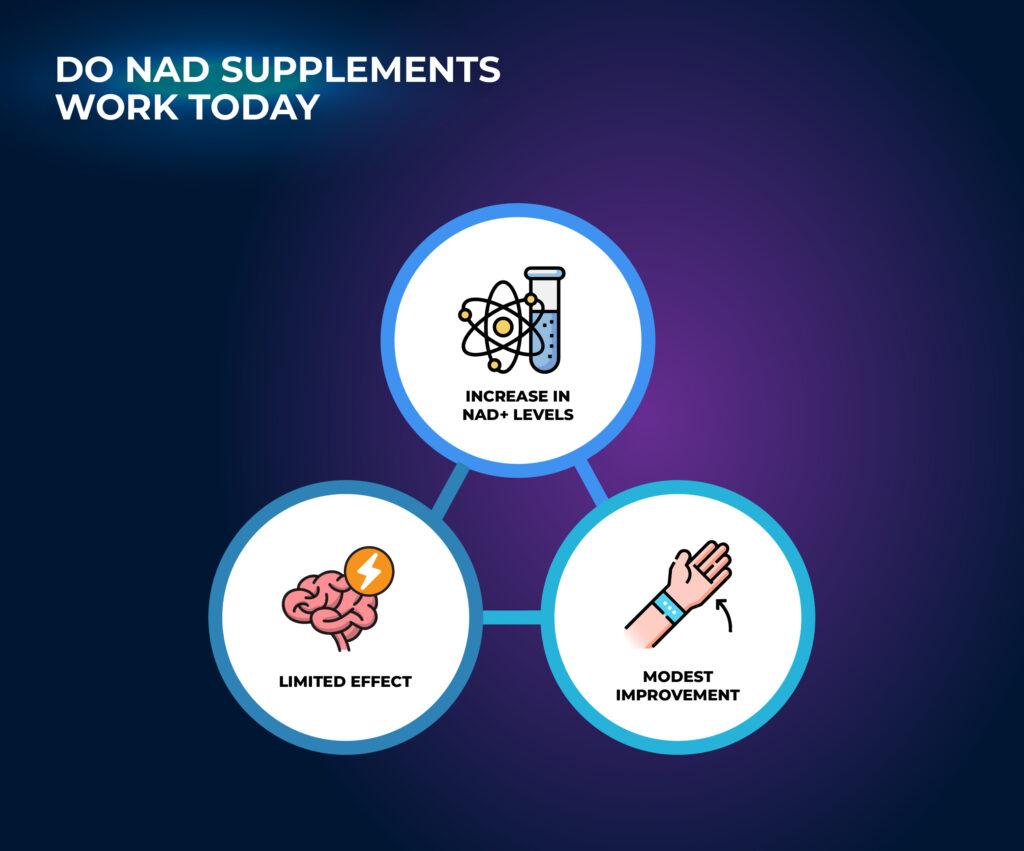
Human research on NR and NMN has grown fast. Studies range from small pilot trials to randomized controlled trials. Results are mixed. Many trials show a rise in blood NAD after taking NR or NMN. Some trials show beneficial effects on risk factors. A few show no clinically significant change.
What we see so far in randomized controlled trials:
- Blood NAD goes up after taking NR at 300 to 1000 milligrams per day. The same holds for NMN at 250 to 600 milligrams per day.
- Some studies in older adults show improved blood pressure or arterial stiffness. Other studies do not confirm this effect.
- Trials in people with insulin resistance report better insulin sensitivity in muscle after NMN. One 2021 Japanese trial found NMN improved muscle insulin sensitivity in prediabetic women, though results are not universal.
- Cognitive function outcomes are limited. Short trials rarely show improved cognition in healthy adults. Longer studies are still needed.
- Body composition changes like fat loss or muscle gain are not clear. Most trials are too short to move the needle.
The bottom line is direct. NAD supplementation can raise NAD levels. Clinical benefits exist in some groups and on some markers. Evidence for long term outcomes like slower cognitive decline or fewer chronic diseases is not strong yet.
NAD Supplementation And Healthy Lifestyle
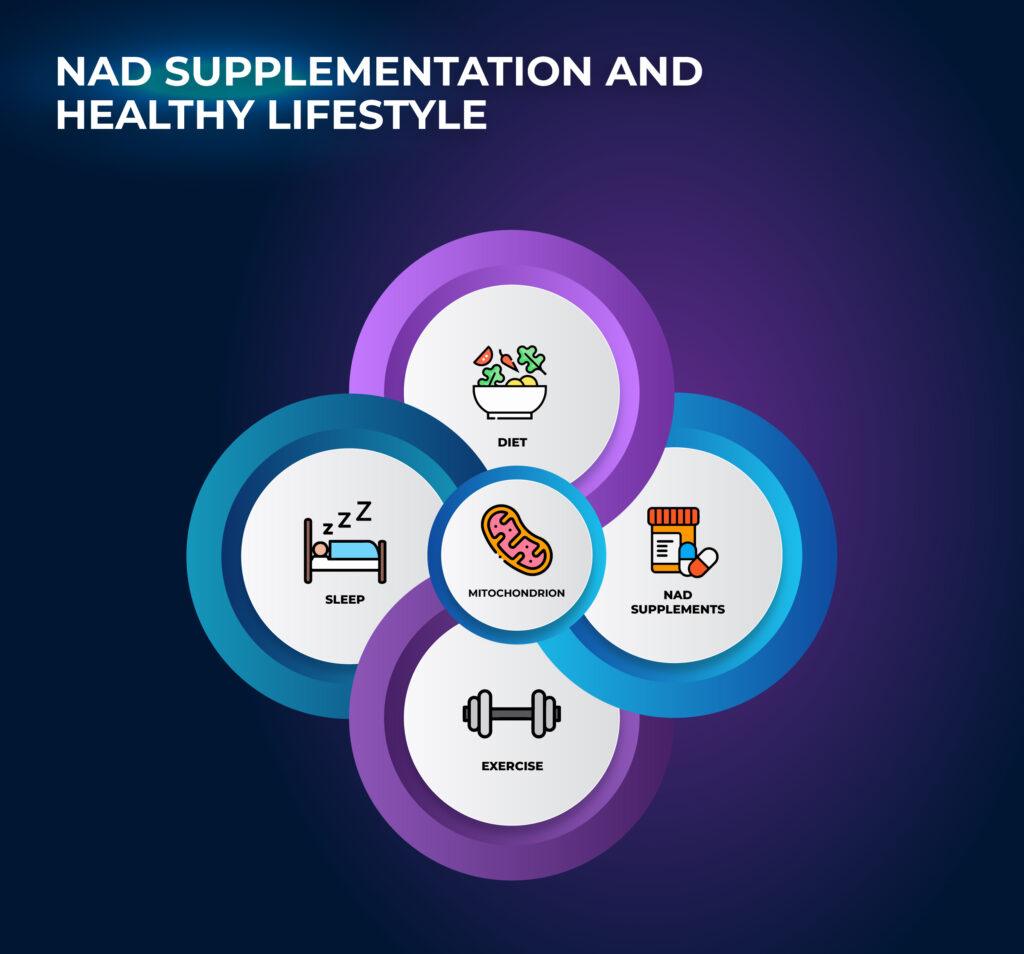
NAD supplementation includes more than pills. Food choices and sleep affect NAD metabolism at the cellular level. A healthy diet supports enzymes that make and recycle NAD. Exercise increases mitochondrial function and can raise tissue NAD. Sleep and circadian rhythm also play a role.
You can use a supplement to boost NAD. Most people choose NR or NMN. You can also support NAD with lifestyle. Use both for better results. Combine oral supplementation with a healthy diet, regular training, and quality sleep. This approach reduces metabolic stress and supports cellular longevity.
Cognitive Function And Brain NAD
The brain uses a lot of energy Neurons depend on healthy mitochondrial function. NAD supports energy production and cellular repair in the brain. Animal studies show potential benefits against neurodegenerative diseases. This includes models of Alzheimer’s and Parkinson’s disease.
Human data is early. A few trials measure brain NAD with imaging. These studies suggest that NR can raise brain NAD in healthy adults. Trials on improved cognition are limited. Short duration studies rarely show improved cognition in healthy populations. Longer trials in older adults or in people with cognitive decline are needed.
Cellular Health And Mitochondrial Function
NAD sits at the center of many biological processes. It helps convert food into ATP, the main energy currency in cells. It powers enzymes that repair DNA. It supports stress responses during illness and aging. Low NAD links to metabolic disorders and aging related diseases.
Raising NAD may support cellular function. Benefits show up on surrogate markers first. These include higher blood NAD, lower inflammatory markers in some studies, and better insulin sensitivity in selected groups. These changes point to potential benefits of NAD on overall health. The clinical evidence still needs depth and longer follow up.
How To Boost NAD
You can boost NAD with a simple plan:
- Choose a proven precursor. NR at 300 to 600 milligrams per day or NMN at 250 to 500 milligrams per day.
- Train three to five days per week. Mix resistance training and zone two cardio.
- Sleep seven to nine hours. Keep a steady sleep schedule.
- Eat a healthy diet rich in protein, colorful plants, and healthy fats. Limit ultra processed foods and added sugar.
- Manage alcohol intake. Excess alcohol strains NAD metabolism and increases metabolic stress.
NAD Levels With Oral Supplementation
NAD levels fall as we age. Chronic diseases and inactivity can lower cellular NAD further. Blood NAD can rise within weeks of oral supplementation. Brain NAD and muscle NAD may also go up, but the data is still limited.
Remember this point. Higher blood NAD does not always mean better health outcomes. It is a step on the path. What matters most is whether raising NAD improves risk factors like blood pressure or insulin sensitivity. Even better would be proof that it reduces events and disease over years.
Cellular Aging And Signs Of Aging
Aging is a complex process. DNA damage, impaired protein quality, and mitochondrial decline all play a role. NAD connects to many of these changes. Cells under metabolic stress burn through NAD. Low NAD weakens DNA repair and sirtuin activity. Over time this can lead to signs of aging.
Boosting NAD may influence cellular aging pathways, though human evidence for slowed aging is not proven. It can support cellular repair and energy production. Trials in humans suggest possible benefits on risk factors, but not yet on outcomes like longer lifespan. Take a realistic view. NAD is a tool. It supports a healthy lifestyle but does not replace it.
Do NAD Supplements Work For Everyone
So do NAD supplements work? If your goal is to raise blood NAD, the answer is yes in most people. If your goal is improved energy or clear clinical benefits, the answer is maybe. Some people feel more energy within weeks. Others feel no change. Clinical evidence shows benefits in specific outcomes for select groups. Many trials are short and small. Larger studies are underway.
Anti Aging With NAD Precursors
NAD boosting supplements are popular in anti aging plans. They target cellular mechanisms that decline with age. These include DNA repair, mitochondrial function, and metabolic flexibility. The best anti aging plan stacks supplements with habits. Train hard. Sleep well. Eat smart. Keep stress under control. Use supplements to fill gaps and support the plan.
Benefits Of NAD You Can Expect
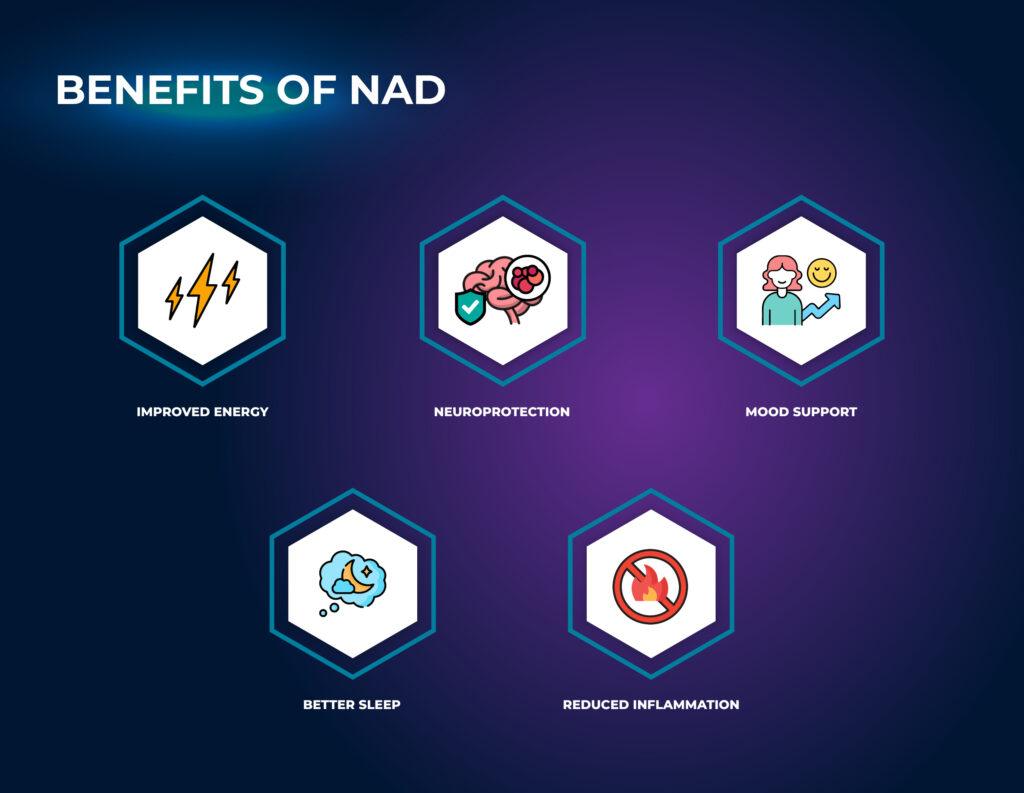
Potential benefits of NAD supplementation include:
- Better energy production and cellular energy during daily life
- Support for DNA repair and cellular repair after stress
- Improved insulin sensitivity in selected trials
- Some small studies in older adults suggest modest improvements in blood pressure
- Support for skin health through collagen production and healthy aging of the skin
These benefits are not guaranteed. Response depends on dose, duration, age, and baseline health.
Dosage And Stacks To Boost NAD
Suggested Dosages
- Nicotinamide riboside, NR. Start at 300 milligrams per day with food. You can increase to 600 milligrams per day if you tolerate it well.
- Nicotinamide mononucleotide, NMN. Start at 250 milligrams per day with food. You can increase to 500 milligrams per day if needed.
- Niacinamide. This form can support NAD but does not activate sirtuins. It is cheaper. Typical doses range from 250 to 500 milligrams per day. It may raise blood sugar in some people at high doses.
- Avoid high dose niacin unless guided by a clinician. Flushing and liver strain can occur at high doses.
Timing Tips
- Take your dose with the first meal. This can match natural NAD rhythms.
- Split higher doses into morning and early afternoon. Avoid late evening for better sleep in sensitive users.
Smart Stacks
- NR or NMN with resveratrol or pterostilbene. This is a classic stack to support sirtuin activity.
- NR or NMN with creatine. This supports cellular energy and brain health through different pathways.
- NR or NMN with CoQ10. This supports mitochondrial function and energy production.
- NR or NMN with glycine and magnesium. This supports sleep and recovery.
Side Effects And Safety Of NAD Supplementation
Most healthy adults tolerate NR and NMN well in short studies. The most common side effects are mild. These include nausea, stomach upset, and headache. Rare reports include flushing with high dose niacin or niacinamide. People with liver disease, active cancer, or chronic diseases should talk with a clinician first.
NAD affects many biological processes. Safety in pregnancy and during breastfeeding is not clear. Children should not take these supplements without medical advice. People on chemotherapy or immunotherapy should seek guidance before use. NAD can affect enzymes involved in cellular growth and repair.
Who May Benefit Most From NAD Supplementation
- Older adults with age-related decline in energy or recovery
- People with insulin resistance who are also improving diet and exercise
- People under high metabolic stress who are fixing sleep and nutrition
Who Should Be Cautious With NAD Supplement Use
- People with active cancer or a history of cancer
- People with liver disease or heavy alcohol use
- People on blood pressure or diabetes medications
Cellular Health Starts With A Healthy Lifestyle
A healthy lifestyle makes any supplement work better. Build a strong base before you rely on a pill. This plan supports NAD production and protects against metabolic diseases.
- Eat a protein forward diet with plenty of plants and healthy fats
- Train with weights two to four days per week
- Add zone two cardio two to three days per week
- Sleep seven to nine hours
- Limit alcohol and added sugar
Practical Buying Guide For An NAD Supplement
Pick products with clear labels and third party testing. Choose brands with human data or transparent sourcing. Consider M&B partners when you shop.
NAD+
NAD+ (Nicotinamide Adenine Dinucleotide) is a naturally occurring coenzyme found in every living cell. It plays a critical role in redox reactions, acting as an electron carrier in key metabolic processes such as glycolysis, the citric acid cycle, and oxidative phosphorylation.
What makes NAD+ so essential is its dual form: oxidized (NAD⁺) and reduced (NADH). This balance allows it to function as a core driver of cellular energy production and biochemical reactions tied to metabolism, DNA repair, and longevity research.
In experimental settings, NAD+ is studied for its potential links to improved mitochondrial function, healthier aging, and enhanced recovery at the cellular level. Because NAD+ levels naturally decline with age, it has become a key focus in longevity and biohacking research circles.
Disclaimer: This content is for informational purposes only. NAD+ has not been approved for medical use by the FDA or other regulators. Products are sold strictly for laboratory research use only and are not for human consumption.
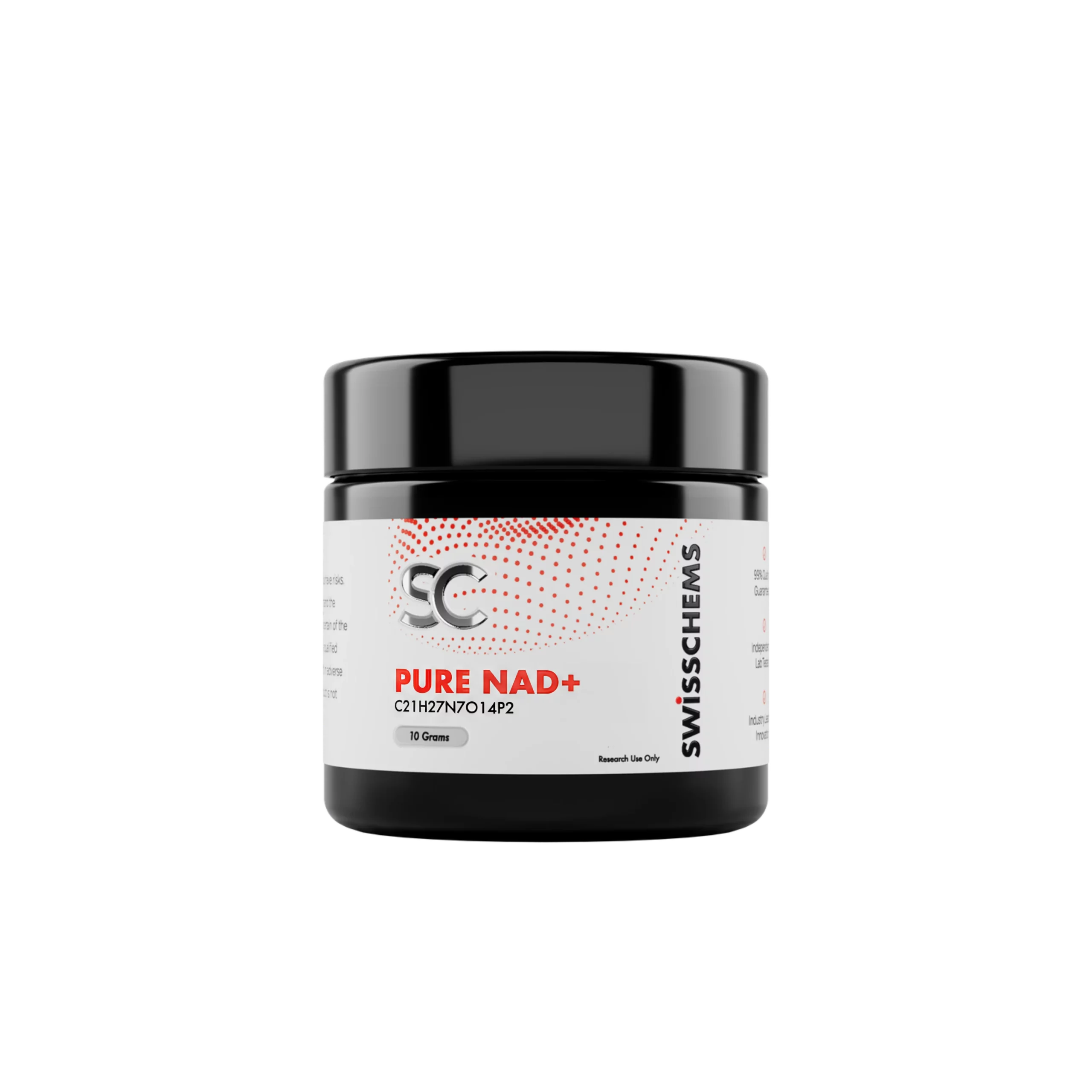
NAD+ Overview
⭐ Top Benefits (Research Context): Supports cellular energy production, promotes DNA repair processes, studied for longevity applications
🧪 Form: Powder (10 grams per container)
⌛ Shelf Life: 36 months (if stored properly)
💰 Average Cost: $39.99 per 10g container
❤️🩹 Side Effects: Not studied for human consumption; safety data limited to laboratory research
📚 Best Stack (Research Use): Often investigated alongside NMN (Nicotinamide Mononucleotide), NR (Nicotinamide Riboside), or other NAD+ precursors for synergistic metabolic effects
Copy Brawn10 for 10% off
- Central coenzyme in cellular metabolism
- Studied for mitochondrial support and healthy aging
- Declines naturally with age, driving longevity research interest
- Side effects may include headaches, fatigue, nausea, or muscle pain
- Not FDA-approved for human use
- For laboratory research only; long-term human data unavailable
Start with a single product. Track how you feel. Track sleep, energy, and training numbers for six to eight weeks. If you see no change, adjust dose or switch form.
Simple Action Plan
- Build your base. Fix sleep, diet, and training first.
- Pick one product. Start with NR at 300 milligrams per day or NMN at 250 milligrams per day.
- Track two to three markers. Use blood pressure, resting heart rate, or a training log.
- Recheck at eight weeks. Adjust the dose or the product.
- Keep the basics strong. Stay with your healthy lifestyle and retest every three months.
Do NAD Supplements Work: The Verdict
Do NAD supplements work. They raise blood NAD in most users. They may support insulin sensitivity, vascular health, and cellular repair in select groups. They do not replace a healthy lifestyle. The science is promising but not final. Use them with clear goals and honest expectations.
Here is how to think about it. Treat NR and NMN like tools that help a system. If sleep, diet, training, and alcohol control are in place, a NAD supplement can add small but meaningful benefits over months. If the basics are weak, pills will not fix the problem.
Your next step is simple. Test one precursor for eight weeks while you track two to three markers. If you see progress and you feel better, stay the course. If you do not, adjust the dose or try the other form. Keep your plan simple and consistent.
Frequently Asked Questions (FAQs)
Will NAD supplements improve cognitive function?
Short trials in healthy adults do not show clear gains in cognition. Longer studies in older adults may show benefits. At this time the evidence is not strong.
Can NAD supplements modify aging?
They may support mechanisms that affect the aging process at the cellular level. Clinical evidence for slower aging in people is limited. Use supplements as part of a full lifestyle plan.
Are NR and NMN the same?
Both raise NAD. NR has more published human data. NMN also shows promise and now has more clinical trials. Response can vary by person.
Do NAD injections work better than pills?
IV therapy can raise blood NAD fast. It costs more and needs a clinic. For most goals, oral NR or NMN is a practical first step.
How fast will I feel results?
Blood NAD can rise within two to four weeks. Some people feel more energy in that time. Others need longer or feel no change.