Contents16 sections
Peptides are everywhere: in collagen powders, anti-aging creams, weight-loss injections and the growth hormone peptides discussed on bodybuilding forums. The word covers everything from a prescription drug like semaglutide to an unapproved research chemical sold online, so it helps to know what it actually means.
This guide explains what peptides are, how they work, where they come from and the main types people use for skin, muscle, fat loss and recovery. For each group you will see how strong the evidence is, what is approved and what is not, and the main safety issues.
Key Takeaways
- Peptides are short chains of amino acids (roughly 2 to 50). Many of the body’s own messengers, such as glucagon, oxytocin and GLP-1, are peptides.
- Strong human evidence exists for only a few peptides: the GLP-1-based drugs (semaglutide, tirzepatide, liraglutide) and tesamorelin are FDA-approved; most bodybuilding peptides rest on animal or short-term studies.
- Growth hormone secretagogues such as sermorelin, CJC-1295, ipamorelin and GHRP-6 raise your own GH and IGF-1, but there is little proof they add meaningful muscle in healthy, trained adults.
- Not everything sold alongside peptides is one: tesofensine, MK-677, anamorelin and macimorelin are small-molecule drugs.
- Collagen peptides are a food supplement with modest evidence for skin and joints. Research peptides sold online are unregulated, and the FDA has flagged several as safety risks in compounding.
What Are Peptides?
Peptides are short chains of amino acids, the same building blocks that make up proteins. The line between the two is a convention rather than a hard rule: chains of about 2 to 50 amino acids are usually called peptides, and longer chains, which fold into complex 3D shapes, are called proteins.
Your body makes thousands of peptides, and many of them are hormones and signaling molecules. Very small peptides from food (two or three amino acids long) can be absorbed intact in the gut, but most larger peptides are broken down by digestive enzymes. That is why most peptide drugs are injected rather than swallowed.
| Molecule | Size | Examples |
|---|---|---|
| Amino acid | A single unit | Leucine, glycine, arginine |
| Peptide | About 2-50 amino acids | Oxytocin (9), glucagon (29), BPC-157 (15) |
| Protein | More than about 50 amino acids, folded | Collagen, whey proteins, growth hormone (191) |
How Do Peptides Work?
Most peptides work as messengers. They bind to specific receptors on the surface of cells, and that binding switches on a response: release a hormone, burn or store fuel, grow, repair tissue or fight bacteria. Each peptide’s shape depends on its amino acid sequence, so each one fits only certain receptors. This is why peptides tend to have targeted effects.
Synthetic peptides are designed to copy, strengthen or block these natural signals. Many are modified to last longer in the body. CJC-1295 with DAC, for example, carries a chemical group that binds to albumin in the blood, and semaglutide has a fatty acid side chain that does the same, which allows once-weekly dosing.
Where Do Peptides Come From?
Peptides are made naturally in the body, released from the proteins in food, and made synthetically in labs.
Food Sources of Peptides
Most bioactive peptides in food are locked inside larger proteins. They are released during digestion, fermentation or processing, for example when protein is hydrolyzed into a powder. Protein foods that yield them include:
- Meat and fish
- Dairy (milk, whey and casein)
- Eggs
- Legumes and soy
- Oats and wheat
- Flaxseeds and hemp seeds
Some food-derived peptides have been studied for specific effects. Milk-derived peptides, for example, have been tested for small reductions in blood pressure, with mixed results. These effects are modest and are no reason to choose one protein food over another.
Synthetic Peptides
Lab-made peptides are usually designed to mimic or influence the body’s own peptides, and their properties depend on their amino acid sequence and any modifications. Some are approved medicines, such as semaglutide, tirzepatide, tesamorelin and oxytocin. Many others, especially those sold for bodybuilding, are unapproved research compounds with little human data.
The Main Types of Peptides and the Evidence
Peptide claims range from muscle growth and fat loss to anti-aging, better skin, lower blood pressure and stronger immunity. The evidence behind those claims differs hugely from one group to the next. This table sums up where each group stands.
| Group | Examples | Approved uses | Evidence level |
|---|---|---|---|
| Collagen peptides | Hydrolyzed collagen powders | Food supplement | Moderate: small benefits for skin hydration, elasticity and joint comfort; weak for muscle |
| Cosmetic peptides | Matrixyl, GHK-Cu, argireline | Cosmetic ingredients | Low to moderate: lab work and small, often manufacturer-funded trials |
| GHRH analogues | Sermorelin, tesamorelin, CJC-1295, Mod GRF 1-29 | Tesamorelin (HIV-related belly fat) | Raise GH and IGF-1 in humans; solid trial data only for tesamorelin’s approved use |
| GHRPs and ghrelin mimetics | GHRP-2, GHRP-6, hexarelin, ipamorelin | None as a treatment in the US | Short human studies show GH release; no good long-term data in healthy adults |
| GLP-1-based drugs | Semaglutide, tirzepatide, liraglutide | Type 2 diabetes, weight management | Strong: large randomized trials |
| Mitochondrial-derived peptides | MOTS-c, humanin | None | Mostly cell and animal studies |
| GH fragments | AOD9604, HGH Frag 176-191 | None | Fat loss in animals; human obesity trials of AOD9604 were disappointing |
| Recovery peptides | BPC-157, TB-500 | None | Mostly animal studies; very little human data |
Forms of Peptides
How a peptide is taken depends on what it needs to do and whether it survives digestion.
- Oral: collagen and other food-derived peptides, taken as powders or capsules. Most drug peptides are destroyed in the gut; oral semaglutide is an exception that relies on an absorption enhancer.
- Topical: creams and serums with signal or copper peptides for the skin. Only small peptides get into the skin, and not deeply.
- Injectable: GH secretagogues, most GLP-1 drugs and recovery peptides are injected under the skin (subcutaneously). See our guide on how to inject peptides.
- Nasal: a few peptides are given as nasal sprays, which avoids the gut, but absorption varies.
Peptides in Skincare
Collagen and elastin are the structural proteins that keep skin firm and springy. The body makes less of both as we age, which contributes to fine lines, sagging and uneven texture. Skincare peptides target this decline in two ways: as oral collagen supplements and as topical ingredients.
Collagen Peptides
Whole collagen molecules are far too large to pass through the skin, so collagen in a cream mostly acts as a moisturizer. Collagen taken by mouth as a hydrolyzed powder is broken down into small peptides and amino acids, some of which reach the bloodstream.
Several trials and meta-analyses report modest improvements in skin hydration and elasticity with daily collagen peptides, and some studies show small benefits for joint pain. Many of these studies are funded by manufacturers and the effects are small, so expectations should be realistic.
Signal and Copper Peptides
Topical cosmetic peptides are small enough to get into the outer layers of the skin. Signal peptides such as palmitoyl pentapeptide-4 (Matrixyl) are designed to prompt skin cells to make more collagen. GHK-Cu, a copper peptide found naturally in the body, has lab evidence for wound healing and collagen production. Peptides such as argireline are marketed as a gentle alternative to Botox for expression lines.
The evidence for these ingredients comes mainly from lab studies and small, short trials, often run by the ingredient makers. They are reasonable, low-risk ingredients, but they do not match retinoids or daily sunscreen for proven anti-aging effects.
Antimicrobial and Tanning Peptides
Antimicrobial peptides (AMPs), such as LL-37 and the defensins, are part of the skin’s own immune defense against bacteria, fungi and viruses. They are studied for wound healing and acne, but few skincare products containing them have solid evidence.
Melanocortin peptides affect skin pigment. Afamelanotide, an analogue of the body’s melanocyte-stimulating hormone, is approved for a rare light-sensitivity disorder. Melanotan II, sold online for tanning, is unapproved, and regulators have warned against using it.
Peptides for Bodybuilding
The peptides most used in bodybuilding are growth hormone secretagogues (GHS): compounds that make the pituitary gland release more of your own growth hormone (GH). They act on two receptors and are usually listed in three groups, the same grouping the World Anti-Doping Agency (WADA) uses:
- GHRH analogues (versions of growth hormone-releasing hormone): sermorelin, tesamorelin, CJC-1295, CJC-1293 and Mod GRF 1-29
- Growth hormone-releasing peptides (GHRPs): alexamorelin, GHRP-1, GHRP-2, GHRP-3, GHRP-4, GHRP-5, GHRP-6 and hexarelin
- Ghrelin and its mimetics: ghrelin itself (lenomorelin), ipamorelin, and the orally active small molecules anamorelin, macimorelin and tabimorelin
Growth hormone boosts protein building and fat breakdown, and many of its growth effects run through insulin-like growth factor 1 (IGF-1), made mainly in the liver. HGH is a prescription drug: in the US it is illegal to distribute it for unapproved uses such as anti-aging or bodybuilding, and it is banned in sport. GH secretagogues are often marketed as a gentler alternative because they work through the body’s own pulsed release of GH, but they have not been shown to be safer long term, and most of them are not approved either.
How GHRH Analogues Work
GHRH analogues bind the GHRH receptor in the pituitary and increase the size of each natural GH pulse. Tesamorelin is FDA-approved (as Egrifta) to reduce excess abdominal fat in people with HIV-associated lipodystrophy, and in its trials it significantly reduced deep belly (visceral) fat compared with placebo. Sermorelin was once FDA-approved for children with GH deficiency before its maker took it off the market. In healthy adults, a single injection of CJC-1295 with DAC raised GH and IGF-1 levels for about a week or more.
How GHRPs and Ghrelin Mimetics Work
Ghrelin is a hormone made mainly in the stomach, with smaller amounts from the small intestine, pancreas and brain. It is known as the hunger hormone because it stimulates appetite and food intake, and it also triggers GH release through the GHS receptor (the ghrelin receptor). GHRPs and ghrelin mimetics bind this same receptor.
That shared receptor explains their side effects. GHRP-6 in particular strongly increases hunger, which makes these compounds a poor fit for weight loss, and GHRP-2 and hexarelin can raise cortisol and prolactin. In animal studies, ipamorelin released GH without a meaningful rise in cortisol, which is why it is the most popular of the group. Anamorelin, an oral ghrelin mimetic, is approved in Japan for cancer-related weight loss, where it increased lean body mass and body weight in trials. Macimorelin is FDA-approved, but only as an oral test for diagnosing GH deficiency in adults. MK-677 (ibutamoren), another oral ghrelin mimetic, is not a peptide and is not approved.


What makes Ipamorelin stand out is its selectivity — it boosts GH without significantly affecting cortisol, prolactin, or other hormones.
This peptide is widely used for its ability to support recovery, promote deeper sleep, and help preserve lean muscle. Many athletes and fitness enthusiasts notice faster recovery between training sessions and improved energy balance.
Overview
- Studied For: Growth hormone release, recovery, body composition, muscle repair, fat metabolism, and healthy-ageing pathways
- Mechanism: Selectively activates ghrelin receptors in the anterior pituitary gland to stimulate pulsatile growth hormone secretion
- Available Strength: 2mg vial
- Form: Peptide vial supplied for reconstitution
- Research Status: Investigational growth hormone secretagogue intended for research use
Pros
- Stimulates GH release with minimal impact on other hormones
- Supports recovery, sleep quality, and lean mass retention
- Generally considered to have a milder side effect profile compared to stronger GH analogs
Cons
- Short half-life requires frequent or carefully timed dosing
- Limited human clinical research and long-term data
- Injection site discomfort and mild side effects possible
What the Evidence Shows for Muscle
GH secretagogues reliably raise GH and IGF-1 in short human studies. What is missing are good trials showing that they add meaningful muscle or strength in healthy, trained people. Even GH itself, in a systematic review of studies in athletes, increased lean body mass, partly through fluid retention, without clearly improving strength or exercise capacity.
For a direct comparison with anabolic steroids, see peptides vs steroids.
Peptides for Weight Loss
Peptides marketed for weight loss range from the best-tested obesity drugs available, the GLP-1-based medicines, to compounds with almost no human data, such as MOTS-c and AOD9604. Tesamorelin also reduces visceral fat in its approved use. Tesofensine often appears on these lists, but it is not a peptide at all (see below).
GLP-1-Based Drugs
GLP-1 is a gut hormone that increases insulin release after meals, slows stomach emptying and reduces appetite. Semaglutide (Ozempic, Wegovy) and liraglutide (Victoza, Saxenda) are long-acting versions of GLP-1, and tirzepatide (Mounjaro, Zepbound) acts on both the GLP-1 and GIP receptors. All three are FDA-approved.
They are the only peptides with large, long randomized trials for weight loss. In their main obesity trials, adults lost around 15% of body weight on semaglutide 2.4 mg and around 20% on the highest dose of tirzepatide over about 15 to 17 months, compared with a few percent on placebo.
Mitochondrial-Derived Peptides (MOTS-c)
MOTS-c is a 16-amino-acid peptide encoded in the DNA of the mitochondria, the cell’s power plants. It is often called an exercise mimetic because, in mice, it reproduced some of the metabolic effects of exercise. Under metabolic stress, MOTS-c can move into the cell nucleus and switch on genes that help the cell adapt.
In mouse studies, MOTS-c improved insulin sensitivity, increased fat burning and prevented weight gain on a high-fat diet. Human research so far has mostly measured natural MOTS-c levels; there are no published controlled trials showing that injecting it causes fat loss in people.
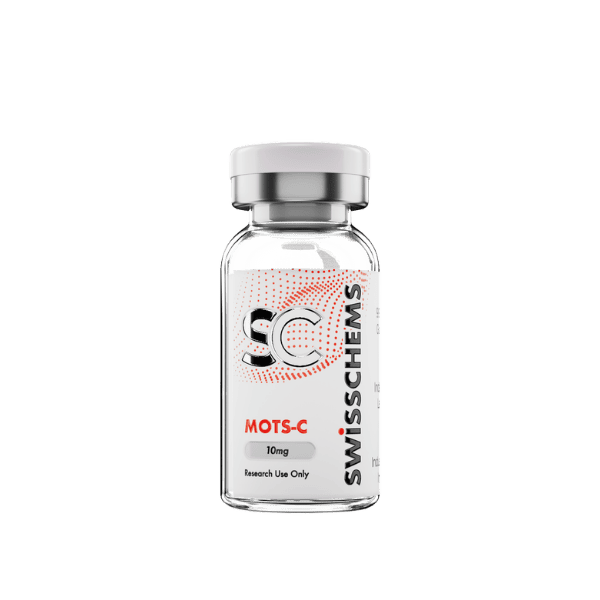
Overview
- Form: Lyophilized powder
- Researched Dosage: 5 mg to 10 mg per week, split into 2-3 injections
- Typical Cycle: 4-8 weeks
- Cost: $69.95
- Stacking Options: 5-Amino-1MQ, SS-31, AOD-9604, BPC-157
Pros
- Activates AMPK, the body’s main energy sensor, which may improve how cells use glucose and fat.
- Mouse studies show better insulin sensitivity and protection against diet-induced weight gain.
- Older mice given MOTS-c showed better physical capacity and endurance, which has drawn interest in its role in healthy aging.
Cons
- No human trials show that injected MOTS-c works.
- At 10 mg per vial and several milligrams per dose, one vial usually lasts only 1-2 weeks, so a full cycle gets expensive.
- MOTS-c is not an approved human medication. The FDA lists it as a bulk substance with potential safety risks (Category 2), and WADA bans it as a metabolic modulator.
GH Fragments (AOD9604)
AOD9604 is a modified fragment of human growth hormone: amino acids 177 to 191 of the GH molecule with an extra tyrosine added. It was designed to keep the fat-burning part of GH’s action without its effects on growth and blood sugar. In obese animals it reduced body weight, increased fat oxidation and increased lipolysis (fat breakdown).
The human results were disappointing. In trials in people with obesity, AOD9604 appeared well tolerated but did not produce meaningful weight loss compared with placebo, and its development as an obesity drug was stopped. Claims that AOD9604 is FDA-approved are wrong; the “GRAS” (generally recognized as safe) status sometimes quoted relates to its use as a food ingredient and is not a drug approval.
Tesofensine: Not a Peptide
Tesofensine is often sold alongside peptides, but it is a small-molecule drug, not a peptide. It is a triple reuptake inhibitor: it blocks the reabsorption of serotonin, noradrenaline and dopamine in the brain, which reduces hunger and helps people eat smaller meals and snack less.
Its weight-loss effect was first noticed in trials for Alzheimer’s and Parkinson’s disease. In a phase 2 obesity trial it produced dose-dependent weight loss, but side effects such as dry mouth, insomnia and a raised heart rate were more common at the highest dose. It is not FDA-approved. Read more in our tesofensine guide.
Peptides for Recovery
Injury recovery is another big category. BPC-157, a 15-amino-acid peptide based on a protein found in gastric juice, and TB-500, a synthetic peptide based on thymosin beta-4, are widely used for tendon, muscle and joint injuries. Their evidence comes almost entirely from animal and cell studies, there is very little controlled human data, and neither is an approved medicine. See our guide to the best peptides for healing for a full breakdown.
FDA and Compounding Status
Peptides fall into very different legal categories, and how a product is sold often matters as much as the molecule:
- Approved peptide drugs (semaglutide, tirzepatide, liraglutide, tesamorelin, oxytocin) are prescription medicines made under drug-manufacturing rules.
- Collagen and food-derived peptides are sold as foods or dietary supplements. The FDA does not approve supplements before sale; the maker is responsible for their safety and labeling.
- Cosmetic peptides in creams are regulated as cosmetic ingredients and cannot legally be sold to treat a medical condition.
- Research peptides sold online “for research use only, not for human consumption” are not approved for human use, and the FDA has sent warning letters to sellers who market them for people.
Compounding pharmacies are the gray zone. In the US, a pharmacy can generally only compound from a bulk substance that is part of an FDA-approved drug, has a USP monograph, or is on the FDA’s list of allowed bulk substances. That is why sermorelin, once part of an approved drug, is still prescribed through compounding pharmacies. The FDA has flagged BPC-157 and several other popular peptides as raising significant safety risks in compounding, so they generally cannot be compounded legally. These lists are under review and change, so check the current status before relying on a clinic.
Approved drugs have their own rules. Now that the US shortages of semaglutide and tirzepatide are officially over, the FDA has said compounders may no longer make what are essentially copies of those drugs. Outside the US the rules differ widely; see are peptides legal for the status in each country.
In sport, WADA bans GHRH analogues, GHRPs and ghrelin mimetics at all times, and BPC-157 is prohibited as a non-approved substance.
Are Peptides Safe?
The safety of a peptide depends on which one it is, its quality and how it is used. In broad terms:
- Collagen peptides: generally safe; mild digestive upset is the most common complaint. Topical peptide products can occasionally irritate the skin.
- GH secretagogues: long-term safety is unknown. Reported side effects include increased appetite, raised blood sugar and reduced insulin sensitivity, fluid retention, tingling or numbness, joint pain and injection-site reactions. GHRP-2, GHRP-6 and hexarelin can also raise cortisol and prolactin.
- GLP-1 drugs: nausea, vomiting, diarrhea and constipation are common, especially as the dose goes up; gallbladder problems and pancreatitis are rare but serious risks. They carry a boxed warning about thyroid C-cell tumors seen in rodents.
- MOTS-c, AOD9604, BPC-157 and TB-500: there is too little human data to know their long-term safety.
- Tesofensine: raised heart rate, dry mouth and insomnia, more so at higher doses.
For unapproved peptides, product quality is a risk of its own. Research-grade peptides are not made under drug-manufacturing standards, so dose, purity and sterility are not guaranteed, and any injection carries a risk of infection, especially with non-sterile equipment. A certificate of analysis helps, but it does not prove a product is safe; our guide on how to read a peptide COA explains what to check.
Are Peptides Legit?
Some are, and the honest answer depends on the group. The strongest evidence is for the approved drugs: the GLP-1-based medicines for weight loss and tesamorelin for visceral fat in HIV-associated lipodystrophy. Collagen peptides have modest, fairly consistent evidence for skin hydration and joint comfort but limited evidence for muscle or bone; collagen lacks tryptophan and is low in leucine, so it is a poor substitute for whey or other complete proteins. GH secretagogues reliably raise GH and IGF-1, but few studies have measured body composition in healthy people using them, and MOTS-c, AOD9604, BPC-157 and TB-500 rest mostly on animal research.
If you are considering a peptide, start with what is approved for your goal, speak to a healthcare provider, and be wary of any product whose evidence is mainly mouse studies and forum anecdotes.
The Bottom Line
Peptides are short amino acid chains that act as the body’s messengers, and the word covers everything from proven prescription drugs to untested research chemicals.
- Strong human evidence exists for only a few peptides, chiefly the GLP-1-based weight-loss drugs and tesamorelin; collagen peptides have modest evidence for skin and joints.
- Bodybuilding peptides such as CJC-1295, ipamorelin and GHRP-6 raise your own growth hormone, but there is little proof they add meaningful muscle, and most are not approved for human use.
- Check what a product actually is (tesofensine and MK-677 are not peptides), its legal status and its quality before considering it, and involve a healthcare provider.
Frequently Asked Questions
Disclaimer
Please read carefully
The information on this site is for educational and informational purposes only, and is not medical advice. Always consult a qualified healthcare professional before using any supplement or medication, or making changes to your health, fitness, or nutrition routine.
Not medical advice
Content here is not a substitute for professional medical advice.
Consult your doctor
Talk to your doctor before starting any supplement or new routine.
Use at your own risk
We are not responsible for adverse effects from acting on this.
Do your research
Make informed decisions about your own health.
No guarantees
Individual results vary. No claims about outcomes.
Important — Never disregard professional medical advice or delay seeking it because of something you read here. If you think you may have a medical emergency, call your doctor or your local emergency number right away.