Have you ever walked into a room and forgotten why you went in? Or spend 10 minutes trying to remember where you left your keys? Then find them in your hand? We laugh it off, but these moments can start to feel like warning signs, especially when they happen more often.
For athletes, entrepreneurs, and high performers, staying sharp is essential. Focus, memory, and fast recovery are not just extras. They are necessary. But stress, lack of sleep, and getting older slowly weaken your brain. Usual supplements often don’t help much. And caffeine only gives a short-term boost.
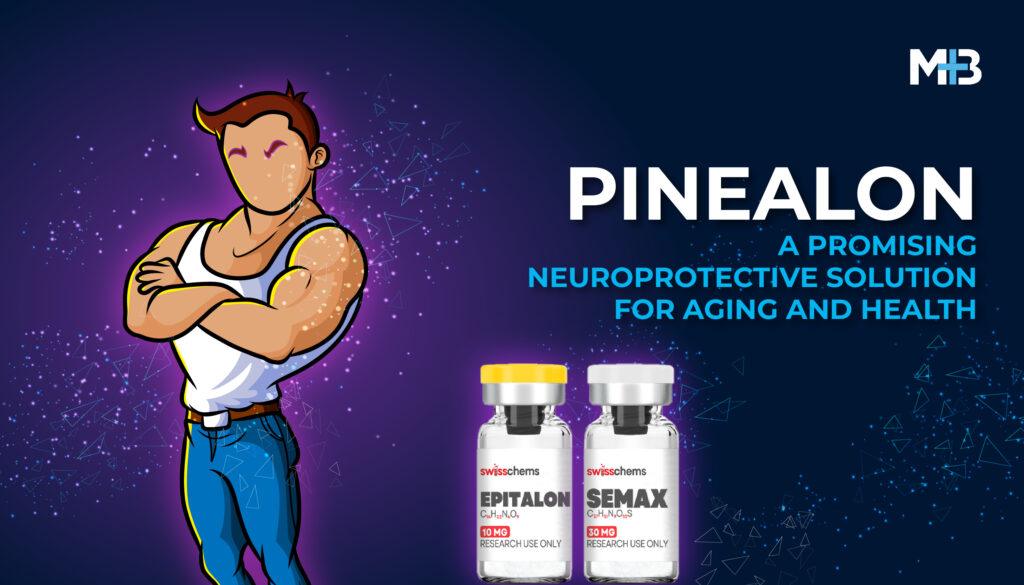
That’s where Pinealon enters the picture.
Pinealon is a small molecule made of three amino acids: Glu, Asp, Arg. It was created in Russia by Professor Vladimir Khavinson and his team. They spent over 35 years studying how it helps protect the brain and keep cells young.
What makes Pinealon different is how it works. Most supplements act on the surface of cells. Pinealon goes inside the cells. It reaches the DNA and helps control how genes work. This means it supports your body from the inside, helping it repair, adapt, and stay strong.
Key Takeaways
- Pinealon is a synthetic peptide that protects brain cells and improves memory 🧠
- It supports sleep, recovery, and healthy aging by regulating gene expression 🌙
- Works best when stacked with Epitalon, Semax, or Cerebrolysin for enhanced effects 🔗
- Available in injectable, oral, and sublingual forms depending on your goal 💉
- Backed by decades of animal research and emerging early-stage human studies 📚

Mechanism of Action: How the Pinealon Peptide Interacts with the Central Nervous System
Gene Expression and DNA Repair with Synthetic Peptides like Pinealon
Pinealon is one of the most promising synthetic peptides studied for brain health. It enters both the cell and its nucleus, where it interacts directly with DNA. This allows it to regulate gene expression, especially under stress or aging conditions.
- It increases cell viability by supporting protein production.
- It activates repair pathways.
- It helps stop unnecessary cell death (apoptosis).
This control over gene expression makes Pinealon unique compared to other short peptides.
Antioxidant Defense: How Pinealon Protects Against Free Radical Damage
One of the most powerful effects of Pinealon is its antioxidant action. Free radicals, or reactive oxygen species (ROS), can damage cells and speed up brain aging. Pinealon protects the brain by reducing these harmful molecules.
- It lowers ROS accumulation in cerebellar granule cells.
- It helps prevent oxidative stress and related cell damage.
- It boosts the brain’s own defense system.
This is backed by clinical and experimental medicine studies.
Brain Energy and Mitochondria: Pinealon and Central Nervous System Vitality
Your brain needs a lot of energy to function well. Pinealon supports this by helping mitochondria, the energy factories in your cells, do their job better.
- It improves mitochondrial membrane stability.
- It boosts ATP production, which powers brain activity.
- It may protect mitochondrial DNA from stress-related damage.
This results in improved brain function, especially in aging individuals or those recovering from traumatic brain injury.
Sleep Regulation and Pineal Gland Support Through Pinealon Peptide Use
Pinealon has a direct impact on the pineal gland. This gland produces melatonin, a hormone that controls your sleep-wake cycle.
- Pinealon helps restore melatonin production.
- It supports a healthy circadian rhythm.
- Better sleep improves brain recovery, memory, and mood.
Research from the International Journal and Rejuvenation Research shows that Pinealon helps improve brain function by supporting the body’s natural rhythm.
Prenatal Neuroprotection: Pinealon in Rat Offspring from Prenatal Hyperhomocysteinemia
Animal studies give us more insights into Pinealon’s power. In rat offspring exposed to prenatal hyperhomocysteinemia, Pinealon showed neuroprotective effects.
- It restored healthy gene activity.
- It supported brain development.
- It reduced damage during a critical time in the second trimester.
This suggests future use of Pinealon peptide in prenatal brain health treatment.
Central Nervous System Regeneration: Pinealon’s Role in Chronic Polymorbidity Cases
Pinealon doesn’t just focus on one area. It supports overall brain and nervous system health.
- It helps neurons recover and stay active under stress.
- It activates proliferative processes to rebuild tissue.
- It works across many pathways to support long-term cognitive functions.
Backed by Research: Pinealon in Treating Organic Brain Syndrome and Cellular Aging
Researchers like Kozina LS, Fedoreyeva LI, Gavrilov IV, and Khavinson V have shared strong data about Pinealon’s effects.
Studies in respected journals like Bull Exp Biol Med and Clin Exp Med highlight Pinealon’s ability to protect neurons and improve brain function in both human cells and animal models. It may also help in the treatment of chronic conditions like organic brain syndrome and cellular aging.
With its wide range of biological actions and growing research support, Pinealon stands out as a serious contender in the future of brain health and peptide therapy.
Benefits of Pinealon Peptide: What the Science Shows in Rat Offspring and Humans
Neuroprotection
A landmark study in the International Journal of Clinical and Experimental Medicine found that Pinealon protects brain cells in rat offspring exposed to prenatal hyperhomocysteinemia. It improved their spatial learning and reduced both ROS accumulation and neuron death. This makes Pinealon highly effective in protecting the brain under stress.
Cognitive Enhancement
Studies in diabetic rats showed that Pinealon helps maintain learning and memory. It also influenced gene expression linked to NMDA receptor subunits in the hippocampus, an area of the brain involved in memory.
Another study in older rats exposed to hypoxia and cold stress found that Pinealon improved both behavior and brain chemistry. These results suggest Pinealon may support healthy brain function even under tough conditions.
Anti-Aging Effects
A clinical trial involving locomotive brigade workers tested Pinealon’s effects on aging. The results were promising. Pinealon improved biological age markers and boosted the activity of the central nervous system. It also showed anabolic effects, helping the body recover faster and function better.
Cellular Viability
Research published in Rejuvenation Research showed that Pinealon increases cell viability by reducing free radical levels. It also activates genes that promote cell growth and regeneration.
- It provides strong antioxidant protection.
- It helps the body repair damaged cells.
- It supports healthy cell turnover, especially in the brain and nervous system.
Pinealon not only protects cells but also helps them thrive, even in stressful conditions.
Pinealon Products: What’s Available Right Now

If you’re considering Pinealon, make sure you’re getting it from trusted sources. Many low-quality products flood the market, especially online. Look for transparency, third-party testing, and clearly listed ingredients.
Here are some common forms of Pinealon available today:
- Injectable Pinealon (Acetate Form)
- Often used in clinical studies related to chronic polymorbidity, cognitive functions, and central nervous system repair
- Typically sold in 10 mg vials with dosage depending on intended use and concentration
- Used in animal studies and early human trials for conditions like organic brain syndrome, apoptosis regulation, and neural rejuvenation
- Sublingual Sprays
- Popular for improving mental clarity and regulating circadian rhythm
- Practical option for patients looking to support cognitive functions and reduce oxidative stress
- May support cellular aging reversal in experimental groups and improve brain biochemistry
- Capsule or Tablet Forms
- Still rare and often part of experimental delivery methods
- Lower absorption but sometimes used in studies involving peptide sequence stability and long-term oral supplementation
- Doses and results may vary based on methods, quantity, and patient response
In studies involving rat offspring, Pinealon showed strong neuroprotective properties. Its activation of proliferative processes and reduction of free radical levels are key mechanisms that researchers continue to observe in vitro and in vivo models.
Make sure to choose vendors that share human data, peptide purity reports, and articles that reference valid clinical experiments. Real Pinealon peptide products should reflect proper biochemistry, sequence accuracy, and functional activities.
Avoid generic suppliers that don’t show evidence of testing, COA, or study-backed methods. This ensures you’re getting a peptide product that delivers the results you intend to achieve.
Where to Buy the Best Pinealon Peptide Products
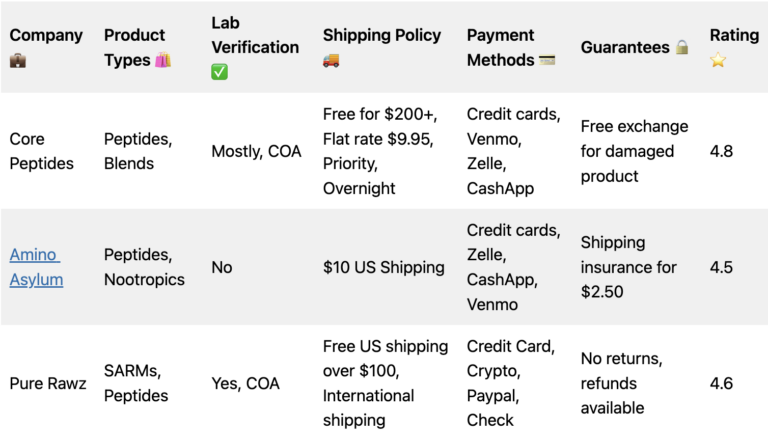
Not all peptide sources are reliable, and when it comes to nootropic and neuroprotective compounds like Pinealon, quality and purity matter. If you’re looking to support your central nervous system, fight cognitive aging, or enhance recovery from stress or neurodegeneration, here’s where to shop:
1. Swiss Chems
Swiss Chems offers high-purity Pinealon peptides that are trusted by researchers and advanced biohackers. Their formulas prioritize transparent sourcing, lab-tested synthetic peptides, and effective dosing protocols. Ideal for those targeting organic brain syndrome, cognitive decline, or recovery from chronic polymorbidity.
2. Cosmic Nootropics
Cosmic Nootropics is a trusted source for authentic Russian nootropics, including Pinealon sourced directly from original manufacturers. Their offerings are widely used in experimental protocols involving rat offspring from prenatal studies, neurodegeneration, and aging-related cognitive decline. A solid option if you’re looking for genuine Pinealon backed by clinical use.
Pinealon Stacks: Best Peptide Combinations for Results
Pinealon works well on its own, but its effects become even more powerful when stacked with other synthetic peptides. Stacking can help target multiple biological pathways at once, giving better support for cognitive function, neuroprotection, and cellular regeneration.
Pinealon + Epitalon

This stack provides full neuroendocrine support. Epitalon is a tetrapeptide (Ala-Glu-Asp-Gly) that helps regulate melatonin and activates telomerase. It has been studied for anti-aging effects in both animals and humans.
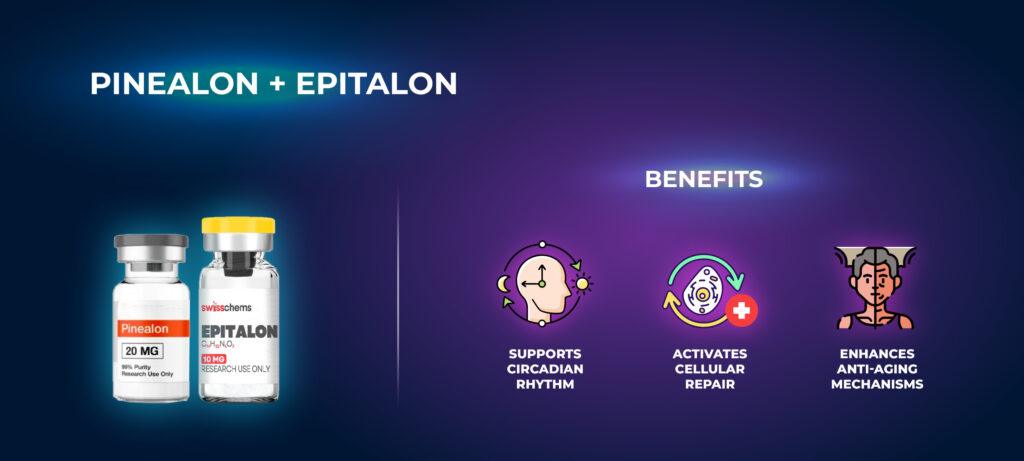
- Supports pineal gland activity and circadian rhythm
- Activates cellular repair processes
- Enhances telomere stability and anti-aging mechanisms
- Commonly used in experimental groups studying cellular aging and functional recovery in rats
This combination is especially useful for patients dealing with chronic polymorbidity or early signs of biological aging.
Pinealon + Semax

Semax is another synthetic peptide known for its effects on BDNF expression and mood regulation. Stacking it with Pinealon creates a well-rounded protocol for mental energy, memory, and focus.

- Promotes BDNF activation for long-term memory support
- Helps reduce cognitive fatigue
- Supports neurotransmitter balance
- Good for patients recovering from stress or brain injury
In vitro and animal studies show this stack improves concentration and resilience under pressure. Human data is still growing, but early results are promising.
Pinealon + Cerebrolysin
Cerebrolysin is a peptide-based nootropic that supports neuroplasticity and neuron survival. Combining it with Pinealon forms a powerful brain regeneration stack.
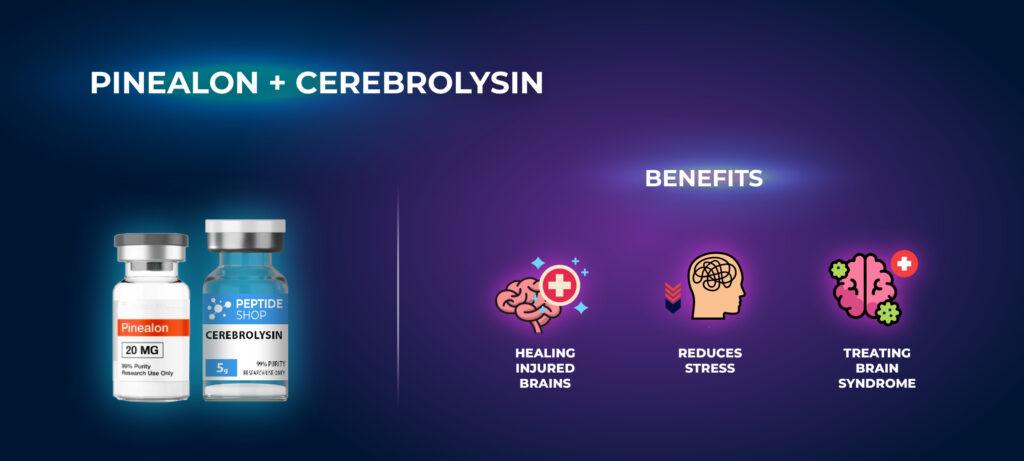
- Boosts neuron protection and healing in aging or injured brains
- Reduces apoptosis and oxidative stress markers
- Used in experiments treating organic brain syndrome and severe aging symptoms
This stack is ideal for individuals dealing with long-term damage, such as traumatic brain injury or neurodegeneration.
Dosage and Cycling Protocols
Injectable Protocols
- 100 to 200 mcg Pinealon subcutaneously, 3 times per week for 4 to 6 weeks
- Alternative: 2 mg daily for 10 days, repeat 2 to 3 times per year
- Works well in combination with low-dose Epitalon during nighttime to enhance recovery
Oral Bioregulator Protocol
- 100 mcg twice daily for 30 days
- Maintenance: 10 days every 3 to 6 months
- Best for general aging support, including memory and cognitive resilience
Sublingual Protocol
- 4 to 6 drops under the tongue (0.25 to 0.35 ml), 3 to 4 times per day
- Ideal for quick action and convenience
- Helps regulate mood, concentration, and circadian balance
Make sure to monitor peptide quantity, concentration, and method of use carefully. Choose protocols based on your intended goal and patient response. Always consult human data or reliable articles for proper methods.
These stacks support the central nervous system, lower free radical levels, and activate key protective mechanisms. While many results come from animal models like rats and experimental poops (rat offspring from prenatal phenylon peptides), the overlap with human biochemistry is strong.
As research continues, stacking Pinealon with targeted peptides offers a promising way to enhance results and optimize long-term brain function in both experimental and clinical settings.
Side Effects and Safety Profile of Pinealon Peptide Use
Pinealon is generally considered safe when used correctly, but like all synthetic peptides, it comes with potential side effects. Most findings are based on both animal experiments and early-stage human data.
Commonly Observed Side Effects
- Mild headache
- Temporary fatigue or drowsiness
- Slight dizziness in sensitive individuals
- Redness or discomfort at injection site (for injectable use)
These side effects are generally mild and temporary, especially when Pinealon is used at proper dosages.
Less Common but Possible Risks
- Nausea or gastrointestinal upset (mainly with oral or sublingual use)
- Irritability or mood changes if taken too frequently without proper cycling
- Potential overactivation of gene expression in unregulated settings
Important Warnings
- Pinealon is not approved by the FDA for medical treatment. It is sold for research purposes.
- Individuals with autoimmune disorders or under treatment for chronic conditions should consult a medical professional before use.
- Use in pregnant women, patients with methionine metabolism disorders, or in pediatric settings has not been studied enough.
In most experimental groups and clinical articles, no severe side effects have been reported. However, the long-term suppression or overactivation of certain cellular mechanisms remains an area for further study.
Because of its role in gene expression, mitochondrial activation, and central nervous system repair, Pinealon must be used with careful attention to dosing, duration, and proper stacking. Peptides are powerful tools but only when used responsibly.
Disclaimers
The information in this article is intended for educational and informational purposes only. Pinealon is not approved by the FDA or other regulatory bodies for the diagnosis, treatment, cure, or prevention of any disease.
- Always consult a qualified healthcare professional before beginning any new supplement or peptide regimen.
- The use of Pinealon should be approached with caution, especially for individuals with chronic illnesses, autoimmune conditions, or those who are pregnant or breastfeeding.
- Data presented here is based on published research, clinical trials, and animal studies. Human data is still limited, and results may vary.
- Dosages, protocols, and stacking strategies are experimental and not yet standardized for clinical use.
This article does not provide medical advice, diagnosis, or treatment. It is your responsibility to research, evaluate risks, and consult professionals before using any peptide.
Why Pinealon Protects the Brain and Central Nervous System
Pinealon is not just another peptide on the shelf. Backed by decades of scientific research, it shows real promise for protecting brain cells, improving memory, and slowing down the effects of aging.
Its ability to regulate gene expression, fight oxidative stress, and support mitochondrial health sets it apart. Whether you’re battling brain fog, recovering from burnout, or simply want to stay sharp as you age, Pinealon is worth your attention.
But like all powerful tools, it should be used wisely. With proper dosing, high-quality sourcing, and strategic stacking, Pinealon may become one of the most effective peptides in your longevity and cognitive performance toolkit.
For serious biohackers, researchers, and high-performers, this is one compound that deserves a place in the stack.
Frequently Asked Questions (FAQs)
What is Pinealon used for?
To support memory, protect brain cells, and slow aging. It also helps with sleep and recovery.
Is Pinealon safe?
Generally safe in proper doses, but still experimental with limited long-term data.
How do you take Pinealon?
Via injection, capsule, or sublingual spray. Cycle it for 10–30 days with breaks.
Can Pinealon be stacked with other peptides?
Yes. Common stacks include Epitalon, Semax, and Cerebrolysin for added benefits.
Where can I buy Pinealon?
From research peptide vendors. Choose sources with COAs and good reviews.