Peptides are short amino-acid chains that signal biological processes and support overall health. Peptide capsules are a convenient daily form, similar to other supplements. When you browse a website or app, you will see many forms such as capsules, powders, and cream. Some options are natural or derived from food sources. Others use specific compounds like collagen or copper peptides.
These supplements aim to support health in clear ways. Collagen may help the skin barrier, reduce the look of pores, and promote healthier hair and nails, with clinical study support in some areas. Other blends are intended for muscle repair, muscle recovery, and muscle growth after training. Peptides are distinct from hormones and vitamins, but many are sold as dietary supplements. They work with proteins and other molecules, and results can vary.
In this article, you will see how a capsule is digested and absorbed, which factors affect potency and formula, and what current research says about efficacy. You will also compare capsules with creams and powders, and learn when another form may fit your goal. The aim is to help you connect the benefits you want with the right product and a consistent plan when you shop, as researchers continuously explore new findings.
Key Takeaways
- Peptide capsules can support skin, joints, and recovery when dose and routine align. ✅
- Bioavailability is the main bottleneck, so delivery form and brand testing matter. 🔬
- Collagen capsules show human data, while many research peptides still need trials. 📚
- Start low, track a few markers, and reassess after eight to twelve weeks. 📈
- Choose clear labels, batch matched COAs, and claims you can verify with real studies. 🛡️

Peptide Capsule Basics: What Amino Acids Do in Your Body

Peptide capsules are one of the most convenient dietary supplements to add to your daily routine. Inside each capsule are peptides which are short chains of amino acids that act as messengers in the body. These chains connect with molecules and trigger biological processes that affect skin, nails, hair, and muscles. Unlike large proteins, peptides are digested into smaller compounds that may be easier for the body to absorb, although absorption still varies.
With the right formula and consistency, capsules can support muscle repair, skin barrier strength, and hair health.
What Peptide Capsules Are Made Of
Most peptide capsules are derived from natural proteins, and collagen is the most common source. Collagen peptides are broken down into smaller chains of amino acids, making them easier to digest and use.
- Collagen-derived capsules – help strengthen the skin barrier and support nail and hair health; they may improve skin texture and hydration.
- Copper peptides & herbs – are better supported topically; oral effects remain limited/early-stage.
- Natural & cruelty free options – available for people who prefer supplements not derived from animal proteins.
- Encapsulated forms – designed to protect potency and improve delivery of peptides into the body.
Remember: peptide capsules are not intended to treat disease. They work as dietary supplements that support the body’s natural processes.
Skin, Hair, and Nail Benefits
Peptide capsules are often marketed for skin and beauty support. Collagen peptide capsules are among the most clinically proven forms.
- Skin barrier & hydration
- Research shows that oral collagen supplementation improves skin elasticity and hydration.
- Clinical studies confirm visible differences in fine lines, skin lightness, and overall skin quality after 8–12 weeks of consistent use
- Collagen and copper peptides also help the skin barrier hold more moisture, which makes pores appear smaller.
- Hair growth & strength
- Amino acids supply building blocks that may support hair quality. Human data for hair thickness from capsules is limited; combining oral collagen with topical products may help.
- Many users report healthier hair and reduced shedding after adding capsules to their daily routine.
- Evidence is still limited, but combining capsules with topical cream products may enhance results.
- Nail health
- Clinical studies report stronger nails and fewer breaks after collagen supplementation.
- Peptide capsules support keratin production, which strengthens nails over time.
Why it matters: Peptides are not just cosmetic. They support real biological processes in the skin and hair by acting as signals to promote regeneration.
Muscle Growth, Repair, and Recovery
Peptides are also used to support fitness, training, and recovery. Capsules containing collagen and other peptide blends contribute to muscle repair and recovery after exercise.
- Muscle repair & recovery
- Studies show that peptide capsules can reduce muscle soreness and accelerate recovery after intense resistance training (Kato et al., 2020).
- Some peptides may support recovery. Collagen aids connective tissue, while dietary protein and training drive muscle protein synthesis.
- Muscle growth
- Peptides alone will not cause dramatic muscle growth, but when paired with proteins in food, vitamins, and training, they can enhance results.
- Collagen peptides specifically support connective tissue and joints, which helps athletes maintain consistent performance.
- Joint comfort & strength
- Zdzieblik et al. (2015) reported that collagen peptide supplementation improved joint comfort and mobility in athletes.
- This makes capsules a useful part of a complete recovery plan.
Reminder: Capsules are supplements. Expect gradual results, not instant transformation. Pair them with good food, proteins, and rest for full benefits.
Why Formulas Differ
Not all peptide capsules are created equal. Their efficacy depends on the way they are formulated, encapsulated, and digested.
- Encapsulation design – Some capsules use delayed-release shells or liposomal coatings to protect peptides from stomach acid and enzymes.
- Added ingredients – Compounds like copper peptides, herbs, or vitamins can improve results but also add more factors that influence absorption.
- Brand quality – The same compound may differ in potency depending on how the capsule was made. Labels should clearly state dosage, peptide type, and clinical study support.
- Clinical studies – Research shows that results vary not only between users but also across brands due to differences in formula strength, storage, and consistency.
When you shop on a website or app, check for:
- Clear intended use (skin, hair, muscle recovery, etc.)
- Verified clinical study references
- Transparent labeling of capsule form, dose, and ingredients
- Cruelty free and natural options if that matters for your routine
Pros and Cons of Peptide Capsules at a Glance
| PROS | CONS |
| Convenient for a daily routine; easy to travel with | Lower and variable absorption; real‑world potency can vary |
| No needles or mixing; simple to shop and use | Slower onset; effects build over weeks |
| May support skin feel, joint comfort, nails, and recovery with consistent use | Quality and dose can differ by brand and batch |
| Often derived from natural food proteins (e.g., collagen) | Cost per effective dose may be high; not intended to treat disease |
The Big Challenge for Peptide Capsules: Oral Bioavailability
Bioavailability is how much of an oral peptide capsule reaches your blood in an active form. In the gut, acids and enzymes cut peptides into smaller amino acids, and only a small share of the intact molecules get through. The liver can lower the amount that finally circulates. These factors explain why many capsules show low absorption in clinical study settings.
Why peptide capsules struggle
- Peptidases in the stomach and intestines break proteins and peptide chains into amino acids, so less intact compound remains.
- The gut wall has tight junctions that block large water-loving molecules from crossing.
- First pass in the liver reduces what does cross before it reaches the rest of the body.
- Food, pH, and timing change absorption, so results can vary from one dose to the next.
Clinical Evidence at a Glance for Peptide Capsule Benefits
Evidence levels below are based on human clinical data when available. Where trials are limited or only in animals, treat claims as early‑stage and keep expectations modest. Doses, duration, and capsule formulas differ across brands, so outcomes can vary.
| Peptide (capsule) | Intended use | Human evidence level | Key findings (typical duration) | Status | Notes & caveats |
| Collagen peptides (hydrolyzed collagen) | Skin hydration/elasticity; joint comfort; nail strength | Moderate–strong (multiple RCTs/meta‑analyses) | Improvements in skin hydration/elasticity; some joint symptom relief (8–12+ weeks) | Dietary supplement | Dose matters; many capsules supply small amounts vs powders. Best paired with protein‑rich diet and daily routine consistency. |
| Oral semaglutide (tablet; GLP‑1 analog with SNAC) | Glycemic control; appetite/weight management | Strong (large RCT program) | Lowers A1c and body weight in type 2 diabetes (weeks to months) | Prescription drug | Not a supplement; different rules and dosing. Shows that engineered oral peptides can work when delivery is optimized. |
| Casein lactotripeptides (VPP/IPP) | Blood pressure support | Mixed–moderate (population‑specific) | Modest systolic BP reduction in some groups (≥8 weeks) | Dietary supplement (varies by region) | Effects vary by population, dose, and product; not all trials positive. |
| BPC‑157 (capsule) | Gut comfort; tissue repair | Limited human; mostly animal | Promising preclinical signals; human data scarce | Research‑only in many regions | Legal status and quality vary. Avoid “clinically proven” claims without a published clinical study. |
| KPV (Lys‑Pro‑Val) | Gut/skin inflammation support | Preclinical/early | Oral and targeted delivery show benefits in animal colitis models | Research ingredient | Sometimes found in topicals; oral efficacy in humans not established. |
How Peptides and Amino Acids Support Skin Repair and Hair Growth
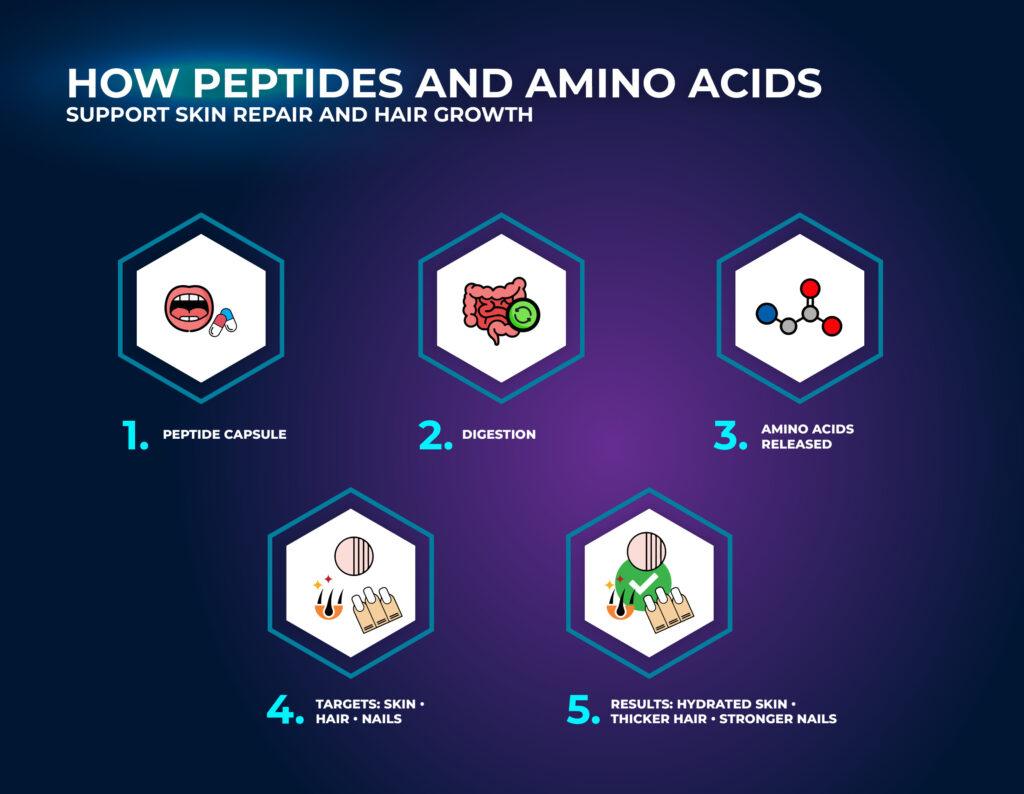
Peptide capsules sit in the same aisle as other dietary supplements, yet people choose them for different reasons. The peptide chains act like signals that can connect with molecules in the body and trigger useful changes, including promoting healthier hair . Results vary because capsules are digested, and many factors like food, sleep, hormones, and vitamins influence outcomes.
Skin, Nails, and Hair Growth with Peptide Capsules
Collagen in a peptide capsule may help the skin barrier hold water. With consistent use, some users notice skin that feels smoother and looks more even, as light fine lines seem to shrink. Hair support is another goal. People hope for healthier hair and, in some cases, hair growth that allows it to grow thicker over time. Nails may also show strengthening when the dose and formula match the intended use.
- Look for clear labels that name the peptide form, the dose, and any clinical study support.
- Some products add copper peptides, herbs, or cream and powder companions to target extra benefits.
- If you prefer natural or cruelty free options, check if ingredients are animal derived before you shop on a website or app.
Muscle Growth and Joint Support from Amino Acids in Capsules
Peptides can support muscle repair and muscle recovery when paired with training and enough proteins in food. They are supplements, not replacements for a program. Collagen and other compounds may also help joint comfort as part of a broader plan.
- Use capsules as a convenient add on to a daily routine that already includes movement, sleep, and balanced meals.
- Potency depends on formula, timing, and overall diet.
- For muscle growth, expect gradual gains that come mainly from training, not from capsules alone.
Weight and Body Goals: Where Peptide Capsules Can Help
Some people use encapsulated peptides to support weight and body composition goals. These products work best when they connect to habits you can keep.
- Changes are usually modest and build with steady use.
- Choose a product with a clear intended use and follow the directions from the brand.
How Peptide Capsule Formulas Differ and Why Amino Acids Matter
Not all capsules feel the same. Differences in quality, coatings, and added elements can change how a peptide is absorbed.
- Brands may use enteric or liposomal designs, or add ingredients to support tolerability.
- The same compound can perform differently across products because the capsule shell, fillers, and release profile affect absorption.
- Compare product labels and seek verifiable claims with cited clinical studies.
Risks, Side Effects, and Legality
A peptide capsule is convenient, but it is not risk free. Some users feel stomach upset, gas, or mild nausea as capsules are digested into amino acids. Others report headaches, itching, or light skin flushing. Stop use and seek medical attention if you feel chest pain, trouble breathing, hives, or swelling. Side effects can vary with dose, formula, and whether you took it with food.
Interactions and timing
Peptides can interact with medicines, hormones, and vitamins. A high fat meal can change absorption and potency. Timing in your daily routine matters. Take one new product at a time so you can see what triggers a reaction. Pregnant or breastfeeding people, children, and those with liver or kidney issues should avoid use unless a clinician approves it. Do not use peptides to treat a disease without medical care.
Quality, labeling, and ingredients
Safety depends on quality and clear labels. Collagen and some peptides are animal derived. If you want natural and cruelty free options, check the label before you shop on a website or app. Brands sometimes add herbs, copper peptides, or other elements to the formula. Extra ingredients can raise perceived benefits, but they also add more chances for reactions. Look for products that state the intended use, peptide form, dose, and any clinical study summary. Compare storage instructions and testing details from the brand.
- Prefer simple formulas when you start.
- Check if the product explains how the peptide chains are protected or encapsulated.
- Avoid blends that mix forms without clear directions and dosing.
Safety checklist
Use a short checklist to lower risk and support health:
- Start with the lowest effective dose. Increase only if needed.
- Keep notes on sleep, skin, hair, nails, weight, and energy. Look for consistent changes.
- Avoid stacking with new high dose vitamins or stimulants.
- Pause use before surgery unless your doctor says otherwise.
- If you feel unsure about interactions, ask a clinician first.
Alternatives to a Peptide Capsule for Hair Growth and Muscle Growth Support

Capsules are convenient, but they are not the only way to use peptides. Different forms can change native potency, how fast the body absorbs them, and how well they fit your daily routine. The best choice depends on your goal, the natural peptide compound, and how the product is digested or delivered.
Sublingual and buccal (under the tongue or in the cheek)
These forms dissolve in the mouth so molecules can enter through thin tissues instead of the gut. That route can avoid some digestion and may raise efficacy for certain peptides. People like the natural, convenient use at home. Taste, saliva flow, and timing with food still affect results.
Good for: support during a busy day, when you want to avoid swallowing capsules
Watch for: clear directions on timing, dose, and any clinical study notes the brand provides
Topical creams and serums
Peptide creams and serums target the skin barrier directly. Collagen fragments, copper peptides, and other amino acids–based blends may help promote healthier hair, the look of hydration, and herbs for pores, and light lines with consistent benefits. Results vary because the skin is a complex barrier and only small chains can pass.
Good for: skin goals, smoother feel, healthier looking tone
Watch for: quality of the formula, cruelty free claims, and how the brand tested absorption
Nasal sprays
Sprays deliver the compound across nasal tissues, which can be a fast route for some molecules. This form avoids the stomach, so less may be digested into simple amino acids. Not all peptides fit this route, and irritation can occur.
Good for: convenience when swallowing is hard
Watch for: storage rules, medical guidance, and clear labeling of the intended use
Injections (prescription or clinic use)
Many clinically proven peptides were designed for injection. This route can deliver higher active levels because it skips digestion and first pass metabolism. It also carries more risk.
Good for: cases where a clinician recommends a specific peptide for a defined goal
Watch for: proper training, sterile technique, and medical attention for side effects
Powders and liquids
Some peptides and collagen are sold as powders or ready-to-drink liquids. You can mix them with food or beverages to support proteins in your diet. Flavor, dose accuracy, and added vitamins or herbs differ across brands.
Good for: flexible dosing, stacking with smoothies or post-workout shakes
Watch for: sugar content, added elements that may trigger reactions, and real dose per serving
Food-based and “natural” options
Collagen derived from food sources, bone broth, and protein-rich meals supply amino acids that the body uses for muscle repair and muscle recovery. These do not work like targeted drug peptides, but they support overall health.
Good for: budget, general strengthening of hair and nails, balanced weight goals
Watch for: quality, protein amount per serving, and how well the plan fits your routine
Quick route selector
| Goal | Route to try first | Why |
| Skin feel / nails / hair support | Collagen powders or higher‑dose capsules; add topical copper peptide cream | Hitting effective intake and acting on the skin barrier |
| Joints / recovery | Collagen powders or capsules matched to study ranges | Easier to reach dose; supports muscle repair and comfort |
| Gut comfort | Enteric or delayed‑release capsules | Local action may matter more than blood levels |
| Faster systemic effect | Clinician‑guided injections or approved oral meds | Strong delivery and dosing control |
| Convenience above all | Peptide capsule | Easiest form to keep consistent day to day |
Pick the route that connects to your goal and lifestyle. Capsules win on convenience. Powders win on dose. Injections win on delivery strength when supervised. For skin and scalp, topicals target the surface while nutrition supports the inside. Choose the formula you can use well, then give it time to work.
Final Thoughts
Peptides can play a clear role in a wellness plan when you set realistic goals. A peptide capsule is a convenient option, and other forms like powders and cream target different needs. Collagen and certain copper peptide blends may support the skin barrier, help pores look smaller, and promote healthier hair and nails, bringing various benefits over time. Training plus enough proteins in food remains the base for muscle repair, muscle recovery, and steady muscle growth. Think of these supplements as support for the body, not as a cure to treat a condition.
A simple plan works best. Fit the product into your daily routine, stay consistent, and track changes in skin, hair growth or thicker look, nails, energy, and weight. Combine supplements with sleep, balanced meals, vitamins when needed, and smart training. If you take medicines or notice unusual effects, pause use and seek medical attention.
The next step is to connect your goal with the right form. Start with one product, use it as directed, and review after a few weeks. In the field, researchers continue to study how peptide chains and encapsulated designs make a difference. As new data arrives, adjust your choices with care. Smart shopping on a website or app, plus honest expectations, will help you get real benefits without the hype.
Frequently Asked Questions (FAQs)
Are there vegan peptide capsules that mimic collagen benefits without animal sources that are free of any additive?
Most are collagen builders, not collagen. They provide amino acids and vitamin C to support collagen. Human data is limited. Choose clear dosing and human studies.
Can peptide capsules change the skin microbiome or oil production around pores?
Evidence is limited. Oral peptides are unlikely to reduce oil or tighten pores. Use topical care for those goals.
Do peptide capsules affect the accuracy of workplace drug tests that are not for sports?
Workplace tests target drugs of abuse, not peptides. Use third-party tested brands to avoid contamination. Keep receipts or COAs.
What storage stability do peptide capsules have in tropical heat without air conditioning?
Keep bottles cool, dry, and away from light. Use the desiccant and close the cap. Store in an airtight box if humid. Refrigerate only if the label says so.
Can wearable data like heart rate variability or sleep stages track responses to peptide capsules?
Yes, as trends. Watch HRV, resting heart rate, and sleep time. Track weekly averages, not daily swings.