
Contents9 sections
If you follow bodybuilding, you have probably heard of “bubble gut”, also called “steroid gut”, “HGH gut” or “muscle gut”. It describes a stomach that pushes out even though the rest of the body is lean and muscular.
The look is most often linked to the mass-monster era of professional bodybuilding, and it divides fans: some see it as the price of extreme size, others as a sign the sport went too far.
This article covers what bubble gut is, what is and is not known about its causes, and what you can do to keep your waist tight while you build muscle.
Key Takeaways
- Bubble gut, also called Palumboism, HGH gut or insulin gut, is a protruding stomach on an otherwise lean, very muscular body. It is a gym term, not a medical diagnosis.
- HGH and insulin are peptide hormones, not steroids. They are the drugs most often blamed, usually alongside anabolic steroids and very high food intake.
- There is little direct research on bubble gut. The strongest clue comes from acromegaly, where years of excess growth hormone enlarge organs such as the liver, kidneys, heart and colon.
- Food volume, visceral fat, gas and food intolerances add to the swelling, and these are the parts you can control with diet and training.
- A new, painful or growing swelling of the abdomen needs a doctor, because conditions such as Crohn’s disease or fluid in the abdomen can look similar.
What Is Bubble Gut?
Bubble gut is a distended stomach that protrudes on a bodybuilder who is otherwise lean, often with visible abs sitting on top of the bulge. It is also called “insulin gut” or “HGH gut”, and nicknamed Palumboism after bodybuilder Dave Palumbo. None of these are medical terms.
The condition is debated in the fitness community. Most people blame human growth hormone (HGH) and insulin, often used alongside anabolic steroids. It is most common among people who push their bodies to extremes with intense training, very high food intake and, in many cases, performance-enhancing drugs.
Bubble gut is not only about looks. It is often a sign that something in the approach to building muscle has gone too far, whether that is the drugs, the amount of food, or both.
Why Do Bodybuilders Get Bubble Gut?
Bubble gut usually comes from several factors at once rather than a single cause. Some are well understood; others, especially the drug-related ones, rest on indirect evidence.
1. Human Growth Hormone and Insulin Use
Human growth hormone (HGH) and insulin are the drugs most often blamed for bubble gut. Neither is a steroid. Both are peptide hormones: HGH is made by the pituitary gland and insulin by the pancreas. Anabolic steroids, by contrast, are synthetic versions of testosterone. Bodybuilders use HGH and insulin alongside steroids, hoping for more growth, fuller muscles and faster recovery.
What the evidence says about GH. Bubble gut itself has barely been studied, so the best evidence comes from acromegaly, a condition in which a pituitary tumor produces too much growth hormone for years. People with acromegaly develop enlarged internal organs (visceromegaly), including the liver, kidneys, spleen, heart and thyroid, and the colon tends to be longer than normal. Bodybuilders who use high doses of HGH for long periods are exposed to the same kind of excess, so organ growth is a plausible contributor. It has not been measured in bodybuilders, though, and acromegaly usually involves many years of untreated excess, so the comparison is a clue rather than proof.
GH also causes fluid retention, a common dose-related side effect in medical use. What GH does not seem to do is add belly fat. In adults with GH deficiency, GH treatment reduces visceral fat, and tesamorelin, a drug that raises the body’s own GH, is FDA-approved to reduce excess abdominal fat in people with HIV-related lipodystrophy. If GH contributes to bubble gut, the likelier routes are organ and tissue growth and fluid, not fat.
What the evidence says about insulin. Insulin is a storage hormone. It moves glucose and amino acids into muscle, but it also promotes fat storage and blocks fat breakdown, and weight gain is a well-known side effect of insulin treatment in diabetes. Bodybuilders who inject insulin typically eat large amounts of carbohydrate to avoid low blood sugar, and that surplus can add visceral fat, the fat that sits inside the abdominal cavity around the organs. Visceral fat pushes the abdominal wall out from the inside, so the stomach can protrude even when the fat under the skin is low.
Insulin is also one of the most dangerous drugs used in bodybuilding. A dosing error can cause severe hypoglycemia, which can lead to seizures, coma and death.
2. Where Anabolic Steroids Fit In
Despite the nickname “steroid gut”, anabolic steroids are not thought to be the main cause on their own. In men with low testosterone, testosterone treatment tends to reduce fat mass rather than add it.
Steroids are usually part of the same stack, though, and they make the rest possible: more muscle means more food, and more food means a fuller digestive tract. Some coaches also point to very thick abdominal and oblique muscles in heavily enhanced lifters, which add to waist size. That is plausible but has not been measured.
3. Excessive Caloric Intake
When you are bulking, eating big is part of the game. But there is a fine line between eating enough to grow and overloading your system.
A digestive tract that is constantly full of food, fluid and gas takes up space and pushes the stomach out. Eating far more than you burn also adds fat, and some of it goes to the visceral depot around the organs. Choosing calorie-dense foods and spreading intake across the day can cut the sheer volume of food you need.
4. Too Much Saturated and Processed Fat
Fat is essential, but the type matters when you are eating in a surplus. In overfeeding studies, extra saturated fat has tended to add more liver and visceral fat than the same calories from polyunsaturated fat.
Large, high-fat meals also slow down stomach emptying, which can leave you feeling full and bloated for hours. Favoring unsaturated fats from fish, olive oil, nuts and seeds, and limiting fried and heavily processed food, helps on both fronts.
5. Poor Digestive Health
High-volume diets often lean on large amounts of a few foods, such as dairy, protein powders, oats, rice and vegetables, which can cause gas, bloating and abdominal discomfort.
Food intolerances add to this. Lactose intolerance, for example, causes gas and swelling when milk sugar reaches the colon undigested. Sugar alcohols in protein bars and sudden jumps in fiber intake can have similar effects.
6. Air Swallowing and Trapped Gas
Swallowing air during meals, known as aerophagia, can trap gas in the digestive tract and cause bloating and discomfort. Eating quickly, talking while eating, carbonated drinks and chewing gum all add to it.
Combined with the large meals many bodybuilders eat, trapped gas makes the stomach look more swollen than it otherwise would.
7. Other Medical Conditions
A swollen abdomen is not always about training or diet. Crohn’s disease causes chronic inflammation of the digestive tract, most often at the end of the small intestine, and can lead to swelling and pain. Other causes include irritable bowel syndrome, celiac disease, hernias, and fluid in the abdomen (ascites), which can come from liver disease. These are less common causes in this group, but they should not be overlooked.
In short, bubble gut is usually the result of several of these factors stacking up. Working out which ones apply to you is the first step in avoiding it or reducing it.
Most Common Signs and Symptoms of Bubble Gut
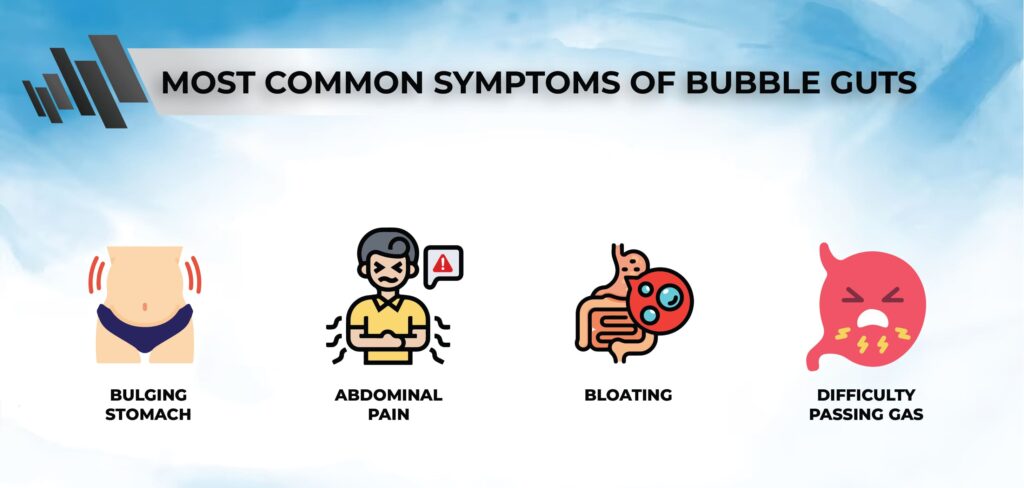
Bubble gut is a visible change more than a set of symptoms, but people describe a fairly consistent picture:
- Protruding midsection: The stomach pushes out even when body fat is low and the abs are visible. In extreme cases it is compared to a pregnancy belly.
- Swelling that stays: The distension is there in the morning and between meals, not only after eating.
- Bloating and discomfort: Gas and fullness, especially after large meals.
- Difficulty passing gas: Trapped gas that adds to the discomfort.
The first two signs point more toward visceral fat, thick abdominal muscles or organ size. The last two point toward digestion, which is the easier part to fix. The table below sums up the difference.
| Feature | Everyday bloating | Bubble gut |
|---|---|---|
| When it shows | Comes and goes, worst after meals | Present most of the time, including when fasted |
| How it feels | Soft, gassy, uncomfortable | Usually firm |
| Main drivers | Gas, food volume, intolerances, fatty meals | Visceral fat, food volume, thick abdominal muscles, possibly enlarged organs |
| What helps | Smaller meals, eating slower, finding trigger foods | Losing visceral fat, eating less volume, stopping GH and insulin misuse |
Prevention and Treatment Options
There is no specific medical treatment for bubble gut. Prevention and improvement come from changing the factors behind it, and from seeing a doctor when the swelling might have another cause. Here is what you can do:
Dietary Adjustments
Keeping a food diary can help you spot the foods that cause bloating and discomfort. Cutting back on fried and heavily processed food and avoiding foods you do not tolerate well can reduce bloating. Smaller, more frequent meals, eating more slowly and drinking fewer carbonated drinks reduce both food volume and swallowed air.
Avoiding GH and Insulin Misuse
The most reliable way to avoid the drug-related part of bubble gut is not to use HGH or insulin outside medical care. Both are prescription drugs, and insulin misuse can be fatal. Anyone who uses performance-enhancing drugs should speak to a doctor, get regular blood work and be open about what they are taking.
Fat burners and other supplements will not shrink enlarged organs, and they are no substitute for fat loss through diet and training.
Exercise and Core Training
Regular training, including cardio, helps reduce visceral fat, the part of a distended stomach you can most directly change. Training the deep abdominal muscles, for example with the stomach vacuum used by classic bodybuilders, can improve control of the midsection when posing. Core work does not burn belly fat on its own, though, and it will not shrink organs.
Medical Evaluation
See a doctor if the swelling is new, growing or painful, or if it comes with symptoms such as changes in bowel habits, blood in the stool, vomiting or weight loss you cannot explain. Chronic digestive problems can get worse when left untreated.
If you use or are thinking about using anabolic steroids or other performance-enhancing drugs, speak with a doctor first.
Bubble Gut and the Sport of Bodybuilding
Bubble gut has had a visible effect on bodybuilding. The narrow waist and V-taper of the Golden Era, seen in physiques like those of Steve Reeves and Frank Zane, set the standard for decades. As top-level physiques grew much larger from the 1990s onward, distended midsections became common enough to spark a debate about where the sport was heading.
Many fans, and some judges, push back against the look and favor competitors with a tighter, more proportionate waist. Photos of bodybuilders with distended midsections regularly draw criticism on social media.
The Classic Physique division, introduced in 2016 with body-weight limits tied to height, is widely seen as part of that response. It rewards a small-waisted, aesthetic look and has become one of the most popular divisions in the sport, a sign that overall aesthetics and health matter to fans, not just sheer size.
The Bottom Line
Bubble gut is not one condition but a stack of causes: food volume, visceral fat, digestion and, at the extreme end, the effects of growth hormone and insulin misuse.
- HGH and insulin are peptide hormones, not steroids. The case against GH rests mainly on acromegaly, where years of excess GH enlarge internal organs; insulin mostly adds fat through storage and the large carbohydrate intake it demands.
- The parts you control are food volume, meal habits, trigger foods and overall body fat, and changing them also fixes most everyday bloating.
- Any new, painful or growing swelling of the abdomen deserves a doctor’s visit before you blame it on training.
Frequently Asked Questions
Disclaimer
Please read carefully
The information on this site is for educational and informational purposes only, and is not medical advice. Always consult a qualified healthcare professional before using any supplement or medication, or making changes to your health, fitness, or nutrition routine.
Not medical advice
Content here is not a substitute for professional medical advice.
Consult your doctor
Talk to your doctor before starting any supplement or new routine.
Use at your own risk
We are not responsible for adverse effects from acting on this.
Do your research
Make informed decisions about your own health.
No guarantees
Individual results vary. No claims about outcomes.
Important — Never disregard professional medical advice or delay seeking it because of something you read here. If you think you may have a medical emergency, call your doctor or your local emergency number right away.