Contents13 sections
Glutathione is a small molecule your cells make to keep oxidation in check, which is why it is often called the body’s master antioxidant. Glutathione injections, given into a vein (IV) or a muscle (IM), have become a popular clinic and wellness treatment, marketed for brighter skin, faster recovery, liver “detox” and healthy aging.
The biology behind glutathione is solid. The evidence that injecting it delivers those benefits is much thinner. Most trials are small and short, many tested oral glutathione rather than injections, and the results for skin lightening and exercise recovery are mixed. No injectable glutathione is approved for skin lightening, and regulators have warned against using it that way.
This guide covers how glutathione works, what studies have actually found, the doses and schedules used in research, the side effects, and how injections compare with oral glutathione and precursors such as NAC.
Key Takeaways
- Glutathione is an antioxidant your body makes from three amino acids. An injection raises blood levels quickly, but the rise is short-lived.
- Skin-lightening evidence is small and mixed: a few short trials, mostly of oral glutathione, found modest effects. No injectable glutathione is approved for skin lightening.
- Recovery and performance claims rest mainly on lab biology and one small oral study. Sleep, nutrition and programming still drive results.
- Doses used in studies range from 250-1,000 mg a day by mouth to 1,400 mg IV three times a week. Clinic schedules are not standardized.
- Injections add risks that oral forms do not, including allergic reactions and infection from non-sterile products. Use only a licensed clinic, and compare with oral glutathione or NAC first.
Mechanism of Action
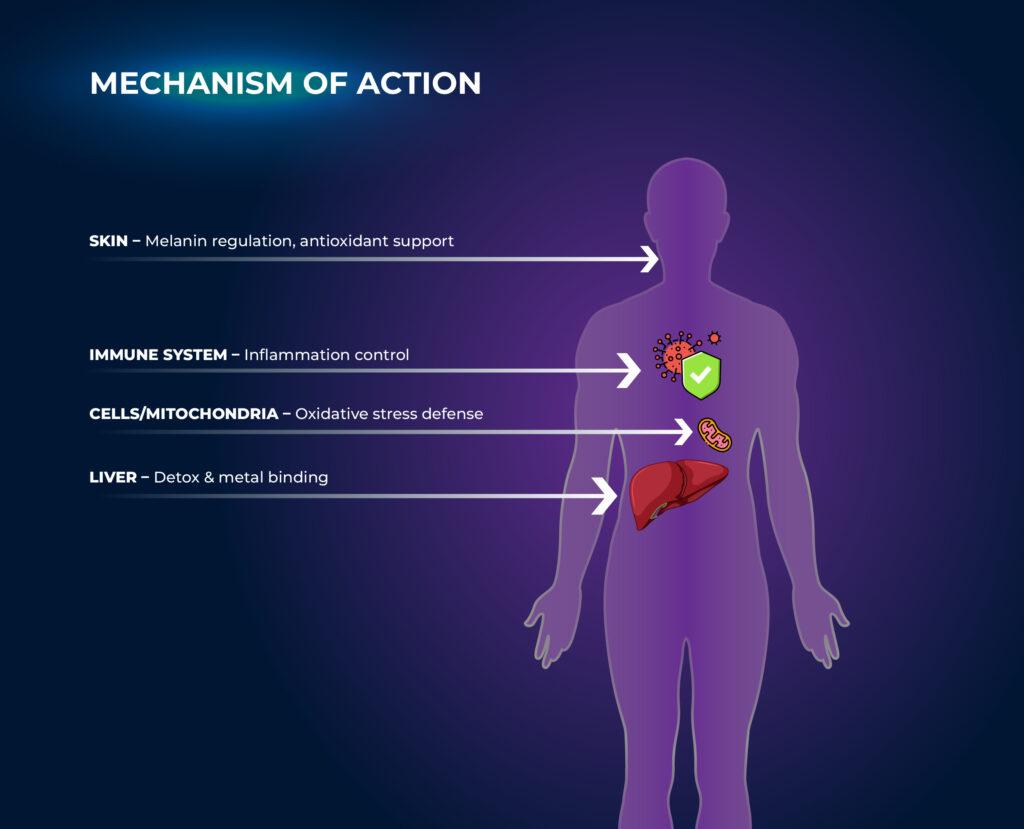
Glutathione works in many tissues at once, including the liver, skin, red blood cells and immune cells. An injection only changes how it is delivered. Below is how glutathione functions and why the route matters less than many clinics suggest.
What Glutathione Is
Glutathione (L-glutathione, or GSH) is a tripeptide made of three amino acids: glutamate, cysteine and glycine. Cells build it themselves, and it is especially concentrated in the liver. In its reduced form it neutralizes reactive oxygen species, supplies enzymes such as glutathione peroxidase that break down peroxides, and binds some drugs and toxins so they can be excreted. After it donates electrons it becomes oxidized glutathione (GSSG), which the cell recycles back into GSH.
Cysteine is usually the building block in shortest supply. That is why protein-rich foods such as fish, eggs, meat, dairy and legumes, and cysteine donors such as N-acetylcysteine (NAC), influence how much glutathione the body makes.
Why a Glutathione Injection?
Oral glutathione is partly broken down in the gut. An early study found that a single 3 g oral dose did not raise glutathione in the blood (Witschi et al., 1992, European Journal of Clinical Pharmacology), and a four-week trial of 500 mg twice a day found no change in oxidative stress markers (Allen and Bradley, 2011). That is the main argument for injections: an IV dose goes straight into the bloodstream.
The picture is more complicated in both directions. Injected glutathione is cleared from the blood within minutes, not hours, and most cells do not take it up intact. It is broken down outside the cell, and its amino acids are used to rebuild glutathione inside. Meanwhile, a six-month randomized trial found that daily oral glutathione (250 or 1,000 mg) did raise glutathione stores in blood and other cells, in a dose-dependent way (Richie et al., 2015, European Journal of Nutrition). Liposomal and S-acetyl forms are marketed as better absorbed, but human data on them are limited.
What Happens in Cells
Inside cells, glutathione is the main buffer against oxidative stress, including the short bursts produced by hard training. It helps clear hydrogen peroxide and lipid peroxides, protects mitochondria and cell membranes, and in the liver it is attached to drugs and reactive chemicals so they can be removed. A familiar example is paracetamol (acetaminophen) overdose: the liver’s glutathione gets used up, and the antidote, NAC, works by restoring it.
Immune cells also need glutathione to multiply and respond normally. Low glutathione is seen in many chronic illnesses, but that does not show that adding more helps people whose levels are already normal.
Skin Pathway and Pigmentation
- In pigment cells (melanocytes), glutathione can shift melanin production from darker eumelanin toward lighter pheomelanin and may reduce the activity of tyrosinase, the key enzyme in melanin synthesis. This is the basis for skin-lightening claims.
- Most of this comes from lab and cell studies. Human trials are few, small and short, and most tested oral or topical glutathione rather than injections.
- Results depend on dose, route, baseline skin tone and sun exposure, and there is little data on how long any change lasts after treatment stops.
Benefits of Glutathione Injections: What the Evidence Shows
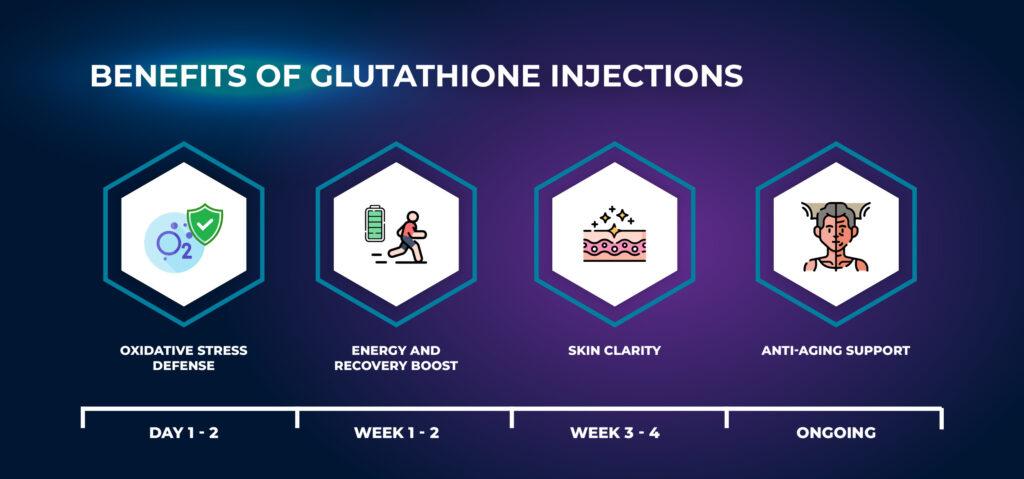
Glutathione injections aim to raise glutathione levels quickly. The claimed benefits follow from its biology, but direct evidence in healthy people is limited. Here is how each claim holds up.
Antioxidant Defense and Recovery
Hard training produces reactive oxygen species, and glutathione helps neutralize them. In a small crossover study of eight healthy men, 1 g a day of oral glutathione for two weeks reduced the rise in blood lactate and muscle fatigue during prolonged exercise (Aoi et al., 2015, Journal of the International Society of Sports Nutrition). There are no good trials showing that glutathione injections speed recovery or improve strength in lifters.
There is also a possible downside. Some trials found that high-dose vitamin C and E blunted parts of the body’s adaptation to training, because the oxidative signals that exercise creates help drive those adaptations (Ristow et al., 2009; Paulsen et al., 2014). Whether glutathione does the same has not been tested well, so more antioxidants do not automatically mean better results.
Liver Health and Detox Support
The liver relies on glutathione to process drugs and reactive chemicals. In a small open-label pilot study of people with non-alcoholic fatty liver disease, 300 mg a day of oral glutathione for four months lowered ALT, a marker of liver injury (Honda et al., 2017, BMC Gastroenterology). The study had no placebo group, and there are no comparable trials of injections for general “detox” in healthy people. For liver protection during a cycle, see our guide to cycle support.
Skin Health and Tone
Skin lightening is the most common reason people get glutathione injections, and it is where the gap between demand and evidence is widest. A placebo-controlled trial in 60 medical students found that 500 mg a day of oral glutathione for four weeks slightly lowered the melanin index at some skin sites (Arjinpathana and Asawanonda, 2012, Journal of Dermatological Treatment). A 12-week trial in women taking 250 mg a day reported small decreases in melanin and some improvement in skin elasticity, though not every result reached significance (Weschawalit et al., 2017, Clinical, Cosmetic and Investigational Dermatology).
Trials of IV glutathione are fewer and smaller still. A dermatology review found the evidence for IV glutathione as a skin-lightening agent weak and its safety unclear (Sonthalia et al., 2016, Indian Journal of Dermatology, Venereology and Leprology). Daily sun protection does more for an even skin tone than any antioxidant, and dark patches such as melasma are best assessed by a dermatologist, since proven treatments exist.
Immune Function and Resilience
Immune cells depend on glutathione, and levels are often low in chronic illness. That does not mean injections reduce colds or sick days in healthy, well-fed people. There are no good trials showing this.
Cellular Protection and Healthy Aging
Glutathione levels tend to fall with age. In small trials, older adults given glycine plus NAC (GlyNAC), the two building blocks that tend to run short, had higher glutathione and lower oxidative stress markers (Kumar et al., 2021, Clinical and Translational Medicine). These were precursor studies, not injection studies. For how glutathione fits alongside NAD+ and other longevity treatments, see our breakdown of the NAD+, glutathione and sermorelin longevity stack.
Evidence at a Glance
| Claim | What studies tested | Strength of evidence |
|---|---|---|
| Raises glutathione levels | IV raises blood levels briefly; daily oral 250-1,000 mg raised body stores over six months | Moderate |
| Skin lightening | A few small, short trials, mostly oral; IV trials fewer and smaller | Low and mixed |
| Exercise recovery | One small oral study (1 g a day for two weeks); no injection trials in lifters | Very low |
| Liver support | One small open-label oral pilot in fatty liver disease | Low |
| Immune health | Lab data and studies in illness only | Very low |
| Healthy aging | Small GlyNAC precursor trials in older adults | Low |
Doses and Schedules Used in Studies
Glutathione injections are not approved for cosmetic or performance use, so there is no official dose for those purposes. The figures below are doses used in published studies or commonly reported by clinics. They are context, not recommendations.
| Route | Dose and schedule | Context |
|---|---|---|
| IV | 1,400 mg three times a week for 4 weeks | Placebo-controlled pilot trial in Parkinson’s disease (Hauser et al., 2009); well tolerated, no clear benefit over placebo |
| IV | About 1,500 mg per square metre of body surface before each chemotherapy dose | Cancer trials testing protection against nerve damage from platinum drugs (for example Cascinu et al., 1995) |
| IV | 600-1,200 mg once or twice a week, often for several weeks | Commonly reported clinic schedules for skin lightening; not established by good trials |
| Oral | 250-500 mg a day for 4-12 weeks | Skin-lightening trials |
| Oral | 250-1,000 mg a day for 6 months | Raised body glutathione stores (Richie et al., 2015) |
| Oral | 1 g a day for 2 weeks | Small exercise-fatigue study (Aoi et al., 2015) |
The chemotherapy results were mixed across trials, and later reviews did not find the evidence strong enough to recommend glutathione routinely for that use. IM shots use smaller volumes than IV, and schedules vary widely between clinics, with no agreed maintenance protocol. Higher doses have not been shown to work better for skin or recovery.
Regulatory Status
In the United States, no glutathione injection is FDA-approved; clinics that offer it use compounded products. Some other countries register injectable glutathione as a medicine for specific medical uses, but none of these approvals cover skin lightening.
Regulators have warned against cosmetic use. The US FDA has warned consumers not to buy injectable skin-lightening products, including those containing glutathione, because they are unapproved and may be unsafe or contaminated. The Philippine FDA has issued public advisories that glutathione injections are not approved for skin lightening and can cause serious side effects.
For tested athletes, glutathione itself is not on the WADA Prohibited List. However, IV infusions or injections of more than 100 mL in a 12-hour period are prohibited outside hospital treatment, surgery or clinical tests, whatever they contain.
Common Stacks and Add-Ons
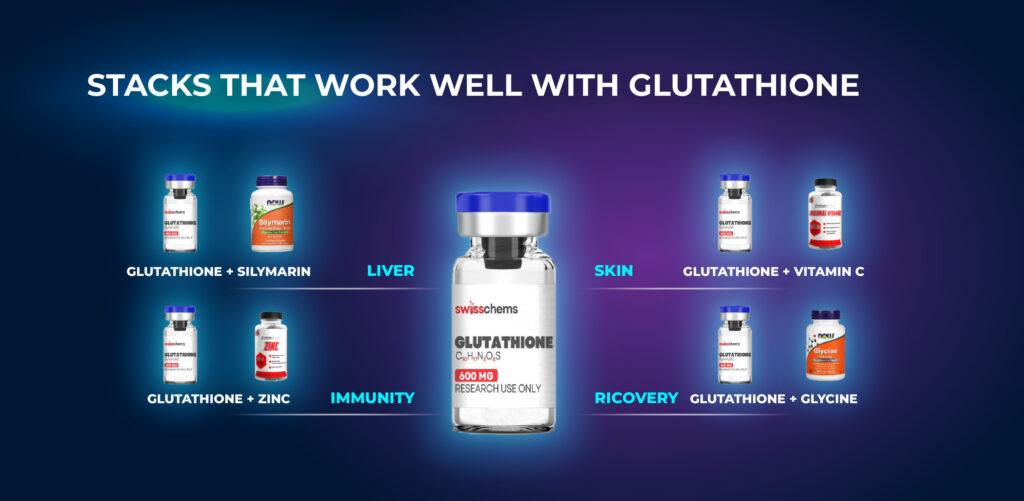
Clinics and supplement users often combine glutathione with cofactors or precursors. None of these combinations has strong trial evidence, so keep any plan simple and match it to one goal.
- Skin tone: glutathione with vitamin C, plus daily broad-spectrum sunscreen. Sun protection has far better evidence for an even skin tone than either antioxidant.
- Your own glutathione production: NAC and glycine (GlyNAC) supply the building blocks the body uses to make glutathione; this is the approach tested in the older-adult trials above. Our comparison of NAC vs NAD explains how NAC differs from NAD+.
- Liver support: NAC is the best-studied glutathione precursor. Milk thistle (silymarin) is popular, but its evidence is mixed.
- Immune balance: correcting a real vitamin D or zinc deficiency, and getting enough sleep, matters more than adding antioxidants.
Because high-dose antioxidants may blunt some training adaptations, some lifters schedule infusions on rest days. There is no direct evidence for an ideal timing. If you notice dizziness, unusual fatigue or a rash, stop and speak with your healthcare provider.
Side Effects and Safety
Oral glutathione has been well tolerated in trials. Injections add risks that come from the route and the product, not just the molecule, and the long-term safety of repeated high-dose IV use has not been studied.
Reported side effects
- Pain, redness or swelling at the injection site
- Headache, nausea, dizziness or flushing
- Rashes and hives
- Allergic reactions with wheezing or difficulty breathing (seek urgent care)
- Rare serious skin reactions, such as Stevens-Johnson syndrome, cited in regulator advisories on cosmetic glutathione injections
- Infection or vein inflammation from non-sterile products or poor technique
Some people should avoid injections or get medical advice first. There are no safety data in pregnancy or breastfeeding. People with asthma should be cautious, since inhaled glutathione has triggered airway narrowing in some asthmatics. Anyone with kidney or liver disease needs close supervision, and anyone having chemotherapy should only use antioxidants with their oncologist’s approval.
Watch how you respond in the first 24 hours. Stop and get help for chest tightness, swelling of the lips or face, severe dizziness or trouble breathing.
Before You Start
- Talk to a licensed provider about your goal and whether an injection adds anything over oral glutathione or NAC.
- Share your full medication and supplement list so the provider can check for interactions.
- Ask what product the clinic uses, where it comes from and how it is stored. Glutathione degrades with heat, light and air.
- If your goal is skin lightening, expect small changes at best, and remember that regulators do not endorse injections for this use.
Clinic Products vs Research-Supply Vials
If you want glutathione injections for yourself, the safe route is a licensed clinic or medical provider using a sterile pharmacy product. Do not buy vials online to mix and inject at home. Sterility, dose accuracy and storage are the main risks, and an IV push done wrong can cause infection or vein damage.
Common clinical options
- IV push or drip: glutathione given into a vein, often alongside vitamin C in the same visit.
- IM shots: smaller volumes injected into muscle, sometimes used between IV sessions.
- Oral alternatives: standard, liposomal or S-acetyl glutathione, or precursors such as NAC. These are cheaper and avoid injection risks.
Glutathione is also sold online as a research chemical in vials, such as SwissChems’ 600 mg injectable glutathione. Research-supply products are labeled for research use only. They are not made or checked as medicines for human injection, and that is not what we are suggesting here.
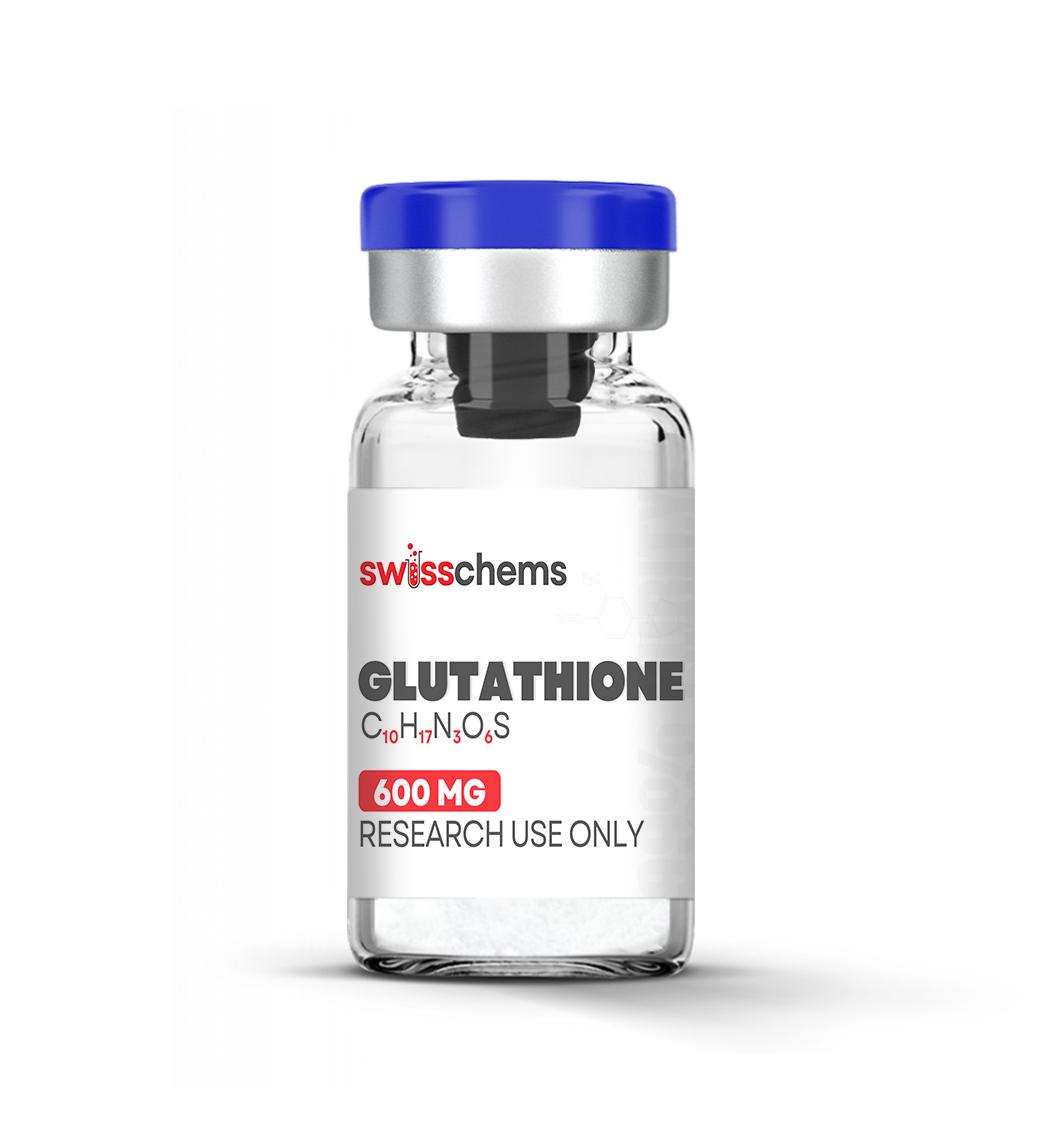
If you source glutathione for laboratory research, ask for a recent third-party certificate of analysis (COA) for the exact batch. Our guide on how to read a peptide COA explains what to check. A COA confirms identity and purity; it does not show that a product is sterile or safe to inject.

Pros
- Exceptional purity & testing (≥98%)
- Pharmaceutical-style packaging for stability
- Broad catalog across peptides & nootropics
- Strong reputation & consistency across years
Cons
- Some items frequently out of stock due to high demand
- Limited long-term data for some compounds
The Bottom Line
Glutathione is a vital antioxidant, but the evidence that injecting it improves skin, recovery or health in healthy people is small and mixed.
- Injections raise blood glutathione quickly but briefly. Daily oral glutathione and precursors such as NAC also raise body stores, with fewer risks and lower cost.
- Skin-lightening trials are few, small and mostly oral. No injectable glutathione is approved for skin lightening, and regulators have warned against it.
- If you choose injections, use a licensed clinic with sterile pharmacy products, and treat study doses as context, not a prescription.
Frequently Asked Questions
Disclaimer
Please read carefully
The information on this site is for educational and informational purposes only, and is not medical advice. Always consult a qualified healthcare professional before using any supplement or medication, or making changes to your health, fitness, or nutrition routine.
Not medical advice
Content here is not a substitute for professional medical advice.
Consult your doctor
Talk to your doctor before starting any supplement or new routine.
Use at your own risk
We are not responsible for adverse effects from acting on this.
Do your research
Make informed decisions about your own health.
No guarantees
Individual results vary. No claims about outcomes.
Important — Never disregard professional medical advice or delay seeking it because of something you read here. If you think you may have a medical emergency, call your doctor or your local emergency number right away.