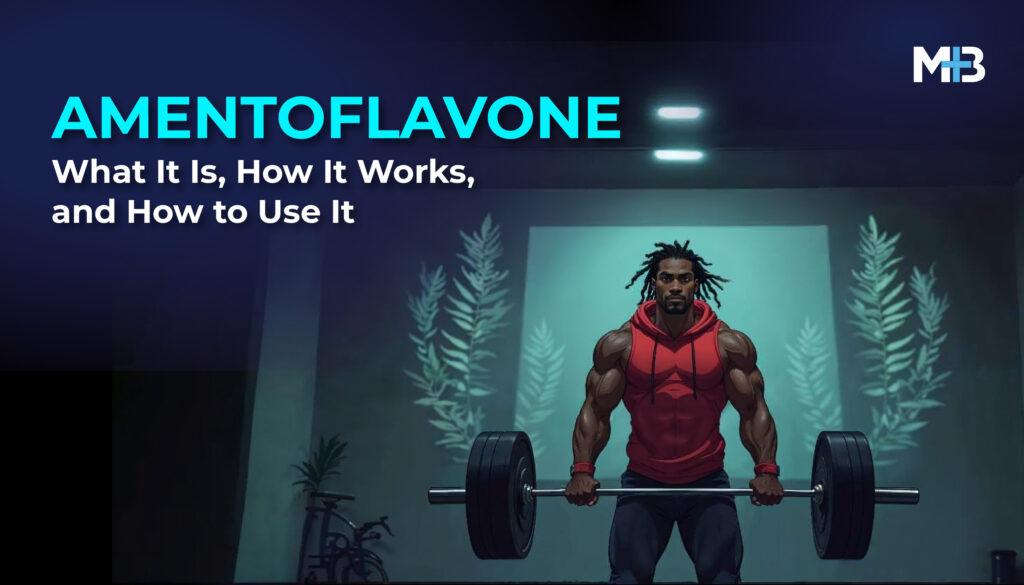
You train hard, but some days the pump falls flat and your focus drifts. You want performance without another jittery stim hit. You want a clean drive in the gym and faster recovery after.
These days are unavoidable, but Amentoflavone may help you get through them better. It’s a plant‑derived biflavonoid found in herbs like Selaginella, Ginkgo biloba, and St. John’s wort.
In this guide, we break down what the science actually says, how lifters use it, smart stacks that make sense, and how to dose it safely. Read on and decide if it deserves a spot in your pre‑workout routine.
Key Takeaways
- Amentoflavone supports blood flow and a calm, clean focus for training. 💪
- Use it as a support ingredient alongside citrulline, creatine, and beta alanine for reliable results. 🧩
- Mechanisms include PDE5 inhibition, nitric oxide and cGMP support, and anti-inflammatory control of nuclear factor kappa b (NF κB) and pro-inflammatory cytokines like TNF α. 🔬
- Start with 25 to 50 milligrams pre‑workout, monitor how you feel, and avoid risky drug interactions without medical advice. ⏱️
- Evidence in athletes is limited, so track pumps, recovery, and performance over two to three mesocycles before deciding to keep it. 📈

What Is Amentoflavone?
Amentoflavone is a well known biflavonoid, two apigenin units linked together, found in natural plants and natural products like Selaginella tamariscina, Ginkgo biloba, and St. John’s wort.
In supplements, it shows up as Selaginella extract or inside pre‑workout blends designed for pumps, focus, and recovery.
The compound is also called 3′,8”‑biapigenin, 8 biapigenin, or didemethyl ginkgetin and is a polyphenolic compound with multiple biological activities.
Most of what we know comes from preclinical research. Signals point to vascular and anti‑inflammatory pathways as the main hooks for lifters, while broader actions (anti viral / antiviral activity, anti tumor, anti senescence) remain investigational.
Why Amentoflavone Matters: The Lab Evidence
Amentoflavone has been getting attention in research because it seems to touch on multiple areas of health. While most of the evidence comes from lab and animal studies, the results so far are promising and point to potential benefits that go beyond a single system in the body.
Anti-Inflammatory & Antioxidant
Inflammation plays a role in everything from joint pain to long-term disease. Amentoflavone appears to calm some of the body’s major inflammation signals, acting like a natural anti-inflammatory. It also helps fight off free radicals — unstable molecules that damage cells — giving it antioxidant properties similar to those found in vitamins C and E. This combination makes it a compound worth noting for overall cellular protection.
Antiviral
Another interesting angle is its antiviral activity. In lab tests, amentoflavone has been shown to interact with certain viral proteins, including ones tied to coronaviruses. While this doesn’t mean it’s a cure or treatment, it does suggest that the compound has potential to be explored in the context of viral defense.
Brain Protection
Brain health is one of the most studied areas for amentoflavone. It has shown the ability to protect neurons in the hippocampus — the part of the brain linked to memory and learning. On top of that, it influences brain receptors tied to inflammation, which may help shield the nervous system from long-term damage. Researchers see this as a possible way to slow down age-related cognitive decline or improve mental clarity.
Metabolic Support
In studies using animals and cell lines, amentoflavone also showed potential benefits for metabolism. It seemed to improve how the body processes insulin and manages blood sugar. If these findings hold true in humans, the compound could one day play a role in supporting metabolic health and possibly helping with conditions like insulin resistance.
How Amentoflavone Works: Anti‑Inflammatory Pathways & More

Most of the research on amentoflavone comes from cell and animal studies. Here’s what the pathways look like in practice:
1. Blood Flow and Pumps
Amentoflavone works by blocking certain PDE enzymes, such as PDE5, which helps nitric oxide remain active for longer.
This increases cGMP, an important signal for vasodilation. In practice, this means stronger pumps in the gym and better nutrient delivery to muscles while training.
2. Recovery and Joint Comfort
This compound helps with recovery by reducing key inflammation drivers, including NF-κB, COX-2, and iNOS. It also functions as an antioxidant, clearing out excess free radicals created during tough workouts.
Together, these effects can reduce post-training inflammation and make recovery feel smoother.
3. Focus Without Stims
Research shows that amentoflavone can influence GABA(A) receptors while also offering neuroprotective effects in lab models.
The result may be a sense of cleaner, calmer focus when it’s used in a pre-workout formula—without the overstimulation or jitters that come from high doses of caffeine.
4. Health Context (Not Gym Claims)
Outside of training, amentoflavone has shown some interesting activity in lab settings. It may inhibit fatty acid synthase, which cancer cells rely on to grow, and can even trigger apoptosis, or programmed cell death.
It has also demonstrated antiviral and antibacterial properties in test-tube studies. These findings are noteworthy but not the main reason lifters turn to it.
For lifters, the main wins are blood flow and inflammation control. Best used alongside proven staples like citrulline and creatine for pumps, strength, and recovery. Keep expectations realistic until more human data roll in.
Science‑Backed Benefits (For Lifters and High Performers)

Strength of Evidence
The strongest research on amentoflavone points to its effects on vascular blood flow and anti-inflammatory pathways. These areas have been studied the most and show the clearest benefits, especially for athletes looking to improve pumps and recovery.
There is moderate evidence supporting its role in focus and neuroprotection. Early studies suggest it may help modulate brain activity and protect neurons, which could contribute to a calmer, more dialed-in mindset during training.
The earliest and least conclusive findings involve fat synthase inhibition and antiviral activity. While these results are promising, they come mostly from cell and animal models, and much more research is needed before drawing firm conclusions.
What It Means for Lifters
For lifters, the most practical takeaways are the improvements in blood flow and inflammation control. These benefits can complement proven supplements like citrulline and creatine to enhance pumps, strength, and recovery.
Amentoflavone should be seen as an add-on rather than a replacement, and expectations should remain realistic until more human studies are available.
Smart Stacks with Amentoflavone
Amentoflavone shines when it’s paired with proven basics. Think of it as a “support player” that makes good supplements even better. Here are some stacks where it fits right in.
Pump & Performance Stack
For a strong pump, combine amentoflavone with citrulline and agmatine before training. Citrulline boosts nitric oxide, amentoflavone helps keep that signal active, and agmatine adds another layer of support.
Together, they deliver bigger pumps, better nutrient flow, and a solid training drive without relying on heavy stimulants. Plus, amentoflavone’s antioxidant effects can help keep inflammation in check after high-volume sessions.
Strength & Power Stack
When chasing strength, stack amentoflavone with creatine and beta-alanine. Creatine fuels your muscles by recycling ATP, while beta-alanine buffers fatigue.
Amentoflavone adds extra blood flow and recovery support, helping reduce the “beat up” feeling that comes with heavy sets so you can keep pushing.
Focus & Feel (Low-Stim)
If you want focus without overloading on caffeine, pair amentoflavone with L-tyrosine and a choline source.
This combo can sharpen concentration and mental drive, while amentoflavone’s effects on the brain may give you steady focus without the jitters. Add a small hit of caffeine only if you need it.
Cutting or Recomp Stack
During a cut or recomp, mix amentoflavone with citrulline and L-carnitine (or green tea extract). The improved blood flow can help keep workouts strong even when calories are lower, while its antioxidant effects may make soreness easier to manage.
Stick with moderate stimulants and pay attention to recovery—sleep, mood, and hunger cues matter as much as the supplements.
Recovery & Joint Comfort
For recovery, amentoflavone pairs well with curcumin and fish oil (EPA/DHA). This stack is all about calming down inflammation and protecting joints so you can train consistently without nagging soreness holding you back.
Health Science Extras
Some lab research points to amentoflavone’s potential in areas like cancer cells, antiviral activity, and antibacterial effects. These are interesting but not the reason lifters use it. In the gym, the real value comes from better blood flow, redox balance, and recovery support.
How to Test an Amentoflavone Stack
Introduce one change at a time. Use amentoflavone on three to four sessions each week and log pump quality, perceived effort, and recovery. Hold nutrition steady. After two to three weeks, decide if the stack earns a spot in your routine.
Dosage, Timing, and How to Use
Start simple and measure. Clinical research on performance is limited, so use ranges seen in products and track your response.
Remember that amentoflavone is a well known biflavonoid and a polyphenolic compound from natural plants and natural products.
Common product ranges
Most pre‑workout blends provide 25 to 100 milligrams of amentoflavone per serving. Many lifters start at 25 to 50 milligrams to assess feel.
Increase only if needed and only when your base stack is solid. These amounts align with products that feature Selaginella extract and synonyms such as didemethyl ginkgetin or 8 biapigenin.
When to take it
Use amentoflavone 30 to 45 minutes before training. Take it with your normal pre‑workout drink.
Keep stimulants modest if you want a calm central nervous system feel. Some athletes also use a small non‑training dose with food to maintain exposure in vivo.
Cycling ideas
Run it for eight to twelve weeks, then take two to four weeks away. Another option uses five days on and two days off.
Cycling helps you judge real changes in pumps and recovery while your inflammatory response settles between blocks.
Safety and Interactions
Human data are limited. Most safety signals come from cell and animal work. Start low, watch how you feel, and speak with a clinician if you use medicines.
Likely side effects
Some users report headache, lightheadedness, or stomach upset. These can follow changes in blood flow or taking products on an empty stomach. Stop use if symptoms persist.
Drug–nutrient interactions to consider
Amentoflavone shows potent inhibition of cytochrome P450 enzymes in vitro, including CYP3A4 and CYP2C9. That means possible changes in drug levels for medicines that use these pathways.
Be careful if you take anticoagulants, antiplatelets, calcium‑channel blockers, immunosuppressants, macrolide antibiotics, or other narrow‑window drugs.
Amentoflavone may also interact with P‑glycoprotein transport at the blood–brain barrier and in the gut. Speak with your clinician before use if you take prescription medicines.
CNS cautions
Studies report amentoflavone as a negative modulator at GABA(A) receptors and as a supporter of hippocampal neurons in the central nervous system.
Do not combine with sedatives or other CNS‑active drugs without medical advice. Avoid use if you have a seizure disorder unless cleared by your care team.
Vascular and training cautions
Amentoflavone helps inhibit phosphodiesterases and supports nitric oxide and cGMP signaling.
Do not combine with prescription PDE5 inhibitors unless your clinician agrees. Stop use if you feel dizzy during sessions.
Metabolic cautions
Some studies report anti diabetic signals in mice and cell models. If you use glucose‑lowering medicines, monitor carefully and talk to your clinician before use.
Immune and inflammation context
Amentoflavone acts as an anti inflammatory agent in models by lowering nuclear factor kappa b activity and pro inflammatory cytokines. If you manage an autoimmune condition, discuss use with your clinician.
Pregnancy, nursing, age
Do not use if you are pregnant, nursing, or under eighteen. Safety has not been established.
Allergy and sourcing notes
Avoid use if you have known allergy to natural plants like St. John’s wort or Ginkgo. Many supplements use Selaginella extract. Read labels and choose brands with third‑party testing.
Quality Control and Label Reading
Not all amentoflavone products are equal. The label should tell you where it comes from—usually Selaginella tamariscina, Ginkgo biloba, or St. John’s wort.
Look for a clear extract type and standardization with the actual milligrams of amentoflavone listed. If the dose is hidden in a “proprietary blend,” skip it.
Do the math on serving size vs. cost. You want to know exactly how much you’re getting per dollar. Avoid filler junk like dyes, artificial colorants, or common allergens.
If possible, stick with brands that carry testing seals like NSF or Informed Sport—extra proof you’re not buying a dusty bottle of mystery powder. Store it cool and dark since polyphenols don’t like heat or light.
When you read claims, think practical. Blood flow, inflammation, and antioxidant support are realistic. Cancer or antiviral talk? That’s just lab science, not gym-floor results.
Buying Guide

Pick a Simple Plan First
Choose a capsule or a clean pre‑workout that lists the amentoflavone dose. Standardization helps. Look for Selaginella extract with clear milligrams per serving and third‑party testing.
Match the Form to Your Goal
Capsules fit daily use and easy stacking. Pre‑workouts are simple for gym days. If pumps and focus matter most, pair amentoflavone with citrulline, creatine, and beta alanine. Keep caffeine modest to protect the central nervous system feel.
Do the Math
Compare cost per milligram and the real dose you get per scoop. Avoid blends that hide amounts. If a brand shares a recent certificate of analysis and uses GMP, it earns trust.
How Strong Is the Evidence?
The science looks solid on the basics.
Amentoflavone hits PDE5, which helps nitric oxide and cGMP stay active—good news for blood flow and pumps. It also dials back inflammation by lowering NF-κB, COX-2, and iNOS, which in turn can calm down cytokines that drive soreness and joint issues.
On the brain side, animal studies show protection for neurons and some GABA(A) modulation, which may explain the smoother focus.
The rest is early-stage. Test-tube work shows antiviral activity on coronavirus enzymes, and cancer cell lines point to fat-synthase inhibition and apoptosis. Interesting for biology, but not what you’re chasing in the gym.
Bottom line: the strongest signals back blood flow and inflammation control. Everything else is still lab-coat territory.
Final Thoughts
Amentoflavone is a support ingredient with real promise. It helps blood flow, calm focus, and recovery through nitric oxide, cGMP, and anti inflammatory pathways.
Most data are mechanistic and preclinical, so keep expectations steady and use it to sharpen a strong stack.
Start low and observe. Take 25 to 50 milligrams before training, track pumps and soreness, and choose a clean product with third‑party testing from Selaginella extract.
Lastly, always check supplements and compounds with your healthcare professional. If your feel and consistency improve across a block, keep it in the plan. If not, save your budget for other tools.
Frequently Asked Questions (FAQs)
1. Can I use amentoflavone with PDE5 inhibitors?
Not a good idea unless your doctor signs off. Both hit the NO–cGMP pathway, so stacking them can be risky.
2. Will amentoflavone help with fat loss?
Not directly. Any fat-loss benefits would come from harder training and better recovery—not from the compound itself.
3. What dose should beginners try?
Most start with 25–50 mg pre-workout. Run it for a few weeks and watch pumps, recovery, and focus before adjusting.
4. Is it safe for women to use?
Yes, but women usually need lower doses. Pay attention to mood, sleep, and cycle changes, and stop if side effects show up.
5. How fast will I notice results?
Usually within a few workouts. Expect fuller pumps and smoother recovery first. Brain and focus effects may be more subtle and take longer.