Peptides are among the most researched ingredients in modern skincare, especially for supporting skin repair, collagen production, and overall skin health. In simple terms, peptides are short chains of amino acids that act as signals, telling skin cells when to repair, regenerate, and protect themselves.
As we age, natural collagen and elastin production slows down. This can lead to fine lines, uneven texture, dullness, and reduced skin firmness. Peptides help address this by supporting the biological processes involved in skin renewal, making them a key ingredient in both topical skincare and injectable skin-support protocols.
With dozens of peptide products available, not all deliver the same results. Some focus on antioxidant defense, others on tissue repair, inflammation control, or cellular energy support. Choosing the right peptide depends on your skin goals, tolerance, and consistency of use.
In this guide, we break down four of the most relevant peptides for facial skin in 2025, explaining how they work, what benefits they’re studied for, and how they’re commonly used in research-based skincare routines.
Key Takeaways
- Peptides for face stimulate collagen and elastin production, leading to glowing and younger looking skin. 💉
- They improve skin tone, hydration, and texture, resulting in plump and even skin. ✨
- Injectable peptides for face such as GHK-Cu, Glutathione, NAD+, and KPV offer targeted skin-support and anti-aging benefits when used consistently. 🏆
- Most peptides are safe for long-term use with minimal side effects. ✅
- Always consult your healthcare provider before adding any peptide to your routine to avoid any unwanted effects. 🩺

What are Peptides and How Do They Work?
Peptides are the short chains of amino acids that are responsible for the production of proteins in the body like collagen and elastin. Amino acids are the main building blocks that produce proteins. These proteins are essential for maintaining the skin barrier, elasticity, firmness and overall cosmetic chemistry.
The body naturally produces peptides, also known as antimicrobial peptides, which are responsible for skin defense and healing. Production decreases over time due to aging, environmental, and lifestyle factors, leading to visible signs of skin aging.
When applied or injected, peptides work by signaling skin cells to produce more collagen and elastin, which are responsible for smooth, and hydrated skin.
Why Do They Matter for Your Skin?
Peptides are responsible for maintaining skin vitality. They work directly with skin cells, prompting them to take action, whether it’s repairing damage, producing more collagen or improving hydration levels. Peptides for face are a must-have in skincare if you are looking to reverse any aging signs that may appear on your skin with time.
As you age, your production of proteins in the body reduces, which results in fine lines, sagging, and dullness. That’s where peptides come in. When applied topically or injected subcutaneously, peptides can:
- Stimulate collagen production
- Improve skin elasticity
- Reduce inflammation
- Brighten pigmentation
- Strengthen the skin barrier
While topical peptides are effective, injectable peptides often deliver more noticeable, faster and long lasting effects.
Benefits of Peptides for Face

Inflammation and oxidative stress can cause damage to your skin over time and can lead to signs of aging. Such as:
- Wrinkles and fine lines
- Discoloration; Hyperpigmentation
- Sagging skin
- Dullness or Dryness
This is when peptides step in to nourish your skin. Studies have suggested that regular use of peptides can do wonders for your skin:
- Improved Elasticity: Peptides stimulate collagen production, which supports skin firmness. With regular use, they can restore elasticity and reduce sagging. Skin can become smoother and more youthful over time.
- Reduced Wrinkles: Peptides help relax facial muscles and smooth fine lines and deep wrinkles. They boost skin hydration for a fresher look, resulting in a softer and more youthful appearance.
- Enhanced Skin Barrier: Peptides strengthen the skin’s protective barrier against pollutants and irritants. This helps reduce sensitivity, dryness, and inflammation. Over time, skin becomes healthier and more resilient.
- Even Skin Tone: Peptides reduce hyperpigmentation, sun spots, and discoloration. They promote balanced melanin production and skin renewal, making the complexion more radiant, even, and clear.
Top Peptides for Face on the Market
Glutathione
Glutathione (600mg Injectable) is a naturally occurring tripeptide composed of three amino acids—L-glutamine, L-cysteine, and glycine—studied extensively for its role in cellular redox balance, antioxidant defense, and detoxification pathways. It is one of the body’s primary intracellular antioxidants and plays a critical role in protecting cells from oxidative stress.
Laboratory research suggests Glutathione supports electron transfer reactions, reactive oxygen species (ROS) modulation, and cellular repair signaling. It is widely investigated in studies related to liver protection, mitochondrial efficiency, immune signaling, and skin-related oxidative processes.
SwissChems provides Glutathione in 600mg freeze-dried vial form, lab-verified for ≥98% purity and sealed in sterile, temperature-controlled, tamper-proof vials. SwissChems is widely trusted for injectable research compounds due to strict quality control and batch consistency.
Disclaimer: Glutathione is a research compound not approved by the FDA for human consumption. This content is for educational purposes only and does not constitute medical advice.
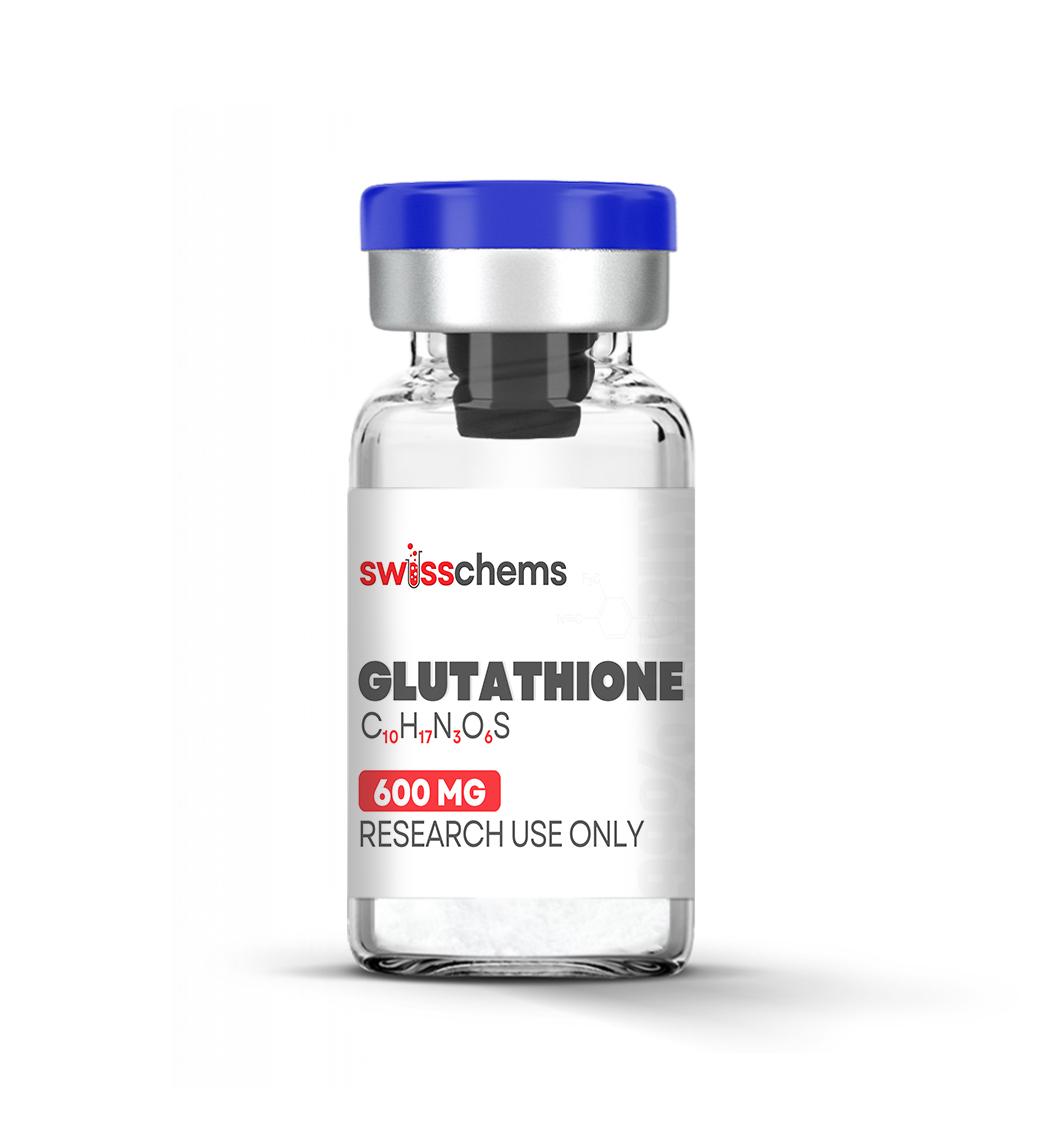
Glutathione Overview
⭐ Top Benefits: Antioxidant defense, cellular detoxification, oxidative stress modulation
💉 Form: Injectable vial — 600mg
⏱ Max Time Used: 2–8 weeks (research use)
💲 Average Cost: $29.95
❤️ Side Effects: Mild fatigue, headache, injection-site irritation
⚠️ Dangers: Limited injectable human data; sterile handling required
🔗 Best Stack: Vitamin C (research), NAD+, Alpha Lipoic Acid
♂♀ Men/Women: Suitable for both (research use)
Copy Brawn10 for 10% off
- One of the most powerful endogenous antioxidant compounds
- Supports detox and redox balance pathways
- Plays a key role in mitochondrial and immune research
- High-purity, sterile, injectable research format
- Research-only compound
- Injectable handling requires precision and sterility
- Limited long-term human injectable data
- Potential injection-site sensitivity
NAD⁺
NAD⁺ is a vital pyridine nucleotide that functions as a primary electron carrier in cellular redox reactions. It is essential for metabolic pathways including glycolysis, the TCA cycle, and oxidative phosphorylation—making it one of the most important molecules involved in energy production and mitochondrial activity.
In research settings, NAD⁺ is widely examined for its role in metabolic regulation, cellular repair, oxidative balance, enzyme activation (including sirtuins), and the maintenance of healthy redox states. Both its oxidized (NAD⁺) and reduced (NADH) forms participate in key biochemical reactions that support cellular survival and function.
SwissChems provides NAD⁺ in a freeze-dried (lyophilized) 100 mg vial, designed to maintain maximum purity, stability, and molecular integrity. Each vial is intended for research use only and should be reconstituted with bacteriostatic water (BAC) prior to use in laboratory environments.
Disclaimer: This compound is for laboratory research only. Not approved for human consumption. Educational purposes only.
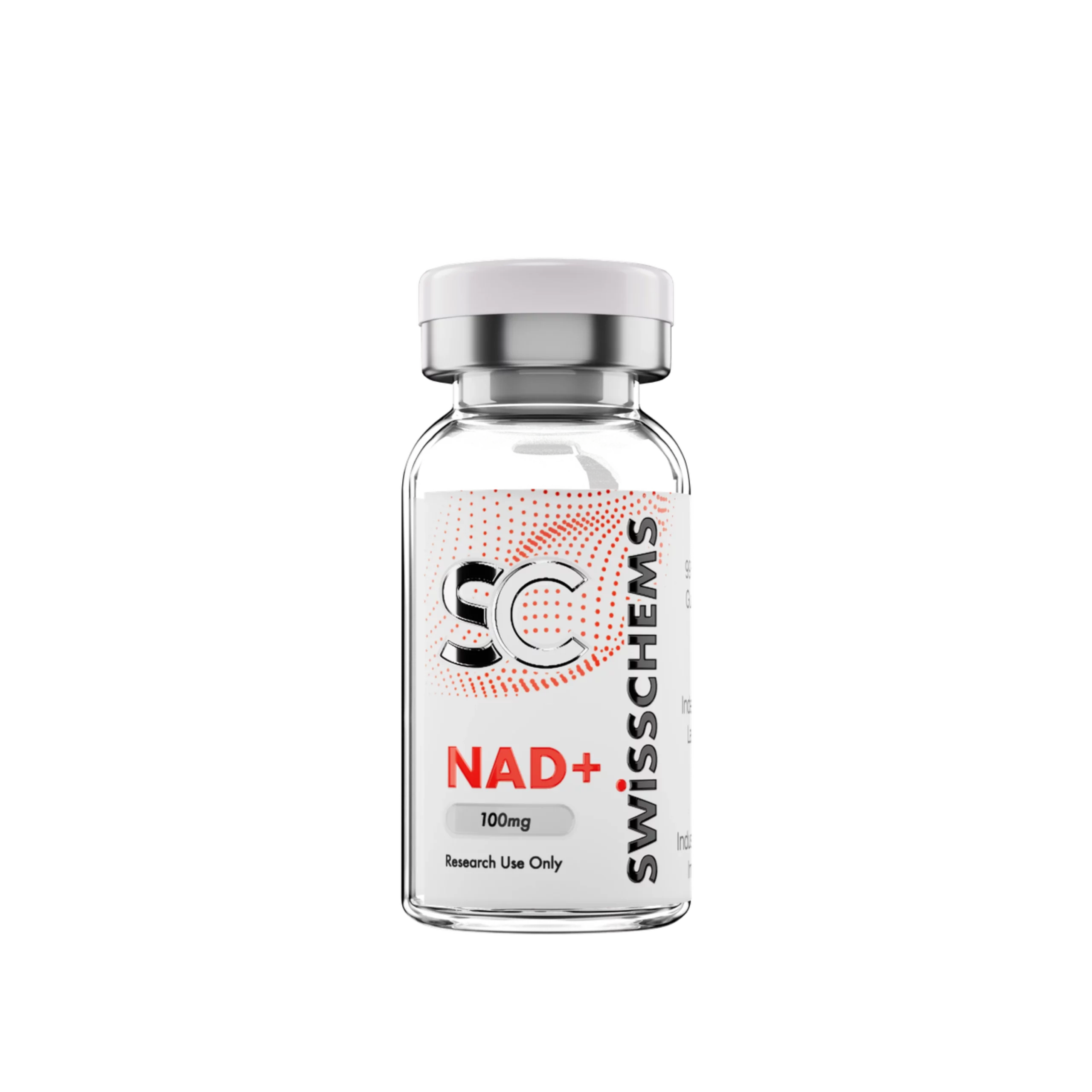
NAD⁺ Overview
🔬 Compound Type: Coenzyme / Pyridine Nucleotide
📦 Form: Lyophilized Powder (100 mg)
🧪 Primary Functions: Cellular energy, redox balance, metabolic catalysis
⚗️ Stability: Freeze-dried for extended shelf life
💲 Price: ~$47.95
📌 Reconstitution: Requires bacteriostatic water (BAC)
📅 Shelf Life: 36 months (stored properly)
⚠️ Research Classification: Non-clinical, not for consumption
Copy Brawn20 for 20% off
- Crucial molecule for metabolic and mitochondrial research
- Supports studies on cellular repair and oxidative stress
- Freeze-dried form preserves potency and stability
- High purity with transparent specification data
- Versatile use across biochemical and metabolic pathways
- Requires reconstitution before research use
- Sensitive to improper storage conditions
- Not suitable for beginners without biochemical handling experience
- For research only — not approved for therapeutic use
- Limited use outside controlled laboratory settings
GHK-Cu
GHK-Cu is a synthetic tripeptide-copper complex composed of glycyl-L-histidyl-L-lysine bound to copper ions. This naturally occurring peptide has gained significant research interest for its ability to support tissue regeneration, wound healing, and collagen synthesis in experimental models.
In laboratory studies, GHK-Cu demonstrates the ability to modulate gene expression, promote angiogenesis, and assist in the repair of damaged skin and connective tissue. Its antioxidant and anti-inflammatory properties have also made it a focus in research related to skin rejuvenation and hair growth.
GHK-Cu is typically studied in topical, injectable, or microneedling applications, and is sometimes combined with peptides like BPC-157 or TB-500 to enhance regenerative outcomes.
Disclaimer: For research purposes only. GHK-Cu is not approved for human or veterinary use by the FDA or any other regulatory body.
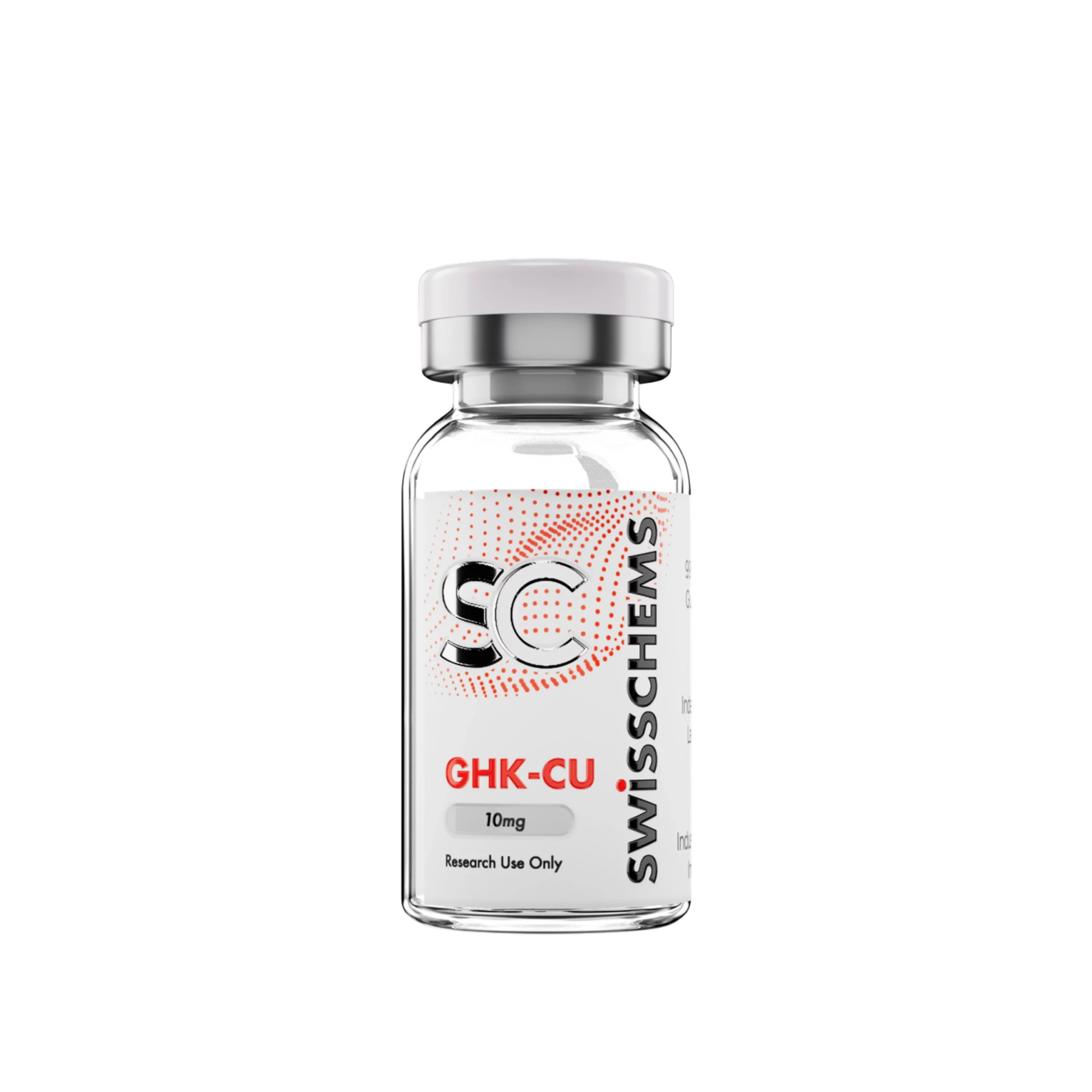
GHK-Cu Overview
⭐ Top Benefits: Supports tissue repair, boosts collagen production, promotes skin and hair regeneration
🧪 Form: 10mg vials (kit of 10 vials, total 100mg)
⌛ Common Research Duration: 4–8 weeks
💰 Price: $246.95 per 10-vial kit, 100mg each
📚 Best Stack: BPC-157, TB-500, GHRP-2
Copy Brawn10 for 10% off
- Promotes collagen synthesis and skin rejuvenation
- May accelerate wound and tissue healing
- Exhibits antioxidant and anti-inflammatory properties
- Limited human data and not approved for clinical use
- Potential for mild irritation in topical or injection studies
- Short biological half-life may require frequent dosing
KPV
KPV is a synthetic tripeptide composed of lysine, proline, and valine in a specific sequence that displays selective pathway interactions in experimental models. Research shows that KPV may influence molecular signaling tied to inflammation, immune response, epithelial protection, and barrier function. Its unique binding behavior has made it a notable peptide for studies examining gut integrity, tissue stress, and localized immune modulation.
SwissChems provides KPV in 250 mcg capsules (60-count), produced under strict quality controls and verified for purity and peptide stability. Each capsule is freeze-dried to preserve molecular integrity and ensure consistent research performance.
Disclaimer: KPV is for research use only. Not approved for human intake. Educational use in controlled laboratory environments only.
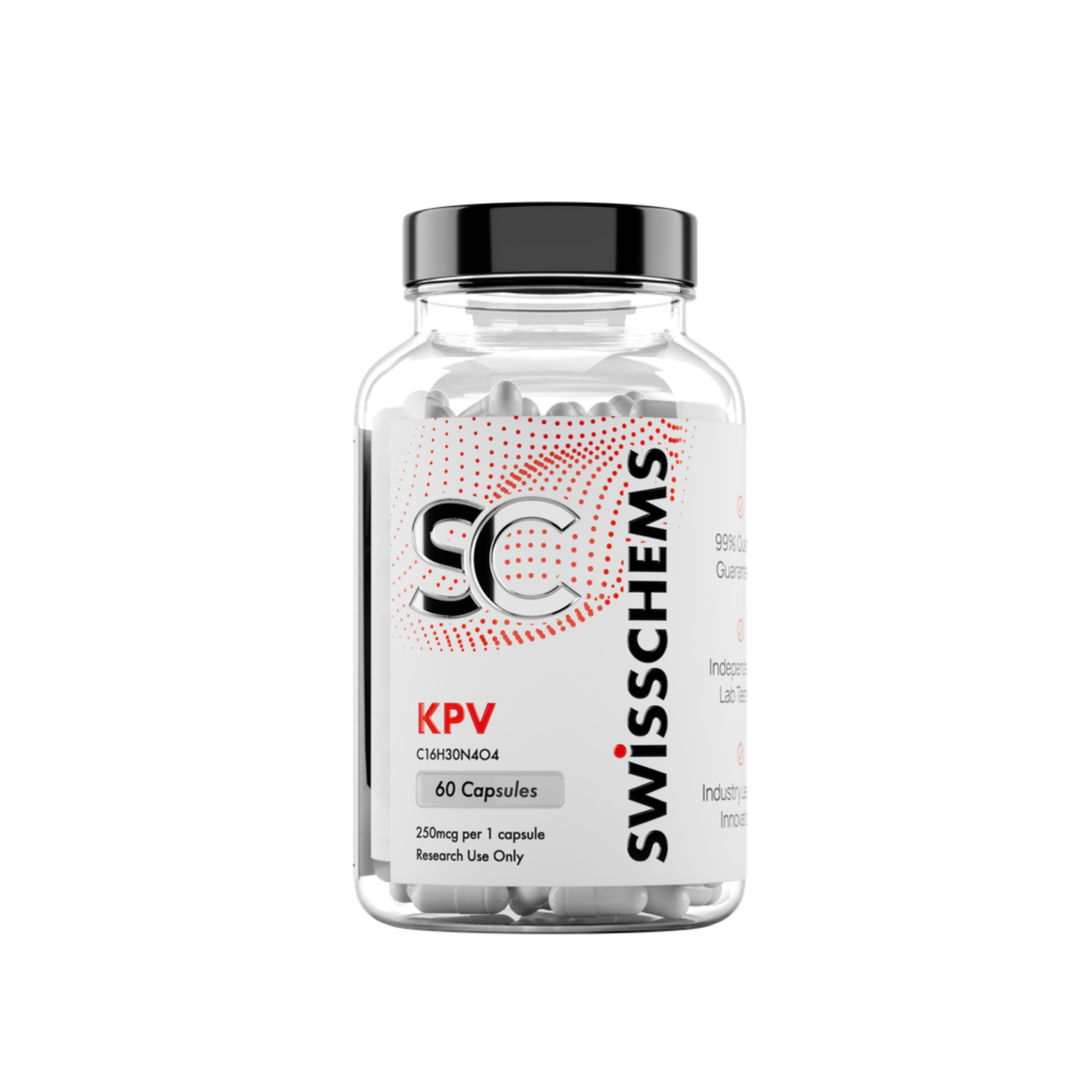
KPV Overview
🧬 Compound Type: Synthetic Tripeptide
📦 Form: 250 mcg per capsule / 60 capsules
🧪 Primary Research Focus: Inflammation pathways, immune regulation, epithelial protection
💲 Price: $139.95
⏱ Max Time Used: Up to 4–6 weeks (research protocols)
🧊 Stability: Freeze-dried to maintain potency
⚠️ Safety Notes: No long-term human data; for lab use only
♀️♂️ Use Case: Suitable for all research models
Copy Brawn20 for 20% off
- May support studies related to intestinal barrier function
- Shows potential anti-inflammatory pathway activity
- Highly specific binding properties across controlled models
- Freeze-dried for superior stability and purity
- Simple capsule format for precise micro-dosing in research
- Limited data in large-scale human trials
- Mechanisms still being mapped across multiple pathways
- Requires careful handling due to micro-dose concentration
- Not intended for therapeutic applications
- Higher cost relative to some basic research peptides
Types of Peptides for Skin
Not all peptides are equal. Peptides come in various types and each serves a unique role in skincare. Here is a detailed look at the types of peptides and how they work to benefit the skin:
| Type of Peptide | Key Benefits | Examples |
| Anti-Inflammatory Peptides | Calms redness, supports skin barrier, reduces irritation. | KPV |
| Copper Peptides | Enhances elasticity, tightens skin, soothes irritation and supports anti-aging. | GHK-Cu |
| Enzyme Inhibitor Peptides | Maintains firmness, strengthens the barrier and improves visible aging signs. | |
| Carrier Peptides | Repairs skin, improves texture and promotes firmness for a more radiant complexion. |
How to Choose the Best Peptide Products

With so many peptide products on the market, selecting the right one can be a task. Here are some tips that can help you choose the right product for you:
Check the Ingredients
Look for products that label peptides prominently. Peptides such as Glutathione and GHK Cu (copper peptides) are the most commonly used peptides in skin care products. Also, look for ingredients that go well with your skin type, that is, oily, combination, dry skin or other skin types.
Look for supporting Ingredients
Just using peptides doesn’t mean that they’ll be enough and effective. Many dermatologists suggest combining peptides for face with skin care ingredients like niacinamide, ceramides and hyaluronic acid. They work well when combined and can amplify their benefits.
Opt for trusted Brands
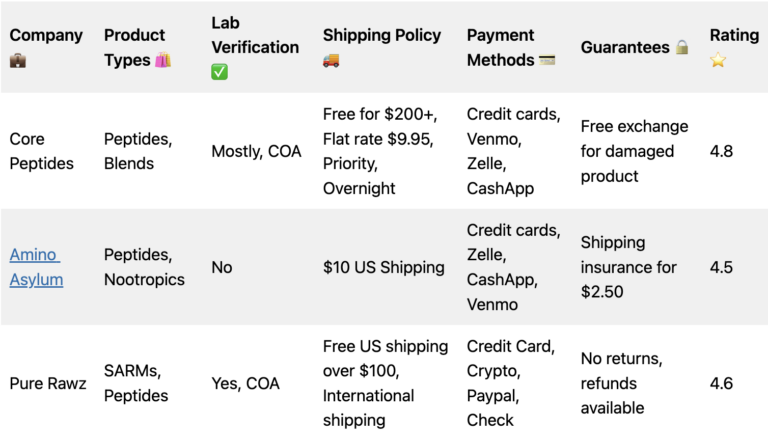
Choose reputable brands that prioritize research and use high-quality ingredients. Here are some reliable and trustworthy companies.
Consult your Dermatologist
Your dermatologist can recommend the right peptide skin product for you, based on your skin type and requirements. Always consult your healthcare provider before adding any ingredient to your skincare.
Peptides for Face: Recommended Dosage
| Peptides | Dosage 💉 | Frequency 📅 | Benefits ✅ |
| GHK-Cu | 100-200 mcg (1-2 mg) | Once daily or every other day | Boosts collagen, tightens skin, reduces wrinkles, improves healing and keeps skin healthy |
| Glutathione | 600-1200 mg | Twice a week | Brightens skin, reduces pigmentation, detoxifies, and improves radiance |
| NAD+ | 50-100 mg | Twice a week | Improves skin hydration, supports DNA repair, and reduces signs of aging |
| KPV | 250–500 mcg | Daily or every other day | Calms inflammation, supports skin barrier, reduces redness |
Pro Tip: Consistency is key. Results usually start showing after 4-6 weeks of regular use.
How to Incorporate Peptides in Your Skincare Routine
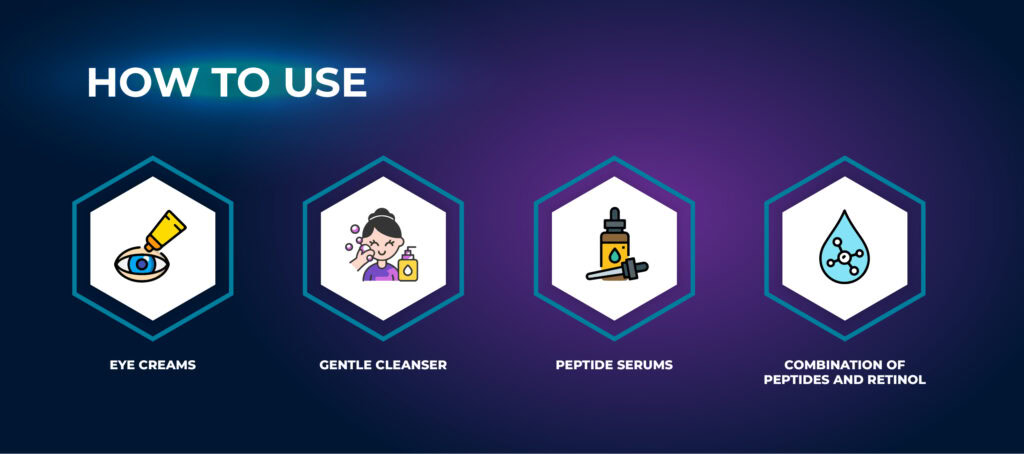
While injectable peptides are more targeted, topical forms can also improve facial skin and reduce signs of aging. Here are some other methods through which peptides can be incorporated into your skin care routine:
- Eye creams with peptides to reduce dark circles or eye bags
- A gentle cleanser containing peptides
- Topical peptide creams or peptide serums to reduce environmental damage or sun damage
- A combination of peptides and retinol
Possible Side Effects of Peptides for Face

- Injection Site Reactions: Redness, swelling, bruising, or tenderness may occur at the injection site. These reactions are usually mild and temporary. Rotating injection sites can help minimize irritation.
- Skin Irritation: Some individuals may experience itching, tightness, or slight burning. This can result from the peptide itself or improper injection technique.
- Breakouts or Congestion: Injectable peptides may influence oil production or skin cell turnover. This can cause clogged pores or breakouts, especially in acne-prone skin.
- Allergic Reactions: Peptides can trigger immune responses like hives, rashes, or swelling, although rare.
- Systemic Effects (Rare): In rare cases, systemic reactions like fatigue, dizziness, or headaches may occur.
Disclaimer: Always consult a healthcare provider before using any peptide for face. Such effects may result from higher doses or individual health sensitivities. Monitoring and adjusting dosage can reduce these risks.
Conclusion
Peptides for face are powerful yet gentle skincare ingredients that promote youthful, radiant, and glowing skin. Whether used topically or through subcutaneous injections, they work at the cellular level to enhance collagen production, improve elasticity, and repair damage. With consistent use and the right formulation, peptides can transform the way your skin looks and feels.
If you are trying to overcome problems related to skin aging, adding peptides into your skincare routine can make a significant difference. GHK-Cu, Glutathione and NAD+ are considered the best peptides for face and skin concerns. It is important to consult your healthcare provider to help you choose which peptide best matches your skin needs before adding any of them into your regimen.
FAQs
Do injectable peptides work better than creams?
Injectables deliver peptides directly to deeper skin layers, offering faster, more effective and targeted results.
Do peptides help with acne or acne scars?
Yes, certain peptides like GHK-Cu have anti-inflammatory and healing properties that can fade acne scars.
Are there side effects to using peptides for face?
Minor irritation, dryness, or breakouts may occur initially, but may subside with regular use.
How soon do you see results from peptides?
Visible results may appear within 4-6 weeks with consistent use.
Can I use peptides during pregnancy or breastfeeding?
It’s best to consult a dermatologist or healthcare provider before use during pregnancy or nursing.