
Contents10 sections
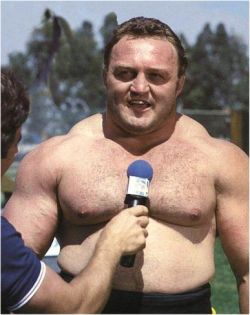
Bill Kazmaier is one of the strongest men who ever lived. He won the World’s Strongest Man contest three years in a row, from 1980 to 1982, won world powerlifting titles and set a world record in the bench press, all before modern multi-ply suits and bench shirts changed what lifters could handle.
His training was as famous as his lifts. Kazmaier trained the squat, bench press and deadlift twice a week each, alternated heavy and light days, and followed the big lifts with enough assistance work to flatten most lifters. Strength fans still argue about what he might have totalled in today’s gear.
This guide covers his training philosophy, his four-day weekly routine and the 10-week bench press plan he used to build up to a world record, laid out in tables with the notation explained. It finishes with how to adapt his approach if you are not a world champion.
Key Takeaways
- Bill Kazmaier won World’s Strongest Man three years running (1980-1982) and was an IPF world powerlifting champion.
- His four-day split trained the squat, bench press and deadlift twice a week each, with a heavy day and a light day for every lift.
- The light days cut the weight, not the workload: most exercises were 3-6 sets of 8-15 reps, and sessions were long.
- His 10-week bench plan steps down from sets of 15 to a heavy triple, the same rep cycle he used before meets.
- In the plan, 410/3/15 means 410 lb for 3 sets of 15 reps. Most lifters need far less volume and should scale the weights to their own strength.
Bill Kazmaier at a Glance
| Attribute | Detail |
|---|---|
| Name | Bill Kazmaier |
| Born | 1953, Wisconsin, USA |
| Sports | Powerlifting and strongman |
| World’s Strongest Man | Winner in 1980, 1981 and 1982 |
| Powerlifting | IPF world champion (late 1970s and early 1980s) |
| Best bench press | 661 lb (300 kg), a world record at the time |
| Training style | Heavy/light days, very high volume, main lifts twice a week |
Who Is Bill Kazmaier?
Bill Kazmaier is an American powerlifter and strongman from Wisconsin. He made his name in powerlifting in the late 1970s, winning IPF world titles. His best competition bench press is usually given as 661 lb (300 kg) in 1981, a world record at the time.
He then moved into strongman and won the World’s Strongest Man contest in 1980, 1981 and 1982, the first man to win it three times. Several men have since won it more often, including Mariusz Pudzianowski with five titles, but Kazmaier’s run set the standard for the sport’s early years.
Kazmaier returned to strongman later in the 1980s, had a spell in professional wrestling and has since become a familiar voice as a commentator on World’s Strongest Man broadcasts. Among strength fans he is still regularly named as one of the strongest men of all time.
Where This Routine Comes From
The weekly routine and the 10-week bench plan below are the versions Muscle & Brawn originally published, reproduced without changes to the exercises, sets, reps or weights. The original post did not name a source. The bench plan is written in Kazmaier’s own words (it refers to “my light day”) and has been widely reprinted as his bench press program, but its first publication is not recorded in our source.
Treat both as his reported training rather than a verified log. Routines from that era were passed around through magazines and word of mouth, and details can differ from one version to the next.
Bill Kazmaier’s Training Philosophy
Powerbuilding Before It Had a Name
Kazmaier may have been one of the first true powerbuilders. He trained heavy on the squat, bench press and deadlift, hitting each lift twice a week, and followed them with a long list of bodybuilding-style assistance exercises for the shoulders, arms, back and legs. The result was a routine that was high in intensity and very high in volume. If the style appeals to you, our guide to the best powerbuilding workouts covers more manageable versions.
Heavy and Light Days
To make twice-weekly training on the big lifts survivable, Kazmaier used a heavy/light system. In the weekly routine, Monday is the heavy bench day and Thursday the light one. The squat and deadlift alternate: Tuesday pairs a heavy squat with a light deadlift, and Saturday pairs a heavy deadlift with a light squat.
The light days lowered the weight, not the workload. Volume stayed high on every training day, and the sessions were long and grueling.
Cycling Down the Reps Before a Meet
As a meet got closer, Kazmaier cycled his reps down: first sets of 8, then sets of 5 and finally heavy triples. The 10-week bench plan follows the same idea, starting with sets of 15 and finishing with a single heavy triple.
Eating Big
Kazmaier’s appetite is part of strongman legend. One story has him drinking a whole gallon of milk in one sitting, which is roughly 2,400 calories and 125 grams of protein; others have him clearing out buffets. Treat these as tall tales rather than a meal plan, but the point stands: training volume like his only works with enough food and sleep to recover from it.
Bill Kazmaier’s Weekly Training Routine
The routine runs over four days. Each main lift gets a heavy session and a light session, and no training is listed for Wednesday, Friday or Sunday, which leaves a day of recovery between most sessions.
| Day | Main lifts | Assistance focus |
|---|---|---|
| Monday | Bench press (heavy) | Wide- and narrow-grip bench, shoulders, triceps |
| Tuesday | Squat (heavy), deadlift (light) | Traps, biceps, back, thighs, calves |
| Thursday | Bench press (light), seated dumbbell press (heavy) | Wide- and narrow-grip bench, front delts, triceps |
| Saturday | Deadlift (heavy), squat (light) | Traps, biceps, back, thighs, calves, abs |
| Wednesday, Friday, Sunday | None listed | Rest |
“Warm-up, then” means progressive warm-up sets before the working sets; the routine does not give the warm-up weights. “Max” means as many reps as you can do in good form.
Monday: Heavy Bench, Shoulders and Triceps
| Exercise | Sets x Reps |
|---|---|
| Bench press (heavy) | Warm-up, then 4 x 10 |
| Wide-grip bench press | 3 x 10 |
| Narrow-grip bench press | 3 x 10 |
| Front delt raise | 4 x 8 |
| Seated dumbbell press | 4 x 10 |
| Side delt raise | 4 x 10 |
| Lying triceps press (“lying tricep push”) | 2 warm-up sets, then 6 x 10 |
| Triceps pushdown | 4 x 10 |
Tuesday: Heavy Squat, Light Deadlift, Back and Arms
| Exercise | Sets x Reps |
|---|---|
| Squat (heavy) | Warm-up, then 4 x 10 |
| Deadlift (light) | Warm-up, then 3 x 10 |
| Shrugs | 2 x 15-40, then 1 x 10-20 |
| Seated hammer curl | 4 x 12 |
| Standing curl | 4 x 10 |
| Close-grip chin-up | 3 x max |
| Seated row | 4 x 10 |
| Leg extension | 3 x 10 |
| Leg curl | 3 x 10 |
| Calf raise | 3 x 15-25 |
Thursday: Light Bench, Heavy Shoulder Press and Triceps
| Exercise | Sets x Reps |
|---|---|
| Bench press (light) | Warm-up, then 3 x 10 |
| Wide-grip bench press | 3 x 10 |
| Narrow-grip bench press | 3 x 10 |
| Seated dumbbell press (heavy) | Warm-up, then 4 x 8 |
| Front delt raise | 4 x 10 |
| Tennis backhand cable extension | 4 x 10 |
| Prone triceps extension | 4 x 10 |

Saturday: Heavy Deadlift, Light Squat, Back and Arms
| Exercise | Sets x Reps |
|---|---|
| Deadlift (heavy) | Warm-up, then 4 x 8 |
| Squat (light) | Warm-up, then 4 x 10 |
| Shrugs (heavy) | 4 x 10-15 |
| Seated hammer curl | 4 x 8 |
| Concentration curl | 4 x 12 |
| One-arm row, 3 positions | 3 x 10 |
| Wide-grip pulldown (to the chest) | 4 x 10 |
| Leg extension | 3 x 10 |
| Leg curl | 3 x 10 |
| Calf raise | 3 x 15-25 |
| Ab work | When possible |
A few exercise names are kept as they appeared in the original. The “tennis backhand cable extension” is not a standard name; it appears to be a one-arm cable extension done with a backhand-like motion. The original also does not say which three positions the one-arm row uses.
Bill Kazmaier’s 10-Week Bench Press Routine
Kazmaier used this 10-week plan to build up to a world record bench press. It has two bench sessions a week, a light day and a heavy day. Both start with the regular bench press, followed by narrow- and wide-grip bench presses. The light day adds shoulder and triceps assistance, and on the heavy day the assistance work is the same as on the light day.
How to Read the Numbers
All weights are in pounds. Each entry is written as weight/sets/reps:
- 410/3/15 means 410 lb for 3 sets of 15 reps.
- 225/10 (two numbers) means a single set: 225 lb for 10 reps. These are the ramp-up sets before the main work.
- A light day of 225/10, 315/10, 410/3/15 is therefore one set of 10 at 225 lb, one set of 10 at 315 lb, then 3 sets of 15 at 410 lb.
The narrow- and wide-grip bench share one entry. In the weekly routine they are separate exercises of 3 sets each, so the entry most likely applies to each grip.
Regular Bench Press
| Week | Light day | Heavy day |
|---|---|---|
| Week 1 | 225/10, 315/10, 410/3/15 | 225/10, 315/10, 405/10, 435/3/15 |
| Week 2 | 225/10, 315/10, 420/3/15 | 225/10, 315/10, 405/10, 455/3/10 |
| Week 3 | 225/10, 315/10, 430/3/12 | 225/10, 315/10, 405/10, 480/3/8 |
| Week 4 | 225/10, 315/10, 440/3/12 | 225/10, 315/10, 405/10, 500/3/8 |
| Week 5 | 225/10, 315/10, 405/10, 450/3/10 | 225/10, 315/10, 405/10, 495/10, 525/5/5 |
| Week 6 | 225/10, 315/10, 405/10, 460/3/10 | 225/10, 315/10, 405/10, 495/8, 545/4/5 |
| Week 7 | 225/10, 315/10, 405/10, 470/3/8 | 225/10, 315/10, 405/10, 495/8, 540/5, 570/3/5 |
| Week 8 | 225/10, 315/10, 405/10, 480/3/8 | 225/10, 315/10, 405/10, 495/8, 570/5, 590/3/3 |
| Week 9 | 225/10, 315/10, 405/10, 490/3/6 | 225/10, 315/10, 405/10, 495/8, 570/5, 610/2/3 |
| Week 10 | 225/10, 315/10, 405/10, 500/3/6 | 225/10, 315/10, 405/10, 495/8, 550/5, 590/5, 635/3 |
The progression is steady. On the light day the top weight rises by 10 lb a week while the reps fall from 15 to 6, and a set of 10 at 405 lb joins the ramp-up from week 5. The heavy day climbs from 3 sets of 15 at 435 lb in week 1 to a single triple at 635 lb in week 10, with more ramp-up sets as the weights get heavier.
Narrow- and Wide-Grip Bench Press
| Week | Light day | Heavy day |
|---|---|---|
| Week 1 | 350/3/10 | 375/3/10 |
| Week 2 | 360/3/10 | 385/3/10 |
| Week 3 | 400/3/10 | 400/3/10 |
| Week 4 | 380/3/10 | 410/3/10 |
| Week 5 | 390/3/10 | 420/3/10 |
| Week 6 | 400/3/10 | 430/3/10 |
| Week 7 | 410/3/10 | 440/3/10 |
| Week 8 | 420/3/10 | 450/3/10 |
| Week 9 | 430/3/8 | 465/3/10 |
| Week 10 | 440/3/8 | 475/3/10 |
Narrow-grip pressing was a big part of Kazmaier’s bench work. If you add it to your own training, check your technique against the close-grip bench press mistake many lifters make.
Shoulder and Triceps Assistance
This is the light-day assistance work; the heavy day repeats it. Where the original says “same as week 1” (or week 3, 5, 7 or 9), the weights are filled in from that week.
| Week | Dumbbell press | Front and lateral raises | Modified triceps press | Decline triceps press |
|---|---|---|---|---|
| Week 1 | 100/3/10 | 75/3/10 each | 300/4/15 | 335/3/15 |
| Week 2 | 100/3/10 | 75/3/10 each | 310/4/15 | 345/3/15 |
| Week 3 | 100/3/10 | 75/3/10 each | 320/4/15 | 355/4/10 |
| Week 4 | 100/3/10 | 75/3/10 each | 330/4/15 | 365/4/10 |
| Week 5 | 110/3/10 | 85/3/10 each | 340/3/15 | 375/4/10 |
| Week 6 | 110/3/10 | 85/3/10 each | 350/4/15 | 350/4/10 |
| Week 7 | 120/3/10 | 85/3/10 each | 370/5/10 | 395/4/10 |
| Week 8 | 120/3/10 | 85/3/10 each | 380/5/10 | 405/4/10 |
| Week 9 | 130/3/10 | 95/3/10 each | 390/5/10 | 415/4/8 |
| Week 10 | 130/3/10 | 95/3/10 each | 400/5/10 | 425/4/8 |
A few numbers break the pattern as originally printed. The light-day narrow- and wide-grip bench jumps to 400 lb in week 3 before dropping to 380 lb in week 4, and the decline triceps press drops from 375 lb in week 5 to 350 lb in week 6. Week 3 also lists “decline presses”, which we read as the decline triceps press. These may be typos in the original, so they are shown as published.
How to Adapt Kazmaier’s Training for Normal Lifters
Kazmaier’s routine was built for a world champion with years of training behind him and exceptional recovery. Copied as written, it is too much for almost everyone else: Monday alone has 32 working sets across eight exercises, and Tuesday has 34 across ten.
The principles behind it still work at any level.
What to Keep
- Train the main lifts twice a week: Research on training frequency suggests that, when weekly volume is the same, training a lift two or more times a week works at least as well as once, and splitting the work makes each session easier to recover from.
- Use heavy and light days: The light day is practice and volume at a moderate weight; the heavy day is where you push the load.
- Cycle the reps down toward a goal: Start with higher reps and lighter weights, then move to sets of 5 and triples as the weeks pass, as Kazmaier did before meets.
- Keep the close-grip and triceps work: Narrow-grip pressing and heavy triceps exercises build the lockout strength the bench press depends on.
What to Change
- Cut the volume: Start with 2-3 working sets on the main lift and 2-3 assistance exercises per session, and add more only while you are recovering well between sessions.
- Scale the weights to you: Never copy his numbers. Use the percentages in the table below instead.
- Stay short of failure on light days: Finish most sets with a rep or two left in reserve so the heavy day is fresh.
- Train safely: Use a spotter or safety arms on heavy bench and squat days.
If you are not sure where you stand, our guide to beginner, intermediate and advanced lifters will help. Beginners usually progress faster on a simpler plan with fewer exercises, such as our 5×3 bench press program.
Scaling the 10-Week Bench Plan
The simplest way to use the bench plan is to express Kazmaier’s top sets as a share of his week-10 triple (635 lb) and apply the same shares to your own target. Pick a realistic goal triple for week 10, a little above what you can triple now, then work out each week from the table. The last column shows the top sets for a lifter aiming at a 250 lb triple, rounded to the nearest 5 lb.
| Week | Light top set | % of week-10 triple | Heavy top set | % of week-10 triple | Example (250 lb goal): light / heavy |
|---|---|---|---|---|---|
| Week 1 | 410/3/15 | 65% | 435/3/15 | 69% | 160 lb / 170 lb |
| Week 2 | 420/3/15 | 66% | 455/3/10 | 72% | 165 lb / 180 lb |
| Week 3 | 430/3/12 | 68% | 480/3/8 | 76% | 170 lb / 190 lb |
| Week 4 | 440/3/12 | 69% | 500/3/8 | 79% | 175 lb / 195 lb |
| Week 5 | 450/3/10 | 71% | 525/5/5 | 83% | 175 lb / 205 lb |
| Week 6 | 460/3/10 | 72% | 545/4/5 | 86% | 180 lb / 215 lb |
| Week 7 | 470/3/8 | 74% | 570/3/5 | 90% | 185 lb / 225 lb |
| Week 8 | 480/3/8 | 76% | 590/3/3 | 93% | 190 lb / 230 lb |
| Week 9 | 490/3/6 | 77% | 610/2/3 | 96% | 195 lb / 240 lb |
| Week 10 | 500/3/6 | 79% | 635/3 | 100% | 195 lb / 250 lb |
Keep the sets and reps from his plan, do the ramp-up sets at lighter weights, and if the high-rep weeks at the start leave you sore for days, cut those sets from 3 to 2. If you miss reps on the heavy day two weeks running, repeat the week rather than forcing the next jump.
Recovery and Food
Kazmaier’s volume was only possible because he ate and rested like a full-time athlete. Eat enough total calories to support the work, get enough protein (a 2018 meta-analysis by Morton and colleagues found that gains in lean mass levelled off at around 1.6 g of protein per kg of body weight per day) and sleep well. Of the supplements, creatine monohydrate has the strongest evidence for adding strength alongside training.

Pros
- Catalog is specifically organized around muscle building, fat loss, testosterone support, and workout performance.
- Range includes creatine, protein, EAAs, beta-alanine, and L-citrulline alongside more specialized formulas.
- Orders of $99+ qualify for free US shipping.
Cons
- Features several strong claims around muscle growth, testosterone, fat loss, and metabolic effects that should be distinguished from independently demonstrated clinical outcomes
- Heavily oriented toward bodybuilding and performance rather than broader nutritional supplementation.
The Bottom Line
Bill Kazmaier trained the three powerlifts twice a week with heavy and light days and huge amounts of assistance work, and his 10-week bench plan steps down from sets of 15 to a heavy triple.
- His weekly split paired a heavy and a light day for each of the squat, bench press and deadlift, and kept the volume high on both.
- In the bench plan, 410/3/15 means 410 lb for 3 sets of 15 reps; two numbers, such as 225/10, mean a single set.
- For normal lifters the structure works but the volume does not: scale the plan to your own goal triple, start with far fewer sets and add work only while you are recovering.
Frequently Asked Questions
Disclaimer
Please read carefully
The information on this site is for educational and informational purposes only, and is not medical advice. Always consult a qualified healthcare professional before using any supplement or medication, or making changes to your health, fitness, or nutrition routine.
Not medical advice
Content here is not a substitute for professional medical advice.
Consult your doctor
Talk to your doctor before starting any supplement or new routine.
Use at your own risk
We are not responsible for adverse effects from acting on this.
Do your research
Make informed decisions about your own health.
No guarantees
Individual results vary. No claims about outcomes.
Important — Never disregard professional medical advice or delay seeking it because of something you read here. If you think you may have a medical emergency, call your doctor or your local emergency number right away.