Contents10 sections
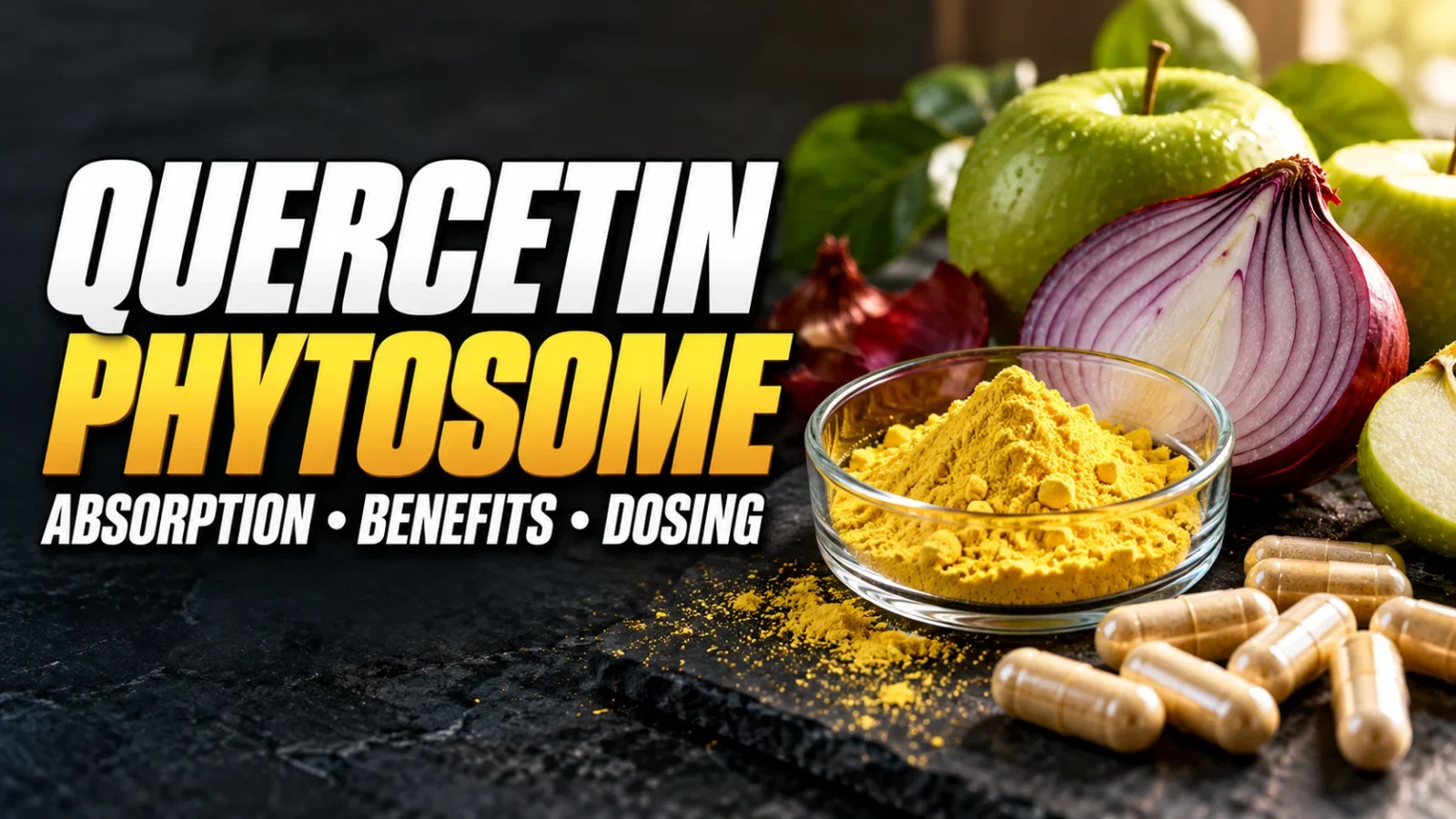
You may have seen quercetin on supplement labels that promise help with immunity, inflammation or recovery. It is a plant flavonoid found in onions, apples, capers and berries, and it is one of the most studied plant compounds in nutrition research.
The catch is absorption. Plain quercetin dissolves poorly and is broken down quickly in the gut and liver, so only a small and variable share reaches the bloodstream. That limits what a standard capsule can do.
Quercetin phytosome is quercetin bound to lecithin (phospholipids) to get around that problem. In a small study in healthy volunteers it produced up to 20 times higher blood levels than plain quercetin. This guide explains how it works, what the human studies do and do not show, the doses used in research, and the side effects to know about.
Key Takeaways
- Quercetin phytosome binds quercetin to sunflower lecithin. In a small study in healthy volunteers it gave up to 20 times higher blood levels than plain quercetin.
- Better absorption has not yet been shown to mean better results: most benefit studies used plain quercetin, and head-to-head outcome trials are missing.
- The firmest human data cover small blood pressure reductions with plain quercetin and a few small COVID-19 studies of the phytosome form.
- Claims about allergies, senescent cells and longevity rest mostly on lab and animal data, or on studies that paired quercetin with the drug dasatinib.
- Quercetin is usually well tolerated, but it can interact with blood thinners, some antibiotics and other prescription drugs.
How Quercetin Works in the Body
Quercetin is a plant pigment from the flavonoid family. It is best known for antioxidant and anti-inflammatory activity. In lab and animal studies it has been shown to:
- Neutralize free radicals and reduce oxidative damage
- Dampen inflammatory signalling
- Influence how immune cells respond
- Change the activity of genes tied to inflammation and cell aging
Quercetin also inhibits the COX and LOX enzymes in lab studies. These enzymes make many of the signalling molecules that drive inflammation. How much of this happens in people at supplement doses is less clear, and absorption is a big reason why.
Why Plain Quercetin Is Poorly Absorbed
Plain quercetin has low and variable oral bioavailability. Estimates differ between studies, and some are as low as a few percent. The main reasons:
- It dissolves poorly in water, so little of it is taken up through the gut wall
- Much of what is absorbed is quickly broken down in the gut and liver
- Only a small amount of free quercetin reaches the bloodstream and tissues
This doesn’t mean plain quercetin does nothing. Several of the trials discussed below used plain quercetin and still found small effects. But it does mean a large part of each dose is wasted.
How the Phytosome Form Improves Absorption
A phytosome is a plant compound bound to phospholipids, the same fatty molecules that make up cell membranes. For quercetin phytosome:
- Quercetin is bound to food-grade lecithin from sunflower
- The phospholipid complex makes quercetin easier to disperse in the gut
- The lipid part is thought to help quercetin pass through the fatty membranes of the gut lining
In the main pharmacokinetic study, healthy volunteers who took quercetin phytosome reached up to 20 times higher blood levels of quercetin than with plain quercetin. That study was small and was run by researchers from the company that makes the ingredient, so independent confirmation would help.
| Feature | Plain Quercetin | Quercetin Phytosome |
|---|---|---|
| What it is | Quercetin powder or capsules | Quercetin bound to sunflower lecithin |
| Absorption | Low and variable | Up to 20 times higher blood levels in a small study |
| Human evidence | Many small trials (blood pressure, exercise, inflammation markers) | An absorption study and a few small clinical studies |
| Label amount | Usually the amount of quercetin | Usually the weight of the whole complex, of which quercetin is only part |
What the Human Studies Show

Beyond the absorption study, most clinical research on the phytosome form comes from COVID-19. A study by Di Pierro, Derosa, Maffioli and colleagues in outpatients with early-stage COVID-19 reported fewer and shorter hospital stays when quercetin phytosome was added to standard care. A later randomized clinical trial by the same group reported faster recovery in the quercetin group.
These results are encouraging but limited. The studies were small, and larger placebo-controlled trials are needed before firm conclusions can be drawn.
Where the Trial Data Come From
Phytosome is a trademark of Indena, the Italian company that developed the technology, and the clinical studies above used Indena’s branded quercetin phytosome. It is made from a Sophora japonica (Japanese pagoda tree) extract bound to sunflower lecithin. Retail products such as Thorne’s Quercetin Phytosome are built on this type of ingredient.
Keep this in mind when you shop. Trial results describe the studied ingredient, not every product with “quercetin phytosome” on the label. Fillers such as microcrystalline cellulose, silicon dioxide or stearic acid are standard in capsules and don’t change the active ingredient.
Potential Benefits of Quercetin Phytosome

Most of the benefit research below used plain quercetin. The phytosome form should deliver more quercetin per dose, but whether that translates into stronger effects has not been tested head to head.
Inflammation
In cell and animal studies, quercetin lowers the production of inflammatory cytokines such as TNF-α, IL-6 and IL-1β. That is the basis for its use around joint and tissue recovery.
Pooled analyses of quercetin supplementation trials suggest it may lower some inflammatory markers, such as C-reactive protein (CRP), in some groups. The effects are modest and not consistent across studies.
Antioxidant Support
Quercetin neutralizes several reactive oxygen species directly. In lab and animal studies it also supports the body’s own antioxidant systems, including glutathione and the enzymes superoxide dismutase and catalase.
Animal research also suggests it helps protect mitochondrial function under stress. Human data on these antioxidant effects are limited.
Immune Function
Rather than simply “boosting” immunity, quercetin appears to modulate it. Lab studies show effects on the balance between Th1 and Th2 immune responses, on interferon signalling, and on histamine release.
In people, a small study in trained cyclists linked 1,000 mg a day of quercetin to fewer upper respiratory illnesses after a block of very hard training. Early reports of quercetin taken preventively by healthcare workers during the pandemic were small and preliminary. Overall, COVID-19 research on quercetin is promising but not conclusive.
Blood Pressure and Heart Health
Heart health is where the human evidence for quercetin is most consistent:
- Meta-analyses of randomized trials found small reductions in systolic and diastolic blood pressure, mainly at 500 mg a day or more of plain quercetin
- Some studies suggest it supports endothelial function by raising nitric oxide availability
- Lab studies show it limits LDL oxidation, an early step in plaque formation
The blood pressure effect is a few points at most. It is not a replacement for blood pressure medication, and the phytosome form has not been tested for this specifically.
Allergies and Histamine
In lab studies, quercetin stabilizes mast cells and reduces histamine release, which is why it is popular for seasonal allergies. Human evidence for allergy relief is limited to small studies, so it should not be seen as a substitute for proven antihistamines.
Antiviral activity against viruses such as influenza has been shown mainly in lab and animal research. An early dose-finding study in people with hepatitis C found quercetin well tolerated, but it was not designed to prove a treatment effect.
Exercise and Recovery
Because of its antioxidant effects, quercetin has been tested as an endurance aid. Meta-analyses found at most a small improvement in endurance performance and VO2max with plain quercetin. For lifters, the more relevant benefit may be the illness data from athletes in hard training blocks described above.
Senescent Cells and Healthy Aging
Quercetin is often called a senolytic: a compound that helps clear senescent cells, the aged, dysfunctional cells linked to chronic inflammation. That reputation comes mostly from studies that combined quercetin with dasatinib, a prescription cancer drug. Those studies include small pilot trials in people.
Quercetin on its own is a weaker senolytic. Its effects on aging pathways such as SIRT1 come mainly from preclinical studies. There is no human evidence yet that quercetin phytosome slows aging.
Where to Buy Quercetin Phytosome
Quercetin phytosome is sold as capsules by supplement brands and as a bulk powder. Our partner SwissChems offers it as a 10-gram powder, which lets you measure your own doses with a milligram scale.


Pros
- Exceptional purity & testing (≥98%)
- Pharmaceutical-style packaging for stability
- Broad catalog across peptides & nootropics
- Strong reputation & consistency across years
Cons
- Some items frequently out of stock due to high demand
- Limited long-term data for some compounds
To be clear, the SwissChems powder is a separate product. It was not the material used in the clinical studies above, so those results describe the studied ingredient, not this specific product. Whichever source you choose, check the certificate of analysis and how much actual quercetin each serving provides.
Stacking Quercetin Phytosome
Quercetin is often combined with other supplements. Most of these pairings are based on how the compounds work rather than on trials of the combination, so treat them as reasonable options, not proven stacks.
With Zinc: In cell studies, quercetin acted as a zinc ionophore, helping zinc cross cell membranes. That is why the two are often paired for immune support. Whether this matters in people has not been shown.

With Vitamin C: Quercetin and vitamin C are a classic antioxidant pair. In lab studies, vitamin C helps protect quercetin from oxidation. The combination has been proposed for immune support, but strong trial evidence for the pair is lacking.

With Bromelain: Bromelain, an enzyme from pineapple, is often combined with quercetin for its own anti-inflammatory effects. It may add value for recovery from injury or allergy symptoms, but the combination is not well studied.

With Fisetin or Resveratrol: Fisetin is a related flavonoid and one of the stronger senolytic candidates in animal studies. Resveratrol is studied mainly for its effects on SIRT1 and related aging pathways rather than as a senolytic. Both appear in longevity stacks with quercetin, but human evidence for these combinations is still very early.

Dosage: What Studies Have Used
There is no official dose for quercetin phytosome. These are the amounts used in research and on product labels, not a personal recommendation:
- Doses used in studies: trials of plain quercetin have mostly used 500 to 1,000 mg a day. The blood pressure effect showed up mainly at 500 mg a day or more.
- Phytosome labels: products usually list the weight of the whole phytosome complex, and only part of that weight is quercetin. Check how much actual quercetin a serving provides and follow the label.
- Timing: commonly taken with a meal. Higher daily amounts are often split into two doses.
- Duration: most trials ran from a few weeks to about 12 weeks. Long-term safety data are limited.
Because the phytosome form is absorbed much better, a given label dose may deliver more quercetin to the blood than the same amount of plain quercetin. That is a reason not to exceed the label, not a reason to take more.
Side Effects and Risks
Studies using up to about 1,000 mg of quercetin a day for up to 12 weeks have reported few side effects in healthy adults. Things to keep in mind:
- Higher doses may cause stomach upset, nausea or headache.
- Quercetin can interact with some medications, including blood thinners and antiplatelet drugs, some antibiotics (quinolones), cyclosporine and drugs broken down by liver enzymes. Some chemotherapy drugs may be affected too.
- There is not enough safety data for pregnancy or breastfeeding, so it is best avoided unless a doctor approves it.
- People with kidney disease should talk to a doctor first, because very high doses have raised kidney concerns.
Before You Start
- Talk to a healthcare provider before starting, especially if you take prescription medication.
- Don’t take more than the label dose.
- Choose a product that states its quercetin content and has a certificate of analysis.
- Responses vary with your health, medications and lifestyle.
The Bottom Line
Quercetin phytosome is a real answer to plain quercetin’s poor absorption, but better absorption is not the same as proven benefits.
- The phytosome form raised blood quercetin levels up to 20-fold in healthy volunteers. Trials comparing its effects directly with plain quercetin are still missing.
- Human evidence is best for small blood pressure effects and a few small COVID-19 studies. Allergy, senolytic and longevity claims are still mostly preclinical.
- Pick a product that states its real quercetin content, remember that trial results apply to the studied ingredient, and check with a doctor if you take prescription medication.
Frequently Asked Questions
Disclaimer
Please read carefully
The information on this site is for educational and informational purposes only, and is not medical advice. Always consult a qualified healthcare professional before using any supplement or medication, or making changes to your health, fitness, or nutrition routine.
Not medical advice
Content here is not a substitute for professional medical advice.
Consult your doctor
Talk to your doctor before starting any supplement or new routine.
Use at your own risk
We are not responsible for adverse effects from acting on this.
Do your research
Make informed decisions about your own health.
No guarantees
Individual results vary. No claims about outcomes.
Important — Never disregard professional medical advice or delay seeking it because of something you read here. If you think you may have a medical emergency, call your doctor or your local emergency number right away.