
Contents10 sections
You train hard, yet the tank runs dry mid-session, race week brings heavy legs, and recovery feels slow. On a plant-based diet, the cause is rarely the plants themselves. It is usually structure: too few calories, too little protein per meal, or the wrong carbs at the wrong time.
A well-planned plant-based diet can support strength, endurance and recovery. The basics are simple: time carbs to refill glycogen, spread protein across the day to support muscle protein synthesis, include fats that cover your omega-3 needs, and close the few nutrient gaps that plant eaters face.
This guide gives you daily targets in grams per kilogram of body weight, a sample hard-training day with macros, a rest-day version, and the foods and supplements that make the plan easy to repeat week after week.
Key Takeaways
- Most athletes in hard training do well on 1.6-2.0 g of protein per kg of body weight on a plant-based diet, spread over 4-5 meals of 0.3-0.4 g/kg.
- Plant proteins carry less leucine than whey, so aim for roughly 30-40 g of mixed plant protein per main meal, or use soy or pea protein isolates.
- Match carbs to the day: about 3-5 g/kg on easy days, 5-7 g/kg on moderate training days and 6-10 g/kg on heavy endurance days, with most of them around training.
- Cover vitamin B12 every day, and watch vitamin D, iron, iodine, calcium, zinc and EPA/DHA omega-3s with fortified foods, supplements or lab checks.
- The sample day below gives an 80 kg athlete about 3,400 kcal and 160 g of protein; scale the portions to your own weight and training.
How a Plant-Based Meal Plan Fuels Hard Training
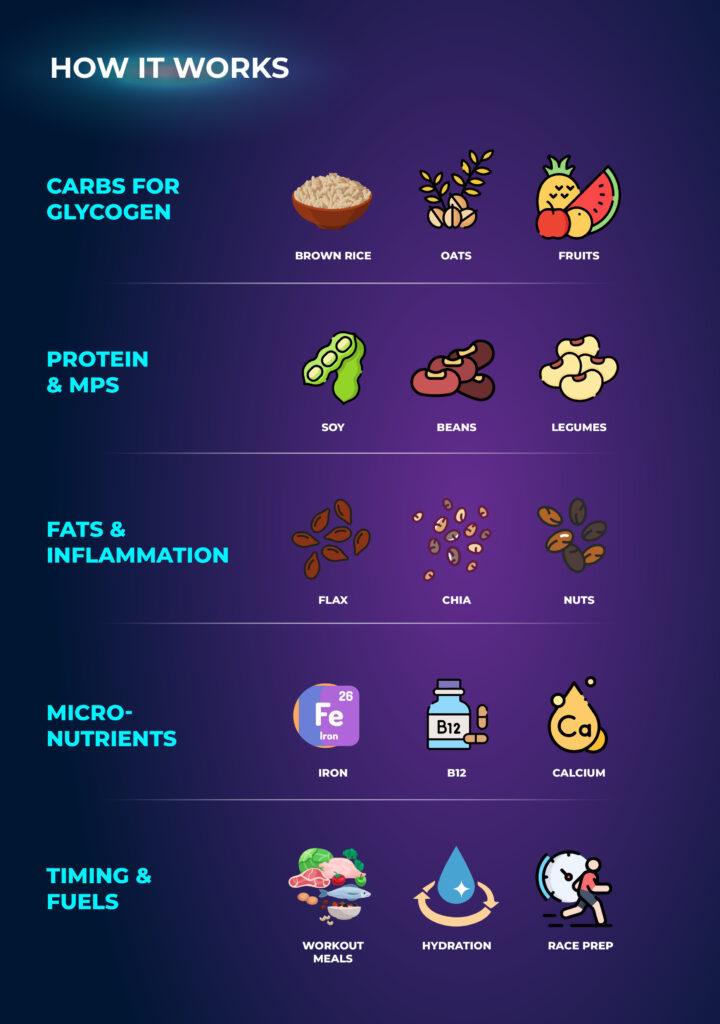
Training drains glycogen, damages muscle fibers and raises your need for fluids and certain nutrients. A good plan answers each of those demands at the right time. Here is how each piece works on plants.
1) Carbohydrates and Glycogen
- Hard sessions drain muscle glycogen. Carbs eaten before and after training refill it and protect power and pace.
- Whole grains and starches such as oats, brown rice, potatoes and quinoa make good base meals away from training.
- Close to key sessions, switch to lower-fiber carbs: white rice, ripe bananas, bagels, simple breads and sports drinks are easier on the gut.
- The most common mistake is simply eating too little. High-fiber plant foods are filling, so athletes can under-eat without noticing.
2) Protein and Muscle Protein Synthesis
The job of protein is the same on plants, with two adjustments: plant proteins are a little less digestible, and they contain less leucine, the amino acid that most strongly switches on muscle protein synthesis (MPS).
- Daily target: sports nutrition guidelines put athletes at 1.2-2.0 g of protein per kg of body weight. On a plant-based diet in hard training, aim for the upper half, about 1.6-2.0 g/kg. For an 80 kg athlete, that is 130-160 g a day.
- Per meal: protein distribution matters. Spread protein over 4-5 meals of about 0.3-0.4 g/kg each (25-35 g for an 80 kg athlete) instead of one large dinner.
- Leucine: a leucine-rich source at each meal helps trigger MPS. A commonly used target is about 2-3 g of leucine per meal. Soy, pea and rice proteins contain around 8% leucine, against more than 10% in whey, so plant eaters usually need 30-40 g of protein per main meal to get there.
- Best sources: hit your daily protein with soy foods (tofu, tempeh, edamame, soy milk), seitan, lentils, beans, chickpeas, and soy or pea-rice protein powders. Mixing legumes and grains over the day covers all the essential amino acids.
- Seeds and nuts (hemp, chia, flax, peanut butter, almond butter) add some protein and healthy fats, but they are not a main protein source.
3) Fats and Omega-3s
- Aim for roughly 20-35% of calories from fat. Going much lower makes it hard to eat enough and to absorb the fat-soluble vitamins.
- Flax, chia, hemp and walnuts supply ALA, a plant omega-3. The body converts only a small share of ALA into EPA and DHA, the long-chain omega-3 fats found in fish oil. Algae oil supplies EPA and DHA directly, without animal products.
- Olive oil, nuts, seeds, avocado and nut butters are the easiest way to add calories when appetite is low.
4) Dietary Nitrates and Blood Flow
- Beetroot, spinach, arugula and other leafy greens supply nitrate, which the body converts into nitric oxide.
- In studies, nitrate (often given as concentrated beetroot juice) lowered the oxygen cost of submaximal exercise. The effect tends to be smaller in highly trained endurance athletes than in recreational ones.
- Studies usually give about 6-8 mmol of nitrate (roughly 400-500 mg) 2-3 hours before exercise. Concentrated beet shots are the easiest way to get there; check the label for the nitrate content.
5) Micronutrients That Need Attention
- Vitamin B12: plants are not a reliable source. Every vegan needs fortified foods or a supplement.
- Iron: supports oxygen delivery. Plant (non-heme) iron is absorbed less well than iron from meat; US intake guidelines suggest vegetarians need about 1.8 times as much. Pair iron-rich foods (lentils, tofu, beans, fortified cereals, pumpkin seeds) with vitamin C, keep tea and coffee away from those meals, and check ferritin if you train hard.
- Vitamin D: supports bone, muscle and immune health. Fortified foods or a supplement are the reliable sources when sun exposure is low.
- Calcium, iodine and zinc: use calcium-set tofu, fortified plant milks, iodized salt (or a small iodine supplement), and legumes, nuts and seeds for zinc.
- For a closer look at how these nutrients affect training, see our guide to energy vitamins.
6) Hydration and Electrolytes
- Fluids and sodium maintain blood volume and nerve signals in heat and heavy sweat. Hydration needs vary a lot between people, so weigh yourself before and after long sessions to learn your sweat losses.
- For long or hot sessions, a drink with carbs and sodium does two jobs at once.
- Swap heavy, high-fiber meals near training for easier options like smoothies, rice bowls or oats.
7) Gut Training and Fiber Management
- The gut adapts to regular fueling during exercise. Practice your race fuels in training, never for the first time on race day.
- Cut fiber and fat in the 2-4 hours before key sessions to reduce stomach and gut symptoms.
- On competition days, lean on low-residue choices like white rice, tofu, white bread and ripe bananas. Save big bean and salad meals for after training or for rest days.
8) Antioxidants and Adaptation
- Berries, cocoa, herbs and leafy greens supply polyphenols that may help with soreness and recovery.
- High-dose antioxidant supplements are a different story: in some studies, large doses of vitamins C and E blunted training adaptations. Get your antioxidants from food first.
9) Simple Timing Framework
- 1-3 hours before training: easy carbs plus a little protein, low in fiber and fat. Try toast with peanut butter and banana, a bagel with jam, or a smoothie.
- During sessions longer than about 75-90 minutes: 30-60 g of carbs per hour with electrolytes. For events over 2.5 hours, a trained gut can handle up to about 90 g per hour from glucose-fructose mixes.
- Within 1-2 hours after: 0.3-0.4 g/kg of protein plus carbs to start repair and refill glycogen. Soy milk smoothies, rice bowls with tofu, or quinoa with beans all work.
- Before bed: a protein snack such as soy yogurt with nuts helps you reach your daily target.
How Much to Eat: Daily Targets for Plant-Based Athletes
Use these targets as a starting point, then adjust every few weeks based on body weight, training quality and recovery. They follow the major sports nutrition position stands, which apply to plant-based and omnivore athletes alike, with protein nudged toward the top of the range for plant eaters.
| Nutrient | Daily target | For an 80 kg athlete | Notes |
|---|---|---|---|
| Protein | 1.6-2.0 g/kg | 130-160 g | 4-5 meals of 0.3-0.4 g/kg; about 2-3 g leucine per meal |
| Carbs: light or skill training | 3-5 g/kg | 240-400 g | Rest days and easy sessions |
| Carbs: moderate training | 5-7 g/kg | 400-560 g | Around 1 hour of training a day |
| Carbs: heavy endurance training | 6-10 g/kg | 480-800 g | 1-3 hours a day; most carbs around sessions |
| Fat | 20-35% of calories | About 65-115 g at 3,000 kcal | ALA sources daily; consider algae EPA/DHA |
Calories follow from these numbers. If your weight drifts down while you are trying to hold it, or training quality slips, add carbs first, in steps of 50-100 g a day, and reassess after one to two weeks.
Sample Plant-Based Meal Plan: A Hard Training Day
Here is a full day for an 80 kg (176 lb) athlete with a 90-minute afternoon session. It lands at roughly 3,400 kcal, 160 g protein (2.0 g/kg), 495 g carbs (6.2 g/kg) and 90 g fat (about 24% of calories). Values are approximate and brands vary, so check your labels; firm tofu alone ranges from about 12 to 17 g of protein per 100 g.
| Time | Meal | kcal | Protein | Carbs | Fat |
|---|---|---|---|---|---|
| 07:00 | Breakfast: 100 g oats cooked in 300 ml soy milk, 1 banana, 20 g hemp seeds | 700 | 30 g | 95 g | 23 g |
| 12:00 | Lunch: 200 g firm tofu, 250 g cooked white rice, 150 g stir-fried vegetables, 1 tsp sesame oil, soy sauce | 700 | 40 g | 85 g | 23 g |
| 15:00 | Pre-training: plain bagel with 20 g jam | 300 | 10 g | 63 g | 2 g |
| 16:00-17:30 | During training: 750 ml sports drink with electrolytes | 180 | 0 g | 45 g | 0 g |
| 18:00 | Post-training shake: 30 g pea-rice protein, 250 ml soy milk, 1 banana, 2 Medjool dates | 450 | 34 g | 67 g | 7 g |
| 20:00 | Dinner: 100 g (dry) whole-wheat pasta with lentil bolognese (200 g cooked lentils, 200 g tomato passata, 1 tbsp olive oil), side salad | 760 | 36 g | 123 g | 16 g |
| 22:00 | Evening snack: 200 g plain soy yogurt, 20 g walnuts, 100 g berries | 280 | 12 g | 17 g | 18 g |
| Total | ~3,370 | ~162 g | ~495 g | ~89 g |
Four of the meals deliver 30-40 g of protein, enough to reach the leucine target with mixed plant sources. The low-fiber bagel and the sports drink sit closest to training; the high-fiber lentils and salad come after it.
Rest or Light Day Version
On rest days, keep protein high and pull carbs down. Drop the pre-training bagel, the sports drink and the dates in the shake. That brings the day to roughly 2,750 kcal, 150 g protein, 350 g carbs (about 4.4 g/kg) and 87 g fat. If you are cutting, trim the rice and pasta portions first and keep the protein portions.
How to Scale It to Your Body Weight
- Protein: multiply your weight in kg by 1.6-2.0. Lighter athletes shrink the tofu, lentil and powder portions; heavier athletes add a fifth protein meal or a second shake.
- Carbs: pick the row in the targets table that matches your training load, then adjust the rice, pasta, oats and fruit.
- Fat: adjust with nuts, seeds, nut butters and olive oil.
- Check: weigh yourself weekly under the same conditions, and adjust portions if your weight moves the wrong way for two weeks in a row.
Plant Protein Portions at a Glance
| Food | Portion | Protein (approx.) |
|---|---|---|
| Firm tofu | 200 g | 24-34 g (varies by brand) |
| Tempeh | 150 g | 28-30 g |
| Seitan | 100 g | 20-25 g |
| Cooked lentils | 250 g | 22 g |
| Cooked chickpeas | 250 g | 22 g |
| Shelled edamame | 200 g | 22-24 g |
| Soy or pea protein powder | 30 g scoop | 20-25 g |
| Soy milk | 500 ml | 15-17 g |
Build Your Week: Mix-and-Match Meals
Rotate meals instead of eating the same day seven times. Keep the protein portion from the table above and swap the rest.
| Slot | Option A | Option B | Option C |
|---|---|---|---|
| Breakfast | Oats with soy milk, banana and hemp seeds | Tofu scramble on toast with fruit | Smoothie: soy milk, protein powder, oats, frozen berries |
| Lunch | Tofu, rice and vegetable bowl | Tempeh burrito bowl with rice, black beans and salsa | Chickpea and quinoa salad with seeds |
| Pre-training | Bagel with jam | Rice cakes with peanut butter and banana | White toast with maple syrup and a banana |
| Post-training | Protein shake with banana and dates | Soy milk, oat and banana smoothie | Rice bowl with tofu, if dinner is soon |
| Dinner | Lentil bolognese with pasta | Seitan stir-fry with noodles | Bean chili with rice |
| Snack | Soy yogurt, walnuts and berries | Hummus with pita and edamame | Peanut butter toast with soy milk |
Batch cook once or twice a week: a big pot of rice or quinoa, a tray of baked tofu or tempeh, a pot of lentils or chili, and one sauce. That covers most lunches and dinners.
Benefits of a Plant-Based Diet for Athletes
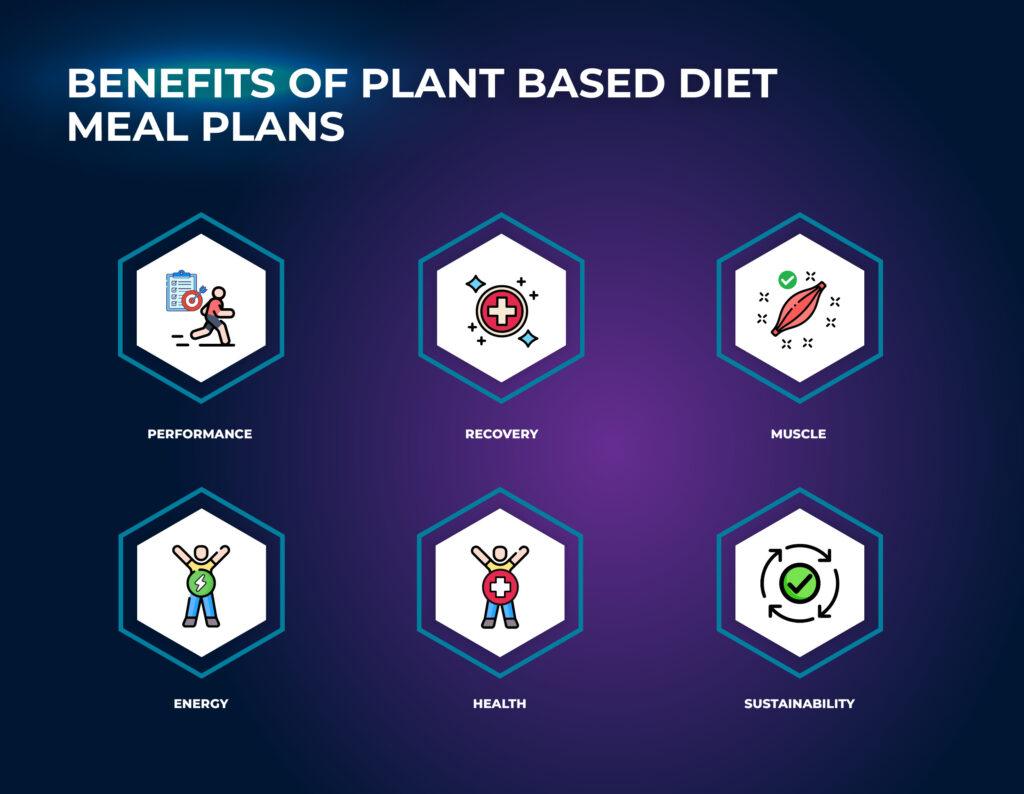
A well-planned plant-based diet can support training as well as a mixed diet, with a few extras. The key word is planned: the benefits depend on eating enough and covering the nutrient gaps above.
- Plenty of carbs: grains, potatoes, fruit and legumes make high-carb days easy to hit, which protects pace and power.
- Recovery support: even protein across meals supports muscle repair, and berries, cocoa and herbs add polyphenols that may help with soreness.
- Muscle and body composition: you can build muscle on plants when protein and calories are high enough. Bulky, high-fiber foods help in fat-loss phases; rice, smoothies and nut butters help when you need to gain.
- Heart health: choosing plant fats over animal fat lowers saturated fat intake, which supports long-term heart health.
- Budget and simplicity: rice, oats, beans, lentils, tofu and frozen vegetables are cheap and easy to batch cook.
- Lower environmental impact: plant-heavy diets are linked with lower greenhouse gas emissions than meat-heavy diets. Performance still comes first.
Foods and Supplements That Support the Plan
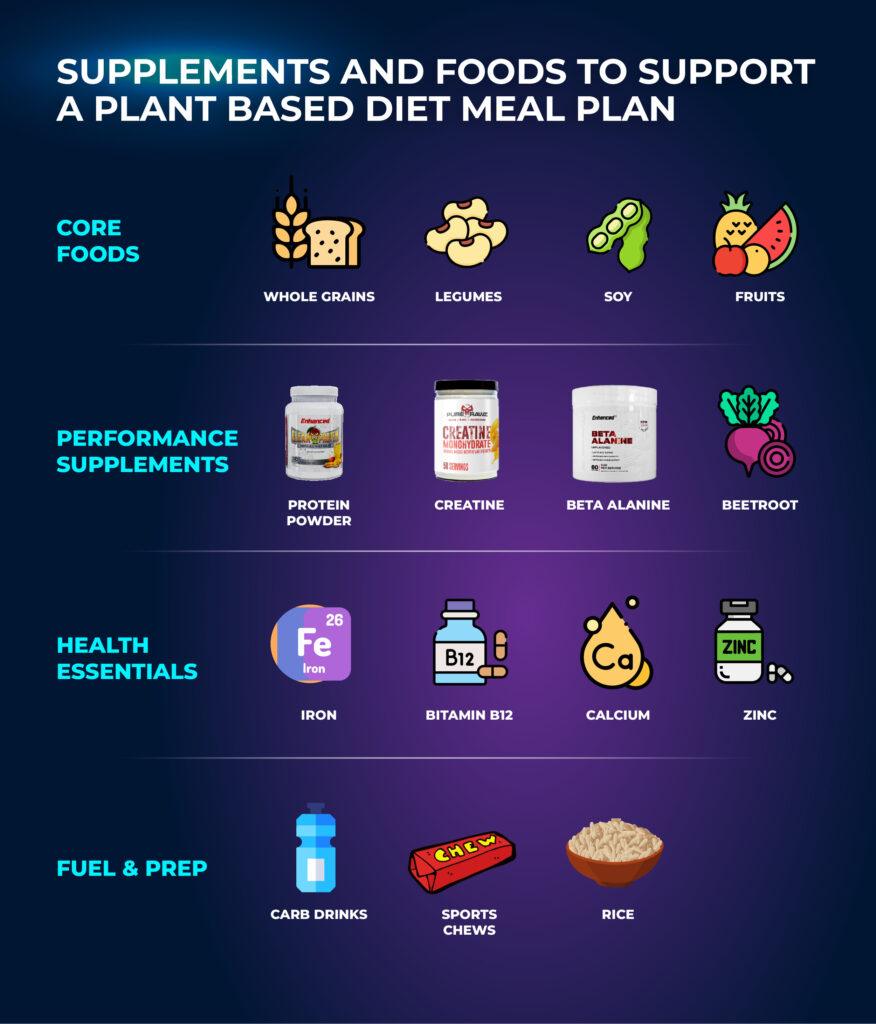
Keep choices simple, budget-friendly and easy to use in a busy week. Food comes first; supplements fill specific gaps.
Core Foods for Your Shopping List
- Whole grains and starches: oats, brown and white rice, quinoa, whole grain bread, pasta and potatoes.
- Legumes: black beans, chickpeas, lentils, kidney beans and edamame.
- Protein-rich plant foods: tofu, tempeh, seitan, soy milk, soy yogurt and lentil pasta.
- Nuts and seeds: peanut butter, almond butter, walnuts, cashews, chia, flax and hemp seeds.
- Leafy greens and colorful vegetables: spinach, kale, arugula, beetroot, carrots and peppers.
- Fruits for training: bananas, berries, oranges, grapes and dates.
Performance Supplements Worth Considering
None of these are required, but a few supplements have strong evidence in athletes and fit a plant-based diet. Get the food plan right first.
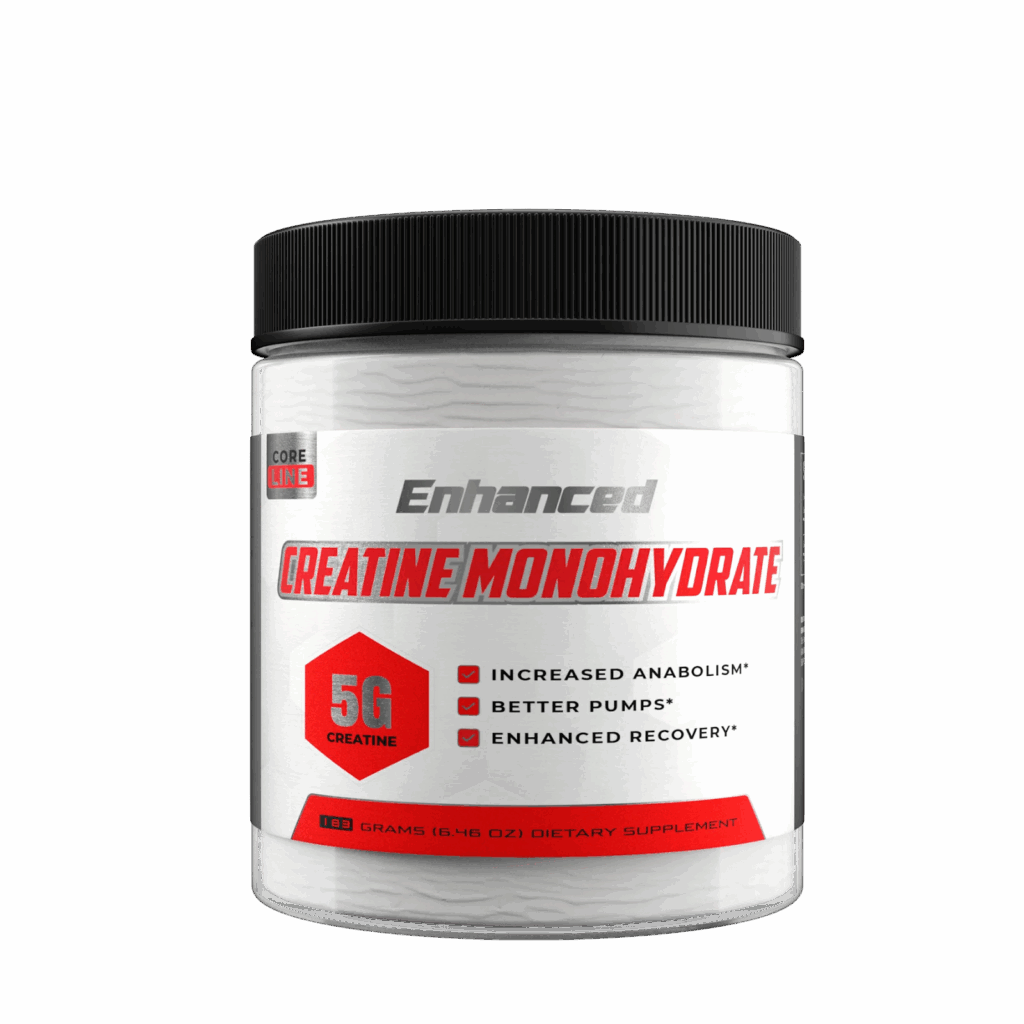
Creatine monohydrate raises muscle phosphocreatine stores and supports short, heavy efforts and lean mass gains with training. Vegetarians and vegans tend to start with lower muscle creatine stores, so they often see a larger rise when they supplement. Most studies use 3-5 g a day. Our guide to the types of creatine explains how the forms compare.
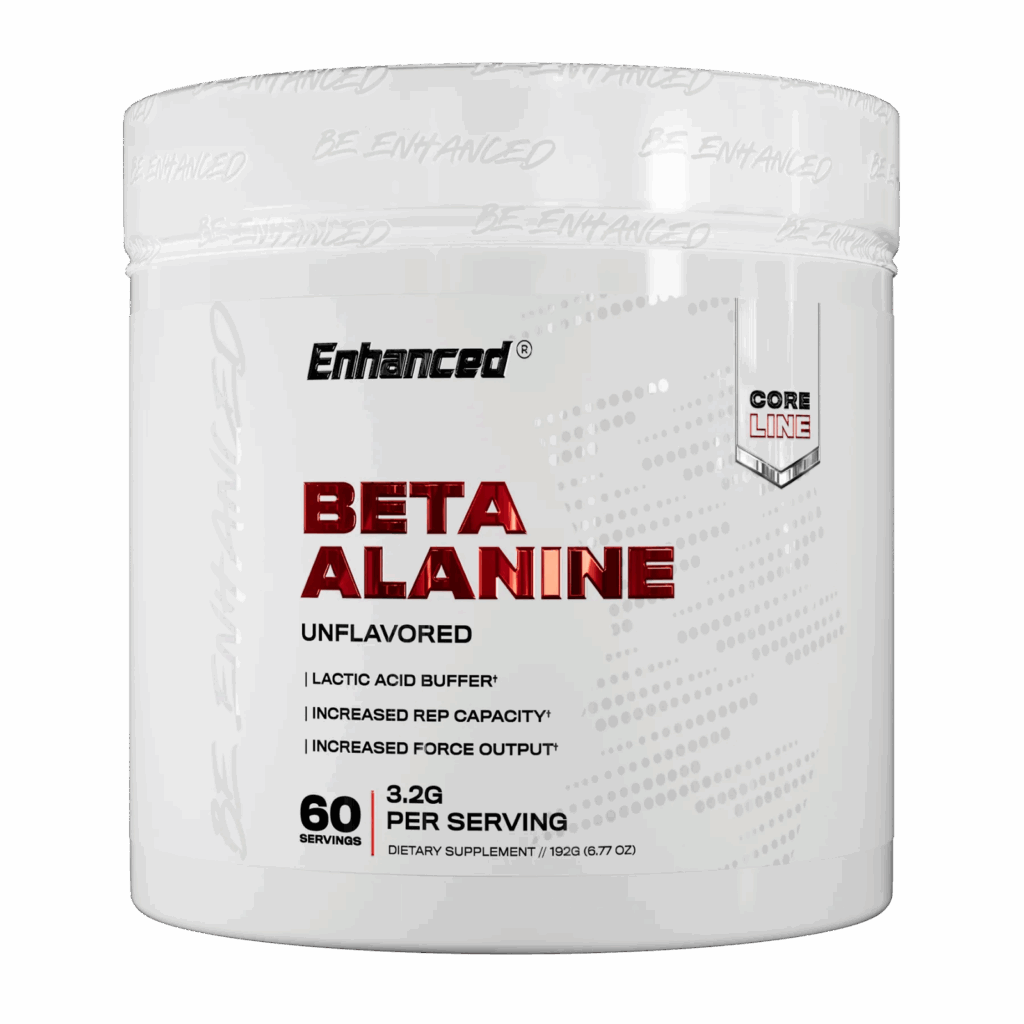
Beta-alanine raises muscle carnosine and can delay fatigue in hard efforts lasting roughly 1-4 minutes, such as intervals and high-rep sets. Studies typically use 3.2-6.4 g a day, split into smaller doses, for at least four weeks.
Caffeine at about 3-6 mg/kg, taken roughly 60 minutes before exercise, improves performance in many sports. Lower doses work for many people and cause fewer jitters and sleep problems.
Beetroot or nitrate concentrate fits long or hard sessions; see the nitrate section above for the doses used in studies.
Plant protein powder (a soy isolate or a pea-rice blend) makes the 30-40 g meals easy on busy days. If powders tend to upset your stomach, see our guide to protein powders for sensitive stomachs.
Our partner Enhanced Labs sells creatine monohydrate and beta-alanine. Both ingredients are made synthetically and contain no animal products, but check the label of any capsule or flavored product, since capsules can be made from gelatin.

Pros
- Catalog is specifically organized around muscle building, fat loss, testosterone support, and workout performance.
- Range includes creatine, protein, EAAs, beta-alanine, and L-citrulline alongside more specialized formulas.
- Orders of $99+ qualify for free US shipping.
Cons
- Features several strong claims around muscle growth, testosterone, fat loss, and metabolic effects that should be distinguished from independently demonstrated clinical outcomes
- Heavily oriented toward bodybuilding and performance rather than broader nutritional supplementation.
Health Essentials for Plant-Based and Vegan Diets
- Vitamin B12: fortified foods or a supplement. This one is not optional on a vegan diet.
- Vitamin D3 from lichen (or vitamin D2): useful when sun exposure is low.
- Algae oil: covers EPA and DHA without fish.
- Iodine: iodized salt or a small supplement to support thyroid function.
- Iron: supplement only after a blood test shows you need it, and pair iron-rich meals with vitamin C.
- Calcium and zinc: calcium-set tofu, fortified plant milks, or a simple supplement if intake is low.
Fuel and Electrolytes for Long Sessions
- Simple carb drink mixes: maltodextrin or glucose, with fructose for very long efforts.
- Sports gels or chews: fast fuel for race-pace work.
- Electrolytes: sodium-based tablets or drink mixes for heat and heavy sweat.
- Real food: rice cakes with nut butter and banana for long rides and runs.
Meal Prep Tools and Shortcuts
- A rice cooker or pressure cooker for batch cooking grains and beans.
- Containers to portion breakfast, lunch, dinner and snacks.
- Frozen vegetables and frozen berries for quick meals.
- Precooked rice packets, canned beans and prewashed leafy greens for fast meals.
- Olive oil and simple spice blends to make plant foods taste great.
Side Effects and Cons: What to Watch Out For
Strong plant-based plans still need guardrails. These are the top risks for athletes and how to manage them. Start with food fixes, use labs to confirm a problem, and add supplements only when needed.
Main Watch-Outs (Diet)
- Low energy availability: eating too little for your training load can cause fatigue, poor recovery, stress injuries and hormonal problems (RED-S, relative energy deficiency in sport). Track body weight, training quality, mood and, for women, menstrual cycles.
- Protein quality and leucine can slip without planning. Use mixed sources, the portion table above, and 4-5 protein meals a day.
- Micronutrients to monitor: iron/ferritin, vitamin B12, vitamin D, iodine, calcium and zinc. Use fortified foods and test as needed.
- Omega-3 EPA/DHA may be low because ALA conversion is limited. Consider algae oil.
- GI distress from high fiber near training is common. Choose lower-fiber options around key sessions.
Side Effects of Common Supplements
Performance aids
- Creatine monohydrate: a small, temporary gain in water weight and occasional stomach upset with large single doses. If you have kidney disease, talk to your doctor first.
- Beta-alanine: tingling skin (paresthesia). Smaller split doses or sustained-release forms reduce it.
- Caffeine: jitters, raised heart rate, reflux, and poor sleep when taken late in the day.
- Beetroot/nitrate: stomach upset in some people; harmless red urine or stool; may lower blood pressure.
Health essentials
- Vitamin B12: usually well tolerated; acne-like skin reactions have been reported rarely.
- Vitamin D: too much can raise blood calcium. Test, and dose with guidance.
- Iron: constipation, nausea and dark stools; unsupervised use risks iron overload. Supplement only when labs show a need.
- Iodine, zinc and calcium: too much iodine can disturb thyroid function, high-dose zinc can cause nausea and over time lower copper, and large calcium doses can cause constipation. Stay within guidelines.
- Algae omega-3 (DHA/EPA): mild stomach upset at high doses; talk to your doctor if you take blood thinners.
Fuel and hydration
- Protein powders: occasional bloating, or allergy issues with soy. Choose third-party tested products.
- Electrolytes and sodium: very high sodium intake may raise blood pressure. Match intake to your sweat losses.
Quick Self-Check (Every 8-12 Weeks)
- Energy: strong training quality across the week; no mid-session fades.
- Recovery: morning readiness, soreness trend and sleep quality.
- Body: stable weight for your goal; no unwanted loss.
- Labs: ferritin/iron, B12 and vitamin D when training hard.
- Gut: minimal GI issues at race pace; fuels practiced in training.
How to Reduce Risk
Spread protein across the day, mix plant protein sources, and lower fiber around key sessions. Track energy, sleep, mood and training quality. Add supplements only when a need is clear and the product fits your sport’s anti-doping rules.
The Bottom Line
A plant-based diet can fuel hard training when it is planned: enough calories, enough protein at every meal, carbs matched to the day, and the few nutrients plants do not cover.
- Aim for 1.6-2.0 g/kg of protein a day in 4-5 meals, with 30-40 g of mixed plant protein at main meals to reach the leucine target.
- Scale carbs from about 3-5 g/kg on easy days to 6-10 g/kg on heavy endurance days, and keep fiber low before key sessions.
- Cover B12 every day, and check ferritin, vitamin D and omega-3 intake with food, fortified products, supplements and labs.
- Use the sample day as a template, batch cook the staples, and adjust portions every few weeks based on weight and training quality.
Frequently Asked Questions
Disclaimer
Please read carefully
The information on this site is for educational and informational purposes only, and is not medical advice. Always consult a qualified healthcare professional before using any supplement or medication, or making changes to your health, fitness, or nutrition routine.
Not medical advice
Content here is not a substitute for professional medical advice.
Consult your doctor
Talk to your doctor before starting any supplement or new routine.
Use at your own risk
We are not responsible for adverse effects from acting on this.
Do your research
Make informed decisions about your own health.
No guarantees
Individual results vary. No claims about outcomes.
Important — Never disregard professional medical advice or delay seeking it because of something you read here. If you think you may have a medical emergency, call your doctor or your local emergency number right away.