Contents13 sections
Creatine is one of the most popular and best-researched supplements in sport. Taken daily alongside resistance training, it helps you get more out of short, hard efforts, and over weeks that adds up to more strength and lean muscle. But walk into any supplement store and you will find many types of creatine, each claiming to be the best.
So which one should you take? This guide breaks down the eight most common forms of creatine, what each one claims, what the research actually shows, and how to dose the one that works.
Key Takeaways
- Creatine tops up the phosphocreatine in your muscles, which helps regenerate energy (ATP) during short, intense efforts; combined with training, it increases strength, power and lean mass.
- Creatine monohydrate is the most researched form and the cheapest per serving. No other form has been shown to work better.
- HCL, buffered, nitrate, magnesium chelate and citrate forms have far less research; creatine ethyl ester and ready-to-drink liquid creatine appear to work worse than monohydrate.
- Take 3-5 g every day; there is no need to cycle creatine. A 5-7 day loading phase of about 20 g a day fills your muscles faster but is optional.
- In healthy people, creatine at recommended doses has a strong safety record. The main side effect is a small weight gain from extra water stored in muscle.
What Is Creatine?
Creatine is a natural compound your body makes from three amino acids (arginine, glycine and methionine), mainly in the liver and kidneys. You also get some from meat and fish. Almost all of it is stored in skeletal muscle, where it helps regenerate ATP (adenosine triphosphate), the molecule your cells use for energy. That matters most during short, intense efforts such as heavy sets and sprints, which is why creatine is one of the most researched supplements for strength training.
Beyond the gym, creatine is also being studied for brain health and for preserving muscle as we age.
How Creatine Works

Creatine supplements increase the phosphocreatine (PCr) stored in muscle cells. During high-intensity exercise, ATP breaks down into ADP (adenosine diphosphate) to release energy. Your muscles only hold a few seconds’ worth of ATP, so phosphocreatine donates a phosphate group to ADP and turns it back into ATP, using the enzyme creatine kinase. More stored phosphocreatine means you can keep up hard efforts a little longer, get an extra rep or two, and recover faster between sets.
Creatine also draws water into muscle cells, and this cell swelling may act as a signal for muscle growth. Researchers are also looking at creatine’s effects on the brain; some trials suggest small benefits for memory and mental fatigue, especially in people who eat little meat or are short on sleep. It is not a proven treatment for any brain disease: a large trial in Parkinson’s disease found that creatine did not slow the disease.
Different Types of Creatine
1. Creatine Monohydrate
Creatine monohydrate is a creatine molecule bound to one molecule of water, and it is about 88% creatine by weight. It is the form used in the large majority of creatine studies, and it reliably increases muscle creatine stores, strength, power and lean mass when combined with resistance training. It is also the cheapest form per serving. Micronized monohydrate is the same compound ground into finer particles so it mixes more easily.
The International Society of Sports Nutrition (ISSN) position stand concludes that creatine monohydrate is safe for healthy people at recommended doses. The only consistently reported side effect is weight gain, mostly water stored in muscle. Large single doses can upset the stomach, which is why loading doses are split through the day.
2. Creatine Hydrochloride (HCL)
Creatine HCL is creatine bound to hydrochloric acid. It dissolves in water far better than monohydrate, and it is marketed as being absorbed better so that a smaller dose does the same job. That claim has not been proven: there is no good evidence that HCL raises muscle creatine more than monohydrate, or that a lower dose of HCL matches a normal dose of monohydrate.
A small study in recreational weightlifters found that both HCL and monohydrate improved strength. Some people find HCL easier on the stomach, but that rests mostly on user reports rather than trials. It also costs more per serving than monohydrate.
3. Buffered Creatine (Kre-Alkalyn)
Buffered creatine, sold as Kre-Alkalyn, is creatine adjusted to a higher pH. It is marketed on the idea that monohydrate breaks down into creatinine before it is absorbed, and that buffering prevents this. A controlled study tested that directly and found that buffered creatine did not raise muscle creatine or improve body composition or strength more than monohydrate.
It is often chosen by people hoping to avoid bloating, but it costs more than monohydrate and offers no proven advantage.
4. Creatine Ethyl Ester (CEE)
Creatine ethyl ester was marketed as a form that crosses cell membranes more easily, so that smaller doses would work. The research shows the opposite: much of it breaks down into creatinine, a waste product, before it reaches muscle.
In a study of people doing heavy resistance training, CEE was less effective than creatine monohydrate at raising blood and muscle creatine, and it did not improve body composition, strength or power more than monohydrate. Of all the forms here, it is the one with the clearest evidence against it.
5. Creatine Nitrate
Creatine nitrate binds creatine to nitrate, with the idea of adding the blood-flow and pump effects of nitrate (which the body can turn into nitric oxide). It dissolves easily in water.
However, research on it is limited and mostly short-term, and it has not been shown to beat monohydrate for performance. Each serving also provides less creatine than the same weight of monohydrate. If better blood flow is what you are after, dietary nitrate from beetroot or citrulline are better-studied options.
6. Creatine Magnesium Chelate
This form binds creatine to magnesium, a mineral involved in muscle contraction and ATP production. It is marketed as improving creatine uptake and causing less water retention. One small study found that both the magnesium chelate and a low dose of creatine monohydrate improved exercise performance; it did not show the chelate to be better.
It is a reasonable option, but there is too little research to say it is as effective as monohydrate, let alone more effective.
7. Creatine Citrate
Creatine citrate combines creatine with citric acid. It dissolves in water better than monohydrate, and some people find it gentler on the stomach. Because citric acid adds weight, each gram provides less creatine than a gram of monohydrate.
A review of newer creatine forms found little research behind creatine salts like citrate. They dissolve better, but creatine breaks down faster in more acidic solutions, so once mixed they are less stable than monohydrate. If monohydrate gives you stomach trouble, citrate is an option, but there is no evidence it builds more muscle.
8. Liquid Creatine
Liquid creatine is a ready-to-drink product that needs no mixing. The problem is stability: creatine slowly breaks down into creatinine when it sits in liquid, so a product stored for weeks may contain much less creatine than the label suggests. A study in team-sport athletes found that a liquid creatine serum was not as effective as creatine powder for improving cycle sprint performance.
Mixing powder into a drink just before you take it is perfectly fine. It is pre-made liquid creatine that is best avoided.
How to Choose the Best Type of Creatine

Many types of creatine claim faster absorption, better solubility or fewer side effects, but creatine monohydrate remains the best choice for almost everyone. It is effective, cheap and backed by far more research than any other form, which is why it is a base layer of the Natty Plus Protocol.
If monohydrate upsets your stomach, first try splitting the dose, taking it with food or switching to a micronized powder. If that doesn’t help, creatine HCL or citrate are reasonable alternatives, although the evidence that they cause less bloating is thin.
| Form | Main Claim | What the Research Shows |
|---|---|---|
| Monohydrate | The standard form | Most studied; reliably raises muscle creatine, strength and lean mass |
| HCL | Better absorbed, smaller dose | More soluble in water; not shown to work better |
| Buffered (Kre-Alkalyn) | More stable, less bloating | No advantage over monohydrate in a controlled study |
| Ethyl ester (CEE) | Better uptake into cells | Breaks down to creatinine; less effective than monohydrate |
| Nitrate | Creatine plus a pump effect | Limited research; not shown to beat monohydrate |
| Magnesium chelate | Better uptake, less water retention | Very little research; no proven advantage |
| Citrate | Easier to dissolve and digest | More soluble but less creatine per gram; little research |
| Liquid | Ready to drink | Creatine degrades in liquid; less effective than powder |
If you have a medical condition or take prescription medication, check with your doctor before adding any form of creatine.
Where to Buy Creatine Monohydrate
Since monohydrate is the form to buy, here are three creatine monohydrate powders. All are meant to be taken daily and continuously.
| Product | Form | Serving | How to Use | Best For |
|---|---|---|---|---|
| Enhanced Labs Creatine Monohydrate | Micronized powder | 5 g per scoop | Daily, continuous | One-scoop dosing, easy mixing |
| PureRawz Creatine Monohydrate | Powder | 4.5 g per scoop | Daily, continuous | Adding to an existing shake |
| Behemoth Labz Creatine Monohydrate | Powder | 5.5 g per serving | Daily, continuous | Heavier lifters |
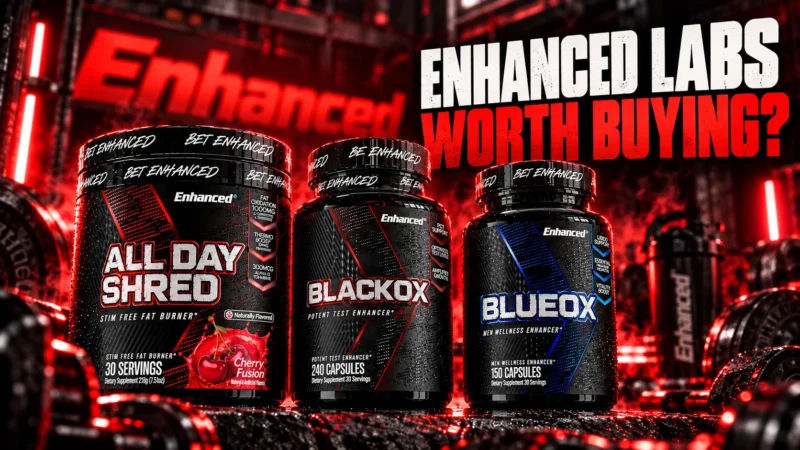
Enhanced Labs Creatine Monohydrate Powder (5,000 mg)

Enhanced Labs creatine monohydrate is a micronized powder with one 5 g scoop per serving, so a single scoop gives you the full daily dose.
- Form: Micronized creatine monohydrate powder
- Dose: 1 scoop (5 g) in 8-10 ounces of water, once a day
- How to use: Every day, before or after training or with a meal; no cycling needed
- What it supports: Strength, power output and lean muscle gains alongside resistance training
- Side effects: Some people get mild stomach discomfort on an empty stomach; taking it with food usually helps
- Stacks well with: Whey protein and beta-alanine

Pros
- Catalog is specifically organized around muscle building, fat loss, testosterone support, and workout performance.
- Range includes creatine, protein, EAAs, beta-alanine, and L-citrulline alongside more specialized formulas.
- Orders of $99+ qualify for free US shipping.
Cons
- Features several strong claims around muscle growth, testosterone, fat loss, and metabolic effects that should be distinguished from independently demonstrated clinical outcomes
- Heavily oriented toward bodybuilding and performance rather than broader nutritional supplementation.
Behemoth Labz Creatine Monohydrate (275 g Powder)

Behemoth Labz creatine monohydrate is an unflavored, easy-to-mix powder in a 275 g tub, with a slightly larger 5.5 g serving.
- Form: Unflavored creatine monohydrate powder
- Dose: 5.5 g per serving, once a day
- How to use: Continuous daily use; can also be used for a loading phase
- Side effects: Possible slight water weight gain
- Stacks well with: Protein powder in a post-workout shake
Pros
- Community reports generally describe quick US shipping, though experiences vary.
- An established brand in the research-compound niche for several years.
- Recent community discussions describe the brand as a reliable supplier they prefer for repeat purchases.
Cons
- Less COA transparency on the website.
- International customers have reported extended transit times and packages remaining in transit for weeks.
How to Use Creatine

- Loading phase (optional): For faster results, take about 20 g a day, split into four 5 g doses, for 5-7 days. This fills your muscles with creatine within a week. If you prefer a gradual approach, skip loading and go straight to the daily dose; your muscles reach the same level in about 3-4 weeks.
- Daily dose: Take 3-5 g a day, every day, with water, juice, a shake or a meal. Consistency is what keeps your muscle stores full.
- No cycling needed: Creatine is taken continuously. There is no evidence that cycling on and off improves results.
Drink enough water through the day, as you would with any training program. If high doses upset your stomach, skip the loading phase.
Best Time to Take Creatine and How to Stack It

Timing matters much less than taking creatine every day. Some people take it before training, others after; any difference between the two is small. A typical daily dose is one 5 g scoop of powder in 8-10 ounces of water, which keeps your muscle creatine stores full. You can even mix creatine into coffee if that is easier to remember.
Best Creatine Stacks
Creatine combines well with a few other supplements:
- Protein: Adding creatine to your post-workout whey shake is an easy routine. Protein supplies the building blocks for muscle repair, while creatine helps you train harder.
- Beta-alanine: Beta-alanine helps buffer acid during efforts lasting roughly one to four minutes, so the two cover different kinds of fatigue.
- BCAAs: These are often stacked with creatine, but if you already eat enough protein, extra BCAAs add little.
Taking creatine with a meal that contains carbohydrates and protein may slightly improve uptake into muscle. Follow the label doses, and check with a healthcare professional if you’re unsure about combining supplements.
Who Should Use Creatine?
- Athletes and bodybuilders: Anyone who wants more strength, power and muscle mass from resistance training or sprint-based sports.
- Regular gym-goers: Whether you are bulking, cutting or maintaining, creatine helps you keep training quality high and supports recovery between sets.
- Vegans and vegetarians: Creatine is found mainly in meat and fish, so people on plant-based diets tend to have lower muscle stores and often respond well to supplementing.
- Older adults: Combined with resistance training, creatine can help with maintaining muscle mass and strength with age.
Creatine vs. Other Supplements
Creatine vs. Whey Protein
These two do different jobs. Whey protein supplies the amino acids your body uses to repair and build muscle fibers after training. Creatine increases the energy available for short, intense efforts, so you can do more work in each session.
Because they work in different ways, they complement each other, and many lifters take them together in one shake.
Creatine vs. BCAA
BCAAs (branched-chain amino acids) are three of the amino acids found in protein. They are marketed for reducing muscle breakdown and soreness, but if your daily protein intake is adequate, their extra benefit is small.
Creatine has much stronger evidence for improving performance and lean mass. If you only buy one of the two, choose creatine.
Possible Side Effects of Creatine

Creatine is considered safe for healthy people at recommended doses, but there are a few things to know:
Water Retention
Creatine draws water into muscle cells, which can cause a small weight gain in the first weeks, especially during a loading phase. Most of this water is stored inside muscle rather than under the skin, but some people notice a feeling of bloating.
Stomach Upset
Some people get stomach discomfort or diarrhea, mostly when they take large single doses or take creatine on an empty stomach. Smaller doses spread through the day, taken with food, usually solve this.
Kidneys
In healthy people, studies at recommended doses have not found kidney harm. Creatine does raise creatinine in the blood, which can make a routine kidney test look worse than it is, so tell your doctor you take it. If you already have kidney disease, speak with your doctor before using creatine.
Dehydration and Cramps
Older warnings said creatine causes dehydration and muscle cramps. Research in athletes, including those training in the heat, has not supported this, and the ISSN concludes that creatine does not increase the risk of cramping or dehydration. Drinking enough water is still sensible for anyone who trains hard.
The Bottom Line
Of the eight types of creatine, plain creatine monohydrate is the one to choose: it has the most evidence, the lowest cost per serving, and no other form has been shown to beat it.
- Take 3-5 g of creatine monohydrate every day. Loading is optional, and there is no need to cycle it.
- Creatine HCL or citrate are reasonable alternatives if monohydrate upsets your stomach, but neither is proven to work better.
- Skip creatine ethyl ester and pre-made liquid creatine; research shows they are less effective than monohydrate.
Frequently Asked Questions
Disclaimer
Please read carefully
The information on this site is for educational and informational purposes only, and is not medical advice. Always consult a qualified healthcare professional before using any supplement or medication, or making changes to your health, fitness, or nutrition routine.
Not medical advice
Content here is not a substitute for professional medical advice.
Consult your doctor
Talk to your doctor before starting any supplement or new routine.
Use at your own risk
We are not responsible for adverse effects from acting on this.
Do your research
Make informed decisions about your own health.
No guarantees
Individual results vary. No claims about outcomes.
Important — Never disregard professional medical advice or delay seeking it because of something you read here. If you think you may have a medical emergency, call your doctor or your local emergency number right away.