Contents11 sections
If you train hard, eat what feels like a lot and still can’t put on weight, you’re not alone. Many naturally lean guys, often called ectomorphs or hardgainers, have a small appetite, a high daily energy burn or a light frame that makes adding size slow.
The fix is not a secret supplement. It is a steady calorie surplus, enough protein and training that gives your muscles a reason to grow. Protein powder is simply the easiest way to close the protein gap when whole food runs short.
This guide covers how many calories and how much protein you need, how to choose a protein powder for weight gain, our top picks from Enhanced Labs, a simple serving guide and the mistakes that keep skinny guys skinny.
Key Takeaways
- Gaining weight takes a steady surplus of about 300-500 kcal a day above maintenance. Protein powder alone won’t do it.
- Aim for 1.6-2.2 g of protein per kilogram of body weight a day. In studies, extra muscle gain levels off at about 1.6 g/kg for most lifters.
- A shake with 20-40 g of complete protein (whey, or a dairy-free option such as beef and egg or a pea-rice blend) is the easiest way to close the gap.
- If you can’t eat enough food, blend protein powder with whole milk, oats, a banana and nut butter, or use a mass gainer, for extra calories.
- Choose third-party-tested powders to limit contaminants, and talk to a doctor first if you have kidney or liver disease.
How Skinny Guys Gain Weight the Right Way
Being naturally thin usually comes down to a mix of genetics, appetite and how active you are during the day. Whatever the cause, the rules for gaining muscle are the same for everyone: eat more than you burn, eat enough protein and lift with progressive overload.
Eat in a Calorie Surplus
Muscle growth needs extra energy. A sensible target is about 300-500 kcal a day above maintenance, which supports steady muscle gain while keeping fat gain in check. If your weight doesn’t move for two to three weeks, add a little more food; if it climbs too fast, pull back.
For guys with a small appetite, calorie-dense foods do most of the work: whole milk, oats, rice, eggs, nut butters, olive oil and dried fruit. See our list of high-calorie foods for bulking for more ideas.
Hit Your Protein Target
Protein supplies the amino acids your muscles use to repair and grow. A 2018 meta-analysis of 49 trials found that the extra lean mass from protein during resistance training leveled off at about 1.6 g of protein per kilogram of body weight a day, with little added benefit beyond about 2.2 g/kg. Aiming for 1.6-2.2 g/kg covers almost everyone.
| Body weight | 1.6 g/kg a day | 2.2 g/kg a day |
|---|---|---|
| 55 kg (121 lb) | 88 g | 121 g |
| 60 kg (132 lb) | 96 g | 132 g |
| 65 kg (143 lb) | 104 g | 143 g |
| 70 kg (154 lb) | 112 g | 154 g |
| 75 kg (165 lb) | 120 g | 165 g |
Fill the Rest With Carbs and Fats
Once protein is set, carbs and fats supply the rest of your calories. Carbs fuel hard training and refill muscle glycogen, so for most lifters they make up around half of daily calories or more; whole grains, potatoes, rice and fruit are good sources. Fat is the most calorie-dense nutrient (9 kcal per gram, against 4 for protein and carbs) and supports normal hormone levels; 20-30% of calories is a common range.
Eat Often Enough to Reach Your Numbers
Daily totals matter far more than meal timing. But when appetite is the problem, eating four to six times a day makes the numbers easier to reach. Spread protein across the day in meals or shakes of roughly 20-40 g, and have one of them in the hours after training.
Train for Growth
Extra food only turns into muscle if training gives your body a reason to build it. Focus on compound lifts such as squats, deadlifts, bench presses, rows and overhead presses, train each muscle group about twice a week, and add weight, reps or sets over time.
Track Progress and Adjust
Weigh yourself a few times a week at the same time of day and watch the weekly average, along with your lifts and your waist measurement. A gain of about 0.25-0.5% of body weight per week (roughly 0.2-0.35 kg, or 0.4-0.8 lb, for a 70 kg lifter) keeps most of the gain as muscle; complete beginners can often gain a little faster. For realistic numbers, see how much muscle you can gain per month.
Why Protein Powder Helps Skinny Guys
Many lean guys struggle to eat enough protein from whole food alone. A big plate of chicken and rice can kill a small appetite for hours, while a shake goes down in a minute and adds 20-30 g of protein.
Protein powder is not magic, though. In the 2018 meta-analysis above, protein supplements added a modest extra gain in lean mass (about 0.3 kg on average) on top of resistance training, mainly by raising total protein intake. Protein supplements work because they make it easier to hit your daily target, especially on days when food volume feels overwhelming.
- Easier to reach protein targets: drinking is easier than eating another large meal when appetite is low.
- Supports consistency: a shake covers the days when meals fall short, so you hit your target more often.
- Fills gaps, doesn’t replace meals: whole foods still bring the fiber, vitamins, minerals and calories a powder lacks.
How To Choose the Best Protein Powder for Weight Gain
Look at five things: protein quality, protein per serving, calories, testing and how well you digest it.
Pick a Complete Protein
Choose a complete protein that is rich in essential amino acids, especially leucine, the amino acid that switches on muscle protein synthesis. Whey is the standard. Well-made plant blends (for example pea plus rice) and dairy-free animal options such as beef or egg protein also work. Some meta-analyses find a small edge for animal protein on lean mass; others find little difference when total protein intake is high enough.
Aim for 20-40 g of Protein per Serving
The International Society of Sports Nutrition’s position stand on protein and exercise recommends about 0.25 g/kg of high-quality protein per meal, or 20-40 g, containing 700-3,000 mg of leucine. Most single scoops of whey land at 20-30 g of protein.
Protein Powder or Mass Gainer
Both can work. The choice depends on whether your problem is protein or calories.
| Option | Calories per serving | Best for | Watch out for |
|---|---|---|---|
| Protein powder (whey or dairy-free) | About 100-150 kcal | Hitting protein targets without much extra fullness | Adds few calories on its own |
| Mass gainer | Roughly 400-1,250 kcal | Guys who truly can’t eat enough food | Mostly fast carbs (maltodextrin, sugar); big servings can upset the stomach |
| Homemade shake (powder, milk, oats, banana, nut butter) | About 600-700 kcal | Extra calories from whole-food ingredients | Needs a blender |
Look for Third-Party Testing
Supplements are not approved before they go on sale, so quality varies. Programs such as NSF Certified for Sport and Informed Sport test products for banned substances and contaminants, and the Clean Label Project also screens for heavy metals. Keep added sugar and fillers low.
Match the Powder to Your Stomach
- Whey concentrate: the cheapest option; contains some lactose.
- Whey isolate: filtered further, very low in lactose and often easier on the gut.
- Casein: digests slowly, which makes it a common choice before bed.
- Dairy-free (beef, egg, pea-rice): for lactose intolerance, a dairy allergy or guys who simply bloat on whey.
If whey gives you gas or bloating, try an isolate or a dairy-free powder first. Our guide to protein powders for sensitive stomachs goes into more detail.
Best Protein Powder for Weight Gain: Our Top Picks
Our partner Enhanced Labs makes two protein powders that fit the guidance above, plus a creatine that pairs well with them. Neither powder adds many calories on its own the way a gainer does, so blend it into a calorie-dense shake if you need the extra energy.
iO Premium Whey
The brand’s whey protein, made with its own filtration process and sold in flavors such as Vanilla Cone and Chocolate Brownie. It suits most lifters who digest dairy well, and it makes an easy base for a homemade weight-gain shake. Check the label for protein per scoop.
Primal Protein
A dairy-free powder that the brand lists at 27 g of protein per scoop, made from hydrolyzed grass-fed beef and egg white protein isolates. It is the pick for guys who get bloated or gassy on whey, or who avoid dairy altogether.
Worth Adding: Creatine Monohydrate
Creatine is not a protein, but it is one of the best-studied supplements for gaining lean mass and strength alongside training. The standard dose is 3-5 g a day, and the first kilo or so on the scale is mostly water stored in muscle. Enhanced Labs sells a straight creatine monohydrate.

Pros
- Catalog is specifically organized around muscle building, fat loss, testosterone support, and workout performance.
- Range includes creatine, protein, EAAs, beta-alanine, and L-citrulline alongside more specialized formulas.
- Orders of $99+ qualify for free US shipping.
Cons
- Features several strong claims around muscle growth, testosterone, fat loss, and metabolic effects that should be distinguished from independently demonstrated clinical outcomes
- Heavily oriented toward bodybuilding and performance rather than broader nutritional supplementation.
Whichever powder you choose, check the protein per serving, keep added sugar low and prefer third-party-tested products. For more on the brand, read our Enhanced Labs review.
How Much Protein Powder To Take: A Simple Serving Guide
Protein powder is food, so there is no special dosing. Work out roughly how much protein your meals already give you, then use shakes to fill the gap.
| Your situation | What to take | When |
|---|---|---|
| About 20-30 g short of your daily protein | 1 scoop of protein powder in water or milk | After training or between meals |
| About 40-60 g short of your daily protein | 2 scoops, split into two shakes | One after training, one between meals or before bed |
| Weight not moving (need 300-500 kcal more) | 1 scoop blended with whole milk, oats, a banana and nut butter | Between meals, so it adds to food instead of replacing it |
| Whey upsets your stomach | 1 scoop of a whey isolate or a dairy-free powder | As above |
Most people do well with 1-2 scoops (about 25-50 g of protein) a day. If you need much more than that, your meals probably need more protein.
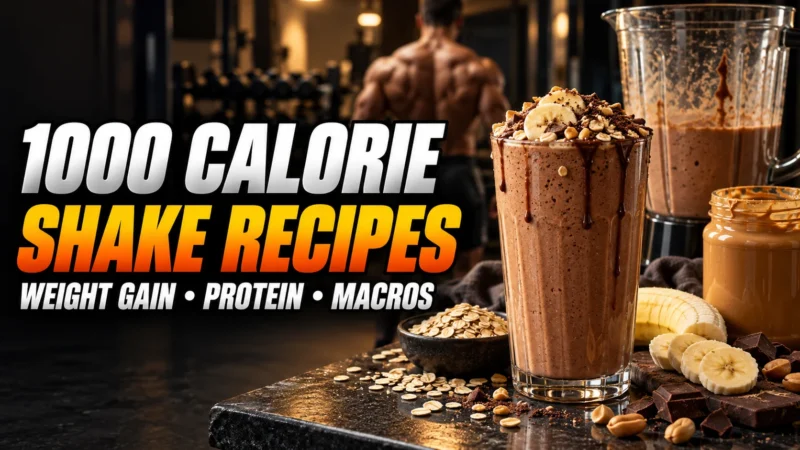
A simple weight-gain shake: 1 scoop of whey (about 120 kcal), 300 ml of whole milk (about 180 kcal), 40 g of oats (about 150 kcal), a medium banana (about 105 kcal) and a tablespoon of peanut butter (about 95 kcal). That comes to roughly 650 kcal and 40-45 g of protein. For a bigger version, see our 1,000-calorie shake.
Common Mistakes To Avoid
Most stalled bulks come down to a handful of habits: not eating enough, not pushing in the gym or not recovering.
Not Eating Enough
Undereating is the most common reason skinny guys don’t grow. A shake on top of the same small meals rarely creates a surplus. If the scale isn’t moving, you aren’t eating enough yet.
Training Without Progressive Overload
Training irregularly, or lifting the same weights for months, sends a weak growth signal. Add weight, reps or sets over time and log your workouts so you know you’re progressing.
Skimping on Sleep
Recovery is where growth happens. In a well-known study of dieting adults, sleeping 5.5 hours a night instead of 8.5 hours on the same diet meant losing more lean mass and less fat. Short sleep also blunts muscle protein synthesis, so aim for 7-9 hours.
Relying on Supplements
Shakes and gainers are aids, not meals. Leaning on them while skipping real food means missing fiber and micronutrients. Use them to fill gaps, not to replace breakfast, lunch and dinner.
Expecting Fast Results
Lean muscle builds slowly. At 0.25-0.5% of body weight a week, a 70 kg lifter gains roughly 0.75-1.5 kg a month, and not all of it is muscle. Judge progress over months, not days.
Safety Considerations
Protein powder is safe for most healthy adults at normal intakes, but two points are worth knowing.
Kidneys and liver: research on whey supplements has reported that chronic, high-dose use, especially without regular exercise, may affect kidney and liver markers. That concern is about very high intakes over long periods. In adults with healthy kidneys, studies of higher-protein diets have not shown harm to kidney function. People with existing kidney or liver disease are a different case and should agree their protein intake with a doctor.
Heavy metals: independent tests have found lead, cadmium and arsenic in many protein powders, with plant-based powders tending to contain more. Some products have exceeded strict safety limits, so third-party testing matters most if you drink a shake every day.
Key Precautions
- Choose third-party-tested products, for example NSF Certified for Sport, Informed Sport or Clean Label Project.
- Stay around 1.6-2.2 g/kg a day unless a professional advises otherwise; more brings little extra muscle.
- Prioritize whole foods and use powders to fill gaps, not to replace meals.
- Ask a doctor first if you have kidney, liver or metabolic disease; they may want to check markers such as creatinine and liver enzymes.
The Bottom Line
Skinny guys gain weight by eating in a steady calorie surplus, getting 1.6-2.2 g/kg of protein a day and lifting with progressive overload. Protein powder makes the protein part easy; it does not replace food or training.
- Use 1-2 scoops a day to close your protein gap, and blend in whole milk, oats, a banana or nut butter when you need extra calories.
- Pick a complete, third-party-tested protein: whey if you digest dairy well, a dairy-free option such as beef and egg or a pea-rice blend if you don’t.
- Aim to gain 0.25-0.5% of body weight a week, and adjust calories every few weeks based on the scale, your lifts and your waist.
Frequently Asked Questions
Disclaimer
Please read carefully
The information on this site is for educational and informational purposes only, and is not medical advice. Always consult a qualified healthcare professional before using any supplement or medication, or making changes to your health, fitness, or nutrition routine.
Not medical advice
Content here is not a substitute for professional medical advice.
Consult your doctor
Talk to your doctor before starting any supplement or new routine.
Use at your own risk
We are not responsible for adverse effects from acting on this.
Do your research
Make informed decisions about your own health.
No guarantees
Individual results vary. No claims about outcomes.
Important — Never disregard professional medical advice or delay seeking it because of something you read here. If you think you may have a medical emergency, call your doctor or your local emergency number right away.