Contents12 sections
Chonluten is a short synthetic peptide made of three amino acids (Glu-Asp-Gly, or EDG). It is one of the “peptide bioregulators” developed by Vladimir Khavinson’s group in St. Petersburg, Russia, and it is promoted for the lining of the airways and lungs. For a quick summary of the compound, see our Chonluten profile.
Interest in Chonluten comes from cell and animal research suggesting it may influence gene activity in airway cells and calm inflammatory signals. Athletes and biohackers use it hoping to recover faster after a chest infection and breathe more easily in training. There are no controlled human trials, and it is not an approved medicine.
This guide covers what Chonluten is, how it is thought to work, which claimed benefits have any evidence behind them, the doses and course lengths that are commonly reported, popular stacks, and what is known about safety and legal status.
Key Takeaways
- Chonluten is a synthetic tripeptide (Glu-Asp-Gly) from Vladimir Khavinson’s bioregulator group, promoted for the bronchial lining and lungs.
- Cell and animal studies, mostly from the developers, suggest it may change gene activity in airway cells and lower inflammatory signals. None of this has been confirmed in people.
- There is no good evidence that it treats asthma, COPD or post-viral breathing problems, or that it improves endurance. It should never replace prescribed lung treatment.
- No human dose is established. Vendor and user protocols describe short daily courses of about 10-20 days, with injectable amounts quoted at roughly 1-10 mg a day.
- User reports describe few side effects on short courses, but there are no controlled human safety data, so “well tolerated” is not the same as proven safe.
What Is Chonluten?
Chonluten is a short synthetic peptide made of glutamic acid, aspartic acid and glycine (Glu-Asp-Gly). It belongs to the same family of short peptides as Bronchogen, Cardiogen and Epitalon. Our guide to bioregulators and their benefits explains the idea behind the whole group.
The theory is that each of these peptides acts on one tissue by entering cells and adjusting which genes are switched on. For Chonluten, the target is the bronchial epithelium, the layer of cells that lines the airways. Its sequence is also the last three amino acids of Epitalon (Ala-Glu-Asp-Gly), which is why the two are often mentioned together.
In Russia, Chonluten is sold mainly as capsules marketed as a dietary supplement. Elsewhere it is sold as a freeze-dried research peptide in vials, labeled not for human use. Almost all of the research comes from Khavinson’s group and its collaborators, and independent confirmation is limited.
How Chonluten Is Thought to Work

Khavinson’s group describes Chonluten as a tissue-specific bioregulator for the airways. The proposed mechanism works at the level of genes rather than through a classic receptor. Everything in this section comes from cell-culture, animal and test-tube work, not from studies in people.
Gene Activity in Airway Cells (Cell-Culture Data)
The developers report that Chonluten changes how genes behave in bronchial epithelial cells grown in the lab. The genes they highlight are tied to tissue repair, protein production and antioxidant defense. If this held up in living lungs, it could mean:
- Faster repair of a damaged airway lining
- More of the structural proteins, such as collagen, that hold lung tissue together
- Better protection against stress from smoke, pollution and infection
These are possibilities drawn from cell work. Whether any of them happens in human lungs, at the doses people actually use, is unknown.
Inflammatory Signals (Lab Data)
Inflammation drives much of the damage in chronic lung disease and slows recovery after infections. In lab studies, Chonluten has been linked to lower levels of inflammatory messengers (cytokines) such as IL-6, TNF and IL-17, and to changes in STAT1 and STAT3, signaling proteins that help switch immune cells on.
Less inflammation would in theory mean less tissue damage. No study has shown that effect on breathing or lung function in people.
Antioxidant Defense (Lab Data)
Oxidative stress from free radicals can damage lung tissue. The developers report that Chonluten switches on genes involved in the body’s own antioxidant defenses in cultured cells. That is a different claim from acting as an antioxidant itself, and it has not been measured in human lungs.
DNA and Epigenetic Claims, Read Carefully
As with the other short peptides from this group, the theory is that Chonluten binds to DNA and to the histone proteins that package it, and so changes which genes are active (an epigenetic effect). This rests on test-tube and cell work. It does not show that Chonluten “resets” lung cells, switches off aging genes or reverses lung damage in the body.
Reported Benefits: What the Evidence Shows

These are the benefits most often claimed for Chonluten, with a note on where the evidence comes from. None of them has been confirmed in controlled human trials.
Recovery After Chest Infections
Chonluten is promoted for recovery after colds, bronchitis and post-viral fatigue. The idea follows from its proposed anti-inflammatory and repair effects. Some users say they breathe more easily soon after a course, but no study has measured recovery time, and most chest infections clear up on their own.
Asthma, COPD and Post-COVID Breathing Problems
These are the boldest claims made for Chonluten, and the weakest. No controlled human trial has shown that it reduces flare-ups, improves lung function or eases breathing in asthma, COPD or lasting breathing problems after COVID.
These are serious conditions with treatments that have been proven in large trials. Anyone who has them should keep using their inhaler and other prescribed medicine, and talk to their doctor before trying any peptide. New or worsening shortness of breath, chest tightness or wheezing needs a diagnosis, not self-treatment.
Breathing and Endurance in Training
Some athletes report easier breathing in hard sessions, quicker recovery between workouts and better stamina. No study has measured endurance, VO2 max or lung function in healthy people taking Chonluten, and expectations alone can change how training feels. Treat these reports as anecdotes.
Immune Balance in the Airways
The developers describe Chonluten as “normalizing” local immunity in the airways: supporting defense against viruses and bacteria while limiting chronic inflammation. This description rests on the same cell and animal work as the inflammation findings above.
Lung Aging: An Open Question
Lung function slowly declines with age. Claims that Chonluten slows this decline, limits long-term cell damage or supports tissue repair in older people come from the developers’ lab work. There are no long-term human data.
| Claim | Where the Evidence Comes From | Human Data |
|---|---|---|
| Changed gene activity in airway cells | Cell cultures, mostly from the developers | None |
| Lower inflammatory signals (IL-6, TNF) | Lab studies | None |
| Faster recovery after chest infections | Proposed mechanism and user reports | No trials |
| Fewer asthma or COPD flare-ups | Not shown | No trials |
| Better breathing and endurance in training | User reports | No trials |
| Slower lung aging | Proposed mechanism | None |
Commonly Reported Doses and Course Length
No human dose of Chonluten has been established in clinical trials. The figures below are what vendors and users describe, in the short-course pattern typical of Khavinson’s bioregulators. They are shown for information, not as a recommendation.
| Item | Commonly Reported |
|---|---|
| Injectable form | Freeze-dried powder in vials, mixed with bacteriostatic water and injected under the skin |
| Daily amount (vials) | Roughly 1-10 mg once a day in vendor and forum protocols; none of these figures has been tested in people |
| Capsules | Sold in Russia as a dietary supplement, with label directions that have not been tested in controlled trials |
| Course length | Usually 10-20 days, followed by a break |
| Repeat courses | Sometimes repeated after a break of a few months; there are no data on long-term repeated use |
Two cautions apply. Doses used in animal studies cannot simply be scaled up to humans, and research-grade vials are not made to drug standards, so the amount in a vial may not match the label. It is also not known how much intact peptide reaches the lungs after a capsule is swallowed.
Common Chonluten Stacks
Users often pair Chonluten with other peptides or supplements. None of these combinations has been tested together in a study, so the reasons below are theory, and each added compound brings its own unknowns.
Thymogen

Thymogen (Glu-Trp) is a dipeptide registered as an immune medicine in Russia, where it is injected in small doses of about 50-100 mcg a day for 3-10 days. Users pair it with Chonluten for immune support while recovering from an infection.
Epitalon

Epitalon is studied mainly for its effects on telomerase in cell cultures and on lifespan in rodents. Users combine it with Chonluten in “longevity” courses aimed at older lungs. The pairing has not been studied.

Vesugen

Vesugen is another short peptide from Khavinson’s group, promoted for the walls of blood vessels. The idea behind pairing it with Chonluten is better blood flow to healing lung tissue. That is a theory, not a tested result.

BPC-157 or TB-500

BPC-157 and TB-500 are studied in animals for tissue healing and inflammation; human data are minimal. Users add one of them to Chonluten for whole-body recovery after injury, illness or a hard training block.
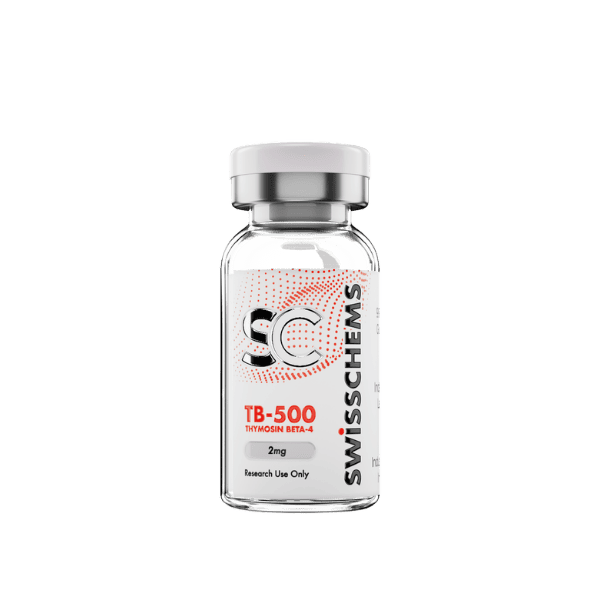

Overview
- Form: Lyophilized powder
- Researched Dosage: 2 mg to 5 mg per week, often split into two doses, during a 4-6 week loading phase; then 2 mg to 2.5 mg every 1-2 weeks for maintenance
- Typical Cycle: 4-8 weeks
- Cost: $23.96-$25.16
- Stacking Options: BPC-157, GHK-Cu, CJC-1295/Ipamorelin
Pros
- Thought to help regulate actin, a protein involved in cell movement and structure, which may help with tissue repair and recovery.
- Animal studies suggest it may speed up healing in muscle, tendon, ligament and skin, and may reduce inflammation.
- Commonly paired with BPC-157 because the two peptides are believed to support recovery in different ways.
Cons
- May encourage new blood vessel growth and cell migration, which raises a theoretical concern about speeding up existing tumors. Long-term human safety data is very limited.
- Not an approved human medication. The FDA lists it as a bulk substance with potential safety risks (Category 2), and WADA bans it for tested athletes.
NAC (N-Acetylcysteine)

NAC is a building block for glutathione, one of the body’s main antioxidants. Unlike Chonluten, it is an approved medicine in many countries, used to thin mucus and as an antidote for acetaminophen (paracetamol) overdose, and it has been tested in people with chronic bronchitis and COPD. Users pair the two for airway support after illness or smoke exposure.
Research each compound on its own before combining anything, keep any prescribed treatment, and talk to a doctor first, especially if you have a medical condition or take other medicines.
Safety Profile
There are no controlled human trials of Chonluten, so its safety in people is not known. The lab and animal studies were designed to look at airway effects, not to detect side effects in humans. Few reported problems is not the same as proven safe.
Reported Side Effects (Anecdotal)
- Tiredness: Some users describe feeling tired or sleepy, or a slight drop in energy, in the first few days of a course.
- Injection site: Redness, bruising or soreness can occur with any injection under the skin.
- Product quality: Research peptides are not made to drug standards. Wrong dosing, impurities or contamination are real risks with any unregulated product.
These are unverified user reports, not study results. No serious reactions have been documented in the published research, but that research was small and mostly preclinical, so rare or long-term effects would not have been detected.
Monitoring and Medical Oversight
- Talk to a doctor first: This matters most for anyone with a lung or heart condition, anyone who is pregnant or breastfeeding, and anyone who takes other medicines.
- Keep prescribed treatment: Never stop or cut back an inhaler or other prescribed lung medicine to try Chonluten.
- Breathlessness needs a diagnosis: New or worsening shortness of breath should be checked by a doctor, not self-treated.
Legal Status
Chonluten is not approved by the FDA, the European Medicines Agency or any other major regulator to diagnose, treat or cure any disease. Outside Russia it is sold as a research chemical, labeled not for human use, and any human use is unregulated.
Most of the available studies come from Russian research institutes and from the peptide’s developers. Independent, peer-reviewed human trials have not been published.
Where to Get Real Chonluten
Chonluten is sold as a research chemical, and quality varies widely between suppliers. The first thing to ask for is a recent third-party certificate of analysis (COA) for the exact batch, with identity and purity testing. Our guide on how to read a peptide COA explains what to check.
SwissChems is the research-peptide supplier featured in our other bioregulator guides. Check its current range, availability and the batch COA before buying anything.
Pros
- Exceptional purity & testing (≥98%)
- Pharmaceutical-style packaging for stability
- Broad catalog across peptides & nootropics
- Strong reputation & consistency across years
Cons
- Some items frequently out of stock due to high demand
- Limited long-term data for some compounds
The Bottom Line
Chonluten is an interesting airway peptide in lab research, but it is not a proven treatment for any breathing problem in people.
- Cell and animal work, mostly from the developers, suggests Chonluten may change gene activity in airway cells and lower inflammatory signals. None of it has been confirmed in human trials.
- There is no good evidence for the asthma, COPD or endurance claims. Anyone with a lung condition should stay on prescribed treatment and talk to a doctor.
- No dose is established. The 10-20 day courses of roughly 1-10 mg a day described online are vendor and user protocols, and long-term safety is unknown.
Frequently Asked Questions
Disclaimer
Please read carefully
The information on this site is for educational and informational purposes only, and is not medical advice. Always consult a qualified healthcare professional before using any supplement or medication, or making changes to your health, fitness, or nutrition routine.
Not medical advice
Content here is not a substitute for professional medical advice.
Consult your doctor
Talk to your doctor before starting any supplement or new routine.
Use at your own risk
We are not responsible for adverse effects from acting on this.
Do your research
Make informed decisions about your own health.
No guarantees
Individual results vary. No claims about outcomes.
Important — Never disregard professional medical advice or delay seeking it because of something you read here. If you think you may have a medical emergency, call your doctor or your local emergency number right away.