Contents16 sections
Male pattern hair loss (androgenetic alopecia) is the most common reason men thin out. In men with a genetic sensitivity, DHT, a hormone made from testosterone, slowly shrinks the hair follicles until they produce finer, shorter hairs and eventually stop. Finasteride and minoxidil are the best-studied treatments, but finasteride’s sexual side effects, which affect a small share of users, lead many men to look for alternatives.
Peptides for hair growth are one of the most popular of those alternatives. Copper peptides such as GHK-Cu are applied to the scalp, while injectable peptides such as BPC-157 are promoted for their effects on blood flow and healing.
This guide covers what each compound is supposed to do, how strong the evidence really is (lab, animal or human), and where RU58841 fits in. Short version: it is often sold next to peptides, but it is not one.
Key Takeaways
- Acetyl tetrapeptide-3 is the only hair peptide with a controlled human trial: in a small 24-week study, a lotion combining it with plant extracts grew hair about as well as 3% minoxidil. Copper peptides (GHK-Cu and AHK-Cu) rest mainly on lab and animal studies.
- The claim that copper peptides “block DHT” is overstated: no human study shows they lower DHT the way finasteride does.
- RU58841 is not a peptide. It is a topical non-steroidal antiandrogen with animal data, no approval and no long-term human safety data.
- BPC-157, glutathione and HGH are linked to hair only through indirect mechanisms such as blood vessel growth, antioxidant effects or IGF-1; none has been tested as a hair-loss treatment in humans.
- Get the cause of your hair loss diagnosed first. Finasteride and minoxidil still have far stronger human evidence than any peptide.

What Are Peptides?
Peptides are short chains of amino acids joined by peptide bonds. The order and length of the chain decide what a peptide does in the body. Many act as signals: they tell cells to repair tissue, build blood vessels or release hormones.
The compounds sold “for hair” are very different from one another. GHK-Cu is just three amino acids bound to copper and is mostly used on the skin. BPC-157 is a synthetic 15-amino-acid peptide that is usually injected. Human growth hormone is a 191-amino-acid protein hormone. Their mechanisms, evidence and risks differ, so ranking them as if they were interchangeable makes little sense.
How Are Hair Growth Peptides Supposed to Work?
Each hair follicle cycles through a growth phase (anagen), a short transition phase (catagen) and a resting phase (telogen) before the hair sheds. In pattern hair loss, DHT shortens the growth phase and shrinks the follicle a little more with each cycle. Treatments try to slow that process, push follicles back into the growth phase, or both.
Peptides are proposed to help through a few routes:
- Blood supply: reduced blood flow has been measured in the scalp of men with early pattern baldness [3], and some peptides promote new blood vessel growth (angiogenesis) in lab and animal studies.
- Growth factors: IGF-1 is one of the growth factors involved in the hair cycle [1].
- Androgens: lowering DHT or blocking its action on the follicle slows pattern hair loss [2]. This is how finasteride works, and it is why “DHT blocking” claims get attached to so many products.
- Inflammation and oxidative stress: both are linked to hair loss in research, and several peptides have anti-inflammatory or antioxidant effects in the lab.
A plausible mechanism is not the same as a proven result. For most compounds below, the data come from cell cultures and animals, not from controlled trials in men with thinning hair.

Peptides for Hair Growth at a Glance
Here is how the compounds most often sold for hair compare. RU58841 is included because it appears on most of these lists, but it is not a peptide.
| Compound | Type and Use | Proposed Mechanism | Evidence for Hair | Status |
|---|---|---|---|---|
| GHK-Cu | Copper tripeptide, mostly topical | Larger follicles, blood vessel growth, anti-inflammatory effects | Lab and animal studies; no large human trials | Cosmetic ingredient; not approved for hair loss |
| AHK-Cu | Copper tripeptide, topical | Stimulates dermal papilla cells | Lab studies on human follicles | Research compound |
| Acetyl tetrapeptide-3 | Cosmetic peptide, topical | Said to strengthen the tissue that anchors the follicle | One small human trial (with plant extracts) | Cosmetic ingredient |
| BPC-157 | Synthetic 15-amino-acid peptide, injected | Angiogenesis | None for hair; anecdotal only | Research compound; banned in tested sport |
| Glutathione | Antioxidant tripeptide, oral or injected | Lowers oxidative stress | No hair-regrowth trials | Supplement; injections through clinics |
| HGH | 191-amino-acid hormone, injected | Raises IGF-1 | Indirect only; not studied as a hair treatment | Prescription only |
| RU58841 (not a peptide) | Non-steroidal antiandrogen, topical | Blocks androgen receptors in the scalp | Animal studies; little human data | Unapproved research chemical |
Acetyl Tetrapeptide-3: The Hair Peptide With a Human Trial
Acetyl tetrapeptide-3 is a small synthetic peptide used in cosmetic hair serums, often under the trade name Capixyl when it is combined with red clover extract. In a 24-week, triple-blind trial in 32 adults with mild to moderate pattern hair loss, a lotion containing acetyl tetrapeptide-3, red clover (biochanin A) and ginseng increased terminal hair counts by 8.3%, against 8.7% for 3% minoxidil, a difference that was not statistically significant (Lueangarun 2020).
The study was small, the peptide was never tested on its own, and it has not been compared with finasteride, so it is best seen as a cosmetic option rather than a replacement for proven treatment.
GHK-Cu: The Best-Known Copper Peptide
GHK-Cu (glycyl-L-histidyl-L-lysine bound to copper) is a small peptide found naturally in human blood plasma, and its levels fall with age. It is the most common peptide in hair serums and is covered in depth in our GHK-Cu copper peptide guide.
In lab and animal research, GHK-Cu has been linked to wound healing, collagen production, anti-inflammatory and antioxidant effects, protection of skin cells from UV damage, and larger hair follicle size [4]. Gene-expression work suggests it influences a broad set of repair-related genes, which is why it shows up in skin care as well as hair products.
The human evidence for hair is thin. Most of the hair data come from cell cultures and animal models. There are no large, independent, placebo-controlled trials showing that GHK-Cu regrows hair in men with pattern hair loss, and none that compare it head to head with minoxidil or finasteride.
Do Copper Peptides Block DHT?
Not in any proven way. The claim rests on lab findings that copper can inhibit 5-alpha reductase, the enzyme that turns testosterone into DHT. No human study shows that applying GHK-Cu to the scalp lowers DHT the way finasteride does (finasteride 1 mg cuts blood DHT by roughly two thirds).
If DHT is driving your hair loss, a copper peptide is at best a supporting player, not a replacement for a proven DHT treatment.
How It Is Used and Side Effects
GHK-Cu is mostly used in topical serums and foams, often alongside minoxidil. Some people inject research-grade GHK-Cu, but there are no established human doses for hair, and injecting a product sold “not for human use” adds sterility and purity risks.
Reported side effects of topical use are mainly scalp irritation and redness and, less often, allergic reactions. A patch test on a small area before regular use is sensible.
AHK-Cu: The Copper Peptide Studied for Hair
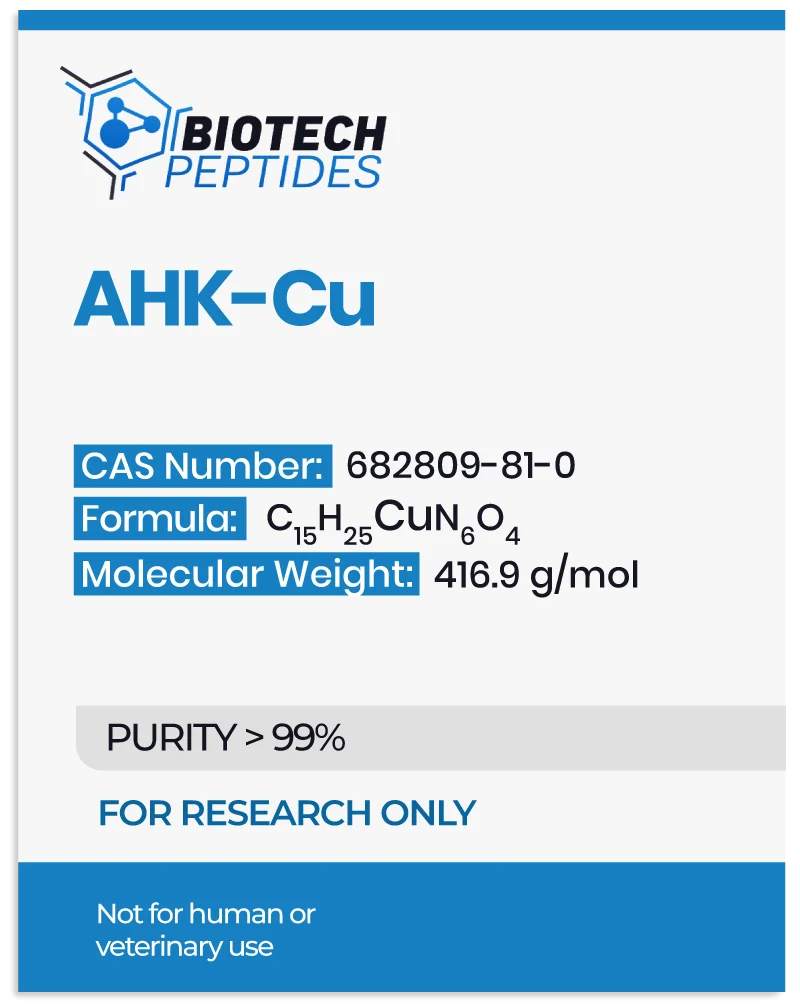
AHK-Cu (alanine-histidine-lysine bound to copper) is a close relative of GHK-Cu that has been studied more specifically for hair. In a lab study on isolated human hair follicles, AHK-Cu stimulated follicle elongation and the growth of dermal papilla cells, the cells that steer hair growth. It also shifted markers linked to cell survival, although the drop in dying cells was not statistically significant (Pyo 2007). It has not been tested in controlled human trials, so how well it works on a living scalp is unknown.

Overview
- Form: Lyophilized powder for topical formulation (200 mg)
- Researched Dosage: Mixed into a serum at roughly 0.1% to 1%, applied to the scalp or skin 1-2 times daily
- Typical Cycle: 3-6 months (hair growth needs several cycles to show)
- Cost: $192.00
- Stacking Options: GHK-Cu, Minoxidil, Topical Finasteride
Pros
- A copper-binding peptide studied mainly for hair, shown in lab work to lengthen hair follicles and boost dermal papilla cell growth.
- It may reduce the cell death that pushes follicles into the shedding phase, which is why it shows up in hair-loss serums.
- Like GHK-Cu, it may also support collagen production and skin firmness.
Cons
- Evidence is limited to cell and isolated follicle studies; there are no controlled human hair-growth trials.
- Copper peptides can irritate sensitive skin and may react with vitamin C, acids or retinoids in the same routine.
- It is sold as a research powder, so you have to formulate it yourself, and $192 is a lot up front.
BPC-157: Blood Vessels, Not Proven Hair Growth
BPC-157 is a synthetic 15-amino-acid peptide based on part of a protective protein found in human gastric juice. It is best known for tendon, muscle and gut healing in animal studies (see our guide to the best peptides for healing).
The hair theory rests on angiogenesis. In animal and cell studies, BPC-157 promotes the formation of new blood vessels, partly through the VEGF (vascular endothelial growth factor) pathway. Better blood supply to the follicles could, in theory, support growth.
That is where the evidence stops. No controlled study has tested BPC-157 for hair loss in humans, and the hair claims are anecdotal. BPC-157 is not approved for any medical use, is sold as a research chemical and is banned in tested sport. Reported side effects include injection site pain and abdominal discomfort.
Glutathione: An Antioxidant, Not a Hair Treatment
Glutathione is a tripeptide made of glutamate, cysteine and glycine, and it is the main antioxidant inside human cells. Its link to hair is indirect: oxidative stress has been associated with hair loss in research, and glutathione levels tend to be lower in older adults.
There is no good evidence that glutathione supplements or injections regrow hair or slow pattern hair loss. How well oral glutathione is absorbed is debated, which is one reason clinics offer it by injection or IV, mostly for skin purposes. Side effects are uncommon but include allergic reactions, and injected products carry the usual infection and quality risks.
HGH and IGF-1
Human growth hormone (HGH) is a 191-amino-acid protein hormone made by the pituitary gland. Much of its effect runs through IGF-1 (insulin-like growth factor 1), which plays a role in follicle growth and the hair cycle in lab research [5].
That does not make HGH a hair treatment. It has not been studied as one in men with pattern hair loss, it is a prescription-only drug approved for conditions such as diagnosed growth hormone deficiency, and it is expensive. Known side effects include fluid retention, joint pain, carpal tunnel symptoms and higher blood sugar. There is no good reason to use HGH for hair alone.
RU58841: Often Ranked With Peptides, But Not a Peptide
RU58841 regularly tops “best peptides for hair” lists, including the old version of this page. It is not a peptide. It is a small synthetic molecule, a non-steroidal antiandrogen developed by the French company Roussel Uclaf, and it is applied to the scalp. Our full RU58841 guide covers it in detail.
How It Works
RU58841 blocks androgen receptors in the scalp, so DHT cannot act on the follicle. That is different from finasteride, which lowers DHT production by blocking 5-alpha reductase. Because RU58841 is meant to act locally, it is marketed as a way to avoid finasteride’s side effects.
What the Research Shows
The evidence is mostly animal data. In stump-tailed macaques, which develop a form of pattern baldness, topical RU58841 produced hair regrowth, and it was also active in rodent models of androgen-driven skin conditions. It was never approved anywhere, and there is no long-term human safety data.
Commonly Reported Use and Side Effects
RU58841 is usually sold as a powder or ready-mixed solution for the scalp, and some people use it alongside minoxidil. There is no established human dose, and products sold as research chemicals vary in purity.
The most common complaints are scalp irritation, itching and redness, plus headaches or dizziness in some users. Some users also report lower libido or breast tenderness, which suggests some of the drug may reach the bloodstream. Nobody can promise that RU58841 avoids sexual side effects.
How Peptides Compare With Proven Treatments
Two treatments have strong human evidence for male pattern hair loss:
- Finasteride (1 mg a day, prescription) lowers DHT and slows hair loss in most men who take it. Sexual side effects were reported by a small percentage of men in clinical trials.
- Minoxidil (topical, over the counter) prolongs the growth phase and thickens existing hair. It does not affect DHT, so it works best combined with a DHT treatment.
Peptides can sit alongside these, not replace them. If you would rather avoid prescription DHT drugs, our guide to natural DHT blockers covers the supplement options.
Find the Cause of Your Hair Loss First
Not all thinning is pattern hair loss, and the right fix depends on the cause:
- Pattern hair loss: gradual thinning at the temples and crown, often with a family history.
- Telogen effluvium: diffuse shedding a few months after illness, surgery, major stress or a crash diet. It usually recovers on its own.
- Thyroid problems and low iron: both can cause diffuse thinning and show up on blood work.
- Alopecia areata: round, patchy bald spots caused by the immune system.
- Steroids, SARMs and TRT: raising androgens can speed up pattern hair loss in men who are prone to it. See SARMs and hair loss for how that works and what helps.
A doctor or dermatologist can examine your scalp and order blood tests to rule out deficiencies and thyroid problems. That saves you from treating the wrong problem with an expensive peptide.
Are Peptides for Hair Growth Legal?
It depends on the compound and the country:
- GHK-Cu is sold legally as a cosmetic ingredient in serums and shampoos.
- Injectable research peptides such as BPC-157, and RU58841, are usually sold online as research chemicals labeled “not for human use”. That label is a legal precaution, and it means the products are not made or checked to pharmaceutical standards.
- HGH is a prescription-only drug, and buying it without a prescription is illegal in many countries.
- HGH and BPC-157 are both banned by WADA, so tested athletes should avoid them.
For a country-by-country overview, see are peptides legal.
The Bottom Line
Peptides for hair growth are an experimental add-on, not a proven treatment.
- Acetyl tetrapeptide-3 has the only controlled human trial, and it was small and combined with plant extracts. Copper peptides (GHK-Cu, AHK-Cu) rest mainly on lab and animal studies and have not been shown to lower DHT in people.
- BPC-157, glutathione and HGH are tied to hair only through indirect mechanisms, and none has been tested as a hair-loss treatment in humans.
- RU58841 is a topical antiandrogen, not a peptide, with animal data, no approval and unknown long-term safety.
- Get the cause diagnosed first and start with what is proven: finasteride and minoxidil have far stronger human evidence than any peptide.
Frequently Asked Questions
Disclaimer
Please read carefully
The information on this site is for educational and informational purposes only, and is not medical advice. Always consult a qualified healthcare professional before using any supplement or medication, or making changes to your health, fitness, or nutrition routine.
Not medical advice
Content here is not a substitute for professional medical advice.
Consult your doctor
Talk to your doctor before starting any supplement or new routine.
Use at your own risk
We are not responsible for adverse effects from acting on this.
Do your research
Make informed decisions about your own health.
No guarantees
Individual results vary. No claims about outcomes.
Important — Never disregard professional medical advice or delay seeking it because of something you read here. If you think you may have a medical emergency, call your doctor or your local emergency number right away.