Contents10 sections
A pre workout is a drink you take before training to feel more alert, push harder and get a better pump. For muscle gain it helps indirectly: it lets you do more quality work in the gym, while training, protein and calories do the actual building.
Most formulas share the same handful of ingredients, and only a few have strong evidence behind them. This guide to the best pre workout for muscle gain covers which ingredients work, the doses used in studies, how to stack a pre workout with creatine and amino acids, the side effects to watch for, and three formulas worth a look.
Key Takeaways
- The ingredients with the best evidence are caffeine, creatine monohydrate, beta-alanine and citrulline, at doses close to those used in studies.
- Pick a label that lists every dose. Proprietary blends make it impossible to check a formula against the research.
- Creatine and beta-alanine work by building up in muscle over weeks of daily use. The beta-alanine tingle is a harmless side effect, not a sign that it is working.
- Stim-free formulas suit evening training and caffeine-sensitive lifters; caffeine taken even six hours before bed can cut into sleep.
- Claims that BCAAs or betaine boost testosterone or growth hormone are not backed by good evidence. Adding 3-5 g of creatine a day does more for muscle gain.
How a Pre Workout Supports Muscle Gain
Creatine Monohydrate: More Work per Set
Creatine monohydrate raises phosphocreatine stores in muscle, which allows faster ATP regeneration during short, hard efforts. In practice that can mean an extra rep or two per set and, over weeks of training, more strength and lean mass. It is one of the most studied supplements in sports nutrition.
Creatine works by saturating your muscles over time, so the daily dose matters more than taking it right before you train.

Citrulline and Nitrates: Blood Flow and Pumps
L-citrulline and beetroot extract are common because they raise nitric oxide, which widens blood vessels and increases blood flow to working muscle. Citrulline malate at 6-8 g has been studied for extra reps in resistance training, with mixed results. Beetroot nitrate has its best evidence in endurance exercise.
A bigger pump feels good, but it has not been shown to build more muscle by itself. Growth depends on hard training and on muscle protein synthesis, which is driven by resistance exercise and enough dietary protein.
Beta-Alanine: Buffering Fatigue in Hard Sets
Beta-alanine raises carnosine levels in muscle. Carnosine buffers the acid (hydrogen ions) that builds up during intense work, which can delay fatigue in hard sets and in efforts lasting roughly one to four minutes. The effect needs a build-up: studies use 4-6 g a day for at least two to four weeks, so a single scoop before training does little on its own.
The tingling (paresthesia) many people feel after a dose is harmless, but it is not a sign that the supplement is working. It depends on how much you take at once; splitting the dose or using a sustained-release form reduces it.
Caffeine: Focus and Effort
Caffeine is the most researched ingredient in these formulas. It blocks adenosine in the brain, which makes hard effort feel easier and improves alertness, focus and performance in both strength and endurance work. Studies typically use 3-6 mg per kg of body weight, taken about an hour before exercise.
BCAAs and Betaine: Weaker Evidence
Many labels add BCAAs, leucine or betaine and claim they raise testosterone or growth hormone. Good evidence for that is missing. Leucine helps switch on muscle protein synthesis, but BCAAs cannot sustain it without the other essential amino acids, and they add little if you already eat enough protein.
Betaine has a few small studies in trained men reporting modest gains in power output, training volume or body composition at about 2.5 g a day, but results are mixed. Treat both as extras, not reasons to buy a product.
Stim-Free Options: Train Hard Without the Crash
Stim-free formulas skip caffeine and rely on citrulline, nitrates, glycerol and similar ingredients for pump and endurance. They suit evening training, caffeine-sensitive lifters and anyone who already drinks a lot of coffee. You lose the energy kick, but you also avoid the jitters, the raised heart rate and the hit to your sleep.
Public guidance on sports nutrition puts a well-planned diet first; supplements only add to it. When you compare products, a transparent label and the dose per serving matter more than flavor.
Best Pre Workout Picks for Muscle Building
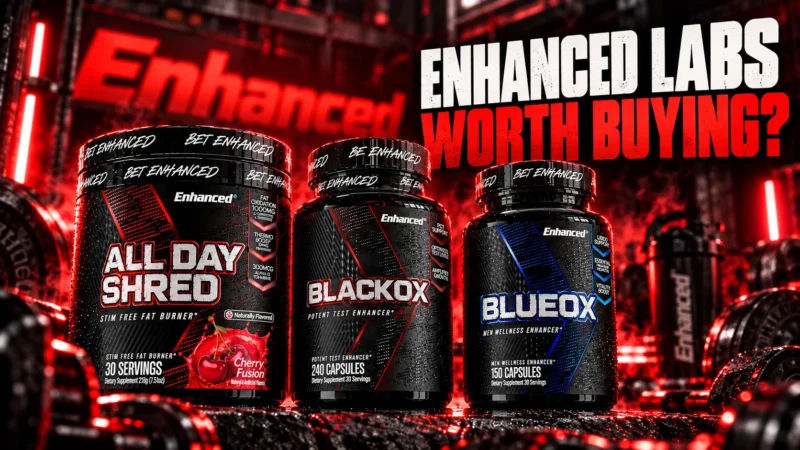
These three formulas from Enhanced Labs cover the main styles: stim-free, high-stim and an all-round option. The ingredient details come from the brand’s product listings. Formulas change over time, so check the current label before you buy.
Maximus Pump (Stim-Free)

Maximus Pump is caffeine-free. The brand lists 8 g of L-citrulline, 3 g of HydroPrime glycerol, Nitrosigine and PeakO2 per serving, aimed at blood flow, pumps and endurance.
Who it’s for:
- Lifters who want a caffeine-free formula
- Evening trainers and anyone sensitive to stimulants
- Anyone who prefers to control caffeine separately, for example with a cup of coffee
Maximus Stim (High-Stim)

Maximus Stim is the brand’s high-stimulant formula. It lists 302 mg of caffeine from PurCaf, plus Dynamine and TeaCrine, 6 g of L-citrulline with AGmass agmatine, and a focus blend of alpha-GPC, tyrosine and huperzine A.
About 300 mg of caffeine in one scoop is a lot for many people. Start with half a scoop and count any coffee or energy drinks you have that day.
Who it’s for:
- Experienced lifters with a high caffeine tolerance
- Morning or early-afternoon sessions, well away from bedtime
Rage 3.0 (All-Round Stim)

Rage 3.0 is a stimulant formula marketed for energy, endurance, pumps and focus in one scoop. Check the label for the caffeine per scoop and the citrulline and beta-alanine doses, and compare them with the studied doses in the table below.
Who it’s for:
- Lifters who want one all-round stim formula
- Anyone stepping up from coffee to a full pre-training drink
For the rest of the range, including single-ingredient creatine, citrulline and beta-alanine, see our Enhanced Labs review.

Pros
- Catalog is specifically organized around muscle building, fat loss, testosterone support, and workout performance.
- Range includes creatine, protein, EAAs, beta-alanine, and L-citrulline alongside more specialized formulas.
- Orders of $99+ qualify for free US shipping.
Cons
- Features several strong claims around muscle growth, testosterone, fat loss, and metabolic effects that should be distinguished from independently demonstrated clinical outcomes
- Heavily oriented toward bodybuilding and performance rather than broader nutritional supplementation.
Essential Ingredients and Studied Doses
A good formula uses ingredients with evidence behind them, at doses close to those used in studies, and lists every dose on the label. The table below sums up the main ones.
| Ingredient | What the research shows | Doses used in studies |
|---|---|---|
| Creatine monohydrate | Raises muscle phosphocreatine; more strength, training volume and lean mass over weeks | 3-5 g daily, any time of day; optional loading of 20 g a day in 4 doses for 5-7 days |
| Beta-alanine | Raises muscle carnosine, which buffers acid in hard efforts of about 1-4 minutes | 4-6 g daily in split doses for at least 2-4 weeks |
| L-citrulline / citrulline malate | Raises arginine and nitric oxide; may add reps and reduce soreness, results mixed | 6-8 g citrulline malate about an hour before training |
| Caffeine | Lowers perceived effort; improves focus, strength and endurance | 3-6 mg per kg body weight about an hour before (roughly 200-400 mg at 70 kg) |
| EAAs / BCAAs | Supply amino acids around training; little extra benefit if daily protein is adequate | 5-10 g around training |
| Betaine | Small studies show modest gains in power and work capacity; evidence mixed | 2.5 g daily, often split into two doses |
| Taurine | Limited evidence for small endurance benefits and less muscle damage | 1-3 g |
If a label hides doses inside a proprietary blend, you can’t tell whether it comes close to these ranges.
Stacking a Pre Workout With Creatine, EAAs and Carbs
A few simple additions can cover what most formulas leave out.
Creatine + Pre Workout

Many formulas contain little or no creatine. Adding 3-5 g of creatine monohydrate to your shaker is an easy way to get your daily dose; keep taking it on rest days too. See our picks of creatine monohydrate powders.
Pre Workout + Intra-Workout EAAs

If you train fasted, or your last meal was several hours ago, sipping essential amino acids (EAAs) during a long session gives your muscles amino acids around training. A protein shake does the same job. If you already hit your daily protein target, extra EAAs add little.
Pre Workout + MK-677 or Peptides

Some advanced lifters combine their supplements with MK-677 (ibutamoren) or growth hormone peptides. This is not a stack in the usual sense. MK-677 is an investigational drug, not approved for human use, that raises growth hormone and IGF-1 over weeks of daily dosing in human studies.
Known side effects include increased appetite, water retention and higher blood sugar, and it is banned in tested sport. Read MK-677 vs HGH for the research and risks before considering it.

 Growth Hormone Secretagogue
Overview
- Form: Oral Capsules
- Dosage: 10 to 25 mg per day
- Typical Cycle: 8-12 weeks on/4 weeks off
- Cost: $69.95
- Stacking Options: RAD-140, LGD-4033, GW-501516
Pros
- Stimulates the ghrelin receptor, which can raise growth hormone and IGF-1 levels.
- Increased GH/IGF-1 signaling may contribute to improvements in lean body mass and recovery, although evidence is limited.
- Can be useful for people struggling to eat enough calories, particularly during a mass-gaining phase.
Cons
- Strong appetite stimulation can make fat gain easier, especially when calorie intake isn't controlled.
- Can reduce insulin sensitivity and increase blood glucose in some users.
- Users may experience edema, lethargy, joint discomfort, or numbness/tingling, and its long-term safety remains uncertain.
Pre Workout + Carb Powder

Fast-digesting carbs before or during training can help in long, high-volume sessions, or when you train many hours after your last meal. For a typical hour of lifting on a normal diet, studies show little extra benefit, so a carb-containing meal one to three hours before works just as well.
Side Effects and Tolerance

Most side effects come from the stimulants and depend on the dose and how often you take them.
Short-term effects:
- Jitters or anxiety, especially from high-stimulant formulas
- Nausea or stomach upset, often when taken on an empty stomach
- Harmless tingling from beta-alanine, and skin flushing from niacin in some products
- Raised heart rate and blood pressure
- Poor sleep if taken late in the day
With frequent or high-dose use:
- Tolerance, so the same dose feels weaker over time
- Caffeine dependence, with headaches and tiredness when you stop
- An energy crash after high-caffeine doses
- Slight water weight from creatine, mostly stored inside muscle
What to watch for:
- More than about 300 mg of caffeine per scoop
- Proprietary blends that hide the doses of stimulants or amino acids
- Combining several stimulant products, or a pre workout plus energy drinks
- Unapproved stimulants such as DMAA, which the FDA says is illegal in dietary supplements
Practical tips:
- Start with half a scoop to see how you respond
- Count your total caffeine from all sources; the FDA cites about 400 mg a day as an amount not generally linked to dangerous effects in healthy adults
- Keep stimulants at least six hours away from bedtime
- If the effect fades, take a one- to two-week break from stimulants instead of raising the dose; keep taking creatine daily
Safety Notes
Pre workout supplements are not suitable for everyone, and the same formula can affect two people very differently.
- Avoid high-stimulant formulas if you have heart disease, high blood pressure, an irregular heartbeat, an anxiety disorder or stimulant sensitivity
- Never stack several stimulant-heavy products
- Not for under-18s; if you are pregnant or breastfeeding, avoid high-stimulant products and follow your doctor’s caffeine advice
- Talk to a healthcare professional first if you take medication or have a medical condition
- If you are drug tested, choose products certified by a third-party program such as NSF Certified for Sport or Informed Sport
The Bottom Line
The best pre workout for muscle gain is one that helps you train harder, with research-backed ingredients at studied doses and a label that shows every one of them.
- Caffeine, citrulline and beta-alanine help performance; creatine monohydrate has the strongest evidence for strength and lean mass, so take 3-5 g a day whether or not your formula contains it.
- Use a stim-free formula for evening sessions, count your total caffeine and skip proprietary blends.
- Supplements only add to what you bring: progressive training, enough protein and calories, and sleep do the building. See muscle gain per month for realistic expectations.
Frequently Asked Questions
Disclaimer
Please read carefully
The information on this site is for educational and informational purposes only, and is not medical advice. Always consult a qualified healthcare professional before using any supplement or medication, or making changes to your health, fitness, or nutrition routine.
Not medical advice
Content here is not a substitute for professional medical advice.
Consult your doctor
Talk to your doctor before starting any supplement or new routine.
Use at your own risk
We are not responsible for adverse effects from acting on this.
Do your research
Make informed decisions about your own health.
No guarantees
Individual results vary. No claims about outcomes.
Important — Never disregard professional medical advice or delay seeking it because of something you read here. If you think you may have a medical emergency, call your doctor or your local emergency number right away.