Contents13 sections
Citrulline malate is one of the most common ingredients in non-stimulant pre-workouts. Lifters take it for better blood flow, more reps in hard sets and less soreness the next day.
The research is real but more modest than the marketing suggests. This guide covers what citrulline malate is, how it works, the doses used in studies (6-8 g of citrulline malate), how it compares with plain L-citrulline, and the side effects and interactions worth knowing about.
Key Takeaways
- Citrulline malate is L-citrulline bound to malic acid, usually in a 2:1 ratio, so roughly two-thirds of each gram is citrulline.
- Citrulline is converted to arginine in the kidneys, which raises nitric oxide production more reliably than taking arginine itself.
- Studies use 6-8 g of citrulline malate (most often 8 g) about an hour before training; smaller amounts such as 2-5 g are below the studied range.
- Pooled human trials show small, inconsistent gains in repetitions and less muscle soreness, not dramatic strength increases.
- Plain L-citrulline works the same way: 6 g of L-citrulline supplies about as much citrulline as 9 g of 2:1 citrulline malate.
What Is Citrulline Malate?
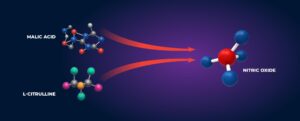
Citrulline malate is a combination of L-citrulline, a nonessential amino acid, and malic acid, a compound found in fruit that also takes part in cellular energy production. Most products use a 2:1 ratio by weight, although some use 1:1, so it is worth checking the label.
Your body makes citrulline on its own, mainly in the gut, and it is not used to build proteins. Its job is as an intermediate in two pathways: the nitric oxide cycle and the urea cycle. Supplementing raises blood citrulline and arginine well above what the diet provides.
Citrulline malate is sold as an unflavoured powder or in capsules, and it is a staple of non-stimulant pre-workout formulas.
How Citrulline Malate Works
Once absorbed, citrulline passes the liver largely untouched and is converted into arginine, mostly in the kidneys. This raises plasma arginine, the raw material your blood vessels use to make nitric oxide, which relaxes the vessel walls and increases blood flow.
That detour is the reason citrulline beats arginine as a supplement. Oral arginine is broken down heavily in the gut and liver before it reaches the circulation, so citrulline raises blood arginine more effectively than an equal dose of arginine.
Malic acid is an intermediate of the Krebs cycle, the pathway cells use to produce energy. The idea is that extra malate supports energy production and reduces fatigue. This is a plausible mechanism, but no study has shown that the malate part of the dose is what makes the difference.
Citrulline Malate vs L-Citrulline
Both forms deliver the same amino acid. The difference is how much citrulline you get per gram, which matters when you compare a label with the doses used in studies.
| Form | Citrulline per gram | Doses used in studies | Citrulline per studied dose |
|---|---|---|---|
| Citrulline malate 2:1 | About 0.67 g | 6-8 g | About 4-5.3 g |
| Citrulline malate 1:1 | About 0.5 g | 6-8 g | About 3-4 g |
| L-citrulline | 1 g | Commonly 3-6 g | 3-6 g |
Most strength and soreness studies used citrulline malate, while most blood flow and blood pressure studies used L-citrulline. There is no good evidence that one form works better than the other once the citrulline content is matched. A 6 g serving of L-citrulline supplies about the same citrulline as 9 g of 2:1 citrulline malate.
Benefits of Citrulline
Citrulline’s effects come back to the same two mechanisms: more nitric oxide and support for the urea cycle. Here is what each one may mean in practice.
Blood Flow and Blood Pressure

By raising nitric oxide, citrulline helps blood vessels widen. Some human studies with L-citrulline found modest drops in blood pressure, mostly in people whose blood pressure was already elevated. The effect in people with normal blood pressure is small.
The same mechanism is why citrulline appears in nitric oxide supplements for erectile function. A small trial in men with mild erectile dysfunction reported better erection hardness with L-citrulline, but the evidence is limited and it is not a replacement for medical treatment.
Exercise Performance

Better blood flow can mean more oxygen and nutrient delivery to working muscle. In practice, the most consistent finding is a few more repetitions in high-rep or later sets, along with lower perceived effort. Studies of single heavy lifts and short sprints show little or no benefit.
Many lifters also take citrulline for the pump: the full, tight feeling in the muscle during high-rep training. That effect is real for many users but hard to measure, and it does not by itself build more muscle. If visible veins are your goal, body fat and training matter far more; see our guide to increasing vascularity.
Muscle Soreness and Recovery
Several citrulline malate trials found less muscle soreness 24 to 48 hours after hard resistance training. Not every study agrees, and soreness is a subjective measure, but it is one of the more repeatable findings and part of why the supplement is popular.
Ammonia and Fatigue
Citrulline is part of the urea cycle, which converts ammonia into urea so it can be excreted. Ammonia builds up during intense or prolonged exercise and is linked to fatigue. Helping clear it is one proposed reason citrulline may delay fatigue, although this has not been confirmed as the main mechanism.
What the Research Shows

All of the performance findings below come from human studies, mostly small trials in young, trained men. That gives a fair picture of what to expect, with some limits.
- Repetitions: A widely cited trial gave 8 g of citrulline malate one hour before a bench press session; participants completed more repetitions in the later sets and reported less soreness afterwards than with a placebo. Later trials were mixed, and reviews that pool them find a small average benefit.
- Perceived effort and soreness: Pooled analyses suggest citrulline malate lowers how hard training feels and reduces soreness in the days after, although the effects are modest.
- Endurance: Results for cycling and running are inconsistent. Some studies using several days of L-citrulline found small improvements; others found none.
- Strength and muscle growth: There is no good evidence that citrulline increases maximal strength or muscle mass on its own. Any long-term benefit would come from slightly more productive training sessions.
In short, citrulline malate is a reasonable, well-tolerated add-on for high-volume training, not a performance enhancer you will feel dramatically from day one.
Citrulline Malate Dosage and Timing
Studies on performance use 6-8 g of citrulline malate, most often a single 8 g dose taken about 60 minutes before training. Blood citrulline peaks roughly an hour after an oral dose, which is why that timing is used. Smaller amounts, such as 2-5 g, are below the doses tested and may not have the same effect, so check how much a pre-workout blend actually contains.
| Goal | Doses used in studies | Timing |
|---|---|---|
| Resistance training performance and soreness | 6-8 g citrulline malate (most often 8 g) | About 60 minutes before training |
| Endurance and blood flow | Commonly 3-6 g L-citrulline per day | Daily for several days, or before training |
| Using L-citrulline instead | About 4-6 g L-citrulline matches the citrulline in 6-8 g of 2:1 citrulline malate | About 60 minutes before training |
Mixing the powder with water is enough; it has a sour taste, so many people add it to a flavoured drink. Taking it with a meal is fine, although larger doses on an empty stomach are more likely to cause mild stomach upset.
Side Effects, Interactions and Precautions
Citrulline is well tolerated by most people. In a short-term study in healthy volunteers, single doses of up to 15 g of L-citrulline caused no notable side effects. Long-term safety data at high doses are limited.
Medication and Health Considerations
Because citrulline increases nitric oxide and can lower blood pressure, it may add to the effects of blood pressure medication, nitrates for chest pain, and erectile dysfunction drugs such as sildenafil or tadalafil. The combination could cause dizziness or lightheadedness.
People with heart conditions, low blood pressure or kidney disease, those who are pregnant or breastfeeding, and anyone preparing for surgery should speak with a healthcare provider before using citrulline.
Common Side Effects
- Mild stomach discomfort, bloating or loose stools, mainly at higher doses
- Lightheadedness in people with low blood pressure
- Occasional headache
If you are new to it, starting at the lower end of the studied range lets you check your tolerance. Stop and seek medical advice if you notice anything unusual.
Food Sources of Citrulline

Watermelon is the richest food source; the name citrulline comes from Citrullus, the watermelon genus. Watermelon flesh typically provides somewhere between about 0.1 and 0.4 g of citrulline per 100 g, depending on the variety, and the rind contains it too.
That means matching a single studied dose would take well over a kilogram of watermelon, often several. Other melons, cucumbers, squash and pumpkin contain smaller amounts. Food sources are a healthy addition to the diet, but a supplement is the practical way to reach the doses used in research.
Where to Buy Citrulline
Citrulline is a dietary supplement, so look for a product with a single ingredient, a clear dose per serving and third-party testing. Check whether the label lists L-citrulline or citrulline malate, and at what ratio, so you can compare it with the studied doses.
Enhanced Labs, one of our partners, sells L-citrulline rather than citrulline malate, at 6 g per serving. That supplies about the same citrulline as 9 g of 2:1 citrulline malate, slightly above the 8 g used in most studies. Our Enhanced Labs review covers the rest of the range.

Pros
- Catalog is specifically organized around muscle building, fat loss, testosterone support, and workout performance.
- Range includes creatine, protein, EAAs, beta-alanine, and L-citrulline alongside more specialized formulas.
- Orders of $99+ qualify for free US shipping.
Cons
- Features several strong claims around muscle growth, testosterone, fat loss, and metabolic effects that should be distinguished from independently demonstrated clinical outcomes
- Heavily oriented toward bodybuilding and performance rather than broader nutritional supplementation.
Alternatives to Citrulline
Several other supplements target blood flow or training fatigue through different mechanisms:
- Arginine: The older nitric oxide booster. It is converted to nitric oxide directly, but so much is broken down before reaching the blood that citrulline is usually the better choice.
- Beetroot or dietary nitrate: Raises nitric oxide through a separate pathway that does not depend on arginine. It is best studied for endurance exercise.
- Beta-alanine: Raises muscle carnosine, which buffers acid during high-intensity efforts lasting about one to four minutes. It can cause a harmless tingling sensation.
- Creatine monohydrate: Supports rapid energy (ATP) regeneration and has far stronger evidence for strength and muscle gain than citrulline. See our guide to creatine monohydrate powders.
How to Stack Citrulline Malate

Citrulline malate combines easily with other pre-workout ingredients because it is stimulant-free and works through a different mechanism. A common stack pairs it with creatine monohydrate and beta-alanine, which support strength output and high-intensity endurance in their own ways.
For energy and focus, some people add caffeine. Keep in mind that caffeine is the ingredient that causes jitters and sleep problems, not citrulline. Creatine and beta-alanine work through daily use and can be taken at any time of day, while citrulline malate is usually taken 6-8 g about 60 minutes before training.
Because it does not contain stimulants, citrulline also suits evening training or anyone who avoids caffeine.
The Bottom Line
Citrulline malate is a safe, well-tolerated supplement that can add a few reps to hard sets and reduce soreness, as long as you take a studied dose.
- Studies use 6-8 g of citrulline malate about an hour before training; smaller amounts are below the studied range.
- L-citrulline works the same way; 4-6 g of it matches the citrulline in a studied citrulline malate dose.
- Expect modest effects, and check with a doctor first if you take blood pressure, nitrate or erectile dysfunction medication.
Frequently Asked Questions
Disclaimer
Please read carefully
The information on this site is for educational and informational purposes only, and is not medical advice. Always consult a qualified healthcare professional before using any supplement or medication, or making changes to your health, fitness, or nutrition routine.
Not medical advice
Content here is not a substitute for professional medical advice.
Consult your doctor
Talk to your doctor before starting any supplement or new routine.
Use at your own risk
We are not responsible for adverse effects from acting on this.
Do your research
Make informed decisions about your own health.
No guarantees
Individual results vary. No claims about outcomes.
Important — Never disregard professional medical advice or delay seeking it because of something you read here. If you think you may have a medical emergency, call your doctor or your local emergency number right away.