Contents12 sections
Pancragen is a short synthetic peptide made of four amino acids: lysine, glutamic acid, aspartic acid and tryptophan (Lys-Glu-Asp-Trp, or KEDW). It is one of the “peptide bioregulators” developed by Vladimir Khavinson’s group at the St. Petersburg Institute of Bioregulation and Gerontology in Russia, and it is aimed at the pancreas, the organ that makes insulin and digestive enzymes.
Interest in it comes from two lines of preclinical work: cell-culture studies in which KEDW raised markers of pancreatic cell maturation and renewal, and studies in old rhesus monkeys in which a course of Pancragen improved blood sugar handling. There are no controlled human trials, and Pancragen is not an approved medicine or a treatment for diabetes.
This guide covers what Pancragen is, how it is thought to work, what the evidence does and does not show, the doses and forms that are reported, and what is known about safety and legal status.
Key Takeaways
- Pancragen is a synthetic tetrapeptide (Lys-Glu-Asp-Trp, or KEDW) from Vladimir Khavinson’s group, sold as a “bioregulator” for the pancreas.
- In young and aged pancreatic cell cultures, KEDW raised cell-maturation factors such as Pdx1 and Nkx2.2 and renewal markers, and lowered p53 (cell data).
- In old rhesus monkeys, a course improved glucose clearance and insulin and C-peptide responses, with effects reported for weeks after it ended (animal data).
- There are no controlled human trials. It is not an approved drug, and nothing shows it is safe or effective for diabetes or pancreatic disease.
- No human dose is established. The 10 mg a day for 10-20 days seen online comes from vendor and forum protocols, and in Russia it is mostly sold as capsules.
What Is Pancragen?
Pancragen is a synthetic tetrapeptide with the sequence Lys-Glu-Asp-Trp (KEDW). It belongs to the same family of short peptides as Cartalax, Livagen and Epitalon, which Khavinson’s group calls bioregulators. Our guide to bioregulators and their benefits explains the idea behind the whole group.
The theory is that each of these peptides acts on one type of tissue by entering cells and adjusting which genes are switched on. For Pancragen, the target is the pancreas: both the endocrine cells that make insulin and other hormones, and the exocrine cells that make digestive enzymes.
Almost all of the published research on KEDW comes from Khavinson’s group and its collaborators, and independent confirmation is limited. The evidence is preclinical: cell and tissue cultures, and studies in old rhesus monkeys.
Is Pancragen an Approved Drug?
No. Pancragen is not approved by the FDA, the EMA or any other major regulator for any condition. In Russia it is sold mostly as capsules marketed as a dietary supplement, not as a registered medicine. Outside Russia it is sold mainly as a freeze-dried research peptide in vials, labeled not for human use.
How Pancragen Is Thought to Work
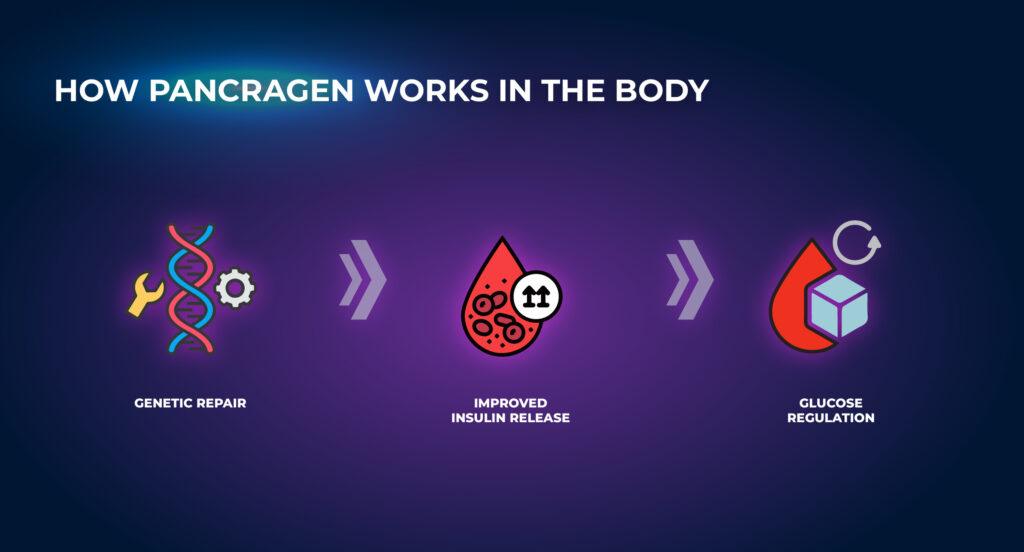
Khavinson’s group proposes that ultrashort peptides such as KEDW can enter cells and reach the nucleus, where they interact with DNA and change which genes the cell reads. That would shift which proteins the cell makes, including the proteins that control how pancreatic cells mature, divide and survive.
This is a working model from the group’s own laboratory and modeling work, not an established mechanism. It has not been shown in the human pancreas, and the effects below were measured in cell cultures and monkeys.
Pancreatic Cell Maturation (Cell Data)
In a cell-culture study from Khavinson’s group, KEDW raised the expression of Pdx1, Foxa2, Pax6, Pax4 and Nkx2.2. These are transcription factors that guide how pancreatic cells mature, including the beta cells that make insulin. The effect was reported in both young and aged cultures, which is why Pancragen is promoted for the aging pancreas.
Cell Survival and Renewal (Cell Data)
A second paper from the group, “Tetrapeptide stimulates functional activity of pancreatic cells in aging“, linked KEDW in aging pancreatic cell cultures to:
- Higher PCNA and Ki-67, markers of cell division and renewal
- Higher MMP2, MMP9 and Mcl-1, proteins involved in tissue remodeling and cell survival
- Lower p53, a protein that can push damaged or aging cells toward self-destruction (apoptosis)
Read together, these results suggest more cell renewal and less cell death in culture. Changes in markers in a dish do not show that the pancreas of a living person regenerates.
Blood Sugar Control (Monkey Data)
The main animal evidence comes from work by Khavinson and colleagues in old rhesus monkeys, whose glucose tolerance declines with age much as it does in people. After a course of Pancragen, the animals cleared glucose faster after a glucose challenge, and their insulin and C-peptide responses moved toward normal. C-peptide is released together with insulin, so it shows how much insulin the pancreas itself is producing. The effects were reported to last for weeks after the course ended.
These are animal studies. They have not been repeated in controlled human trials, so they do not show that Pancragen improves blood sugar in people, with or without diabetes.
Mechanisms at a Glance
| Reported effect | Where it was seen | Type of evidence |
|---|---|---|
| Gene regulation (DNA interaction) | Model proposed by Khavinson’s group | Laboratory and modeling work |
| More Pdx1, Foxa2, Pax4, Pax6 and Nkx2.2 | Young and aged pancreatic cell cultures | Cell culture |
| More Ki-67 and PCNA, less p53 | Aging pancreatic cell cultures | Cell culture |
| Faster glucose clearance, better insulin and C-peptide responses | Old rhesus monkeys | Animal study |
| Effect on human blood sugar or diabetes | Not tested in controlled trials | None |
Pancragen Benefits: What the Research Suggests
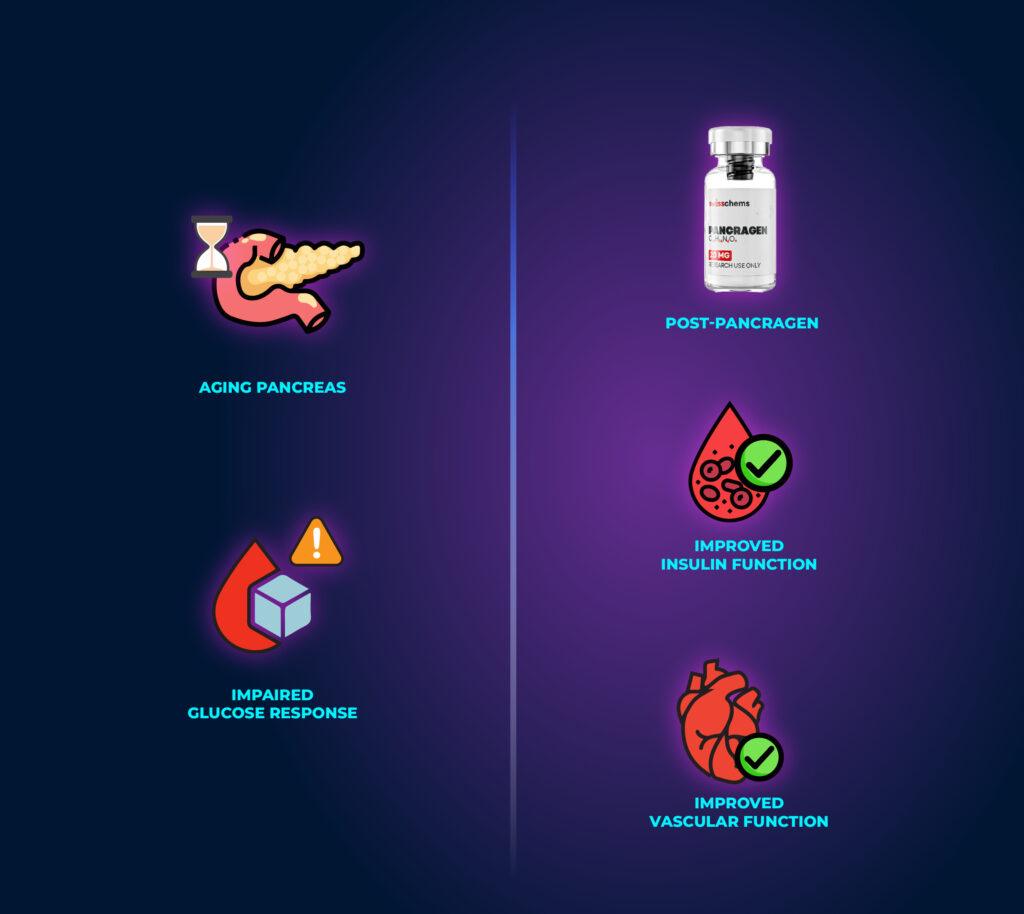
Every benefit claimed for Pancragen rests on cell and monkey data. Here is what that data points to, and where the gaps are.
Pancreatic Cell Renewal
The cell-culture work points to a peptide that supports the maturation and survival of pancreatic cells, including in aged cultures. That is the basis for the “pancreatic regeneration” claim. No study has shown that Pancragen restores beta cells or pancreatic tissue in people, and lab results are a long way from that.
Blood Sugar and Insulin Response
The monkey studies are the strongest evidence for an effect on whole-body metabolism. They showed better glucose handling in old animals, and the effect outlasted the course. Whether the same happens in people, how large the effect would be and how long it would last are all unknown.
Human Data
There are no published randomized controlled trials of Pancragen in people. Claims that it is “safe and effective” or “low-risk” are not backed by formal safety or efficacy studies. The honest summary is that the human evidence is missing, not that it is negative.
Who Is Interested in Pancragen and Why
Pancragen draws interest from several groups. None of these uses has been tested in controlled trials; this section explains why people try it, not proof that it works.
Older Adults
Insulin secretion and glucose tolerance tend to decline with age, which is why the aged-culture and old-monkey findings attract older users. Whether Pancragen helps preserve the endocrine (insulin-producing) or exocrine (digestive enzyme) functions of the pancreas in people has not been studied.
People With Insulin Resistance or Metabolic Syndrome
The monkey data on glucose tolerance is the reason Pancragen comes up in discussions of insulin resistance. Those studies did not test insulin sensitivity in people, and Pancragen is not a treatment for prediabetes, metabolic syndrome or diabetes. Anyone with these conditions should work with a doctor on blood sugar regulation rather than rely on an unapproved peptide.
Athletes on High-Carbohydrate Diets
Some lifters on high-carbohydrate bulking diets use Pancragen hoping to support their insulin output. In healthy, active people the pancreas handles a high-carbohydrate diet without outside help, and there is no evidence that Pancragen improves nutrient partitioning, body composition or performance.
Biohackers
In longevity circles, Pancragen is often run as part of a rotation of organ-specific bioregulators, alongside peptides such as Cartalax for cartilage. This is community practice. No study has tested bioregulators in combination or shown that they extend healthy lifespan in people.
How Pancragen Is Used
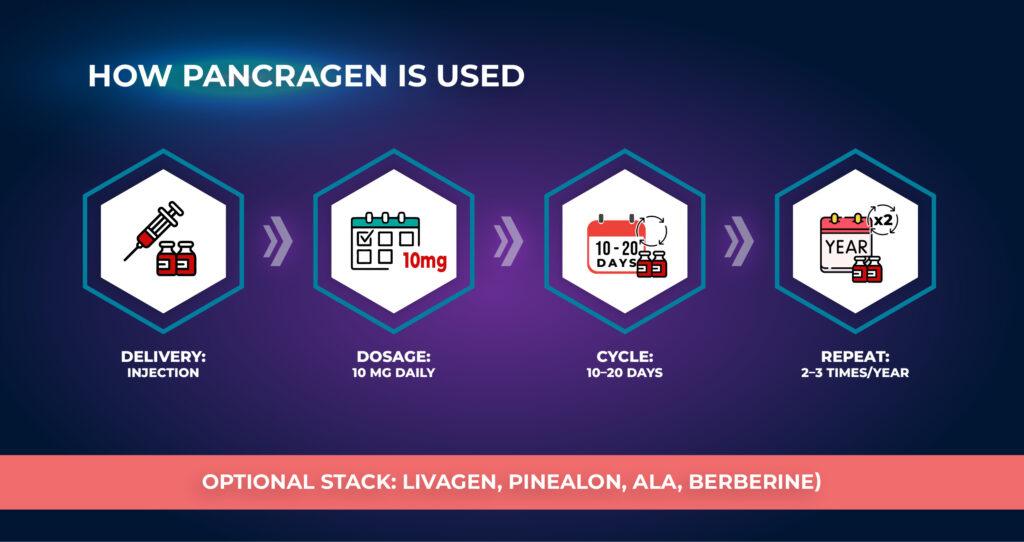
Pancragen is sold in two forms. In Russia, the main form is oral capsules marketed as a dietary supplement. Outside Russia, it is mostly sold as a research peptide in vials, which is reconstituted and injected under the skin (subcutaneous) or into a muscle (intramuscular).
Oral forms are not rare: like most of Khavinson’s bioregulators, Pancragen is sold in Russia mainly as capsules. Larger peptides are broken down in the gut, but Khavinson’s group argues that very short peptides such as KEDW can be absorbed intact. How much intact Pancragen reaches the pancreas after a capsule is swallowed has not been shown in people.
Reported Doses and Course Length
No human dose of Pancragen has been established in clinical research. The figures below are what is commonly reported, not a recommendation.
- Injectable research vials: the figure that circulates most, 10 mg per day for 10-20 days, comes from vendor and forum protocols. It is often described as a Russian clinical protocol, but no published human trial has tested it.
- Capsules: the capsule products sold in Russia carry their own label directions. These have not been tested in controlled trials.
- Repeat courses: courses are usually described as short and repeated after a break, often 2-3 times a year. This matches how Khavinson’s bioregulators are generally described, but there is no published data on long-term repeated use in people.
The monkey studies reported effects that outlasted treatment by weeks, which is the main reason short courses with breaks are the norm. That does not tell you what dose or schedule, if any, is right for a person.
What People Pair It With
No study has tested Pancragen together with other peptides or supplements. Stacks are community practice, and combining compounds makes it harder to tell what, if anything, is working or causing a side effect.
- Livagen: another Khavinson tetrapeptide (Lys-Glu-Asp-Ala), common in longevity stacks. Its research, like Pancragen’s, is preclinical and comes mostly from the same group.
- Pinealon: a tripeptide from the same group (Glu-Asp-Arg), studied in cell and animal models for effects on nerve cells. People add it for brain and stress support; none of this has been tested with Pancragen.
- Metabolic supplements: berberine has human trials showing lower blood sugar in type 2 diabetes, and alpha-lipoic acid is also used for glucose control. Neither has been tested with Pancragen, and stacking several glucose-lowering agents raises the chance of blood sugar dropping too low.
Side Effects and Safety
There are no formal human safety studies of Pancragen, so its side effects and long-term risks are not known. Cell and animal studies of this kind are not designed to find rare or long-term harms. What exists is user reports and the general risks of research peptides.
- Commonly reported: mild redness, itching or discomfort at the injection site.
- Blood sugar: Pancragen is claimed to affect insulin output. How it interacts with insulin, sulfonylureas or other glucose-lowering drugs has not been studied, so anyone taking these should not add it without their doctor.
- Purity: research vials are not made to pharmaceutical standards. Contamination, a wrong dose or a different compound in the vial are real risks.
- Injection risks: infection from non-sterile reconstitution or injection technique.
- Cell growth: KEDW raised markers of cell division (Ki-67, PCNA) in culture. Its effect on existing tumors, including pancreatic tumors, has not been studied.
People who should not use it include anyone pregnant or breastfeeding, anyone under 18, and anyone with a current or past cancer. If you have diabetes, pancreatitis or another pancreatic condition, do not use Pancragen in place of the treatment your doctor has prescribed.
Legal Status
Pancragen is not a controlled substance in most countries. In Russia it is sold as a dietary supplement. In the United States and Europe it is not approved for human use and is sold as a research peptide, labeled not for human consumption.
Tested athletes should be careful. WADA’s S0 category covers pharmacological substances that are not approved by any government health authority for human therapeutic use. Check with your anti-doping body before using any research peptide.
Where to Buy Pancragen
Pancragen is sold mainly as a research peptide. If you buy it for research, choose a vendor that publishes a third-party certificate of analysis (COA) for each batch, and store it as the label directs; our guide on how to store peptides covers powder and mixed vials. A COA does not make a product safe for human use.
SwissChems sells Pancragen as a research peptide.

Pros
- Exceptional purity & testing (≥98%)
- Pharmaceutical-style packaging for stability
- Broad catalog across peptides & nootropics
- Strong reputation & consistency across years
Cons
- Some items frequently out of stock due to high demand
- Limited long-term data for some compounds
The Bottom Line
Pancragen is a well-defined pancreas peptide on paper, but every benefit claimed for it still rests on cell-culture and monkey data.
- In cell cultures, KEDW raised pancreatic maturation factors and renewal markers and lowered p53. In old rhesus monkeys, it improved glucose clearance and insulin and C-peptide responses for weeks after a course. Almost all of this work comes from one research group.
- There are no controlled human trials and no established human dose. The 10 mg a day for 10-20 days seen online is a vendor and forum protocol, and in Russia Pancragen is mostly sold as capsules.
- It is a dietary supplement in Russia and an unapproved research peptide elsewhere. Long-term safety is unknown, and it should never replace treatment for diabetes or any pancreatic condition.
Frequently Asked Questions
Disclaimer
Please read carefully
The information on this site is for educational and informational purposes only, and is not medical advice. Always consult a qualified healthcare professional before using any supplement or medication, or making changes to your health, fitness, or nutrition routine.
Not medical advice
Content here is not a substitute for professional medical advice.
Consult your doctor
Talk to your doctor before starting any supplement or new routine.
Use at your own risk
We are not responsible for adverse effects from acting on this.
Do your research
Make informed decisions about your own health.
No guarantees
Individual results vary. No claims about outcomes.
Important — Never disregard professional medical advice or delay seeking it because of something you read here. If you think you may have a medical emergency, call your doctor or your local emergency number right away.