Contents13 sections
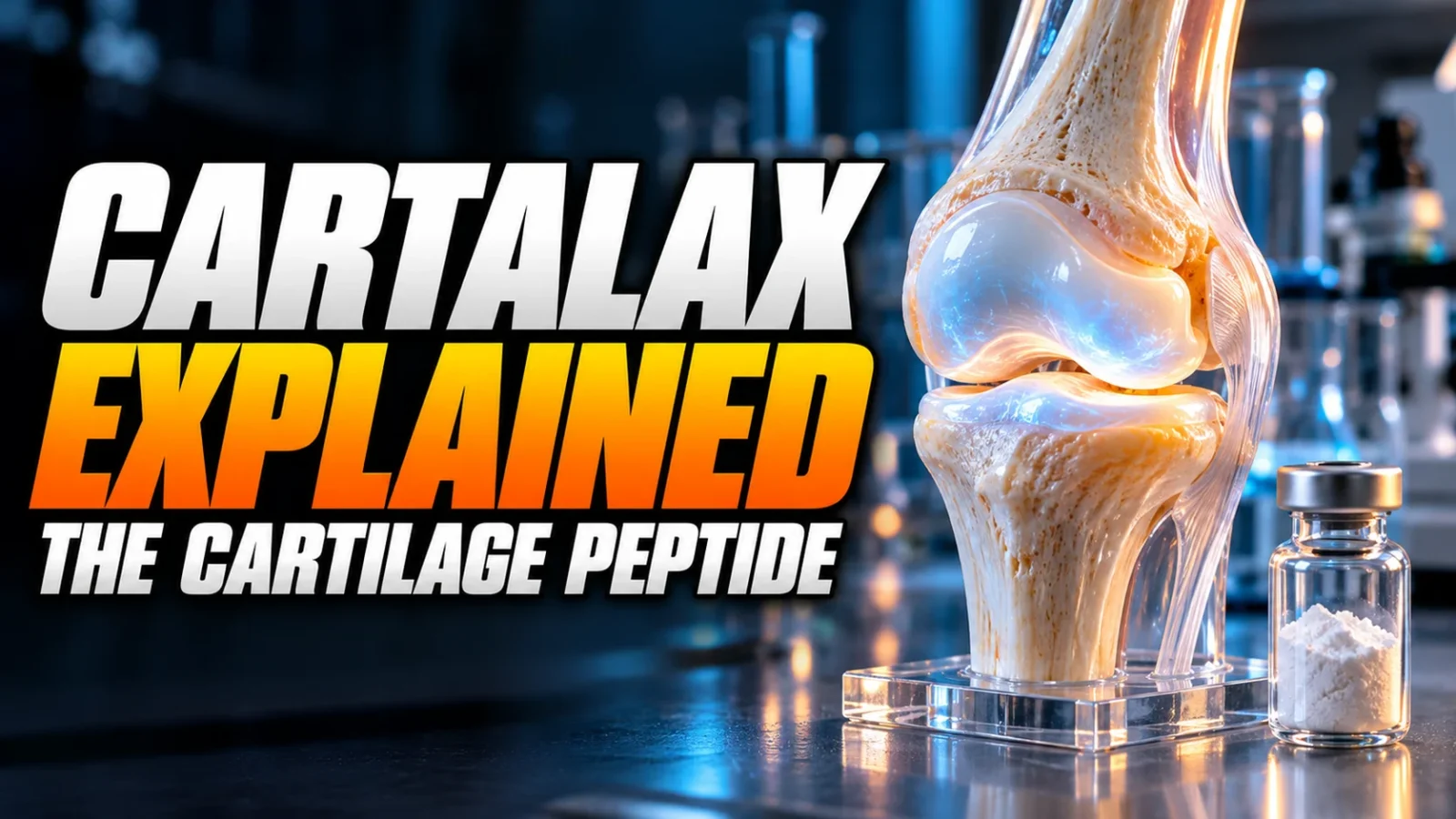
Cartalax is a short synthetic peptide made of three amino acids: alanine, glutamic acid and aspartic acid (Ala-Glu-Asp, or AED). It is one of the “peptide bioregulators” developed by Vladimir Khavinson’s group at the St. Petersburg Institute of Bioregulation and Gerontology in Russia, and it is aimed at cartilage and other connective tissue.
Lifters and older athletes are interested in it because of cell-culture reports that AED raises cartilage proteins such as type II collagen and lowers MMP-9, an enzyme involved in tissue breakdown. Those findings come from preclinical work. There are no controlled human trials showing that Cartalax rebuilds cartilage or eases joint pain, and it is not an approved medicine.
This guide covers what Cartalax is, how it is thought to work, what the evidence does and does not show, the doses and course lengths that are reported, and what is known about safety and legal status.
Key Takeaways
- Cartalax is a synthetic tripeptide (Ala-Glu-Asp, or AED) from Vladimir Khavinson’s group, sold as a “bioregulator” for cartilage and connective tissue.
- In cell cultures, AED was linked to more type II collagen and proteoglycan activity and less MMP-9, an enzyme involved in tissue breakdown (cell data).
- The same group reports lower cell-aging markers (p16, p21, p53, caspase-3) and higher SIRT-6 in aged cells. These are lab findings, not proof of slower aging in people.
- It is not an approved drug: in Russia it is sold as a dietary supplement, elsewhere as a research peptide, and claims of military use are not backed by published sources.
- No human dose has been established. Reported courses are short (10-20 days), and the 5-10 mg figures seen online come from vendor and forum protocols, not trials.
What Is Cartalax?
Cartalax is a synthetic tripeptide with the sequence Ala-Glu-Asp (AED). It belongs to the same family of short peptides as Vilon, Chonluten and Epitalon, which Khavinson’s group calls bioregulators. Our guide to bioregulators and their benefits explains the idea behind the whole group.
The theory is that each of these peptides acts on one type of tissue by entering cells and adjusting which genes are switched on. For Cartalax, the targets are chondrocytes (the cells that build and maintain cartilage) and the fibroblasts of other connective tissue.
Almost all of the published research on AED comes from Khavinson’s group and its collaborators, and independent confirmation is limited. The evidence is preclinical: cell cultures and other laboratory work.
Is Cartalax an Approved Drug?
No. Some websites describe Cartalax as an approved medicine in Russian and Eastern European medical protocols, or as a recovery drug made for soldiers. Neither claim holds up. In Russia, Cartalax is sold as a dietary supplement in capsule form, not registered as a medicine, and the stories of military use are not supported by published sources.
Outside Russia, it is sold mostly as an injectable research peptide in vials, labeled not for human use. It is not approved by the FDA, the EMA or any other major regulator for any condition.
How Cartalax Is Thought to Work

Khavinson’s group proposes that ultrashort peptides such as AED can enter cells and reach the nucleus. There, according to their molecular modeling and test-tube work, the peptide binds DNA (mainly in the minor groove) and changes how tightly chromatin is packed. That would make some genes easier for the cell to read and others harder, shifting which proteins the cell makes.
This is a working model, not an established mechanism. It has not been shown in human cartilage, and the effects below were measured in cell cultures.
Cartilage Proteins (Cell Data)
- In cell-culture studies, AED was linked to higher activity of the genes for type II collagen and proteoglycans, the main building blocks of cartilage.
- It was also linked to lower expression of MMP-9, an enzyme involved in tissue breakdown and inflammation.
Cell Aging Markers (Cell Data)
- In aged cell cultures, AED lowered markers tied to cell aging and cell death, including p16, p21, p53 and caspase-3.
- It raised SIRT-6, a protein involved in DNA repair. Some reports also describe higher Ki-67 and CD98hc, markers of cell renewal and of the cell’s ability to take up nutrients.
- Changes in these markers in a dish do not show that cartilage, joints or people age more slowly.
Mechanisms at a Glance
| Mechanism | Reported effect | Type of evidence |
|---|---|---|
| Gene regulation (DNA binding) | May open or close gene regions, shifting which proteins are made | Molecular modeling and test-tube work |
| Cartilage protein production | More type II collagen and proteoglycan activity | Cell culture |
| Tissue breakdown | Lower MMP-9 expression | Cell culture |
| Cell aging markers | Lower p16, p21, p53 and caspase-3; higher SIRT-6 | Cell culture |
| Effect on human joints | Not tested in controlled trials | None |
Cartalax Benefits: What the Research Suggests
Every benefit claimed for Cartalax rests on preclinical data. Here is what that data points to, and where the gaps are.
Cartilage Regeneration and Osteoarthritis
In cell cultures, AED activated chondrocytes and raised the cartilage proteins they make. Khavinson’s group has published further preclinical work on short peptides and cartilage, and this is the basis for interest in Cartalax for osteoarthritis and worn joints.
No controlled human trial has shown that Cartalax regrows cartilage, slows osteoarthritis or improves joint scans. Cartilage repairs slowly even when a treatment works, so lab results are a long way from proof.
Joint Mobility and Recovery
Claims of better joint function, less stiffness and faster recovery after training come from user reports and marketing, not from published controlled studies. People who try Cartalax often change their training, rest or other supplements at the same time, which makes self-reports hard to read.
Inflammation and Tissue Aging
Lower MMP-9 and lower cell-death markers point to a possible anti-inflammatory and protective effect at the cell level. The group also reports that AED slowed signs of cell aging in culture. Whether any of this happens in human joints, at the doses people actually use, is unknown.
Human Data
There are no published randomized controlled trials of Cartalax in people. Statements that it is “safe in short cycles” or “well tolerated in humans” are not backed by formal safety studies. The honest summary is that the human evidence is missing, not that it is negative.
Who Is Interested in Cartalax and Why

Cartalax draws interest from several groups. None of these uses has been tested in controlled trials; this list shows why people try it, not proof that it works.
- Athletes and lifters: joint wear from heavy training and recovery after injuries.
- Older adults: joint stiffness and age-related cartilage wear.
- Biohackers: longevity stacks built around several bioregulator peptides.
- Bodybuilders: joint and tendon support during deloads or between cycles.
- Buyers in Russia: the capsule form is sold over the counter as a dietary supplement.
Stacking Cartalax: What People Pair It With
No study has tested Cartalax together with other peptides. Stacks are community practice, and combining compounds also makes it harder to tell what, if anything, is working or causing a side effect.
With TB-500 or BPC-157

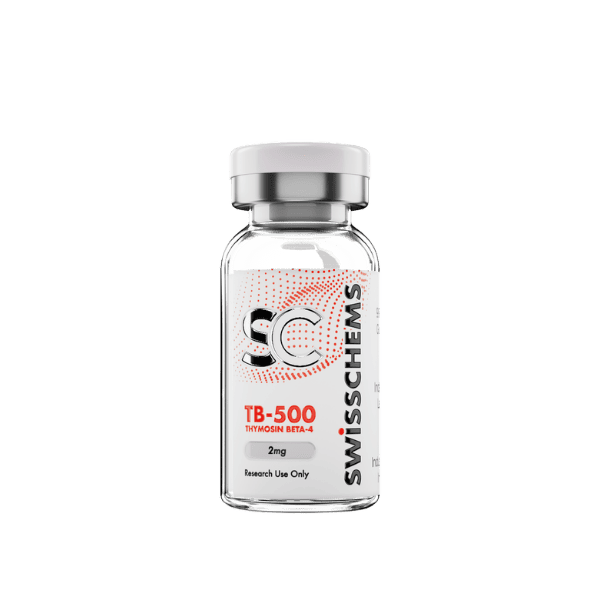
TB-500 is a synthetic peptide based on thymosin beta-4, a protein that regulates actin, which cells use to move and repair tissue. BPC-157 is a peptide studied mainly in rats for tendon, ligament, muscle and gut healing. Both have animal data on soft-tissue repair and very little human data.
People pair them with Cartalax hoping to cover soft tissue and cartilage at the same time. That combination has not been studied.


Overview
- Form: Lyophilized powder
- Researched Dosage: 2 mg to 5 mg per week, often split into two doses, during a 4-6 week loading phase; then 2 mg to 2.5 mg every 1-2 weeks for maintenance
- Typical Cycle: 4-8 weeks
- Cost: $23.96-$25.16
- Stacking Options: BPC-157, GHK-Cu, CJC-1295/Ipamorelin
Pros
- Thought to help regulate actin, a protein involved in cell movement and structure, which may help with tissue repair and recovery.
- Animal studies suggest it may speed up healing in muscle, tendon, ligament and skin, and may reduce inflammation.
- Commonly paired with BPC-157 because the two peptides are believed to support recovery in different ways.
Cons
- May encourage new blood vessel growth and cell migration, which raises a theoretical concern about speeding up existing tumors. Long-term human safety data is very limited.
- Not an approved human medication. The FDA lists it as a bulk substance with potential safety risks (Category 2), and WADA bans it for tested athletes.

With Epitalon

Epitalon (AEDG) is another Khavinson peptide, studied mainly for its effects on telomerase and the pineal gland. It is often paired with Cartalax in longevity stacks. As with the other combinations, there is no research on using the two together.

Reported Doses and Course Length
No human dose of Cartalax has been established in clinical research. The figures below are what is commonly reported, not a recommendation.
- Injectable research vials: figures that circulate online, such as 5-10 mg per day by subcutaneous or intramuscular injection, come from vendor and forum protocols. No published human study has tested these doses.
- Course length: reported courses are short, usually 10-20 days, sometimes repeated after a break of several months. This matches how Khavinson’s bioregulators are generally described.
- Longer runs: some vendor pages list use for up to 4-6 weeks. There is no safety data for runs of that length, and longer exposure adds unknown risk.
- Capsules: the capsule products sold in Russia carry their own label directions. These have not been tested in controlled trials, and it is not known how much intact peptide reaches cartilage after it is swallowed.
Side Effects and Safety: What You Need to Know
There are no formal human safety studies of Cartalax, so its side effects and long-term risks are not known. What exists is user reports and the general risks of injecting research peptides.
- Commonly reported: mild redness, itching or discomfort at the injection site.
- Purity: research vials are not made to pharmaceutical standards. Contamination, a wrong dose or a different compound in the vial are real risks.
- Injection risks: infection from non-sterile reconstitution or injection technique.
- Cell growth: AED is reported to raise markers of cell renewal in culture. The effect of that on existing tumors has not been studied.
People who should not use it include anyone pregnant or breastfeeding, anyone under 18, and anyone with a current or past cancer. If you have arthritis or a joint injury, do not use Cartalax in place of the treatment your doctor has prescribed.
Legal Status
In Russia, Cartalax is sold as a dietary supplement. In the United States and Europe it is not approved for human use and is sold as a research peptide, labeled not for human consumption.
Tested athletes should be careful. WADA’s S0 category covers pharmacological substances that are not approved by any government health authority for human therapeutic use. Check with your anti-doping body before using any research peptide.
Where to Buy Cartalax
Cartalax is sold mainly as a research peptide. If you buy it for research, choose a vendor that publishes a third-party certificate of analysis for each batch, and learn how to read a peptide COA so you can check identity and purity yourself. A COA does not make a product safe for human use.
SwissChems sells Cartalax as a research peptide.
Pros
- Exceptional purity & testing (≥98%)
- Pharmaceutical-style packaging for stability
- Broad catalog across peptides & nootropics
- Strong reputation & consistency across years
Cons
- Some items frequently out of stock due to high demand
- Limited long-term data for some compounds
The Bottom Line
Cartalax is an interesting cartilage peptide on paper, but every benefit claimed for it still rests on cell-culture and other preclinical data.
- In lab studies, AED raised cartilage proteins such as type II collagen, lowered MMP-9 and improved markers of cell aging. Almost all of this work comes from one research group.
- There are no controlled human trials showing it rebuilds cartilage, eases joint pain or speeds recovery, and no established human dose. Reported courses are short, usually 10-20 days.
- It is a dietary supplement in Russia and an unapproved research peptide elsewhere. Long-term safety is unknown, so it should never replace medical care for arthritis or a joint injury.
Frequently Asked Questions
Disclaimer
Please read carefully
The information on this site is for educational and informational purposes only, and is not medical advice. Always consult a qualified healthcare professional before using any supplement or medication, or making changes to your health, fitness, or nutrition routine.
Not medical advice
Content here is not a substitute for professional medical advice.
Consult your doctor
Talk to your doctor before starting any supplement or new routine.
Use at your own risk
We are not responsible for adverse effects from acting on this.
Do your research
Make informed decisions about your own health.
No guarantees
Individual results vary. No claims about outcomes.
Important — Never disregard professional medical advice or delay seeking it because of something you read here. If you think you may have a medical emergency, call your doctor or your local emergency number right away.