
Contents12 sections
Nootropics are substances people take to sharpen focus, memory and mental energy. The term covers everything from caffeine and L-theanine to prescription drugs such as modafinil and research compounds that have never been tested in healthy humans. The products marketed hardest are often the ones with the weakest evidence or the biggest risks.
This guide compares ten popular nootropics for focus and concentration, plus several other common options, on what actually matters: what each one does, how strong the human evidence is, the doses used in studies or commonly reported, the side effects, and who should avoid it. If you are new to the topic, start with our overview of what nootropics are and how they work.
The short version: the best-supported options are also the simplest, and no compound makes up for poor sleep or chronic stress.
Key Takeaways
- The best-supported nootropics for everyday focus are the simplest: caffeine (ideally with L-theanine), creatine for mental fatigue, and Bacopa monnieri for memory over 8-12 weeks.
- Selank, Bromantane and Phenibut were developed in Russia and rely mainly on Russian clinical data; Dihexa has animal and cell data only.
- Phenibut is a sedative, not a focus aid: regular use can lead to dependence and a severe withdrawal syndrome.
- Research compounds such as Oxiracetam, Fasoracetam and NSI-189 have little or no evidence in healthy adults, so any dose quoted is a study or user-reported figure, not advice.
- Sleep, stress and nutrient deficiencies such as low vitamin B12, vitamin D or iron affect focus more than any pill. Fix those first.
What Are Nootropic Supplements?
A nootropic is any natural or synthetic substance taken to improve mental function, such as attention, memory, motivation or mental stamina. Nootropics fall into three broad groups:
- Dietary supplements: caffeine, L-theanine, creatine, Bacopa monnieri, Rhodiola rosea and similar ingredients sold over the counter.
- Prescription drugs: medicines such as modafinil, methylphenidate and amphetamine (Adderall), approved for conditions like narcolepsy and ADHD.
- Research compounds: substances such as Selank, Dihexa, the racetams and NSI-189, which are not approved by the FDA and are sold as research chemicals in the US.
Healthcare professionals disagree about how much nootropics help healthy people. Some argue that much of the benefit is placebo: if you believe a pill will sharpen you, you often feel sharper and more confident. Others point to controlled trials showing real, if modest, effects for some compounds. That is why this guide separates human trials from animal data and user reports.
How Do Nootropics Work?
Research is still working out exactly how many nootropics act, but studies suggest some increase blood flow to the brain, allowing it to use more oxygen and glucose. Nootropics influence different neurotransmitter systems, including the cholinergic (acetylcholine) and glutamatergic systems involved in learning and memory, and some affect brain energy metabolism and the production of ATP.
Others change levels of dopamine or serotonin, which shape motivation and mood, or act on brain-wave patterns and growth factors such as BDNF that support the connections between neurons. Stimulants like caffeine work more directly, by blocking adenosine, the chemical that builds up during the day and makes you feel tired.
How you take them matters too. Water-soluble compounds such as L-theanine and caffeine absorb well with just water, while fat-soluble compounds absorb better with a meal that contains some fat.
The 10 Best Nootropics for Focus and Concentration
The table compares the ten nootropics covered in detail below. “Human evidence” describes the quality of research in people, not how strong the effect feels.
| Nootropic | Best For | Human Evidence | Form | Main Side Effects and Risks |
|---|---|---|---|---|
| Selank | Anxiety relief | Limited (small Russian studies) | Nasal spray, injectable | Nasal irritation, headache, tiredness |
| Dihexa | Neuroprotection | None (animal and cell studies only) | Powder, capsules | Unknown in humans; theoretical cancer concern |
| Bromantane | Stress and fatigue | Limited (Russian studies) | Powder, capsules | Insomnia, restlessness, headache; banned in sport |
| Phenibut HCL | Anxiety (not focus) | Limited (Russian clinical use) | Powder, capsules | Sedation, dependence, severe withdrawal |
| L-Theanine | Calm focus with caffeine | Moderate (placebo-controlled trials) | Powder, capsules | Generally well tolerated |
| Creatine Monohydrate | Mental fatigue | Moderate (reviews of trials) | Powder, capsules | Water weight, stomach upset |
| Bacopa Monnieri | Memory over weeks | Moderate (meta-analyses) | Capsules, powder | Nausea, cramps, diarrhea, fatigue |
| Oxiracetam | Learning and memory | Limited (older dementia trials) | Powder, capsules | Headache, insomnia, irritability |
| Fasoracetam | Mood and focus | Very limited (one small open-label study) | Capsules, powder | Headache, stomach upset; long-term safety unknown |
| NSI-189 | Neurogenesis | Limited (depression trials) | Capsules, powder | Headache, nausea; long-term safety unknown |
1. Selank: Best for Anxiety Relief
Selank is a synthetic peptide developed in Russia, where it is registered as an anti-anxiety nasal spray. It is a modified version of tuftsin, a short peptide the body makes naturally, with extra amino acids added to make it more stable.
Small Russian clinical studies in people with anxiety disorders reported reduced anxiety without the sedation typical of benzodiazepines. Animal research suggests it acts on the GABA system, slows the breakdown of enkephalins (the body’s own calming peptides) and raises BDNF, a growth factor involved in learning, in the hippocampus. Its value for focus is indirect: it is most likely to help when anxiety is what is breaking your concentration.
Doses: Selank is used as a nasal spray or by injection. Commonly reported doses are a few hundred micrograms a day, with 250-300 mcg the most often cited figure. There are no Western clinical trials.
Side effects: It was well tolerated in the Russian studies. Users most often report nasal irritation, headache and tiredness. As with any peptide, an allergic reaction such as a rash is possible.
2. Dihexa: Best for Neuroprotection (Animal Data Only)
Dihexa is a small, peptide-like molecule derived from angiotensin IV, developed by researchers at Washington State University as a possible treatment for Alzheimer’s disease. In cell studies it strongly promoted new connections between neurons by boosting the hepatocyte growth factor (HGF)/c-Met signalling system, and in rats it reversed experimentally induced memory deficits and improved learning in aged animals.
That is where the evidence stops. There are no published human trials of Dihexa, so its effect on focus, a safe dose and its side effects in people are all unknown. Researchers have also flagged a theoretical concern: the HGF/c-Met pathway it activates also drives the growth of some cancers. Whether this matters in practice has not been studied.
Doses: No human dose has been established. The doses quoted online come from vendors and user forums, not from studies, so we do not list one.
Side effects: Unknown in humans. This is the most experimental compound on the list.
3. Bromantane: Best for Stress Management and Fatigue
Bromantane was developed in Russia as an “actoprotector”, a compound meant to raise physical and mental work capacity under stress. It is registered there under the name Ladasten for asthenia, a state of persistent physical and mental fatigue.
Unlike classic stimulants, which force the release of dopamine, bromantane appears to increase how much dopamine the brain makes by raising levels of the enzymes that produce it. Users describe a gradual lift in motivation and energy rather than a stimulant buzz, and Russian studies also describe an anti-anxiety effect. Bromantane is on WADA’s prohibited list and has been since athletes tested positive for it at the 1996 Olympics.
Doses: Russian clinical use for asthenia is typically 50-100 mg a day, taken in the morning, for a few weeks. Commonly reported doses among users range from 50 to 200 mg a day. Taken later in the day, it can disrupt sleep.
Side effects: Insomnia, restlessness, headache and irritability are the most reported. Some users also report a raised heart rate, nervousness or nausea.
4. Phenibut HCL: Strong Anti-Anxiety Effect, High Dependence Risk
Phenibut was developed in the Soviet Union in the 1960s and is still prescribed in Russia and some neighbouring countries for anxiety and insomnia. It is a form of GABA, the brain’s main calming neurotransmitter, with an added ring structure that lets it cross into the brain. It acts mainly on GABA-B receptors, like the muscle relaxant baclofen, and also binds the same calcium-channel site as gabapentin.
Users report less social anxiety, calm and better sleep, which is why it is sold as a nootropic. But phenibut is a sedative, not a focus aid. Higher doses cause drowsiness, poor coordination and euphoria, and its effects take a few hours to build, which leads some people to take more before the first dose has peaked.
Dependence warning: Tolerance to phenibut builds quickly, and regular use can lead to physical dependence. Withdrawal after daily use can be severe: rebound anxiety, insomnia, agitation, tremor and, in some reported cases, hallucinations and psychosis that needed hospital treatment. Combining phenibut with alcohol, benzodiazepines, opioids or other sedatives raises the risk of dangerous over-sedation. Anyone who has been taking it daily should not stop abruptly without medical advice.
Doses: Russian prescribing for adults typically uses 250-500 mg up to three times a day, in courses of a few weeks under medical supervision. Commonly reported doses among users range from 250 to 1,000 mg, and dependence is most often reported after daily use with escalating doses. In the US, the FDA does not consider phenibut a lawful dietary supplement ingredient.
Side effects: Drowsiness, dizziness, nausea, poor coordination, tolerance, dependence and withdrawal.
5. L-Theanine: Best for Calm Focus
L-theanine is an amino acid found mainly in tea leaves and one of the safest, best-studied nootropics. On its own it promotes a relaxed but alert state; studies have found that it increases alpha brain-wave activity, a pattern linked to calm attention.
Its best use is with caffeine. Several placebo-controlled trials found that the combination improved attention and accuracy on demanding tasks and reduced distraction, with some finding the pair worked better than caffeine alone. L-theanine also takes the edge off caffeine’s jitters.
Doses used in studies: Most studies used 100-200 mg of L-theanine, often with 50-100 mg of caffeine, roughly a 2:1 ratio. A cup of tea contains much less theanine than that.
Side effects: Generally well tolerated. High doses may cause mild stomach upset or headache, and it can slightly lower blood pressure in sensitive people.
6. Creatine Monohydrate: Best for Mental Fatigue
Creatine is best known for building strength and muscle, but the brain uses it too. Creatine and phosphocreatine act as a fast energy reserve that helps cells recycle ATP, which matters most when the brain is under strain.
Reviews of randomized trials have found that creatine can improve short-term memory and reasoning, with the clearest effects in older adults, vegetarians (who get little creatine from food) and people who are short on sleep. In young, well-rested people who eat meat, the effects are small or absent. Monohydrate is the form used in almost all of this research; see our guide to the types of creatine for how the others compare.
Doses used in studies: Cognitive studies have used anywhere from about 5 g to 20 g a day. The standard 3-5 g daily dose is the most studied for long-term safety, though brain levels rise more slowly than muscle levels.
Side effects: Early water weight (held in the muscles), and stomach upset or bloating with large single doses. Creatine raises blood creatinine, a lab marker of kidney function, without harming healthy kidneys; people with kidney disease should talk to their doctor first.
7. Bacopa Monnieri: Best for Memory Enhancement
Bacopa monnieri is a creeping wetland herb used for centuries in Ayurvedic medicine to support memory. Its active compounds, called bacosides, appear to support communication between neurons and protect them from oxidative stress in laboratory studies.
Unlike caffeine, Bacopa does nothing on the day you take it. Meta-analyses of randomized trials found that a standardized extract taken daily for about 12 weeks modestly improved memory, particularly recall of newly learned information, and the speed of attention. It is a long-term memory supplement, not a focus booster for a deadline.
Doses used in studies: Most trials used 300 mg a day of a standardized extract, some up to 600 mg, for 8-12 weeks or longer. Taking it with food reduces stomach upset.
Side effects: Nausea, stomach cramps, diarrhea, fatigue and dry mouth are the most reported.
8. Oxiracetam: Best for Learning and Focus
Oxiracetam is a racetam, a relative of piracetam, developed in Italy. Animal studies suggest it increases the release of acetylcholine (cholinergic effects) and enhances signalling at AMPA glutamate receptors, two systems central to learning and recall. Users often describe it as one of the more stimulating racetams, with clearer thinking and better recall.
The human evidence comes mostly from older clinical trials in people with dementia and other forms of cognitive decline, with mixed results. There are no good trials in healthy adults, and it is not approved by the FDA.
Doses: Clinical trials commonly used 800 mg twice a day. Commonly reported doses among users range from about 1,200 to 2,400 mg a day, split into two or three doses, often with a choline source such as Alpha-GPC.
Side effects: Headache, insomnia, nervousness, irritability and stomach upset.
9. Fasoracetam: Best for Mood Stabilization
Fasoracetam is a racetam originally developed in Japan as a treatment for vascular dementia, a programme that was later dropped. In animal studies it activates metabotropic glutamate receptors, increases GABA-B receptor levels and raises acetylcholine release in the cortex, and it showed anti-anxiety and antidepressant-like effects in rodents.
In people, the main evidence is one small open-label study in adolescents with ADHD who carried specific variants in glutamate-receptor genes, which reported improved symptoms. That study had no placebo group, and placebo-controlled results have not confirmed a benefit. There are no trials in healthy adults.
Doses: The adolescent ADHD study used much higher doses than users report, rising to 400 mg twice a day. Commonly reported doses among users are typically 10-30 mg a day.
Side effects: It was generally well tolerated in the ADHD study. Users most often report headache, stomach upset and irritability. Long-term safety is unknown.
10. NSI-189: Best for Neurogenesis
NSI-189 was developed by the US company Neuralstem as an antidepressant. In laboratory and mouse studies it stimulated the growth of new neurons in the hippocampus, the brain region central to memory, and increased hippocampal volume in mice.
It has been tested in people with major depression. A small early trial reported improvements in depression and some cognitive measures. A larger placebo-controlled phase 2 trial missed its main goal on clinician-rated depression scores, although patient-rated depression and some cognitive measures improved at the lower dose. It has not been tested for focus in healthy people.
NSI-189 is sold in two forms, the freebase and the phosphate salt. The phosphate salt dissolves more easily in water and is the form used in the clinical trials.
Doses used in studies: 40-80 mg a day in the phase 2 trial, and up to 120 mg a day in the early trial.
Side effects: It was generally well tolerated in the trials. Users report headache, nausea, dizziness and vivid dreams. Long-term safety is not established.
Buying research compounds: Selank, Dihexa, Bromantane, Oxiracetam, Fasoracetam and NSI-189 are sold as research chemicals, not supplements, and quality varies widely between vendors. If you buy any of them, choose a vendor that publishes independent lab testing for each batch, and check the law where you live. SwissChems, a partner of this site, is the vendor we recommend for research compounds:

Pros
- Exceptional purity & testing (≥98%)
- Pharmaceutical-style packaging for stability
- Broad catalog across peptides & nootropics
- Strong reputation & consistency across years
Cons
- Some items frequently out of stock due to high demand
- Limited long-term data for some compounds
Other Nootropics Worth Knowing
These options did not make the top ten for focus, but they come up in every nootropics discussion, and several have better human evidence than the research compounds above.
Caffeine
Caffeine is the most widely used and best-studied focus aid. By blocking adenosine, it improves alertness, reaction time and attention, especially when you are tired, and most studies show benefits at 50-200 mg. The FDA cites up to 400 mg a day as an amount not generally linked to dangerous effects in healthy adults. Tolerance builds with daily use, and caffeine taken within about six hours of bedtime can disrupt sleep. Pairing it with L-theanine smooths out the jitters.
Noopept
Noopept (omberacetam) was developed in Russia, where it is sold as a medicine for memory problems. It is often grouped with the racetams, though chemically it is a dipeptide. Rat studies show it raises the growth factors BDNF and NGF in the hippocampus; human evidence is limited to small Russian studies in people with mild cognitive impairment. Russian clinical use is 10 mg twice a day, and commonly reported doses are 10-30 mg a day. Users report headache and irritability, especially at higher doses.
Alpha-GPC and Citicoline
Alpha-GPC and citicoline are choline sources the body uses to make acetylcholine. Both are prescription medicines for cognitive decline in some European countries, and both are popular additions to racetam stacks. Common supplement doses are 300-600 mg of Alpha-GPC or 250-500 mg of citicoline a day. Evidence for sharper focus in healthy young adults is limited.
Rhodiola Rosea
Rhodiola is an adaptogenic herb studied for mental fatigue under stress, such as night shifts and exam periods. Some small trials found less fatigue and better concentration with roughly 200-600 mg a day of a standardized extract, but the overall evidence is modest and mixed. Side effects are usually mild: dizziness, dry mouth or feeling overstimulated.
Ashwagandha
Ashwagandha is an Ayurvedic herb with several small randomized trials showing lower perceived stress and cortisol, and some showing better sleep and memory, typically at 250-600 mg of root extract a day. Its benefit for focus is indirect, through lower stress. Rare cases of liver injury have been reported; it should be avoided in pregnancy and used with care by people with thyroid conditions.
Lion’s Mane Mushroom
Lion’s mane (Hericium erinaceus) contains compounds that stimulate nerve growth factor in cell studies. A small Japanese trial in older adults with mild cognitive impairment found that 16 weeks of lion’s mane improved cognitive test scores, and that the gains faded after people stopped taking it. There is little evidence for focus in healthy younger adults.
Modafinil (Prescription Only)
Modafinil is a prescription wakefulness drug for narcolepsy, obstructive sleep apnea and shift-work sleep disorder, and a Schedule IV controlled substance in the US. A systematic review of studies in healthy, well-rested adults found modest benefits on complex tasks such as planning and decision-making, with less consistent effects on simpler ones. It can cause insomnia, headache and anxiety, very rarely serious skin reactions, and it can make hormonal birth control less effective. It is not a study aid for all-nighters: use it only with a prescription and medical supervision.
Brain Fog: Fix the Basics First
Brain fog, the feeling of slow, cloudy thinking and poor concentration, usually has a cause that no nootropic fixes. Before adding a supplement, check the basics:
- Sleep: Short or broken sleep is the most common cause of poor focus. Most adults need seven to nine hours a night.
- Stress: Chronic stress and anxiety drain working memory. Regular exercise, daylight and proper breaks help more than any pill.
- Nutrition and deficiencies: Low vitamin B12, vitamin D or iron can cause tiredness and poor concentration. A blood test shows whether you are low; supplementing when you are not deficient adds little.
- Alcohol and medications: Regular drinking, sleep aids, sedating antihistamines and some other medicines can leave you foggy the next day.
- Medical causes: Thyroid problems, depression, hormonal changes and other conditions can all cause brain fog. If it lasts more than a few weeks, see a doctor.
Benefits of Nootropic Supplements
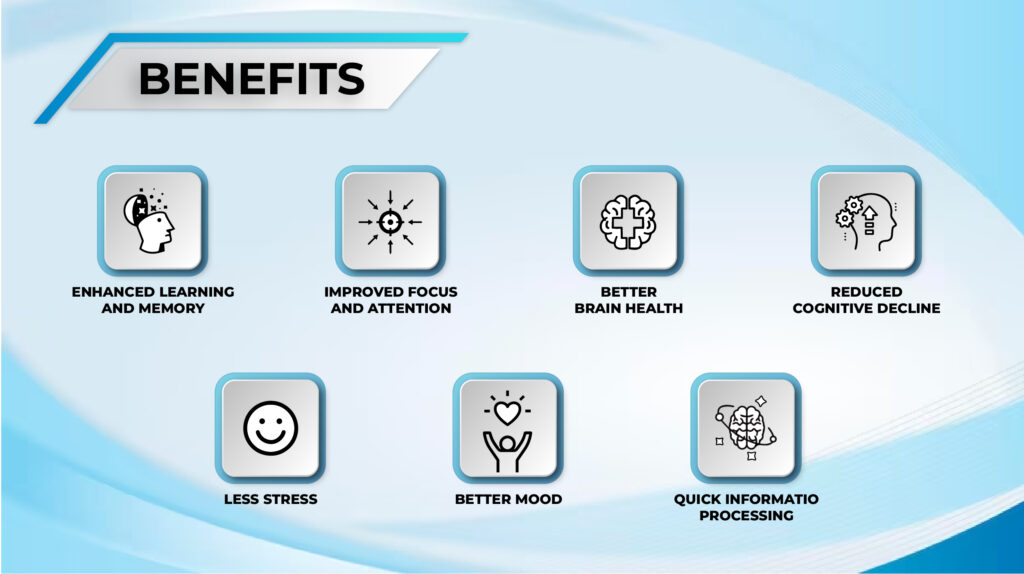
Different nootropics target different parts of mental performance. Here is what the evidence supports, and how strongly:
- Learning and memory: Bacopa monnieri (over 8-12 weeks) and creatine (mainly in older adults, vegetarians and the sleep-deprived) have the best human data. Racetams and Noopept rely mostly on older or small studies, and Dihexa on animal studies.
- Focus and attention: Caffeine, ideally with L-theanine, has the most consistent evidence for short-term gains in alertness and sustained attention.
- Brain health: Dihexa, NSI-189 and lion’s mane promote neuron growth or new connections in lab and animal studies; whether this brings benefits in healthy people is unknown.
- Age-related cognitive decline: Alpha-GPC, citicoline, oxiracetam and lion’s mane have been studied in older adults with cognitive impairment, with modest or mixed results.
- Less stress: Ashwagandha, L-theanine, Rhodiola and Selank may reduce stress or anxiety, which can make it easier to concentrate.
- Mood and motivation: Bromantane and NSI-189 have been studied for fatigue and depression, mainly in small or mixed trials.
- Faster information processing: Caffeine and, under strain, creatine can speed reaction time and mental processing.
Side Effects of Nootropic Supplements
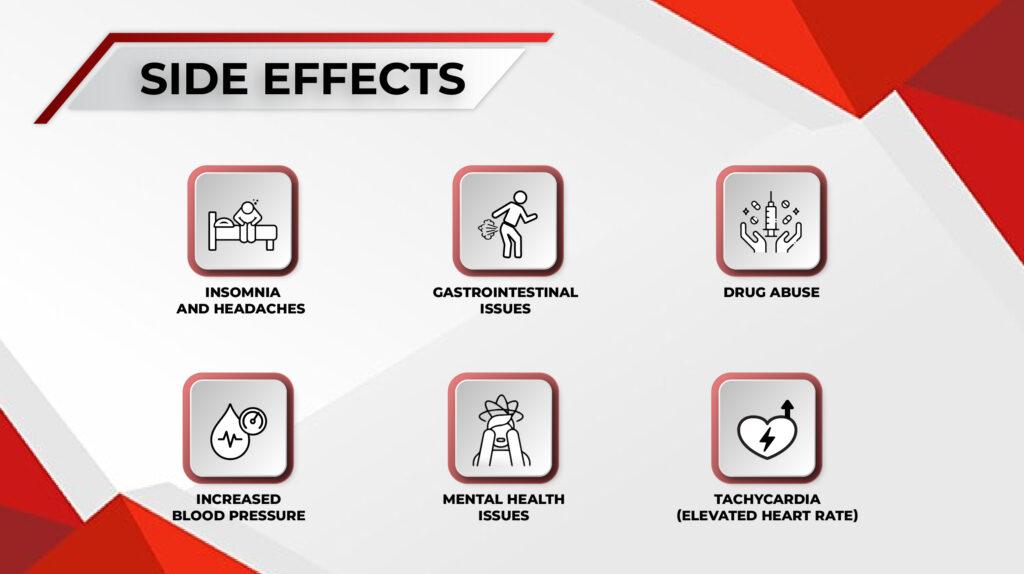
Even natural nootropics can cause side effects, and many research compounds have no long-term safety data at all. The most common risks are:
- Insomnia and headaches: Common with stimulating nootropics such as caffeine, bromantane, racetams and modafinil, especially when taken late in the day.
- Gastrointestinal issues: Nausea, cramps and diarrhea are common with Bacopa and with large doses of creatine or racetams.
- Dependence and withdrawal: Phenibut and prescription stimulants can cause dependence; daily caffeine causes milder withdrawal headaches and tiredness.
- Raised heart rate and blood pressure: Stimulants can cause palpitations and raise blood pressure, a particular concern for people with heart conditions or hypertension.
- Mental health effects: Stimulating compounds can worsen anxiety or irritability, and sedatives such as phenibut can worsen low mood. Responses vary between people.
- Drug interactions: Nootropics can interact with prescription medicines, including antidepressants, blood pressure drugs and hormonal contraceptives.
Doctors advise against using any cognitive enhancer during pregnancy or breastfeeding.
Are Nootropics Legal?
The legality of nootropics depends on the compound and the country.
In the United States, caffeine, L-theanine, creatine, Bacopa and similar ingredients are legal dietary supplements. Modafinil, methylphenidate and amphetamine are prescription-only controlled substances. Racetams, Selank, Dihexa, Fasoracetam and NSI-189 are not approved by the FDA for any use and are sold as research chemicals, and the FDA has stated that phenibut and piracetam are not lawful dietary supplement ingredients.
European rules differ by country; piracetam, for example, is a prescription medicine in several countries. In Australia and Canada, legality also depends on the compound and its intended use, and Australia lists phenibut as a prohibited substance.
Competitive athletes should also note that bromantane and modafinil are on WADA’s list of substances prohibited in competition. Check local laws before buying or using any nootropic.
How to Choose a Nootropic
Before trying a nootropic, weigh these points:
- Research and evidence: Prefer compounds backed by placebo-controlled human trials over those backed only by animal studies or user reports.
- Safety and dependence risk: Avoid compounds with a known dependence risk or no human safety data, especially for daily use.
- Legal status: Check how the compound is classed where you live, and whether it is banned in your sport.
- Quality: Buy from sources that publish independent lab testing for each batch, so you know what you are taking and how much.
- Medical history and medications: Heart conditions, anxiety, depression and prescription medicines can all change how a nootropic affects you. Talk to your doctor first.
- Cost: Supplements like Bacopa only show benefits after months of daily use, so factor in the ongoing cost.
If you do try one, change one thing at a time so you can tell what is working, and keep simple notes on sleep, mood and focus.
The Bottom Line
The best nootropics for focus are the least exotic: caffeine with L-theanine for daily focus, creatine for mental fatigue, and Bacopa monnieri for memory over months.
- Research compounds such as Selank, Bromantane, Oxiracetam, Fasoracetam and NSI-189 have limited human data, and Dihexa has none. Treat any dose you see as a study or user-reported figure, not a recommendation.
- Phenibut is a sedative with a real risk of dependence and withdrawal, not a focus aid. Modafinil and stimulant ADHD medicines belong under a prescription.
- No nootropic makes up for poor sleep, chronic stress or a nutrient deficiency. Fix those first, then add one well-studied compound at a time.
Frequently Asked Questions
Disclaimer
Please read carefully
The information on this site is for educational and informational purposes only, and is not medical advice. Always consult a qualified healthcare professional before using any supplement or medication, or making changes to your health, fitness, or nutrition routine.
Not medical advice
Content here is not a substitute for professional medical advice.
Consult your doctor
Talk to your doctor before starting any supplement or new routine.
Use at your own risk
We are not responsible for adverse effects from acting on this.
Do your research
Make informed decisions about your own health.
No guarantees
Individual results vary. No claims about outcomes.
Important — Never disregard professional medical advice or delay seeking it because of something you read here. If you think you may have a medical emergency, call your doctor or your local emergency number right away.