Contents14 sections
Nootropics, often called smart drugs or brain enhancers, are substances people take to support memory, focus, alertness or mood. The label covers a very wide range: your morning coffee, herbal extracts such as Bacopa monnieri, amino acids like L-theanine, synthetic compounds such as piracetam, and prescription medicines like modafinil.
That range is why the topic is so confusing. Some nootropics have decades of human research behind them. Others rest on animal studies, small trials or user reports. A few are prescription-only drugs with a real risk of misuse.
This guide explains where the term comes from, how nootropics are thought to work, how strong the evidence is for each popular compound, the main side effects, and how to approach them more safely.
Key Takeaways
- Nootropics are natural or synthetic substances taken to support memory, focus and other mental functions. The term was coined in 1972 with a much stricter meaning than it has today.
- Modafinil, Adderall and Ritalin are prescription-only, controlled medicines, not supplements. Using them without a prescription is illegal and risky.
- Evidence varies widely: caffeine has strong human data, caffeine with L-theanine, creatine and Bacopa have moderate data, and many popular compounds rest on small trials or animal studies.
- Most positive trials were done in people with dementia, cognitive impairment, ADHD or sleep disorders. Benefits in healthy adults are usually small.
- Anxiety, poor sleep, headaches and stomach upset are the most common side effects, mostly with stimulants. Supplements can interact with medicines, so check with a doctor first.
What Are Nootropics?
The term nootropic was coined in 1972 by the Romanian psychologist and chemist Corneliu E. Giurgea, who worked on piracetam, the first drug described as a nootropic. The word combines the Greek nous (mind) and trepein (to bend or turn).
According to Giurgea, a substance had to meet five criteria to be called a nootropic:
- Enhance learning and memory.
- Help learned behavior and memory hold up under conditions that disrupt them, such as low oxygen (hypoxia) or electroconvulsive shock.
- Protect the brain against physical or chemical injury, for example from barbiturates or scopolamine.
- Strengthen the brain’s own control mechanisms in the cortex and the regions beneath it.
- Lack the usual effects of psychoactive drugs, such as sedation or stimulation, and have very few side effects and very low toxicity.
Very few substances meet that strict definition. Stimulants such as caffeine, modafinil and amphetamine fail the fifth criterion, for example. Today the word is used much more loosely for any natural or synthetic substance taken to support cognitive function: memory, focus, alertness, mental energy or mood.
Two very different groups use them. People with conditions such as Alzheimer’s disease, other forms of dementia or ADHD may be prescribed drugs that improve specific brain functions. Healthy adults use supplements, research compounds and sometimes prescription drugs in the hope of a mental edge at work or while studying. The evidence for these two groups is not the same, as the sections below show.
Prescription drugs such as modafinil, Adderall and Ritalin are often lumped in with nootropic supplements online. They are not supplements: they are prescription-only medicines and controlled substances, and they should only be used under a doctor’s care.
How Do Nootropics Work?
There is no single mechanism. Different nootropics act on different systems in the brain, and for many of them the proposed mechanism is better established than the benefit. The main pathways are:
- Neurotransmitters. Choline sources such as Alpha-GPC and citicoline supply the raw material for acetylcholine, a chemical messenger involved in learning and memory. Prescription stimulants increase the activity of dopamine and norepinephrine.
- Adenosine blocking. Caffeine blocks adenosine receptors. Adenosine builds up while you are awake and makes you feel sleepy, so blocking it increases alertness.
- Precursors under stress. L-tyrosine is an amino acid the body uses to make dopamine and norepinephrine. Human studies suggest it may help keep working memory steady during acute stress, such as cold, sleep loss or heavy multitasking, but not when you are rested.
- Blood flow. Some herbs, such as Ginkgo biloba, are thought to improve cerebral blood flow, though this has not translated into clear benefits in large human trials.
- Brain energy. Creatine, best known for strength training, also supports the energy supply of brain cells. Some trials suggest small memory benefits, most clearly in people who are sleep-deprived, older or eat little meat.
- Neuroprotection. Many nootropics reduce oxidative stress and inflammation in cell and animal studies. Whether this protects the human brain over years is mostly unproven.
Reviews of the research report the clearest cognitive benefits in people with age-related memory problems or brain diseases such as Alzheimer’s. In healthy adults the effects are usually smaller, and they depend heavily on the compound, the dose and the task being measured.
For most people, caffeine is the nootropic they already use. The FDA cites 400 mg a day, about four or five cups of coffee, as an amount not generally linked to dangerous effects in healthy adults. Sensitivity varies a lot, and higher intakes raise the risk of anxiety, a racing heart and poor sleep.
The Science Behind Nootropics: Systematic Reviews and Clinical Trials
Nootropics have been studied for decades, but the quality of the evidence varies widely. Clinical trials of nootropic drugs have mostly been done in people with cognitive impairment, dementia or mild cognitive impairment (see this overview of nootropics). Those results do not automatically apply to healthy adults.
Reviews of nootropics in dementia are cautious: on their own they are not a treatment for the disease, although some may play a supporting role, especially in milder stages.
Research has also looked at prescription drugs, such as ADHD medications and modafinil, as cognitive enhancers. These drugs have strong evidence for the conditions they are approved for. In healthy, rested adults the measured benefits are usually modest.
Herbal extracts such as Ginkgo biloba, Bacopa monnieri and Panax ginseng have been studied in both healthy people and people with cognitive impairment. Results range from modest benefits (Bacopa) to mixed or negative findings in large trials (Ginkgo).
The same weak points come up across the field: small trials, short follow-up, different extracts and doses from study to study, and few independent replications. Many claims made online for research compounds come from animal studies or user reports.
Evidence Strength at a Glance
The table below rates the main compounds in this guide. Strong means many human trials with consistent results. Moderate means several human trials with smaller or less consistent effects. Limited means few or small trials, mixed results or mostly animal data.
| Compound | What it is | What the human evidence shows | Evidence strength |
|---|---|---|---|
| Caffeine | Natural stimulant (coffee, tea, pills) | Many trials: better alertness, reaction time and attention, especially when tired | Strong |
| Caffeine + L-theanine | L-theanine is an amino acid found in tea | Several small trials: the pair modestly improved attention and task switching; L-theanine alone has weaker data | Moderate |
| Creatine | Dietary supplement | Trials and reviews: small memory benefits, clearest in sleep-deprived people, older adults and people who eat little meat | Moderate |
| Bacopa monnieri | Ayurvedic herb | Several placebo-controlled trials: modest gains on some memory and attention tests after about 12 weeks | Moderate |
| Ginkgo biloba | Herbal extract | Mixed: some benefit in dementia trials, but the large GEM trial (about 3,000 older adults) found it did not prevent dementia | Limited |
| Ashwagandha | Adaptogenic herb | Small trials: lower reported stress and, in some, lower cortisol; little data on memory or focus | Moderate for stress, limited for cognition |
| Rhodiola rosea | Adaptogenic herb | Small trials on mental fatigue and stress, mostly of low quality | Limited |
| L-tyrosine | Amino acid | Small studies: may protect working memory under acute stress or sleep loss; no clear effect when rested | Limited to moderate |
| Alpha-GPC and citicoline | Choline sources | Small trials in older adults with cognitive impairment; very little data in healthy adults | Limited |
| Omega-3 fatty acids | Fish oil | Large trials in older adults, including AREDS2, found no effect on cognitive decline | Limited |
| B vitamins | Vitamins | Correcting a deficiency (for example B12) matters; extra B vitamins in people with normal levels show little cognitive benefit | Strong for deficiency, limited otherwise |
| Piracetam | Synthetic racetam, not FDA-approved | A Cochrane review found the evidence did not support it for dementia or cognitive impairment; no good trials in healthy adults | Limited |
| Modafinil | Prescription-only (Schedule IV in the US) | Approved for narcolepsy, obstructive sleep apnea and shift work disorder; in rested healthy adults, modest gains mostly on complex tasks | Strong for sleep disorders, moderate in healthy adults |
| Adderall (amphetamine) and Ritalin (methylphenidate) | Prescription-only (Schedule II in the US) | Strong evidence in ADHD; in healthy adults the effects on memory and attention tests are small | Strong for ADHD, limited in healthy adults |
For deeper comparisons, see our guides to the best nootropics for focus and the best racetams and nootropics.
Key Benefits of Nootropics
| Benefit | Examples | What the evidence shows |
|---|---|---|
| Memory | Bacopa monnieri, Ginkgo biloba | Bacopa: modest gains on some memory tests after about 12 weeks. Ginkgo: mixed; a large trial found it did not prevent dementia. |
| Focus and alertness | Caffeine, L-theanine, modafinil (prescription-only) | Caffeine reliably improves alertness, especially when tired. L-theanine may add a little when paired with caffeine. Modafinil is a prescription drug for sleep disorders. |
| Stress and mood | Ashwagandha, Rhodiola rosea | Small trials show lower reported stress, and ashwagandha lowered cortisol in some. Effects on thinking are less clear. |
| Brain aging | Citicoline, Alpha-GPC, omega-3s | Small trials in older adults with cognitive impairment. Little evidence in healthy adults; large omega-3 trials found no effect on cognitive decline. |
| Performance under stress | L-tyrosine, caffeine | Tyrosine may keep working memory steady under acute stress or sleep loss, with no clear effect when rested. |
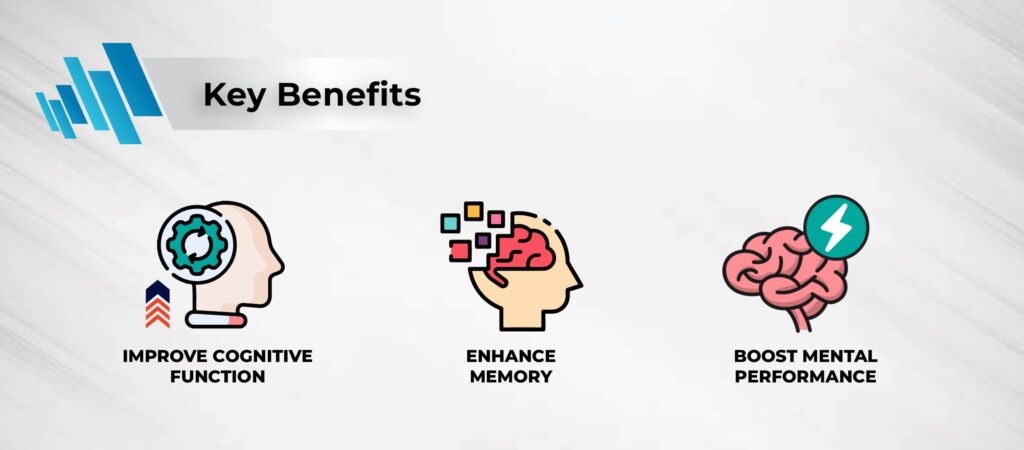
Reviews of nootropics describe benefits for both healthy adults and people with cognitive impairment, but the size of the effect depends on the compound and on who takes it. Here are the main benefits people look for, and what the evidence supports.
Memory Enhancement
Bacopa monnieri and Ginkgo biloba are the herbs most often taken for memory. Some trials found improvements in memory and learning, and small studies in healthy people and people with mild cognitive impairment reported better memory performance after taking these herbal supplements.
The effect builds slowly: Bacopa trials usually run for about 12 weeks before differences show. Ginkgo’s record is weaker; in the large GEM trial it did not prevent dementia in older adults. Neither herb is a quick fix for an exam next week.
Enhanced Focus and Mental Clarity
Caffeine is the best-studied focus aid. Pairing it with L-theanine, an amino acid found in tea, may improve attention a little more and take the edge off caffeine’s jitters for some people.
Some healthy people use modafinil, a prescription-only drug approved for sleep disorders, to stay alert through long days. Without a prescription this is illegal in the US, and it skips the medical checks the drug requires. Studies show that better focus and alertness are among the main reasons healthy adults turn to nootropics.
Mood Improvement and Stress Reduction
Ashwagandha and Rhodiola rosea are adaptogens, herbs taken to help the body cope with stress. Small trials of ashwagandha found lower reported stress and, in some, lower cortisol. Rhodiola’s evidence for fatigue and stress is weaker.
Research generally treats these herbs as a complement to a healthy diet, exercise and sleep, not a replacement. They are not a treatment for anxiety disorders or depression, which need a doctor’s care.
Neuroprotection and Cognitive Longevity
Citicoline and Alpha-GPC supply choline for acetylcholine, which is essential for memory and learning. Small trials in older adults with cognitive impairment found some benefits, but there is little evidence that they protect the brain in healthy people.
Omega-3 polyunsaturated fatty acids from fish are part of brain cell membranes, but large trials in older adults, such as AREDS2, found that omega-3 supplements did not slow cognitive decline.
Enhanced Cognitive Performance Under Stress
L-tyrosine, an amino acid, is a building block for dopamine and norepinephrine. Studies suggest it can help maintain working memory and mental flexibility during acute stress, such as cold exposure, sleep loss or heavy multitasking. When you are rested and unstressed, it does not appear to do much.
Unlike caffeine pills, tyrosine is not a stimulant, so it does not cause jitters, but its effects are also subtler.
Types of Nootropics: Natural, Synthetic and Prescription
Nootropics fall into a few broad groups. The group matters, because it tells you a lot about the evidence, the risks and the legal status.
Natural Nootropics
Natural nootropics come from plants and foods. Reviews of plant-based nootropics describe generally mild side effects, though “natural” does not mean free of risks or drug interactions. The most popular include:
- Ginkgo biloba: thought to improve blood flow in the brain. It has been studied mainly in older adults and people with dementia, with mixed results. It may increase bleeding risk, especially with blood thinners.
- Bacopa monnieri: an Ayurvedic herb with modest memory benefits in several trials. Its proposed mechanisms include effects on neurotransmitter systems and protection of nerve cells. Stomach upset is the most common side effect.
- Rhodiola rosea: an adaptogen studied for mental fatigue and stress, with limited evidence.
- Coffee and tea: the most widely used natural nootropics. Caffeine blocks adenosine and increases alertness and focus, and tea adds L-theanine. Too much caffeine causes jitters, anxiety and poor sleep.
Synthetic and Prescription Nootropics
Synthetic nootropics are made in a lab. They range from research chemicals with little human data to prescription medicines with strong evidence for specific conditions.
- Piracetam and other racetams: piracetam was the original nootropic. It is prescribed in some European countries, mainly for a movement disorder called cortical myoclonus, but it is not approved by the FDA and is sold in the US as a research chemical. The evidence for memory benefits is weak.
- Modafinil (Provigil): a prescription-only wakefulness drug approved for narcolepsy, obstructive sleep apnea and shift work disorder. It is a Schedule IV controlled substance in the US, and buying it without a prescription is illegal.
- Adderall (mixed amphetamine salts) and Ritalin (methylphenidate): prescription-only stimulant medications for ADHD and narcolepsy. Both are Schedule II controlled substances in the US because of their risk of misuse and dependence. They are not nootropic supplements, and taking them without a prescription is illegal and risky.
Vitamins, Minerals, and Amino Acids
These are not nootropics in the strict sense, but some dietary supplements play a role in brain function:
- B vitamins: B6, B12 and folate are needed for neurotransmitter production and energy metabolism. Low B12 can cause memory problems. Supplements help when you are deficient, but not much otherwise.
- Omega-3 fatty acids: found in oily fish and fish oil, these polyunsaturated fatty acids are part of brain cell membranes. Supplements have not shown clear cognitive benefits in well-nourished adults.
- L-theanine and L-tyrosine: amino acids used for calm focus (theanine, usually with caffeine) and for performance under stress (tyrosine).
Adaptogens and Herbal Supplements
Adaptogens such as Ashwagandha and Panax ginseng are taken to help the body handle stress. Ashwagandha has the better evidence for lowering stress and cortisol, while ginseng’s effects on memory and mental clarity are mixed across small trials. Ashwagandha has been linked to rare cases of liver injury and should be avoided in pregnancy.
| Type | Examples | Main uses | Status |
|---|---|---|---|
| Natural nootropics | Ginkgo biloba, Bacopa monnieri, coffee | Memory, focus and alertness; generally mild side effects | Foods and supplements |
| Synthetic nootropics | Piracetam and other racetams | Memory and focus; weak human evidence | Not FDA-approved; prescribed in some European countries |
| Prescription drugs | Modafinil, Adderall, Ritalin | Sleep disorders and ADHD | Prescription-only; controlled substances in the US |
| Vitamins and fatty acids | B vitamins, omega-3s | Brain health; help most when you are deficient | Supplements |
| Amino acids | L-theanine, L-tyrosine | Calm focus and performance under stress | Supplements |
| Adaptogens | Ashwagandha, Rhodiola rosea, Panax ginseng | Stress and fatigue | Supplements |

Pros
- Exceptional purity & testing (≥98%)
- Pharmaceutical-style packaging for stability
- Broad catalog across peptides & nootropics
- Strong reputation & consistency across years
Cons
- Some items frequently out of stock due to high demand
- Limited long-term data for some compounds
How to Use Nootropics More Safely
If you are considering a nootropic supplement, these steps reduce the risk of problems.
1. Consult a Healthcare Professional
Check with a healthcare provider before starting, especially if you take prescription medications or have heart disease, high blood pressure, anxiety, insomnia or a condition such as dementia. Some combinations are risky: Ginkgo with blood thinners, for example, or stimulants with other stimulants or with certain antidepressants such as MAOIs.
2. Start with Low Doses
Start with the lowest common dose of one product at a time, so you can tell what is causing any effect or side effect, and do not exceed the label dose. With prescription drugs, follow the prescriber’s dose exactly.
3. Monitor Timing
Take stimulants such as caffeine early in the day. Caffeine’s half-life is about five hours in most adults, so an afternoon coffee can still disturb sleep at night. Modafinil is normally taken in the morning for the same reason. L-theanine is not sedating: it is often taken with morning coffee, and some people also use it in the evening to wind down.
4. Watch for Tolerance
Regular caffeine use builds tolerance, so the same dose does less over time. Keeping intake modest, or taking regular breaks, helps. Do not stop, skip or “cycle” prescription medicines on your own; any change should go through your doctor.
5. Combine Carefully
Combining nootropics, known as “stacking”, is popular, but most stacks have never been tested together. The main exception is caffeine with L-theanine, which has been studied as a pair. Adding several stimulants raises the risk of anxiety, a racing heart and high blood pressure. Introduce one compound at a time and check combinations with a pharmacist or doctor.
6. Check Product Quality
Supplements are not approved by the FDA before they are sold, so quality varies. Choose products with clear labels and third-party testing, and avoid proprietary blends that hide the dose of each ingredient.
Potential Side Effects of Nootropics: What You Should Know
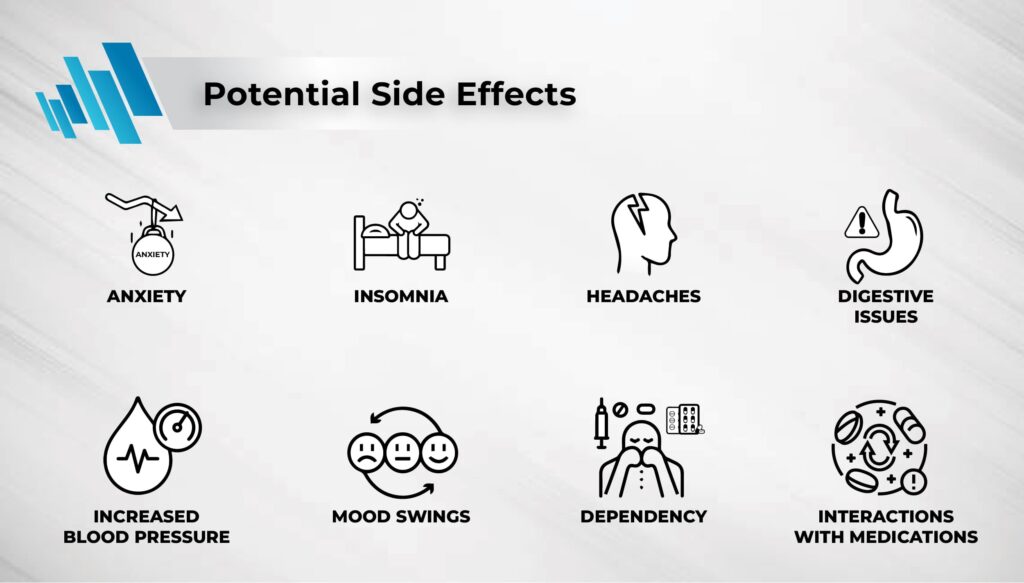
Most natural nootropics cause only mild side effects at normal doses, but the risks rise with stimulants, high doses and combinations. It is worth knowing the potential side effects before you start:
- Nervousness and Anxiety
Stimulants such as caffeine, modafinil and Adderall can overstimulate the nervous system, causing jitters, anxiety and irritability. - Insomnia
Stimulants disrupt sleep, especially when taken late in the day. If you struggle to fall asleep, move your intake earlier or cut the dose. - Headaches and Digestive Issues
Headaches, nausea and stomach upset are common with many supplements, including Bacopa. Taking them with food may help. - Increased Heart Rate and Blood Pressure
Stimulants, including modafinil and ADHD medicines, can raise heart rate and blood pressure. People with heart problems should not use them without medical supervision. - Mood Changes and Dependence
Drugs that act on dopamine can cause mood swings, irritability or a “crash” as they wear off. Adderall and Ritalin carry a risk of misuse and dependence. - Rare Serious Reactions
Modafinil can, rarely, cause serious skin reactions, including Stevens-Johnson syndrome; stop it and get medical help if a rash appears. Ginkgo can increase bleeding risk in people taking blood thinners.
Popular Nootropics and Their Cognitive Benefits
Here is a closer look at five of the most popular nootropics, with what the evidence actually supports for each.
1. Modafinil (Prescription-Only)
Modafinil is approved for narcolepsy, obstructive sleep apnea and shift work disorder, and it is also used off-label to stay awake and focused. It blocks the reuptake of dopamine, although its full mechanism is still not completely understood.
Evidence: strong for excessive sleepiness in these conditions. In healthy, rested adults, a systematic review found modest gains, mostly on longer and more complex tasks. It is a Schedule IV controlled substance in the US; it should only be used with a prescription.
2. Piracetam
Piracetam, the first of the racetams, is the compound the word nootropic was coined for. It is prescribed in some European countries, mainly for cortical myoclonus, and is widely sold online for memory and focus. It is not approved by the FDA.
Evidence: limited. A Cochrane review concluded that the evidence does not support piracetam for dementia or cognitive impairment, and there are no good trials in healthy adults.
3. Ginkgo Biloba (Natural Nootropic)
A popular herbal supplement, Ginkgo biloba is taken for memory and is thought to improve cerebral blood flow. Most research has been in older adults with memory problems or dementia.
Evidence: limited and mixed. Some dementia trials reported small benefits, but the large GEM trial found that it did not prevent dementia in older adults, and benefits in healthy adults are unclear.
4. L-Theanine
Found naturally in tea, L-theanine is an amino acid that promotes calm without drowsiness. It is usually paired with caffeine to smooth out caffeine’s edge while keeping focus.
Evidence: moderate for the caffeine plus L-theanine combination, which improved attention in several small trials. L-theanine on its own has weaker evidence for focus.
5. Bacopa Monnieri (Natural Nootropic)
Used in Ayurvedic medicine, Bacopa monnieri is taken for memory and, less often, for anxiety. Its effects build over weeks rather than hours.
Evidence: moderate. Several placebo-controlled trials found modest improvements on some memory and attention tests after about 12 weeks. Stomach upset is the most common side effect.
Nootropics for Specific Conditions
For medical conditions, nootropics are not a substitute for diagnosis and treatment. Here is how they fit in.
1. Alzheimer’s Disease and Dementia
The drugs approved to treat the symptoms of Alzheimer’s disease are the cholinesterase inhibitors (donepezil, galantamine and rivastigmine) and memantine. They act on the same acetylcholine and glutamate systems that many nootropics target, and they are prescription-only.
Citicoline and Alpha-GPC have been tested in small trials in older adults with cognitive impairment, with some positive results, but they are not standard treatments. Anyone with memory problems should see a doctor first, because some causes, such as low B12 or thyroid problems, are treatable.
2. Attention Deficit Hyperactivity Disorder (ADHD)
For ADHD, prescription stimulants such as Adderall and Ritalin have strong evidence. They increase dopamine and norepinephrine activity, which helps with concentration and impulse control. They are prescription-only, Schedule II controlled substances in the US and should only be used under medical supervision.
Some people try natural options such as Bacopa monnieri, but the evidence for supplements in ADHD is much weaker, and they should not replace treatment without a doctor’s advice. Our guide to Adderall alternatives covers the non-prescription options in more detail.
3. Cognitive Impairment Due to Aging
Aging can bring mild cognitive impairment that affects memory and attention. Omega-3 fatty acids are often recommended, but the results are mixed: some small trials in people with mild cognitive impairment reported benefits, while large trials in older adults, including AREDS2, found no effect on cognitive decline.
Lifestyle factors with good evidence for brain health include regular exercise, treating high blood pressure, good sleep and staying mentally and socially active.
4. Sleep Disorders
People with narcolepsy, obstructive sleep apnea or shift work disorder may be prescribed modafinil or armodafinil to stay awake and alert. These drugs reduce sleepiness and the mental fog that comes with it, but they do not replace sleep, and they do not treat the airway problem behind sleep apnea.
Combining Nootropics with a Healthy Lifestyle
No nootropic makes up for poor sleep, no exercise or a poor diet, and the benefit of most supplements is small next to these basics:
- Sleep: most adults need at least seven hours. Sleep loss impairs memory and attention more than any supplement can fix.
- Exercise: regular aerobic exercise and strength training support blood flow and brain health.
- Diet: oily fish, vegetables and enough B vitamins support normal brain function.
- Stress: chronic stress impairs concentration. Adaptogens such as ashwagandha may help a little, but sleep, exercise and a manageable workload matter more.
The Bottom Line
Nootropics range from coffee to prescription drugs, and the evidence behind them varies just as widely: a few have solid human data, while many rest on small trials or animal studies.
- Caffeine (with or without L-theanine), creatine and Bacopa monnieri have the best evidence among non-prescription options, and their effects in healthy adults are modest.
- Modafinil, Adderall and Ritalin are prescription-only, controlled medicines, not supplements. They belong under a doctor’s care.
- Start with one compound at a low dose, watch for side effects and interactions, and check with a healthcare professional first, especially if you take other medicines.
- Sleep, exercise and diet still do more for focus and memory than any nootropic.
Frequently Asked Questions
Disclaimer
Please read carefully
The information on this site is for educational and informational purposes only, and is not medical advice. Always consult a qualified healthcare professional before using any supplement or medication, or making changes to your health, fitness, or nutrition routine.
Not medical advice
Content here is not a substitute for professional medical advice.
Consult your doctor
Talk to your doctor before starting any supplement or new routine.
Use at your own risk
We are not responsible for adverse effects from acting on this.
Do your research
Make informed decisions about your own health.
No guarantees
Individual results vary. No claims about outcomes.
Important — Never disregard professional medical advice or delay seeking it because of something you read here. If you think you may have a medical emergency, call your doctor or your local emergency number right away.