Contents8 sections
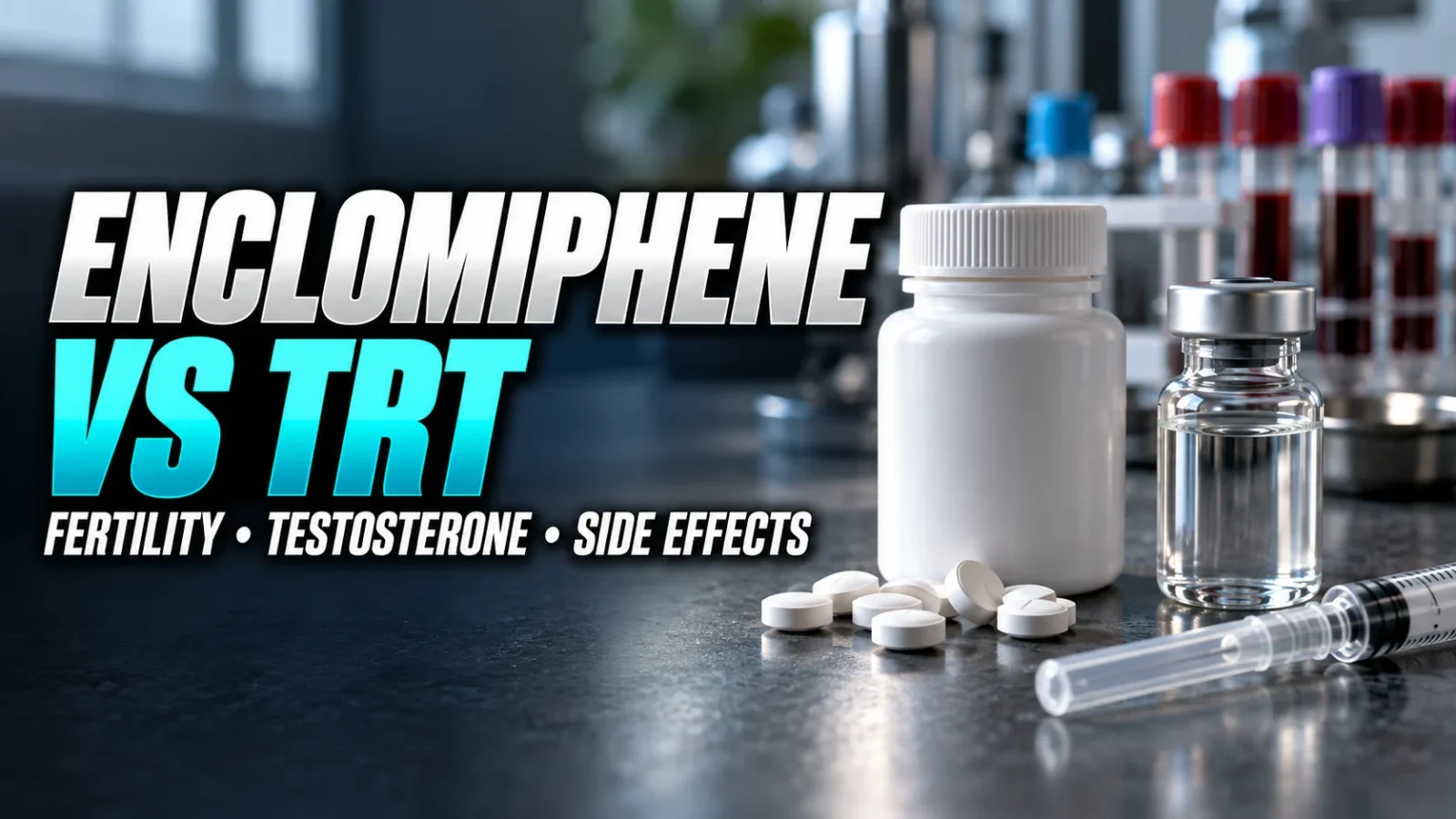
Enclomiphene and testosterone replacement therapy (TRT) both treat low testosterone, but they work in opposite ways. TRT gives you testosterone from outside the body. Enclomiphene, the active isomer of the fertility drug clomiphene, signals your brain to tell the testes to make more of their own.
That difference drives the rest of the comparison: how far testosterone rises, what happens to sperm count and fertility, which side effects show up, and which men each option can help at all. TRT is the standard, FDA-approved treatment for diagnosed hypogonadism. Enclomiphene has been tested in clinical trials but is not FDA-approved.
This guide compares the two on the points that matter, using the clinical trial data where it exists.
Key Takeaways
- Enclomiphene raises testosterone by getting your own body to make more of it. TRT supplies testosterone from outside and switches your own production down while you are on it.
- In clinical trials, enclomiphene kept sperm counts normal while testosterone gel lowered them. TRT can push sperm production down to zero, which matters if you want children.
- Enclomiphene only works if your pituitary and testes can still respond (secondary hypogonadism). TRT works for any cause of low testosterone and raises levels more predictably.
- TRT has decades of use and large safety trials behind it. Enclomiphene’s trials lasted months and mostly measured hormone levels and sperm counts, not symptoms.
- Testosterone is legal in the US with a prescription. Enclomiphene is not FDA-approved; US clinics have prescribed it as a compounded drug, which the FDA does not review.
What Is Enclomiphene Citrate?
Enclomiphene citrate is one of the two isomers that make up clomiphene citrate (Clomid), a drug approved to treat female infertility. Clomiphene is a roughly 60:40 mix of enclomiphene and zuclomiphene. Enclomiphene is the anti-estrogen part. Zuclomiphene has weak estrogen-like effects, clears slowly and builds up with daily use, which may explain some of clomiphene’s side effects.
Enclomiphene is a selective estrogen receptor modulator (SERM). It blocks estrogen receptors in the hypothalamus and pituitary gland. Estrogen normally acts there as a brake on hormone release, so blocking it makes the pituitary release more follicle-stimulating hormone (FSH) and luteinizing hormone (LH). LH tells the testes to make testosterone. FSH, together with the testosterone made inside the testes, keeps sperm production going.
Because it works through your own hormone system, enclomiphene raises testosterone without shutting down sperm production. The catch is that the system has to work: the pituitary must be able to respond, and the testes must still be able to make testosterone.
History of Enclomiphene
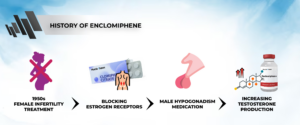
Clomiphene was developed in the late 1950s and approved in the US in 1967 to induce ovulation in women. Doctors found that it also raised testosterone in men, and it has long been used off-label for male hypogonadism and male infertility.
Researchers then isolated enclomiphene to keep the testosterone-raising effect without zuclomiphene. Under the name Androxal, enclomiphene citrate went through phase 2 and phase 3 trials in men with secondary hypogonadism, but it has not been approved by the FDA.
Benefits of Enclomiphene
- Raises your own testosterone: By increasing LH and FSH, enclomiphene gets the testes to make more testosterone instead of replacing it.
- Preserves sperm production: In clinical trials, sperm counts stayed in the normal range on enclomiphene, unlike on testosterone gel.
- Keeps the testes working: Because LH and FSH stay up, the testes are not switched off, so the testicular shrinkage common on TRT is not expected.
- Simple to take and to stop: It is a daily oral tablet. When it is stopped, testosterone drifts back toward its starting level rather than dropping below it, as it can after TRT.
What Is Testosterone Replacement Therapy (TRT)?
Testosterone replacement therapy (TRT) is a prescription treatment for hypogonadism: consistently low testosterone together with symptoms such as low libido, erectile problems, fatigue, low mood and loss of muscle mass. It supplies testosterone from outside the body to bring blood levels back into the normal range. Our guide to the pros and cons of TRT covers the full picture.
Guidelines call for at least two low morning testosterone readings plus symptoms before treatment starts, followed by regular blood tests for testosterone, hematocrit and, depending on age, PSA. TRT works whatever the cause of low testosterone, whether the testes are failing (primary hypogonadism) or the brain is not sending enough signal (secondary hypogonadism).
History of TRT
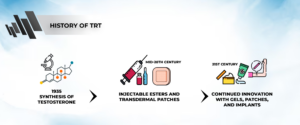
Researchers experimented with testicular extracts in the late 19th century, and testosterone itself was isolated and synthesized in 1935. Injectable testosterone esters followed and were the main option for decades. Patches arrived in the 1990s, gels in 2000, and oral testosterone undecanoate capsules were approved in the US in 2019.
Its heart safety was debated for years. In the TRAVERSE trial, published in 2023, testosterone gel did not increase major cardiovascular events compared with placebo in more than 5,000 men with low testosterone and existing heart disease or a high risk of it. The testosterone group did have more atrial fibrillation, pulmonary embolism and acute kidney injury.
Forms of TRT
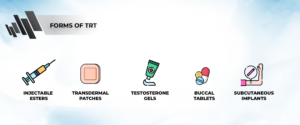
| Form | How often | Worth knowing |
|---|---|---|
| Injections (cypionate, enanthate) | Every 1-2 weeks, or split into smaller, more frequent doses | Cheapest and most common; long gaps between doses cause peaks and dips |
| Gels | Daily, on the skin | Steady levels; can transfer to a partner or child through skin contact |
| Patches | Daily | Skin irritation is common |
| Pellets | Implanted under the skin every few months | Few doses, but the dose can’t be adjusted once implanted |
| Oral testosterone undecanoate | Twice daily with food | No injections or skin transfer; blood pressure needs monitoring |
Benefits of TRT
- Sexual function: In men with confirmed low testosterone, TRT most reliably improves libido and sexual function. Effects on mood and energy are smaller and less consistent.
- Body composition and bone: TRT increases lean muscle mass, reduces fat mass and improves bone density in hypogonadal men.
- Reliability: It raises testosterone in almost every man who takes it, whatever the cause of the deficiency, and the dose can be adjusted to reach a target level.
Enclomiphene Citrate vs TRT
| Point | Enclomiphene | TRT |
|---|---|---|
| How it works | Blocks estrogen feedback in the brain, so the pituitary releases more LH and FSH | Supplies testosterone from outside the body |
| Your own testosterone production | Increases | Suppressed |
| Sperm production | Maintained in trials | Usually falls, sometimes to zero |
| Works if the testes are failing | No | Yes |
| How it is taken | Daily oral tablet | Injections, gels, patches, pellets or oral capsules |
| US status | Not FDA-approved | FDA-approved for hypogonadism; Schedule III controlled substance |
| Evidence | Trials lasting months, mainly hormone and sperm results | Decades of use and large trials, including on heart safety |
Increasing Testosterone
TRT is the more powerful and predictable way to raise testosterone. The dose sets the level, so it can lift testosterone into the normal range in almost any man, including men whose testes no longer work.
Enclomiphene is limited by what your own system can produce. In trials of men with secondary hypogonadism, doses of 12.5-25 mg a day raised average testosterone into the normal range. It does nothing for men whose testes are failing. Our enclomiphene guide for men covers the trial data and the doses used in studies in more detail.
For natural production, the trade-off runs the other way. TRT lowers LH and FSH, so your testes make much less of their own testosterone while you are on it. Production usually recovers after stopping, but that can take months. Enclomiphene raises LH and FSH instead.
Sperm Count and Fertility
The testes need LH and FSH to make sperm. Because TRT lowers both, it also lowers sperm production, which is why testosterone has been studied as a male contraceptive.
A review of sperm recovery after testosterone use summarizes the data: “Testosterone as a contraceptive can suppress spermatogenesis and lead to azoospermia in 65% of normospermic men within 4 months of use. Cessation of exogenous testosterone will lead to the reversal of hormonally-induced azoospermia in 64% to 84% of men with a median time of about 110 days – All men in these studies recovered to baseline levels after cessation of therapy; however, it took up to 2 years for some men to recover. These studies were performed in a controlled setting for a clinical trial, with a limited duration of testosterone use. In actual practice, recovery may not be as pronounced.“
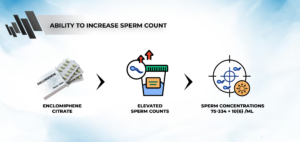
Enclomiphene does the opposite. In a small study comparing it with testosterone gel, “Enclomiphene citrate elevated sperm counts in seven out of seven men at 3 months and six out of six men at 6 months with sperm concentrations in the 75-334 × 10(6) /mL range“. Larger phase 3 trials in overweight men with secondary hypogonadism found the same pattern: enclomiphene raised testosterone and kept sperm counts normal, while testosterone gel lowered them.
If you want children now or in the next few years, this is the clearest difference between the two. Keep in mind that TRT lowers sperm counts but is not reliable birth control. If you are already on TRT, see how to increase sperm count while on TRT.
Estrogen Management
The aromatase enzyme always converts some testosterone into estradiol, so anything that raises testosterone can raise estradiol. That applies to both options.
On TRT, estradiol rises roughly in line with testosterone. Prescribed testosterone is the same hormone your body makes; what pushes estradiol above the normal range is a high dose or large peaks after infrequent injections. That can contribute to water retention and breast tissue growth. See our guide on the best way to control estradiol on TRT.
Enclomiphene blocks estrogen’s signal in the brain, but it does not stop estradiol being made, so blood estradiol can still rise as testosterone rises. Unlike clomiphene, it contains no zuclomiphene, the slowly cleared isomer with estrogen-like effects.
Side Effects of TRT and Enclomiphene
Common TRT side effects include acne and oily skin, fluid retention, breast tenderness or growth, testicular shrinkage and lower sperm counts. TRT raises the red blood cell count (hematocrit), which is checked regularly because very high levels thicken the blood. It can also worsen sleep apnea, and doctors monitor prostate health in older men.
Side effects reported with enclomiphene and clomiphene in men are mostly mild: headache, hot flushes, nausea and mood changes. Blurred vision and other visual disturbances are an uncommon but known side effect of clomiphene and a reason to stop. The biggest gap is long-term data. The enclomiphene trials ran for months, not years.
Who Each Option Suits
- Enclomiphene may suit men with secondary hypogonadism, meaning low testosterone with low or normal LH and FSH, who want to keep their fertility or avoid lifelong injections.
- TRT suits men with primary hypogonadism (testicular failure, shown by high LH and FSH), men who do not respond to SERMs, and men who are not planning children and want the most reliable result.
Legality
Testosterone is an FDA-approved prescription drug and, in the US, a Schedule III controlled substance. It is legal with a valid prescription from a licensed provider, including telehealth clinics.
Enclomiphene is not FDA-approved. In the US, clinics have prescribed it as a compounded drug made by a pharmacy. Compounded drugs are not FDA-approved or FDA-checked for safety, quality or effectiveness, and the FDA’s rules on which substances pharmacies may compound change from time to time, so availability can change. Products sold online as “research chemicals” are not made for human use, and their contents are not verified.
Rules differ in other countries, and in most of them enclomiphene is not a licensed medicine. Both testosterone and SERMs are banned in competitive sport by WADA.
How to Get Enclomiphene or TRT
Start with a diagnosis, not a product: two morning testosterone tests, plus LH and FSH to show whether the problem is in the testes or in the brain. That result decides whether enclomiphene is even an option.
Both are available through licensed clinics, including online TRT clinics that arrange lab work locally and ship the medication. Choose one that tests before prescribing, explains the fertility trade-off and rechecks your blood work.

Pros
- LegitScript-certified telehealth provider that uses licensed U.S. pharmacies.
- Licensed providers review every intake, and TRT plans include quarterly bloodwork.
- Direct-pay pricing with the consultation and shipping included and no membership fees.
- Fully remote, with no clinic visits and treatments shipped to your door.
Cons
- Serves U.S. patients only.
- Some treatments are compounded and have not been evaluated by the FDA for safety or effectiveness.
The Bottom Line
TRT is the stronger, better-proven way to raise testosterone; enclomiphene is the option for men with secondary hypogonadism who want to keep their own production and fertility.
- TRT works for any cause of low testosterone and has decades of data, but it suppresses your own testosterone and sperm production and usually means long-term treatment and monitoring.
- Enclomiphene raised testosterone and preserved sperm counts in trials, but it only works if the testes and pituitary can respond, its long-term data are thin, and it is not FDA-approved.
- Either way, the choice should start with repeat morning blood tests, LH and FSH, and a clinician who will monitor you.
Frequently Asked Questions
Disclaimer
Please read carefully
The information on this site is for educational and informational purposes only, and is not medical advice. Always consult a qualified healthcare professional before using any supplement or medication, or making changes to your health, fitness, or nutrition routine.
Not medical advice
Content here is not a substitute for professional medical advice.
Consult your doctor
Talk to your doctor before starting any supplement or new routine.
Use at your own risk
We are not responsible for adverse effects from acting on this.
Do your research
Make informed decisions about your own health.
No guarantees
Individual results vary. No claims about outcomes.
Important — Never disregard professional medical advice or delay seeking it because of something you read here. If you think you may have a medical emergency, call your doctor or your local emergency number right away.