Contents16 sections
Testosterone replacement therapy can ease the low libido, low mood and fatigue that come with low testosterone. It can also stop sperm production. When testosterone comes from outside the body, the brain stops sending the two hormones the testes need to make sperm, and in many men the sperm count falls to very low levels or to zero.
That matters if you want children now or later. The main ways to protect fertility are to have a semen analysis and freeze sperm before starting, to add low-dose hCG alongside TRT, or to use a treatment that raises your own testosterone instead of replacing it, such as clomiphene or enclomiphene. Men whose sperm count has already dropped usually recover after stopping, but it can take months to two years, and longer in older men and long-term users.
This guide explains how testosterone controls sperm production, what studies show about TRT and sperm counts, how long recovery takes, and which options to discuss with your doctor.
Key Takeaways
- TRT switches off the brain’s LH and FSH signals, which lowers the testosterone inside the testes that sperm production depends on. In contraceptive trials, weekly testosterone injections suppressed sperm counts to zero or near zero in most men within six months.
- Any man of reproductive age should have a semen analysis before starting TRT, and consider freezing sperm if he may want children. In one study, fewer than 2% of men on TRT had one.
- Low-dose hCG alongside TRT, or switching to clomiphene or enclomiphene, can help keep sperm production going. These uses are off-label, and enclomiphene is not FDA-approved.
- Sperm counts usually recover after testosterone is stopped, often within 6 to 12 months, but it can take up to two years. Older men and men who used TRT for longer recover more slowly, and some do not fully recover.
- US guidelines advise against testosterone therapy for men who are trying to conceive. A reproductive urologist can help men with low testosterone who want children.
What Is Testosterone?
Testosterone is the main male sex hormone. It drives male development and keeps up muscle, bone, libido and sperm production in adult men.
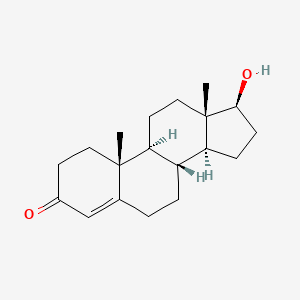
Testosterone levels are controlled by the hypothalamic-pituitary-gonadal (HPG) axis. Roughly every 90 minutes, the hypothalamus releases a pulse of gonadotropin-releasing hormone (GnRH). GnRH tells the pituitary gland to release luteinizing hormone (LH), and LH stimulates the Leydig cells in the testes to make testosterone.
Only about 1-2% of total testosterone circulates in the free form. The rest is bound to proteins: tightly to sex hormone-binding globulin (SHBG) and loosely to albumin. Because the albumin bond is weak, free plus albumin-bound testosterone is called bioavailable testosterone, the share the body can readily use.
What Are Normal Testosterone Levels?
There is no single normal range. Each lab sets its own reference range, and results differ between testing methods. The Endocrine Society uses a standardized range of 264-916 ng/dL for healthy, non-obese men aged 19 to 39. Levels also run highest in the morning, which is why tests are done early in the day.
The American Urological Association (AUA) uses a total testosterone below 300 ng/dL, confirmed on two separate early-morning tests and paired with symptoms, as the threshold for diagnosing low testosterone. For how levels change with age, see our guide to average testosterone levels by age.
Testosterone and Fertility
In healthy men, the hypothalamus releases GnRH in pulses, and GnRH makes the pituitary release two hormones: LH and follicle-stimulating hormone (FSH). LH drives testosterone production in the Leydig cells. FSH acts on the Sertoli cells, which nurse developing sperm inside the seminiferous tubules.
Sperm production depends on both signals: FSH acting on the Sertoli cells, and a very high concentration of testosterone inside the testes. Testosterone levels inside the testes are many times higher than in the blood. Within the tubules, the Sertoli cells are the cells that carry receptors for both FSH and testosterone.
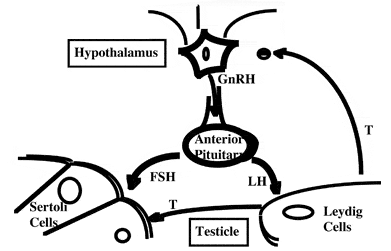
Testosterone inside the testes is needed to form the blood-testis barrier, to keep developing sperm cells attached to the Sertoli cells, and to release mature sperm from them. Without enough of it, sperm production stalls.
Low Testosterone
Testosterone levels decline gradually with age, by roughly 1-2% per year from the 30s onward. The rate varies from man to man and is faster with obesity and chronic disease.
Testosterone replacement therapy (TRT) is widely prescribed to men with low levels and symptoms. The AUA’s 2018 guideline uses a total testosterone below 300 ng/dL as a reasonable cut-off for diagnosing low testosterone, alongside symptoms.
How Common Is Testosterone Deficiency?
In the US HIM study of men aged 45 and older seen in primary care, about 39% had testosterone below 300 ng/dL.
A large international online survey using the Aging Males’ Symptoms (AMS) questionnaire found that most respondents, including many younger men, reported symptoms that can go with low testosterone. A symptom questionnaire cannot diagnose low testosterone, though. Only repeated blood tests can.
TRT can help men with genuinely low testosterone, but it has side effects, and reduced fertility is one that matters to men who want children. Many testosterone users, and even some clinicians, do not know that outside testosterone suppresses the HPG axis and can cause infertility. The good news is that in most cases, TRT-related infertility is reversible.
TRT and Testosterone Deficiency
Testosterone is approved by the Food and Drug Administration (FDA) for men with low testosterone caused by specific medical conditions (primary or secondary hypogonadism). In 2015 the FDA added to the label that its safety and benefit for low testosterone due to aging alone have not been established. Even so, it is widely prescribed for late-onset hypogonadism, the gradual drop in testosterone some men have with age.
In the US, TRT use among men over 40 more than tripled between 2001 and 2011, and use has grown among younger men too.
Signs and symptoms of testosterone deficiency include low libido, erectile dysfunction, depressed mood, reduced muscle mass and strength, low bone density, mild anemia, poor sleep, low energy and trouble concentrating.
The Endocrine Society and the AUA recommend treating only men who have symptoms and low testosterone confirmed on two separate early-morning blood tests.
Does TRT Decrease Your Sperm Count?
Yes, in most men. Along with a rise in red blood cell count (hematocrit), a major side effect of TRT is reduced sperm production. It happens for two linked reasons.
- The brain’s signals switch off. As blood testosterone rises, it (and the estradiol made from it) feeds back on the hypothalamus and pituitary, which cut their release of GnRH, LH and FSH, often to levels too low to support sperm production.
- Testosterone inside the testes falls. Without LH, the Leydig cells stop making testosterone, so levels inside the testes drop even while blood levels are normal or high. Testosterone from an injection or gel cannot reach the concentrations the testes need.
Low FSH combined with low testosterone inside the testes means fewer sperm cells survive and mature. Sperm-producing tissue makes up about 80% of testicular volume, so when it shrinks, the testes get smaller. Testicular shrinkage on TRT reflects that loss of sperm production and Leydig cell activity.
This is why TRT can improve libido and sexual function while lowering fertility at the same time. The AUA and the Endocrine Society both advise against testosterone therapy for men who are trying to conceive or plan to soon.
Do Testosterone Injections Kill Sperm Count?
The clearest evidence comes from trials that tested testosterone as a male contraceptive.
- In a large Chinese trial of monthly testosterone undecanoate injections, more than 90% of men had their sperm counts suppressed to 1 million/mL or less within six months.
- In two World Health Organization trials of weekly testosterone enanthate (1990 and 1996), roughly two-thirds to three-quarters of men had no sperm at all (azoospermia) within six months, and most of the rest fell to 3 million/mL or less.
These trials used doses aimed at full suppression, but they show how strongly testosterone shuts down sperm production. They also show that the effect is not uniform: not every man reached zero. TRT therefore lowers fertility in most men, yet it is not reliable birth control either.
TRT and Infertility
Discuss Fertility Before Starting Testosterone Therapy
Many men are surprised to learn that testosterone can suppress fertility even as it improves libido and erections. Any man who may want biological children should raise it with his doctor before the first dose, not after.
That conversation should cover whether you want children, and when. The answer changes the plan: a man hoping to conceive in the next year may be better served by a treatment other than TRT, while a man with no plans for several years may choose TRT and bank sperm first.
Semen Analysis and Blood Tests
TRT use has grown among men aged 18 to 45. In one study of these men, more than 20% had no testosterone level checked before starting, and fewer than 2% had a baseline semen analysis. Some of them may not have known about the effect on fertility at all.
Along with total testosterone, LH and hematocrit, every man of reproductive age should have a baseline semen analysis before starting TRT. It shows whether his sperm count was already low and gives a reference point for later tests.
How Quickly Does TRT Impact Fertility?
In the first WHO trial, weekly testosterone injections made about 65% of men with normal sperm counts azoospermic within six months. Sperm counts usually start to fall within the first few months.
Responses vary. Some men see a fast, steep drop, others a slower or partial one, depending on the dose, the form of testosterone and the individual.
Is the Impact of TRT on Fertility Permanent?
In most cases, no. When testosterone is stopped, sperm production usually returns, especially after short-term use. A minority of men, more often older men and long-term users, do not recover their previous sperm counts.
How Long After Stopping TRT Does Your Sperm Count Increase?
In the contraceptive trials, sperm counts came back after the injections stopped, usually within several months. Most men returned to their baseline semen results within 6 to 9 months, but some took up to two years.
A 2006 pooled analysis of male contraceptive studies, covering more than 1,500 men, found that about 67% had recovered to a sperm concentration of 20 million/mL within 6 months of stopping, 90% within 12 months and 100% within 24 months. These were healthy young volunteers on short courses, so men on long-term TRT should expect slower recovery.
Kohn and colleagues studied men with infertility after TRT who were treated with human chorionic gonadotropin (hCG) and selective estrogen receptor modulators (SERMs). After 12 months of treatment, about 30% of the men still had not reached a total motile sperm count above 5 million. Older men and men who had used TRT for longer took longer to recover.
| Source | Who was studied | Recovery finding |
|---|---|---|
| WHO contraceptive trials | Healthy men on weekly testosterone enanthate | Most back to baseline within 6-9 months; some took up to 2 years |
| 2006 pooled analysis | More than 1,500 men in contraceptive studies | 67% at 20 million/mL by 6 months, 90% by 12 months, 100% by 24 months |
| Kohn and colleagues | Men with infertility after TRT, treated with hCG and SERMs | About 30% still below a total motile count of 5 million at 12 months; older age and longer TRT slowed recovery |
Recovery usually runs in months, not weeks. After stopping, it takes time for the brain’s signals to return, and producing new sperm takes roughly two to three months on top of that.
If You Want To Be a Father and You Are on TRT, What Should You Do?
Talk to your doctor. They can check whether your low testosterone could be treated another way that leaves sperm production intact.
For example, if the problem is in the pituitary gland (secondary hypogonadism), treatments that stimulate the testes directly, such as hCG, or that raise your own LH and FSH, such as clomiphene, may correct testosterone without shutting down sperm production. These options need testes that can still respond, so they do not help men whose testes are the source of the problem (primary hypogonadism).
If you get TRT through an online clinic, ask before you start whether they offer fertility-preserving options and semen testing. Our guide to the best online TRT clinics compares what the main providers offer.

Pros
- LegitScript-certified telehealth provider that uses licensed U.S. pharmacies.
- Licensed providers review every intake, and TRT plans include quarterly bloodwork.
- Direct-pay pricing with the consultation and shipping included and no membership fees.
- Fully remote, with no clinic visits and treatments shipped to your door.
Cons
- Serves U.S. patients only.
- Some treatments are compounded and have not been evaluated by the FDA for safety or effectiveness.
If You’re on TRT and You Want To Be a Dad, Should You Stop?
Do not stop TRT suddenly or on your own. Stopping brings back the symptoms of low testosterone, and they can be worse than before for a while, because your own production is still switched off.
If your doctor decides that stopping TRT is the right move for your fertility, they may taper the dose, or switch you to a medicine that restarts your own production, such as clomiphene (Clomid) or hCG. The approach is similar to the recovery protocols described in our guide to PCT for testosterone, but it should be run and monitored by a doctor.
How Can You Increase Sperm Count While on TRT?
These are the main options doctors use for men who need testosterone treatment but want to keep their fertility. What works for one man does not necessarily work for another, so make any decision with your doctor.
| Option | How it works | Main use | Status for men (US) |
|---|---|---|---|
| Low-dose hCG with TRT | Acts like LH, so the testes keep making testosterone | Preserving sperm while staying on TRT | Off-label for this use |
| Clomiphene instead of TRT | Blocks estrogen feedback in the brain, raising LH and FSH | Raising testosterone without stopping sperm production | Off-label (approved for women) |
| Enclomiphene instead of TRT | One of the two forms of clomiphene, same mechanism | Same as clomiphene | Not FDA-approved |
| hCG plus a SERM or FSH after TRT | Replaces or restarts the signals the testes need | Restarting sperm production after TRT | Specialist treatment |
| Sperm freezing | Stores sperm for later use in IUI or IVF | Insurance before or during treatment | Standard fertility clinic service |
Human Chorionic Gonadotropin (hCG)
hCG is a hormone made in pregnancy that acts on the same receptor as LH. In men it stimulates the Leydig cells to make testosterone, which keeps testosterone levels inside the testes up even when the brain’s own LH signal is suppressed. hCG is FDA-approved for some forms of male hypogonadism, but using it alongside TRT, or to restart sperm production after TRT, is off-label.
Small studies support low-dose hCG alongside TRT. In one study of 26 men on testosterone injections who also took 500 IU of hCG every other day, semen results held steady and none became azoospermic during follow-up.
hCG is also used to restart sperm production after TRT. In a 2015 study of 49 men with no sperm or very low counts after testosterone use, treatment built around hCG 3,000 IU every other day, often combined with other drugs, was followed by a return of sperm in most of them. When hCG alone is not enough, specialists may add FSH.
Doses used in studies range from about 500 IU every other day alongside TRT to several thousand IU a few times a week for recovery. There is no single agreed dose, and hCG needs monitoring, since it raises testosterone and estradiol.
Clomiphene Citrate
Clomiphene citrate is a selective estrogen receptor modulator (SERM). It was approved more than 50 years ago to induce ovulation in women, and doctors also use it off-label in men with low testosterone and infertility.
It blocks estrogen receptors in the hypothalamus and pituitary. The brain reads that as low estrogen and raises GnRH, LH and FSH, so the testes make more of their own testosterone and keep producing sperm. Because it works through your own hormones, it does not suppress fertility the way TRT does.
In one study, clomiphene raised testosterone to levels comparable to testosterone gels. Another found it significantly increased testosterone without changing PSA or hematocrit. It is also less expensive than most testosterone treatments. See our guide to Clomid for more on how it is used.
Enclomiphene
Clomiphene is a mix of two forms. Enclomiphene is the form that does most of the work of raising LH and FSH. In trials comparing it with testosterone gel, it raised testosterone while sperm counts held steady, whereas the gel lowered them. It is not FDA-approved.
Combining Treatments
Specialists often combine these medicines. Low-dose hCG can be added to TRT to keep testicular size and testosterone levels inside the testes up. To restart sperm production after TRT, hCG is often paired with a SERM such as clomiphene, and sometimes with FSH, as in the recovery studies above.
Talk To a Specialist
Men with low testosterone who want children should be referred to a reproductive urologist. A specialist can run a full fertility workup, choose between the options above and track recovery with repeat semen tests.
Consider Sperm Freezing
If you have low testosterone and want children in the future, freezing sperm before you start TRT is one of the most reliable ways to protect your options.
The process is simple. You produce a semen sample, which is checked under a microscope (semen analysis) to see whether it is suitable for freezing. The sperm are then frozen and stored in liquid nitrogen at -196°C, a temperature at which biological activity effectively stops.
Freezing and thawing damages some sperm, so a thawed sample has fewer moving sperm than it did when fresh, and clinics often suggest banking more than one sample. Once frozen, storage time itself makes little difference, and sperm can stay usable for many years.
Frozen sperm can be used for intrauterine insemination (IUI) or IVF, where eggs and sperm are combined in a lab.
The Bottom Line
TRT and fertility can be managed, but the planning has to start before the first dose, not after the sperm count has dropped.
- TRT lowers sperm production in most men, sometimes to zero, by switching off LH and FSH. It is reversible in most men, but recovery can take up to two years and is slower with age and longer use.
- Before starting, get a semen analysis and consider banking sperm. If you want to conceive soon, ask about clomiphene, enclomiphene or hCG instead of TRT.
- If you are already on TRT, do not stop on your own. A reproductive urologist can add low-dose hCG or plan a supervised switch to restart sperm production.
Frequently Asked Questions
Disclaimer
Please read carefully
The information on this site is for educational and informational purposes only, and is not medical advice. Always consult a qualified healthcare professional before using any supplement or medication, or making changes to your health, fitness, or nutrition routine.
Not medical advice
Content here is not a substitute for professional medical advice.
Consult your doctor
Talk to your doctor before starting any supplement or new routine.
Use at your own risk
We are not responsible for adverse effects from acting on this.
Do your research
Make informed decisions about your own health.
No guarantees
Individual results vary. No claims about outcomes.
Important — Never disregard professional medical advice or delay seeking it because of something you read here. If you think you may have a medical emergency, call your doctor or your local emergency number right away.