Contents13 sections
Shop for magnesium and you will see “magnesium glycinate” on one bottle and “magnesium bisglycinate” on the next, often with the bisglycinate sold as the premium option. It is natural to wonder whether one is better than the other.
The short answer: they are the same compound. Both names describe magnesium bound to two glycine molecules. “Bis” simply spells out the two. The differences you see between products come from what else is in the capsule and how much magnesium you actually get, not from the name on the front.
This guide explains the chemistry in plain terms, what that means for absorption, how to read a label for elemental magnesium, typical doses, side effects, and how glycinate compares with other forms of magnesium.
Key Takeaways
- Magnesium glycinate and magnesium bisglycinate are two names for the same compound: one magnesium ion bound to two glycine molecules.
- There is no separate “one-glycine” version on the shelf, so there is no absorption or calming difference between the two names, and no reason to pay more for “bisglycinate”.
- What really differs between products is buffering (added magnesium oxide) and the amount of elemental magnesium per serving.
- Pure magnesium glycinate is only about 14% magnesium by weight: 1,000 mg of the compound gives roughly 140 mg of magnesium.
- Glycinate is one of the gentlest forms on the gut. For adults, the upper limit for magnesium from supplements is 350 mg a day unless a doctor advises more.
Magnesium Glycinate vs Bisglycinate: Same Compound, Two Names
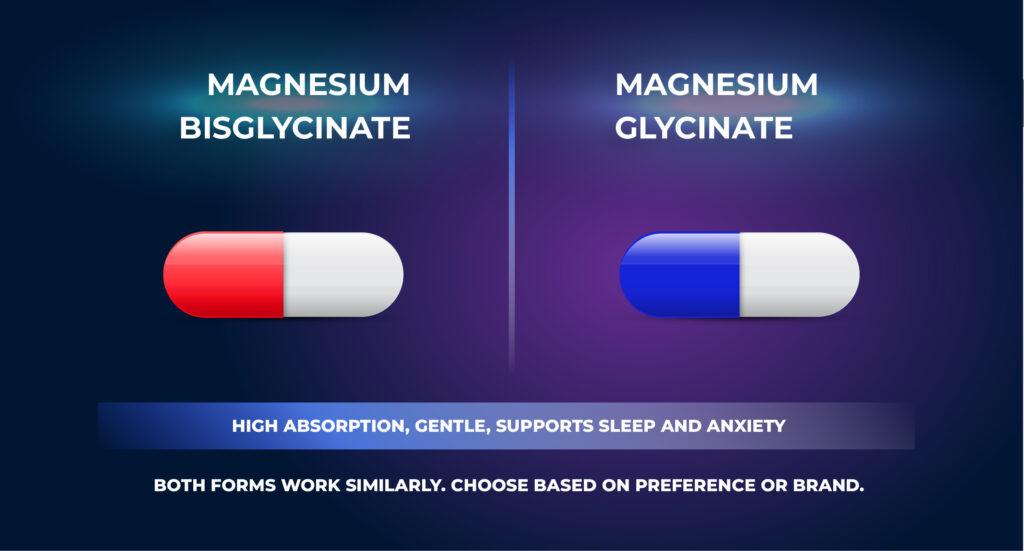
Magnesium glycinate is made by binding magnesium to glycine, the smallest amino acid. This is called chelation: glycine holds the magnesium with both its amino group and its acid group, forming a stable ring around it. That is why the product is often sold as a “chelate”.
Magnesium carries a 2+ charge and each glycinate carries a 1- charge, so a stable, neutral molecule needs two glycinates per magnesium. That is exactly what “bisglycinate” (also sold as “diglycinate” or “bisglycinate chelate”) means, and it is also what “magnesium glycinate” on a supplement label refers to. PubChem lists the compound as magnesium bisglycinate.
The popular claim that glycinate has one glycine and bisglycinate has two is a misunderstanding. “Bisglycinate” is just the more precise chemical name, and “glycinate” is the everyday short form. Some brands use the longer name to make a product sound more advanced, but the molecule inside is the same.
What Actually Differs Between Products
Two bottles can still be quite different, for reasons that have nothing to do with the name:
- Buffered vs fully chelated: some “magnesium glycinate” products mix in magnesium oxide to fit more magnesium into each capsule and cut cost. The label then lists magnesium oxide or calls the product “buffered”. Non-buffered products are often labelled “fully reacted” or “100% chelated”.
- Elemental magnesium per serving: one product may give 100 mg of magnesium per serving and another 200 mg or more.
- Blends: some formulas combine glycinate with other forms such as citrate, malate or oxide.
- Quality control: whether the contents have been checked by an independent lab.
How Magnesium Glycinate Works in the Body
Once absorbed, the magnesium from glycinate behaves like magnesium from any other source. It is a cofactor in more than 300 enzyme systems, including those involved in energy production, protein synthesis, muscle contraction, nerve signaling, blood sugar control and blood pressure regulation.
Glycine is an inhibitory neurotransmitter in the brainstem and spinal cord, which is one reason glycinate is a popular choice for evening use. The amount is modest, though. A dose that gives 200 mg of magnesium contains about 1.2 g of glycine, less than the 3 g of glycine used in small sleep studies of glycine on its own. Don’t expect a sedative effect from the glycine part.
The evidence that magnesium supplements improve sleep or reduce stress is modest and mixed, and benefits are most likely in people whose intake is low to begin with. Few trials have tested the glycinate form specifically.
Absorption and Bioavailability
Bioavailability refers to how much of a nutrient your body absorbs and uses. For magnesium, it varies by form. Magnesium oxide is poorly absorbed: in one study of commercial preparations, only about 4% of the magnesium in magnesium oxide was absorbed. Chelated and organic forms such as glycinate and citrate are generally considered better absorbed, although studies differ in design and few compare glycinate directly with other forms in people.
There is no glycinate-vs-bisglycinate difference to measure, because they are the same compound. What can change how much you absorb from a given product is:
- Buffering: in a buffered product, part of the magnesium comes from the less absorbable oxide.
- Dose size: the share of magnesium you absorb falls as the dose rises, so two smaller doses can be absorbed better than one large one.
- Your magnesium status: the gut tends to absorb more when the body’s magnesium is low.
Elemental Magnesium: How Much Are You Actually Getting?
Elemental magnesium is the magnesium itself, not the total weight of the compound. Because the two glycines make up most of the molecule, pure magnesium glycinate is only about 14% magnesium by weight. That is why glycinate capsules are often large and why a serving may be two to four capsules.
| Magnesium glycinate (compound) | Elemental magnesium | Glycine |
|---|---|---|
| 500 mg | About 70 mg | About 435 mg |
| 1,000 mg | About 140 mg | About 870 mg |
| 1,500 mg | About 210 mg | About 1.3 g |
| 2,500 mg | About 350 mg | About 2.2 g |
On a standard Supplement Facts label, the number next to “Magnesium” is the elemental amount, with the form in brackets, for example “Magnesium (as magnesium bisglycinate) 200 mg”. If a product only gives the weight of the compound, use the 14% rule to work out the magnesium. A buffered product shows more magnesium per gram, because magnesium oxide is about 60% magnesium.
How Much Magnesium Glycinate to Take
The Recommended Dietary Allowance (RDA) for magnesium covers all sources, and most of it should come from food such as leafy greens, nuts, seeds, legumes and whole grains.
| Group | RDA (food and supplements) |
|---|---|
| Men 19-30 | 400 mg/day |
| Men 31 and over | 420 mg/day |
| Women 19-30 | 310 mg/day |
| Women 31 and over | 320 mg/day |
| Pregnancy | 350-360 mg/day |
The tolerable upper intake level for magnesium from supplements and medicines (not food) is 350 mg a day for adults and children aged 9 and over. Above that, diarrhea and stomach cramps become more likely. Doctors sometimes prescribe more for specific conditions, but that should be under their supervision.
Most glycinate products provide 100-200 mg of elemental magnesium per serving, and commonly reported daily amounts from supplements fall between 100 and 350 mg. Many people take it in the evening, or split it into two doses with meals. If your diet is already rich in magnesium, you may need less, or none at all.
Tolerability and Side Effects
One of the main reasons people choose glycinate is digestive comfort. Citrate and oxide have a stronger laxative effect, partly because magnesium that is not absorbed draws water into the bowel. Glycinate is generally reported to be easier on the stomach, although large head-to-head trials are lacking.
Even so, glycinate is not free of side effects or risks:
- Digestive upset: loose stools, nausea or cramps, mostly at higher doses.
- Kidney disease: the kidneys clear excess magnesium, so poor kidney function raises the risk of magnesium building up in the blood. Don’t supplement without medical advice.
- Medicine interactions: magnesium can reduce the absorption of bisphosphonates (osteoporosis drugs) and of tetracycline and fluoroquinolone antibiotics, so these need to be taken a few hours apart. Some diuretics and long-term use of acid-reducing proton pump inhibitors can also change magnesium levels.
- Toxicity: rare, and usually linked to very large amounts from magnesium-containing laxatives or antacids, or to kidney problems.
Other Magnesium Forms at a Glance
The real choice is not glycinate vs bisglycinate but glycinate vs other forms of magnesium. Here is how the common ones compare.
| Magnesium form | Key feature | Common use | Drawback |
|---|---|---|---|
| Glycinate (bisglycinate) | Magnesium bound to two glycines; about 14% magnesium | Daily or evening use, sensitive stomachs | Less magnesium per capsule; costs more than oxide |
| Citrate | Soluble; mild laxative effect | Daily use, easing constipation | Loose stools at higher doses |
| Oxide | About 60% magnesium, so a lot per tablet | Laxative and antacid use | Poorly absorbed |
| Malate | Magnesium bound to malic acid | Daytime use | Claims for energy and fatigue are poorly tested |
| L-threonate | Raised brain magnesium in rat studies | Early research on memory and cognition | Expensive, low magnesium per capsule, limited human data |
How to Choose a Magnesium Glycinate Supplement
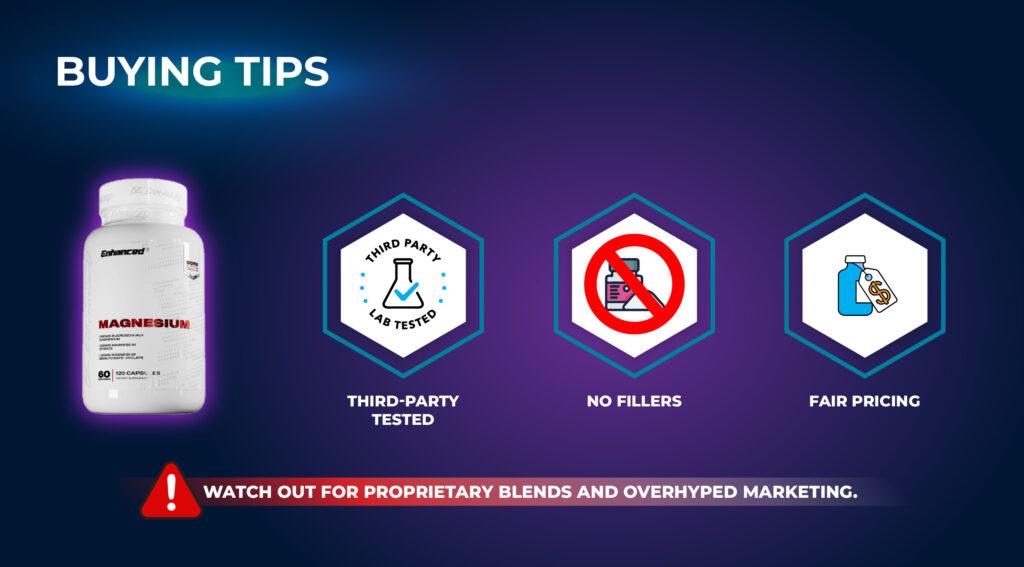
Since the name on the front makes no difference, judge a product by what is on the back:
- Check the elemental magnesium per serving: this is the number that counts toward your intake, not the weight of the compound.
- Check for buffering: if the ingredients include magnesium oxide or the label says “buffered”, part of the dose is the less absorbable form. That isn’t harmful, but you are not getting pure glycinate.
- Look for ingredient transparency: every form and amount should be listed, with nothing hidden in a proprietary blend.
- Look for independent testing: a third-party certification mark (such as USP or NSF) or a published certificate of analysis.
- Don’t pay extra for the word “bisglycinate”: it is the same compound as glycinate.
Enhanced Labs, one of our supplement partners, sells its own magnesium formula, Enhanced Magnesium. Apply the same checks to it as to any product: which form or forms it uses and how much elemental magnesium each serving provides. You can read more about the brand in our Enhanced Labs review.

Pros
- Catalog is specifically organized around muscle building, fat loss, testosterone support, and workout performance.
- Range includes creatine, protein, EAAs, beta-alanine, and L-citrulline alongside more specialized formulas.
- Orders of $99+ qualify for free US shipping.
Cons
- Features several strong claims around muscle growth, testosterone, fat loss, and metabolic effects that should be distinguished from independently demonstrated clinical outcomes
- Heavily oriented toward bodybuilding and performance rather than broader nutritional supplementation.
Alternatives to Magnesium for Sleep and Stress
If magnesium on its own isn’t doing much for you, these are other common options. The quality of evidence varies a lot between them.
- Glycine: taken on its own, 3 g before bed improved subjective sleep quality in small studies. That is far more glycine than a magnesium glycinate dose provides.
- Ashwagandha: an adaptogenic herb. Several small trials report lower stress scores and lower cortisol. See our guide to ashwagandha benefits.
- L-theanine: an amino acid found in tea leaves, used for relaxation without drowsiness and often paired with caffeine for calm focus.
- Valerian root: an herb with a long history of use for sleep; study results are mixed.
- Melatonin: the hormone that signals night to your body. Melatonin is most useful for shifting sleep timing, such as with jet lag, rather than as a general sleep aid.
- GABA: the brain’s main calming neurotransmitter. Whether GABA taken by mouth reaches the brain in meaningful amounts is debated, and the evidence is limited.
Phenibut is sometimes promoted for sleep and anxiety, but it is not a like-for-like swap for magnesium. It is a GABA-B drug with a real risk of tolerance, dependence and difficult withdrawal.
The Bottom Line
Magnesium glycinate and magnesium bisglycinate are the same supplement under two names, so choose a product by its label, not by which name it uses.
- Both names mean magnesium bound to two glycine molecules, so there is no difference in absorption or calming effect between them.
- What matters is the elemental magnesium per serving (pure glycinate is about 14% magnesium) and whether the product is buffered with magnesium oxide.
- Glycinate is one of the gentlest forms. Keep magnesium from supplements at or below 350 mg a day unless a doctor advises otherwise, and check with one first if you have kidney disease or take interacting medicines.
Frequently Asked Questions
Disclaimer
Please read carefully
The information on this site is for educational and informational purposes only, and is not medical advice. Always consult a qualified healthcare professional before using any supplement or medication, or making changes to your health, fitness, or nutrition routine.
Not medical advice
Content here is not a substitute for professional medical advice.
Consult your doctor
Talk to your doctor before starting any supplement or new routine.
Use at your own risk
We are not responsible for adverse effects from acting on this.
Do your research
Make informed decisions about your own health.
No guarantees
Individual results vary. No claims about outcomes.
Important — Never disregard professional medical advice or delay seeking it because of something you read here. If you think you may have a medical emergency, call your doctor or your local emergency number right away.