Contents10 sections
Ashwagandha (Withania somnifera) is an Ayurvedic herb that has become one of the most popular supplements for stress, sleep and training. Unlike many herbal products, it has a reasonable number of randomized, placebo-controlled human trials behind it, most of them using standardized root extracts.
The evidence is strongest for lower stress and cortisol and for better sleep, followed by modest gains in strength and testosterone in men who train. For the brain, the heart, blood sugar and immunity, most of the data still come from animal and lab studies.
This guide covers the nine most-cited ashwagandha benefits, how strong the evidence is for each, the doses used in studies, and the safety issues (liver, thyroid, pregnancy) that anyone thinking about taking it should know.
Key Takeaways
- Ashwagandha (Withania somnifera) is an adaptogenic herb from Ayurvedic medicine; most modern trials use standardized root or root-and-leaf extracts.
- Stress is the best-supported benefit: in one trial, 600 mg a day for 60 days cut serum cortisol by about 28%, versus about 8% on placebo.
- Trials in men show modest testosterone increases (about 15% more than placebo in older, overweight men) and larger strength gains when combined with resistance training.
- Doses used in studies are mostly 240-600 mg of extract a day for 8-12 weeks; the often-quoted 750-1,250 mg range comes from one small tolerability study.
- It is not for everyone: rare liver injury, thyroid effects and pregnancy concerns are documented, and Denmark has banned it in food supplements.
What is Ashwagandha?

Ashwagandha, botanical name Withania somnifera, also called “Indian ginseng” and “winter cherry”, is a small shrub in the nightshade family, native to India, the Middle East and parts of Africa. Its root, and to a lesser extent its leaves, have been used for thousands of years in Ayurvedic practices to ease stress, restore vitality and support fertility.
The name “ashwagandha” means “smell of a horse” in Sanskrit, a reference to the root’s distinct odor and the old belief that it grants the strength of a stallion.
Its main active compounds are withanolides, a group of steroidal lactones that includes withaferin A. Supplement makers standardize their extracts to a set withanolide content, which is why products, and the doses used in studies, vary so much. Ashwagandha is classed as an adaptogen: a substance thought to help the body cope with physical and mental stress.
Top Ashwagandha Benefits You Need to Know
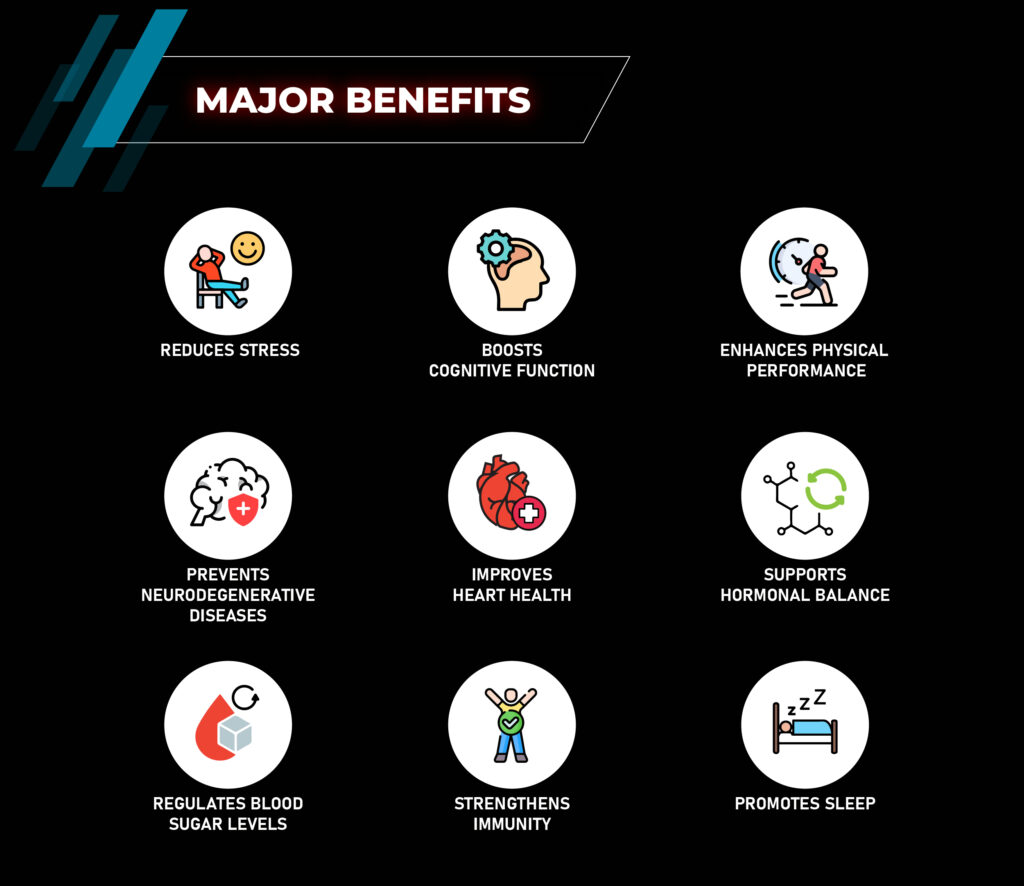
Ashwagandha is credited with a long list of benefits, but the quality of the evidence differs a lot from one claim to the next. Here is how the nine most-cited benefits compare before we go through each one.
| Benefit | Main evidence | Strength of evidence |
|---|---|---|
| Stress and anxiety | Several placebo-controlled human trials | Moderate |
| Sleep | Human trials and a meta-analysis | Moderate |
| Strength and endurance | Small human trials, mostly industry-funded | Low to moderate |
| Testosterone and libido | Small human trials | Low to moderate |
| Cognitive function | A few small human trials | Low |
| Heart health | Small human studies, animal data | Low |
| Blood sugar | Lab and animal studies, a few small human studies | Low |
| Immunity and inflammation | Mostly lab and animal studies | Low |
| Neurodegenerative diseases | Animal and cell studies only | Very low |
1. Reduces Stress and Anxiety
Stress relief is the best-researched ashwagandha benefit. As an adaptogen, it appears to dampen the body’s stress response, including levels of the stress hormone cortisol, and double-blind, placebo-controlled trials in stressed adults consistently report lower stress scores and lower cortisol.
The effect sizes are meaningful. In one of the most-cited trials (Chandrasekhar and colleagues), 64 adults with chronic stress took 300 mg of root extract twice a day for 60 days. Serum cortisol fell by about 28%, versus about 8% on placebo, and scores on the Perceived Stress Scale fell by 44%, versus 5.5% on placebo. A later 8-week trial compared 250 mg and 600 mg a day with placebo: both doses lowered stress scores and serum cortisol, and the higher dose worked better.
Another placebo-controlled study gave 240 mg a day of a different extract for 60 days to adults reporting high stress. Anxiety scores on the Hamilton Anxiety Rating Scale and morning cortisol both fell more than on placebo. These were stressed but otherwise healthy people, not patients diagnosed with an anxiety disorder, so ashwagandha should not be seen as a treatment for clinical anxiety or depression. For other options, see our guide to the best supplements to reduce cortisol.
2. Boosts Cognitive Function and Focus
The human evidence here is small but positive. In an 8-week trial, 50 adults with mild cognitive impairment who took 300 mg of root extract twice a day improved more than the placebo group on tests of memory, attention and information-processing speed.
Lab research suggests some of its withanolides can cross the blood-brain barrier, which would allow them to act on the brain directly, and animal studies show reduced oxidative stress in brain tissue. Whether it sharpens focus in healthy young adults has not been clearly shown.
3. Enhances Physical Performance and Strength
Ashwagandha is popular with lifters, and a handful of trials back this up. In an 8-week study, 57 young men new to resistance training took either 300 mg of root extract twice a day or a placebo while following the same program. The ashwagandha group added about 46 kg to their bench press versus about 26 kg on placebo, and about 14.5 kg versus 10 kg on leg extension. They also gained more arm and chest size, showed less exercise-induced muscle damage and lost more body fat.
Ashwagandha has also been tested for stamina in athletes, where randomized trials report modest improvements in VO2 max, the main measure of aerobic fitness, compared with placebo. Most of these studies are small, short and funded by extract makers, so treat the size of the effect with caution.
4. May Protect Against Neurodegenerative Diseases
In animal and cell studies, ashwagandha extracts and withanolides protect nerve cells, reduce oxidative stress and, in some models, reduce markers linked to Alzheimer’s and Parkinson’s disease. Reviews of this research describe protective effects on the central nervous system and see ashwagandha as a promising lead for neurodegenerative diseases.
However, no human trial has shown that ashwagandha prevents or reverses Alzheimer’s, Parkinson’s or age-related cognitive decline. For now this benefit is based on animal data only.
5. Supports Heart Health
Small human studies have reported modest drops in total cholesterol and triglycerides, and the endurance trials above found better aerobic capacity. Ashwagandha may also slightly lower blood pressure. Studies point to its antioxidant and anti-inflammatory effects, and possibly its effect on stress hormones, as the likely mechanisms. There are no large trials looking at heart disease outcomes, so this remains a possible rather than a proven benefit.
6. Supports Hormonal Balance and Libido
This is the benefit most lifters care about. The effect on testosterone shows up in trials, but it is modest:
- Older, overweight men: in an 8-week crossover trial in men aged 40-70, testosterone rose 14.7% more and DHEA-S 18% more on ashwagandha than on placebo. There was no significant difference in fatigue, vigor or sexual well-being.
- Young men who lift: in the 8-week strength trial above, testosterone rose by about 96 ng/dL on ashwagandha versus about 18 ng/dL on placebo.
- Men with low sperm counts: in a pilot study, 675 mg a day for 90 days raised sperm count by about 167%, semen volume by 53% and sperm motility by 57% from baseline, with testosterone up about 17% and LH up about 34%.
Other clinical research in men with poor sperm quality points the same way. To put the testosterone numbers in context, a 15% rise takes a man from 500 to about 575 ng/dL, still well within the normal range (see average testosterone levels by age) and nothing like the effect of TRT. Because it can raise testosterone, men with hormone-sensitive prostate cancer should not take it unless their doctor agrees.
Evidence in women is thinner. One small 8-week trial in women with sexual dysfunction reported better scores on a sexual-function questionnaire than placebo. Claims that ashwagandha relieves PMS, regulates periods or treats PCOS are not backed by good human trials.
7. May Help Regulate Blood Sugar Levels
In lab studies, withaferin A and other withanolides increased glucose uptake into cells, and animal studies show lower blood glucose. A few small human studies have reported lower fasting glucose, but the data are far too limited to call ashwagandha a diabetes treatment. If you take glucose-lowering medication, it could add to its effect, so check your levels and talk to your doctor first.
8. Supports Immunity and Fights Inflammation
Withaferin A shows clear anti-inflammatory activity in lab studies, and animal research suggests ashwagandha can change how immune cells behave. Early research also points to effects on antibody (immunoglobulin) production. Human data are limited. The same immune-stimulating effect is the reason people with autoimmune conditions are advised to be careful with it.
9. Promotes Sleep
The species name somnifera means “sleep-inducing” in Latin, and sleep is the second-best-supported benefit. A placebo-controlled trial examined 300 mg of root extract twice a day for 8 weeks in healthy adults and in people with insomnia. Time to fall asleep, total sleep time and sleep efficiency improved in both groups, with larger effects in the insomnia group, and anxiety scores and mental alertness on waking also improved.
A meta-analysis of five randomized trials (about 400 participants) found a small but significant improvement in overall sleep, larger in people with insomnia and at doses of 600 mg a day or more taken for at least 8 weeks.
Choosing an Ashwagandha Supplement
Ashwagandha products differ a lot, and trial results only apply to products similar to the ones tested. Before you buy, check:
- Extract and standardization: a standardized extract that states its withanolide content, rather than an unspecified “ashwagandha blend”.
- Dose per capsule: so you can match the 240-600 mg a day used in most studies.
- Plant part: root-only and root-and-leaf extracts have different compound profiles and are not interchangeable.
- Testing: third-party testing for purity, heavy metals and contaminants.
Enhanced Labs Ashwagandha (Capsules)
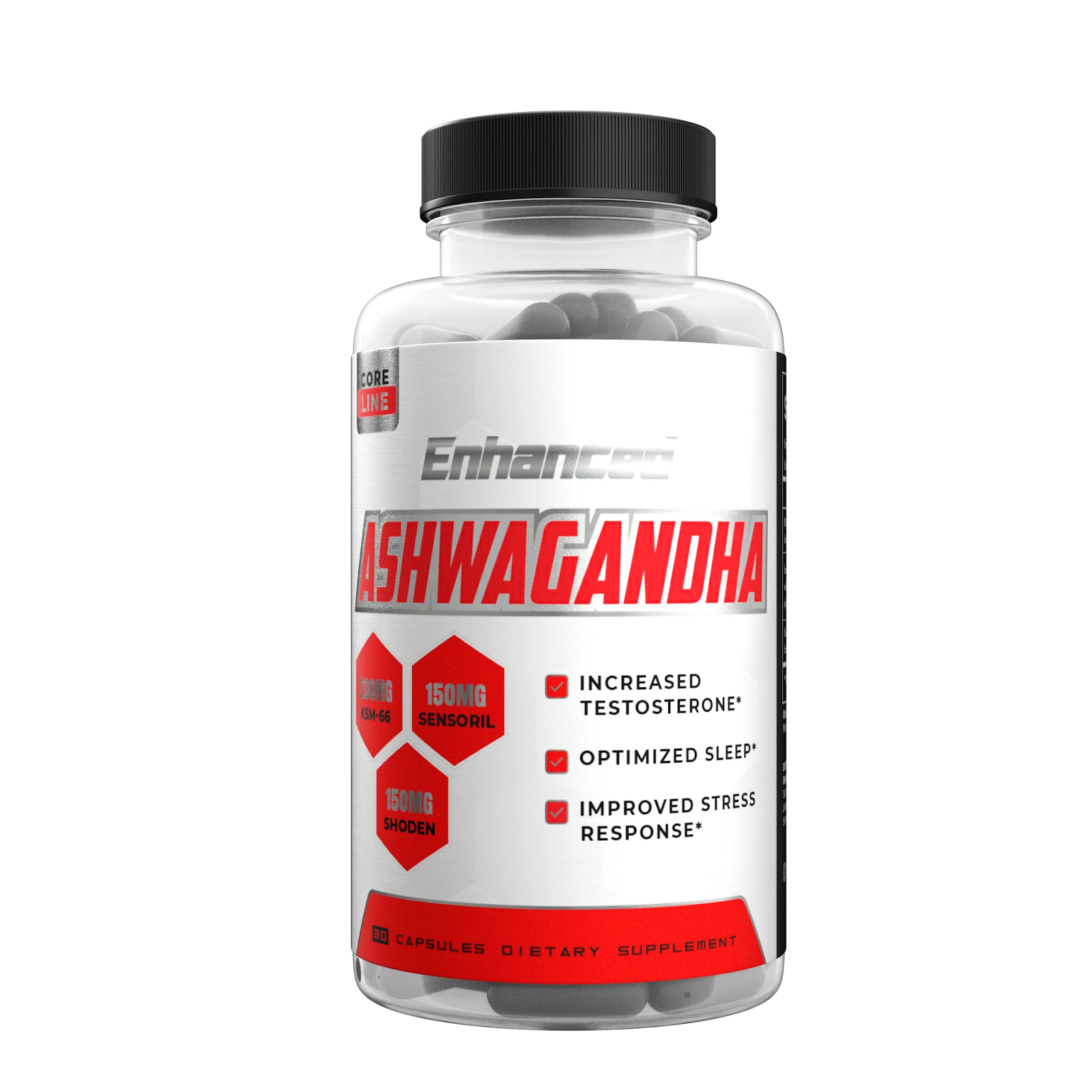
Enhanced Labs, one of our partner brands, sells ashwagandha as a once-daily capsule aimed at stress support. As with any brand, check the label for the extract used and the dose per capsule, and compare it with the doses used in studies below. Our Enhanced Labs review covers the rest of its range.

Pros
- Catalog is specifically organized around muscle building, fat loss, testosterone support, and workout performance.
- Range includes creatine, protein, EAAs, beta-alanine, and L-citrulline alongside more specialized formulas.
- Orders of $99+ qualify for free US shipping.
Cons
- Features several strong claims around muscle growth, testosterone, fat loss, and metabolic effects that should be distinguished from independently demonstrated clinical outcomes
- Heavily oriented toward bodybuilding and performance rather than broader nutritional supplementation.
How to Use Ashwagandha
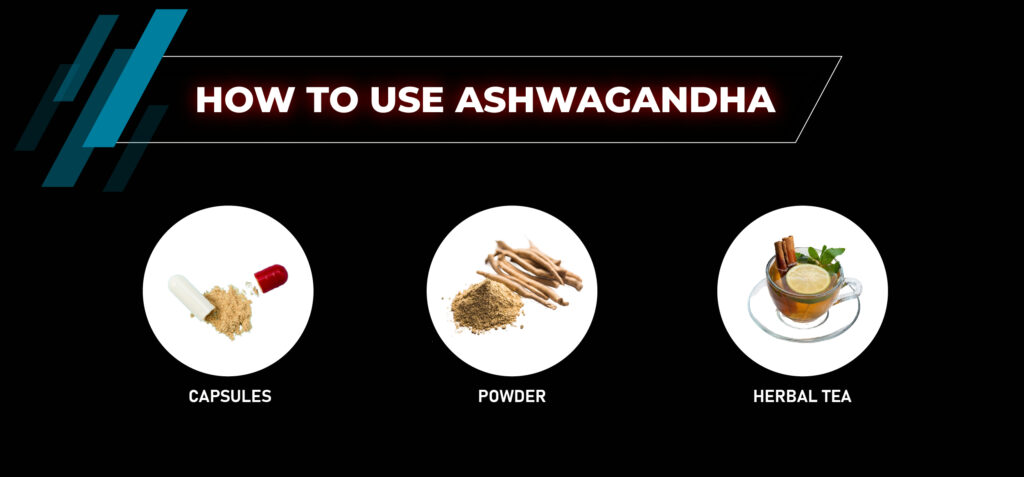
Ashwagandha is usually taken as a capsule of standardized root (or root-and-leaf) extract. Most human trials use 240-600 mg of extract a day, taken once daily or split into two doses (for example 300 mg twice a day), for 8-12 weeks. Results apply to the extract tested, so products with a different withanolide content are not directly comparable.
You may also see 750-1,250 mg a day quoted. That range comes from a small exploratory study of extract in capsules in 18 healthy volunteers, who took escalating doses (750 mg, then 1,000 mg, then 1,250 mg a day, 10 days each). The doses were well tolerated, and some participants showed better strength, lower cholesterol and better sleep, but there was no placebo group. The study tested tolerability; it did not set a recommended dose.
Plain root powder is much less concentrated than an extract, so the extract doses above do not apply to it. Powder has a bitter, earthy taste and a strong smell; people often mix it into warm milk, smoothies or herbal tea with a little honey.
Doses Used in Studies
| Goal | Daily extract dose used in studies | Typical length |
|---|---|---|
| Stress, cortisol and anxiety scores | 240-600 mg | 8 weeks |
| Sleep | 600 mg (300 mg twice a day) | 8 weeks |
| Strength with resistance training | 500-600 mg | 8-12 weeks |
| Testosterone and sperm quality (men) | 600-675 mg | 8 weeks to 3 months |
| Tolerability only (not a target dose) | 750-1,250 mg | 30 days |
Note: these are doses used in studies, not personal advice. Taking it with a meal can reduce stomach upset, and an evening dose suits sleep goals. Speak to a healthcare professional first if you take medication, have a liver or thyroid condition or an autoimmune disease, or are pregnant or breastfeeding.
Common Myths About Ashwagandha
1. Myth: Ashwagandha Works Instantly
Some people report feeling calmer or sleeping better within the first couple of weeks, but most trials measure results after about 8 weeks of daily use. That is a fair timeline for judging whether it works for you.
2. Myth: Ashwagandha is Only for Stress and Anxiety
Stress is where the evidence is strongest, but trials have also looked at sleep, strength, endurance, testosterone and sperm quality. The effects on blood sugar, immunity and brain health come mostly from animal and lab studies.
3. Myth: Ashwagandha is Only for Men
Many of the stress and sleep trials included women, and the benefits there apply to both sexes. Data on female hormones are limited: one small trial reported improved sexual function, but claims about PMS, menstrual cycles and PCOS lack solid human evidence.
4. Myth: Ashwagandha is Addictive
There is no evidence that ashwagandha causes addiction or dependence, and trials have not reported withdrawal effects when people stop. It does have mild sedative effects, which can add to those of sleeping pills, benzodiazepines and alcohol.
5. Myth: Ashwagandha Can Cure Diseases
Ashwagandha is not a cure for any disease. It may help with stress and sleep, but it is not a replacement for medical treatment of conditions like diabetes, thyroid disorders, anxiety disorders or heart disease.
Risks and Side Effects of Using Ashwagandha

In trials lasting up to about three months, ashwagandha is generally well tolerated. Rarer but more serious problems show up in case reports and regulatory reviews, and long-term safety has not been well studied. Here is what to know before you start.
Digestive Issues
Some people get mild stomach upset, including nausea, bloating or diarrhea, especially at higher doses. Starting low and taking it with food usually helps.
Drowsiness or Sedation
Ashwagandha’s calming effect can cause drowsiness, particularly at higher doses or when combined with other sedatives. If it makes you sleepy, take it in the evening.
Liver Injury
Ashwagandha is a rare but recognized cause of liver injury, and the NIH’s LiverTox database lists it among herbal products linked to liver damage. Published case series, including patients from Iceland and the US Drug-Induced Liver Injury Network, describe liver injury appearing about 2-12 weeks after starting, with jaundice and itching. Most patients recovered within a few months of stopping, but severe cases have been reported, particularly in people with existing liver disease.
Stop taking it and see a doctor if you notice yellowing of the skin or eyes, dark urine, itching or unusual tiredness. Avoid it if you have liver disease, and don’t combine it with other compounds that strain the liver, such as oral anabolic steroids.
Thyroid Effects and Thyroid Medication
Ashwagandha can raise thyroid hormone levels. In an 8-week trial in people with subclinical hypothyroidism, 600 mg a day raised T3 and T4 and lowered TSH compared with placebo, and case reports describe thyrotoxicosis (an overactive thyroid) in people taking it. Avoid it if you have hyperthyroidism, and if you take thyroid medication, only use it with your doctor’s agreement and have your levels checked.
Not Recommended for Pregnant or Breastfeeding Women
There is no reliable safety data for ashwagandha in pregnancy or breastfeeding, and high doses have been linked to miscarriage in traditional sources. Avoid it if you are pregnant or breastfeeding.
Banned in Food Supplements in Denmark
Denmark has banned ashwagandha in food supplements. The decision followed a risk assessment by the National Food Institute at the Technical University of Denmark (DTU), which raised concerns about possible effects on pregnancy, sex hormones and thyroid function. Ashwagandha is still sold as a supplement in most other countries, but the Danish review is a reminder that its long-term safety is not well established.
Lowered Blood Pressure
Ashwagandha may lower blood pressure slightly. If you already take blood pressure medication, the combination could push it too low and cause dizziness or lightheadedness.
Medication Interactions and Autoimmune Conditions
Talk to your doctor before using ashwagandha if you take any of the following:
- Sedatives: benzodiazepines, sleeping pills and alcohol, whose drowsiness it can add to.
- Thyroid medication: it can raise thyroid hormone levels.
- Diabetes and blood pressure medication: it may add to their glucose- and pressure-lowering effects.
- Immunosuppressants: it may stimulate the immune system and work against them.
For the same reason, people with autoimmune conditions such as lupus, rheumatoid arthritis or multiple sclerosis should be cautious. Because it can slow the central nervous system, stop taking it at least two weeks before planned surgery.
The Bottom Line
Ashwagandha is one of the better-studied herbal supplements, but its benefits are modest and best supported for stress and sleep.
- The strongest human evidence is for lower stress and cortisol and better sleep, using 240-600 mg of standardized extract a day for about 8 weeks.
- Strength and testosterone gains are real in small trials but modest, nowhere near the effect of TRT.
- Claims about the brain, heart, blood sugar and immunity rest mostly on animal and lab data.
- Rare liver injury, thyroid effects and pregnancy concerns mean you should check with a doctor first, especially if you take medication.
Frequently Asked Questions
Disclaimer
Please read carefully
The information on this site is for educational and informational purposes only, and is not medical advice. Always consult a qualified healthcare professional before using any supplement or medication, or making changes to your health, fitness, or nutrition routine.
Not medical advice
Content here is not a substitute for professional medical advice.
Consult your doctor
Talk to your doctor before starting any supplement or new routine.
Use at your own risk
We are not responsible for adverse effects from acting on this.
Do your research
Make informed decisions about your own health.
No guarantees
Individual results vary. No claims about outcomes.
Important — Never disregard professional medical advice or delay seeking it because of something you read here. If you think you may have a medical emergency, call your doctor or your local emergency number right away.