Contents12 sections
Brazilian Jiu-Jitsu asks a lot of the body. Hard rounds, constant gripping and bracing, and joints loaded from every angle, often several times a week, add up to real fatigue, soreness and wear. Technique, food, sleep and smart training do most of the work in keeping you on the mat, but a few supplements can help fill specific gaps.
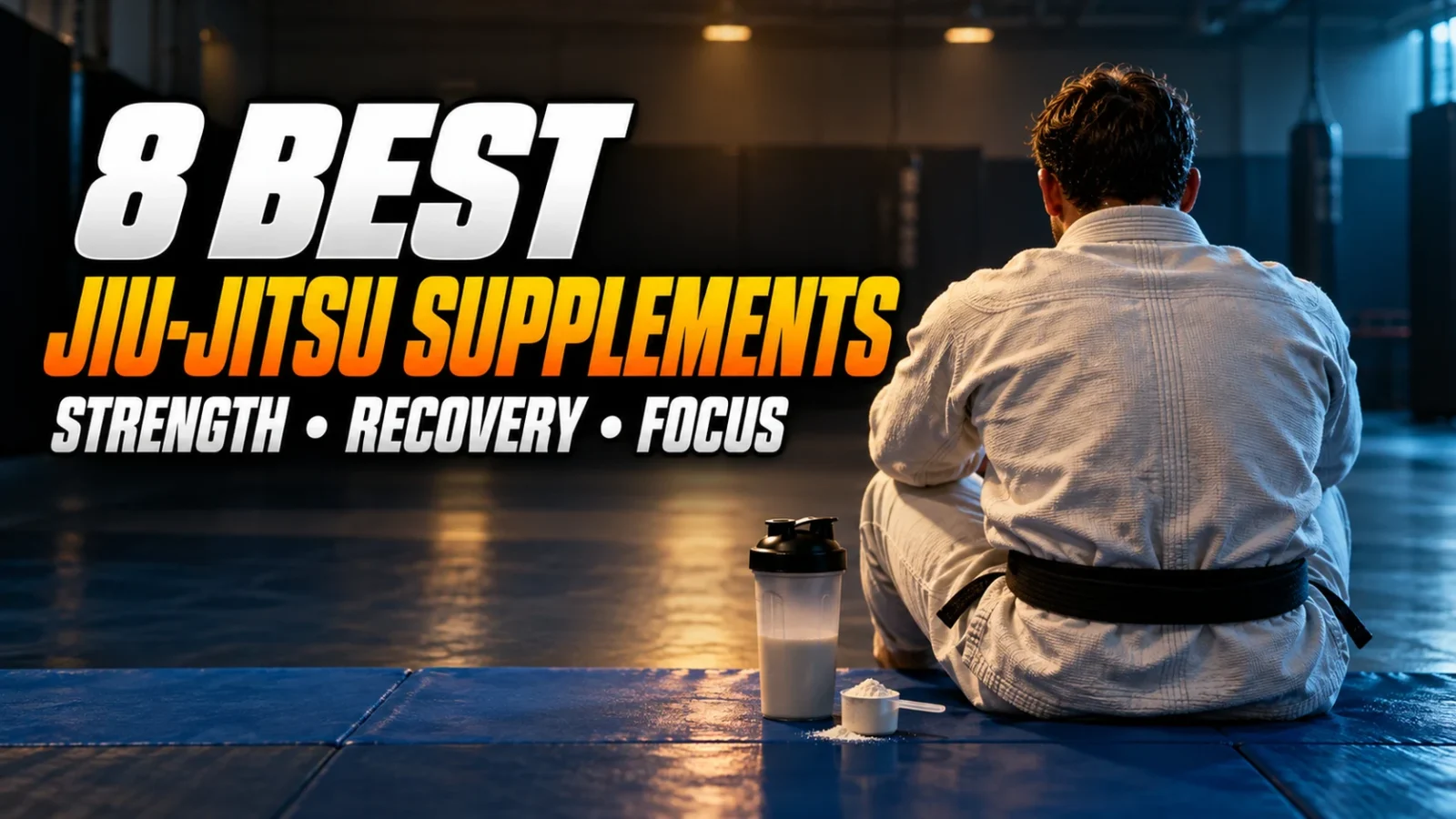
This guide covers the 8 best Jiu-Jitsu supplements, starting with the best-supported ones: what the research shows for each, the doses used in studies, when to take them, and what to watch for if you compete under anti-doping rules. Products from our partners follow further down; the ingredient and dose matter more than the label.
Key Takeaways
- Food, sleep and mat time do most of the work; supplements are worth it when they fill a specific gap.
- Creatine monohydrate (3-5 g a day) and enough total protein (1.4-2.0 g per kg of body weight a day) have the strongest evidence for grapplers.
- Creatine needs no cycling and does not harm the kidneys of healthy people at recommended doses, but it can add a little water weight.
- Vitamin D and magnesium help most if you are low; ashwagandha, L-theanine and glutamine have weaker or mixed evidence.
- If you compete, use third-party-tested products: under strict liability, a contaminated supplement can still cost you a suspension.
What Is Jiu-Jitsu?
Brazilian Jiu-Jitsu (BJJ) is a grappling martial art built on ground fighting, positional control and submissions such as joint locks and chokes. Instead of strikes, it uses leverage and technique to control a resisting opponent, which is why a smaller, skilled player can beat a bigger, stronger one.
Its roots are in Japanese jiu-jitsu and judo, which reached Brazil in the early 20th century; the Gracie family developed them into what is now called Brazilian Jiu-Jitsu. The art reached a global audience when Royce Gracie won the first UFC event in 1993, and it is now a core skill in modern MMA as well as a sport of its own.
Why Supplements Matter in Jiu-Jitsu

Jiu-Jitsu is a demanding combat sport. It combines strength, grip endurance and repeated short bursts of near-maximal effort, with scrambles, escapes and submission attempts often packed into rounds of five minutes or more. Bruises, sore joints and accumulated fatigue are part of training several times a week.
A balanced diet, enough fluid and good sleep come first. Supplements make sense when they fill a specific gap: not enough protein, low vitamin D, or a proven performance aid such as creatine. They will not make up for poor sleep or a bad diet, and many products marketed to grapplers have little evidence behind them. For joint-specific options, see our guide to joint supplements for athletes.
The 8 Best Jiu-Jitsu Supplements
Here is how the eight compare at a glance. The doses are those used in research or set as official intake limits, not personal advice.
| Supplement | What it helps with | Doses used in studies | Evidence for athletes |
|---|---|---|---|
| Creatine monohydrate | Strength, repeated explosive efforts, training adaptations | 3-5 g a day; optional loading at about 20 g a day for 5-7 days | Strong |
| Whey protein | Muscle repair; reaching daily protein | 20-40 g per serving, within 1.4-2.0 g/kg of total protein a day | Strong |
| Vitamin D | Bone health and muscle function if levels are low | 600 IU a day recommended for most adults; upper limit 4,000 IU | Good if deficient |
| Magnesium | Muscle and nerve function; sleep if intake is low | 200-350 mg of elemental magnesium; upper limit from supplements 350 mg | Modest; best if intake is low |
| Essential amino acids (EAAs) | Muscle protein synthesis when protein intake is low | Per label; little extra benefit if protein intake is adequate | Moderate |
| Ashwagandha | Perceived stress and sleep | About 250-600 mg of extract a day for 8-12 weeks | Mixed; small, short trials |
| L-theanine | Calm focus, often paired with caffeine | 100-400 mg; 200 mg is common | Small studies |
| Glutamine | Claimed gut, immune and recovery support | Varies widely between studies | Weak in healthy athletes |
1. Creatine Monohydrate
Creatine monohydrate is the best-researched supplement for strength and power, and one of the most studied supplements in sports nutrition. It raises the phosphocreatine stored in muscle, which helps regenerate energy (ATP) during short, all-out efforts: the takedowns, scrambles and explosive escapes that often decide a round.
The International Society of Sports Nutrition (ISSN) position stand on creatine (Kreider et al., 2017) concludes that creatine improves high-intensity exercise capacity and training adaptations and is safe for healthy people at recommended doses, including long-term use. Doses used in studies are 3-5 g a day. An optional loading phase of about 20 g a day, split into four doses for 5-7 days, fills muscle stores faster. No cycling is needed.
One thing matters for competitors: creatine draws water into muscle, so body weight often rises a little in the first weeks. If you compete in a weight class, start it well before a tournament rather than during competition prep.
2. Whey Protein
Hard rounds damage muscle tissue, and you need enough protein to repair it. Whey is a fast-digesting, complete protein that makes your daily target easier to hit. The ISSN position stand on protein and exercise (Jäger et al., 2017) recommends 1.4-2.0 g of protein per kg of body weight a day for most people who train, spread over meals of roughly 20-40 g.
Whey simply counts toward that total; it does nothing the same amount of protein from food would not. If dairy upsets your stomach, whey isolate contains less lactose than whey concentrate.
3. Vitamin D
Vitamin D supports bone health, muscle function and the immune system. Jiu-Jitsu is an indoor sport, and people who work indoors and train in the evening often get little sun, the body’s main source of vitamin D.
Supplementing seems to help mainly people who start out low, so a blood test is the best guide. The US recommended intake for most adults is 600 IU (15 mcg) a day, many supplements contain 1,000-2,000 IU, and the upper limit for adults is 4,000 IU (100 mcg) a day unless a doctor advises more. Take it with a meal that contains some fat, as vitamin D is fat-soluble.
4. Magnesium
Magnesium is involved in muscle contraction, nerve signalling and energy production, and some is lost in sweat. Many people eat less than the recommended amount. Supplementing can help if your intake is low, and some studies suggest it may improve sleep quality, mostly in older adults. Evidence that it prevents ordinary muscle cramps is weak.
Common supplemental doses are 200-350 mg of elemental magnesium a day. The upper limit from supplements for adults is 350 mg a day; above that, diarrhea becomes more likely. Glycinate forms are often better tolerated than oxide or citrate.
5. Essential Amino Acids (EAAs)
Essential amino acids are the nine amino acids your body cannot make, so they must come from food. Three of them, leucine, isoleucine and valine, are the branched-chain amino acids (BCAAs). An EAA product contains all nine; a BCAA product contains only those three. Because muscle is built from all nine, BCAAs on their own are a weaker choice than EAAs or a complete protein.
The ISSN position stand on essential amino acids (Ferrando et al., 2023) reviews the evidence that EAA supplements stimulate muscle protein synthesis. In practice, EAAs add little if you already reach your daily protein target with food and whey. They are most useful if you train early on an empty stomach or struggle to eat enough protein.
6. Ashwagandha
Ashwagandha is a herb used in Ayurvedic medicine and classed as an adaptogen, meaning it is thought to help the body cope with stress. Small clinical trials have reported lower perceived stress, better sleep and, in some trials, modest gains in strength and recovery. The NIH Office of Dietary Supplements fact sheet reviews these trials; most were small and short, so the evidence is promising but not settled.
Doses used in studies are roughly 250-600 mg of root or root-and-leaf extract a day for 8-12 weeks, and safety beyond about three months is not well established. For more, see our breakdown of ashwagandha benefits and our guide to supplements that reduce cortisol.
7. L-Theanine
L-theanine is an amino acid found in tea leaves. It is not an adaptogen, although it is often grouped with them. Small human studies suggest it can promote calm without sedation, and one study found it reduced psychological and physiological stress responses during a stressful task.
It is often combined with caffeine, a pairing studied for attention and focus, which some grapplers use before competition. Studies mostly use 100-400 mg, with 200 mg common. For other options, see our guide to nootropics for focus.
8. Glutamine
Glutamine is the most abundant amino acid in the body and fuels immune and gut cells. Very long or intense exercise can temporarily lower blood glutamine, which is the basis for claims about faster recovery and fewer colds.
In healthy athletes who eat enough protein, the evidence is weak. Reviews have found little effect on performance, body composition or muscle breakdown, and supplementing has not reliably reduced illness; a few small studies report less soreness. There is no good evidence that glutamine helps with a weight cut. It is low-risk, but it is the last item on this list to spend money on.
Where to Buy the Best Jiu-Jitsu Supplements
These products from Muscle & Brawn partners match the ingredients above. Compare labels for ingredient and dose rather than brand. If you compete in tested events, check each product for third-party sport certification before you buy.
SwissChems L-Theanine Powder

A plain L-theanine powder from SwissChems, for calm focus before training or competition. A 100 g tub holds hundreds of servings at study doses, so you need a milligram scale to measure it accurately.
| Detail | SwissChems L-Theanine |
|---|---|
| Form | Powder (100 g tub) |
| Doses used in studies | 100-400 mg; 200 mg is common |
| Best for | Calm focus without drowsiness |
| Side effects | Generally well tolerated; mild stomach upset in some people |
| Pairs well with | Caffeine |

Pros
- Exceptional purity & testing (≥98%)
- Pharmaceutical-style packaging for stability
- Broad catalog across peptides & nootropics
- Strong reputation & consistency across years
Cons
- Some items frequently out of stock due to high demand
- Limited long-term data for some compounds
Creatine Monohydrate by Enhanced Labs

A straight creatine monohydrate from Enhanced Labs, the form used in nearly all of the strength research. The 5 g serving sits at the top of the 3-5 g daily range used in studies. If you are weighing up forms, see our comparison of creatine HCL vs monohydrate.
| Detail | Enhanced Labs Creatine Monohydrate |
|---|---|
| Form | Powder |
| Label serving | 5 g (5,000 mg) a day |
| Cycling | Not needed; take it daily |
| Side effects | A little water weight; stomach upset if large doses are taken at once. No kidney harm in healthy people at recommended doses |
| Pairs well with | Whey protein or EAAs |
Creatine can raise creatinine on a blood test, a marker doctors use to check kidney function, so tell your doctor you take it before routine bloodwork.
Enhanced EAA by Enhanced Labs

An essential amino acid powder that contains all nine EAAs, including the three BCAAs (leucine, isoleucine and valine), in line with the ISSN position stand on essential amino acids. It is useful on days you train fasted or fall short on protein; if you already have whey after training, it adds little.
| Detail | Enhanced EAA |
|---|---|
| Form | Powder (228 g tub) |
| Label serving | 1 scoop (7.5 g) |
| Cycling | Not needed |
| Side effects | Mild stomach upset in some people |
| Pairs well with | Creatine |
Magnesium by Enhanced Labs

A once-daily magnesium capsule for grapplers whose diet runs low on magnesium. Check the label for the amount of elemental magnesium per capsule and keep your total from supplements within the 350 mg daily upper limit.
| Detail | Enhanced Labs Magnesium |
|---|---|
| Form | Capsules |
| Label serving | 1 capsule a day |
| Best for | Covering low dietary intake; evening use for sleep |
| Side effects | Loose stools or diarrhea at higher doses |
| Pairs well with | Vitamin D3 |
Vitamin D3 + K2 by Enhanced Labs
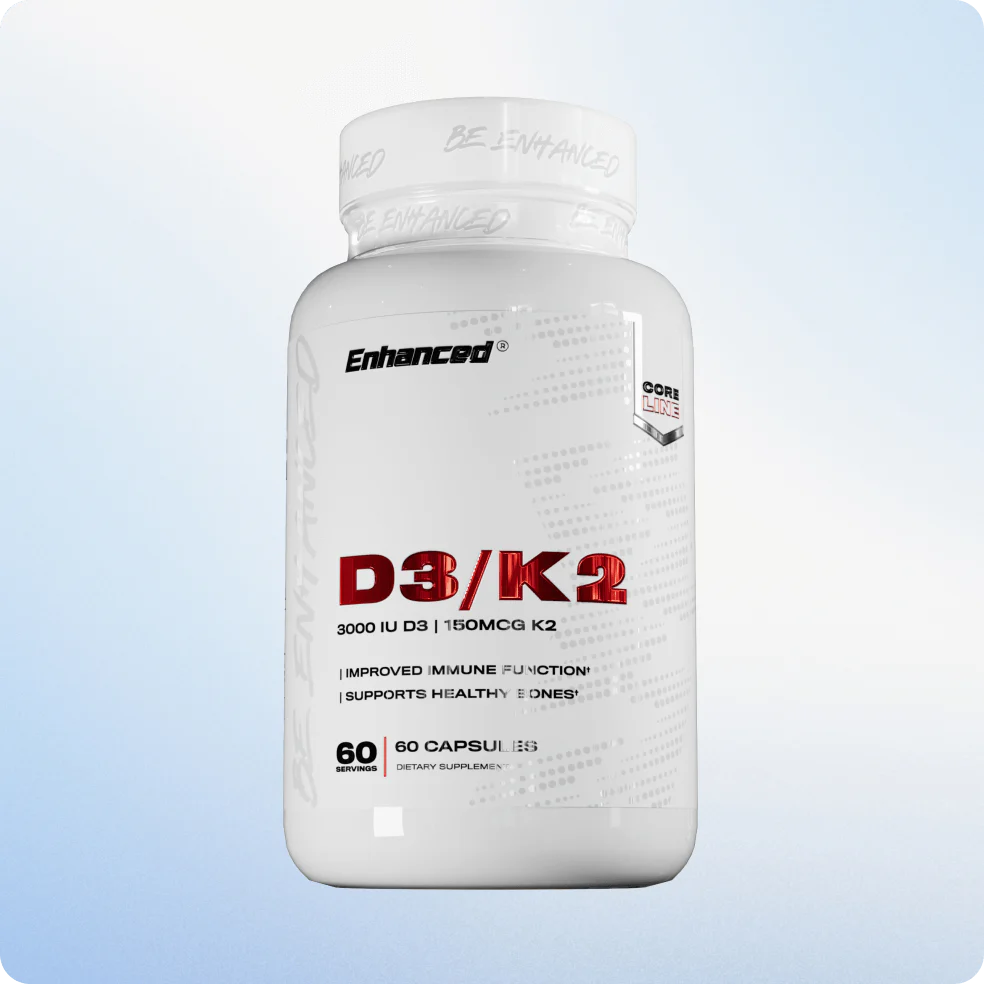
Jiu-Jitsu puts steady strain on bones and joints. This capsule combines vitamin D3, which supports bone health and muscle function, with vitamin K2, which helps activate proteins involved in building bone. It is most useful if your vitamin D is low; there is no good evidence that the combination improves joint mobility or performance.
| Detail | Enhanced Labs D3 + K2 |
|---|---|
| Form | Capsules |
| Label serving | 1 capsule a day |
| Best for | Low vitamin D, especially with little sun exposure |
| Side effects | Rare at normal doses; very high vitamin D intake over time can raise blood calcium |
| Caution | Vitamin K can interfere with warfarin; ask your doctor first if you take a blood thinner |
Ashwagandha by Enhanced Labs

An ashwagandha capsule for stress and sleep support. In trials, effects built up over weeks of daily use, so it is not a pre-training stimulant.
| Detail | Enhanced Labs Ashwagandha |
|---|---|
| Form | Capsules |
| Label serving | 1-2 capsules a day |
| Doses used in studies | About 250-600 mg of extract a day for 8-12 weeks |
| Side effects | Stomach upset, drowsiness; rare cases of liver injury reported |
| Avoid or ask a doctor first | Pregnancy, thyroid or autoimmune disease, or use of thyroid medication, sedatives or immune-suppressing drugs |
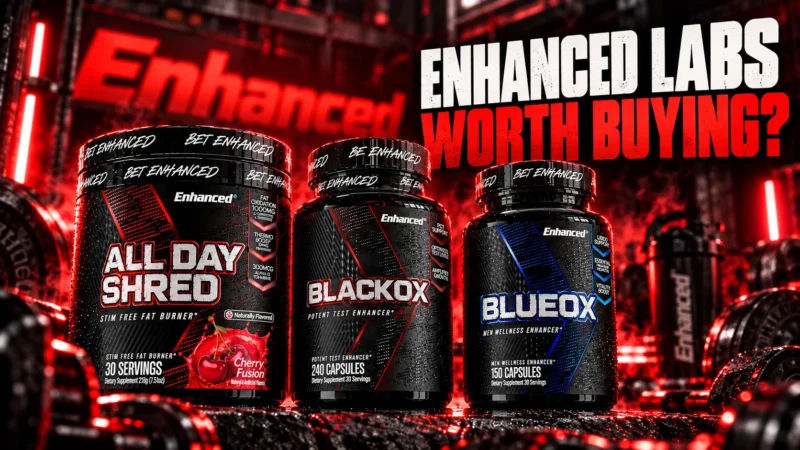
For a wider look at the range, read our Enhanced Labs review.

Pros
- Catalog is specifically organized around muscle building, fat loss, testosterone support, and workout performance.
- Range includes creatine, protein, EAAs, beta-alanine, and L-citrulline alongside more specialized formulas.
- Orders of $99+ qualify for free US shipping.
Cons
- Features several strong claims around muscle growth, testosterone, fat loss, and metabolic effects that should be distinguished from independently demonstrated clinical outcomes
- Heavily oriented toward bodybuilding and performance rather than broader nutritional supplementation.
Other Supplements for Jiu-Jitsu Athletes

- Electrolytes: Replace sodium and fluid lost in sweat during long or hot sessions, and help you rehydrate after weigh-ins.
- Beta-alanine: Raises muscle carnosine, which buffers acid during hard efforts of roughly 1-4 minutes. The ISSN position stand (Trexler et al., 2015) describes 4-6 g a day for at least 2-4 weeks; a harmless tingling sensation is common.
- Caffeine: The ISSN position stand on caffeine (Guest et al., 2021) supports 3-6 mg per kg of body weight about 60 minutes before exercise. Start lower, and avoid it late in the day if it affects your sleep.
- Calcium: Supports bone health. Most people can get enough from food, so supplement only if your diet falls short.
- Omega-3 fish oil: May modestly reduce muscle soreness and supports heart health; evidence that it speeds recovery from injuries is limited.
- Multivitamin: Covers gaps, including B vitamins, if your diet is limited. It will not boost performance in someone who already eats well.
If you also train striking, our guide to supplements for boxers covers what changes for stand-up fighters.
When to Take Each Supplement
For most supplements, taking them consistently matters more than exact timing. This is a practical schedule for a typical training day:
| Timing | Supplements | Notes |
|---|---|---|
| 30-60 minutes before training | Caffeine, L-theanine | Skip caffeine before evening sessions if it disrupts your sleep |
| During long or hot sessions | Fluids, electrolytes | Matters most with heavy sweating or two-a-days |
| After training | Whey protein or EAAs | Counts toward daily protein; the daily total matters more than timing |
| Any time, every day | Creatine, beta-alanine | Work by building up in muscle; taking them with a meal is convenient |
| With a meal | Vitamin D, omega-3, multivitamin | Fat in the meal improves vitamin D absorption |
| Evening | Magnesium, ashwagandha | May support sleep; ashwagandha works with daily use over weeks |
Supplements and Weight Cuts
No supplement makes a hard weight cut safe or effective. At IBJJF tournaments, athletes weigh in right before their first match (in the gi for gi divisions), so there is almost no time to rehydrate, and dehydration costs strength and endurance on the mat. For most grapplers it is smarter to compete close to their normal weight. If you do cut, fluids and electrolytes help you recover afterward, and starting creatine well before the event avoids surprise water weight on the scale.
Supplements and Anti-Doping Rules
If you compete at events with drug testing, such as major IBJJF championships, MMA promotions or national federations, you are subject to anti-doping rules, most of them based on the WADA (World Anti-Doping Agency) Prohibited List. Creatine, protein, vitamins and the other supplements in this guide are not prohibited. The risk is contamination and mislabeled products.
Anti-doping works on strict liability: you are responsible for anything found in your sample, even if it came from a contaminated supplement. One wrong product can cost you a suspension. An IOC-funded analysis of 634 non-hormonal supplements (Geyer et al., 2004) found that about 15% contained undeclared anabolic steroid precursors. Here is how to lower your risk:
- Buy from brands that test for purity. Third-party testing confirms the product matches its label. If a brand will not share its testing standards or batch certificates of analysis, that is a red flag.
- Look for “NSF Certified for Sport” or “Informed Sport” labels. These programs screen products for banned substances. You can search the NSF certified products list, and USADA’s athlete guide explains how testing works.
- Avoid proprietary blends and vague ingredient lists. A “proprietary blend” hides the exact dose of each ingredient and can mask underdosed or unlisted compounds.
Side Effects and Precautions

A supplement labeled “natural” or “safe” is not risk-free, especially if you do not know how it works in your body. Here is what to watch for when choosing Jiu-Jitsu supplements:
Digestive Issues
Large single doses of whey, creatine or magnesium can cause bloating, gas, cramps or loose stools, especially if you are new to supplements or have a sensitive gut. Starting low, splitting doses and taking them with food usually helps.
Water Weight from Creatine
Creatine pulls water into muscle, which is part of how it works. Research does not show that it causes dehydration or muscle cramps, and it does not need to be cycled. The main practical issue is a small gain on the scale, which matters if you compete in a weight class.
Ashwagandha Cautions
Ashwagandha is generally well tolerated in short trials, but it is not risk-free. It may raise thyroid hormone levels, rare cases of liver injury have been reported, and it should be avoided during pregnancy. Claims that it disrupts hormones in healthy athletes are not backed by good evidence; the documented concerns are thyroid and liver effects, so people with thyroid or liver conditions should speak to a doctor first.
Interactions with Medications
Some supplements interact with common drugs. Vitamin K can reduce the effect of warfarin, magnesium can reduce the absorption of some antibiotics and osteoporosis drugs, and ashwagandha may interact with thyroid medication, sedatives and immune-suppressing drugs. If you take any regular medication or have kidney disease, check with a healthcare professional before adding new supplements.
The Bottom Line
The best Jiu-Jitsu supplements are the simple, well-studied ones: they support your training, but technique, food and sleep still do most of the work.
- Start with the strongest evidence: creatine monohydrate at 3-5 g a day and enough total protein, with whey or EAAs filling any gap.
- Add vitamin D and magnesium if your intake or blood levels are low; treat ashwagandha, L-theanine and glutamine as optional extras with weaker evidence.
- If you compete, buy third-party-tested products, plan creatine around your weight class, and check anything new with a healthcare professional.
Frequently Asked Questions
Disclaimer
Please read carefully
The information on this site is for educational and informational purposes only, and is not medical advice. Always consult a qualified healthcare professional before using any supplement or medication, or making changes to your health, fitness, or nutrition routine.
Not medical advice
Content here is not a substitute for professional medical advice.
Consult your doctor
Talk to your doctor before starting any supplement or new routine.
Use at your own risk
We are not responsible for adverse effects from acting on this.
Do your research
Make informed decisions about your own health.
No guarantees
Individual results vary. No claims about outcomes.
Important — Never disregard professional medical advice or delay seeking it because of something you read here. If you think you may have a medical emergency, call your doctor or your local emergency number right away.