Contents10 sections
Boxing asks a lot of the body at once: explosive power in every punch, the conditioning to repeat it for up to 12 rounds, and the recovery to train hard again the next day, often while making weight.
Training, sleep and food do most of the work. The right supplements can fill gaps in your diet and add a small edge on top, as long as they are well studied and safe to use under anti-doping rules.
This guide covers seven supplements worth considering, from creatine and beta-alanine to whey protein and vitamin D: what the research shows, the doses used in studies, when to take them, and which products boxers should avoid, especially if they are drug tested. For each one we note the matching Enhanced Labs product.
Key Takeaways
- Creatine monohydrate (3-5 g a day) has the strongest evidence for strength and repeated explosive efforts. Take it daily: it does not need cycling and does not work as a fight-day energy boost.
- Protein comes first: about 1.4-2.0 g per kg of body weight a day. Whey and EAAs are convenient ways to reach that target, especially during a weight cut.
- Beta-alanine (4-6 g a day for at least 2-4 weeks) helps most in hard efforts of about 1-4 minutes, roughly the length of a round.
- Magnesium, vitamin D3/K2 and ashwagandha are support supplements: they help most when your intake is low, your levels are low or stress is high.
- If you are drug tested, check the WADA list, favor third-party certified products, and avoid stimulants like DMAA, prohormones, SARMs and diuretics.
Why Supplements Matter for Boxers

Boxing demands a balance of strength, power and stamina, and every hard session or sparring round takes a toll. A balanced diet covers most of what you need, but supplements can make it easier to hit your targets and recover between sessions. Here is where they can help.
Energy and Endurance
A round is a series of short, intense bursts with little rest in between. Beta-alanine and caffeine both have evidence for helping you keep your output high in efforts like these. Eating enough carbohydrate to fuel training matters even more.
Recovery
After hard training and sparring, muscles need protein and time to repair. Getting enough protein every day, with help from whey or EAAs if your meals fall short, supports that repair so you can train hard again sooner.
Strength and Power
Punching power comes from technique and from the force your legs, hips and trunk produce. Creatine helps you work harder in short, explosive efforts, which over weeks of training supports gains in strength and power.
Mental Focus and Stress
Fight camps are stressful. Sleep and routine do most of the work here. Ashwagandha has some evidence for lowering perceived stress, and caffeine sharpens alertness in the short term.
Joint and Bone Health
Punching, footwork and years of impact load the hands, wrists, shoulders and knees. Enough vitamin D, calcium and magnesium supports bone health. For joint-specific options, see our guide to the best joint supplements for athletes.
The 7 Best Supplements for Boxers
Here are the seven supplements covered below, with the amount used in studies or the usual daily intake, and the main reason a boxer might take each one.
| Supplement | Enhanced Labs product | Typical daily amount | Best for |
|---|---|---|---|
| 1. Creatine monohydrate | Creatine Monohydrate | 3-5 g | Strength, power and repeated explosive efforts |
| 2. Beta-alanine | Beta Alanine | 4-6 g in split doses | Hard efforts of about 1-4 minutes |
| 3. Whey protein | iO Premium Whey | 20-40 g protein per serving, as needed | Reaching your daily protein target, muscle repair |
| 4. Essential amino acids (EAAs) | Enhanced EAA | One serving around training | Protein support when meals fall short |
| 5. Magnesium | Magnesium | Follow the label (supplement upper limit 350 mg) | Filling low intake, muscle and nerve function |
| 6. Vitamin D3 + K2 | D3 + K2 (MK-7) | Follow the label (vitamin D upper limit 4,000 IU) | Bone health, correcting low vitamin D |
| 7. Ashwagandha | Ashwagandha | 250-600 mg root extract in studies | Stress and sleep support |
1. Creatine Monohydrate

Creatine is the most researched sports supplement and one of the most useful for boxers. It raises the phosphocreatine stored in your muscles, which your body uses to regenerate ATP quickly during short, explosive efforts such as combinations, sprints and heavy lifts. Over weeks, that lets you train a little harder, which is why creatine is consistently linked to gains in strength and power.
Creatine is not an amino acid supplement and does not supply essential amino acids. Your body makes it from three amino acids, and you get small amounts from meat and fish. It works by filling your muscle stores, so timing matters little: take it every day, on training and rest days, and keep taking it. There is no need to cycle it on and off.
- Doses used in studies: 3-5 g a day. An optional loading phase of about 20 g a day, split into four doses, for 5-7 days fills muscle stores faster.
- Weight class note: creatine often adds about 1-2 kg in the first weeks, mostly water held in muscle. Start it well before a camp, or skip loading close to a weigh-in, so the scale doesn’t surprise you.
- Side effects: generally well tolerated. Large single doses can upset the stomach. Research has not shown kidney harm in healthy people at recommended doses; if you have kidney disease, talk to your doctor first.
- Pairs well with: whey protein and beta-alanine.
Enhanced Labs option: Creatine Monohydrate, sold as a flavored powder with 5,000 mg (5 g) per serving and as a basic Coreline powder. Monohydrate is the form with the most evidence; for how it compares with other forms, see creatine HCL vs monohydrate.
2. Beta-Alanine

Beta-alanine is a non-essential amino acid that your muscles combine with histidine to make carnosine. Carnosine buffers the acid that builds up during hard efforts, which helps delay muscle fatigue. That makes it a good fit for boxing, where a round is two or three minutes of repeated high-intensity work.
According to the International Society of Sports Nutrition, the benefit shows up most clearly in hard efforts lasting about one to four minutes. A small study in amateur boxers also reported more forceful and more frequent punches in a simulated bout after four weeks of supplementation.
- Doses used in studies: 4-6 g a day for at least 2-4 weeks. It works by building up carnosine over time, so it does not need to be taken right before training, and carnosine stays raised for as long as you keep taking it.
- Side effects: a harmless tingling of the skin (paresthesia), mostly after larger single doses. Splitting the daily amount into smaller doses with meals reduces it.
- Pairs well with: creatine, which helps in shorter bursts while beta-alanine helps in longer ones.
Enhanced Labs option: Beta Alanine powder.
3. Whey Protein
Whey protein is the simplest way for a boxer to reach daily protein needs. The International Society of Sports Nutrition recommends about 1.4-2.0 g of protein per kg of body weight a day for people who train hard, spread over meals of roughly 20-40 g. During a weight cut, eating toward the higher end, or a little above it, helps you hold on to muscle while body fat comes down.
Whey is a complete protein that digests quickly and is rich in leucine, the amino acid that most strongly switches on muscle protein synthesis. A shake after training or between meals makes up the difference when food falls short. It is food, not a stimulant: it won’t give you energy for a fight, and it works through your total daily intake.
- Typical serving: 20-40 g of protein, once or twice a day as needed to reach your daily target.
- Concentrate vs isolate: isolate is filtered further and has very little lactose, so it is often easier on people who bloat with dairy.
- Side effects: bloating or gas in people sensitive to lactose; otherwise well tolerated.
- Pairs well with: creatine, which you can simply mix into your shake.
Enhanced Labs option: iO Premium Whey. If dairy doesn’t agree with you, the brand’s Primal Protein uses hydrolyzed beef and egg white protein instead of whey.
4. Essential Amino Acids (EAAs)

Essential amino acids are the nine amino acids your body cannot make, so they have to come from food or supplements. They include the three branched-chain amino acids (BCAAs: leucine, isoleucine and valine) plus six others. Building new muscle protein needs all nine, which is why a full EAA product is a better choice than BCAAs alone, as the International Society of Sports Nutrition position stand on EAAs explains.
If you already eat enough protein, extra EAAs add little. They are most useful as a light drink during long sessions, for fasted morning roadwork, or when a full protein meal isn’t practical, for example during a weight cut.
- Typical use: one serving before, during or after training.
- Side effects: mild stomach upset in some people.
- Pairs well with: whey protein and creatine.
Enhanced Labs option: Enhanced EAA, which the brand lists at 14 g of amino acids per serving with all nine EAAs and a 2:1:1 BCAA ratio.
5. Magnesium

Magnesium is involved in muscle contraction, nerve function, energy metabolism and bone health. Many people get less than the recommended amount from food, and heavy sweating adds small losses on top. A supplement helps mainly when your intake is low. It is not a joint treatment, and the evidence that it prevents muscle cramps is weak.
- Recommended intake: 400-420 mg a day for adult men and 310-320 mg for adult women, from food and supplements combined. Supplement doses are in milligrams, not grams; follow the label.
- Upper limit: 350 mg a day from supplements for adults. Higher doses commonly cause diarrhea, especially with forms such as magnesium oxide.
- Who should be careful: people with kidney disease should not take magnesium supplements unless a doctor advises it.
- Pairs well with: vitamin D3.
Enhanced Labs option: Magnesium capsules, which the brand describes as a blend of three forms of magnesium.
6. Vitamin D3 + K2
Vitamin D helps your body absorb calcium and supports bone health, muscle function and the immune system. Athletes who train indoors, live far from the equator or have darker skin are more likely to run low, especially in winter. Correcting a deficiency is worthwhile; if your levels are already normal, extra vitamin D is unlikely to improve performance.
Vitamin K2 (as MK-7) helps activate proteins that bind calcium in bone. It is often paired with D3, although evidence for an added benefit in healthy athletes is limited.
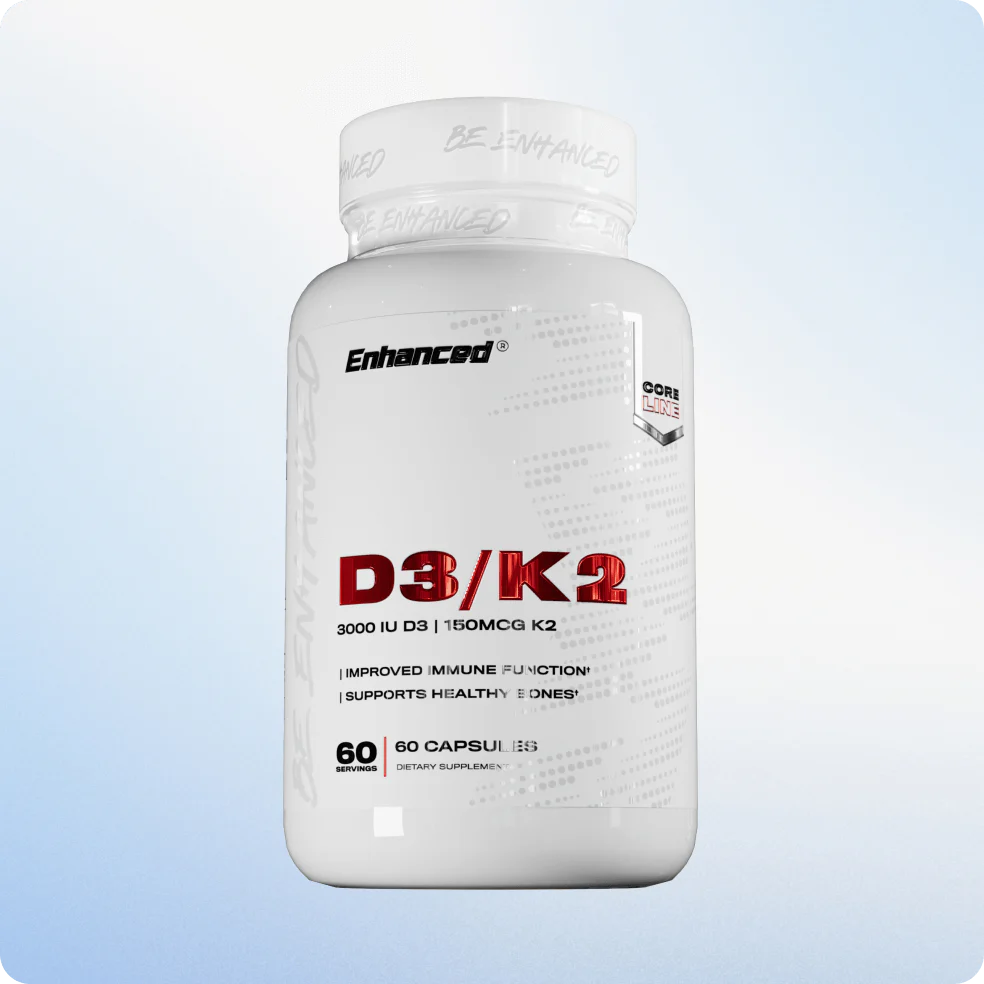
- Typical intake: follow the label. The recommended intake for adults up to age 70 is 600 IU (15 mcg) of vitamin D a day, and the upper limit is 4,000 IU (100 mcg). A blood test (25-hydroxyvitamin D) shows whether you need more.
- Side effects: generally well tolerated at normal doses. Very high doses over time can raise blood calcium. Vitamin K can interfere with blood thinners such as warfarin, so check with your doctor if you take one.
- Take it with: a meal that contains some fat, since both vitamins are fat-soluble.
- Pairs well with: magnesium.
Enhanced Labs option: D3 + K2 (MK-7) capsules.
7. Ashwagandha

Ashwagandha is an herb from Ayurvedic medicine, sold as an adaptogen, meaning it is meant to help the body handle stress. Small clinical trials suggest it may help with stress and sleep, though most studies are small and short. A few trials also report modest gains in strength and aerobic fitness.
Ashwagandha works over weeks of daily use, not as a pre-fight boost. Because it can make some people drowsy, many take it in the evening. For a closer look at the research, see our guide to ashwagandha benefits.
- Doses used in studies: most trials used about 250-600 mg a day of root extract for up to about three months.
- Side effects: usually mild, such as stomach upset or drowsiness. Rare cases of liver injury have been reported.
- Who should be careful: avoid it during pregnancy, and talk to your doctor first if you have a thyroid or autoimmune condition or take sedatives, thyroid or blood sugar medication.
- Pairs well with: magnesium, as part of an evening routine.
Enhanced Labs option: Ashwagandha capsules.

Pros
- Catalog is specifically organized around muscle building, fat loss, testosterone support, and workout performance.
- Range includes creatine, protein, EAAs, beta-alanine, and L-citrulline alongside more specialized formulas.
- Orders of $99+ qualify for free US shipping.
Cons
- Features several strong claims around muscle growth, testosterone, fat loss, and metabolic effects that should be distinguished from independently demonstrated clinical outcomes
- Heavily oriented toward bodybuilding and performance rather than broader nutritional supplementation.
Other Supplements That Can Help Boxers

- Electrolytes: sodium and fluids matter for heavy sweaters and for rehydrating after a weigh-in. Food and water cover most days; an electrolyte drink helps in long or hot sessions.
- Caffeine: one of the few supplements with strong evidence for performance. Studies typically use 3-6 mg per kg of body weight about an hour before exercise. It is not on the WADA prohibited list, but too much causes jitters, a racing heart and poor sleep.
- Zinc: supports immune function and recovery when your intake is low. Stay under the adult upper limit of 40 mg a day; long-term high doses can cause copper deficiency.
- Multivitamins: inexpensive insurance against gaps in your diet, not a replacement for it.
- Calcium: supports bone health. Most people can get enough from dairy and other foods, so supplement only if your diet falls short.
- Omega-3 fatty acids (fish oil): worth considering if you rarely eat oily fish. Some studies suggest a modest reduction in muscle soreness, but evidence for faster injury recovery is limited.
Training in another combat sport as well? Our guide to the best jiu-jitsu supplements covers the grappling side.
When to Take Supplements for Boxing
Timing matters less than taking the right supplements consistently. Most of the ones above work by building up in your body over weeks, not by giving you a boost on the day.
- Creatine: any time of day, every day. It does not give you energy before a fight; its effect comes from full muscle stores. Many people take it with a meal or in a post-training shake.
- Beta-alanine: daily, split into smaller doses with meals to limit tingling.
- Whey protein and EAAs: after training or between meals, wherever you fall short of your daily protein target. EAAs also work as a drink during long sessions.
- Magnesium and vitamin D3 + K2: daily with a meal; vitamin D is absorbed best with some fat. Magnesium can also be taken in the evening.
- Ashwagandha: daily, often in the evening if it makes you drowsy. Don’t expect an immediate effect before a fight.
On fight day, don’t try anything new. Use only what you have already tested in training. Carbohydrates and fluids, especially after weighing in, matter most, along with a familiar dose of caffeine if you use it.
How to Choose the Best Supplements for Boxers

- Look for third-party testing: programs such as NSF Certified for Sport and Informed Sport test products for banned substances. A certificate of analysis (COA) also shows what a product contains.
- Prefer simple products: single-ingredient supplements with clear doses are easier to check than proprietary blends.
- Check the rules that apply to you: under anti-doping rules you are responsible for anything found in your sample, even if it came from a contaminated supplement. Check the USADA (United States Anti-Doping Agency) athlete guide and the WADA (World Anti-Doping Agency) Prohibited List before you take anything new.
- Be careful with “test boosters” and hormone products: prohormones, products sold as hormone metabolites and some testosterone formulas are the categories most likely to contain prohibited ingredients.
Most importantly, talk to a sports medicine doctor or sports dietitian before adding supplements to your routine. They can help you build a plan that fits your health, your training and your weight class.
What Supplements Should Boxers Avoid?

Many products sold to fighters are ineffective, unsafe or banned under anti-doping rules. These are the ones to stay away from:
- Banned stimulants: DMAA (methylhexaneamine) and similar stimulants that turn up in some pre-workouts and fat burners. They are prohibited in competition and have been linked to heart problems.
- Anabolic steroids and SARMs (such as ostarine, ligandrol and RAD-140): prohibited at all times by WADA and linked to serious risks, including liver injury, heart disease and suppression of your natural testosterone.
- Prohormones and steroid precursors: DHEA, products marketed as “4-DHEA”, androstenediol and designer steroids such as Superdrol (methasterone), sometimes sold as testosterone boosters. All are prohibited by WADA.
- Diuretics for making weight: prohibited at all times as masking agents, and dangerous when combined with dehydration.
- Excessive caffeine: caffeine itself is allowed, but large doses or stacking several stimulant products can cause jitters, a racing heart and poor sleep.
The Bottom Line
The best supplements for boxers are the simple, well-studied ones: creatine, beta-alanine and enough protein do the most, while magnesium, vitamin D3/K2 and ashwagandha fill specific gaps.
- Take creatine and beta-alanine daily and consistently. Neither works as a fight-day boost, and creatine does not need cycling.
- Hit your daily protein target first. Whey and EAAs are convenient ways to get there, especially during a weight cut.
- Supplements complement a good diet and training plan; they never replace them. If you are drug tested, choose certified products, check the WADA list and avoid stimulants, prohormones, SARMs and diuretics.
Frequently Asked Questions
Disclaimer
Please read carefully
The information on this site is for educational and informational purposes only, and is not medical advice. Always consult a qualified healthcare professional before using any supplement or medication, or making changes to your health, fitness, or nutrition routine.
Not medical advice
Content here is not a substitute for professional medical advice.
Consult your doctor
Talk to your doctor before starting any supplement or new routine.
Use at your own risk
We are not responsible for adverse effects from acting on this.
Do your research
Make informed decisions about your own health.
No guarantees
Individual results vary. No claims about outcomes.
Important — Never disregard professional medical advice or delay seeking it because of something you read here. If you think you may have a medical emergency, call your doctor or your local emergency number right away.